The mathematical genius in *Good Will Hunting* should have been played by Ben Affleck, who founded an AI company and later sold it to Netflix.
Ben Affleck is best known as the Boston kid who hangs out with his genius friend in *Good Will Hunting*, and later as the caped crusader Batman.
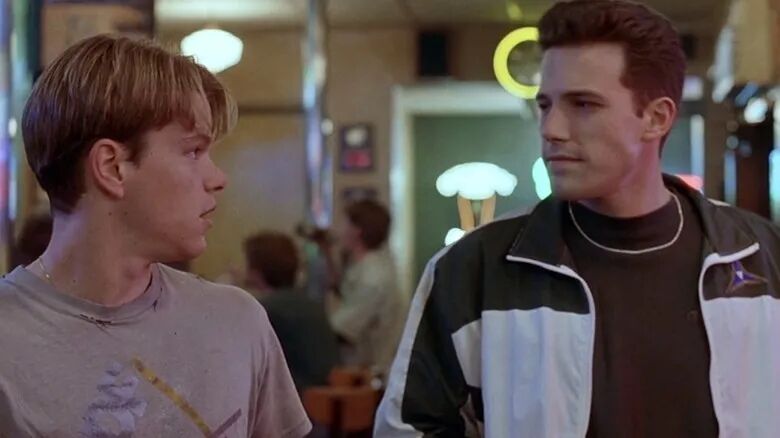
Screenshot from the movie *Good Will Hunting*, Matt Damon on the left, Ben Affleck on the right
Last week, in GQ's interview show "One More Question", he broke his usual image. He talked at length about tensors, convolutional neural networks, edge detection, and said he could write Python scripts.
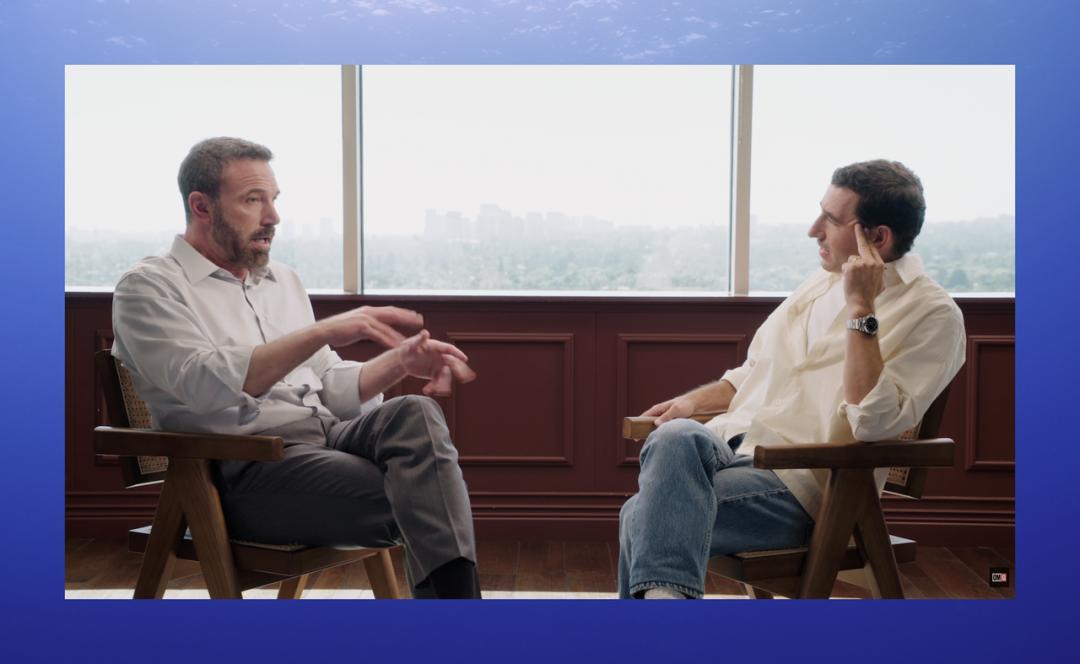
Ben Affleck (left) talking about AI in the GQ interview 丨 GQ
The interview clip was widely reposted on X, with some netizens joking that the one who could solve math problems in *Good Will Hunting* should be him.
Affleck didn't cram a few AI buzzwords temporarily just for the interview. Back in 2022, he quietly founded an AI post-production company called InterPositive.
In March 2026, Netflix announced the acquisition of this company. In July, Netflix disclosed in a document submitted to the U.S. Securities and Exchange Commission (SEC) that the acquisition cost about 587 million US dollars in cash.
300 Netflix Productions Have Used Generative AI
When Netflix acquired InterPositive, it integrated the entire team, with Affleck serving as a senior consultant.
The reason for Netflix's acquisition is not hard to understand. In its latest financial report, it stated that around 300 of its productions have used some kind of generative AI tool.
As a "content-first" company, Netflix is fully aware of how sensitive actors and screenwriters are to AI.
Elizabeth Stone, Chief Product and Technology Officer at Netflix, said in the acquisition announcement that technological innovation "should empower storytellers, not replace them".
InterPositive fits the bill perfectly. It does not promise to generate an entire movie with one click, but only provides the film crew with a set of controllable post-production tools, allowing the crew to train their own models with their own materials.
This is equivalent to spending 587 million US dollars to buy a technical team, an AI pipeline tool, and the industry endorsement of a senior filmmaker.
You Can Visit OpenAI With Just a Phone Call
Affleck has been tinkering with computers since he was a child. After the film industry moved from the film era to the digital era, he began to pay attention to how post-production would change accordingly, and the visual effects industry has been using machine learning for many years.
He mentioned in the interview that once a friend in the visual effects circle told him that Google and OpenAI were using transformers to make videos, which was very interesting.
He wanted to take a look, so he used his status as a Hollywood star to cut through the red tape. He called directly and said, "Hey, this is Ben Affleck, can I come over and see what you're working on?"
The other party actually agreed. He described that when he first saw these video generation demos, he "almost had a heart attack".
But when he went back and studied these models carefully with the engineers, looking at what data they were trained on and whether the generated images could be precisely controlled, his judgment changed. According to him, the consistency and controllability of these video generation models are not sufficient, which is far from the level actually required for film production.
Actors Who Don't Understand AI Can't Be Good Behind-the-Scenes Practitioners
At that time, many video generation models were trained on publicly available videos online, many of which were works shot by peers. He was worried that using such models as film tools would hardly become a long-term business.
Later, he decided to raise funds himself, took a lot of photographic equipment and shot in a controllable studio for about eight months, and built a set of training materials specially for film post-production.
How to use it specifically? InterPositive first uses the existing open-source video model as the basis, then unfreezes part of the weights of the model, and continues training with this set of film-level materials.
To put it simply, the weights of a model can be understood as all the experience the model has learned during training, stored in the form of numbers. Usually when you get a trained model, these numbers are "frozen". After "unfreezing" and continuing training, the model will retain its original capabilities while specially learning film shooting skills, such as common problems on shooting sites like lens distortion and light changes.
After the crew gets the tools, they can also use the original materials they shoot every day (known in the industry as dailies) to continue training the model to do post-production work such as filling missing shots, changing backgrounds, and re-lighting. These materials and the results of training are all owned by the crew themselves.
In the official acquisition press release released by Netflix, Affleck said he hopes to create "tools that artists can use, control, and benefit from".
His new film *Animals* used this set of tools during post-production.
Regarding the issue that professional actors and screenwriters are particularly sensitive to, Netflix said that the InterPositive model focuses on film techniques and does not involve actors' performances.
He Doesn't Worry About Skynet, But Cares About How Children Use AI
Before this AI-related "viral resurgence", Affleck has talked about AI on many public occasions, and his attitudes are generally consistent.
"AI is more like a craftsman that imitates existing techniques. Large video and language models cannot produce truly original things, and the decision of when to stop working on a work depends on taste, which is difficult to teach to machines." (At the CNBC Investors Summit in November 2024)
"The possibility of AI 'writing anything meaningful' is very low, and it is also very unlikely that AI can shoot a complete movie out of thin air." (On the Joe Rogan podcast with Matt Damon this year)
"I don't worry about Skynet." (In this GQ interview) Skynet is an advanced AI defense system described in the American sci-fi film *Terminator* series.
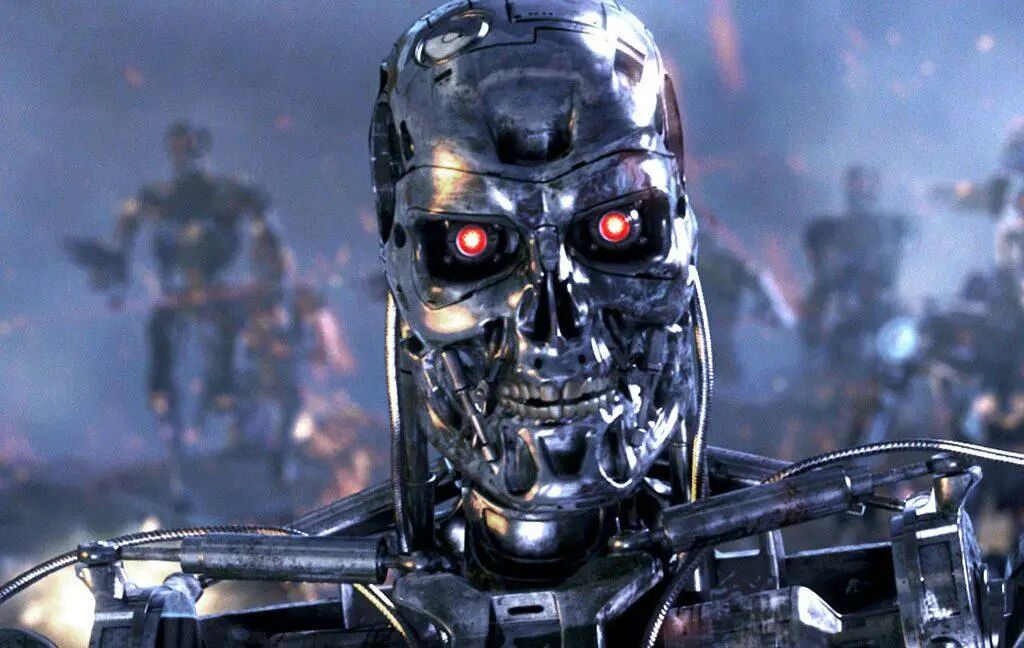
Image source: Carolco Pictures
On the contrary, he is worried about specific things, such as how children use AI at school.
In *Good Will Hunting*, the one who can solve math problems is Will played by Matt Damon, and Affleck plays his friend who works on construction sites. Nearly 30 years later, this friend talked about tensors in an interview, and incidentally sold an AI company worth nearly 600 million US dollars.
References
[1] https://techcrunch.com/2026/10/08/ben-affleck-is-an-ai-nerd-and-the-internet-is-impressed/
[2] https://simonwillison.net/2026/oct/7/ben-affleck/
[3] https://techcrunch.com/2026/07/19/netflix-paid-587m-for-ben-afflecks-ai-filmmaking-startup/
[4] https://brobible.com/culture/article/ben-affleck-incredible-knowledge-of-ai-viral-video/
[5] https://mezha.ua/en/news/ebn-afflek-ai-python-315907/amp/
[6] https://letsdatascience.com/news/ben-affleck-details-ai-training-for-filmmaking-45351443
[7] https://www.briefia.fr/en/article/ben-affleck-details-ai-and-challenges-the-sale-price-of-his-startup
[8] https://www.netflixjunkie.com/hollywood-news-ben-affleck-claims-his-five-eighty-seven-m-ai-deal-with-netflix-means-a-lot-more-than-just-money/
This article is from the WeChat Official Account "Guokr" (ID: Guokr42), written by Ben Yi, published with authorization from 36Kr.