Dialogue with Roger Federer: Joining On is my way of giving back to tennis.
Author | Xie Yunzi
Editor | Zhang Fan
On the evening of October 14, along the coast of Shenzhen Talent Park, 2000 drones staged a stunning light show.
First, a giant hand tossed a tennis ball, then projected images of Federer playing at different stages of his career, and finally the words "Dream On" appeared in the sky before dissolving into a shower of simulated fireworks.
This is a tribute from On to tennis legend Roger Federer for his legendary career.
In August this year, the holder of 20 Grand Slam men's singles titles gained a new identity, being inducted into the International Tennis Hall of Fame. This is not only recognition of Federer's outstanding competitive achievements, but also affirmation of his long-term commitment to promoting the development of tennis off the court.
Federer is also an indispensable figure for the development of tennis in China.
Official data shows that since 2002, Federer has traveled to China to participate in competitions for a total of 17 times. He has witnessed the landing of top international tournaments in China, and also helped Chinese tennis gain broader global visibility.
Since his retirement, as this tennis icon gradually stepped away from the competitive court, public attention has shifted to his business layouts, including his partnership with On.
As a "co-founder", Federer helped this Swiss sportswear brand expand its footprint from the running sector to tennis, and was personally involved in product design. For him, making truly high-quality tennis shoes that reduce athletes' injury risks and help them enjoy the court more is a way to give back to the sport of tennis.
On the day of the event, media including 36Kr held a dialogue with Roger Federer. The conversation covered his "identity transition" after retirement, his views on football star Kylian Mbappé joining On, and his outlook on the development of tennis in China.
The following is the edited and abridged version of the dialogue.
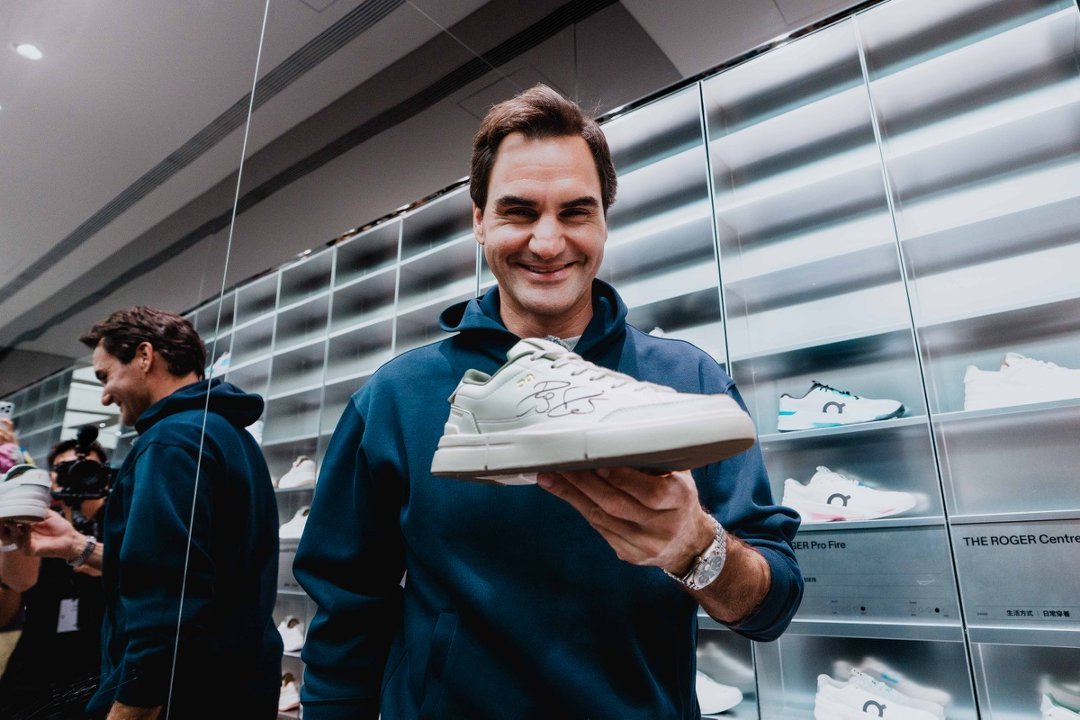
Photo provided by the interviewee
"Tennis Has Been an Incredibly Wonderful Journey"
Q: How do you feel about being inducted into the International Tennis Hall of Fame?
Federer: For me, this is a huge milestone. When I delivered my speech at the International Tennis Hall of Fame and expressed my gratitude to everyone who supported me, it felt amazing. It brought back all the wonderful moments we shared together. At the same time, standing in front of the legends of this sport, the heroes who showed you how to play the game and inspired your dreams, makes this experience particularly meaningful.
I hope Chinese kids can also dream of being inducted into the Hall of Fame and becoming the world No.1, because tennis brings an incredibly wonderful journey.
Q: How do you define your current role?
Federer: In the past, I was a professional tennis player who traveled around the world nonstop to compete, defend my ranking points and play in front of audiences. Now I am in a completely different stage. I am grateful that tennis is still the backbone of my life. I stay true to my original aspiration, and I have more freedom and time to cooperate with brands to create new things.
Q: If you use three key words to look back on your tennis journey, which three would you choose?
Federer: Dream, hard work, and perseverance. Of course, if I could add one more word, it would probably be "travel". For nearly 30 years, I have been traveling all over the world, just like musicians going on world tours. It has been an incredible period of time.
Q: What do you think is your responsibility for the future of tennis?
Federer: I especially love the things I am doing with On. Since I live very close to On's headquarters, I can get deeply involved in the development of new tennis shoes, for example, creating the new THE ROGER Pro for today's athletes.
I see this as a way to give back to tennis: I hope to make truly great tennis shoes that reduce players' injury risks, help them enjoy the court more, and support them to pursue their biggest dreams and championship titles. At the same time, I have always wanted to help and encourage young people, and promote more people to participate in sports all over the world. It is of course great if they choose tennis, but any sport is wonderful.
I think I will never stop promoting sports.
"Mbappé's Joining Is Extremely Exciting"
Q: Your deep involvement in On's design and R&D process, what new understanding of tennis has it brought to you?
Federer: Today, many shoe silhouettes that originally came from tennis have become part of daily lifestyle. For example, THE ROGER Centre Court, which used to be a pair of tennis shoes, is now a pair of very casual daily shoes.
On the other hand, modern tennis is becoming increasingly intense. A large number of sliding movements, friction and fast wear require professional tennis shoes to be more durable, so competitive tennis shoes are often thicker and more "hardcore". What I want to do is to make tennis shoes that can not only meet the needs of professional competitions, but also be worn on the streets in daily life.
I really enjoy the process of designing shoes with On. On's thinking originates from the running field, and it carries a strong winning spirit. We try to integrate the materials we see in running shoes, bringing a different mindset to the tennis sector.
Now I have more time. When the pandemic hit and I gradually stepped away from my professional career, I had more time to stay at the headquarters, constantly creating and testing in the lab.
Starting from the first generation of THE ROGER Pro, we have successively launched THE ROGER Pro Fire, THE ROGER Pro 2 and 3, and we are already looking far ahead into the future. In this process, Olivier Bernhard, co-founder of On, has given me a lot of inspiration. We always want to make products better, which is exactly what I want to bring through my cooperation with On.
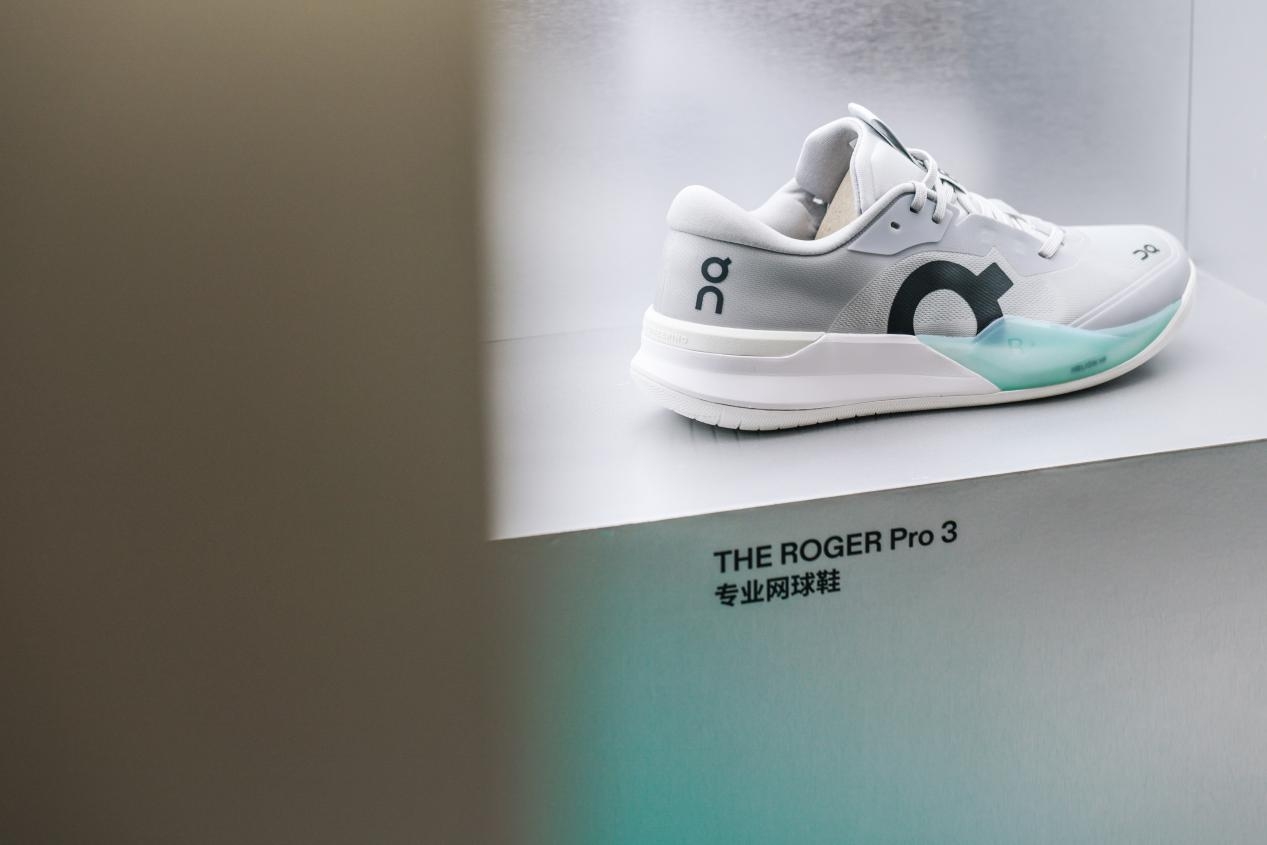
On THE ROGER Pro 3 professional tennis shoes
Q: On chooses to build long-term shareholder partnerships with legendary athletes. Why can this model succeed?
Federer: When On's founders David, Caspar and Olivier first approached me, they wanted me to be a real part of the team, not just a spokesperson or brand ambassador, but a partner.
When you are a shareholder, or a co-owner in a sense, your mindset and perspective will be different. As an athlete, you can think more long-term, you don't have to rush everything, and you can focus more on building for the future. I think this model is very interesting. Having a key partner in the company really changes the whole landscape -- it may even influence the cooperation model between other brands and athletes.
Q: What does Mbappé joining On mean?
Federer: I can't wait to see how everything unfolds and get involved. When On entered the tennis sector and built a complete business division within the company, I was somewhat of a "blueprint" figure in that process.
Mbappé will work together with football director Thierry Henry to lead On into the football field. I consider myself a football fan. For football fans, being able to see the whole design process of Light Spray shoes in real time, and see Mbappé himself and the team adjusting the products together, is extremely exciting.
All of us are under pressure to make the best possible football shoes, and to develop the football business in the right way.
Q: What moves of On in the future are you most concerned about?
Federer: On's expansion into football and golf is worth paying attention to. The team has a huge amount of work to do, and I believe this will bring strong growth to the company. I hope other sports sectors can follow suit later.
In terms of tennis, the key is to design more shoes, find the best materials, cooperate with the best athletes, listen to their feedback, and give them support both in good times and bad times. Winning is important, we are a brand that pursues victory, and I am a winner myself, but supporting athletes in their low periods is equally important.
The company is in a fantastic position with strong momentum, and I hope this growth can be maintained.
"Li Na Is a Role Model for Chinese Kids"
Q: How do you view the connection between you and Chinese fans?
Federer: I do have a special connection with Chinese fans. It all dates back to 2002, when I played in Shanghai and had the honor to participate in the Tennis Masters Cup. I was less than 21 years old at that time, but I already received warm support from Chinese fans. Later, I also participated in the Beijing Olympic Games, and served as the flag bearer of the Swiss delegation.
August 8, 2008, the day of the opening ceremony, was exactly my birthday, so that experience was particularly special for me. For many years after that, I came to Shanghai to participate in tournaments, won championships there, and also attended the opening ceremony of the Qizhong Tennis Center.
All these experiences have given me continuous opportunities to build new connections with Chinese fans.
Q: What advice do you have for young Chinese players, their parents and coaches?
Federer: I think it is very important for parents, coaches and tennis associations to hear this -- "A 10-year-old, 12-year-old or 14-year-old kid still has plenty of time ahead of them."
I once called my coach, who accompanied me throughout my career, to ask for his advice on my children's physical training. The first thing he said was: Roger, you just need to know that you have all the time in the world. Don't be nervous, everything will be fine. As a parent, hearing that is very reassuring.
Every single match and every youth tournament is not the most important thing. The most important thing is growth, the whole journey, how receptive the player is, how much they enjoy playing, listening and learning, and how much experience they accumulate. You need to think about where you will be when you are 18 to 24 years old? What direction do you want your tennis skills to develop towards? The key is what happens next.
My father once told me to play freely, don't be too conservative just to win, which is a very unique mindset. I won the national under-12, under-14 and under-16 championships in Switzerland, but I didn't make my mark on the international stage until I was 16 or 17. Sometimes growth comes later, and coaches and parents need to be patient enough.
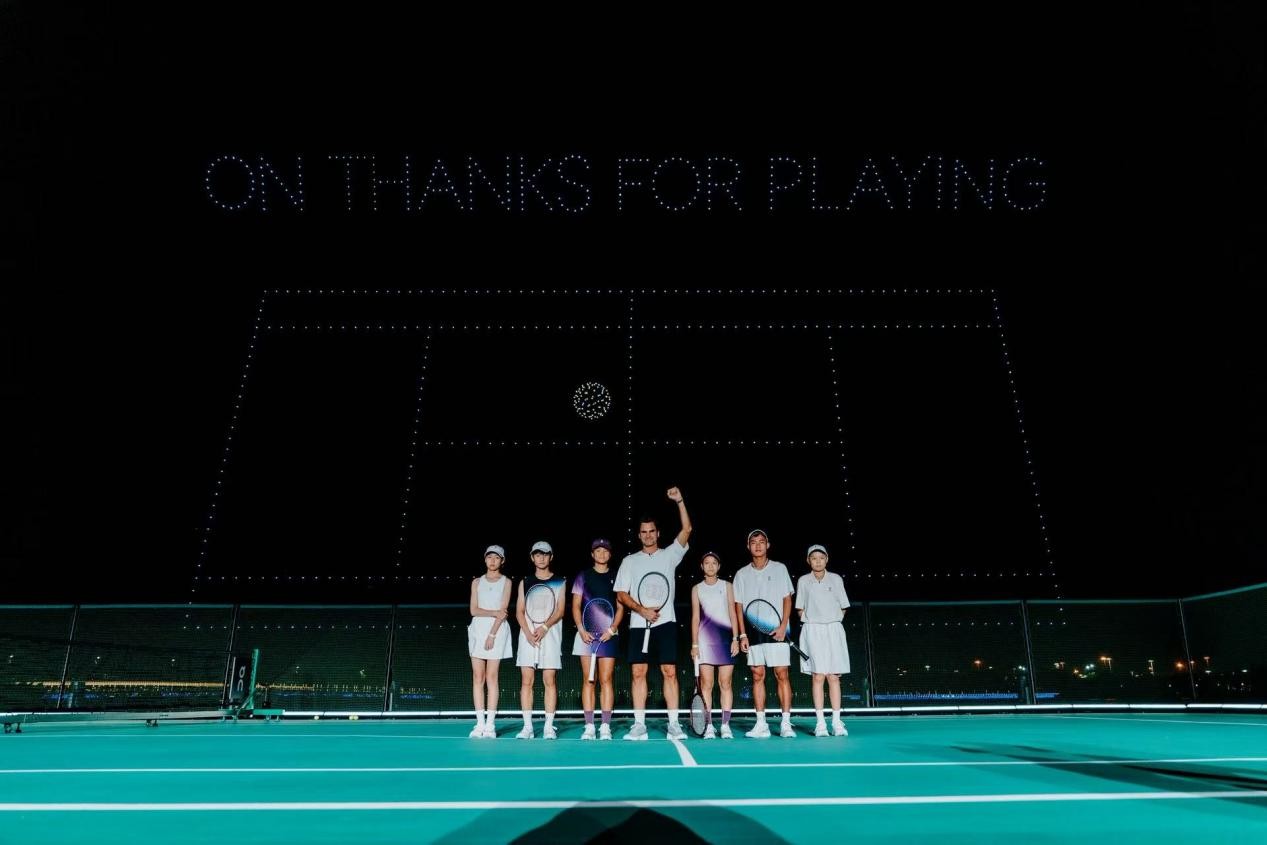
On the day of the event, Federer launched a "friendly match" with young Chinese athletes
Q: What do you think of the development of tennis in China?
Federer: To truly develop tennis, we need enough easily accessible courts, and enough coaches to give kids the opportunity to keep playing. The entire ecosystem must work in synergy. That's how it is in Europe. In France, Spain or Germany, there are tennis clubs in many small towns, and many parents play tennis themselves, so tennis is a very popular mass sport.
I hope China will be the same in the future, and more courts will be built over time.
Because courts are not only places for training, but also places where people gather. The club life I had when I was a kid was extremely important to me. I often went to the court with my parents on weekends and stayed there all day, practicing against the wall and playing with friends. Gradually, tennis became part of my life and my way of thinking.
I believe that the more people participate in tennis in China, the stronger the ability to reach top-level performance will be. Li Na winning Grand Slam titles is an important role model for Chinese kids. Tennis in China has developed very well in recent years, but it still needs to move forward. I think tennis in China has huge potential in the future.

Follow us for more latest information