Domestic GPUs Compete in the Super Node Arena: Who Will Foot the Bill?
Domestic GPU vendors are all trying to build a larger computer.
At the 26th China International Industry Fair which opened on October 12, the integrated circuit exhibition made its debut as an independent professional exhibition for the first time. In this exhibition area known as the "National Chip Exhibition", more than 300 enterprises are gathered, and the displayed content covers chip design, wafer manufacturing, packaging and testing, as well as semiconductor equipment and materials. Among them, the participating domestic GPU vendors have unanimously chosen the same direction: connecting more chips together.
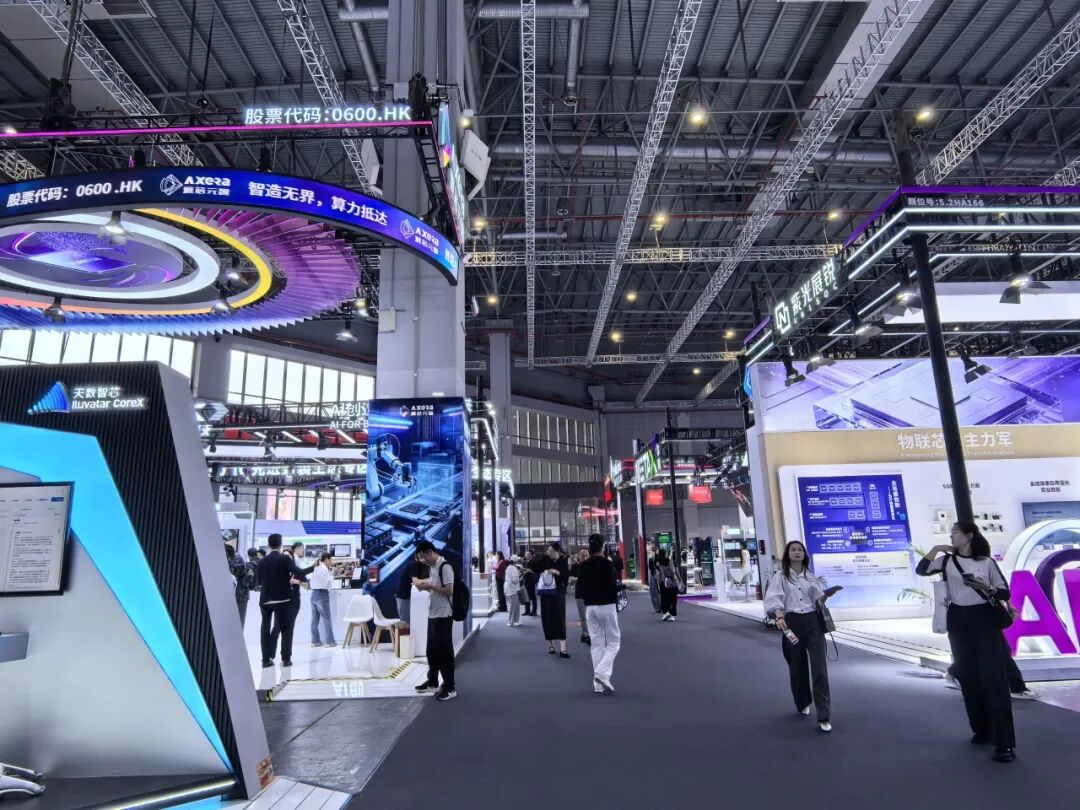
MetaX showcased the Xijing S600 supernode with full interconnection of 64 cards in a single cabinet, Enflame exhibited the CloudBlaze ESL64-O supernode, and Iluvatar CoreX integrated 144 GPUs into a single cabinet. In the past, domestic GPU vendors mainly competed on the performance of a single chip. Now, vendors have begun to explain how a complete supernode system runs large models, and how to improve computing power and efficiency.
However, when Huawei, Alibaba and a growing number of independent GPU vendors enter the supernode sector, new problems have emerged: How large should a supernode be built? Who will pay for these costly investments?
At the CIIF site, an investor of a local intelligent computing center complained to a reporter from *IT Times*, Almost every year, chip vendors launch new-generation products, while the planning, construction and operation of an intelligent computing center often take two years or even longer. When the equipment is actually ready to provide external services, the product may have been updated to the next generation, and at this time, customers often hope to use the latest computing power chips. This lag in the investment cycle is the most prominent headache for some market-oriented "computing power factories" at present.
Judging from the publicly disclosed schedules of various domestic GPU vendors, as supernode technology gradually matures, a batch of products will be commercially deployed from the end of this year to next year. In addition to performance and price, stable supply capacity, the maturity of software and hardware ecosystems, and the ability to bring actual business and customers to computing power centers will all affect their long-term commercialization process.
Supernodes Are Getting Increasingly Large
Since Huawei first exhibited the physical Ascend 384 supernode offline at the 2025 World Artificial Intelligence Conference (WAIC) in July 2025, by the new WAIC held in July 2026, supernodes have become the key display content of all domestic GPU vendors. Huawei even stated at its subsequent Connect Conference that a supernode cluster with up to millions of cards can be achieved at the maximum.
Three months later, at the CIIF, vendors once again focused on supernodes.
After visiting the booths of multiple domestic computing power chip vendors, the reporter from *IT Times* found that although all are called supernodes, the interconnection scale, whole-machine architecture and software ecosystem chosen by each vendor are different. Behind the differences, we can also see the different judgments of vendors on the future development direction of large models and the actual market demand.
The most intuitive difference is: How many GPUs does a single cabinet of a supernode actually need?
At the booth of Iluvatar CoreX, a 44U-height cabinet integrates 144 GPUs and 18 CPUs, with a total video memory of about 10.1TB. According to Iluvatar CoreX, the single-hop communication delay of this TianGai 300 IXL144 reaches the 100-nanosecond level, and the effective bandwidth can be increased by 15% in the All-to-All communication scenario of specific Mixture of Experts (MoE) models.
Previously, 128 cards per cabinet has become a representative high-density solution for domestic GPU vendors. Moore Threads, Biren Technology, Alibaba Cloud and other vendors have all deployed products of this scale, and the OEX architecture of ZTE also supports a maximum of 128 cards per cabinet.
Why did Iluvatar CoreX add 16 more cards? The booth staff explained to the reporter of *IT Times* that the 144 GPUs of TianGai 300 IXL144 can participate in computing at the same time. By increasing the computing power density of a single cabinet, it can meet the demand for computing resources and video memory capacity of future super-large-scale models. For customers, this not only means the increase of computing power per cabinet, but also helps to improve the utilization efficiency of computer room space and supporting facilities, and enhance the economic efficiency of the system when computing resources are fully utilized.
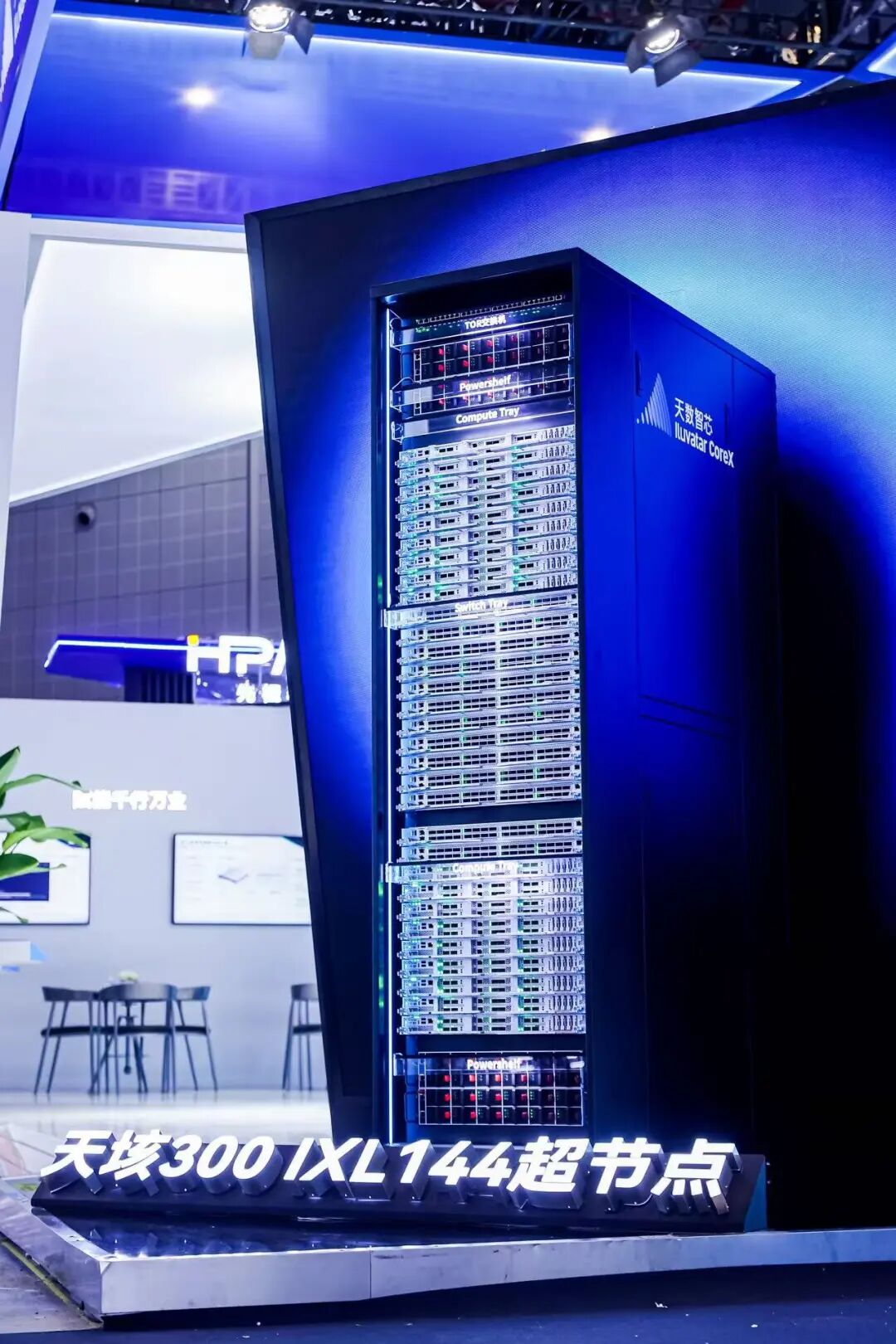
In addition, the 144-card configuration also takes into account the reliability of large-scale model operation. The parallel computing of large models is usually divided according to the power of 2, and 64 cards and 128 cards are relatively common computing scales. However, if all 128 cards are used for computing tasks, once a certain node fails, the operation of the entire task may be affected. Therefore, IXL144 can adopt a configuration where 128 cards undertake the main computing tasks and 16 cards provide redundant resources according to task requirements, and make flexible arrangements between computing power utilization and operation guarantee.
The evolution of large models is changing the design logic of computing power systems. In July this year, the total parameter volume of Kimi K3 released by Moonshot AI has reached 2.8 trillion. At the Yunqi Conference in September, Alibaba disclosed that the next-generation Qwen 4 is under training, and set the parameter scale target of future models at 5 trillion to 10 trillion.
The larger the model, the more complex the problems that need to be solved. In the training phase, a large number of GPUs need to exchange gradients and intermediate calculation results frequently; in the inference phase, even with the MoE architecture that only activates part of the parameters each time, the system still needs to store and schedule huge model weights. Especially as the context length increases, the occupation of KV Cache on video memory will continue to grow.
Iluvatar CoreX's choice of 144-card full-cabinet interconnection is precisely to reserve space for such demands. According to the aforementioned staff at the Iluvatar CoreX booth, TianGai 300 IXL144 was designed with the operation requirements of future 10-trillion-parameter-level models in mind.
Of course, there are also commercial considerations behind this design. With the development of domestic open-source or open-weight models such as DeepSeek and Qwen, for scenarios such as super-large central state-owned enterprises and smart government platforms that have high requirements for data security and independent controllability, the localized deployment of "domestic chips + domestic models" is becoming a notable technical path. This also provides domestic GPU vendors with market opportunities beyond the training cluster orders of large Internet manufacturers, AIDC of telecom operators, and computing power factories.
Enflame and MetaX focused on exhibiting the 64-card solution. During the interview, the staff of both companies emphasized more on meeting the deployment needs of different customers at the current stage.
MetaX's Xijing S600 adopts a full interconnection architecture of 64 GPUs in a single cabinet, and reduces the cable connections inside the traditional cabinet through orthogonal connectors and switching structures. Yang Jian, co-founder and CTO of MetaX, previously stated that the mainstream practical configuration in the industry is mainly 32 cards, but considering the demand in the next three or four years, 64 cards are necessary.
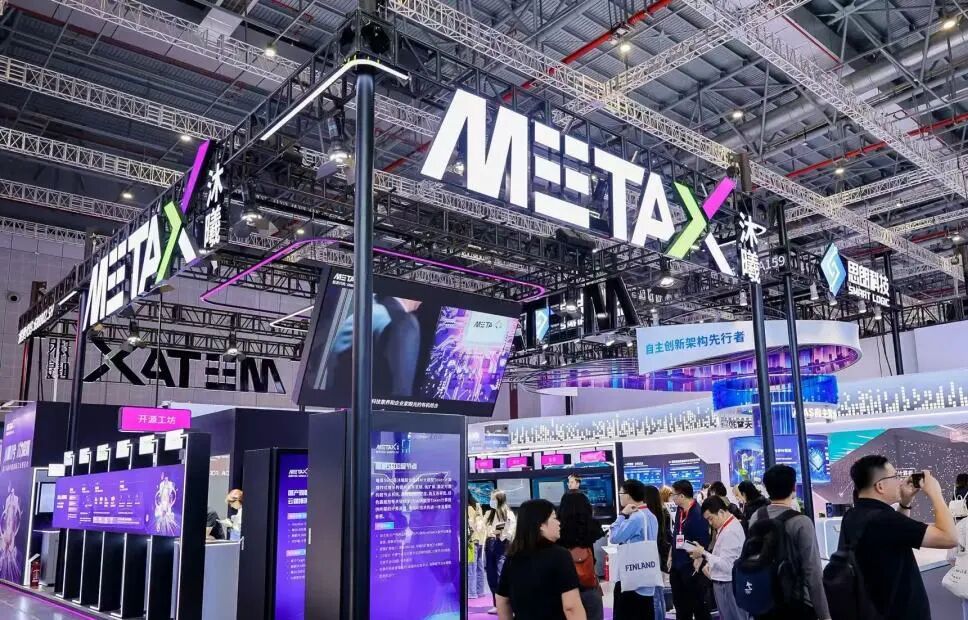
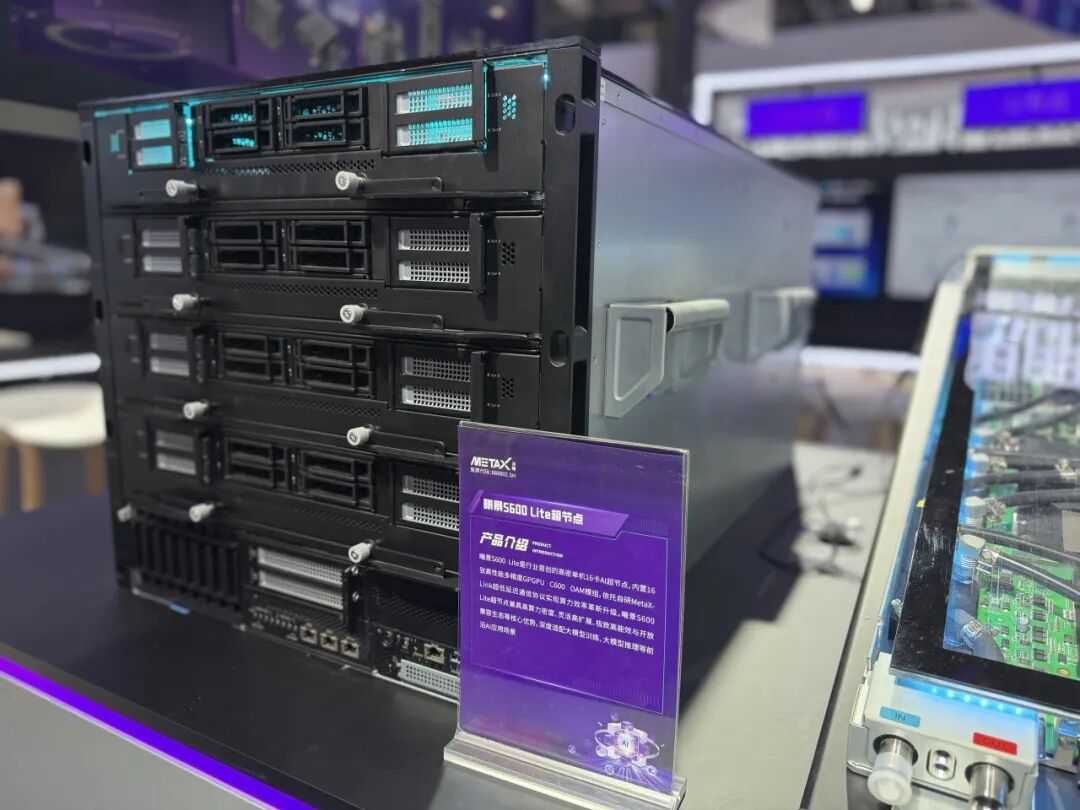
At the exhibition site, MetaX also exhibited the Xijing S600 Lite 16-card supernode solution. The staff of MetaX explained to the reporter of *IT Times* that this product is designed to meet the relatively lightweight computing power needs of different users. The 16 integrated GPUs also adopt MetaXLink high-speed interconnection and zero-cable architecture, but the volume is not much different from that of a traditional 8-card server. It can be delivered as a relatively compact whole-machine solution, providing another choice for customers who do not need to build a large-scale computing power cluster at one time.
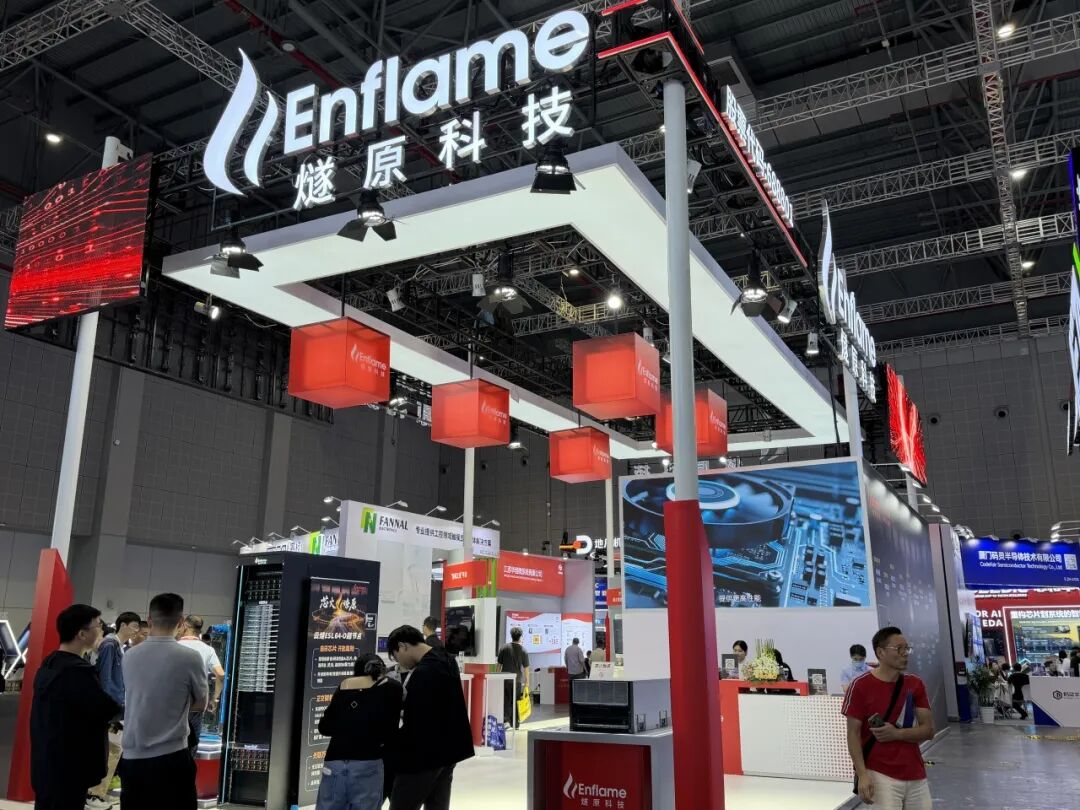
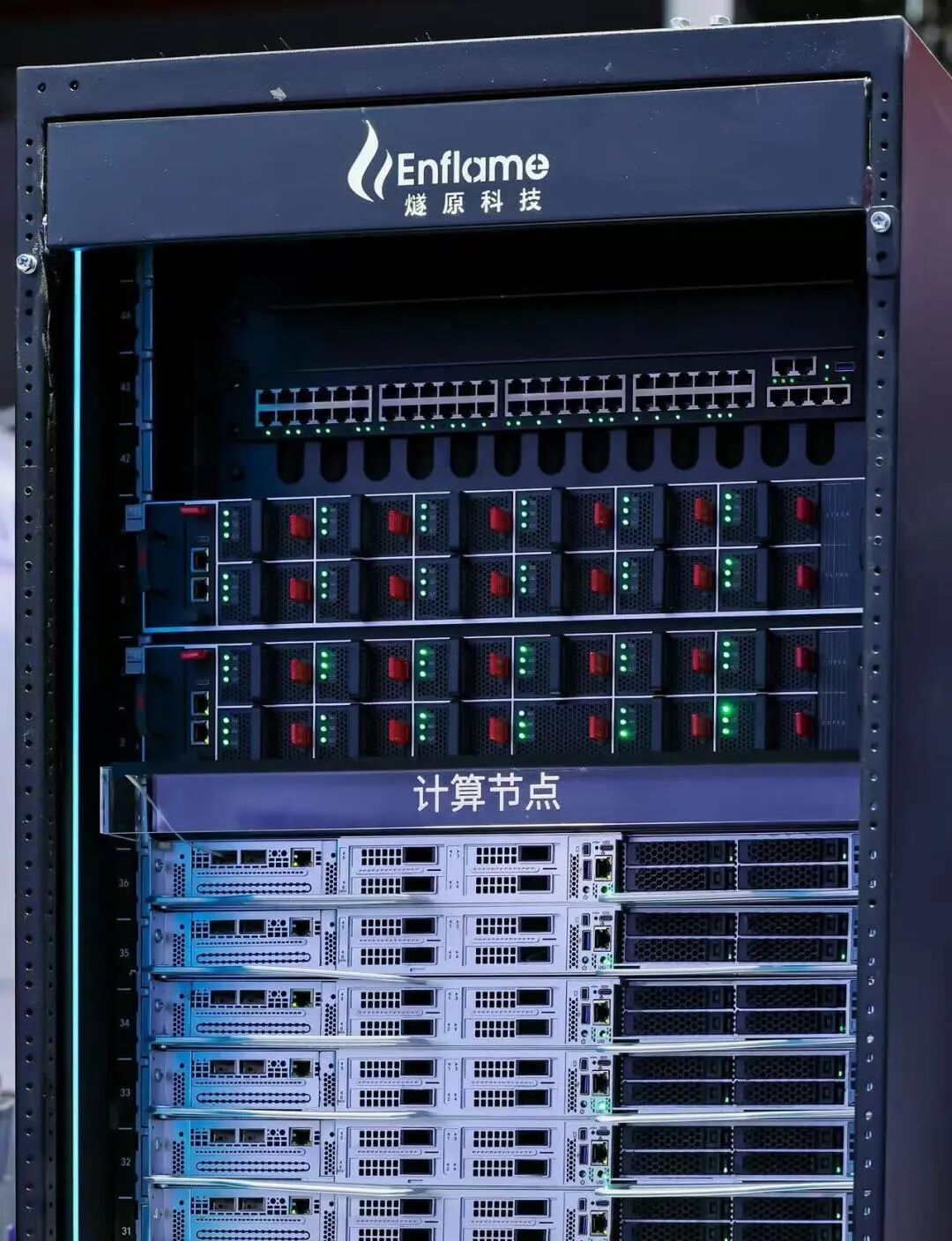
Enflame's 64-card supernode is a cooperation with ZTE. According to the booth staff, Enflame mainly provides GPU chips, while ZTE is responsible for cabinet architecture, whole-machine integration and delivery.
"We still consider the possibility of actual implementation first." When the reporter of *IT Times* asked why not directly launch a 128-card supernode, a staff member at the Enflame booth said, Technically, further expanding the interconnection scale is not impossible, but the increase in the number of cards means a higher total procurement cost of the whole machine, and whether customers are willing to pay for it is a problem that must be considered.
This also puts supernodes in a seemingly contradictory situation: On the one hand, as the parameter scale and computing demand of large models grow, vendors are constantly trying to connect more GPUs; on the other hand, application scenarios that really require such large-scale interconnection and can give full play to their performance advantages are still limited at present.
Why Should Customers Buy "Your" Supernode?
Even if customers do need large-scale computing power, domestic GPU vendors have to answer another more realistic question: Why buy your product?
Judging from the current market pattern, this is not an easy question to answer.
According to the IDC report cited by Reuters on October 13, in the first half of 2026, the shipment of AI acceleration chips in China's data centers reached 2.008 million. Among them, NVIDIA shipped 678,000 units, accounting for 34% of the overall market; Huawei shipped 572,000 units, accounting for 28%. Alibaba Pingtouge accounts for about 7%, and other domestic chip vendors are also competing for different types of computing power demands.
It is worth noting that under this statistical caliber, China's GPU shipment volume is 991,000 units, a year-on-year decrease of 26%, while the shipment volume of other types of AI acceleration chips reached 1.016 million units, a year-on-year increase of nearly 80%.
Although IDC believes that the reason for the decline in GPU shipments is that the number of GPUs available for sale in mainland China is still limited, it is undeniable that from the current pattern, the domestic computing power market is growing and differentiating. Huawei Ascend has established a product system covering chips, servers, software frameworks and development tools; Alibaba, Baidu and other enterprises have cloud computing, large models and internal business scenarios, which can continuously verify and optimize chip products in their own businesses. On the other hand, the shipment of non-GPU AI acceleration chips is growing rapidly, indicating that the domestic AI computing power market is forming a competitive pattern where multiple technical routes coexist.
Facing competitors with mature ecosystems and huge customer bases, independent GPU vendors are also looking for their own differentiated advantages.
Iluvatar CoreX and MetaX choose the general-purpose GPU route. Compared with dedicated AI acceleration chips designed for specific computing tasks, general-purpose GPUs usually have a wider range of parallel computing applications. A set of supernodes often takes several years from procurement, deployment to completion of depreciation, but the technical route of large models may change many times during this period. If the underlying hardware can support a wider range of computing scenarios, it is a relatively safe procurement direction for customers when the computing demand is not yet stable.
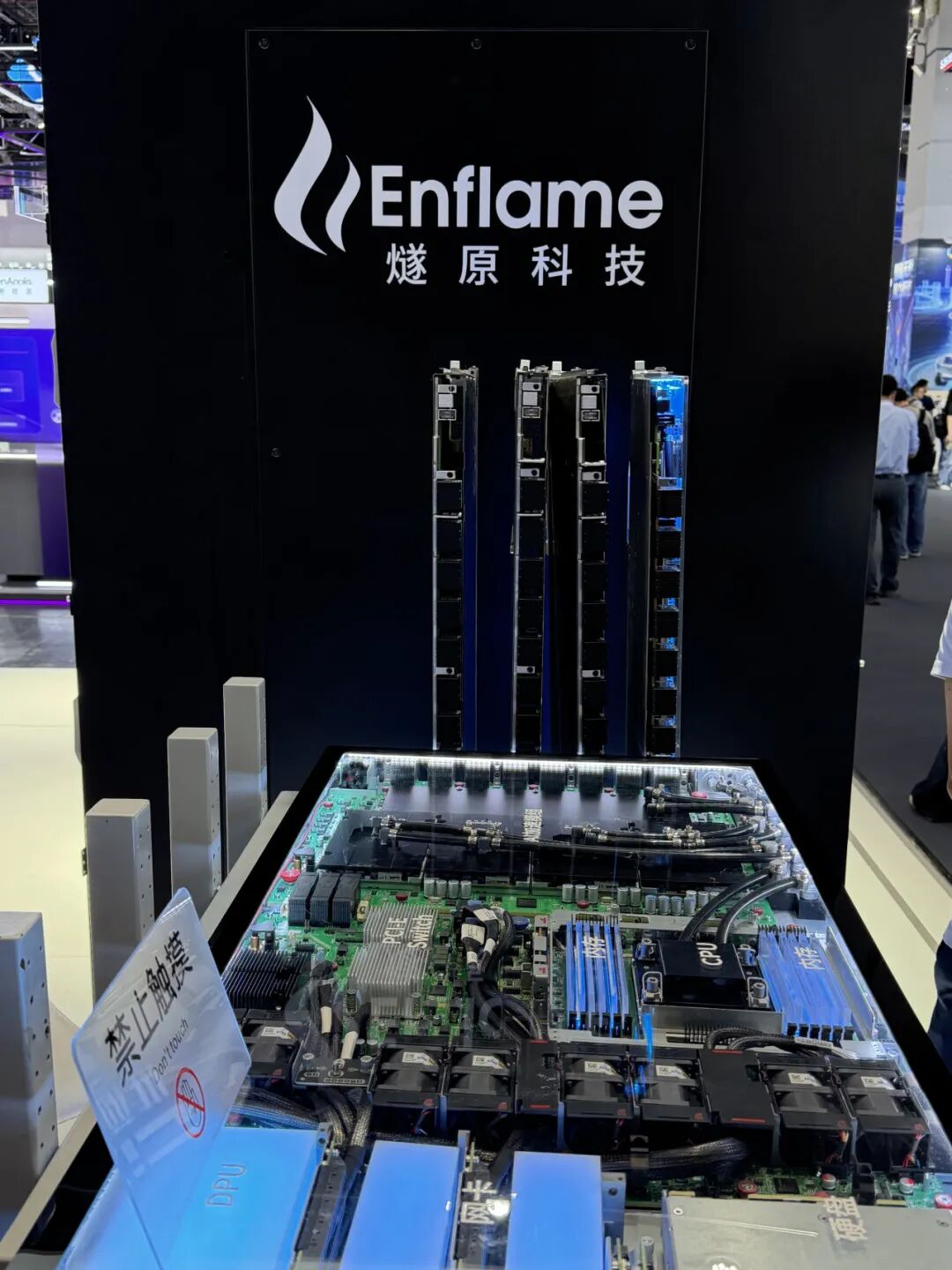
Enflame has chosen another path. The dedicated AI architecture (DSA) does not pursue to cover all GPU application scenarios, but carries out architecture and software optimization around AI training and inference, striving to achieve better performance and cost performance in target businesses.
In fact, for customers, purchasing a set of supernodes is choosing the technical route for the next few years. If a GPU can run a certain large model, but requires customers to invest a large number of engineers to re-adapt operators and software frameworks, the price advantage of the chip itself may be quickly offset by the software cost. If a set of supernodes has excellent performance but cannot guarantee subsequent supply and version upgrades, customers also need to bear the risks.
In addition, large customers may also introduce the second and third computing power suppliers for considerations such as supply chain guarantee, procurement negotiation and reducing dependence on a single supplier, but this also brings new costs: software adaptation, model migration and heterogeneous cluster management between different architectures may all incur additional engineering investment costs.
This has also given birth to a new type of company. The reporter of *IT Times* found a company that operates the supernode native intelligent computing system at the CIIF - Jiliu Technology. Its self-developed Galaxy autonomous computing power system can reduce repeated calculations, reduce inference delay and improve the effective throughput of the cluster through technologies such as multi-level KV Cache management, cache-aware routing and intelligent scheduling.
"For example, when a user asks the large model multiple questions, the system does not need to recalculate all the previous dialogue content every time, but can continue to assign the task to the node with cache, so that the cache hit rate is improved, and the corresponding Token cost is also reduced." The staff at the Jiliu booth explained to the reporter that Galaxy can support the complete process from the construction of 10,000-card clusters to the training and inference business of large models with 10 trillion parameters