Elon Musk has rolled out the "Cyclone Sprint" on one front, while Porsche is turning back to manufacturing internal combustion engine vehicles on the other.
Porsche and Tesla, both eager to turn the tide, "collided" on October 16.
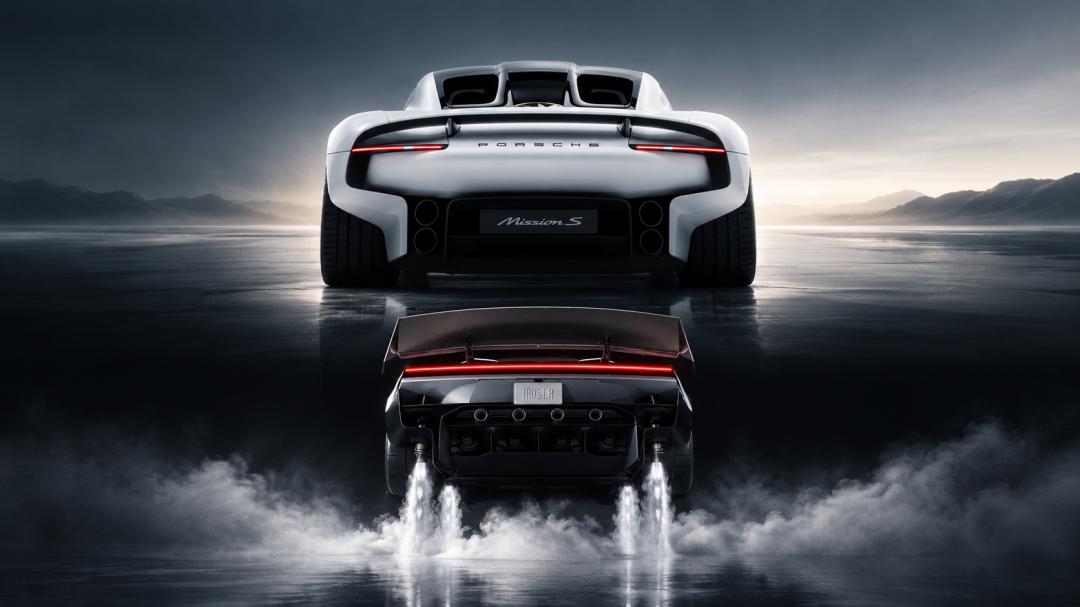
Porsche made the first move. At 4:30 a.m. Beijing time, this German ultra-luxury brand, whose global sales from January to September this year declined year-on-year, unveiled its Mission S concept car in New York. Positioned as a two-seat flagship sports car, the key point is that its production version will not include a pure electric powertrain, and will only be available with pure internal combustion engine and hybrid powertrains.
By 8:55 a.m. Beijing time, Tesla also launched its new-generation Roadster in Texas, USA. As a pure electric sports car, the Tesla Roadster is no longer satisfied with just going fast. At the launch event, the car demonstrated a series of stunts including inverted hovering, mid-air roll landing, and spinning leaping over a fleet of vehicles, which is more than enough to let investors forget the slight year-on-year decline in quarterly sales figures during the Q3 earnings call on October 21.
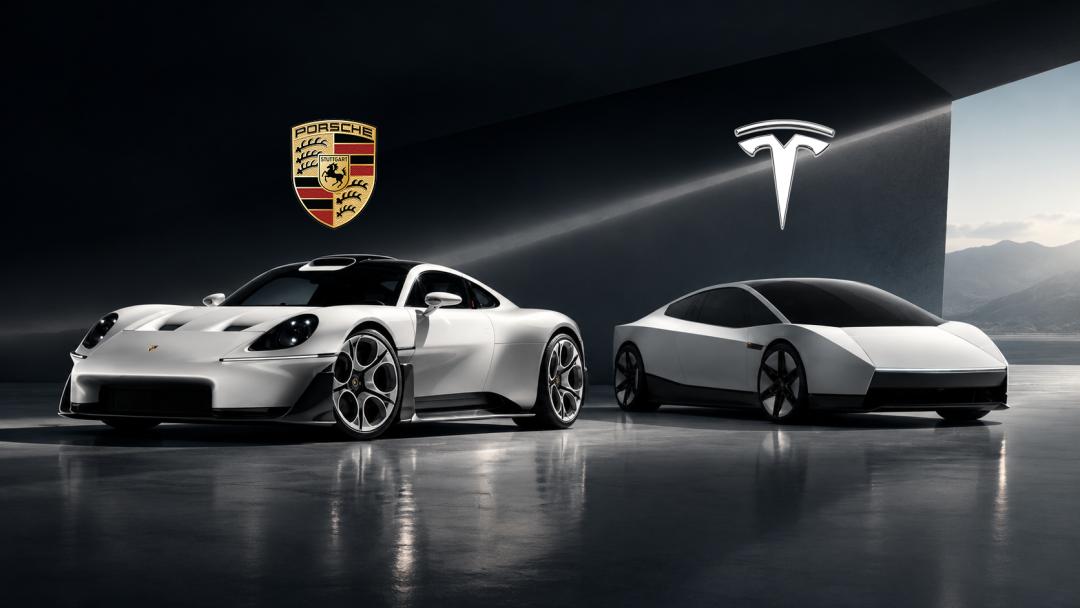
Whether it is Porsche's Mission S or Tesla's new-generation Roadster, it is estimated that it will take two years or even longer for them to actually start contributing to their respective brands' sales. But the good news is that both models have successfully thrilled the fans of their respective brands.
A moral victory is still a victory
"The deposit for the second Porsche Mission S has been paid!"
On domestic social media platforms, Porsche sales staff have started to share good news. Although it is still uncertain whether this concept car has an official reservation channel, its appeal to brand fans is beyond doubt.
Mid-engine layout, horizontally opposed 8-cylinder, rear cooling fan paying tribute to the Porsche 917 racing car... The Mission S can be said to be full of "speed bumps" for fuel car fans. The sincerity Porsche showed on this car is at a historic level, and it no longer habitually "holds back upgrades".
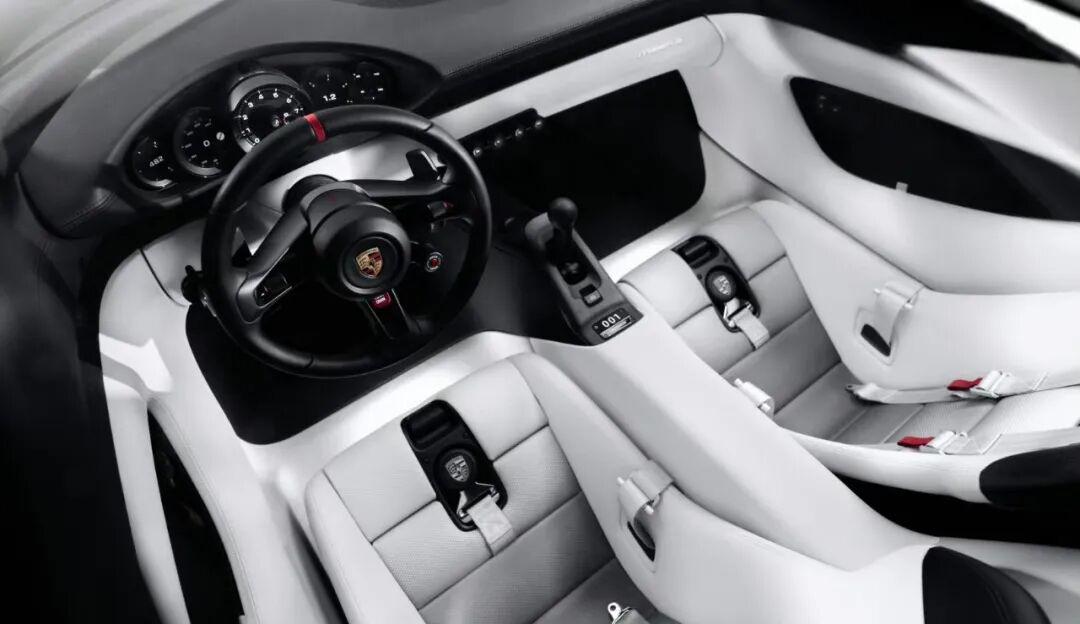
At the same time, the cabin of the Porsche Mission S has no large screen. Navigation and entertainment rely on a retractable mobile phone holder, the tachometer in front of the steering wheel uses a mechanical pointer, and the gear shift also uses a mechanical lever. It can be said that the Porsche Mission S emphasizes its feature of drawing a clear line with pure electric vehicles from the inside out.
Although the Mission S is nominally still a concept car, given the relatively high degree of completion of its interior and exterior, combined with the recent pressure Porsche is facing, it is believed that the production and launch of this car will be faster than the usual pace. For reference, the last production car derived from Porsche's Mission series concept cars is the Taycan Cross Turismo, which went into production and went on sale in 2021, while the corresponding Mission E Cross Turismo concept car was unveiled in 2018.
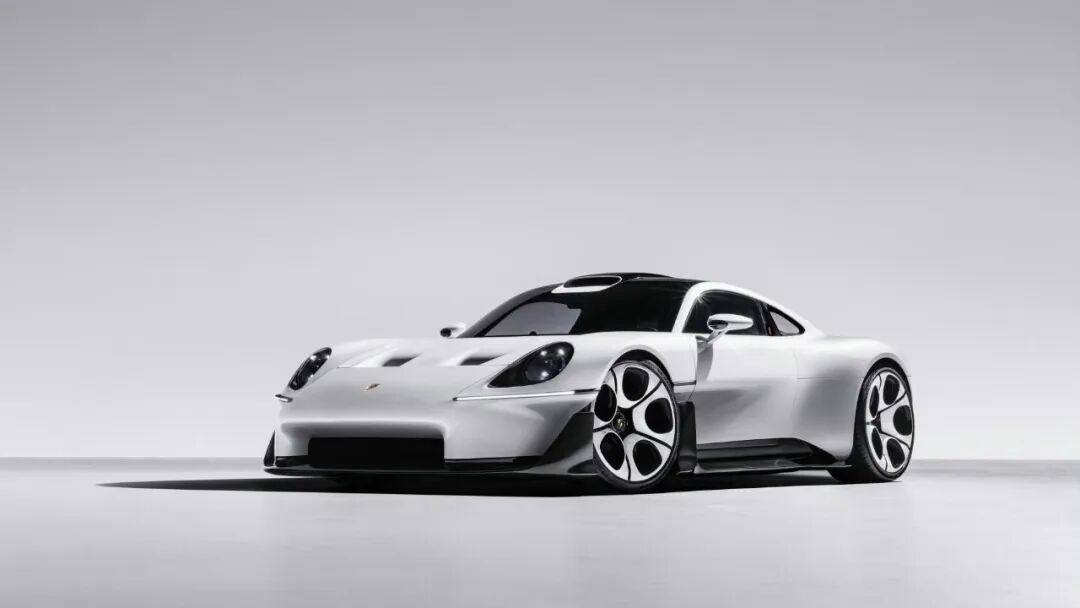
For Porsche, even if the production version of the Mission S, positioned as a flagship sports car, is destined to remain a niche model, if it can move closer to Ferrari's direction of extremely high per-car profit, it can also be regarded as a success. In contrast, the help that Tesla's new-generation Roadster brings to the brand may be more focused on emotional value.
According to official information, the Rocket version of the new-generation Roadster, which can replicate the famous scene "Cyclone Charger Tornado" from the classic anime *Let's & Go* to take off in place, is not available for public sale. Currently, only the Performance and Thrust versions equipped with a negative pressure adsorption system that can firmly adhere to the road surface are open for reservation.
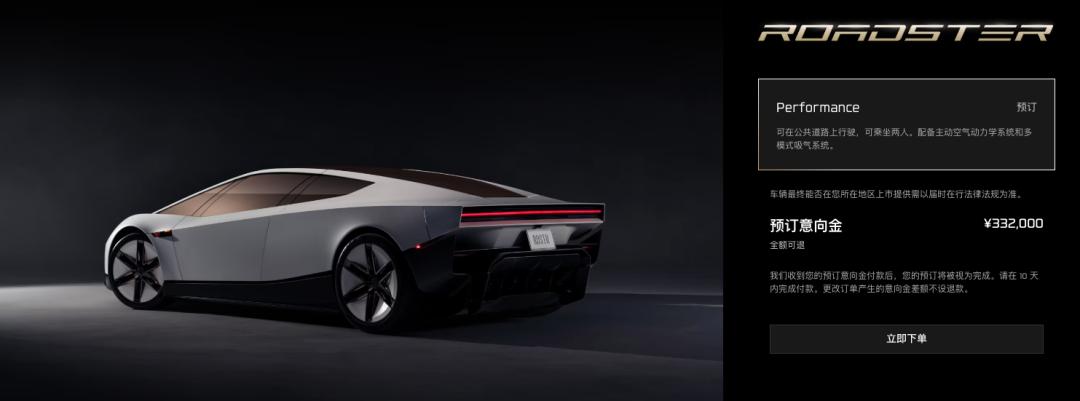
Among them, the reservation deposit for the Performance version on the Chinese official website is 332,000 RMB, while the Thrust version, which is equipped with an additional thruster at the rear that can make the 0-100 km/h acceleration time less than 1 second, is not open for reservation in China.
There are reports that the new-generation Roadster will be produced at Tesla's Gigafactory in Texas, USA in 2028. However, it should be noted that the previous generation Roadster was unveiled by Tesla in 2017 and has not yet achieved mass production.
Whether the new-generation Roadster will still be the "legendary delay king" remains to be seen over time, but it is certain that this car, just like the Mission S, will be difficult to achieve high sales even after mass production. Its main value lies in allowing Tesla and Porsche to greatly enhance their appeal among their respective audiences, reducing the possibility of brand fans being lured away by electric vehicles, especially those from Chinese brands.
Don't go head-to-head with Chinese electric vehicles
Porsche and Tesla's simultaneous gimmick moves are inseparable from the pressure on their performance.
Take Porsche as an example. According to the official corporate data included in the Tianyancha App, this German ultra-luxury carmaker's deliveries in the first half of this year fell by 16.5% year-on-year, of which the deliveries of pure electric models decreased by more than 30% year-on-year. Although its operating profit in the same period is still relatively considerable, Porsche has also taken the initiative to carry out business adjustments including layoffs.
As for Tesla, its cumulative new car deliveries in the first three quarters of 2026 remained at a high level, with the second quarter even hitting a record high, but its operating profit shrank significantly, and the Q2 operating profit even fell by more than 50% year-on-year. Behind this, in addition to the sharp increase in costs caused by Tesla's continuous increased investment in the robotics and AI fields, there is also the impact of "trading price for volume" for new cars.
In overseas markets, Tesla has successively launched the lower-priced "affordable versions" of Model 3 and Model Y in multiple markets this year, while in China, this US carmaker, which has not worried about orders for a long time, has begun to introduce cash discounts on final payments for new car purchases.
Looking at the specific business performance of Porsche and Tesla in different regions this year, the Chinese and European markets are respectively the key areas where the two carmakers are impacted, and Chinese brand electric vehicles are very strong in both regions.
There is no need to elaborate on the domestic auto market. In Europe, the limelight of Chinese brand electric vehicles has begun to overtake Tesla this year.
Data shows that BYD's monthly registrations in the EU in May this year reached 26,017 units, and the cumulative registrations from January to May reached 99,578 units, both figures exceeding Tesla's.
It is not difficult to see that in the context where Chinese brand electric vehicles are getting stronger and stronger in both domestic and overseas markets, overseas carmakers need some new "gimmicks" to maintain their business scale and even continue to grow. Porsche's move to develop fuel cars again, and Tesla's application of aerospace technology from its sister company SpaceX to new cars, are operations worthy of reference for overseas peers.
At the very least, not competing with Chinese electric vehicles in the "refrigerator, color TV, big sofa" configuration will give them a slightly higher chance of winning.
Some images are quoted from the Internet. Please notify us for deletion if there is any infringement.
This article is from the WeChat official account "Yuan Media Hui", written by Pan Zhuolun, and published by 36Kr with authorization.