What exactly is the current level of the misunderstood domestically made Chinese disposable diapers?
The incident of "formamide detected in disposable diapers" has passed for 4 months, and this turmoil concerning the safety of infant and toddler products and China's disposable diaper industry has once again entered the public view following the recent circular released by the joint investigation team of four government departments.
On October 15, the joint investigation team of four departments, namely the State Administration for Market Regulation, the Ministry of Industry and Information Technology, the National Health Commission, and the National Administration of Disease Control and Prevention, issued the Circular on the Investigation and Verification of the Formamide Issue in Infant and Toddler Disposable Diapers.
The circular stated that a comprehensive sampling inspection was conducted on all 168 domestic infant and toddler disposable diaper manufacturers (including OEM enterprises) across the country. A total of 368 batches of finished disposable diaper samples from 180 brands were sampled, and 32 batches of partial tests were carried out on key parts such as the waistband and adhesive fastener of some key brands. No formamide was detected in all samples.
This means that the rumor of "toxic disposable diapers" that has affected the nerves of millions of parents is not valid under authoritative and systematic verification. The so-called conclusion that formamide was detected cannot be scientifically verified due to problems such as non-standard procedures and questionable original data.
However, this four-month-long trust crisis will not disappear completely just because of a circular. After the turmoil, what is more worthy of attention is that China's disposable diaper industry is actually at the forefront of the world in terms of technology, supply chain and standard formulation.
01. Sudden "Collective Anxiety"
The public opinion related to "formamide-containing disposable diapers" was detonated by self-media bloggers on social media in June this year. With subsequent follow-up reports from the media, the public opinion continued to spread and fully ferment.

Screenshot from Weibo
Since then, parents' anxiety has spread from online to offline. Some consumers canceled e-commerce orders and turned to physical stores. Some parents traveled across provinces to buy reassuring products. Many maternal and child stores posted test reports showing "no formamide detected" next to the shelves...
This has also directly affected the sales of related brands. Citing data from an e-commerce platform, Lanjing News reported that after the turmoil broke out, from June 19 to 21, the daily sales of Babycare's official flagship store dropped to 500,000 to 1 million yuan, while it was no less than 2.5 million yuan for consecutive days before the incident; the sales of Huggies' official flagship store dropped to about 250,000 yuan in the same period, which was also no less than 2.5 million yuan before; the sales of Beaba's official flagship store was about 10,000 yuan, which was basically stable at 100,000 to 250,000 yuan before.
In August this year, Kimberly-Clark, the parent company of Huggies, released its financial report for the second quarter of 2026, showing that organic sales fell by 0.1%, and admitted that the interference from China's social media business brought a negative impact of 50 basis points.
In addition, citing data from Magic Mirror, Yibang Power reported that in the first half of 2026, the overall sales of the online maternal and child market reached 1192.8 billion yuan, a year-on-year decrease of 2.1%, of which the sales of infant and toddler diapers decreased by 14.6% year-on-year.
Some children who are only a few months old can even be said to have been "weaned" from disposable diapers in advance. During this period, "cloth diapers", "diaper pads" and "urine isolation pads" became hot search terms, and the sales of cloth diapers on some e-commerce platforms more than doubled year-on-year.
In fact, in the past few years, China's disposable diaper industry has gradually shown a trend of surpassing overseas brands. After all, the penetration rate of baby disposable diapers in China has just risen from 84.8% in 2024 to 89% in 2025. A turmoil has reversed this trend.
At the same time, this situation may, to a certain extent, push people to a more uncontrollable situation.
For a long time, the disposable diaper industry has generally had the situation of multi-layer outsourcing OEM. After this public opinion incident, some consumers turned to buy some no-name products. Experts pointed out that products from small factories are more likely to illegally add harmful substances.
When panic-stricken consumers turn from strictly regulated leading brands to no-name products with weaker quality control, the actual safety risks rise instead of falling.
02. In the Invisible Places
Beyond this turmoil, China's disposable diaper industry has actually experienced a long period of "adversity reversal".
Many people still remember that more than ten years ago, Chinese parents were still snapping up disposable diapers in Japanese drugstores and carrying milk powder back from overseas. The high-end market had long been dominated by international big brands such as Pampers, Huggies, Merries and GOO.N. Data shows that in 2018, five foreign brands occupied 58.1% of China's market share. During this period, domestic brands had not yet entered the mainstream market, and most of them were trapped in the mire of OEM and price wars.
In order to break through from the subsequent market competition, some domestic brands began to adopt differentiated strategies, and at the same time chose the mid-to-high-end track to meet the needs of specific groups such as "ingredient-focused consumers".
In 2018, Babycare entered the disposable diaper track and simultaneously launched the first generation of the "Royal Lion Kingdom" series. Its products with high-end positioning and international supply chain raw materials soon became market hits.
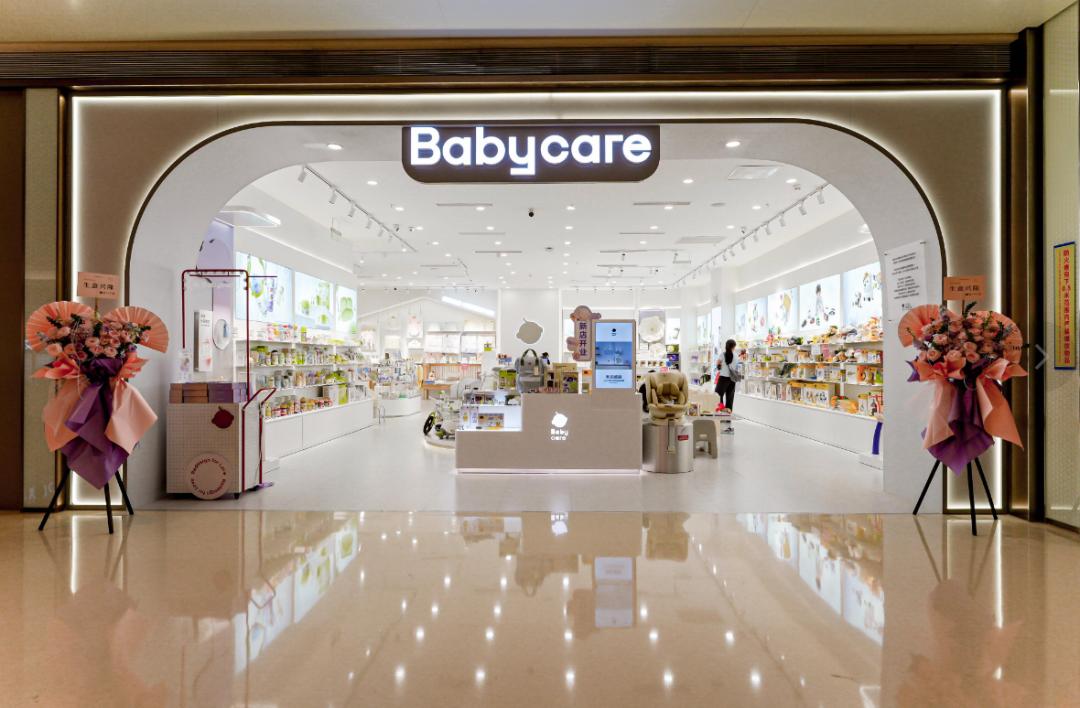
Illustration: Babycare store
Babycare's strategy is equivalent to splitting a disposable diaper into more than a dozen kinds of fabrics, and then looking for the best suppliers in the world with the highest standards. For example, it chooses BASF from Germany for SAP polymer, Lycra from the United States for elastic bands, Henkel from Germany for wetness indicator glue, 3M for magic tapes, and Avery Dennison from the United States for disposal tapes.
On the other hand, with the rise of domestic online channels, Babycare's product advantages have been continuously amplified. At the same time, during this period, post-80s and post-90s mothers have become the main force of market consumption. These new-generation parents have turned their parenting concepts to refined parenting, with stronger willingness to consume and are willing to pay a premium for high-quality parenting products.
During the Double 11 Shopping Festival in 2020, Babycare ranked third in the sales of disposable diapers on Tmall. In 2022 and 2023, it successively won the online sales championship of 618 and Double 11.
According to data from CIC Consulting, from 2023 to 2025, Babycare ranked first in the all-channel sales of maternal and child products in China for three consecutive years; offline monitoring by Winsdata also shows that in the first five months of 2026, its offline share rose to the third place.
During this period, the competitive landscape of the domestic disposable diaper industry has also changed. According to the research report of Huafu Securities citing data from Euromonitor International, in 2024, Huggies accounted for 16%, Pampers 14%, Babycare 8% ranking third, and Merries and GOO.N each accounted for 3%.
As for the industry as a whole, from 2013 to 2020, China's disposable diaper industry has achieved systematic breakthroughs in fields such as SAP materials, high-end non-woven fabrics, high-speed production lines, and core core technology, and gradually moved towards independent control. This also indirectly supported the rise of domestic brands.
It can even be said that the technological breakthroughs have made some domestic disposable diapers now have a generational gap in product power compared with overseas brands.
Taking the core of the disposable diaper as an example, it is the most core part of the product, equivalent to the "CPU", which determines whether the disposable diaper absorbs water quickly and whether it feels dry and comfortable. At present, composite core is the mainstream in China, accounting for 90%. This kind of core can press polymer materials and special non-woven fabrics together, without delamination or fracture, and the rewet rate is extremely low.
For the elastic band around the waistband, Chinese brands also have their own high standards. They have reduced the elastic band from 620D to 140D, and the glue coating spacing from 20 mm to 2 mm. The tension is more uniform, and the baby will not feel strangled when wearing it.
In terms of the top sheet, while mainstream foreign products are still using spunbond non-woven fabrics with rough hand feel, Chinese brands have switched to hot-air non-woven fabrics, with fibers reduced from 0.8D to 0.6D, and then to 0.4D, which is finer than silk.
The logic of the supply chain has also reversed. China has always been one of the largest disposable diaper markets in the world, and for the first time, international material giants can apply cutting-edge technologies to products in China. Even when raw material supply is tight, multinational companies will give priority to supplying raw materials to Chinese brands such as Babycare.
At the same time, the two sides also carry out joint technology research and development. For example, Babycare has jointly developed testing equipment and nozzle technology with Henkel to achieve tight bonding with the least amount of raw materials.
It can be said that the most demanding market has forced out the highest quality. Chinese mothers require disposable diapers to be soft, breathable and leak-proof, which will naturally promote the overall quality of the Chinese market to continue to improve, even higher than that of Europe and the United States.
03. Leading Standards
During this turmoil, a sentence has been circulating for a long time, that is, "The national standard is the minimum standard." But this is not the case.
In terms of hygiene standards, the paper Comparative Analysis on Key Diaper Standards and Regulations in and out of China from the annual meeting of China Paper Association has made a systematic comparison of Chinese and foreign disposable diaper standards. It states that as disposable sanitary products, China's GB 15979 sets limits for the total number of bacterial colonies (no more than 200cfu/g) and the total number of fungal colonies (no more than 100cfu/g). Three pathogenic bacteria, namely Pseudomonas aeruginosa, Staphylococcus aureus and hemolytic streptococcus, shall not be detected, and mandatory requirements are put forward for the production environment, disinfection facilities and personnel hygiene; while foreign standards in Europe, America, Japan, South Korea and other countries do not involve hygiene indicators.
In terms of chemical indicators, the old national standard was indeed relatively narrow in this regard, but the new national standard in 2021 has made up for the shortcomings, adding safety indicator limits for heavy metals, migratory fluorescent substances, acrylamide, formaldehyde, phthalates, decomposable carcinogenic aromatic amine dyes, etc., and restricting recycled materials from the source.
Jiang Huashu, President of the National China Maternal and Child Industry Research Institute, commented that under the new national standard, the standard of domestic baby disposable diapers is "now at the leading level" compared with the international level, and "the technical level of standard indicators is basically in line with relevant foreign standards and regulations, and is at the international advanced level".
In this circular, there are also two details that confirm the current background of China's disposable diaper industry.
On the one hand, the investigation team sealed up and re-inspected the remaining samples of the self-media blogger, covering 15 brands and 58 batches, and no formamide was detected in all samples. Experts fully reproduced the other party's testing process and found that the method had not been strictly confirmed, and the conclusion of "detected" could not be drawn.
On the other hand, all 168 inspected enterprises across the country complied with the hygiene specifications for disinfection product manufacturers, and no formamide was added or contained in the production process and raw materials.
In any case, putting aside the disputes, this turmoil has also left certain positive values. It makes people see again that China's disposable diapers have actually been at the forefront of the world in terms of core technology, supply chain and standards.
Now, some enterprises have started to do the simplest but most effective thing. They go a step further, opening the factory doors to let ordinary consumers directly see the source of the products.
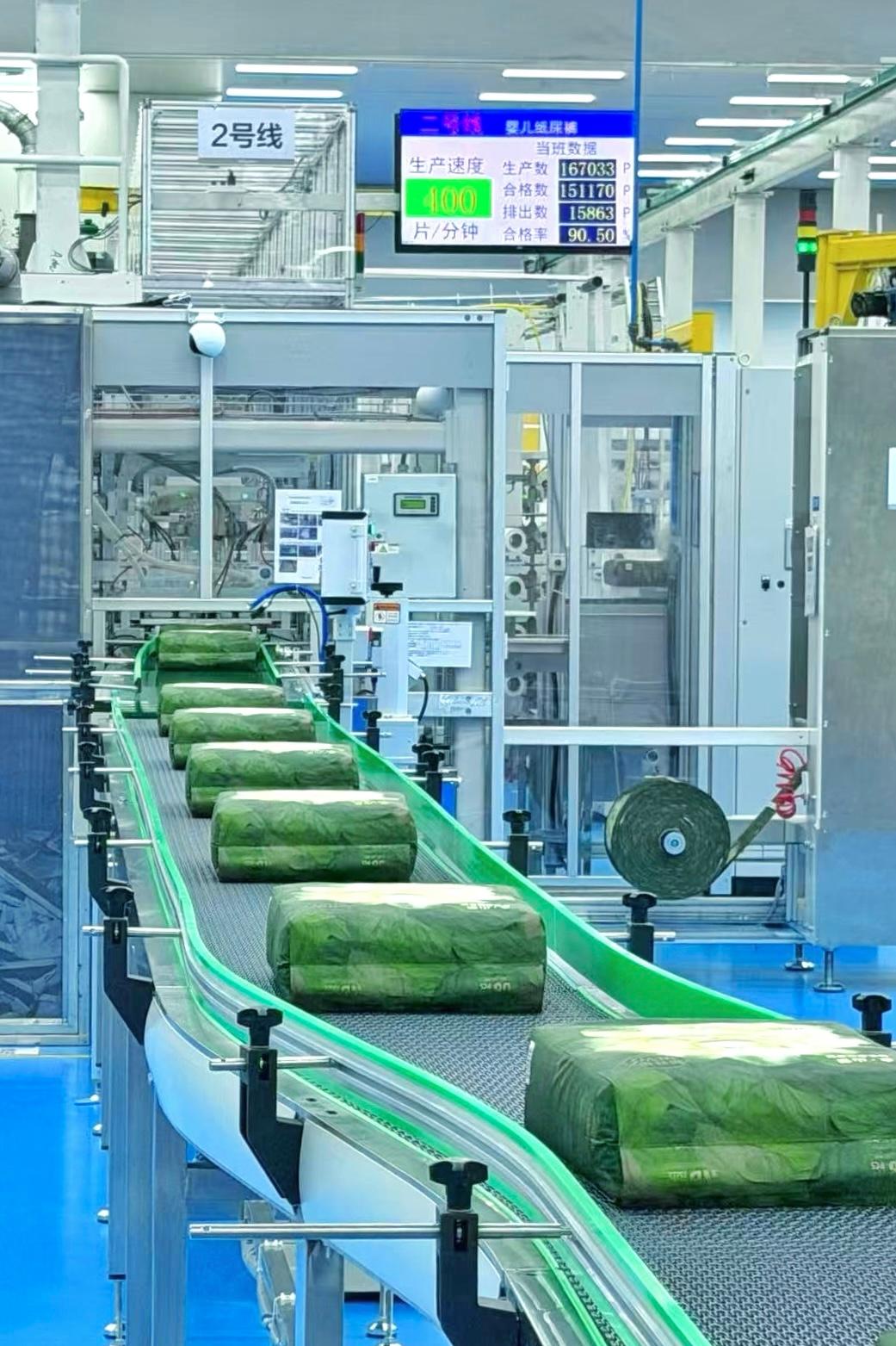
In September this year, Babycare's Asian Transparent Factory · Huzhou Factory was officially open to the public. After arriving at the factory, consumers can scan the code to query raw material information, equipment parameters, finished product test reports, etc., and can also watch the real-time situation of the production line, realizing one-by-one traceability of products and full-link visualization.
From benchmarking overseas standards to opening the factory to accept everyone's scrutiny, the growth of domestic products can now be embodied in every production line.
Note: The materials of this article are derived from official reports and public information, and the views are for reference only | Some pictures are from the Internet, please contact us for deletion if there is any infringement.
This article is from the WeChat official account "Yuan Media Hui", author: Wang Yan, authorized by 36Kr for release.