From "North-South Segmented Operation" to "North-South Convergence", the 22-year transformation of Toyota China's business landscape.
Toyota's core assets in China may be gathered into the hands of GAC Group through an asset acquisition.
On October 8, in Guangzhou, Liu Yigong, General Manager of FAW Group, Sato Kentaro, President of Toyota Motor, and Feng Xingya, Chairman of GAC Group, appeared at the same signing ceremony, where the three parties officially signed a new strategic cooperation framework agreement.
The news first broke out a month ago — on September 14, GAC Group suspended trading and announced that it had signed a letter of intent with FAW Co., Ltd.; the restructuring plan was disclosed to the public on September 28; on October 8, Toyota joined as a joint venture partner, and the three parties sat at the same table.
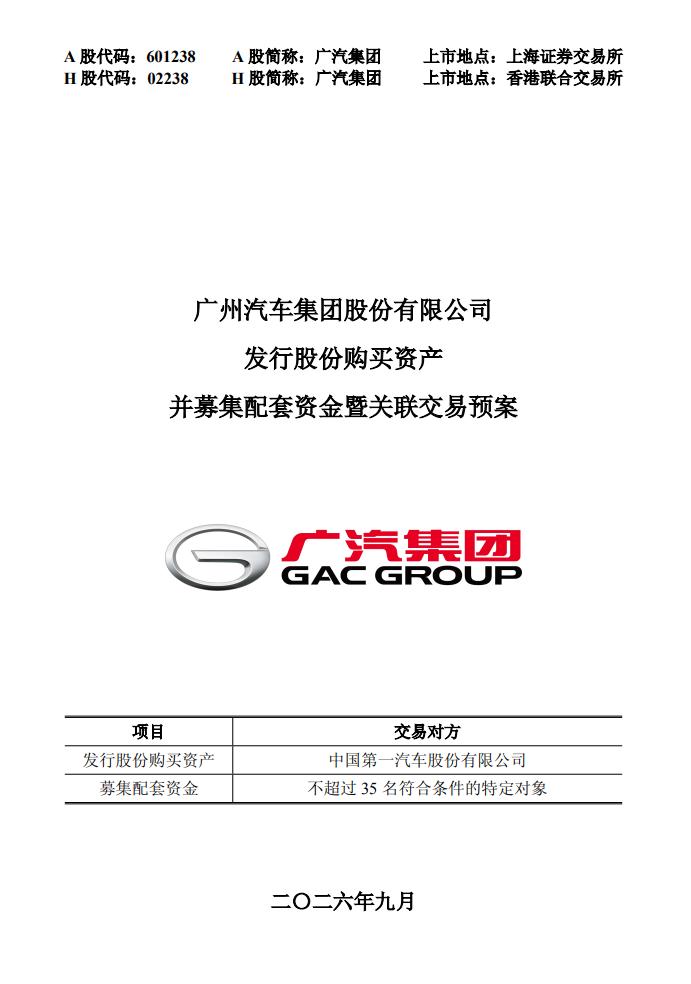
Restructuring plan, source: official website of Shanghai Stock Exchange
It usually takes a period of time from the release of the plan to the delivery of the transaction. But if nothing unexpected happens, the 22-year-old pattern of separate governance of "North and South Toyota" will be completely rewritten.
FAW and Toyota started their cooperation in 2002, while GAC and Toyota launched their partnership in 2004. The two joint ventures have accumulated more than 23.56 million users in the Chinese market. According to data from the China Association of Automobile Manufacturers, the combined sales volume of "North and South Toyota" accounted for 17.03% of the total sales of joint-venture passenger vehicles in 2025, ranking among the top joint-venture brands.
If the restructuring is completed, the dual joint-venture system of "North and South Toyota" that has operated for more than 20 years will shift from parallel competition to deep integration.
This is the first time in the history of China's automotive joint ventures that central SOEs, local SOEs and foreign automakers have achieved deep integration through market-based share swap. How on earth is this restructuring designed? What do the three parties want respectively? Can it blaze a new trail for the aging joint venture model?
How is this restructuring designed?
Compared with the previously misinterpreted "merger of North and South Toyota", this restructuring is actually much "lighter".
According to the plan, GAC Group intends to acquire 50% equity of FAW Toyota held by FAW Co., Ltd. by issuing shares.
After the transaction is completed, FAW Toyota will continue to exist as an independent operating entity, and its equity structure will change from "50% FAW Co., Ltd. + 45.77% Toyota Motor + 4.23% Toyota China" to 50% held by GAC Group and 50% held by the Toyota system respectively.
The "lightness" is reflected in three unchanged points.
Through interpretation of the nature of the transaction, it can be found that: The rights and interests of Toyota, the foreign party, remain unchanged, and its shareholding ratio is kept as it is; the actual controller of GAC Group is still the State-owned Assets Supervision and Administration Commission of Guangzhou Municipality, and this transaction does not constitute a restructuring and listing; the legal person, brands and factories of FAW Toyota will remain in their original locations, and the labor relations of employees will not be automatically transferred with the change of equity.
The GAC side made it clear that this cooperation is different from the traditional state-owned enterprise reform model of "full acquisition, main body restructuring and system integration" in the past. It belongs to cross-level and cross-region flexible linkage, which retains the original operating vitality of both sides to the greatest extent.
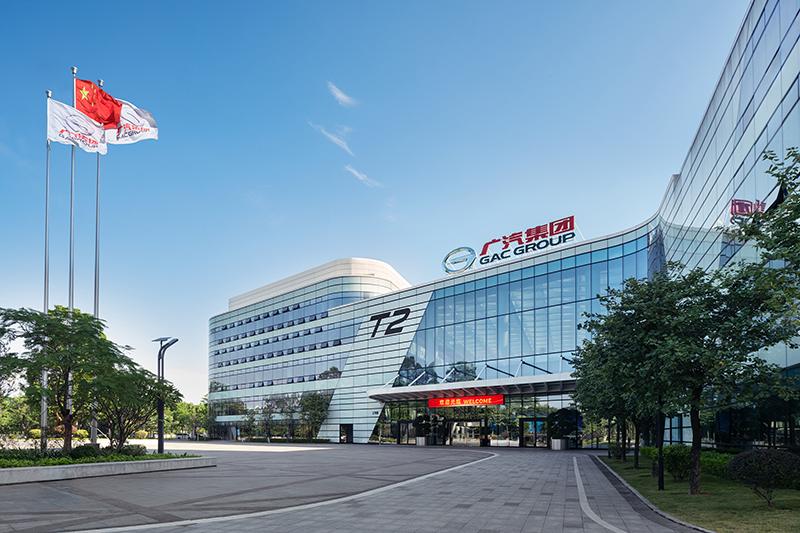
Source: official website of GAC Group
The biggest change brought by the acquisition is the shift of FAW's position.
This asset acquisition is equivalent to gathering Toyota's core joint venture resources in China into the hands of GAC.
Correspondingly, FAW has withdrawn from the direct shareholding of FAW Toyota in exchange for more than 5% of the shares of GAC Group, becoming its second largest shareholder and a potential affiliated legal person of the listed company.
In other words, FAW has stepped down from the position of operator and become a strategic shareholder. It is reasonable to speculate that after entering the board of directors, FAW Co., Ltd. will still retain influence on strategic issues such as procurement, R&D and production capacity.
The change of the external market environment is undoubtedly one of the key factors that prompted the three parties to reach a consensus.
In recent years, competition in the automotive industry has become unprecedentedly fierce. The problem of industry homogenization, coupled with weak domestic demand and continuous price wars squeezing profits, has accelerated the concentration of the industry towards leading enterprises.
At the same time, the policy orientation of the national automotive industry has shifted to standardizing industry order and promoting stock integration. On September 11 this year, nine departments including the Ministry of Industry and Information Technology issued the "15th Five-Year Plan" for the Development of Intelligent Connected New Energy Vehicle Industry, which clearly proposed to "increase the intensity of lawful merger and reorganization and cross-regional integration of automotive enterprises".
In the current environment, cross-regional integration has become a necessary means for automakers to enhance their competitiveness and resist industry changes.
Why do all three parties need this restructuring?
The three parties sat at the same table, but the accounts in front of each of them are completely different.
As a global automotive giant, Toyota is currently facing the main pressure that the Chinese market has dragged down its global performance. In the first half of 2026, Toyota's global output was 4.8637 million units, down 1.2% year on year; its sales volume was 5.0089 million units, down 2.9% year on year.
This is the first time in nearly two years that Toyota has seen a simultaneous decline in both production and sales, and the main reason is the structural problems faced by joint-venture brands in the domestic market.
Before 2012, the market share of joint-venture brands in China exceeded 60%. But according to the latest data from the China Passenger Car Association, the market share of independent brands reached 66.2% from January to August this year, while that of joint-venture brands was 33.8%.
After the market turned to stock competition, Toyota's previous "one brand, two joint ventures" strategy implemented in the Chinese market is no longer applicable.
This strategy used to be a powerful tool for expansion, which allowed the two enterprises to develop respectively in the south and the north to seize the market as much as possible. But now it has become a source of internal friction: the product lines are highly overlapping, which is equivalent to competing for the same group of customers; the greater the investment in new energy and intelligence, the more expensive the repeated waste of independent development and procurement under the two systems.
For Toyota, integrating the two Chinese parties' respective enterprises into a unified operation window can not only reduce costs, but also speed up the electrification transformation, preventing the Chinese market from continuing to drag down the global basic market.
For GAC Toyota and FAW Toyota, their previous separate development, separate procurement and separate channel construction will be transformed into unified sharing, which can amplify the scale synergy effect, reduce repeated investment and share the cost of technological innovation.
The saved resources can be focused on independent brands and new energy businesses, increasing their weight in the reconstruction of the automotive industry chain.
In addition to the integration of resources, their accounts will also change.
In recent years, GAC's net loss attributable to shareholders has continued to narrow, falling from 4.429 billion yuan in 2023 to 824 million yuan in 2024. It turned from profit to loss in 2025 with a huge loss of 8.784 billion yuan, and lost another 4.467 billion yuan in the first half of 2026.
One of the reasons for the loss is that money is continuously invested in the new energy transformation: In the first half of 2026 alone, GAC's independent R&D investment reached 4.834 billion yuan, up 27.58% year on year, and its cumulative R&D investment has exceeded 67 billion yuan.
After acquiring the equity of FAW Toyota, FAW Toyota will be jointly controlled by GAC and the Toyota system with 50% shareholding each. This company will be accounted for as a joint venture under the equity method — its revenue will not be incorporated into GAC's statements, but half of its net profit will be fully included in GAC's "investment income" account, which may reach billions of yuan.
GAC also clearly mentioned this transaction purpose in the plan, the restructuring can "inject profit-making assets to improve the profitability of the listed company".
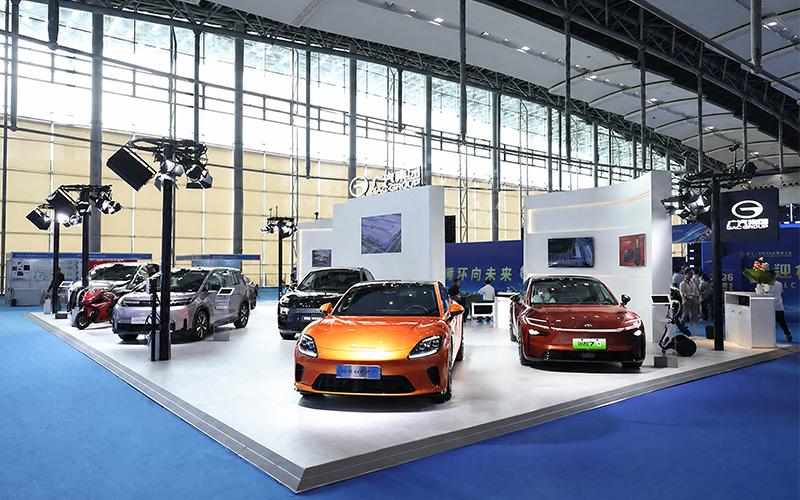
Source: official website of GAC Group
At the performance level, FAW may also gain something. It is mainly facing a crisis at the sales level — since the beginning of this year, the overall sales of FAW Toyota have declined significantly, with cumulative sales of 379,000 units in the first 8 months, which was overtaken by GAC Toyota (sales of 447,000 units in the same period).
After the transaction, GAC's production and sales can be included in FAW's performance caliber to a large extent. This is not unprecedented. In December 2025, FAW Co., Ltd. once invested 3.744 billion yuan in Leapmotor to obtain about 5% of its shares, and Leapmotor contributed about 32,000 units of sales statistics to FAW that year.
All in all, Toyota pursues efficiency, while GAC and FAW seek a way out. This restructuring is the most realistic choice for them at the moment.
After integration, can one plus one be greater than two?
Restructuring and integration is a huge project. It is not easy to find a new path and increase competitiveness in the new energy market.
If we want to continue to promote the new energy transformation, GAC Toyota will definitely remain the vanguard, and its transformation is significantly faster than that of FAW Toyota.
The bZ3X, which was launched in March last year, achieved sales of more than 100,000 units in 14 months, making it the fastest model among joint-venture new energy vehicles to reach this milestone; from January to August this year, the bZ3X alone sold 59,700 units, ranking first in the joint-venture pure electric segment.
In the same period, the sales of FAW Toyota bZ5 were less than 10,000 units, and its new energy business was generally absent.
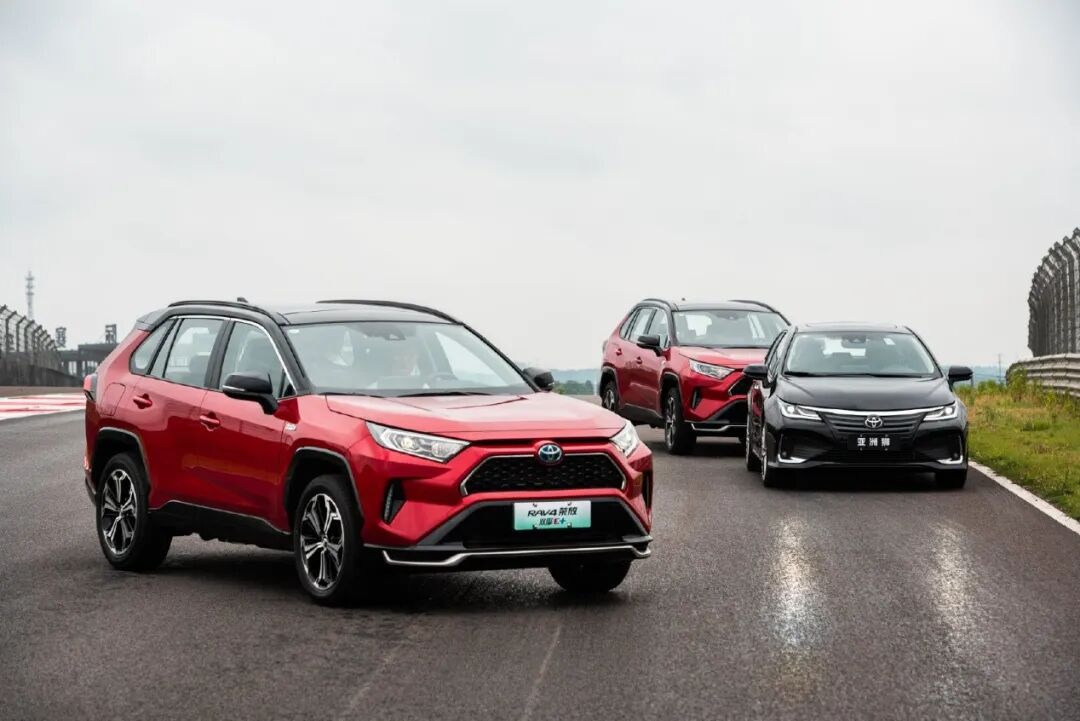
But FAW Toyota also has its own advantages. It has absorbed Toyota's TPS lean production system in the past, and has accumulated experience in manufacturing technology, industrial workers and component systems. Its Chengdu base is Toyota's first complete vehicle joint venture project in China, and it is still one of the few flexible mixed-flow complete vehicle bases in China that covers sedans, SUVs and buses at the same time. This shows that FAW has the ability to "build good cars".
Not only the new energy system and complete vehicle manufacturing, but also production capacity and regional markets, the two sides can complement each other. But in reality, there are many obstacles in the way of connection, and we need to consider the interests of all parties and how to integrate different teams.
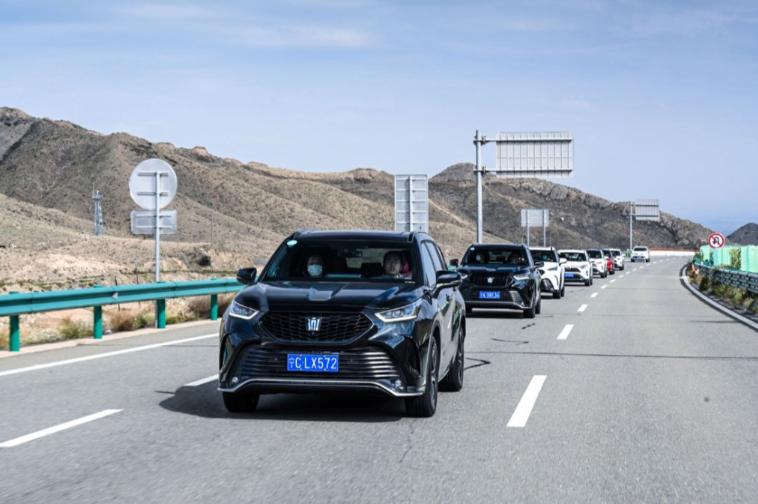
Source: official website of FAW Toyota
At the same time, transformation is inseparable from continuous investment in new energy technologies and other aspects. Enterprises often need to make large-scale investments while carefully controlling costs. Whether the resource integration after restructuring can leave room for careful cost control has also become the key.
For example, the problem of differentiation in product planning, highly overlapping sibling models need to be selectively discarded and retained; after procurement and supply chains shift from decentralization to collaboration, joint procurement can be promoted in fields such as batteries, chips, intelligent driving hardware, automotive electronics and raw materials, to enhance procurement discourse power and cost reduction space, and so on.
The current outlook on this account is relatively optimistic. Citibank estimates that from model rationalization and joint procurement to distribution network integration, it is expected to save about 2 to 3 percentage points of sales costs, and about 1 to 2 percentage points of sales and administrative expenses.
It is worth noting that the question of "whether the two enterprises will re-divide their work after restructuring" that the outside world is concerned about cannot be confirmed at present.
According to a report by Automotive Business Review, people close to the transaction revealed that the relevant parties will re-establish a new company, with the former GAC Toyota side mainly responsible for R&D and supply chain, and the former FAW Toyota side mainly responsible for marketing, channels and customer operation.
But as of the signing of the three parties, this division of labor arrangement has not been officially confirmed, and the official caliber is only that the two joint ventures will "jointly undertake" functions such as R&D, procurement, production and sales.
There are many speculations in the current market. A speculation about business differentiation is that FAW Toyota will focus on the hybrid vehicle sector in the future, while GAC Toyota will continue to focus on pure electric vehicles.
At present, new energy is the fastest growing route in the market, and its retail penetration rate has exceeded that of fuel vehicles. Among them, the pure electric sector has the largest scale, and GAC Toyota has a set of proven pure electric systems, which has more opportunities to continue to seize market share.
FAW Toyota has achieved more scale results in hybrid vehicles. According to the data it released, its intelligent hybrid dual-engine models sold 380,100 units in the whole year of 2025, a year-on-year increase of 14%, accounting for about 47% of its total sales.
From the perspective of regional market structure, the division of labor is also naturally reasonable. FAW Toyota's foundation is in the north, where the low temperature environment in winter is naturally not conducive to the endurance performance of pure electric vehicles; GAC Toyota is backed by the Pearl River Delta, and South China is one of the regions with the highest new energy penetration rate and acceptance in China.
But after all, speculation is just speculation. The final division of labor between North and South Toyota depends on every step the three parties take next.
Source: FAW Toyota's official Weibo account
From