AI financing stars sandwiched in the gaps of ByteDance's business territory
In the era of mobile Internet, a popular joke in the venture capital circle went like this: What if Tencent enters the track of your product? At that time, Tencent's social ecosystem was a nightmare for most entrepreneurs.
Now, AI video entrepreneurs are encountering the ByteDance version of this problem.
Since the beginning of this year, Shengshu Technology and Yanyu Technology have been reported to have entered the valuation range of over 2 billion US dollars, and Yanyu Technology's target valuation for the new round of financing is about 3 billion US dollars; after Aishi Technology announced that it has raised a total of 2.98 billion yuan in the overall Series C round, media outlets exposed that its post-investment valuation exceeds 2 billion US dollars; Flova has publicly disclosed that its total cumulative financing exceeds 80 million US dollars.
As the financing stars of independent AI video enterprises this year, Aishi Technology, Shengshu Technology and Yanyu Technology are even rumored to have set timetables for their Hong Kong IPOs.
However, as ByteDance gradually consolidates its ecosystem, these entrepreneurs may all face a key question: Why do creators still need an independent AI creation platform?
In October, it was reported that some businesses of ByteDance's Skylark and Jimeng will merge, and the merger is expected to start within the month, with some teams having already received notifications.
ByteDance has not officially confirmed this adjustment, but it still reveals that the company is reducing internal boundaries between its AI video products and integrating different generation capabilities back into the CapCut workbench.
Prior to this, CapCut had already started integrating the creation process.
At the AI New Creation Conference held on September 20, CapCut launched its one-stop creation workbench CapCut Hub, which combines an infinite canvas with a multi-track editor. Users can organize scripts, generate storyboards, call Jimeng and Skylark to produce images, videos and audio, and then enter the editing timeline for modifications.
The CapCut Assistant released at the same time can directly call the video model to edit the materials generated by Jimeng and Skylark without leaving the CapCut environment.
This used to be the development direction of independent AI video platforms: LibTV built team canvases and asset libraries, Flova added project folders, multi-session functions and cross-project material calling, all trying to extend a single generation output into a complete project.
In the past, the business logic of independent AI video platforms was to stitch together fragmented processes.
Creators needed to switch back and forth between models, material libraries, storyboarding tools and editing software. Platforms including LibTV and Flova tried to integrate different models, project files, asset libraries, Agents and editing processes into the same workbench. On an integrated platform, users can avoid repeated exporting and transferring of files, and no longer lose context information in the middle of the workflow.
Now that ByteDance has built a full-stack video workflow, the "intermediate layer" business of independent platforms has become very risky.
The new generation of tool-focused AI enterprises are having a hard time, and independent native video model manufacturers are also facing difficulties.
On October 8, Shengshu Technology lowered the launch preferential price of Vidu Q4 Preview to 0.09 yuan per second.
A few days later, the Skylark official website launched a promotion. From October 13 to 26, the effective lowest price for Seedance 2.5 720P for premium members can be as low as 0.19 yuan per second, and the lowest price for Tiandi members can be as low as 0.177 yuan per second. Although it is still more expensive, it has better cost performance in terms of performance.
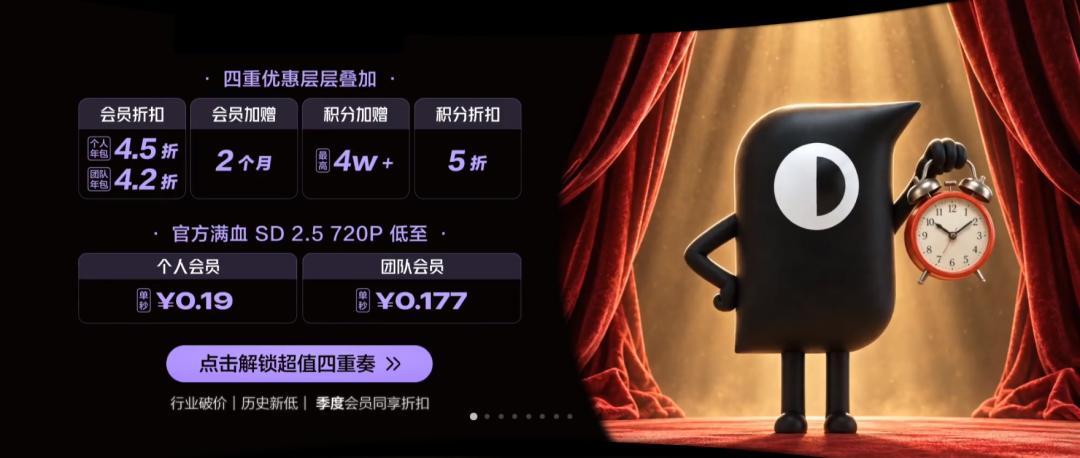
At the same time, this strategy also brings a trend: Instead of cutting prices at the model end, ByteDance can reduce short-term prices through points and free content giveaways in its tool ecosystem, and then use CapCut subscriptions, Douyin distribution and enterprise services to capture subsequent revenue.
This not only ensures the stability of model prices, but also makes it difficult for third-party model vendors to gain a cost-effective pricing advantage. In comparison, independent model vendors do not have so many available resources.
For these financing stars in the AI video track, it is difficult to find entrepreneurial opportunities in the ecosystem of tech giants, but for giants, integrating their own ecosystem is a basic capability.
Entrepreneurs from the ByteDance ecosystem are facing headaches
Guo Lie previously developed FaceQ and FaceU, and after his team was acquired by ByteDance, he participated in the incubation of image products including CapCut. His new startup Flova has completed two rounds of financing totaling 80 million US dollars according to public information, with investors including HSG, IDG and Yunjiu Capital.
Another former CapCut executive Chen Mian was once in charge of the global commercialization of CapCut. After founding Yanyu Technology, he gradually built a product matrix covering LiblibAI, Xingliu and LibTV. After completing nearly 300 million US dollars in Series B+ financing, the company's post-investment valuation exceeded 2 billion US dollars, with a large list of shareholders including Tencent, Shunwei Capital, Ant Group, HSG and Granite Asia.
The founders' experience of building hit products from scratch in the ByteDance ecosystem has accelerated the financing process of both startups. For investors, the set of proven hit product methodology held by these entrepreneurs, which has been verified by ByteDance, is a rare asset in the AI application track.
The two startup products inherit CapCut's product logic, encapsulating professional skills into simple buttons, so that users only need to make judgment decisions instead of completing complex operational tasks.
Flova Agent allows users to express their needs in plain language; LibTV builds functions such as character 3-view drawing and lighting control into the system, helping users bypass technical barriers to produce outputs.
Taking LibTV's one-sentence short drama generation function as an example, users only need to send a sentence on their mobile phone, and the Agent can write the script, design storyboards, dialogues and sound effects, complete the editing, and deliver a complete finished video within a few minutes.

Now, CapCut Hub is replicating this path item by item.
In the past, creators generated videos on one platform, designed storyboards on another, and then returned to CapCut for editing, leaving scripts, materials and project files scattered across different platforms. Now CapCut Hub turns scripts into editable projects, allows materials to be reused, and all modifications are made on the timeline.
At the same time, the infinite canvas + multi-track editor directly aligns with the product architecture of LibTV and Flova, and the CapCut Assistant Agent can undertake repetitive work such as material sorting, voiceover trimming and subtitle error correction.
Independent platforms have chosen to fight back. In Flova's recent update, users can create project folders to organize works by user, and save character elements and shot designs to the asset library for reuse when continuous production is needed.
LibTV launched the team version of this function even earlier. The team version supports multiple people editing the same canvas in real time, can create a unified team asset library to manage style materials, and automatically transfers assets when team members change.
The tripartite competition is gradually extending to the precipitation of project assets, character settings and workflows. Once users accumulate color libraries, scene libraries, style rules and workflow skills on a platform, their migration cost will rise sharply. For example, whether the Agent can share a set of character and scene maps determines whether characters, scenes and styles can remain consistent across the entire sequence of works.
CapCut's advantage lies in its huge user base. As early as the end of 2024, CapCut's global monthly active users exceeded 800 million. Its deep integration with the Douyin ecosystem, one-click content distribution, and creator incentives of more than 150 million yuan per year are extremely attractive to creators.
For ByteDance, the platform does not need to compete for historical users of third-party platforms, it only needs to guide existing users to use CapCut. The huge existing user pool of Douyin + CapCut plus the massive incremental growth brought by the AI creation boom allows CapCut Hub to compete head-on with independent platforms.
Shengshu Technology and its peers have no say in pricing
On October 8, Shengshu Technology released its new flagship video generation model Vidu Q4 Preview, with the launch preferential price starting from 0.09 yuan per second, focusing on stronger character performance and cinematography.
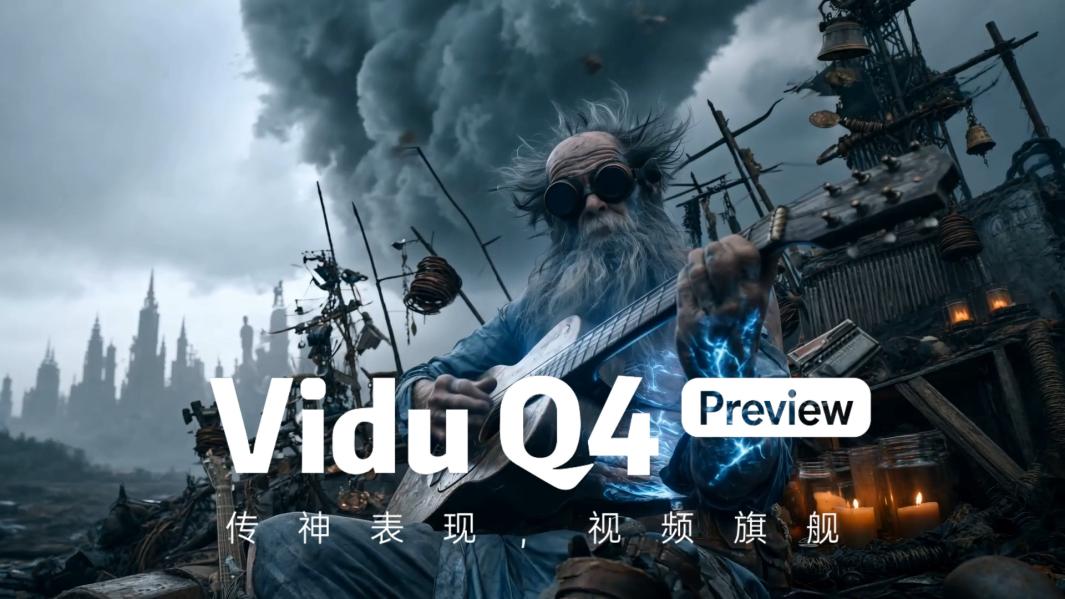
Luo Yihang, CEO of Shengshu Technology, mentioned: "We hope to continuously convert model efficiency into lower usage thresholds, so that more individuals, teams and enterprises can afford and make good use of our products."
At this time, Skylark has just ended its double holiday promotion.
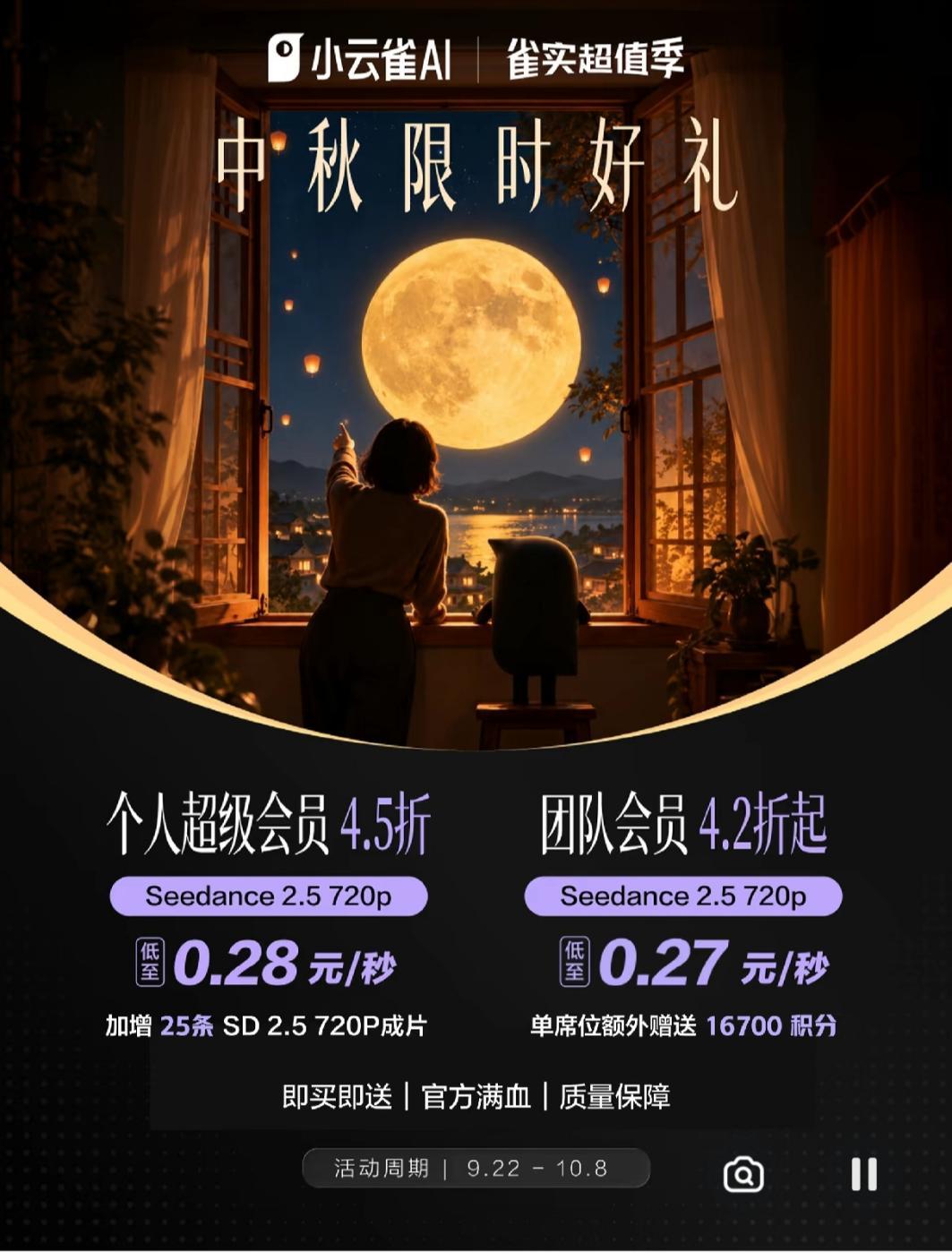
In the event from September 22 to October 8, after stacking subscription discounts, free content giveaways and preferential prices for specified generation modes, the first-month price for Skylark's personal super members was as low as 0.28 yuan per second, with an extra 25 SD2.5 720P finished videos given away. For team members, the price dropped to 0.27 yuan per second, with an additional 16700 points given away per seat.
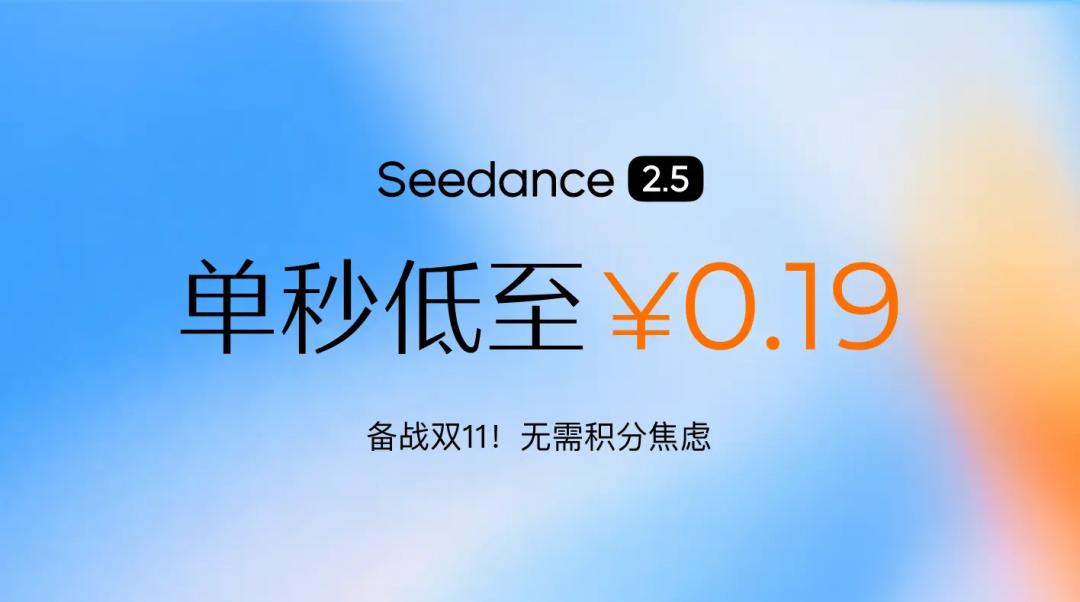
Less than a week later, the official website updated its prices again. In the new campaign from October 13 to 26, Jimeng cut the price for premium personal members to 0.19 yuan per second.
CapCut also included its original member rights into the package. The AI Ultra released in September provides 22100 AI points and SVIP rights per month, with a continuous monthly subscription price of 199 yuan, and the launch period price is only 99 yuan.
In other words, CapCut is shifting from selling software functions to selling computing power, incorporating the generation links in the AI creation chain that originally flowed to external model vendors into its own subscription system.
In terms of model pricing, latecomers still need to establish attractiveness through cost-effective positioning. Seedance and Keling are improving the performance and pricing of each generation of models, driving latecomers out of the core price range.
The price of the Seedance model is more than twice that of Vidu and PixVerse. According to the official website, the price of Vidu Q4 Preview 720P is about 0.59 yuan per second, the price of PixVerse V6 without audio is about 0.6 yuan per second, while the price of Seedance 2.5 is about 1.51 yuan per second.
The bigger gap comes from business structure. From Tomato Novels to video models, then to the distribution monetization of Douyin and Hongguo Short Dramas and creator traffic investment revenue, ByteDance already has a highly efficient monetization link.

Reflected in the pricing space, ByteDance obviously has more options. It can actively choose to exchange discounts for market share, or stick to the original price to maintain a high-end positioning. The core path of Shengshu Technology and Aishi Technology is still subscription or API, and their non-hard-currency models do not have the mature distribution ecosystem of Seedance.
In other words, the cost-effective positioning of Vidu and PixVerse is a passive strategy. As Skylark continues to launch price wars, the two have lost their label of absolute low price.
Retaining users ultimately depends on revenue sharing
Skylark has used points, memberships and cash incentives to attract creators. The new Skylark Creator Program promises to invest 100 million points in the next three years to support individual creators and other groups.
According to the rules, high-quality creators can get 6000 monthly points, one month of standard membership, and cash incentives up to 50,000 yuan. At the same time, works produced on Skylark are eligible to participate in platform distribution, rankings and related incentive programs.

The current AI video track is characterized by overproduction and scarce traffic, and distribution right means the right to survive. Data from DataEye shows that in the first half of 2026, 221,900 new AI short dramas were added on Douyin, of which 1055 had over 100 million views, with a hit rate of about 0.48%.
Wan Shou Du Zun from Chuangyi Media is a typical sample. This 60-episode comic drama was completed by a 5-person team using Skylark's short drama Agent, gained over 100 million views on Douyin 4 days after launch, and topped the Hongguo Comic Drama popularity list.
In this context, Skylark has a built-in direct promotion channel for Douyin, with official traffic support directly linked to cash incentives; Jimeng is connected to the Xingtu task pool, and selected creators can be added to the Xingtu whitelist for priority recommendation of commercial orders across the entire ByteDance ecosystem.
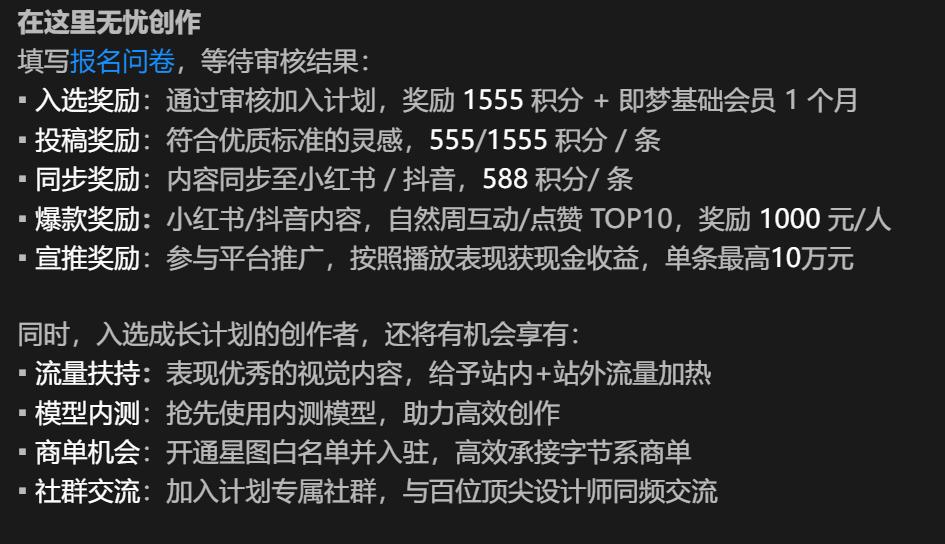
For creators, this provides a second revenue curve in addition to play-sharing, bringing certainty from both traffic and revenue perspectives. It is more like granting creators the right to survive than simply providing support.
The question of what