Kling 4.0 is released. Why has the valuation of Kling AI overtaken that of its parent company Kuaishou?
$18 Billion vs $15.6 Billion: Thoughts Triggered by the Contrast
The long-awaited product finally arrived. Late on the night of October 15, Kling 4.0, the new-generation video generation model from Kling AI, was officially launched.
On October 16, the stock price of Kuaishou, the "parent" of Kling AI, surged immediately. Kuaishou's share price jumped by more than 5% at the opening, rising back above HK$30;
Earlier on October 13, Kuaishou's share price once fell to HK$28.5, hitting a record low, with a total market value of HK$122.668 billion (about $15.631 billion), lower than the post-money valuation of $18 billion for Kling's independent financing.
Such a stark contrast inevitably raises a question:
As an AI business spun off from Kuaishou, why is Kling AI's valuation so much higher than the market capitalization of its parent Kuaishou?
01 Kling 4.0: Kling's Ambition for "AI + Digital Content Industry"
Kling has stepped into the 4.0 era.
On September 28, Kling AI announced that Kling 4.0 would be officially launched in October, and the lightweight version Kling 4.0 Flash was open to a small group of users for experience. In early October, films supported by Kling 4.0 made their debut at Busan, South Korea.
Late on the night of October 15, Kling 4.0 was officially fully launched, supporting 4K and 1080p 10-bit HDR format output; users can input up to 10 images, 5 videos and 7 subjects at a single time; it supports generating videos up to 30 seconds long, and supports long shots and continuous narrative.
Previously, at the Busan International Film Festival in South Korea, Kim Sung-soo, director of Spring in Seoul, joined hands with Kling to present the AI short film Worm Train.
Kim Sung-soo introduced that Worm Train initially used Kling 3.0 for visual development, and the desired footage was obtained in only two days. But he soon found that the model could hardly present the sense of weight and physical reaction when insects collide with passengers, and the desired picture was not obtained until it was remade with Kling 4.0 Preview.
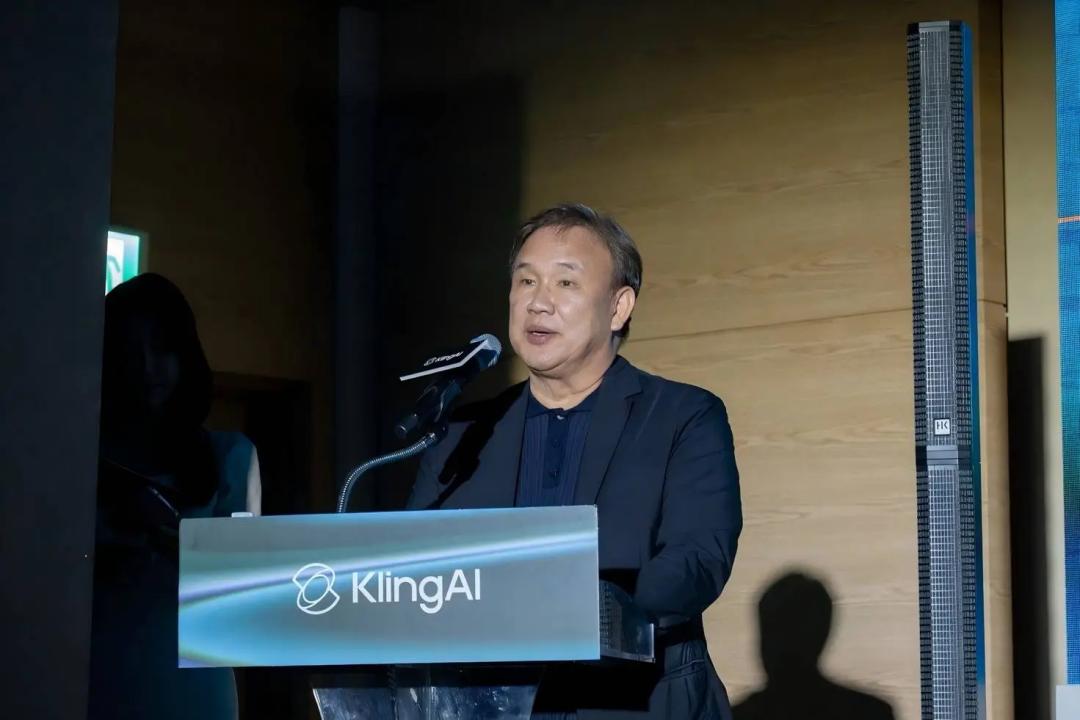
South Korean director Kim Sung-soo delivers a speech at the event. Source: CNR.cn
AI video technology is gradually entering feature film production. At the Busan Film Festival, director Li Wei brought the 105-minute animated feature The Storm of Danjia People with technical support from Kling AI, which is scheduled to be released this year. In addition, the AI hyper-realistic film Sanxingdui: Past Events in the Future is about to be released in theaters.
In Los Angeles, Kling co-hosted a roundtable forum with Obsidian Studio and Oxen.ai, discussing how AI video can be integrated into enterprise products and production workflows, covering model R&D, platform integration and professional content production.
Back in September not long ago, Kling AI appeared at the Toronto International Film Festival and held a series of activities. On its official account, Kling wrote:
This series of activities further presents a clear trend: AI video is accelerating its entry into the professional film and television production process.
Kling is frequently active at major film festivals. As the earliest Sora-class AI video model released in China, Kling actually appeared at international film festivals very early. According to incomplete statistics from FoST Future Narrative, Kling has appeared at international film festivals six times.
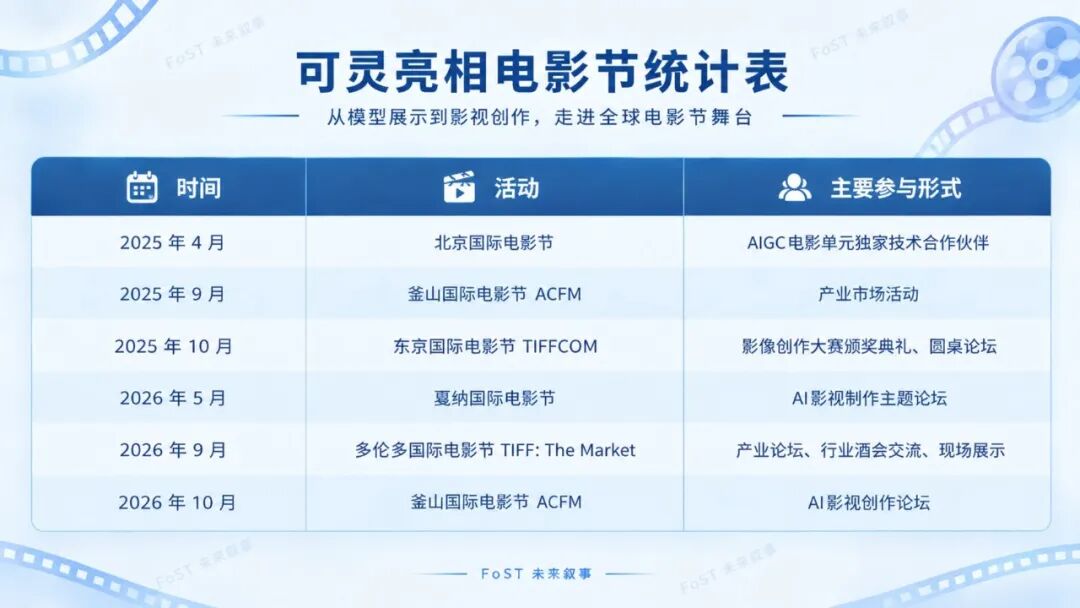
Behind its frequent appearances at film festivals, Kling has taken a different path from Seedance.
Seedance has the collaborative support of Douyin, Volcano Engine and Hongguo Short Drama. While Kling has long taken a tool route that is relatively independent of Kuaishou, providing tools for P-end users (professional creators) at home and abroad, and providing API services for enterprises.
Cheng Yixiao, CEO of Kuaishou, once said in a conference call that the high growth of Kling's revenue is driven by the two wheels of API calls from B-end enterprise customers and P-end paid membership subscriptions.
This choice is the result of the dual drive of Kuaishou's limited resource support and Kling's confidence in its own model capabilities, which also paves the way for Kling to move towards independent financing. But when Kling becomes independent and faces market evaluation, it naturally needs to tell a better story.
Film has always been regarded as the pearl on the crown of the digital content industry. Kling's ability to enter a series of international film festivals and be recognized by well-known directors means that AI video models are moving from short drama and advertising production to higher-level content industries.
Once it picks this "brightest pearl on the crown of the digital content industry", Kling can open up the broad space and commercial imagination of "AI + digital content industry".
After the full launch of Kling 4.0, its capabilities are connected to MCP/CLI. That means it can be embedded in scenarios such as AI screenwriting Agents, editing pipelines, and independent film and television studios, gaining a wider range of application scenarios.
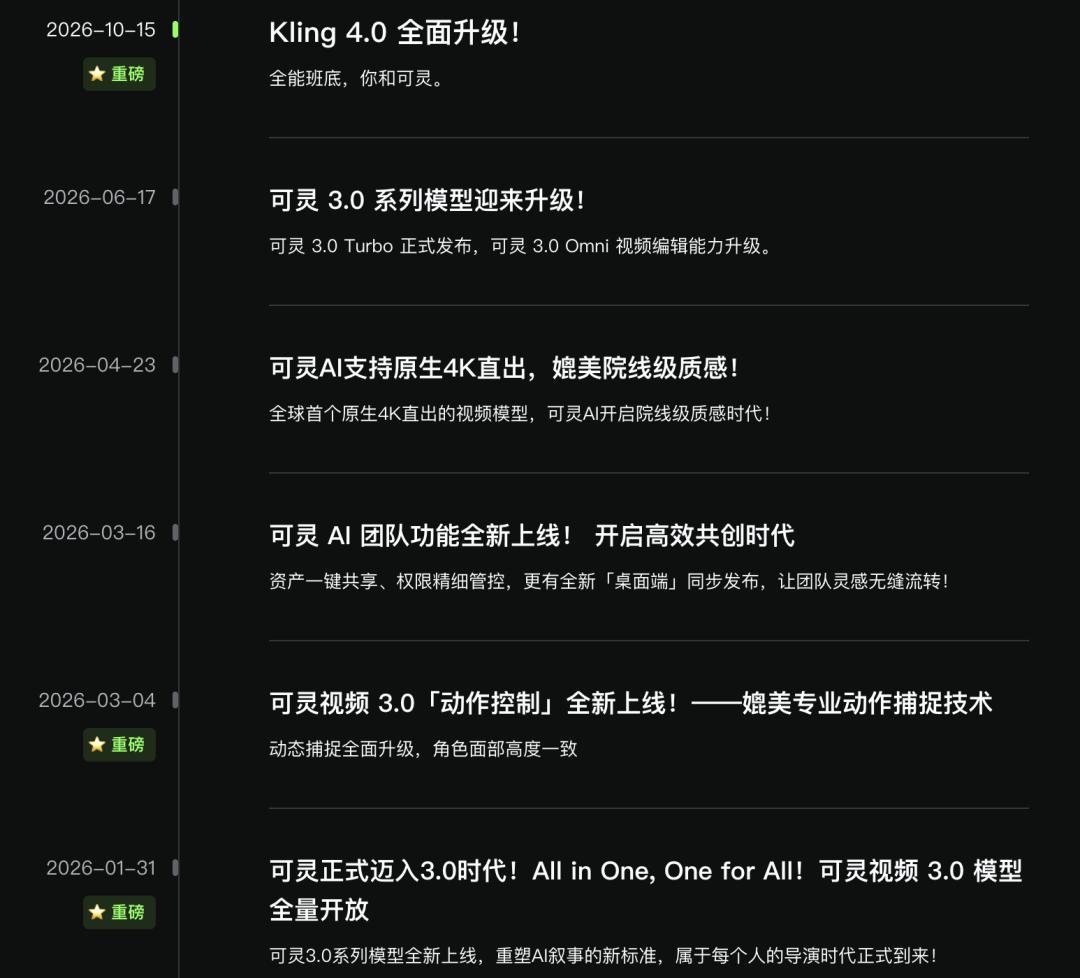
Kling's upgrade timeline from version 3.0 to 4.0
But this does not mean that Kling will obtain sustainable growing revenue, and its trillion-level valuation may still be open to discussion.
02 "Leaving" Kuaishou: Kling with $18 Billion Valuation Sprinting for Listing
In May 2026, the news that Kuaishou planned to spin off Kling AI spread quickly. Subsequently, Kuaishou officially responded that it was evaluating relevant restructuring plans, but no final agreement had been signed. On July 2, Kuaishou officially announced the news that Kling would introduce external financing.
According to the announcement released by Kuaishou on the Hong Kong Stock Exchange, Kling has finalized $3 billion in external capital increase, setting a single-round financing record for global video large model companies, with a post-money valuation of $18 billion.
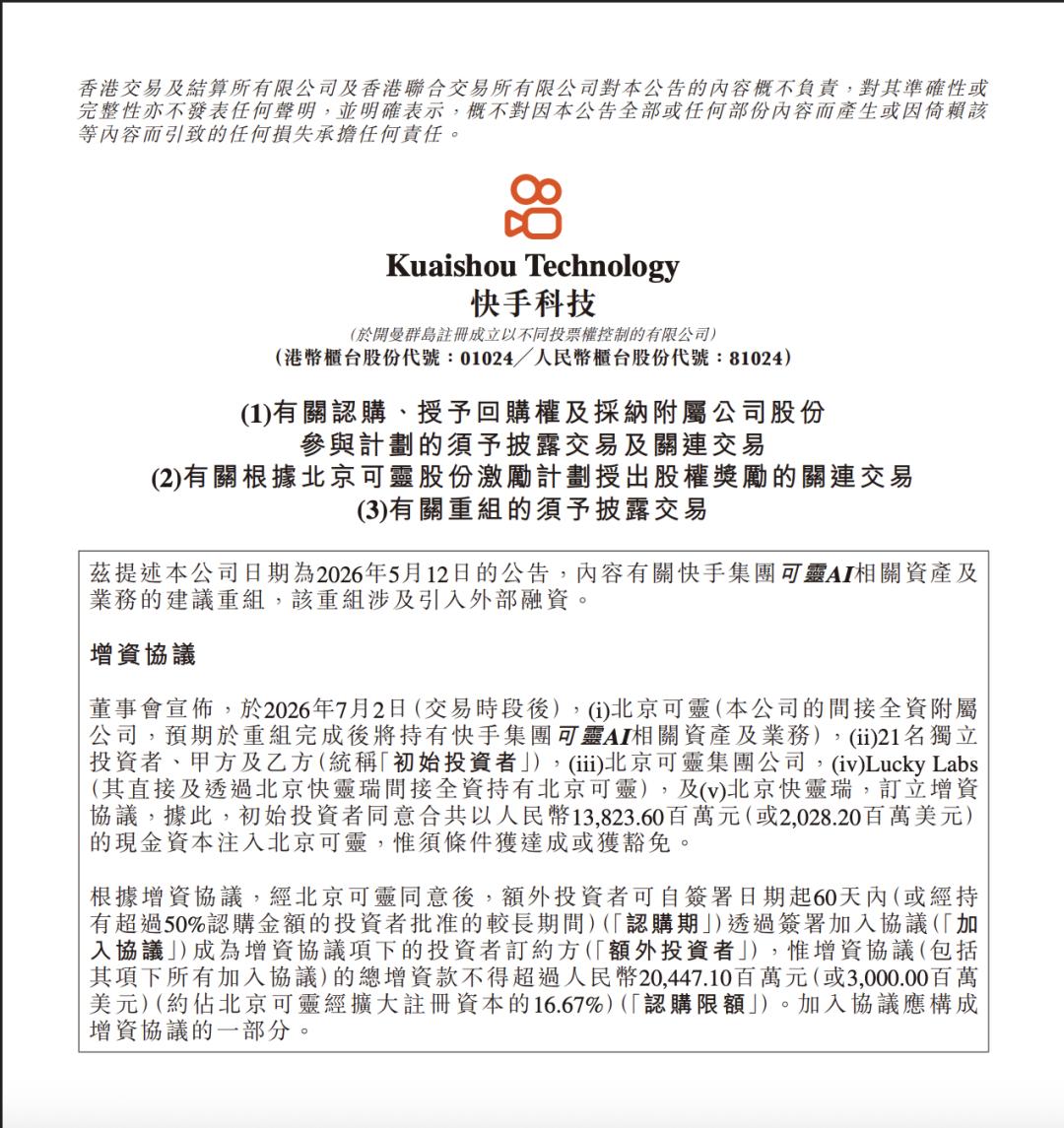
Kuaishou announcement: Kling AI has completed nearly $3 billion in financing
After the news was announced, Kuaishou's share price once surged 7%, but soon gave back all the gains. On July 6, Tencent reduced its holdings in Kuaishou, and its shareholding ratio would drop from about 15.68% to 9.37%. The next day, Kuaishou's share price plummeted by 12%.
Interestingly, Tencent also appears in the list of Kling's investors. According to Kuaishou's announcement, Tencent invested a total of about 1.363 billion yuan through two entities to obtain about 1.12% of the equity.
In addition to Tencent, Kling's investors also include Baidu, Alibaba Cloud, as well as a number of state-owned capitals such as China Internet Investment Fund, Beijing Information Industry Development Investment Fund, Beijing Artificial Intelligence Industry Investment Fund, and Yangtze River Delta Digital Cultural Industry Private Equity Investment Fund.
On August 31, Kuaishou announced that the National Artificial Intelligence Industry Investment Fund and Chuangda Robot would invest 1.4 billion yuan and 131 million yuan in Beijing Kling respectively as additional investors.
The additional investment from a large number of investors shows Kling's popularity in the market. "High-quality investment targets in the AI video track are inherently scarce, and those that can reach Kling's level are very few." Kuang Yuqing, founder of Lens Consulting, once said in an interview with the media.
Kling, which has completed $3 billion in financing, is on the way to sprint for listing.
On September 30, Kuaishou announced that in order to cooperate with the listing rhythm and strengthen core management capabilities, Yu Yue, former head of the Community Science Line, was transferred to serve as Director and CEO of Kling AI, and will focus on the operation and management of Kling AI in the future.
A week later, Bloomberg reported that Kling is cooperating with China International Capital Corporation, Goldman Sachs Group and UBS Group, with the goal of listing as early as next year. However, relevant arrangements are still in the early stage, and the specific timetable, issuance scale and valuation level may be adjusted according to market conditions.
03 Why is Kling "More Expensive" Than Kuaishou
Kling has obtained a valuation of $18 billion, but Kuaishou's share price continues to decline, even hitting a record low.
An investment analyst once explained to us that Kling is still unlisted at present, and it is impossible to judge its actual effect on Kuaishou's overall performance. Once Kling's listing meets expectations, Kuaishou's share price may be driven to rebound by it.
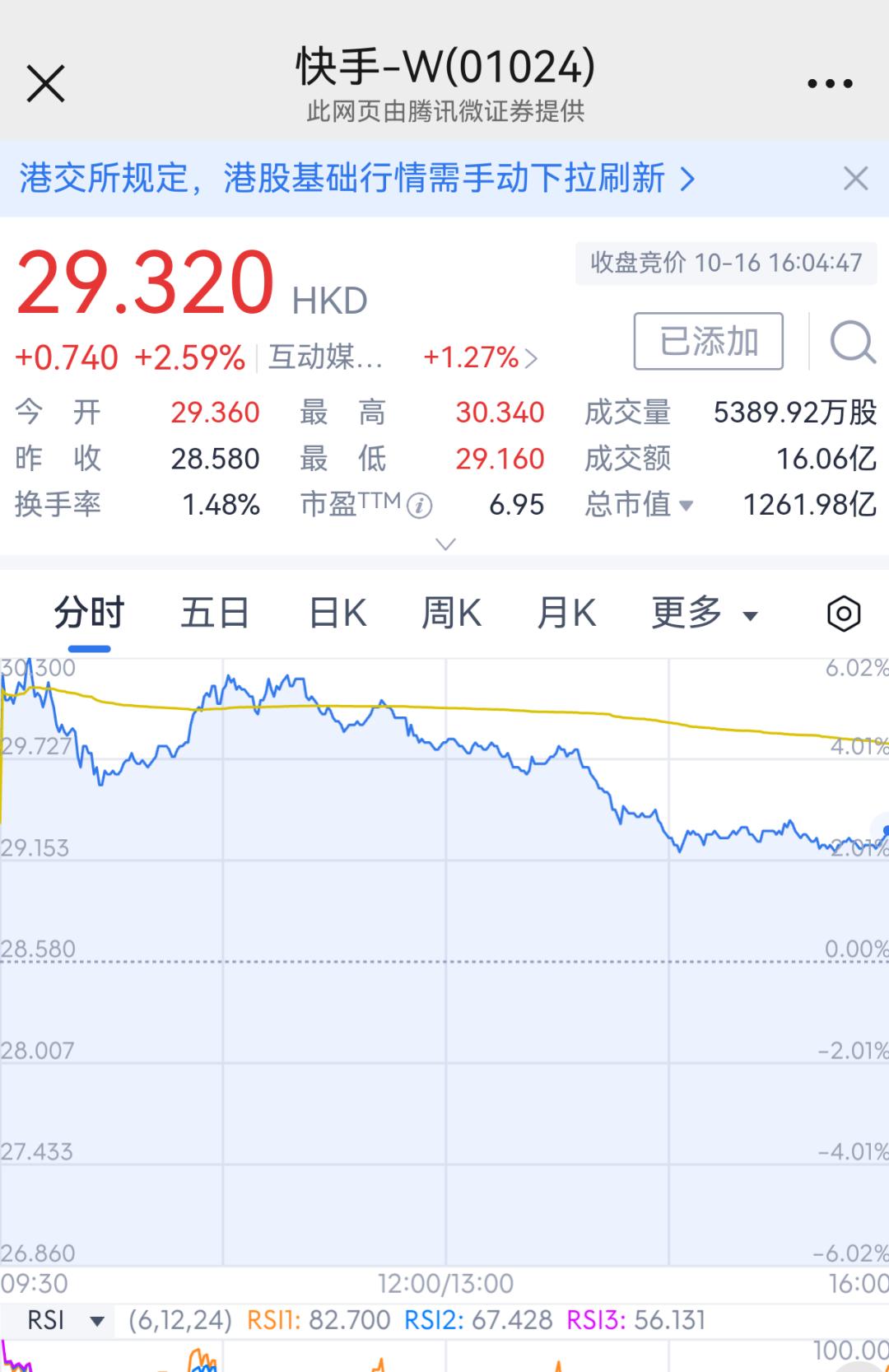
After the release of Kling 4.0, Kuaishou's share price once surged by more than 5%, but then fell back
Although the primary market financing valuation and the secondary market market value are not completely comparable, the current price difference between Kuaishou and Kling still seems to be too huge.
Looking at the present, in 2025, Kuaishou's total annual revenue was 142.8 billion yuan. Although Kling's growth rate far exceeded expectations, its annual revenue of about 1.1 billion yuan accounted for less than 1% of Kuaishou's total revenue, and it is still in a state of huge losses.
But when measuring the value of the two, we can't only look at the present. Especially in the capital market, more attention is paid to future expectations. So what are the respective values of Kuaishou and Kling, and how should we evaluate them?
The capital market generally judges the value of a company from three dimensions: market space, market position and growth rate.
- Market Space: Stable and Measurable vs Uncertain
Kuaishou is a platform that grew up in the mobile Internet era. Starting from short videos and live broadcasts, it has extended to advertising and e-commerce businesses, and has formed a relatively mature and stable commercial system.
In 2025, the market size of China's online audio-visual industry reached 1,287.661 billion yuan, a year-on-year increase of 5.3%; online retail sales reached 15.97 trillion yuan, a year-on-year increase of 8.6%, both of which have entered the single-digit growth stage.
Kling is different. The text-to-video industry it is in is still an emerging market, still in a stage of rapid growth. The market space depends on how much users are willing to pay for generated videos. From short drama production to film and television development, from advertising production to game development, with the gradual maturity of technology, AI video is being applied in more and more extensive fields, and the market still has unlimited imagination space.
Of course, the uncertainty of the market boundary does not mean that the market size can expand infinitely. How much new demand AI can create ultimately needs to be verified by customer payment, practical application and commercial results. But at least, it still has unlimited imagination.
- Market Position: "Multiple Strong Players Compete" vs "First Echelon"
In the current short video field, Douyin is far ahead, while Kuaishou forms a pattern of multiple strong players competing with Hongguo Short Drama, WeChat Channels, Xiaohongshu and Bilibili.
A report released by Nomura Securities shows that in August, Douyin's user usage duration increased by 25% year-on-year, surpassing WeChat to become the product with the longest user duration in China; Kuaishou's user usage duration shrank by 16%.
The text-to-video industry is still in the stage of competition among many heroes, and head companies are racing against time around model capabilities, generation quality and price.
Although Kling can't be said to occupy the first position in the industry, it is at least in the competitive first echelon, and can compete with Seedance back and forth. Considering that Seedance has no independent financing plan for the time being, Kling's scarcity may also partially push up the market's pricing of Kling.
At the earnings call in August, Cheng Yixiao said when talking about the industry competition pattern that the current AI video generation track is in a prosperous period of letting a hundred flowers bloom and jointly expanding the industry increment. Compared with the relatively scattered market competition pattern of large language models, AI video presents the characteristics of clear head status and high concentration in the first echelon.
- Growth Rate: Steady Growth vs Rocket Speed