The "Take Off" concept sparks a widespread wave of daily limit-up rallies in the related stock sector.
Tesla, it can fly now!
On October 16, the flying car concept sparked a wave of daily limit surges in the A-share market. Jiezong Technology on the Beijing Stock Exchange closed with a 30% daily limit, while Huali Chuangtong, Jia Liqi, Jindun Co., Ltd., Guanglian Aviation, and Inbol all hit the 20% up limit, with the overall sector's increase exceeding 5%.
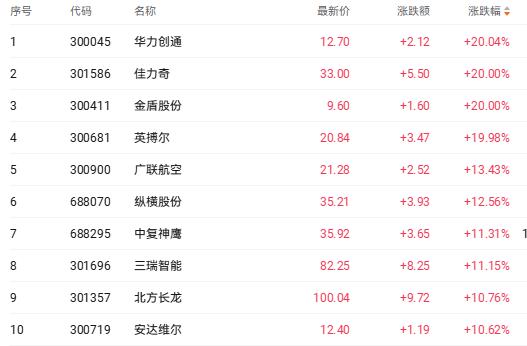
(Performance of eVTOL concept stocks; Futu NiuNiu)
Capital entered the market without hesitation, many targets hit the daily limit early, and the full-day trading volume expanded significantly. On the same day, adjacent sectors such as low-altitude economy, general aviation, and aviation equipment followed the upward trend. The general aviation ETF has seen net inflows for three consecutive trading days, and the linkage between sectors is quite orderly.
What ignited this boom was an overnight press conference.
On the evening of October 15 local time, Tesla displayed the second-generation Roadster, which had been shelved for nearly nine years, at SpaceX's rocket testing facility in Texas. The demonstration vehicle accelerated along a U-shaped slide track, then soared into the air and flipped, with the whole set of movements rising, falling and rolling just like a rocket.
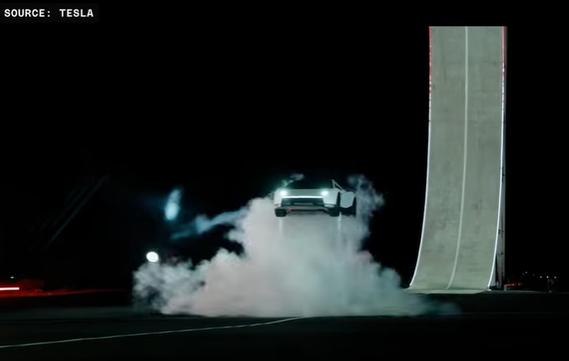
Musk tied this press conference to SpaceX right from the opening, and also mentioned that the Roadster will be the only Tesla model that retains manual driving. As for the price, the official did not mention a single word.
Lars Moravy, Tesla's Vice President of Engineering, revealed the parameters that this vehicle is equipped with 10 thrusters. The matching compressed air storage system has a capacity of 600 liters, which is used to assist in completing the takeoff and aerial rotation.
In terms of performance, the Roadster adopts a four-seat four-wheel drive layout, with a wheel torque of 10,000 N·m. The base version accelerates from standstill to 60 mph in 1.9 seconds, which can be further shortened after opting for the SpaceX package, with a top speed of over 250 mph.
The reservation channel is also open. The deposit for the Performance version on the US official website is 50,000 USD, the Thrust version is 250,000 USD, and the Rocket version is only open to invited customers. The Chinese official website currently only has the Performance version available, with a deposit of 332,000 RMB.
The positioning of the three versions is clearly differentiated. The Performance version follows a relatively affordable route, the Thrust version strengthens thrust and control, while the Rocket version corresponds to a more aggressive optional configuration. At present, the only actual drivable car is the one shown at the press conference.
This car has been delayed for a long time. The first-generation Roadster was delivered in 2008, and the second-generation concept car made its debut in November 2017, originally scheduled to go into production in 2020. It has experienced at least eight delays since then, and only made its first public dynamic demonstration last night.
The reaction of the A-share market is more lively than the press conference itself. The flying car is not a new concept, terms like low-altitude economy and eVTOL have been hyped for several rounds, but the scene of a sports car rolling on the slide has brought the topic back to the center of public attention.
Strictly speaking, the Roadster is only a sports car that can leave the ground for a short time, and the thrusters are responsible for a few seconds of takeoff and rotation, and do not undertake the point-to-point travel function. The reason for this round of hype is the visual presentation, which is still far from the real technical route.
Looking at these companies that hit the daily limit, most of the connections between their businesses and flying cars remain in the realm of imagination. Jiezong Technology's main business is precision automotive components, Jia Liqi's carbon fiber composite materials are used in aerospace structures, and Guanglian Aviation receives orders for aviation tooling and structural parts.
Inbol's strength lies in the electric drive assembly, and Huali Chuangtong's focus is on satellite navigation and simulation testing. The actual distance between these companies and the low-altitude economy track needs to be checked one by one in their order books.
There is also stratification within the sector. Companies such as CITIC Offshore Helicopter and Wanfeng Auto Wheel, which are already deeply rooted in general aviation and general aviation manufacturing, have the confidence to hit the daily limit thanks to their main business.
Other targets get on the hot topic bandwagon through a cooperation agreement or a reply on an investor interaction platform, with significantly higher turnover rate when the limit is sealed, and more scattered chips.
In addition, the 16th China International Aviation & Aerospace Exhibition is scheduled to be held in Zhuhai from December 7 to 13, and multiple types of main battle equipment will make their debut for the first time.
Future Think Tank believes that flying cars have moved out of the R&D and verification stage, and entered a critical period where engineering tackling and pilot operation are carried out in parallel. The industrial chain covers materials, key components, complete vehicle manufacturing and demonstration operation.
Back to the market. A demonstration video can support the daily limit of dozens of concept stocks, indicating that the market's expectation for the low-altitude economy track has never been fully satisfied. As long as there is an eye-catching enough scene, capital is willing to give a wave of pricing first.
However, whether the Roadster can achieve mass production and whether the flying car is a false proposition cannot be proved or falsified by the current daily limit. Tesla held the press conference at the rocket test site, the story was told very thoroughly, but the delivery account still needs time to be verified.
The market rally may not end here. The low-altitude economy has been written into the development plans of many regions, and links such as airspace management, airworthiness certification, and infrastructure are all moving forward, and the medium and long-term direction of the industry is clear.
What is ambiguous is the rhythm, which companies can really receive orders, and which ones just paste the concept in their announcements.
Concepts can be ignited overnight, but the moat of the industrial chain needs to be dug year after year, there is no shortcut on this road.
This article is from the WeChat Official Account "Gelonghui APP" (ID: hkguruclub), author: Godzilla, published with authorization from 36Kr.