Don't rush to pronounce the death sentence on the internal combustion engine.
The auto market this year has turned cold far earlier than in previous years.
According to data released by the China Passenger Car Association (CPCA), retail sales of passenger vehicles across the country reached 1.618 million units in September, down 28% year on year, marking the largest single-month drop within the year. It is widely recognized that September is traditionally known as the peak sales season "Golden September", but the auto market did not welcome the expected boom, instead witnessing a sharp large-scale correction.
Among the figures, retail sales of new energy passenger vehicles reached 1.084 million units in the month, with the retail penetration rate surging to 67.0%, refreshing the historical record for the third consecutive month. On the other side, retail sales of fuel passenger vehicles only stood at 530,000 units, down 43% year on year, of which sales of pure fuel models dropped by 49% year on year, nearly halving.
While the penetration rate of new energy vehicles keeps rising and their retail sales remain at a high level, the performance of fuel vehicles has almost been cut in half. Between the rise and the fall, the sentiment that "fuel vehicles are already dying" in the market has been ignited again.
In fact, according to the retail caliber of CPCA, fuel vehicles still accounted for about 33% of the overall passenger vehicle market in September; according to the full caliber (including commercial vehicles) of China Association of Automobile Manufacturers (CAAM), new energy vehicles account for 61.6%, and fuel vehicles still take up 38.4% of the market share.
Obviously, the fuel vehicle market, whose monthly market share exceeds 30% and cumulative market share reached about 40% in the first 9 months, is by no means a large market that can be described as "dying". It is a huge market that can sell hundreds of thousands of units per month and millions of units per year.
No one denies that "new energy vehicles replacing fuel vehicles" is the general trend, but the trend is a future direction. The final outcome of the auto market is far from coming, so it is inappropriate to regard the decline as extinction. It is neither objective nor responsible to declare that fuel vehicles are unviable right now.
Domestic market share still stands at 40%, fuel vehicles are far from exiting the global market
Looking at the performance of the domestic market, fuel vehicles are indeed accelerating their decline in the first nine months, which is fully reflected in various major statistical data.
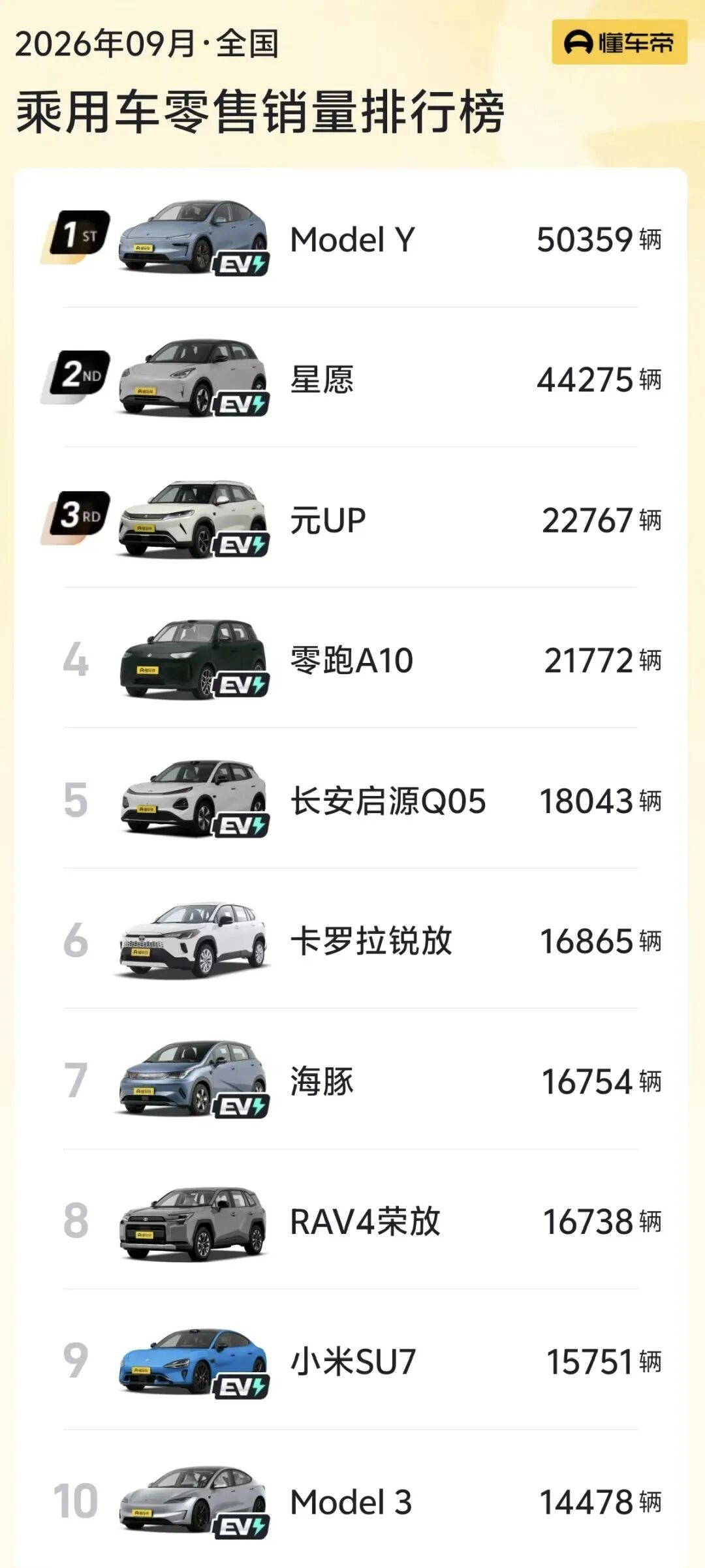
Data from CAAM shows that from January to September, domestic sales of traditional fuel vehicles reached 6.599 million units, down 33.6% year on year. Retail sales of conventional fuel passenger vehicles in September alone hit 530,000 units, down 43% year on year. This decline is alarming for any product category.
However, there are also many easily overlooked details in this trend.
For example, the best-selling model list in September was not completely dominated by new energy vehicles. Two fuel models appeared on the list, namely FAW Toyota Corolla Cross and RAV4 Rongfang, ranking 6th and 8th respectively. Although the remaining seats on the list are all occupied by new energy vehicles, the awkward situation that no fuel vehicles entered the top 10 of the best-selling list in August has been broken.
This means that fuel vehicles have their own seasonal rebound rhythm. From the dealer volume sprint at the beginning of each year, the car purchase demand before the Spring Festival, to the peak season of "Golden September and Silver October", the market share of fuel vehicles will rise periodically. This has been an old rule of China's auto market for many years, and 2026 is no exception. Although fuel vehicle sales in September fell by 43% year on year, they only dropped by 0.3% month on month — the peak season effect still exists, but it is covered by the overall decline of the whole market.
In addition, looking at the performance of fuel vehicles from the global market, data from Mobility Global shows that in the first half of this year, the global share of pure gasoline vehicles dropped to 49%, which is the first time that pure gasoline vehicles have lost half of the global new car market in more than 100 years since the large-scale popularization of automobiles.
This news sounds shocking, but the situation is actually not that desperate.
In the global auto market in the first half of the year, the sales share of pure gasoline vehicles was 49%, non-plug-in hybrid vehicles (HEV) accounted for 18%, pure electric vehicles (BEV) accounted for 17%, and diesel, plug-in hybrid and other models accounted for about 16%. In other words, the share of pure electric vehicles that do not burn fuel at all is only 17%. For every two cars sold, more than one is still equipped with an internal combustion engine.
Moreover, after a detailed breakdown of the sales data, you will find that the global average level of electrification is actually greatly boosted by the two markets of China and Europe.
Take the US market as an example. According to data from Cox Automotive, the share of ICE (gasoline + diesel) still reached 76.8% in the second quarter of this year, and the penetration rate of electric vehicles was only about 6%. After the federal tax credit was reduced, EV sales in the third quarter dropped by about 45% year on year. Buyers did not turn to pure electric vehicles, but poured into HEVs and took them as an alternative option.
In addition, in populous large countries and emerging markets such as India, Southeast Asia, Latin America and the Middle East, the charging infrastructure is far from keeping up, and fuel vehicles are the absolute mainstream. Data from Mobility Global shows that BEV sales in Southeast Asia increased by 81% year on year, but the base is extremely small, and fuel vehicles still account for more than 90% of the market.
Even in the seemingly radical European market, the penetration rate of new energy vehicles in 9 European countries from January to September was 36.24%, and nearly two-thirds of the vehicles are not pure electric.
In other words, fuel vehicles are not exiting the global market, but withdrawing from China's first-tier markets and developed European markets. From the perspective of the global overall market, it is still a mainstream category covering billions of people with hundreds of millions of annual sales.
Fuel vehicles will not die out that soon
In addition, from another perspective, although the performance of fuel vehicles this year is unsatisfactory, it is largely due to the overall decline of the whole market.
Data from CPCA shows that retail sales of new energy passenger vehicles in September reached 1.084 million units, down 16.7% year on year. Moreover, the three technical routes of pure electric, plug-in hybrid and range-extended all experienced different degrees of correction in the first nine months. Among them, the A00-class pure electric models were most impacted by the subsidy reduction, with wholesale sales in September falling by more than 50% year on year.
That is to say, it is not only fuel vehicles that are declining, but the entire market is shrinking. When the cake gets smaller, no one can get enough share.
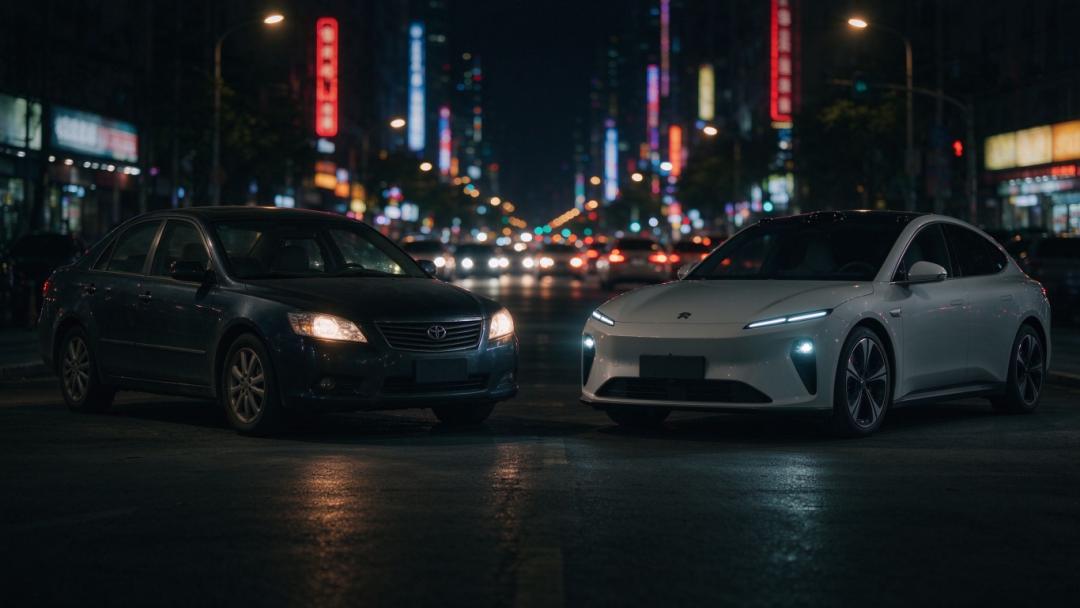
Therefore, almost all automakers have bet all their resources on electrification in recent years. New car-making forces have launched a large number of new brands and new models, and traditional giants have successively announced the production stop timetable for fuel vehicles. However, behind the boom, the sales profit margin of the automotive industry has dropped from 4.3% in 2024 to 4.1% in 2025, and further to 3.6% from January to August 2026.
With the development of the times and the evolution of the market, it is increasingly difficult to make profits in the automotive industry. Especially on the new energy track, behind the myth of various hit models, there are a large number of failed models with monthly sales of hundreds or thousands of units, which disappear quietly without any attention.
In contrast, Toyota, the world's largest automotive group, went against the trend when the whole industry was shouting for full electrification, and took HEV as its main global battlefield.
In the second quarter of 2026, the share of HEVs in the US market rose to a new historical high of 16.3%. While consumers complained about the reduction of subsidies, they voted with their money for the HEV option that saves fuel but does not need charging. Toyota's logic is very simple: before the charging network, battery cost and recycling system are fully prepared, HEV is not only a transition solution, but also a viable business.
The same is true in China. Fuel vehicles have not lain flat in the past two years. After new energy vehicles rolled out the configuration of "refrigerator, color TV and big sofa", the fuel vehicle camp quickly copied this set of experience, such as dual screens, seat massage, L2+ intelligent driving, 8295 vehicle infotainment chip... Configurations that were unthinkable for 200,000-yuan-level fuel vehicles in the past can now be bought for only more than 100,000 yuan.
In addition, the reduction of new energy subsidies and the gradual decrease of purchase tax preferences on the policy side are the general trend. The market matured by policy will return to real demand sooner or later. Therefore, choosing fuel vehicles or vehicles with internal combustion engines has become a very good option for consumers.
To sum up, in the long run, the trend of new energy vehicles replacing fuel vehicles is beyond doubt, which is the industry consensus. The share of fuel vehicles in China's passenger vehicle market has dropped from more than 90% in the peak period to just over 30% today, which also confirms this trend.
But it should be noted that the process of new energy vehicles replacing fuel vehicles has lasted for more than ten years. Today's fuel vehicles still sell hundreds of thousands of units per month, occupy half of the global market share, and are carrying out self-transformation with intelligent technology and HEV and other means to enhance their competitiveness. Therefore, it is too early to say that fuel vehicles are already unviable.
This article is from the WeChat Official Account "Auto Community" (ID: iAUTO2010), written by LI Sijia, and authorized for release by 36Kr.