Why are automakers all choosing this particular juncture to rush into developing humanoid robots?
When an entire industry collectively shifts direction in the same autumn, it is usually not because everyone spots an opportunity at the same time, but because all parties have simultaneously exhausted all other available options.
On October 9, the China National Intellectual Property Administration published a design patent for an embodied intelligent robot, with the patentee being BYD Co., Ltd.
The robot body in the attached drawings of the patent adopts a black-and-white color scheme, with a smooth curved head, no external display screen, and densely distributed joints on its four limbs. The description of its purpose is very plain, only stating that it is an intelligent robot with walking, balancing and interactive functions.
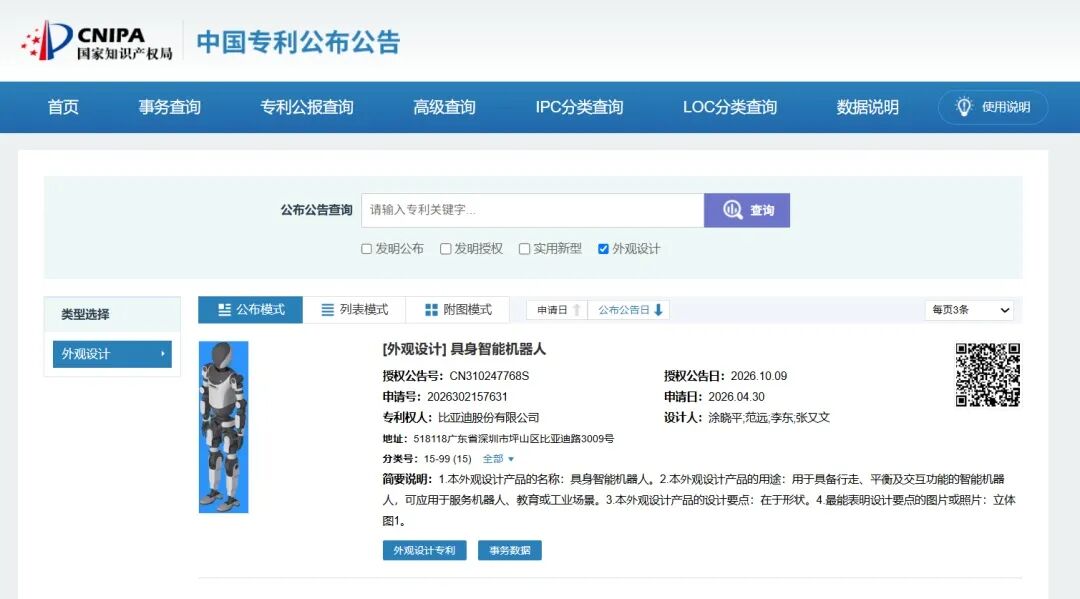
This is "Xiao Di", whose original code name circulated online was "Yao-Shun-Yu", an embodied humanoid intelligent robot independently developed by BYD. At the beginning of August, it made its first public appearance in real form at the Zhengzhou Di Space. The official released data shows that it is 1.61 meters tall, with 31 degrees of freedom of movement, and the dexterous hand has a repeat positioning accuracy of ±1 mm. BYD plans to deploy 2 to 3 units in each of its stores.
Peers are also taking action. XPeng's Iron has been piloted in the Guangzhou factory, Xiaomi's robot has entered the Yizhuang automotive factory in Beijing, and SAIC's Nengzai No. 1 has been put into work on the Buick battery production line.
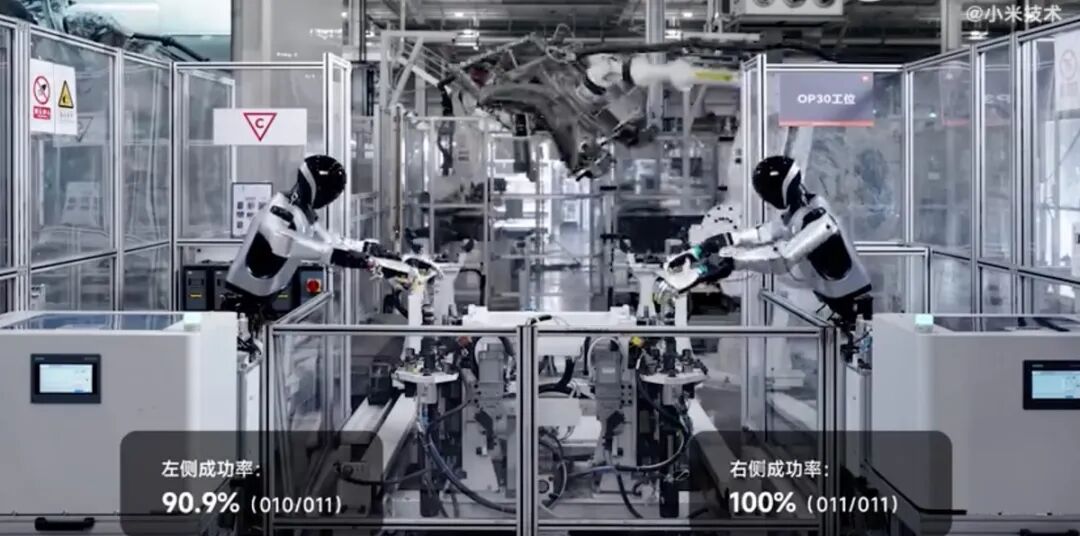
Xiaomi and other enterprises have begun to test robots working in their factories
The "human-making" business is booming, but the reports for the same period tell a different story. In the first half of 2026, BYD recorded a revenue of 344.815 billion yuan, a year-on-year decrease of 7.13%, the net profit attributable to shareholders was 12.325 billion yuan, down 20.54%, the sales volume was 1.8085 million units, down 15.72%. Calculated by sales volume, the profit per vehicle is about 6,200 yuan. Wang Chuanfu stated that the industry is going through a brutal knockout round.
Domestic automakers are adding a secondary line on the premise of maintaining their main business, where robots serve to sell cars rather than replace car sales. Tesla can afford robots that do not make profits for a long time and bet on its valuation, but domestic car companies do not have such conditions. The blood loss of the main business is far faster than the hematopoietic capacity of the robot business.
The question is what problems these robots can solve. In 2025, the shipment volume of humanoid robots in China was about 14,400 units, with a market size of about 1.55 billion yuan. In the same year, the revenue of the automotive industry reached 11.18 trillion yuan and the profit was 461 billion yuan. The former accounts for only 0.014% of the revenue and 0.34% of the profit. By contrast, from January to August 2026, the profit of the automotive industry has dropped to 253.4 billion yuan, down 16% year on year.
An industry with an annual shipment of 14,400 units and a market size of about 1.55 billion yuan cannot fill the cash gap within the time window of cash consumption for car enterprises at all. Therefore, to understand why so many vehicle enterprises are flocking to "make humanoid robots", the real question to answer is not whether the robots are feasible, but what exactly car companies are pursuing by rushing into this track at this point in time.
A brand new choice amid the predicament
The difficulty of the automotive industry does not lie in the excessively low selling price, but in the simultaneous deterioration of revenue, cost and asset efficiency, and this state has continued to this day.
Data released by the China Passenger Car Association on September 28 shows that from January to August 2026, the automotive industry recorded a revenue of 7.0062 trillion yuan, a year-on-year increase of 2.9%, the cost was 6.237 trillion yuan, up 4%, the profit was 253.4 billion yuan, down 16% year on year, and the sales profit margin was 3.6%. This figure is lower than 4.3% in 2024 and 4.1% in 2025, and also lower than the average level of 5.66% of industrial enterprises above designated size in the same period.
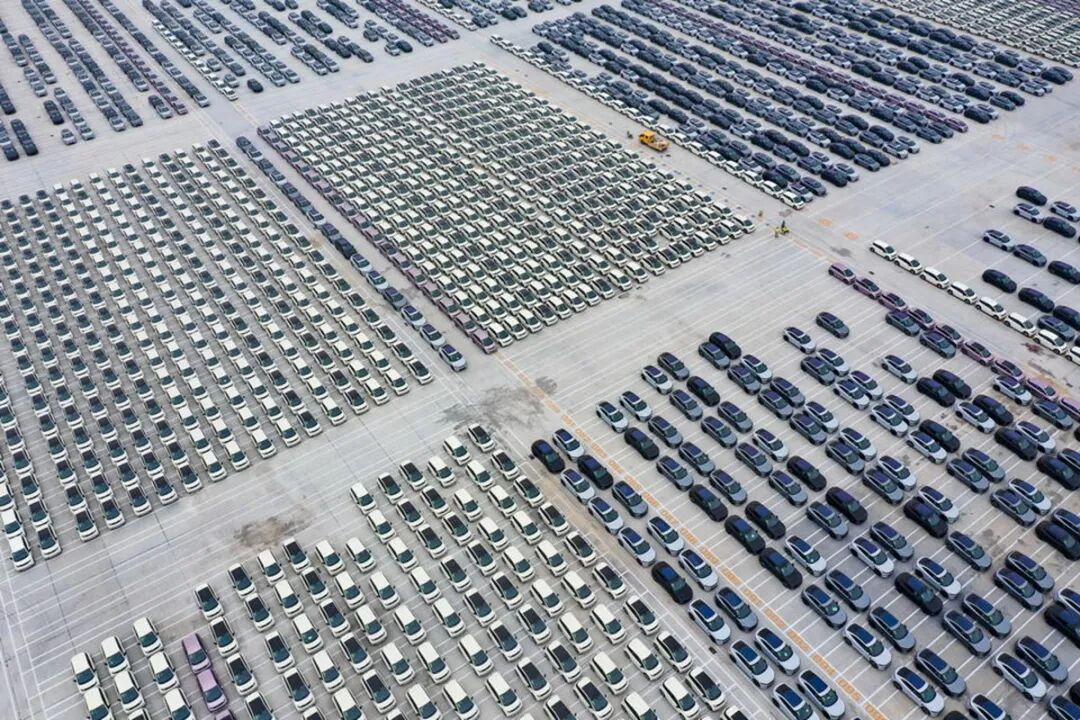
The key reason is that cars are getting harder to sell
The differentiation on the production and sales side is more direct. Data released by the China Association of Automobile Manufacturers on October 12 shows that in the first three quarters of 2026, the automobile production and sales completed 23.246 million units and 23.271 million units respectively, both down 4.5% year on year. In September, the production and sales completed 2.99 million units and 2.956 million units respectively, down 8.7% and 8.4% year on year.
The domestic market is the first to bear the brunt. From January to September, the domestic automobile sales volume was 15.066 million units, down 22.4% year on year. The monthly sales volume in September was 1.904 million units, down 26% year on year, of which the domestic sales volume of traditional fuel vehicles was 6.599 million units, down 33.6% year on year. Chen Shihua, Deputy Secretary-General of the China Association of Automobile Manufacturers, said that the market generally presents a situation of "cold domestic demand and hot overseas demand", and it is expected that domestic sales will continue to decline in the coming months.
The decline in capacity utilization has blocked the way to turn the tide by diluting fixed costs. Data from the National Bureau of Statistics shows that this indicator for the automobile manufacturing industry was 70.3% in the first quarter of 2026 and 70.8% in the second quarter, lower than the 75% health line usually adopted in the manufacturing industry, while this figure was 74.7% back in 2021. Structural mismatch is more troublesome than the total volume, because the current widespread idle fuel vehicle capacity and insufficient high-quality new energy capacity exist at the same time.
Exports are the only segment still maintaining rapid growth at the moment. From January to September, automobile exports reached 8.205 million units, up 65.8% year on year. In September, the monthly export volume was 1.053 million units, up 61.4% year on year, and the export volume of new energy vehicles was 4.006 million units, up 1.3 times year on year. The China Association of Automobile Manufacturers expects that the annual export volume is expected to exceed 10 million units.
However, the problem is that the United States firmly refuses to open its market, while the European Union has begun to turn to trade barrier policies, and exports are currently facing increasing policy risks. The overseas expansion is shifting from complete vehicle export to local production and supply chain compliance. The growth rate is still considerable, but it no longer naturally translates into profits.
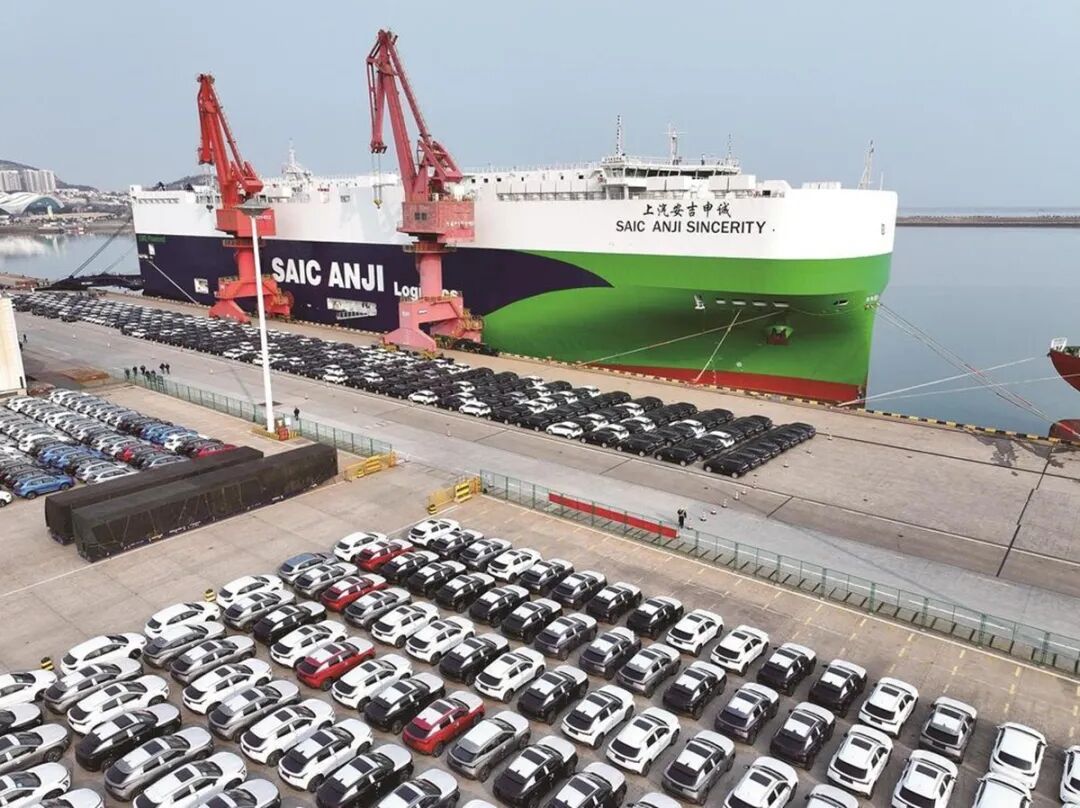
Overseas expansion is an important source of profit at present, but it faces huge uncertainty
The three paths that used to support the profits of car enterprises, namely diluting costs by scale, occupying funds by account period, and seeking increment by export, are narrowing at the same time, and there is no more direct and effective path for enterprises to solve the current problems by selling more cars.
The capability boundary of automakers
Robots are pushed to the forefront at this position. The reason for such operation is actually easy to understand, because it can meet three demands at the same time.
First, it provides the capital market with a story independent of the vehicle model cycle. Second, it provides a new path for final assembly automation to bypass special equipment. Third, it endows the highly overlapping parts production capacity of automobiles with a new order outlet. However, there is a problem that none of the above contents will be reflected in the current profit statement. The valuation revaluation is a one-time event, cost reconstruction takes decades, and new supply chain orders are first recorded in the statements of suppliers.
Therefore, there are two other forces driving so many vehicle enterprises to intensively "develop humanoid robots" and display their products.
Externally, there is policy enthusiasm. Embodied intelligence has been written into the government work report for two consecutive years, and the 15th Five-Year Plan Outline lists it as a future industry. On June 9, 2026, the Ministry of Industry and Information Technology and the State-owned Assets Supervision and Administration Commission jointly issued a notice to launch a special action for real-scene practical training, aiming to condense more than 100 high-value application scenarios by the end of the year. Complete absence from this track will be interpreted as having no position in the field of physical intelligence. Internally, there is valuation pressure. When the main business is under pressure, a story independent of the vehicle model cycle is needed.
Car companies dare to rush into this track, more because they have ready-made resources on hand. The multi-sensor fusion, domain control, end-to-end model and data closed loop of autonomous driving can be used for environmental perception and task planning of robots. The motors, power electronics and precision bearings of new energy vehicles highly overlap with robot joints and dexterous hands in the supply chain.
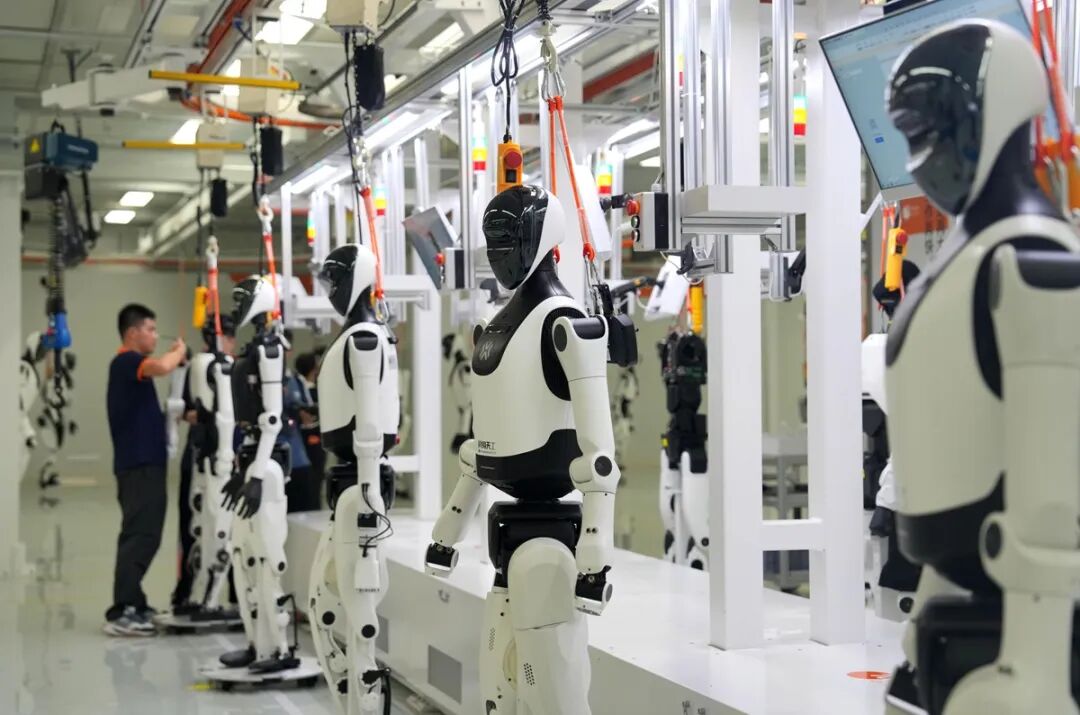
He Xiaopeng previously said on the earnings call that "Iron is fully self-developed, and more than 85% of its supply chain can overlap with XPeng's automotive business". SAIC's Nengzai No.1 undertakes cell grasping and feeding on the mass production line of Buick Electra E7 batteries. Chery's Mojia has signed a contract for 1,000 police intelligent robots and delivered 100 units. GAC established Huilun Technology in February 2026 and completed financing of over 100 million yuan.
However, we need to point out here that reusability explains why the threshold is low enough for many vehicle manufacturers to cross-border into this field, but it does not mean that commercialization is bound to succeed. The reasons lie in the technical level —
Autonomous driving deals with planning safe trajectories on open roads, while robots deal with continuously controlling high-degree-of-freedom bodies to make contact with unknown objects. The latter requires whole-body dynamics modeling, bipedal balance, gait planning, dual-arm coordination and torque control. Cars can rely on lanes, rules and redundant systems to maintain a safety boundary, while robots must maintain balance in unstructured spaces.
In addition, the data requirements are also different.
The data closed loop of autonomous driving relies on a large number of fleets, fixed sensor layouts and clear traffic rules, while robot learning requires human-in-the-loop demonstration, teleoperation, force and tactile signals and cross-ontology migration. Simulation can reduce part of the cost, but the sim-to-real gap caused by friction and sensor noise still exists.
Earlier this year, the author had the honor to communicate with a relevant expert from the China Academy of Information and Communications Technology, who mentioned that robots have far stricter requirements for positioning and operation accuracy than automobiles. The mobile positioning needs to reach the centimeter level, and hand-eye coordination needs to reach the millimeter level. Therefore, the data advantage of vehicle enterprises can only form a flywheel after the ontology, sensors and task library are unified — which is usually not easy to achieve.
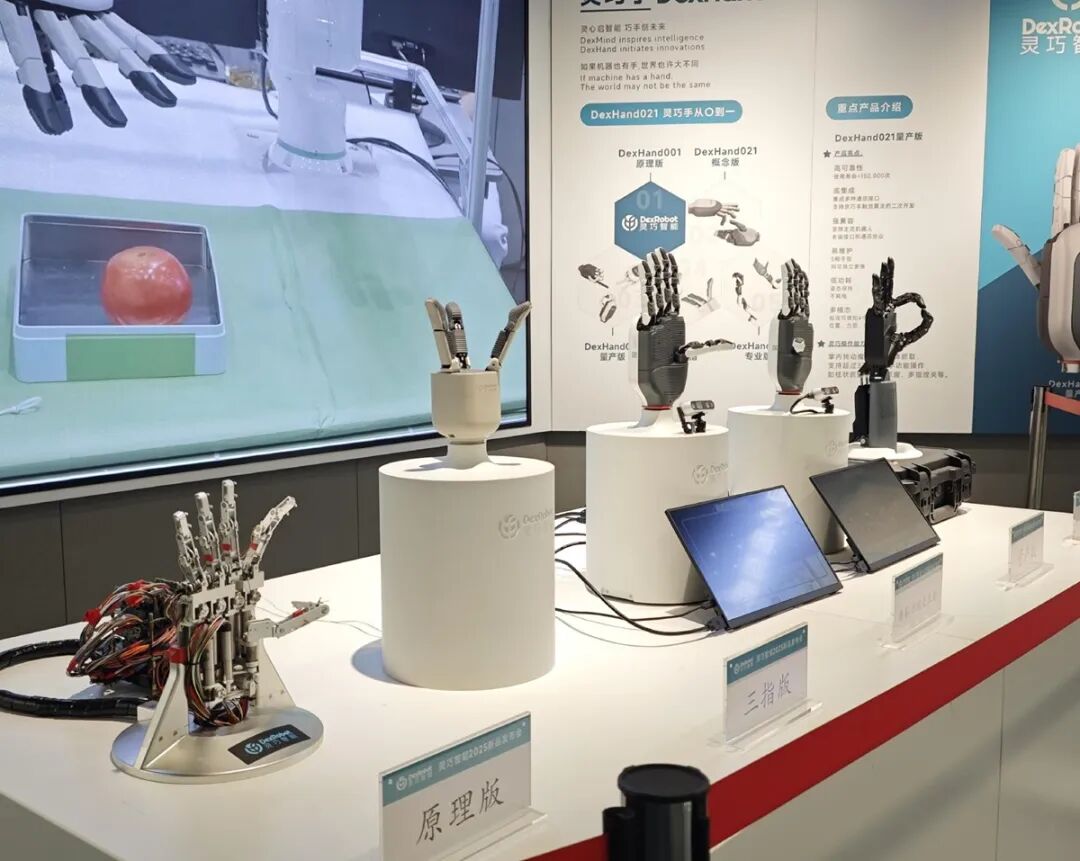
The crucial "dexterous hand" of humanoid robots means that it will get rid of the special gripper system of industrial robotic arms, and solve all operations with the mode of bare hands + tools just like real humans
Since the difference in requirements on technical details is obvious, the internal friction caused by cross-border cooperation is unavoidable.
Vehicle enterprises are accustomed to long-cycle platform development, supplier designation, and large-scale production lines, with highly hierarchical management. In the early stage, robots require more rapid trial and error, joint iteration of algorithms and hardware, and on-site engineering support. In view of this obvious problem, many companies have chosen to establish independent companies and introduce external capital, indicating that the industry has realized that internal organizations may not be the most suitable.
However, even with such problems, automakers have stumbled and managed to develop the "humanoid robots" successfully.
It cannot solve the immediate "thirst", but it is impossible to give up
Since 2025, the domestic humanoid robot industry has gradually moved out of the entertainment field and embarked on the road of real commercialization.
For example, UBTECH, its main model Walker S2 delivered more than 500 units in total last year, with an order amount of nearly 1.4 billion yuan. Some industrial customers who purchased small batches for trial use believed that when performing tasks such as handling and simple tooling, the work efficiency per unit time reached 60% to 80% of that of manual workers.
Due to the very positive market response in 2025, the sales volume of this model increased to 921 units in the first half of 2026, but the total sales amount dropped to 590 million yuan due to the increase in output and product optimization. However, its gross profit margin is as high as 66.8%. Even with such achievements, UBTECH's financial report for the first half of this year still recorded a loss of 339 million yuan.
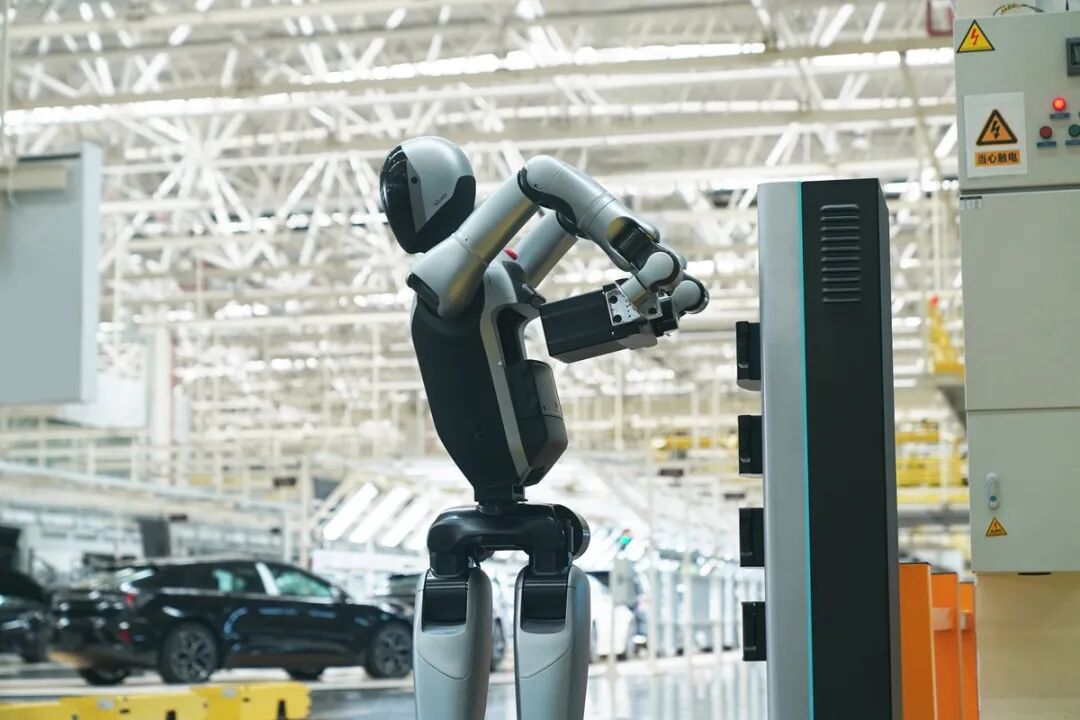
UBTECH's industrial intelligent humanoid robot Walker S2