Yes, Tesla has really built a "flying car"
We all know Elon Musk is a maverick, but no one expected he could push boundaries this far.
On local time October 16, at SpaceX's rocket test site in McGregor/Waco, Texas, on a man-made highway that curves vertically upward, a white sports car was stuck to the curved upper section in an almost anti-gravity, mind-bending state. That was not all: after reversing and accelerating on this stretch of road, the car broke away from the highway, flew straight into the air, spun its body, and landed steadily with the support of thrusters.
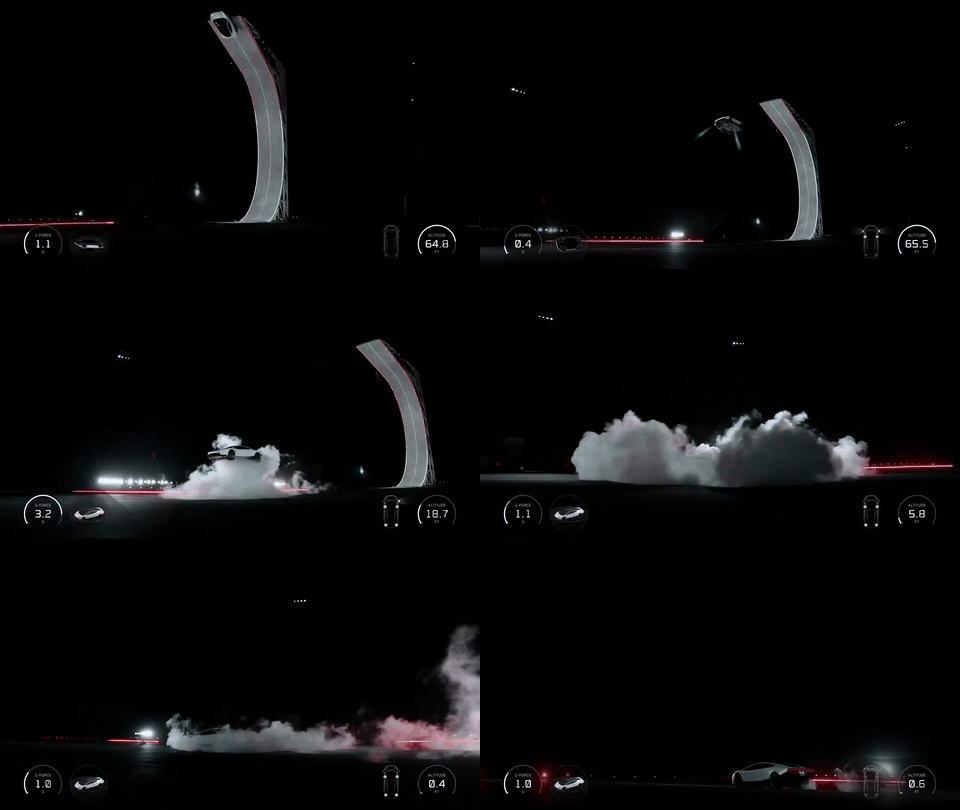
Indescribably cool | Image source: Tesla
The new-generation Tesla Roadster sports car made its debut in this unprecedented fashion.
Elon Musk told the audience at the opening of the event: "We are certain it will work, but if things go wrong by any chance, the safety distance here is not nearly enough."
Of course, as you can imagine, a little bit of fear can spark far greater excitement, and Musk knows exactly how to play to that.
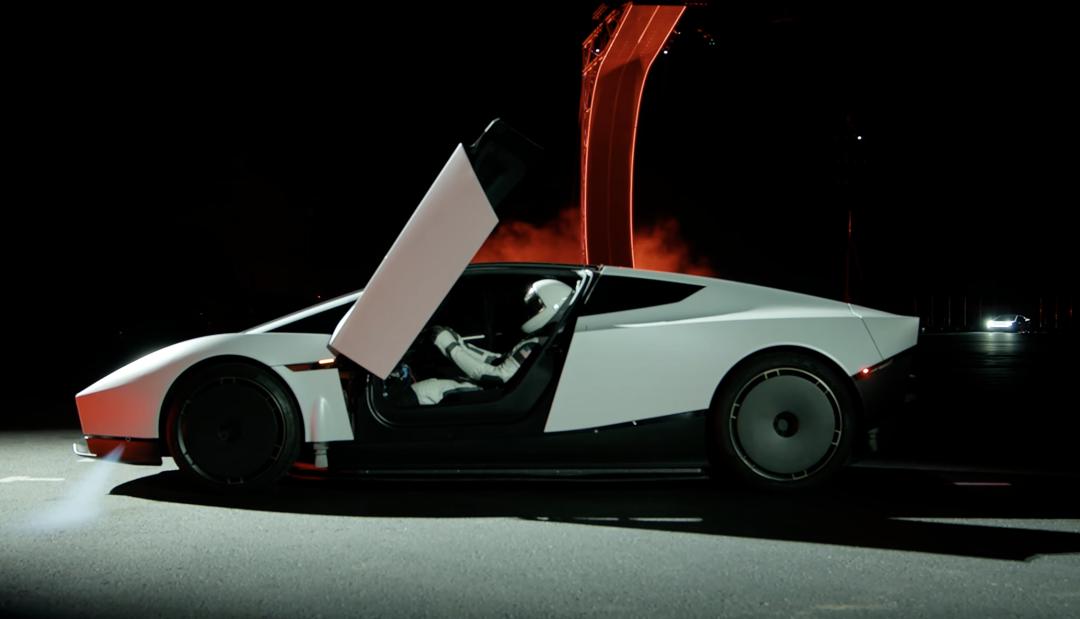
The Rocket version used for the test does not have a real human driver behind the wheel | Image source: Tesla
Apart from the ability to fly, the new-generation Roadster is reported to have three variants: Performance, Thrust and Rocket. The top-tier Rocket variant is a single-seater, with a staggering 0-60 mph acceleration time of just 0.59 seconds.
Although the official price has not been announced yet, you can bet that wealthy people all over the world have already started preparing their checkbooks.
Tesla's flying car
To cut to the chase: the new-generation Roadster can fly not by relying on propellers or jet engines, but on a cold gas propulsion system "borrowed" from SpaceX, paired with a fan system that can "suck" the car to the ceiling.
The demonstration at the opening of the launch event was almost a joint operation of these two systems.
A Roadster was hung upside down at the top of a curved ramp, with its four wheels facing the sky, stuck firmly in place without falling off. Then it reversed and rushed out, flipped in mid-air, stabilized its posture with the airflow ejected from its tail, and landed smoothly and steadily.
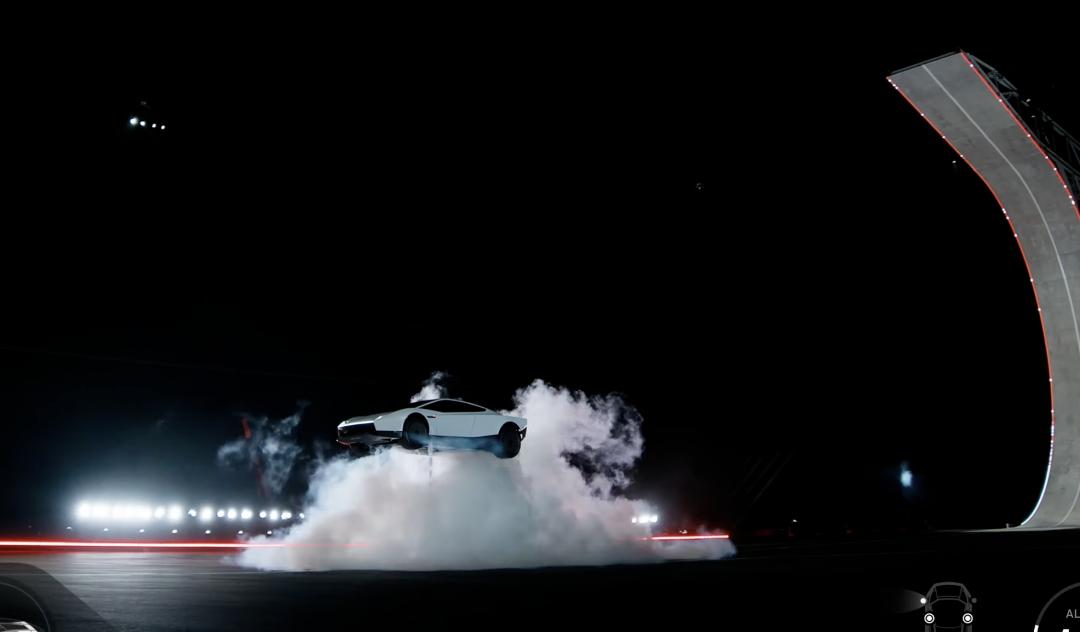
When the car landed steadily, the first line from the stage was "Well, it worked" — which means it succeeded, and immediately after that, someone shouted a more straightforward line: "Flying cars are real."
Musk then quoted a famous line from his old friend Peter Thiel: "We wanted flying cars, instead we got 140 characters", before adding, "Not anymore."
The reason it can hang upside down is that it literally can "suck".
A fan suction system is installed under the chassis of the Roadster, which pumps out the air under the car to create negative pressure, generating up to 2G of adsorption force. That means the force pressing the car to the ground is twice its own weight. So even if the car is upside down and stays stationary, it will not fall.
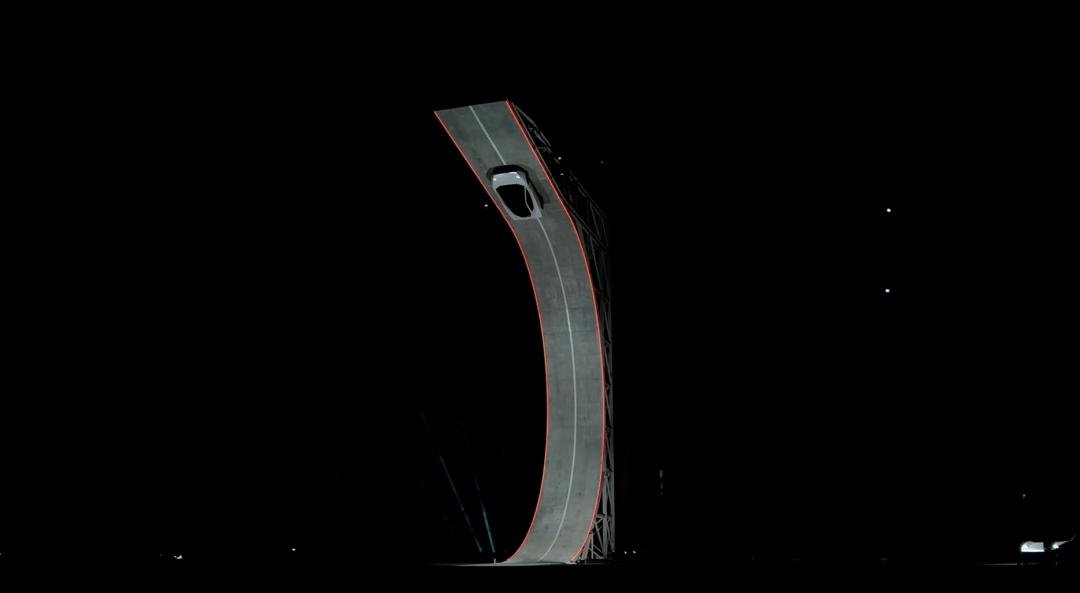
Musk made a rare light-hearted joke on stage, saying that this car "can suck the chrome off a trailer hitch" and "can suck a tennis ball through a water pipe".
Jokes aside, he also admitted that no one would want to drive upside down in daily life. The real value of this system actually lies on the race track.
The grip limit of ordinary tires is around 1.26G, and they will skid once exceeding that. With the fan suction system, the Roadster can take corners at over 2G, looking as if it is "defying the laws of physics". Musk's exact words were that it will "demolish all track records".
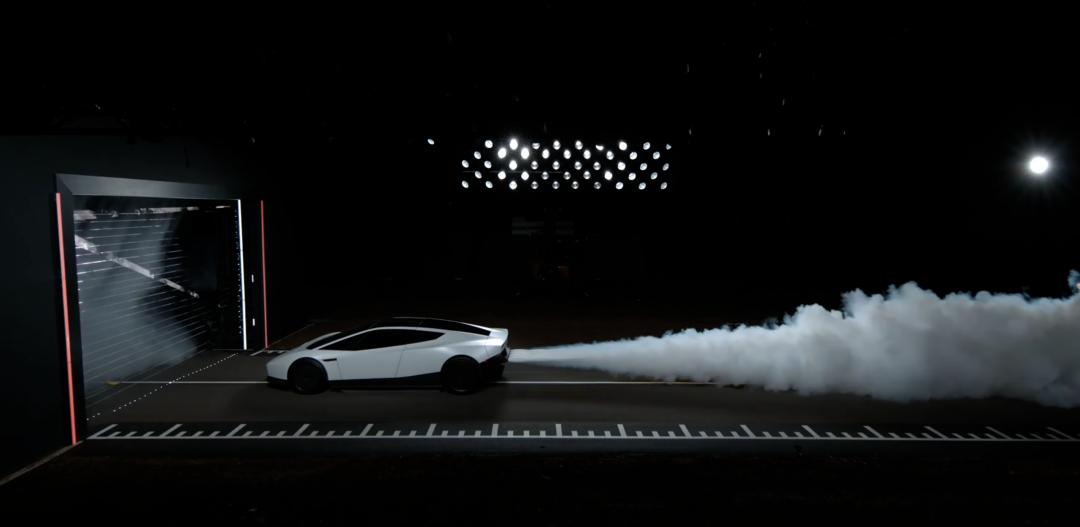
The fan system itself also has two modes. At low speeds, it sucks the car down to supplement traction; at high speeds, it opens the air ducts at the front and rear of the car to allow more airflow to pass under the chassis, further increasing downforce. The car body can also switch between "high downforce" and "low aerodynamic drag" modes, with an adjustable rear wing angle that automatically adjusts according to track conditions.
As for its ability to fly, that is because it is literally equipped with "rockets".
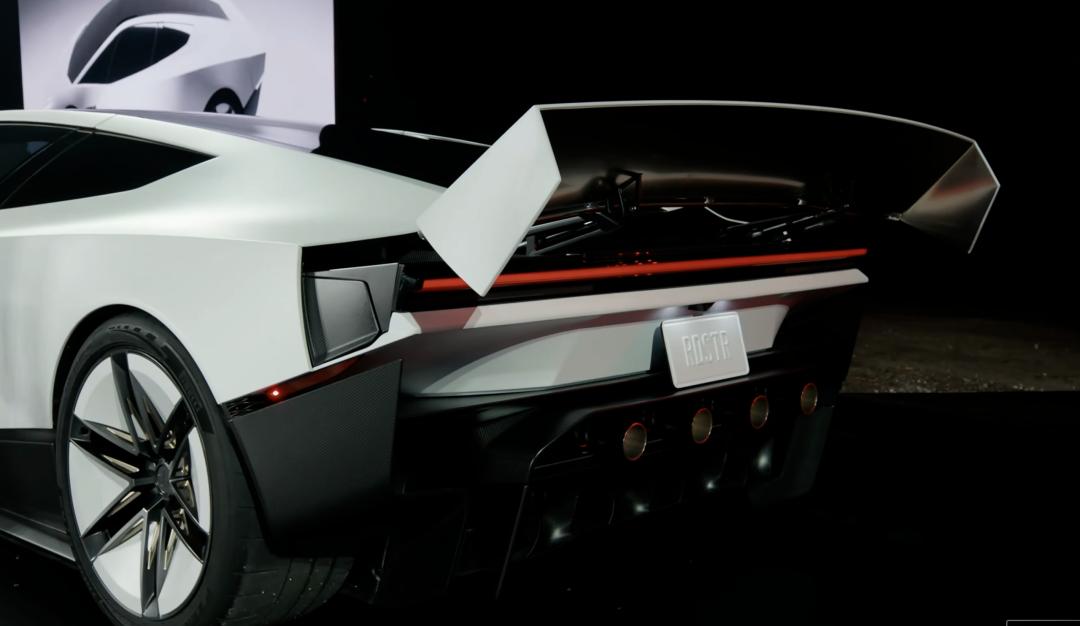
The main thrusters are hidden in the rear diffuser of the Roadster, and there are attitude control thrusters distributed around the car body. Musk said this allows it to "basically fly like a rocket", perform rolls and all kinds of "crazy gymnastic moves".
This set of thrusters does not burn fuel, but runs on compressed air.
Lars Moravy, Vice President of Engineering, who calls himself a "parameter nerd", laid out all the numbers clearly on stage. The car is equipped with carbon fiber-wound high-pressure gas cylinders, the same COPVs used on SpaceX's Falcon 9 rocket, with a total volume of 600 liters holding around 250 kilograms of air, and 10 nozzles are responsible for all propulsion and attitude control. Tesla's post on X was even more exaggerated: "Every usable space in the car is stuffed with COPVs."
The airflow ejected from the main thruster at the rear exceeds the speed of sound, so the "Mach diamonds" that usually only appear in rocket exhaust flames can be seen at the scene.
More importantly, this "fuel" can be refilled by itself. Musk said the car can re-inflate its own high-pressure gas tanks without any special propellant, "it will inflate itself", so you can fly whenever you want.
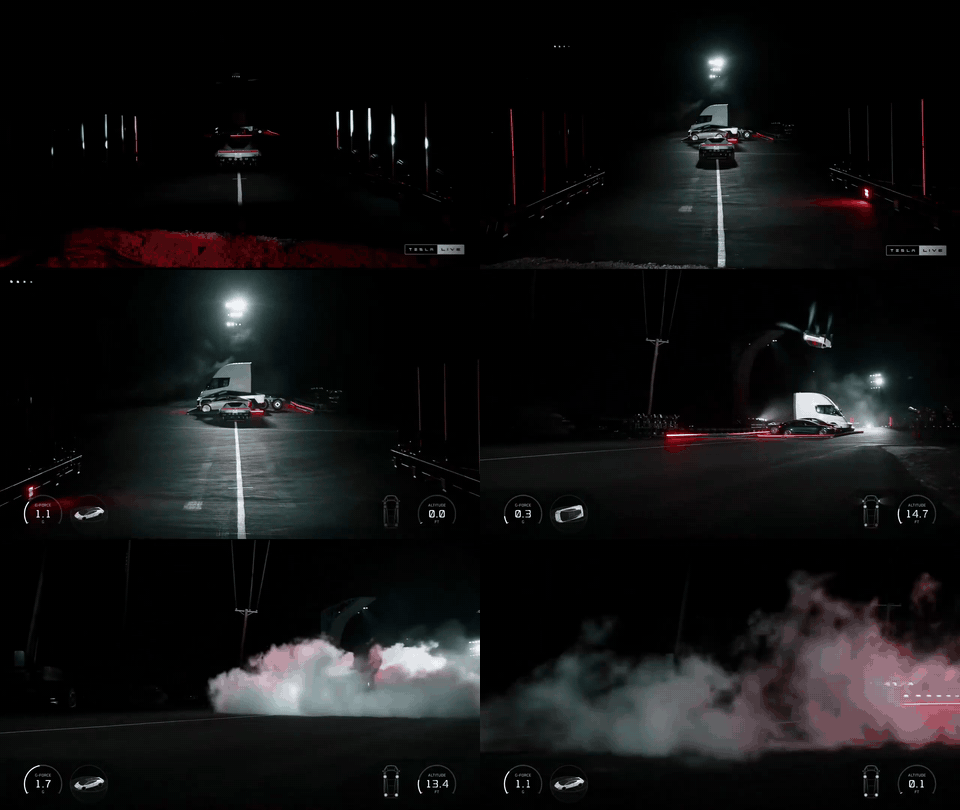
Tesla Roadster performing a "kickflip" | Image source: Tesla
The second demonstration that followed was even more dramatic. The Roadster accelerated all the way, flew over an entire row of Tesla vehicles including a Semi truck, flipped in mid-air before landing.
"I've seen a lot of things, but I've never seen this." The team on stage named this move "Kickflip", the skateboard trick, adding "Tony Hawk would be proud of this."
Apart from its flying capability, it is also an absurdly fast car.
The goal Musk set for his team was to break the 1-second 0-60 mph acceleration mark. During the on-site test, the track was too short so they had to cut power early, and the final result was 0.81 seconds.
He casually brought up Newton's second law, a = F/m: with higher thrust and lower weight, acceleration naturally becomes greater. So he said the mass-produced version will be even faster, and the only upper limit is "don't make the passengers' retinas detach".
According to Tesla, this is "the fastest accelerating mass-produced car in the world". While other cars finish a quarter mile, this one can finish half a mile. Its top speed exceeds 230 mph, around 370 km/h, and Musk's next target is Mach 0.5, "maybe a little higher".
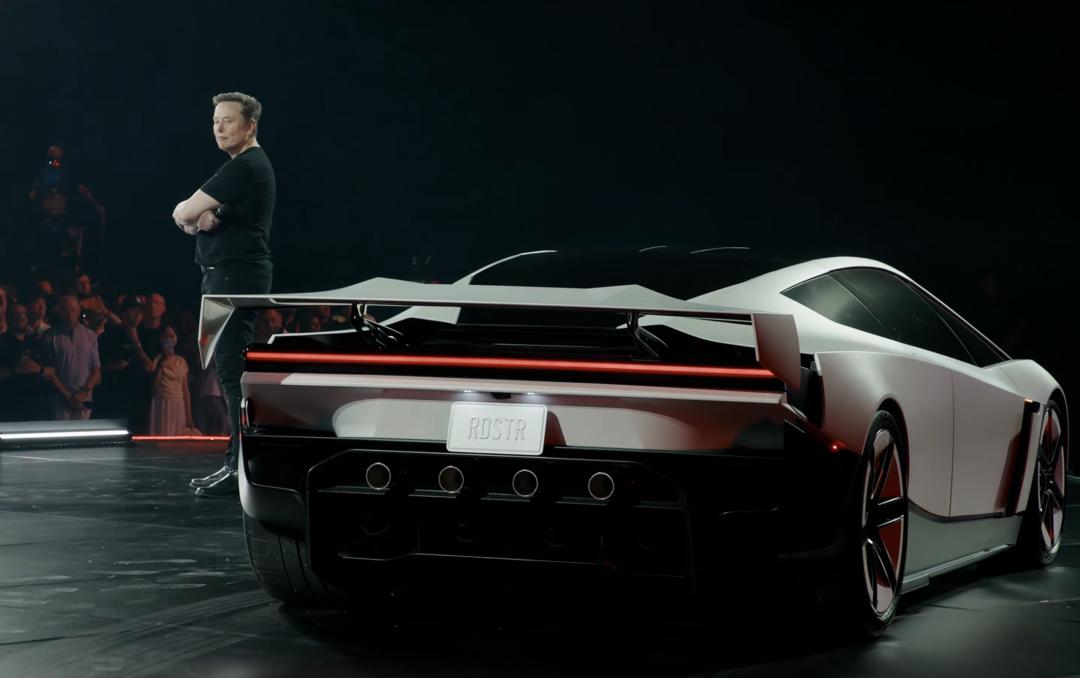
Someone on stage added a line: "Where we're going, you don't need tires", paying tribute to the classic line from *Back to the Future*.
Let's get back to the car itself.
Franz von Holzhausen, Head of Design, introduced that since the team knew the car would be able to fly, they looked for the "coolest aircraft" for inspiration, and finally settled on the SR-71 "Blackbird" reconnaissance plane and those "transforming vehicles".
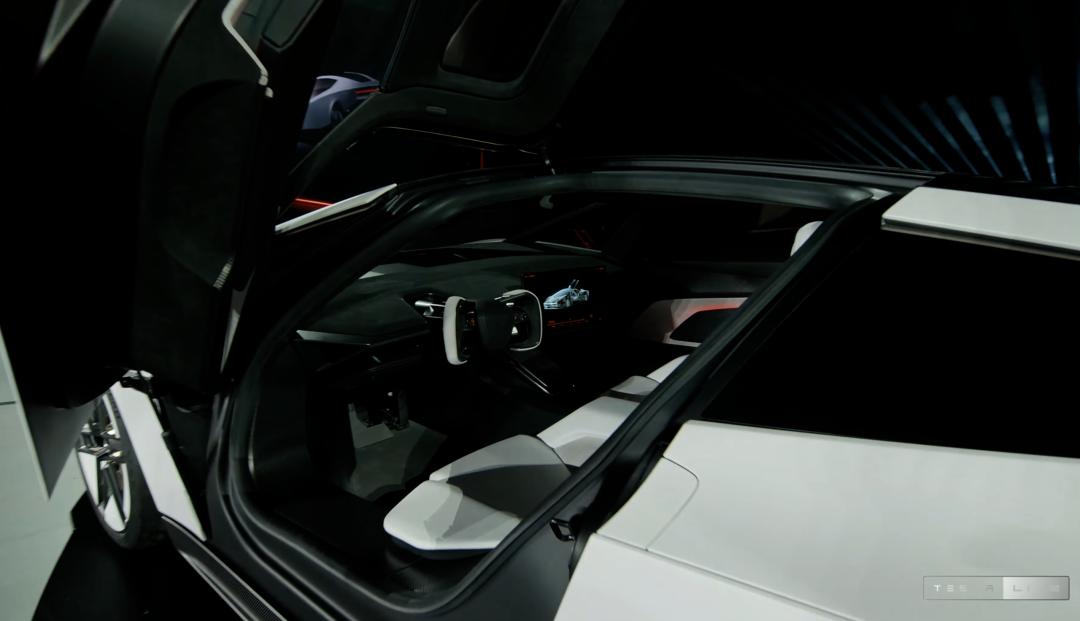
The new Roadster has clean lines, with hidden headlights, full-width taillights, and flush aerodynamic kits, carrying the consistent "cyber" temperament of the Cybertruck and Cybercab. Its paint is a white color called "Ano White", which Tesla says draws on aerospace coating technology, with properties of UV resistance, low temperature resistance, anti-static performance and corrosion resistance. The dark-tinted windows are modeled after the visors of spacesuits.
It is a two-seater vehicle. To reduce weight, the seats are integrally formed with the chassis, the steering wheel is a steer-by-wire yoke, and both the brake and accelerator pedals are also drive-by-wire. The interior uses a large amount of magnesium, titanium and carbon fiber.
After the launch event, Tesla announced the three variants on X.
The Performance variant, "built for the road", is a two-seater equipped with active aerodynamics and multi-mode fan suction system, with 0-60 mph acceleration in under 1.6 seconds, and a reservation deposit of $50,000;
The Thrust variant, "built for the race track", is a two-seater with additional cold gas thrusters at the rear, 0-60 mph acceleration in under 0.9 seconds, sold in limited quantities, with a reservation deposit of $250,000;
The Rocket variant, "built for the sky", is a single-seater with 10 cold gas thrusters distributed all around the body, capable of flying upward and spinning, 0-60 mph acceleration in under 0.59 seconds, available by invitation only, and not approved for public road use.
It has a range of over 300 miles, around 480 kilometers, and a top speed exceeding 230 mph. Tesla defines the Thrust and Rocket variants as "enhancement kits" based on the Performance variant.
It is worth noting that all those stunning flying and flipping stunts happen on the limited-edition and off-road-only variants. The road-legal Performance variant does not have thrusters. Musk himself also said that this car "may not be legal everywhere", but "there will be such a car that people can truly own".
The Roadster that we waited nine years for: what does it really mean?
At the very beginning of the launch event, Franz mentioned that 20 years have passed since Musk first unveiled the Roadster to the world.
In 2006, Tesla released the first-generation Roadster. It was built on the chassis of the Lotus Elise, started delivery in 2008, and was discontinued in 2012, with a total of around 2450 units sold.
The production volume was small, but its significance goes far beyond sales. In an era when electric vehicles were still dismissed as "golf carts", the Roadster proved for the first time that EVs can be fast, fun to drive, and have a long enough range. In Franz's words, they are "real cars".
In the same year, Musk published his famous "Tesla Secret Master Plan", the roadmap of which was very simple: first build an expensive sports car, use the profit to build a more affordable car, then use the profit from that to build an even more affordable car.
Lars said on stage that the Roadster was the reason he joined Tesla in the first place. The rest of the story is well known to everyone: the Model S, Model 3, Model Y, the master plan was gradually turned into reality.
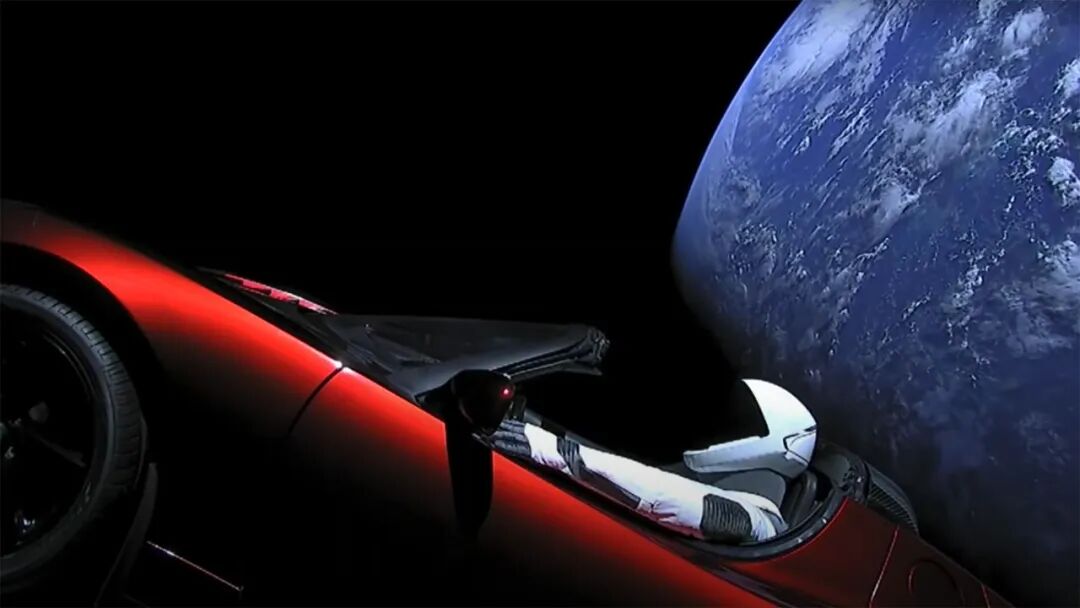
The first-generation Roadster has an even more romantic "epilogue". In February 2018, the maiden flight of SpaceX's Falcon Heavy rocket sent Musk's own cherry-red Roadster into space, with a spacesuit-clad dummy named "Starman" sitting in the driver's seat. To this day, it is still orbiting the Sun.
This time, Starman also made a cameo appearance at the launch event. After the demo car landed, it was a Starman dummy that poked its head out of the driver's seat. The team on stage specifically clarified that "it is not a real person".
But the story of the second-generation Roadster is far less romantic.
In November 2017, at the launch event of the Tesla Semi, Musk suddenly drove the new-generation Roadster out from the cargo bed of the truck, drawing screams from the audience. The promises back then included a 0-60 mph acceleration of 1.9 seconds, a range of 620 miles (around 1000 kilometers), a top speed of over 250 mph, a 2+2 four-seat layout, a starting price of $200,000, and a limited Founder's Series priced at $250,000, with delivery scheduled