Ye Jun, former president of DingTalk, founded his own business one year after leaving his post, betting on the "niche gaps" that large tech giants are incapable of developing and even disdain to get involved in.


Text | Liu Sijie
Editor | Zhang Wei
Cover Source | Unsplash
One year after leaving Alibaba, Ye Jun, former Alibaba Vice President and President of DingTalk, has finally confirmed his entrepreneurial direction: enterprise-level AI Agent. The new company Deepspace Order has been established for about 3 months, and has obtained tens of millions of yuan in financing. The lead investor is Guangzhou 4399 Information Technology Co., Ltd., and it already has two paying customers.
For Ye Jun, this may carry a sense of continuing unfinished business.
Leaving DingTalk was somewhat unexpected for Ye Jun. At that time, DingTalk was fully preparing for the 8.0 launch event, planning to launch a version that fully shifted to the Agent base, which he called the "AI version" of DingTalk. On March 31, 2025, he received a notice of position adjustment.
Three months later, Ye Jun left Alibaba, where he had worked for 19 years.
The unheld launch event became a regret on Ye Jun's AI practice journey. When he was at DingTalk, he always believed that "Agent is the window of the next era", and began to promote the full shift of business to AI in 2022.
Ye Jun is very clear that what he wanted to do in the past could only be done relying on the platform of a large factory. Now, as an entrepreneur, what he can do is to use his past resources and experience to reach the gaps that large factories cannot and disdain to do: make enterprise Agents, dive into specific industries, and go deep into the business processes of companies one by one.
Foreign trade and cross-border e-commerce are the specific industries that Ye Jun chose first. He found that there are a large number of unsolved problems here. For example, helping overseas buyers match Chinese suppliers more accurately, and using AI to help improve the quality of replies to inquiries from overseas customers, thereby affecting transaction closing.
One of Ye Jun's chips comes from the experience and resources accumulated in promoting enterprise-level business at DingTalk in the past five years. He attaches great importance to the commercialization of To B business, and his working state all year round is to travel between various enterprise customers. "I have to meet more than 100 enterprise customers a year." He described his devotion at the most dedicated time like this.
The financing that Deepspace Order has obtained at present mainly comes from the industrial side. A boss who is familiar with him said that no matter what he does, he will invest.
Of course, Ye Jun is also facing doubts.
During our communication, Ye Jun once used the outside world's prejudice against large company executives starting businesses to self-deprecate: "Anyway, most executives who start businesses fail."
When Ye Jun left Alibaba, there was an evaluation from the outside world: he was more like a professional manager, good at taking a thing from 10 to 100, rather than from 0 to 1. When AI redefines collaborative office, DingTalk needs someone to start from scratch again. Now, Ye Jun, who is starting his own business, has come to the position from 0 to 1.
During his five years at DingTalk, Ye Jun has accumulated a lot of trust from B-end customers. Just one month after the new company was established, there were two paying customers.
But Ye Jun is very clear that the real 0-to-1 problem has not been solved yet. Can these orders based on personal resources, experience and trust be precipitated into standardized products? For example, can a set of solutions that require FDE to go deep into the site to run through be replicated from one company to one industry, and then from one industry to more industries?
Ye Jun was once considered good at taking things from 10 to 100, but at the moment, he confessed that if this entrepreneurial venture fails, the problem is more likely to lie in the "10 to 100" stage. After all, starting a business does not have the resources and talent density of large factories.
The following is the edited conversation between Ye Jun and "Future Human Lab" (hereinafter referred to as "Future Human").
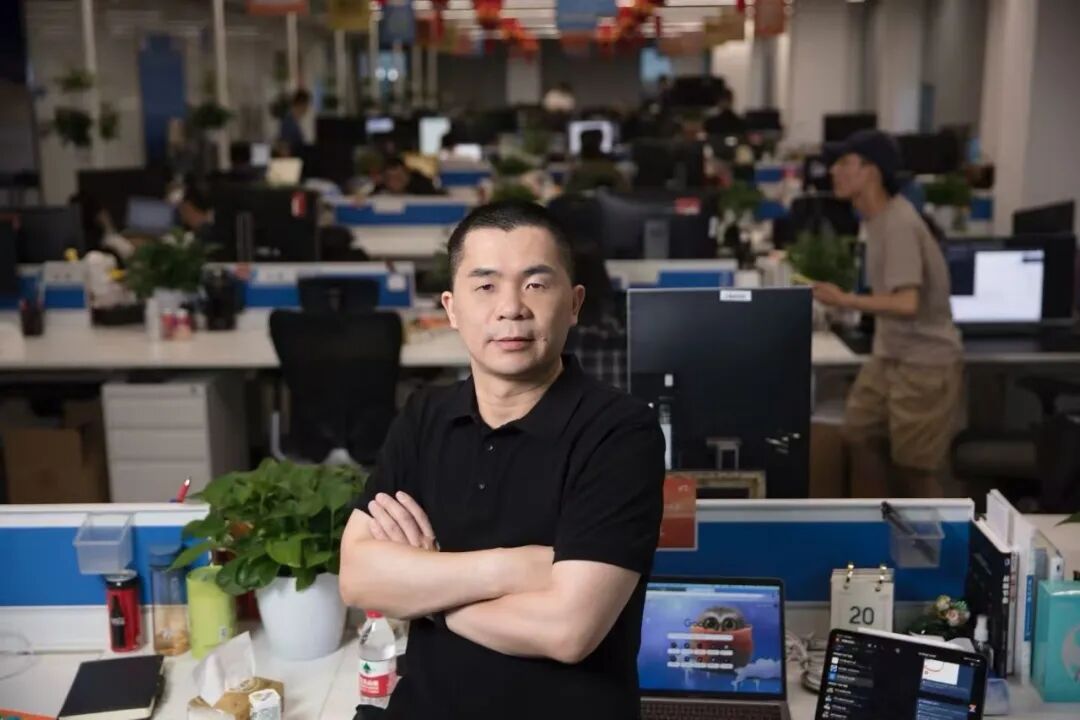
Ye Jun

After leaving DingTalk, I don't want to work for others anymore
Future Human: Why did you leave DingTalk?
Ye Jun: I have been at Alibaba for a long time, and I have been fully responsible for product R&D, sales, marketing, service, and human resources & finance & legal affairs. I held an independent P&L position, and such experience gave me a lot of training.
The company has different position arrangements in different periods. I gladly accepted the adjustment at that time. After working for five years, my body was really very tired, and I was very willing to take a rest.
I had never thought of starting a business before.
Future Human: At that time, DingTalk was preparing for the 8.0 launch event. What was this version originally going to release?
Ye Jun: A full AI version. The product should continue the plan mentioned at the 7.5 launch event, open up the capabilities of the Agent base, and rebuild the AI software and hardware ecosystem.
Future Human: DingTalk's AI momentum and performance were both good at that time. According to your analysis, why did the group still want to change the leader?
Ye Jun: The group's strategic needs in different cycles. From the group's perspective, AI is too critical to Alibaba, and they hope to replace it with someone who is more capable of fighting and has more entrepreneurial spirit. I can understand and support it.
Future Human: Looking back, how do you evaluate your achievements at DingTalk? What did you really accomplish?
Ye Jun: One thing I kept doing was to make products create deep value and make customers willing to pay. The essence of commercialization is value exchange. If a To B product has no value, it will not last long by relying on stories, narratives, or subsidies.
I took over and did commercialization for four and a half years. In terms of ecology and openness, customers obtained data such as attendance, video conferencing, documents, and human resources, and began to feed their own enterprise data to AI. I believe that for enterprise-level products, enterprise customers have their own data sovereignty. In order to perceive the market rhythm, I will meet hundreds of entrepreneurs a year and have in-depth exchanges with customers. Customers are very concerned about data.
In terms of products, we made explorations very early: AI code writing, AI generation, AI search, super assistant and AI knowledge base. The paradigm of AI products on the market has been updated at least 3 times. We once connected seven external models to the Agent market. This open paradigm was among the first in China to come out, but it is a pity that we did not make a strong general-purpose Agent.
We worked hard to bring the business into the AI era, and also promoted SaaS partners to shift from the traditional software ecosystem to the AI ecosystem, and build more business data collaboration. We did it very practically, and did not rely on telling stories.
Future Human: When you were in office, DingTalk made so many AI assistants, and you also judged that with 80 to 90 million daily active users, it is not difficult to achieve 10 million people using AI every day. Why did neither a star Agent appear in the end, nor the expected user scale be achieved?
Ye Jun: At least in the complex enterprise task scenario, there is no To B product of this user scale in the domestic market to this day. The first reason is that the capabilities of the model at that time were not mature enough compared to today. We made memory, Skill, process and knowledge base, but model capability is the prerequisite. The model at that time could not support Agent for complex enterprise workflow tasks.
The second reason is that both enterprise customers and users need time for market education. To B is not To C, you can't get scale the next day after putting in advertisements and giving subsidies. The main task of employees is not to use advanced tools, but to complete work. Employees are already used to the original work process, and no matter how good the tool is, it has to go through the introduction process. We have to wait for that point in time.
The third reason is that there are restrictions on product mindsets. Up to now, the AI products we see widely used are products such as Coding and video creation, which are all grown on the model. The mindset of products such as OA and online collaboration is to complete the collaboration between people. The mindset transformation cycle is long.
It is not that if the office entrance has 80 to 90 million users, it can immediately convert 10 million AI daily active users. Platform traffic cannot be directly converted into AI usage — products must find real, high-frequency scenarios that can continuously create value, and at the same time wait for the maturity of models and customers.
Future Human: Why did you finally choose the enterprise Agent as your entrepreneurial direction?
Ye Jun: In the past year, several companies have approached me, hoping that I would serve as a business executive. I am very grateful from the bottom of my heart, but in the end I rejected all of them. I want to do something of my own. I want to take full responsibility for the results and let customers and the market test the product.
In the past year, I have communicated with entrepreneurs in different directions such as computing power centers, data collection and robots. I have been in Alibaba for nearly 19 years. In the early stage, I did cross-border e-commerce, and later I did enterprise services for a long time. These experiences made me more familiar with foreign trade and enterprise-level business. After the non-compete period ended, I formally formed the company, starting from one person to build the team, find customers, and find investors.
Future Human: Why did 4399 invest in you? They are a game company.
Ye Jun: Early-stage investment actually invests in people in the end. They recognize my judgment on the AI implementation path, and also recognize my way of behaving and doing things. At the same time, they also have needs in the field of enterprise-level AI Agent.

Find the gaps that large factories do not do
Future Human: Why did you choose foreign trade and cross-border e-commerce first? What industry pain points did you find that need to be solved urgently?
Ye Jun: We first chose to deeply cultivate the vertical industry of foreign trade because we have accumulated resources and found that there are a large number of unsolved problems. For example, in a foreign trade enterprise, dozens of employees sit in front of computers every day to reply to inquiries from overseas customers. After AI scans historical communications, it can suggest how to reply to each message, what customers care most about, and whether there is a risk of churn. Foreign trade customers mainly rely on remote communication, and the quality of replies directly affects transactions, which is exactly where AI can create incremental value. AI amplifies human judgment and work results.
Future Human: Alibaba International Station also has similar AI functions. What's the difference between you and them?
Ye Jun: Platform products first need to cover a wider range of common needs, and the starting point of decision-making is often platform value. I want to run a small company, help customers solve a series of needs in vertical scenarios, and become part of the platform's ecosystem.
The International Station hopes to serve the customers on the International Station well. A foreign trade enterprise may use the International Station, Amazon, Facebook, TTS and other channels at the same time. Now in foreign trade, in addition to the fragmentation of information context brought by multiple channels, there is also a trend of smaller orders and longer orders becoming shorter orders, which also leads to scattered enterprise information and heavier workload for employees. As a third party, we can stand from the customer's perspective, connect different platforms, different systems and the entire business process of the customer's enterprise, and AI is suitable for processing a large amount of scattered information.
Future Human: What product is Deepspace Order making now? What stage has it progressed to so far?
Ye Jun: It is not a single Agent, but a foreign trade AI work platform. The platform will handle model scheduling, Token Planning, memory management, tool call, and long-term task disassembly, and then superimpose multiple specific industry scenario Agents on it, such as marketing, traffic delivery, customs declaration, etc.
The company has been established for about three months, and now has more than ten people, mainly in product R&D, FDE and new media marketing, without marketing and sales. According to my standards, I think it is still in the product polishing stage, and there is a long way to go before a mature product.
Future Human: You need to enter the enterprise to sort out the process and provide customized solutions, which sounds more like FDE or a project company. Will heavy delivery drag down the subsequent productization and scaling?
Ye Jun: Enterprise-level vertical scenarios definitely require FDE, and there will definitely be customization. The work of FDE is to translate the customer's business language into a language that Agent can understand. Without understanding how the enterprise works, it is impossible to make products that truly solve business problems.
But the customized demand of one enterprise may not be customized in one industry. For example, the customs declaration scenario is something that all foreign trade enterprises have to do; using Agent to help sellers find buyers is also a common demand; the connection of work orders, orders and customer service systems is not unique to one enterprise. We do a good job for one customer first, and then precipitate the common parts into Skills and products, which other enterprises can use directly.
I think customization is a necessary process before the productization of To B startups. If you don't really go deep into the business of an enterprise, and want to make a general platform as soon as you start, there will be no threshold. AI reduces the customization cost. Today's customization is not exactly the same as the project system in the traditional software era.
It is precisely because it is necessary to enter the enterprise business site and understand the industry that large companies are unwilling to do it, and small teams may not be able to do it, so a market gap is formed here. Without this process of judging the position, most To B startups in the AI era will lose their barriers, and large platforms and large models will soon cover you.