36Kr Exclusive | National defense technology experts develop micro intelligent drones, with total accumulated financing exceeding 100 million yuan, and hundreds of millions of yuan worth of orders signed within the year.
Author | QIAO Yujie
Editor | YUAN Silai
This article is around 2900 words, with an estimated reading time of 7 minutes
Hard Krypton has learned that Changzhou Zhongwan Intelligent Technology Co., Ltd. (hereinafter referred to as "Zhongwan Intelligence"), a hard-tech enterprise focusing on aerial unmanned intelligent agents, has successively completed multiple rounds of financing including Angel Round, Pre-A Round, Pre-A+ Round and Series A, with total accumulated financing exceeding 100 million RMB. Its historical shareholders include CAS Star, Yida Capital, Fangguang Capital, Suxin High-tech Financial Holding, Dunxing Capital and other institutions. Zhongwan Intelligence is the parent company of Zhongke Jingrui Technology Co., Ltd. (hereinafter referred to as "Zhongke Jingrui").
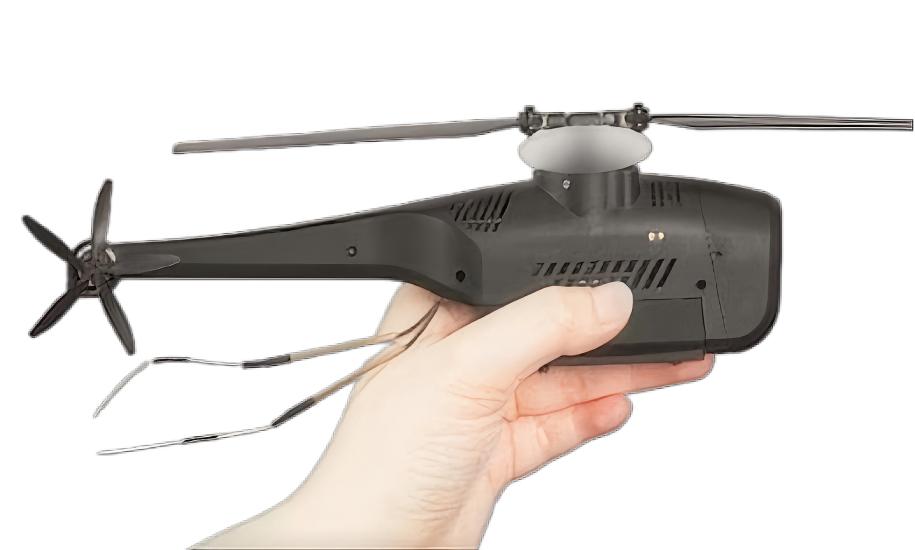
Zhongke Jingrui is incubated by the Suzhou Incubation Center of the Chinese Academy of Sciences. Its core team is composed of national defense technology experts with more than 20 years of industry experience, who have led a number of key national projects. Taking the 200-gram class micro air vehicle as the core platform, Zhongke Jingrui has built full-chain capabilities covering overall design, aerodynamic and structural design, core component R&D and mass production, and has developed products of multiple configurations such as micro unmanned helicopters, coaxial dual-rotor aircraft and bionic aircraft.
Different from the relatively open scenarios of outdoor medium and high-altitude flight, the current micro intelligent UAVs are mainly oriented to special environments with limited space such as indoors, tunnels and underground pipe networks. In these scenarios, satellite navigation signals are often unavailable, and narrow spaces put forward higher requirements for the obstacle avoidance, positioning and autonomous control capabilities of aircraft. Traditional similar products still rely heavily on manual operation or takeover in complex environments, with limited degree of autonomy, and there is still a market gap for micro aerial intelligent agents that can complete tasks independently.
Based on the low-power small edge-end computing platform, Zhongke Jingrui has developed edge-end intelligent technology that adapts to the mission scenarios of micro air vehicles and integrates embodied large model and deep learning, which can realize aircraft operation without remote control, autonomous operation without GPS, complex environment reconstruction and cluster collaboration.
LIU Desheng, founder of Zhongke Jingrui, told Hard Krypton that compared with medium and large UAVs, the technical difficulties of micro air vehicles are mainly concentrated in four aspects: flight control system, structural design, aerodynamic optimization and intellectualization.
The first is the flight control system. Micro UAVs need to fly flexibly in closed and narrow spaces, which puts forward higher requirements for control accuracy, response speed and anti-interference ability. Most of the traditional open-source flight control schemes are designed for conventional multi-rotor platforms, which are difficult to directly adapt to the company's micro air vehicles. Based on the accumulation of practical applications, Zhongke Jingrui independently develops the underlying code of flight control, does not apply the traditional open-source flight control algorithm, and independently develops a flight control technology system adapted to micro air vehicles of different configurations to improve control accuracy and anti-interference ability.
The second is structural design. Miniaturization means that the airborne space and weight budget are very limited, and the difficulty of component assembly accuracy, tolerance control and system integration increases accordingly. Through the integrated design of deep electromechanical integration combined with hardware parallel processing, Zhongke Jingrui shortens the system control cycle from millisecond level to microsecond level to meet the requirements of micro flight platforms for rapid response.
In terms of aerodynamic optimization, the company reduces flight noise through a large number of simulations and parameter iterations to adapt to application scenarios sensitive to concealment and environmental noise, and optimizes the hover quality factor (FM) of the rotor system to the level of 0.65-0.7.
Indoor navigation and intellectualization are another threshold for micro UAVs to achieve autonomous operation. In an environment lacking satellite navigation signals, the aircraft needs to rely on airborne sensors and computing modules to complete autonomous positioning, environment perception, obstacle avoidance and path planning. According to LIU Desheng, the company's products are equipped with a lightweight airborne intelligent module with a computing power of 0.8TOPS, and based on visual SLAM technology, realize autonomous navigation and task execution when navigation and positioning signals are missing or interfered. The company is also promoting the deployment of Visual-Language Navigation (VLN) model on micro flight platforms, and relevant simulation verification has been completed at present.
It is understood that Zhongke Jingrui's intelligent micro unmanned helicopter completed technical finalization in October 2025, and entered the pilot test and engineering implementation stage in December of the same year. At present, the company's products are mainly divided into three series, which are oriented to different task requirements respectively.
The Smart Bee series is oriented to multi-service scenarios, supports multi-sensor configurations such as visible light, infrared and LiDAR, and has relatively stronger airborne computing power and intelligent capabilities; the Wing Bee series focuses on lightweight and low noise, with a single unit weight of about 65 grams, mainly equipped with visible light sensors, which is suitable for scenarios with higher requirements for weight and concealment; the Shadow Bee series focuses on long endurance, wind resistance and cluster collaboration, supports stable flight in a six-level wind environment, and can realize "one control for multiple units". Since cluster tasks involve perception, planning and collaboration among multiple aircraft, the Shadow Bee series needs to be configured with stronger airborne computing power.
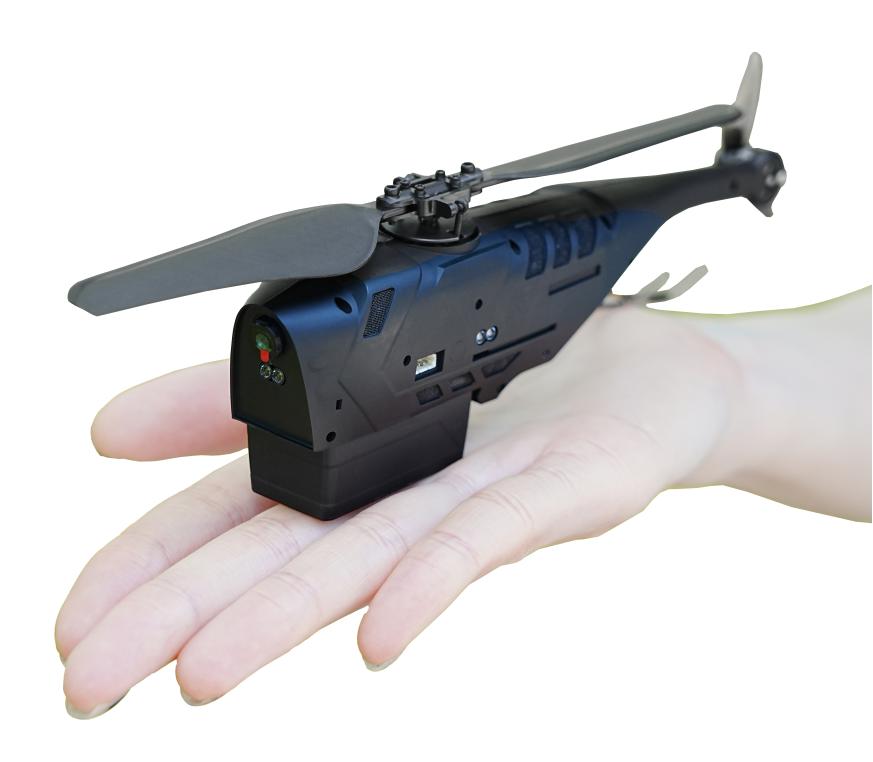
(Wing Bee Series)
Focusing on cluster operation, Zhongke Jingrui has developed a distributed heterogeneous cluster system, which deploys functions such as task planning, control and monitoring on the ground end, while the airborne end completes target recognition, tracking, multi-sensor fusion, obstacle avoidance and multi-aircraft task collaborative grouping. Through the collaboration between the ground end and the airborne end, the system can support multiple UAVs to perform functions such as task planning, collaborative operation, task evaluation and process playback, so as to improve the operation efficiency in complex scenarios.
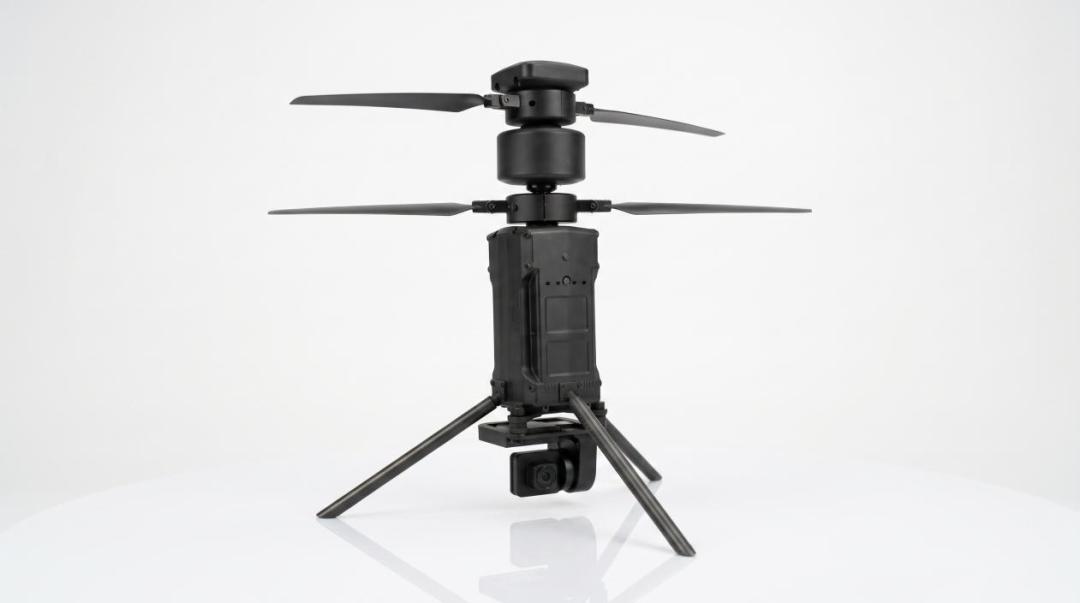
(Shadow Bee Coaxial UAV)
In terms of commercialization, according to introduction, since 2026, the Smart Bee and Wing Bee series UAVs have signed more than 5000 sets of orders, with hand-held orders worth hundreds of millions of RMB.
The following is the Q&A with the founder:
Hard Krypton: To realize the deployment of SLAM and VLN models under the limited computing power of 0.8TOPS, what work has the company done in algorithm optimization and hardware adaptation?
LIU Desheng: The airborne computing power of micro UAVs is limited by multiple factors such as volume, weight and power consumption. Chips with stronger computing power usually have larger volume and higher power consumption, which not only increases the difficulty of deployment, but also affects the flight endurance. Therefore, we do not simply solve the problem by improving hardware computing power, but optimize more from the algorithm and system architecture.
At the algorithm level, we have designed a lightweight VLN intelligent agent architecture for micro flight platforms, covering the complete link from input information processing, semantic understanding to action planning, and adapt around links such as obstacle avoidance, trajectory optimization and online strategy update. At the same time, we have also optimized functions such as state information return, autonomous navigation and 3D environment modeling.
Limited by computing power, we will make trade-offs on model capabilities according to specific tasks. For example, in indoor environment modeling, the focus of the system is to identify key structures such as walls, doors and columns to provide necessary spatial information for flight and obstacle avoidance, rather than pursuing high-precision 3D reconstruction, detail restoration or rendering. In this way, we can prioritize ensuring the core capabilities required for task execution under limited computing power.
In addition, in practical applications such as emergency rescue and indoor inspection, we have also accumulated a large amount of scenario data, and continuously optimized the model and algorithm strategies accordingly. Our idea is not to directly move the general large model to the micro UAV, but to build a lightweight airborne intelligent agent around vertical application scenarios, so that the limited computing power can be concentrated to serve the actual task requirements.
Hard Krypton: The Shadow Bee series has cluster collaboration capability. Compared with single-aircraft flight, what additional airborne capabilities and system deployment are required to realize clustering?
LIU Desheng: First of all, cluster collaboration has higher requirements for computing power, so the airborne computing power configuration of the Shadow Bee series is relatively stronger. At the same time, we have also developed a set of distributed heterogeneous cluster system, which can be understood as the system software and algorithm framework for multi-UAV collaborative operation.
In terms of system architecture, the ground end is mainly responsible for task planning, control and status monitoring, while the airborne end undertakes real-time perception, flight control and task execution. A single UAV needs to have capabilities such as target recognition, target tracking, multi-sensor fusion and autonomous obstacle avoidance; on this basis, the cluster system further needs to support functions such as multi-aircraft task grouping, collaborative planning, task allocation, execution evaluation and process playback.
These capabilities require the joint completion of the ground end and the airborne end. Through reasonable division of labor between task planning and real-time execution, the system can realize unified scheduling and collaborative control of multiple UAVs, that is, "one control for multiple units", so as to improve the operation efficiency in complex tasks.
Hard Krypton: What application scenarios does the company plan to expand its products to in the future?
LIU Desheng: At this stage, we will give priority to focusing on professional scenarios with limited space such as underground tunnels, pipe networks, and the inspection and maintenance inside large equipment. These environments usually have problems such as insufficient light, narrow space, and missing satellite navigation signals, which put forward high requirements for the safety, autonomous navigation and environment perception capabilities of aircraft. We hope to provide solutions that are difficult for traditional equipment to achieve for these scenarios through micro intelligent UAVs.
On this basis, we will continue to improve the intellectualization and integration capabilities of the platform. We always believe that the aircraft itself is only a carrier, and what really matters is whether it can independently complete specific tasks under the conditions of limited space, computing power and complex environment interaction.
In the longer term, the application scenarios of micro intelligent UAVs can be further extended. For example, in the home environment, aircraft can be used for tasks such as remote patrol, care and daily inspection. Of course, such applications put forward higher requirements for safety, noise and autonomous control capabilities, which can only be implemented after the technology is gradually mature. Letting micro intelligent agents move from professional scenarios to a wider range of daily life is the direction we hope to explore in the future.