The logic of AI investment has changed, and the market has poured cold water on Jensen Huang.
The narrative style of AI investment may be quietly changing. Over the past two weeks, two major events have both pointed to this signal.
On October 13, Jensen Huang, founder of NVIDIA, stated during an event in Paris that the company plans to announce a 2 billion euro AI-related investment in Europe in the coming week, and will make new additional investments in French enterprises Doctolib, Genesis AI, Pigment and Entalpic; over the past year, NVIDIA has already invested 8 billion US dollars in Europe.
At almost the same time, the market side poured cold water on the hype: according to the Financial Times, OpenAI informed investors that its annualized revenue is "close to 50 billion US dollars", which is about 20 billion US dollars lower than the widely cited figure of around 70 billion US dollars more than a week ago, although part of the caliber difference stems from whether revenue from cloud partners is included.
On one hand, NVIDIA, the world's largest chipmaker, has extended its investment scope from "selling chips" to "sharing data center, power and cloud capacity costs". On the other hand, the revenue expectations of leading large model companies are being re-examined. The pricing anchor of AI investment is shifting quietly. Perhaps, the narrative of the AI boom has turned a new page.
Three Shifts in Domestic AI Investment
Recent events in China also indicate that AI investment has entered a new phase.
The first shift is from "Chat" to "Agent", from competing for scale to competing for density. Since January this year, a number of domestic AI enterprises including Zhipu AI, Iluvatar CoreX, MiniMax have lined up for IPOs; at the "AGI-Next" Summit hosted by Tsinghua University, the industry consensus is that the "Chat" paradigm centered on conversation has given way to the agent paradigm.
The "Density Law" proposed by Facewall Intelligence in collaboration with Tsinghua University points out that AI will evolve in both capability and cost dimensions, achieving more intelligence with less computing power and data more efficiently. Wei Liang, Vice President of the China Academy of Information and Communications Technology, judged that the industry no longer relies solely on increasing parameter scale to achieve breakthroughs.
At the Yunqi Conference held in late September this year, Alibaba T-Head launched the self-developed AI chip Zhenwu V900 with 3 times the performance of the previous generation, which will be mass-produced and sold in the first quarter of 2027; Alibaba also disclosed that versions such as Qwen4.5 and Qwen5 will be expanded to 5 to 10 trillion parameters, and the scale of Alibaba Cloud's global data centers will exceed 20GW by 2032.
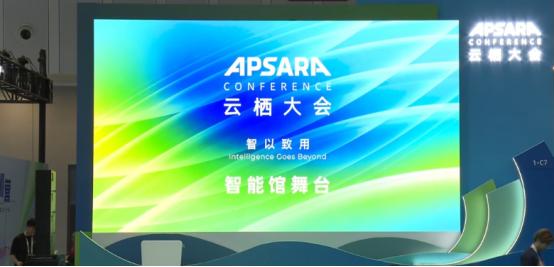
(Figure 1: Yunqi Conference Event, Source: Official Website)
The second shift is from the free C-end story to enterprise-level cash flow. The price signal is the most direct: on September 10, DeepSeek announced a substantial cut in the invocation price of its Flash series models, with the cache hit price reduced by 60%, and the input price for cache misses reduced by more than 33%.
Data shows that domestic large model services have officially entered a new round of inference cost reduction cycle; the weekly prices of Zhipu AI and MiniMax in September fell by 26.23% and 25.29% respectively, and the market pricing center has shifted from the previous theme popularity to the profit realization capability.
In contrast, there is real money in the public financial reports: MiniMax's financial statements disclose that its total revenue in 2025 was 79.038 million US dollars, a year-on-year increase of 158.9%, of which more than 70% came from overseas markets, and its annualized recurring revenue (ARR) increased by more than 100% in the past two months.
The third shift is the "local closed loop" of capital and computing power. On the policy side, Wu Qing, Chairman of the China Securities Regulatory Commission, announced at the Lujiazui Forum in June that the scope of application of the fifth set of standards for the Sci-Tech Innovation Board will be expanded to the artificial intelligence field. The Shanghai Stock Exchange subsequently issued guidelines for AI large model enterprises to apply the fifth set of standards, and the two Hong Kong-listed "large model dual leaders" Zhipu AI and MiniMax have rapidly advanced their A-share return process.
Gartner predicts that by 2030, 80% of China's local AI infrastructure will adopt domestically developed AI chips, while this proportion is only 20% at present.
Goldman Sachs Presents the "Position Switch" Roadmap
International investment banks have the most straightforward expression of the changes in AI investment. Calculations released by Goldman Sachs Research in August show that global AI investment will exceed 1 trillion US dollars in 2026; the proportion of AI capital expenditure in US GDP will rise from 1.8% in 2026 to 2.5% in 2027 and 2.8% in 2028.
Goldman Sachs has made the point clear in the title of its mid-year strategy report: "AI Investment Enters the Return Verification Period". The report predicts that the growth of AI capital expenditure will peak in 2026 and then slow down, and warns that the current expenditure of hyperscale cloud providers is expected to account for 92% of their operating cash flow, which is higher than the level during the dot-com bubble period.
As for "what to buy", Goldman Sachs' top 10 investment themes for 2026 released at the beginning of the year have pointed out the direction: AI transactions are shifting to a broader group of beneficiaries - storage manufacturers, connector companies, power and gas turbine industrial chains are strengthening, while the previously reliable "leading stocks" such as NVIDIA have seen their gains stagnate since summer. Goldman Sachs recommends buying "AI productivity beneficiary stocks", that is, companies that can use AI to cut costs or increase revenue.
For the Chinese market, Goldman Sachs stated in "Investment Strategy: Long China's AI Value Chain" that "China's AI industry has officially entered our field of vision", and sharply raised its 2026 ARR expectation for Chinese AI large models to 130 billion US dollars (the previous forecast was 100 billion US dollars), with an overweight position on the cloud computing and data center sector.
It is worth noting that Goldman Sachs also poured a basin of cold water on the fanaticism: its US team wrote in an article in August that the contribution of AI expenditure to macro GDP is exaggerated by both bulls and bears. After integrating the indirect effects, the impact of AI investment on US GDP growth in 2026 will be reduced by about 0.1 percentage points.
Selling Sentiment Spreads Across AI Chip Stocks
In the past two weeks, the sell-off wave of AI chip stocks has continued to spread, from South Korea, Japan to the United States, the global semiconductor sector has plunged as a whole. As of October 14, the Korea Composite Stock Price Index (KOSPI) has fallen by more than 9% in October, Japanese memory chip manufacturer Kioxia has fallen by more than 10%, and the Philadelphia Semiconductor Index (SOX) in the US stock market once fell by more than 3%.
This round of sell-off is not driven by a single factor. Reuters analysis points out that after the AI infrastructure investment boom has lasted for nearly four years, market sentiment is changing: rising interest rates, increased volatility in the bond market, rising AI financing costs, and whether huge capital expenditures can be converted into actual returns have all begun to be subject to stricter scrutiny.
Last week, Firmus, a data center operator in which NVIDIA holds shares, shelved its planned 5 billion US dollar IPO in Australia; at the same time, Chinese memory chip manufacturer Changxin Technology disclosed its R&D progress on the 4F² DRAM architecture, further triggering market concerns about the competitive landscape of the memory industry.
On October 10, Cao Kanyu, President of Changxin Technology, announced that key progress has been made in the R&D of the 4F² DRAM architecture, and it is expected to launch a new generation of DDR5 RDIMM products integrating this advanced technology by the end of 2026.
It is reported that as the mainstream configuration in the server market, DDR5 RDIMM has extremely high requirements for product performance indicators, operation stability and compatibility in its application environment. If stable mass production can be achieved in this direction, it will provide a new technical foundation for Chinese manufacturers to further enter the server memory market.
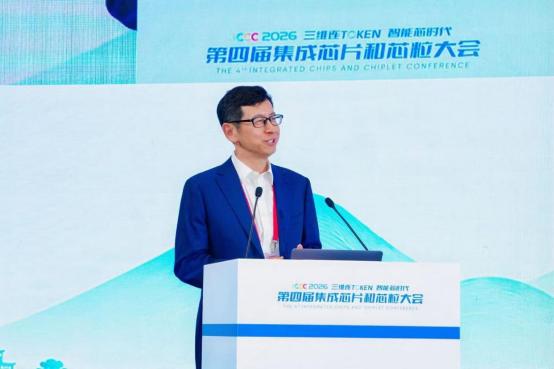
(Figure 2: Changxin Technology Plans to Release New Products, Source: Organizer)
Some views hold that the technological progress of Changxin Technology may become the direct catalyst for this round of memory stock sell-off, but the deeper change is that investors have begun to shift from chasing AI growth to examining capital returns.
Market participants pointed out that among the AI stocks that have risen significantly this year, memory chip stocks are particularly vulnerable to profit-taking; under the circumstances of crowded transactions and overvalued valuations, new competitive signals are enough to trigger concentrated sell-offs, and the change in competitive expectations brought by Changxin Technology just becomes the reason to trigger position reduction.
From Jensen Huang's 2 billion euro European investment check, to DeepSeek's 60% cut in invocation prices, to Changxin Technology's new technology release triggering the sell-off of AI chip stocks - AI investment in the second half of 2026 is switching its style from "paying for dreams" to "pricing for returns". For investors, the stock selection logic in the same track may have been different: the question is no longer "who has the largest model", but "who can make money from tokens".
(This article is for reference only and does not constitute investment advice. The market is risky, and investment needs to be cautious.)
This article is from the WeChat Official Account "Investor Network - Thinking Finance", author: Zhang Wei, published with authorization from 36Kr.