Where are we in the power equipment industry cycle?
Over the past year or more, electrical equipment has been one of the most volatile sectors on the A-share market (the electrical equipment here includes both main grid equipment, and power electronics and power supply links). A number of companies quickly became double-bagger stocks first, then took a sharp downturn after May 2026, with most of their market value cut by half from the highs.
During the same period when the A-share market cooled down from a hot state, leading companies such as Siyuan Electric and Eagle Energy successively disclosed their prospectuses on the Hong Kong Stock Exchange, planning to raise additional financing. The market is cooling down while capital activities are heating up. This seemingly contradictory combination just provides the best perspective to inspect the quality of this round of electrical equipment sector.
Return to the Starting Point After Frenzy
First, let's make a simple review of the market trend.
Essentially, this round of electrical equipment market rally is the result of the resonance of three main lines: grid equipment going global, large-scale energy storage overseas, and AI power supply chain. The three main lines continued to gain momentum from 2025 to 2026, pushing almost all sub-segments including transformers, tap changers, energy storage systems, AI power supplies, HVDC/SST into the fast track of valuation expansion.
The continuous decline since May 2026 does not mean that the above fundamental logic has suddenly collapsed, but that "the narrative has changed". On the one hand, the performance delivery pace of some companies is lower than the most aggressive market expectations; more critically, on the other hand, the market has begun to price in new concerns — easing overseas supply, rising trade risks, and position adjustment after overcrowded A-share AI trading.
Two recent landmark events have pushed this narrative change to a new level.
First, on August 27, 2026, the President of the United States signed an executive order banning the procurement or installation of some foreign-manufactured large power system equipment and related software in the United States. On the same day, A-share transmission and distribution equipment and inverter stocks collectively fell: Siyuan Electric hit the limit-down, Sungrow Power once plunged 14% during the session, and Jinpan Technology dropped by more than 7%.
Second, in September 2026, UBS downgraded the rating of China's electrical equipment industry. UBS pointed out that the sector has fallen by 30% to 50% from its high point within the year, mainly due to the reverse position adjustment of AI trading and the faster-than-expected easing of the global shortage of transformers and gas turbines; it also predicted that exporters will face share and profit margin pressure from 2028 to 2029.
The data at individual stock level is more intuitive. From the beginning of 2025 to the high point in 2026, the maximum increase of Sifang Co., Ltd., Siyuan Electric, Sungrow Power, and Jinpan Technology exceeded 400%, 220%, 160%, and 170% respectively; then they retraced from the high point by around 50%.
The Queue for Hong Kong Listings Remains Fervent
When the market cools down from a hot state, electrical equipment companies have all set their sights on the Hong Kong stock market. Companies including Siyuan Electric and Eagle Energy have successively disclosed prospectuses on the Hong Kong Stock Exchange, forming "A+H" dual listings. In fact, after the sharp drop in A-shares, the offering price on the Hong Kong stock market will inevitably be greatly discounted, which is equivalent to diluting the equity of original shareholders at a low level.
However, the pace of companies raising funds in Hong Kong has not slowed down, but is even somewhat eager to outperform each other. The biggest story driving this trend is going global — no matter participating in overseas grid equipment renewal or undertaking data center construction, the reasons for going global seem sufficiently convincing.
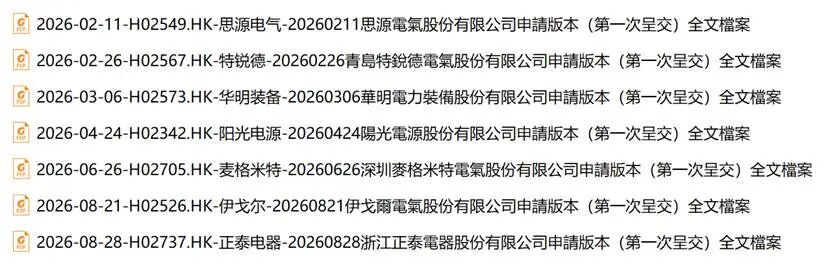
Figure: Summary of representative prospectuses of electrical equipment companies applying for Hong Kong stock listing Source: JinDuan Research Institute
The overseas electrical equipment market is huge, with a scale about 4 times that of China's domestic market.
Take the broad-caliber market size given in Eagle Energy's prospectus as an example: the global electrical equipment market size exceeded 8.5 trillion yuan in 2025, and is expected to exceed 12 trillion yuan in 2030, with a CAGR of over 7%. At the same time, electrical equipment under the traditional decentralized distribution architecture is facing the bottlenecks of low efficiency, high redundancy and large space occupation, and the demand for upgrading and iteration is clear.
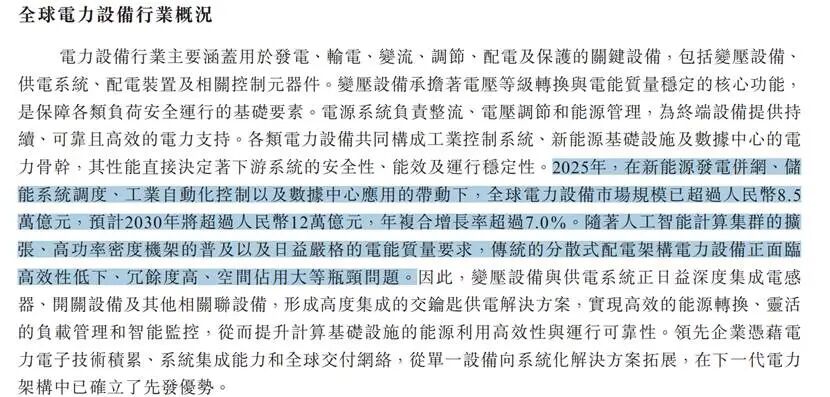
Figure: Discussion on global electrical equipment in Eagle Energy's prospectus Source: Prospectus
Going global is upgrading from "receiving orders" to "building systems". Overseas certification cycles often last for months to a year, the barriers for customer access are high, and companies also need to cope with localization requirements brought by policy fluctuations. To gain a firm foothold overseas, a complete layout of overseas production capacity, local services, channels and compliance systems is required, all of which require substantial capital expenditure.
The Hong Kong stock market just provides an international capital platform — financing, mergers and acquisitions, employee incentives, and brand endorsement can all be realized in this market.
However, a cold water comes immediately, which is geopolitical restrictions. The U.S. executive order and the EU's restrictive measures are also brewing. Major regions are trying to promote the "sovereignization" of equipment supply chains, and these policy orientations will significantly raise the risk discount of overseas orders on customer access and geopolitical uncertainty.
So the question arises: against the backdrop of sluggish stock prices, do enterprises still have sufficient reasons to queue up for discounted additional issuance in Hong Kong? To answer this question, we need to examine the domestic and overseas markets respectively.
Domestic Market: Stable Fundamental Base, But Limited Imagination Space
China's domestic electrical equipment sector is a large single market, whose core demand comes from the centralized procurement of State Grid Corporation of China and China Southern Power Grid. The advantage is that the two grids have been promoting localization for many years. At present, except for UHV components, the vast majority of electrical equipment has been localized; moreover, the harsh and complex working conditions in China have also put the technical strength of domestic enterprises in the global first echelon.
But in terms of pure industrial logic, the only variable for the prosperity of domestic grid equipment has always been the capital expenditure of the power grid. Therefore, electrical equipment is a typical capital expenditure-driven industry, whose business model is not outstanding.
Entering the "15th Five-Year Plan" period, State Grid has clarified 4 trillion yuan of fixed asset investment, China Southern Power Grid's five-year investment scale is approaching 1 trillion yuan, and the total investment of the two grids is likely to exceed 5 trillion yuan. The mainstream market expectation is that the average annual growth rate of national grid investment from 2026 to 2030 is slightly over 8%, which is still significantly higher than the GDP growth rate — from the total volume perspective, this is still a pretty good industry.
However, while the total volume center rises, the pressure is more reflected in prices. The demand for grid equipment is almost entirely dominated by the two grids, and the volume of State Grid is about 5 times that of China Southern Power Grid; tenders are organized by the unified platform of the two grids, and the customers have extremely strong bargaining power, which can be called the strongest buyer's market in the world.
Historical data has illustrated the problem: low and medium voltage and distribution network products are highly standardized, with fierce homogeneous competition. The average gross profit margin of the sector has long hovered at around 18%, the gross profit margin of cables is just over 10%, and that of transformers is about 20%, all significantly lower than the overseas market.
Since there is limited room to make a difference in the total volume, can enterprises achieve excess returns (alpha) by expanding product categories and increasing market share? In fact, the market structure in China is very difficult to change.
Electrical equipment is widely recognized as a decentralized industry with high research barriers. The horizontal products are extremely scattered, and primary/secondary equipment, AC/DC and different voltage levels cross to form more than 10 sub-segments; most domestic enterprises focus on several sub-segments, with prominent sub-segment/product-oriented characteristics.
The long-term solidified domestic market structure is rooted in the fact that downstream customers will make restrictive institutional arrangements for market share in centralized bidding; at the same time, the high technical and reliability barriers in the primary high-voltage and UHV segments lead to very few new entrants.
One overlooked side effect is that although grid customers have obtained cost-effective equipment supply, the platformization capability of electrical equipment enterprises has been suppressed since the very beginning. Compared with full-industry chain giants such as Siemens Energy, GE Vernova, and Hitachi Energy, domestic enterprises are far behind in scale and system integration capabilities.
Up to now, we can draw a simple conclusion: the domestic market can let enterprises survive, but it is difficult to let them thrive. Therefore, the domestic demand background of going global is fully convincing — seeking incremental growth overseas should be a strategic-level adjustment of enterprises for more than ten years.
In fact, after completing domestic substitution, leading domestic enterprises are no longer satisfied with a single product category, and are moving towards the combination of "transformer + switch + power quality/terminal/distribution network automation + energy storage", taking the first step from "multi-category" to "light platform". Private enterprises such as Siyuan Electric and Jinpan Technology have the fastest product category expansion in the process of going global, and are most expected to step into the prototype of a platform with higher revenue level first.
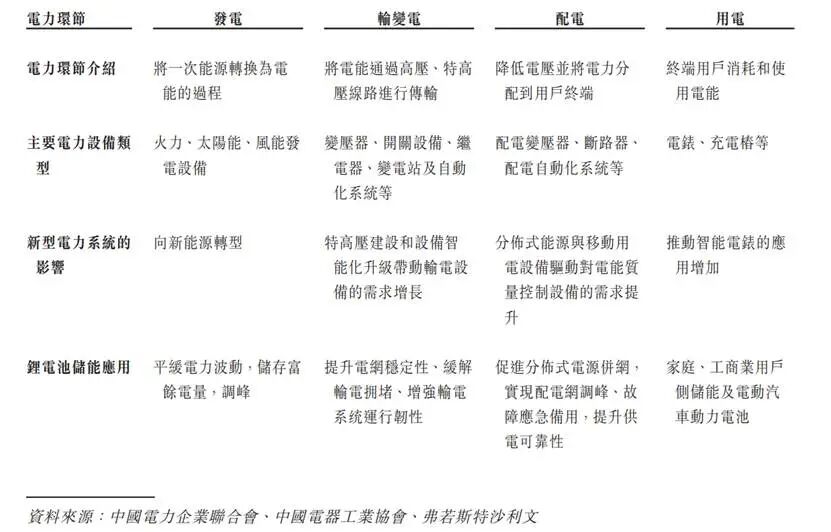
Figure: Electrical equipment covers a wide range of fields, and domestic enterprises do not yet have platformization capabilities
Overseas Market: Opportunities for China's Market Share in the Super Cycle?
From a global perspective, global energy investment is expected to reach about 3.3 trillion US dollars in 2025, of which power sector investment is about 1.5 trillion US dollars, exceeding the total investment in the upstream supply of oil, natural gas and coal — this reflects the reality that global energy investment is being reshaped by the "electric power era". Electrical equipment has become the core, running through the whole chain of "source-grid-load-storage".
Breaking down in detail, the rush of electrical equipment enterprises to go global is mainly driven by several forces.
Driver 1: Severe Supply-Demand Mismatch Worldwide
Since 2025, the market has significantly revised up its expectations for overseas grid investment, with the core of multiple positive factors superimposed: renewal of old grids overseas, new energy grid connection, manufacturing backflow and electrification trend, plus the additional load driven by AI data centers.
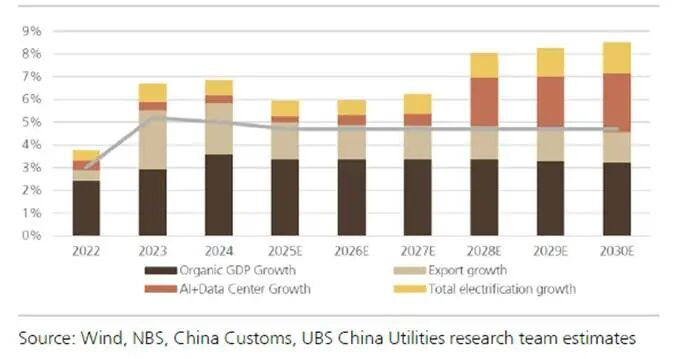
Figure: UBS's breakdown of the growth rate of domestic electrical equipment, going global and AI are the two biggest driving forces in the next 5 years
For a long time in the past, the transfer and expansion of local electrical equipment production capacity in Europe and the United States were slow, and a large number of equipment has been in service beyond their time limit for decades. What is more urgent is the increase in the proportion of new energy power generation — the total global power generation reached 31256 TWh in 2024, with a year-on-year increase of about 1300 TWh, and the combined power generation proportion of wind power and solar energy is about 15% — which makes the "old broken car" of European and American grids directly face the huge impact of unstable power generation.
To make matters worse, there are currently more than 2200 GW of new energy and energy storage capacity worldwide stranded in the grid connection waiting list. According to forecasts by authoritative institutions such as IEA, the problem of new energy installed capacity will only become more serious by 2050.
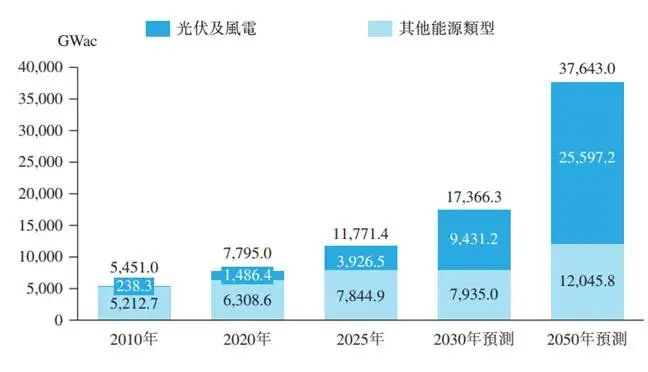
Figure: Global installed power generation capacity by energy source Source: IEA, etc.
The demand side is also rising. The construction of high-energy-consuming AI data centers, manufacturing backflow, electrification and the increase of new energy penetration rate make the global power demand present the characteristics of "rising base load and enlarged peak value". Power shortage is not a problem only in the United States, and the grids of Europe and the United States are already overloaded.
Therefore, the AI-driven power demand growth in the United States, the reform and growth expectation in Europe, new energy and power cooperation in the Middle East, and the accelerated electrification in emerging markets, etc., jointly support this round of ultra-long prosperity cycle of electrical equipment.
According to IEA data, global grid investment was about 400 billion US dollars in 2024, several times that of China; by 2030, to meet the demand, the annual global grid investment needs to be increased to more than 600 billion US dollars. Take the U.S. grid as an example, its investment is entering a "super cycle". According to EEI statistics, U.S. utility companies will invest more than 1.1 trillion US dollars in the next five years, close to the investment level of the past 10 years.
For Chinese enterprises, the shortage of overseas production capacity has also opened a gap for the first time in history in the traditionally closed electrical equipment market.
Driver 2: AI is the Strongest New Demand Engine, Bringing Decoupling Opportunities
AI is the strongest incremental engine of this round of demand. The IEA mentioned in its annual outlook *Electricity 2026* that the combined power consumption of global data centers, AI and cryptocurrency has exceeded 850 TWh in 2025, and is expected to exceed 1050 TWh by the end of 2026 — in just two years, the incremental power consumption brought by AI is equivalent to the total power generation of Germany.
In the future, AI will be the core growth pole in the global new power demand; especially in the United States, 50% of the new power consumption may come from AI-related fields. Huayuan Securities estimates that if the maximum U.S. power load in 2030 is realized according to the upper scenario of 1000 GW, the power supply gap on the U.S. power generation side will reach 182 GW; even if all planned retired units are extended in service, the gap will still be 89 GW.
The explosive growth of capital expenditure of AI giants on data centers has opened a new cycle of power demand; however, the U.S. electrical equipment production capacity is weak. Taking large transformers as an example, about 80% of them rely on imports.
