Apple Makes Its First Concession: iPhone 18 Pro Gets Official Price Cut, With Orders Slashed by 15%
The new Apple iPhones have barely been in consumers' hands before their prices have started to loosen.
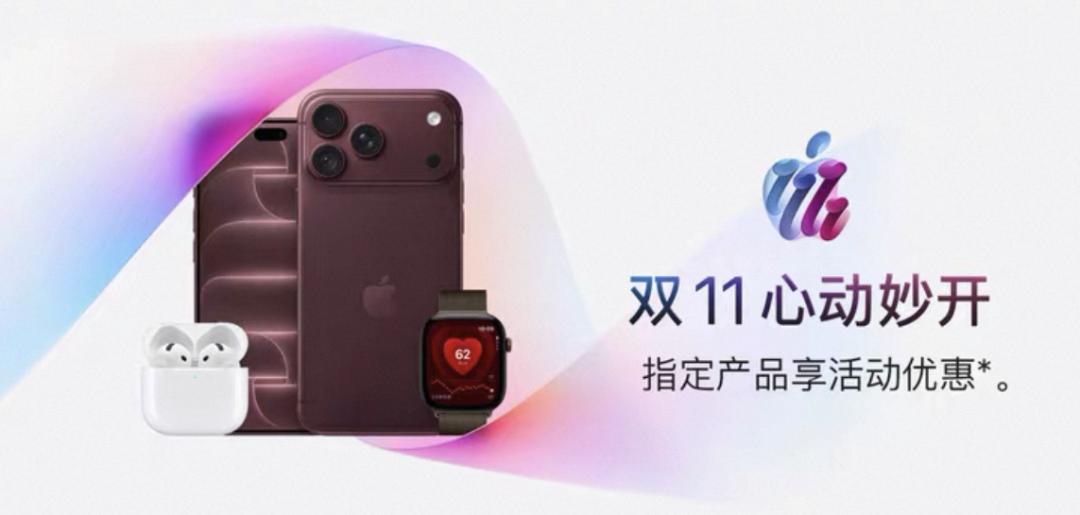
On October 15, Apple's official flagship store released its Double 11 promotion preview: The event kicks off at 8 p.m. on October 20. All models of iPhone 18 Pro and Pro Max are eligible for a 300 RMB coupon, which can be stacked with a 500 RMB trade-in subsidy. The official estimated final price starts at 9699 RMB. This is the first official price adjustment for the two models since their official launch on September 18, less than a month apart — a pace that is unusual for Apple.
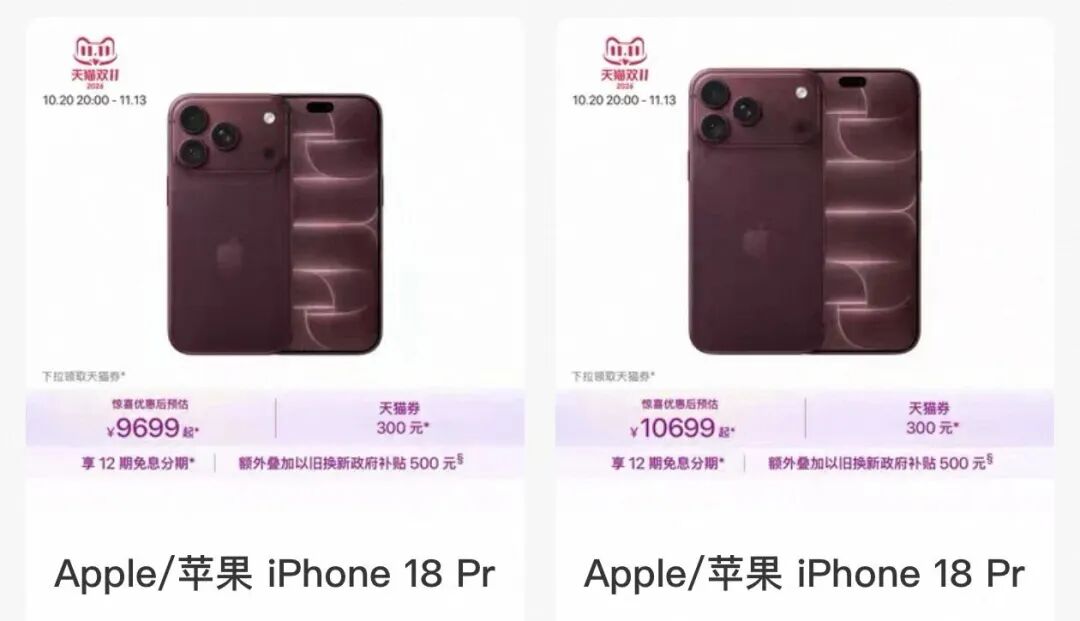
What is more subtle is that the subsidies are not covered by Apple. Apple's customer service made it very clear to the media that there are no Double 11 discounts on the official website, where products are still sold at full price, and the subsidies are paid by the platform. Apple maintains its official price position, leaving the profit concessions to the channels. However, there is no difference in the products from both sides, but the after-sales policies vary: the official website supports 14-day no-reason return and exchange, while the platform flagship store only offers 7-day service.
This generation of iPhones is already priced a bit reluctantly. Affected by the rising prices of memory chips, the starting price of the Chinese mainland version of iPhone 18 Pro has risen from 8999 RMB of the previous generation to 9999 RMB, and the starting price of Pro Max has increased from 9999 RMB to 10999 RMB, both of which are 1000 RMB more expensive. The price increase has directly impacted the demand side. Nikkei Asia reported on October 9 that Apple has notified some suppliers to cut parts orders for October, reducing them by at least 15% compared to the original plan, with some models seeing a 20% cut. Securities Times learned from supply chain companies that Apple has cut orders for iPhone 18 Pro by 10% to 15%, while increasing orders for Pro Max by 10% to 15%, leaving the total volume of the Pro series unchanged.
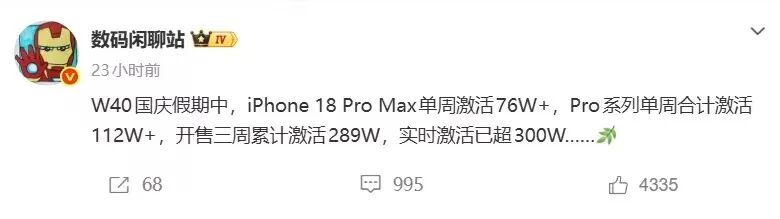
The price differentiation is more intuitive than the order figures. Three weeks after launch, the number of domestic activations of the iPhone 18 Pro series exceeded 3 million units, with about 322,800 units sold on the first launch day, 130% of that of the iPhone 17 Pro series in the same period. But almost all the popularity is concentrated on the Pro Max — during the National Day week, its single-week activation volume exceeded 760,000 units. The standard Pro model has long fallen below its launch price in third-party channels, with some quotes once as low as 900 RMB below the official price, and even scalpers refused to accept it at the time of the first sale.
Apple is not the only one loosening its price grip. On October 14, JD.com's Double 11 event kicked off, and the entire Xiaomi 17 series followed suit with price adjustments: the 17 Pro Max has a maximum instant discount of 1050 RMB, bringing the final price to 6249 RMB; the 17 Ultra also drops by 1050 RMB, priced at 7449 RMB with a free photography kit; the 12+256GB version of 17 Pro is reduced by 1000 RMB; the 17, 17T Pro and 17 Max are all cut by 550 RMB; the foldable MIX Flip 2 has a maximum discount of 1800 RMB, with a final price of 3199 RMB. It has been less than a week since the entire Xiaomi 17 Ultra series raised its price by 1000 RMB due to rising memory costs.
The official price of the 12GB+256GB version of Huawei Mate 80 is 4699 RMB, and the final price after stacking national subsidies and platform discounts is about 4099 RMB; OPPO Find X10 Pro Max also has quotes of 800 RMB off for all versions in some offline stores.
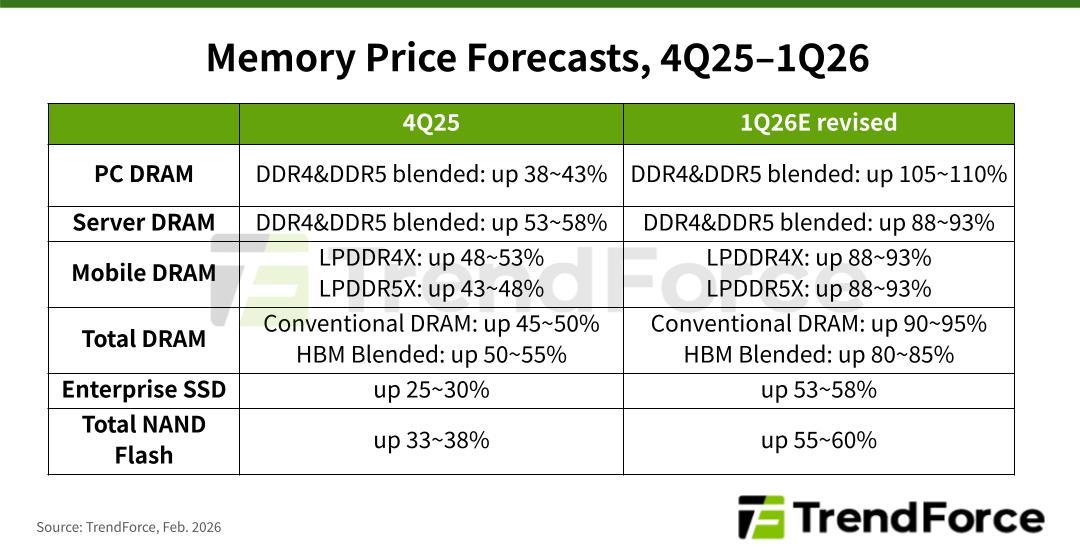
Behind all these moves is the same industry chain. Data from TrendForce shows that global DRAM contract prices rose by 90% to 95% in the first quarter of 2026; the quarter-on-quarter growth of DRAM contract prices in the second quarter is expected to slow down to 58% to 63%. Some sources from the supply chain stated that the proportion of memory in the total bill of materials cost of a smartphone has risen from 10% to 34%.
With costs rising, selling prices go up, consumers hold back, and manufacturers and platforms have to use subsidies to pull the final prices back down. As a result, an awkward scene has emerged during this year's Double 11: the official listed prices are getting higher and higher, while the actual final transaction prices are getting lower and lower.
The iPhone Duo will be officially launched on October 23, with a starting price of 15999 RMB, and it is not on this list of discounted products.