After being expelled for poisoning ByteDance's AI, his company has a valuation of 200 million US dollars.
On October 12, two years after being fired by ByteDance over the "poisoning" controversy, Tian Keyu publicly shared his account of the incident as he saw it.
He admitted that he had interfered with his colleagues' training tasks, but framed his motive as an attempt to help others, and gave this experience a rather noble name: "Immature" and "naive justice".
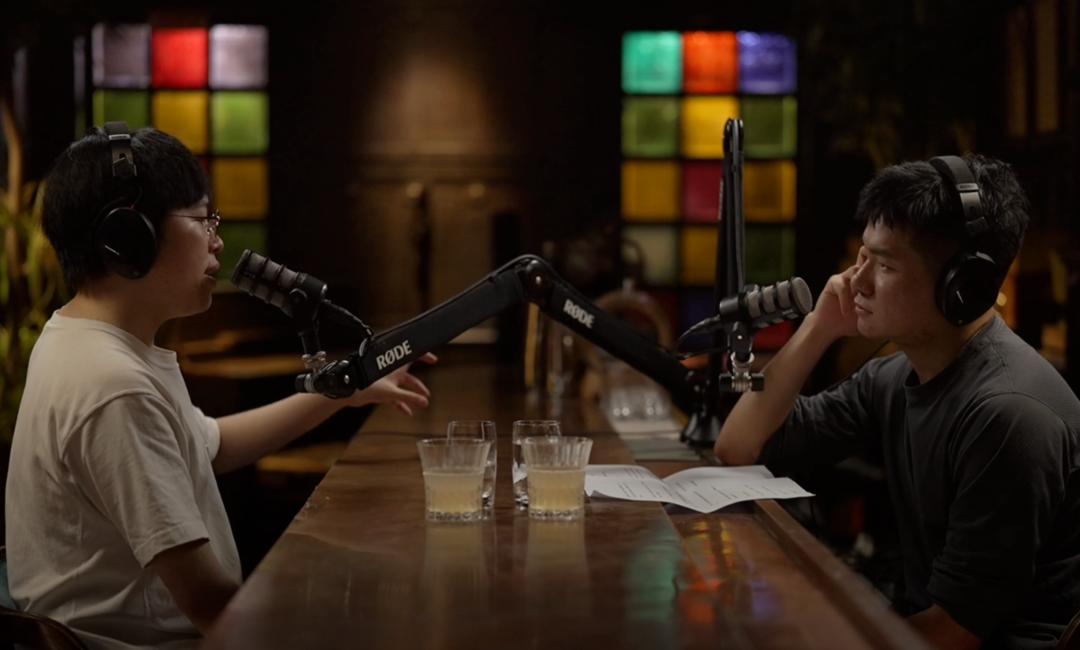
Footage from Tian Keyu's public interview.
By the time the response was released, he had already been the first author of the best NeurIPS paper, secured investment and started his own business.
Shortly afterwards, a long article published in the name of the affected parties refuted his account, and requested his current partners and investment institutions to conduct verification.
How did an intern stir up such a big storm at ByteDance, leading the company to dismiss him and sue him for more than 8 million yuan in compensation? And how did he frame his deliberate act of interfering with his colleagues' work as standing up for others?
Sabotaging training can also be called "naive justice"
At the time of the incident, Tian Keyu had been interning at ByteDance for nearly three years. During this period, he graduated from the School of Software of Beihang University, enrolled in Peking University to pursue a master's degree in data science in 2022, and participated in ByteDance's visual generation research. Though holding the status of an intern, Tian Keyu was no longer a newcomer who had just entered the workplace and knew nothing at all.
According to Tian Keyu's recollection, one night in 2024, after submitting his training task, he found that another colleague was scrolling through his phone and had not submitted his own task.
The colleague told him that even if he submitted it, it would be shut down by A.
A was a new intern that year. Tian Keyu claimed that A occupied resources and stopped other colleagues' programs, and the problem was not solved after the team gave feedback. His own tasks were not affected, and the computing power was sufficient, but as an intern who had stayed in the team for a long time, he felt that he should do something.

Therefore, he chose to ask GPT to help write programs to stop or hang A's tasks. He explained this as releasing resources so that others could use them normally.
According to him, the interference occurred over about ten days, around five times in total, and only affected A's experiments. He first emphasized that he operated "manually and in a scattered manner", and then admitted that "it could also be regarded as continuous".
Even counting only the number of times he admitted, this was not an impulsive act he could not resist for a moment.
Tian Keyu called A the "perpetrator", interpreted his motive as "naive justice", and at the same time admitted that his approach was immature, which eventually became "violence against violence".
ByteDance's internal notice back then did not adopt this set of "heroic narrative". Media cited the internal notice on November 5, 2024, saying that from June to July that year, Tian Keyu, dissatisfied with the team's resource allocation, maliciously attacked the training tasks of the team's research projects by writing and tampering with codes, resulting in resource loss.
Prior to that, ByteDance had dismissed him in August. The company's public statement in October clarified that the affected research projects belonged to the commercial technology team, and no formal projects or online services were affected; the online rumor that more than 8,000 cards were involved and the loss amounted to tens of millions of dollars was a serious exaggeration. The company corrected the loss rumor and confirmed the existence of the interference act.
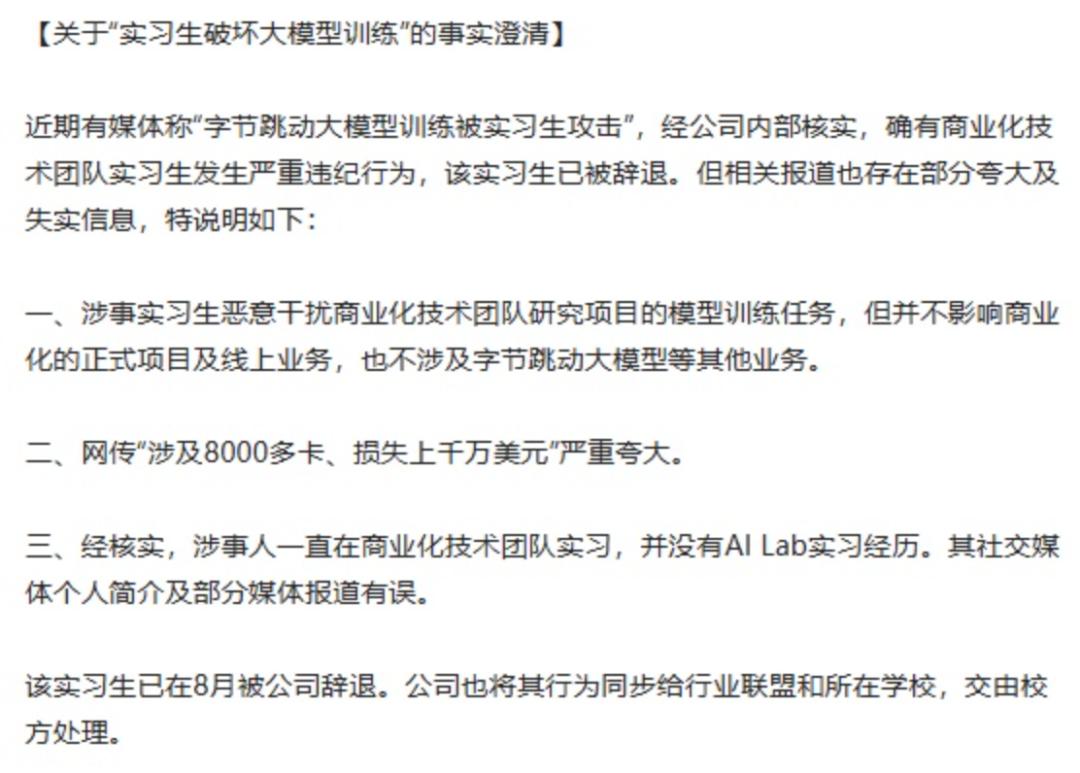
In October 2024, ByteDance publicly responded to the intern's training interference incident.
According to the statement of the affected parties, members of the same group had read and write access to the shared directory at that time. Tian was accused of modifying model files and underlying codes in the training environment, affecting multiple tasks. The permission that was supposed to facilitate colleagues' collaboration became the condition for the sabotage to happen in this statement.
In November, ByteDance filed a lawsuit, demanding 8 million yuan in compensation for losses, 20,000 yuan in reasonable expenses, and a public apology.
Media cited a ByteDance insider back then saying that the company initially handed over the post-dismissal handling to the school, but Tian repeatedly denied the incident to the public, shifted the blame to other interns, and even reported to the police that he was being slandered, so the company decided to sue him.
In this self-account, Tian Keyu denied framing others, saying that he called the police to find out the author of the online post, and had confirmed with the company in advance. He admitted that he violated the rules and said he should pay compensation, but he did not accept the public's description of the scope of his behavior and his character.
Regarding his denial back then, his answer was: "I never denied my behavior." This statement directly contradicts the situation described by the insider to the media back then, and there is no proof other than his own guarantee.
The "poisoning" controversy plus the award became the double buff for starting a business
On April 3, 2024, the draft of the visual autoregressive (VAR) image generation paper co-authored by Tian Keyu, researchers from Peking University and ByteDance was released to the public. In December of the same year, this paper won the NeurIPS Best Paper Award, with Tian Keyu as the first author, and the paper was co-signed by Peking University and ByteDance.
NeurIPS is an important academic conference in the AI field, and this paper proposes a method to generate images from coarse to fine. When he won the award, he had already been dismissed and was involved in the lawsuit.
The conference's statement on December 10 said that the award committee treated all accepted papers equally, selected them independently based on their scientific value, and did not consider factors such as the author's identity separately.

The original homepage of the VAR paper.
Tian Keyu recalled that when he won the award, he was facing public opinion and litigation, and his first reaction was that he might still be able to find a job in the industry. He also mentioned that a large model company he originally wanted to join revoked the offer.
Later, he chose to start a business, and called Meng Xing, a partner at 5Y Capital, his first investor. There was also a fund he really liked, which kept pressing him about the ByteDance incident in the last online meeting, and he cried when he got home that night.
In his account, these inquiries once made him desperate. He later admitted that the other party needed to build trust.
According to media reports in October, his AI lab secured nearly 30 million US dollars in investment from 5Y Capital and IDG Capital, with a post-investment valuation of 200 million US dollars. His entrepreneurial direction is a multimodal foundational model that can predict the future, which is the so-called world model by the public, and the research still focuses on images and videos.

Talking about the attention brought by the ByteDance incident, he did not deny the benefits: coupled with the best paper award, it formed a "double buff", and this popularity did help a lot for his startup. He then emphasized that what he valued more was the growth he gained from the incident.
A single sentence of "immaturity" cannot erase everything
On October 12, 2026, the podcast "Elsewhere" released the text excerpt of Tian Keyu's interview, followed by the launch of the audio and video version. The program was actually recorded in July.
At that time, the first-instance judgment ordered him to pay about 500,000 yuan in compensation, and ByteDance had filed an appeal.
Tian Keyu said he was willing to pay the compensation determined by the court to ByteDance, and also admitted that his behavior wasted the team's time.
After the text version of the interview was released, a long refutation article spread on GitHub. The publisher claimed to organize materials based on the experiences of the affected parties, internal records and codes, pushing the start of the interference back to March 2024, involving multiple projects such as LlamaGen, Goku.
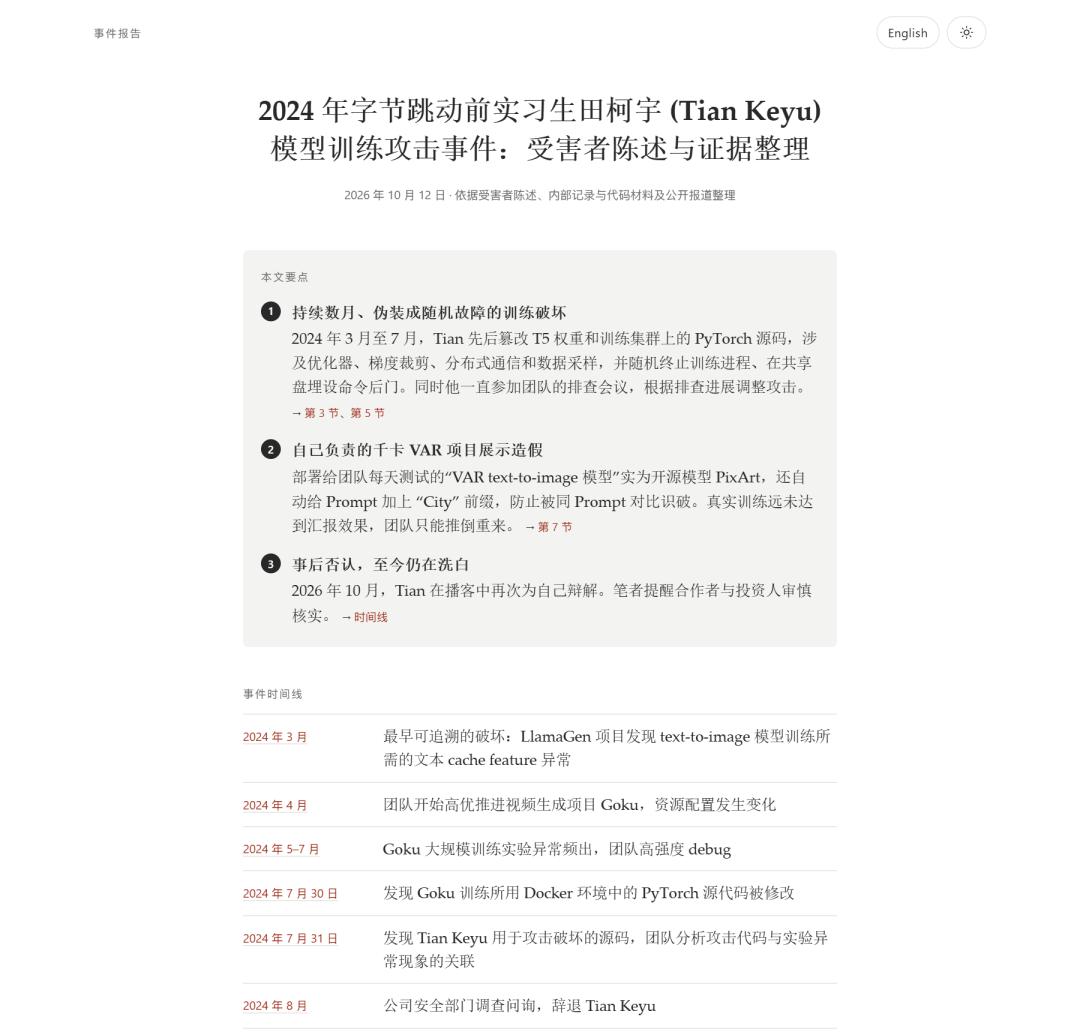
The statement published by the publisher on GitHub Pages.
The five confirmers listed in the long article were all Tian Keyu's colleagues in the same group during his internship back then.
Their accounts are far less lightweight than his "naive justice". The team initially regarded the training anomalies as technical faults, and colleagues in Beijing, Shanghai and Seattle took turns to troubleshoot. Sometimes when they finally found the abnormal machine and restarted the operation, the fault disappeared again.
They also alleged that Tian Keyu had always stayed in the communication group, attended the troubleshooting meetings, and adjusted the interference code according to the troubleshooting progress. He could see how his colleagues were troubleshooting, and the time everyone spent on the fault, but he still used this information to continue the interference.

On July 30, colleagues found abnormal codes in the training environment, and the next day they found the relevant codes in his personal directory.
The publisher also alleged that Tian Keyu forged R&D results in the internal VAR text-to-image extension project of the company: the demo program for the team's daily test actually called the open-source model PixArt, and would automatically add the word "City" before the prompt words, to prevent colleagues from comparing and seeing through with the same prompt words.
According to the statement, the team's post-event review found that the model Tian actually trained was far less effective than the effect he reported and demonstrated before.
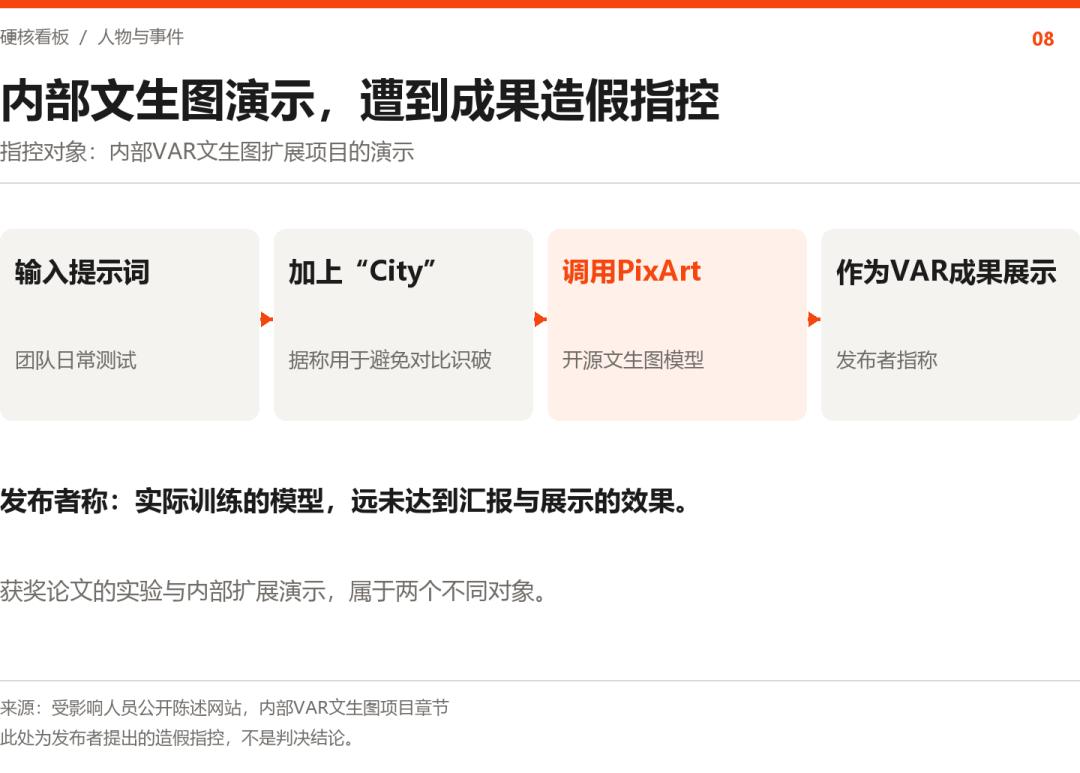
Allegations put forward by the affected parties against the internal text-to-image extension demo.
The publisher finally asked his current collaborators and investors to verify with the participants of the project back then before cooperation or additional investment, to confirm the model source and actual training progress.
Talking about what would happen if similar problems occurred in his own company, Tian Keyu said that from the perspective of a leader, he would think about how to resolve conflicts, and even intervene before conflicts arise, to prevent problems before they happen.
"Of course, whether as an individual or a founder, you have to treat everything in a more mature way."
"Immaturity" is really a handy word. He admitted the mistake, but as if he left all the responsibility to his two-year-ago self.
This article is from the WeChat official account "Hardcore Dashboard" (ID: yinghekb), author: Li Feng, published with authorization from 36Kr.