Cook: The beta version of China-market Apple AI will be rolled out in October, and Chinese users will no longer need to wait for it?
This week, Apple has been bustling yet tangled.
Apple's market capitalization has topped 5 trillion US dollars, but the iPhone 18 Pro has seen its orders cut by 15% to 20%; more than a dozen new smart home products were launched at one go, yet Chinese users can only buy the HomePod mini 2; it is rumored that Apple Intelligence for the Chinese mainland will be launched in December, but the new version of Siri is still not on the first batch of the list.
On October 15, Tim Cook, Executive Chairman of Apple's Board of Directors, paid a visit in Shanghai. When talking about Apple Intelligence, he said that Apple Intelligence and the relevant Tongyi Qianwen large model from Alibaba have indeed been approved, and the beta version will be released later in October, including the first batch of features such as real-time translation, writing tools, and photo eraser, but Siri AI is not included. "But we are very glad that the first batch of core Apple Intelligence features can be rolled out gradually," Cook said.
Apple holds the strongest hardware pricing power across the globe, but the race for entry points in the AI era is eroding its advantage of "the same experience worldwide".
Standing at this juncture is John Ternus, who just took over as CEO in September. This new leader with a background as a hardware engineer needs to answer not only "how to make the next iPhone", but also a more complex question: as mobile phones get increasingly expensive and AI becomes a new reason for purchase, how can Apple convince consumers that the premium they pay today will bring a usable future in return?
The 5-trillion-dollar enthusiasm meets the cut orders
The capital market and the supply chain are scoring Apple from different perspectives.
At the close of US stocks on local time October 14, Apple was quoted at 342.96 US dollars, with a total market capitalization of 5.01 trillion US dollars, equivalent to about 33.53 trillion RMB, making it the world's second company with a market cap exceeding 5 trillion US dollars after Nvidia.
Prior to that, another news came from the supply chain: Apple required some suppliers to cut the production of components for iPhone 18 Pro and iPhone 18 Pro Max, and the relevant orders in October were reduced by 15% to 20% compared with the original plan.
Although this news has not been confirmed by Apple and does not involve all suppliers, the signal of pressured demand still deserves attention.
Market capitalization reflects the expectation of future profits, while component orders reflect the stocking judgment at a specific stage, and the two do not need to change synchronously. But when the capital market continues to raise expectations, Apple must also come up with new basis for growth. That's why Apple's newly released HomeView is so noteworthy.
More than a dozen new products at one go, is Apple building its "Apple Home" ecosystem?
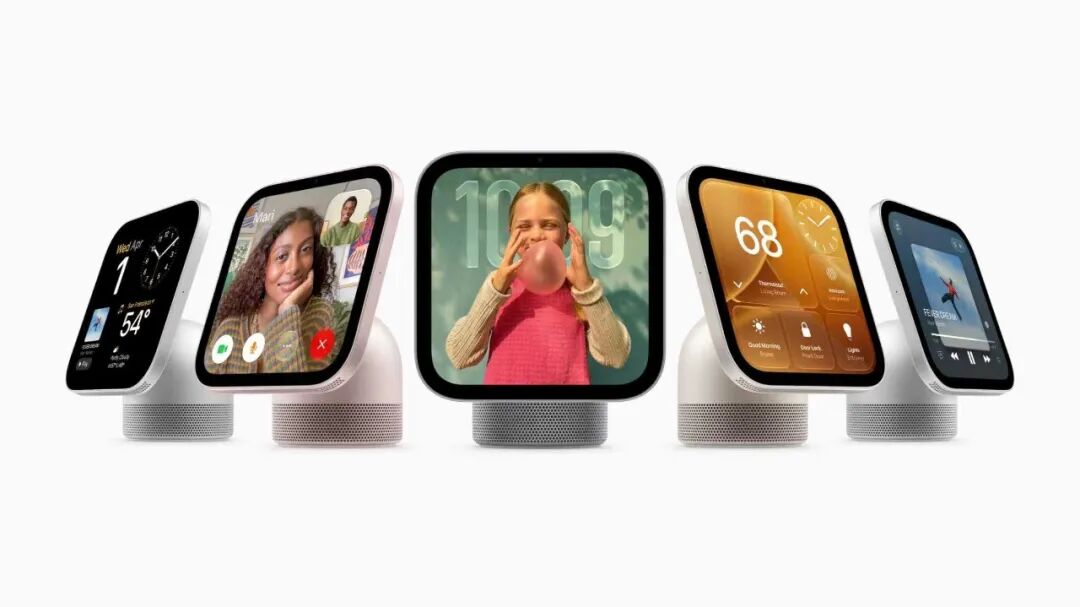
On the evening of October 13 Beijing time, Apple launched four heavyweight new home products at one stroke: HomeView, a smart home hub with a screen, the latest Apple TV 4K set-top box, the brand-new smart speaker HomePod mini 2, and the smart home accessory line Home Collection.
What exactly can HomeView do? To put it simply, it is a smart screen shared by the whole family that can recognize different users. On the one hand, users can use it to view the footage of home cameras, control compatible smart home devices, or make FaceTime video calls; on the other hand, it can identify family members standing in front of the screen, switch to personal content, and call the calendar, messages and reminders on the iPhone with the help of Siri AI.
For Apple, the significance of this screen goes far beyond generating additional hardware revenue. Apple is trying to extend the personal services built around the iPhone to the home, giving Siri more opportunities to be used. A terminal that stays at home all the time gives Apple a chance to further participate in people's daily family life.
This also makes HomeView a test of Apple's AI capabilities. Whether it can understand the needs of different family members and connect personal information with device control will determine whether it is just a convenient family screen, or a reliable smart assistant worth relying on.
Back in 2014, Apple released the HomeKit platform, making it one of the first tech giants to enter the smart home track. Later, it successively launched HomePod and HomePod mini, and undertook part of the functions of the home hub through Apple TV. But more than a decade has passed, compared with mature product lines such as iPhone, Mac and Apple Watch, Apple has never launched a smart home product that can truly represent its ambitions.
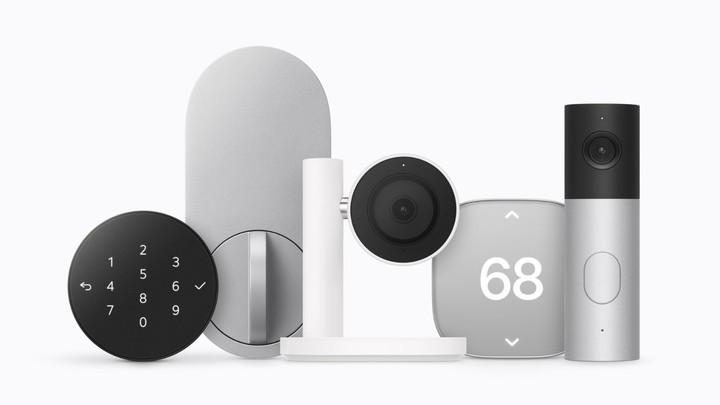
Now, in addition to the four new home products, Apple has also launched Apple Home Collection in cooperation with LG and Schneider Electric. LG brings smart locks, video doorbells, indoor and outdoor cameras, thermostats, temperature and humidity sensors and other products; Schneider Electric also launches thermostats and room sensors. A product matrix of as many as a dozen products has formed Apple's "Apple Home".
Apple independently develops the hub, cooperates with LG to make accessories, and embeds Siri AI into the living room, marking a fundamental shift in its strategic posture. The price of 299 US dollars is lower than some analysts' expectations. Research institution Counterpoint believes that this shows that Apple's top priority is the popularization of the ecosystem rather than short-term hardware profits.
But this path faces a completely different competitive landscape in the Chinese market from the US market. Xiaomi's AIoT platform has connected more than 1 billion devices, and Huawei's HarmonyOS Smart Home has connected 182 million devices. The two together occupy an absolute dominant position in China's smart home ecosystem.
In the key category of smart speakers, Xiaomi's sales share is as high as 57.5%, while Apple's sales share continues to shrink. More importantly, there are differences in strategic positioning: Apple's ecosystem vision is to "manage devices", while Xiaomi focuses on "managing people, vehicles and homes", and Huawei focuses on "managing an entire space". Domestic manufacturers have long moved from single-product intelligence to whole-house intelligence, and it took Apple 12 years to make up for the lesson of launching a screen-equipped home hub.
Chinese users cannot keep waiting forever
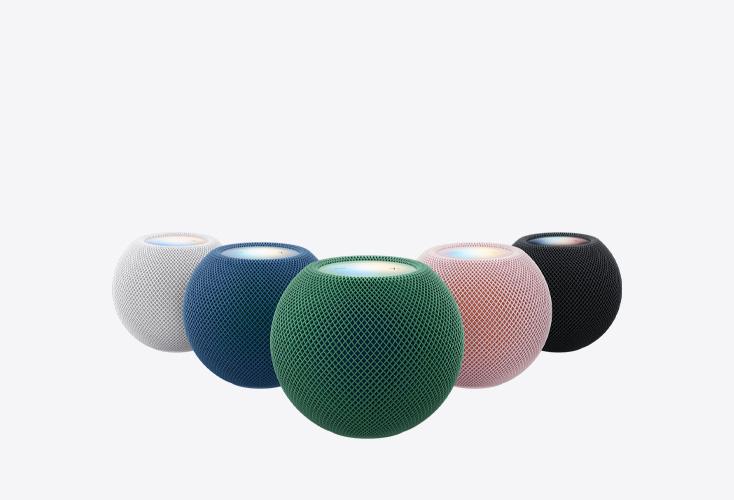
The experience Apple is building is difficult for Chinese users to fully access. The first batch of regions where HomeView is launched does not include the Chinese mainland. Although the HomePod mini 2 has a Chinese mainland version priced at 1099 yuan and is scheduled to go on sale on October 30, buying a speaker is still far from the full use of home AI services.
HomeView, the core product of Apple's smart home layout this time, happens to avoid the market where it most needs to prove itself. For a market that has already formed multiple mature ecosystems such as Mi Home and HarmonyOS Smart Home, this absence is hard to ignore.
The wait on the mobile phone side has not ended either. According to media reports, Apple plans to launch Apple Intelligence in the Chinese mainland in December, but the new version of Siri is not included in this launch, and the features that will be available have been launched overseas for about two years.
In the midst of the waiting, clearer signals have emerged for the launch of the Chinese mainland version of Apple AI. The information of telecom equipment network access license from the Ministry of Industry and Information Technology shows that the relevant models of iPhone Duo and iPhone 18 Pro series have completed the renewal of certificates on September 29, with newly added filing numbers carrying large models, corresponding to Apple Intelligence, Tongyi Wanxiang and Tongyi Qianwen respectively.
If key capabilities are missing, the ecological value that Apple demonstrates globally can hardly be fully delivered to Chinese consumers. Usage habits for both personal devices and smart homes will take shape as devices accumulate. Once the smart lock is installed, the lamps are connected, and the automation rules are set up, latecomers need to give sufficiently convincing reasons to get users to migrate.
How can the "hardware veteran" catch up with the new AI story?
All these challenges are finally placed in front of Ternus. A graduate majoring in mechanical engineering at the University of Pennsylvania, he joined Apple's product design team in 2001, participated in the hardware development of iPad, AirPods, and multiple generations of iPhone, Mac and Apple Watch, and has long been working on integrating design, materials, performance and reliability into a mature product.
In Apple's official introduction, reliability, durability, material innovation and repairability are important parts of his work; the Financial Times describes him as a calm, capable and low-profile manager. Compared with strong personal expression, his public image is closer to a person in charge who values engineering details and product delivery.
This resume suggests a possible direction: Apple will continue to give full play to its advantages in software and hardware integration, embed AI into devices, and create value through experiences that users can perceive. HomeView embodies this idea. It can recognize different family members, switch personal content, and use Siri to access the personal context of the iPhone.
Apple is not in a hurry to find a story that completely replaces the iPhone. Instead, it tries to expand the scope of the iPhone's functions, making the mobile phone the foundation of personal information and services, and then increasing usage scenarios through home devices. New terminals can not only bring hardware revenue, but also enhance the stickiness of the entire ecosystem.
The foundation Cook has built over 15 years has brought Apple to a scale of hundreds of billions of dollars, and its profit structure has long been no longer relying solely on selling mobile phones. At present, Apple's biggest shortboard and opportunity both lie in AI. The new version of Siri has come late, and the Chinese mainland version of Apple Intelligence has been delayed again and again. Apple's arrangement of letting a hardware engineer make up for the lessons of software and AI shows that in the next decade, Apple will still rely on terminals to define experiences: AI should be built into devices, not floating in the cloud.
Ternus is taking a path of "hardware driving AI". The product line will continue to expand, but what is expanded is the hardware with AI entry points. Pure hardware advantages such as foldable screens, imaging, and chips are the cards he is best at, and also the most effective cards in the Chinese market in the short term.
HomeView is also a sample: screens, microphones, cameras are all hardware capabilities, embedded with Siri and AI capabilities. Apple will most likely lay out more entry points along the lines of "at home, on the body, on the desk", and Vision Pro and the foldable iPhone Duo are also on this track.
Turn today's premium into tomorrow's experience
Apple's deepest "tangled" point at the moment is that it can continue to sell hardware relying on its existing advantages, but the AI and ecosystem synergy that its future growth depends on still need to be realized one by one.
Judging from the news this week, Apple's next direction has been revealed: stabilize the basic market of the iPhone, expand entry points through new scenarios such as home, and then use AI to enhance the value of the entire ecosystem. Ternus's experience in hardware will help build these entry points; whether they can play a role in the long run depends on whether software, services and localization can keep up.
Adopting local models or finding cooperative partners does not necessarily mean that the experience will be compromised. The key is that Apple needs to integrate local services, Chinese understanding, device connection and privacy protection into a truly usable product, rather than just ticking a few more boxes on the feature list.
Apple is still good at selling products to users. Next, it needs to prove that it can also deliver the promised AI to users. After all, consumers are paying today's price, and they cannot wait forever to experience the promised future.
This article is from the WeChat official account "IT Times" (ID: vittimes), written by Jia Tianrong, edited by Sun Yan, and published with authorization from 36Kr.