Many former DJI employees have successively achieved highly impressive major results one after another.
These entrepreneurs from various factions are highly sought after, which on the surface seems to be the market's thirst for technology, but in essence, it reflects that the capital market is willing to pay a premium for a tech giant's organizational culture, talent pipeline and proven entrepreneurship methodology.
Twenty years ago, the most favored entrepreneurs by capital were overseas returnees.
With a diploma from Stanford or UC Berkeley, plus two years of work experience at Microsoft or Google, they would return to China and be chased by all kinds of angel investors urging them to launch their own businesses.
Ten years ago, the most popular entrepreneurs among capital institutions were talents who graduated from top tech giants.
Having work experience at Alibaba, Tencent or Baidu was almost equivalent to a cash voucher at VC firms, which could be directly redeemed for millions of dollars in investment.
Today, the most sought-after entrepreneurs by capital are those from the DJI ecosystem.
As long as they have the two buffs of "DJI background" and "hardware track experience", they face the risk of being frantically targeted by investment institutions and reaping huge returns one after another.
Last year alone, 17 startups founded by "DJI alumni" secured financing, with the smallest deal reaching several million RMB and the largest hitting hundreds of millions of US dollars.
Many investment institutions even rented offices near DJI's headquarters in Shenzhen, specifically tracking news of core DJI employees leaving to start their own businesses, for fear of sending capital too late and missing the next Unitree or Bambu Lab, making them far more dedicated than professional headhunters.
DJI today is exactly the Huangpu Military Academy in the hardware sector.
The success of Bambu Lab and Unitree has built a sterling reputation for the "DJI alumni" group. Beyond these two superstar companies, other startups such as Lingbot Robotics that makes lawn mowing robots and robot chassis, Vigorun that produces high-speed hair dryers, Stone Intelligence that works on general embodied large models, and EcoFlow that focuses on energy storage, are all highly competitive in their respective fields.
But this situation is not necessarily something DJI is happy to see.
As we all know, to earn the title of the Huangpu Military Academy in a certain industry, three conditions need to be met.
First, the company must have a sufficiently large number of employees leaving to start their own businesses.
Second, those who leave must not be incompetent, but capable of achieving real business success.
Third, even after so many outstanding talents have left, the company itself must not collapse. Otherwise, it is not a Huangpu Military Academy, but a group of people who are useless when gathered together yet all shine brightly when scattered.
Therefore, calling a company the Huangpu Military Academy is more of a sarcastic remark than a compliment. You have to be able to cultivate strong talents, precisely let these strong talents leave on their own, and keep the company operating stably after they leave. This balance is extremely tricky to maintain.
Yet DJI has managed to pull off all of that.
01
Let's start with employee turnover first.
When did DJI begin to deliver a large number of talents to the whole society? It was around 2017.
At that time, DJI was sanctioned by the United States for the first time as a technology enterprise, and its drone business gradually hit the industry ceiling, while its imaging hardware business that now brings in huge profits had not yet started. The company encountered its first development bottleneck.
When development slows down, there is no longer enough room to accommodate all existing talents.
DJI just happens to have an extremely high talent density. During the period when the drone business was advancing rapidly, a large number of middle-level backbones were given important responsibilities. These people are generally characterized by strong entrepreneurial spirit, excellent technical capabilities and abundant creative ideas, and are fully capable of leading a whole new business line from scratch.
Their shortcoming is that they are hard to manage, as they prefer to build their own independent team and be the leader. They are also better at developing products and technologies on the front line, rather than doing management and team building work behind the scenes.
However, when development slows down, the company no longer needs so many heroes who charge forward, but needs more managers who can sort out processes and steady operators who can continuously optimize and iterate existing products.
A mismatch of demands emerged between the company and its employees, and a group of middle and senior business leaders chose to leave and start their own careers.
In 2019, DJI launched an internal rectification campaign, and later adjusted its organizational structure to solve the problem of independent fiefdoms and fragmented internal factions. This wave of movement further accelerated the departure of a large number of employees.
Therefore, we can see that the period from 2017 to 2020 was the peak of DJI talents leaving to start their own businesses.
In 2017, Wang Lei, head of the battery R&D department, founded EcoFlow, and Wei Jidong, head of the RoboMaster project, founded Lingbot Robotics.
In 2019, Wang Mingyu, vice president of R&D, founded Ruyuan Technology.
In 2020, Tao Ye, head of the consumer drone business, founded Bambu Lab, and Zhao Cong, head of the visual AI department, founded Gotodata.
This group of entrepreneurs who left collectively formed the earliest "DJI alumni" group.
The latest wave of departures took place in 2025, when a large number of technical backbones and top sales talents left the company in groups. Some of them joined other top hardware manufacturers such as Insta360 and Dreame, while others chose to start their own businesses and embrace the wave of the AI era and embodied intelligence.
There is a clear trend that in the past one or two years, newly founded companies by DJI alumni are mostly robotics companies or hardware products with AI concepts. The success of Wang Xingxing, a well-known former DJI intern and founder of Unitree, has also created a myth in the capital market that "products from DJI are all high-quality", making countless investors willing to put real money down to lay the first brick for the entrepreneurial road of DJI's former employees.

Many investors even actively encourage DJI's middle-level employees to start their own businesses. No matter what they do or how good their product is, the investors will pour money in to grab a stake first. With real money placed in front of them, even a company as strong as DJI cannot avoid internal unrest among its employees.
In this way, DJI has become the company that exports the largest number of talents in China's hardware sector.
02
It just so happens that the entrepreneurs from DJI background are generally very competitive. Even excluding the attractiveness of the "DJI alumni" label to the capital market and top talents, this group of people are generally very capable of delivering results.
The most prominent feature of the DJI alumni group is that they prefer to start businesses in teams and fight collectively.
Tao Ye, CEO of Bambu Lab, used to be the head of the consumer drone business unit. Its CTO used to be the head of DJI's system engineering department. Its COO once served as product manager for DJI's goggles and FPV drones. The founding team also includes engineers from DJI's gimbal department and software system design department.
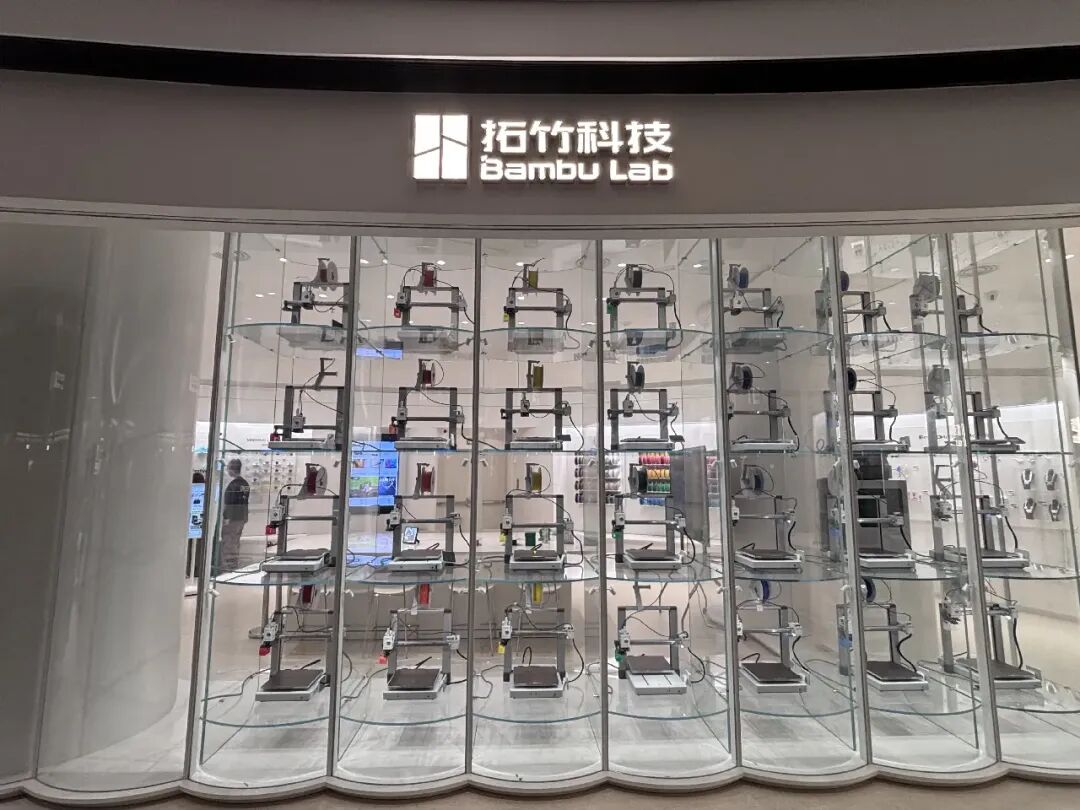
This core team covers every link from software to hardware, from supply chain to algorithm, leaving no blind spots.
Another company founded by a DJI alumnus, Future Ola that makes electric toothbrushes, has CEO Liu Yihan who used to be an aerodynamic engineer at DJI, CTO from DJI's motor control team, chief engineer who used to be DJI's overall design engineer, and COO who was in charge of supply chain and innovative structural design of power systems at DJI.
Although the overall level of this team is not as high as that of Bambu Lab, it is a very targeted team with no shortcomings for the electric toothbrush category whose core competitiveness comes from motor performance.
Last year, Gao Jianrong, former assistant to DJI's general manager and head of supply chain, founded Motion Tech to focus on embodied intelligence. The partners in charge of R&D are Li Haonan, former head of DJI's flight system technology middle platform, and Yang Shuo, former technical director of DJI in the early years.
The result of engineers starting businesses together is that these companies carry an indelible DJI imprint.
For example, their consistent pursuit of "usability".
DJI has always been committed to turning originally professional, complex or poorly experienced scenarios into products that ordinary people can use directly.
Take drones as an example. Before DJI rose to fame, drone enthusiasts generally did not focus on flying, but on modifying the drone itself.
Products at that time generally had many defects and were far from perfect. So in the drone community, enthusiasts would generally buy spare parts by themselves, assemble the drones on their own, and study flight skills painstakingly.
The emergence of DJI completely changed the rules of the consumer drone industry. Its products are extremely usable, with very few hard defects, no longer relying on DIY, so even newbies can quickly get started to complete flight and shooting tasks.
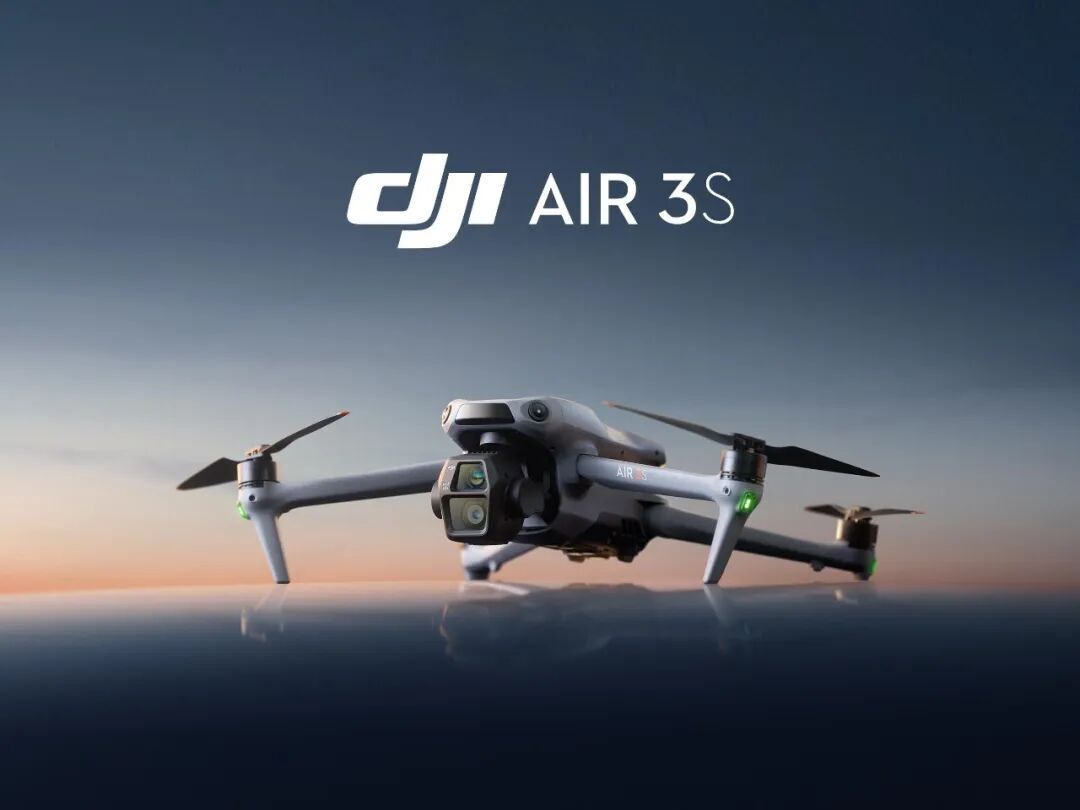
This is DJI's logic: it will not launch a product until the technology is mature enough. If the product is not easy to use, it is destined to only occupy a niche market and cannot make big profits. If you upgrade it to a very mature hardware product, the market size will multiply again and again, allowing the company to reap huge profits.
Many "DJI alumni" companies are also following this path.
The most typical example is Bambu Lab. As a latecomer in the industry, Bambu Lab entered the 3D printing track five or six years later than its peers.
Before that, most of the products of its peer manufacturers were imperfect, hard to operate, not precise, and prone to failures, which highly relied on users' hands-on ability. Bambu Lab directly raised the level of consumer 3D printing products to the quasi-industrial level.
As a result, Bambu Lab immediately became a dark horse in the 3D printing sector, and now it has occupied nearly 30% of the global consumer 3D printing market share.
Abundant engineer resources bring leading technical capabilities, leading technical capabilities lead to extreme usability, extreme usability is transformed into mature products, and mature products bring commercial success.
This is the standard growth path for companies founded by DJI alumni.
In addition, strategies such as strong supply chain control, quickly launching low-end models to lower the threshold and ignite the mass market, and focusing on overseas markets, are all proven successful experiences verified by DJI.
Therefore, DJI does have the attributes of the Huangpu Military Academy in the hardware industry. It not only exports talents, but also exports a set of proven and effective hardware entrepreneurship methodology.
At the very least, it has not exported toxic workplace culture to the society, right?
03
Finally, back to DJI, why has the company not collapsed even after it has exported so many outstanding entrepreneurs?
Lin Yuan, founder of Vigorun and also a DJI alumnus, once put forward a radical view: If DJI had blindly invested 5 to 10 million RMB in every excellent departing entrepreneur from the very beginning, and empowered them with its own supply chain and channels, DJI's market value would be at least 10 times its current size.
That being said, in reality, DJI is neither able nor willing to do so.
Even more, for this company, the continuous replacement of talents is part of its management philosophy.
In the early days, DJI was a very geek-style company, and many of its businesses and products were generated based on the interests and capabilities of its teams.
For example, DJI has tried many fields including model aircraft ecosystem, autonomous driving, chip products and even automotive related businesses. But no company, not even Huawei or Xiaomi, can deploy its resources in every field. Limited resources can only be allocated to two directions: the current core business, and the target business that it has identified for the future.
In this case, some marginal teams and businesses have to be cut off, and some entrepreneurial talents recruited during the expansion period have to be replaced by management-oriented, support-oriented and steady-operation-oriented talents.
To put it bluntly, one company only needs one Steve Jobs. If everyone in the company is a Steve Jobs, the company will fall apart sooner or later.
DJI already has Frank Wang (Tao Wang) as its founder, so the ambition of all other employees can only be realized elsewhere.
For the company, this is a good thing.
More importantly, there is more than one "Huangpu Military Academy" in the technology industry. DJI itself has never stopped absorbing talents from other companies with completely different ways of thinking.
For example, employees who left Anker generally have strong e-commerce and sales thinking, and are good at creating hit products. Alumni from Xiaomi are strong in supply chain, and are extremely sensitive to cost control.
If we expand to the AI algorithm field, ByteDance is also a Huangpu Military Academy that is no less influential than DJI.
Even in Shenzhen where DJI is located, the large number of talents who left Huawei alone have propped up half of the technology industry.
These entrepreneurs from various factions are highly sought after, which on the surface seems to be the market's thirst for technology, but in essence, it reflects that the capital market is willing to pay a premium for a tech giant's organizational culture, talent pipeline and proven entrepreneurship methodology.
These non-replicable, intangible things that are embedded in the muscle memory of entrepreneurs are the reason why China's technology industry will never lose its vitality.
This article is from the WeChat official account "IC Lab" (ID: InsightPlusClub), written by IC Lab, and authorized for release by