Jensen Huang talks about Chinese AI companies: The more scarce the computing power is, the more it forces them to push their architectures to the absolute limit.
"Hey everyone, quiet down! Morris Chang is on the phone!"
When the call came in, the employees outside Jensen Huang's office were playing the first-generation PlayStation, with laughter and shouts blending together. He had been waiting for a long time to get in touch with TSMC: he flipped through the Yellow Pages, looked up numbers, repeatedly called the US office and left voice messages, but never received a callback. Finally, he wrote a long letter to Morris Chang.
Until one evening, a voice came from the other end of the line: "This is Morris Chang from TSMC."
Many years later, Jensen Huang still remembers the excitement at that moment: "Maybe we don't have to go out of business."
In this long unscripted conversation with Lex Fridman where they walked, ate and talked at the same time, Jensen Huang recalled the process of NVIDIA establishing contact with TSMC, and explained a very interesting choice: why did he finally choose TSMC? One of the details that impressed him was exactly that Morris Chang would clearly tell him: "We can't do this." In Jensen Huang's view, behind these answers lies the adherence to business boundaries, integrity and long-term relationships. Chip manufacturing is full of unknowns, and it is impossible to agree on all details in advance. "What you really choose is not what to buy, but who to do it with."
This set of views on cooperation also runs through his judgment on the current AI competition.
Talking about the Chinese AI companies that Lex has visited, Jensen Huang believes that the shortage of computing power is forcing them to design more efficient architectures. "They are facing extremely, extremely huge restrictions", but they are still raising funds and advancing their business, "desperately making things happen".
These serious topics are interspersed with visiting exhibitions, wandering night markets and having breakfast. Facing the attention of the whole world, he admitted that he still gets nervous every time he gives a public speech; back at the night market, he remembered that his family could not afford to go to restaurants when he was a child, and the experience of accidentally scratching his face and being rushed to the hospital in his father's arms.
From a phone call that could change the fate of entrepreneurship to a breakfast that he was reluctant to put down, this conversation presents Jensen Huang's specific attitude towards technology, relationships and life. And one point he repeatedly emphasized is: let others know that you want them to succeed, and leave partners the benefits that allow them to continue operating and growing.
The following is a curated selection of this conversation, with some redundant greetings and other daily conversation clips removed.
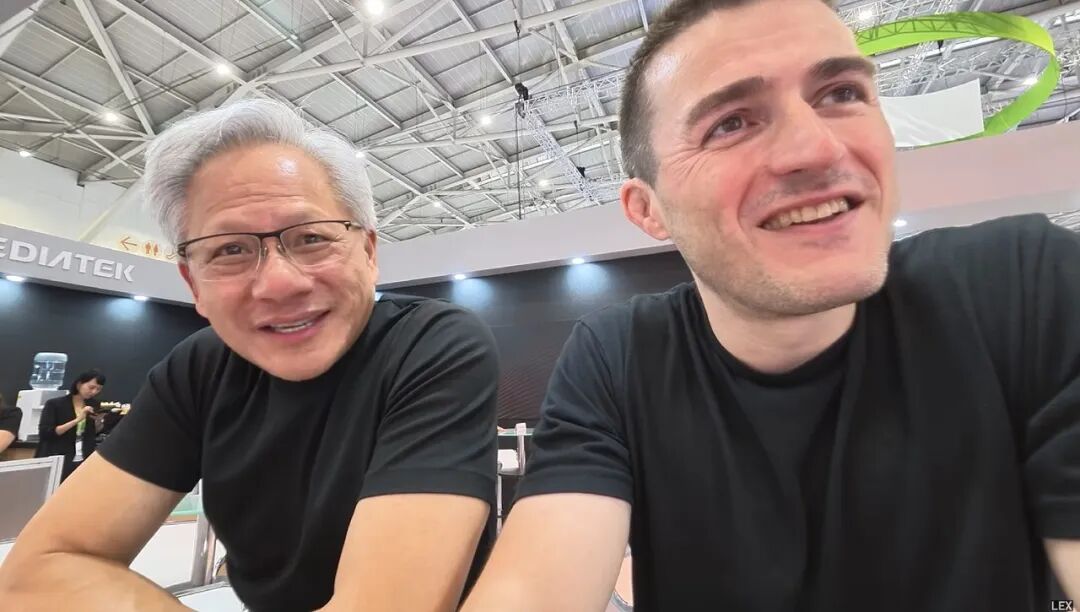
Lex: Do you get nervous before your keynote speech starts? The whole world is watching you.
Jensen Huang: I was extremely nervous back then. But I get nervous all the time. Every public speech, no matter what the occasion, makes me nervous.
Lex: Does this nervousness keep you sharp?
Jensen Huang: Yes. I don't take all of this for granted. I want to do a good job. Besides, everything usually comes together at the last minute, there is hardly time for rehearsal, and we really don't rehearse. So I don't know exactly what I'm going to say at that time. I don't have a teleprompter either.
If we want to manufacture and sell trillions of dollars worth of computing devices in the next few years, the entire Taiwan, China region must participate, and the entire ecosystem must be involved.
Every company here will need to invest hundreds of billions of dollars in the next few years. So first of all, they have to understand this matter, be inspired, be willing to participate, and know what benefits they can get from it.
Therefore, in the keynote speech, I tried to make these things clear with as few words as possible.
Lex: By the way, Jensen Huang was extremely warm to me, so warm that I felt I didn't deserve it. But he is like that to everyone, the same to every single person.
You also didn't forget to take care of gamers, showing off gaming laptops and games.
Jensen Huang: I love gamers. That's where we started. Never forget your roots. No matter how high you go, don't let your feet leave the ground.
Lex: Gamers are the most passionate group of people in the world. Some of the happiest moments in my life are playing video games with NVIDIA hardware. Look at this, look at this.
Jensen Huang: Look at these people.
Lex: It's incredible. It's the honor of my lifetime. Thank you for giving me this experience. I'm honored to see an engineer welcomed like a rock star, it's really inspiring. Because engineers built this world, but they often don't get the love and recognition they deserve.
You inspire thousands, even millions of children to think: "Okay, then I want to be an engineer too."
Jensen Huang: Exactly, that's it.
Lex: How was your trip to Chinese mainland this time?
Jensen Huang: Oh my god, it was total chaos. Did you see those clips? I went to the center of Beijing, and the scene immediately boiled over, completely out of control.
Lex: You went to eat, right?
Jensen Huang: I ate food from every restaurant. Then I became the "spokesperson" for every restaurant.
They moved so fast, maybe in just half an hour, I appeared online and became the promotional signboard of every restaurant. Tomorrow we will have a really amazing lunch that will absolutely surprise you. We'll eat zongzi, the ones wrapped in leaves. The zongzi here is absolutely top-tier.
Lex: Speaking of Computex, thank you for suggesting I come. I think I have never experienced such a scene, full of excellent engineers everywhere.
Jensen Huang: This is the place that makes computers for the whole world. And the people here are all very humble.
Lex: That's also a feeling I got during my trip in Chinese mainland. I interviewed quite a few people in the AI field, and after coming to Taiwan, China, I felt the same: humble, always humble. These young engineers are changing the world, yet they have no arrogance at all.
How Taiwan, China's technology industry got started: From Kwoh-Ting Li, Morris Chang to the PC Revolution
Lex: Why did so many excellent companies emerge at all levels of the entire technology system, especially in the hardware infrastructure sector? What's your take on this question?
Jensen Huang: It dates back to a man named Kwoh-Ting Li. He was involved in promoting local technology and industrial policies, and took on the corresponding mission. Back in the 1950s, he had a vision: to bring science and technology and tech manufacturing to Taiwan, China.
It was his vision that prompted Morris Chang to come to Taiwan, China.
Note: On January 28, 1910, Kwoh-Ting Li was born into a well-off family at Hanximen, Nanjing. In 1926, he was admitted to the Department of Mathematics of Southeast University, and soon transferred to the Department of Physics. In September 1934, he obtained the Sino-British Boxer Indemnity Scholarship with excellent grades, went to study at the University of Cambridge in the UK, entered the Cavendish Laboratory, studied under the world-famous physics master and Nobel laureate Professor Rutherford, engaged in the research of radioactive material particles, and he is also known as the "Father of Taiwan, China's Information Industry".
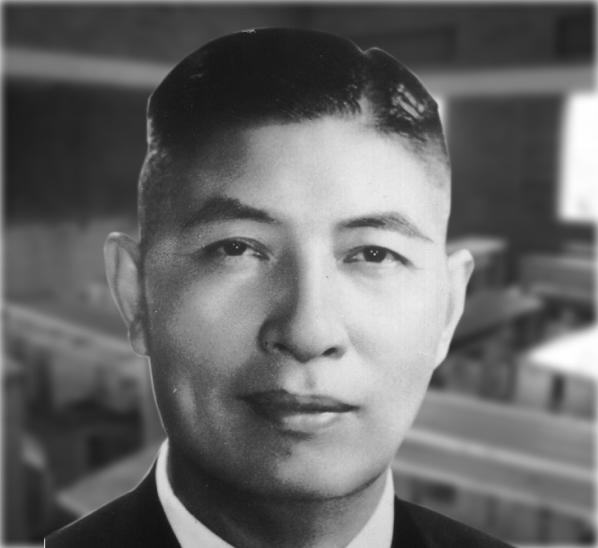
There were some other things before that, I don't remember the exact historical order clearly. The wafer fab spun off from Philips later became TSMC, and the semiconductor manufacturing equipment business spun off later became ASML. It's really amazing to think that all of this is related to Philips.
Philips was a consumer electronics company, you could say it's the General Electric of Europe. You should remember that General Electric also did semiconductor manufacturing in its early years, and was engaged in all kinds of advanced manufacturing businesses. Anyway, Kwoh-Ting Li managed to attract Philips to Taiwan, China, and that was the real starting point.
Lex: It's equivalent to planting a seed.
Jensen Huang: Right. Later, UMC and TSMC were both looking for chips suitable for manufacturing, and the PC Revolution came at just the right time, the timing was perfect.
IBM made a very visionary decision back then, opening the specifications of the so-called IBM-compatible chipset. Basically, those chips that make up the motherboard, including cache controllers, memory controllers, interrupt controllers, as well as VGA controllers, graphics controllers, etc. The relevant specifications were clarified and made public.
So these smart engineers designed chipsets based on these specifications, and then handed them over to TSMC and UMC for manufacturing. That's how the PC industry began to grow and expand.
The first companies that made PCs were companies like Compaq and IBM. Later, because of the PC chipsets provided by Taiwan, China, all kinds of companies could enter this market, including a young man named Michael Dell.
He bought motherboards from Taiwan Province, assembled them into PCs, and obtained an operating system license from Microsoft, and that's how he became a PC manufacturer.
The entire industrial cycle was established in this way. Michael's relationship with Taiwan, China dates back to a very long time ago.

Lex: It also has something to do with culture. A very friendly lady told me that she grew up in Taiwan. She said: "When I was a little girl, I already knew how to spell CoWoS before I could even spell Gucci."
I think that line is brilliant, and it shows the status of engineering technology in the local culture — what kind of things are considered cool by everyone.
Jensen Huang: Exactly, CoWoS.
Lex: So thank you for making engineering cool again, Jensen.
Jensen Huang: Yeah, we made technology charming again.
Lex: So does NVIDIA have a lot of local teams in Taiwan, China now?
Jensen Huang: The local team is about a thousand people. Including supply chain, a lot of systems engineering work, operations engineering, and engineers in wafer manufacturing, packaging and testing.
Lex: That means they are all engineers doing hardcore hardware work, right?
Jensen Huang: Right. We are going to build a building, very similar to the one you visited before, almost a replica of it. We need to find a site here first and get a piece of land. That building can accommodate four thousand people, so we will recruit three thousand more people. I really like it here, and I also really like the night markets here, they are famous for a reason. My parents love eating this kind of food, and we used to come to the night market back then.
When I was a kid, when we said "go out to eat", we meant coming to a place like this, not going to a restaurant. Our family didn't have that much money, so we wandered around the night market and sat at these tables to eat.
Once, I needed to go to the toilet, so I walked away by myself. I walked up to a chef and was about to ask him if there was a toilet nearby. He was wiping his knife at that time, and my face was right next to the knife. The knife swiped across and cut a gash on my face.
I was five years old at the time, almost five to be exact. My dad picked me up and ran to the hospital.
But after that, I still loved night markets all the time, and I always have very good memories here. I love everything here, I love the people here.
Everyone is trying to make a living, working so hard, but still wanting to take out something to share with you. They don't have much money. The profit from one serving may only be a tiny bit. They give up the profit to me, just to show a little kindness.
This is the human touch of Taiwan, China. And it's also a pleasure to watch them make things and show off their craftsmanship.
Talking about Chinese AI companies: Shortage of computing power, but they are desperately making things happen
Jensen Huang: Did you go to Shanghai?
Lex: Yes, I visited several AI companies including MiniMax.
Jensen Huang: Those companies are amazing.
Lex: Then I went to Hangzhou and visited Unitree Robotics. Those people who make robots are also extremely humble. There are a lot of robotics companies there. Do you know what those AI companies are all talking about? Everyone is saying: "We need more computing power."
Jensen Huang: Right. But in a way, it is precisely because of the lack of computing power that they are forced to come up with those very brilliant, extremely efficient architectures.
Lex: Exactly, that's the case.
Jensen Huang: Restrictions can be said to be the mother of invention. Scarcity of resources breeds innovation.
Lex: Right.
Jensen Huang: They are facing extremely, extremely huge restrictions, but they are still getting financing, still moving forward, right? They are just desperately making things happen.
"I have always wanted others to succeed"
Lex: You are just like the Beatles in the 1960s. And after going through all this, you still remain humble. Jensen, your life is incredible. When millions of people look up to you, you carry such a huge responsibility, do you sometimes feel the pressure is overwhelming?
Jensen Huang: No, because I don't see it that way. People have always been very kind to me.
Lex: Even when you had nothing at all.
Jensen Huang: Right. I have always been kind to others, always been polite, and always wanted others to succeed, wanted them to be happy.
When I was in school, I always hoped that other kids could get good grades too. I was also very happy to share my homework with everyone.
I love seeing others succeed, including my peers working at other companies.
Lex: The way the world works is really interesting. When you sincerely cheer for others and want them to succeed, somehow, you end up becoming more successful yourself.
Jensen Huang: For example, all 43,000 employees at NVIDIA want me to succeed. It's really like that, you know what I mean?
Lex: And you want every single one of them to succeed. This creates a ripple effect that keeps spreading outwards.
Jensen Huang: Exactly, that's it. Kindness is not a zero-sum game, it is not limited by the laws of physics.
Lex: By the way, Jensen, I heard you are extremely good at making fried rice.
Jensen Huang: Yes. I watch AI videos, and I also watch fried rice videos. I also watch some videos of dogs, pandas or otters to relax.