A vintage early Tesla model finally gets the latest FSD, making Intel an effortless winner.
The nearly 10-year-old vintage Tesla can now access the 2026 FSD technology!
Tesla has just officially announced that it is pushing FSD v14.3 Lite to older Model S/X units equipped with Intel infotainment chips.
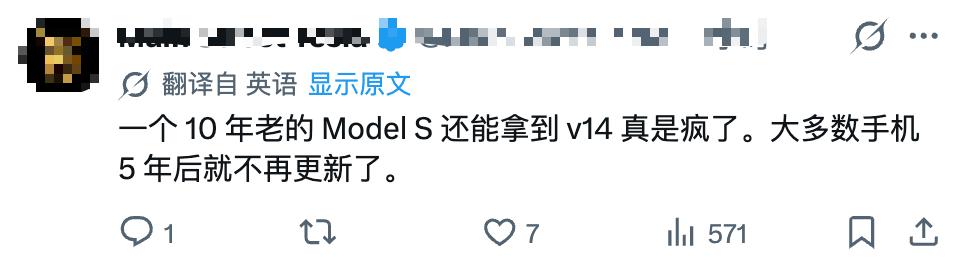
Some Model X owners have already shared their update records online, with many exclaiming "crazy", as most mobile phones stop receiving updates after only five years of use...
How "old" can these vehicles be?
They are 2017 models! Back then the Model 3 had just started deliveries, and Tesla's self-developed HW3 Autopilot computer had not even been born yet.
This is absolutely good news for long-time Tesla owners~
But despite the update, Tesla has finally admitted that due to outdated hardware, these old vehicles are unlikely to achieve the full self-driving that was promised years ago...
The 9-year-old Tesla receives 2026 FSD update
Tesla's official account confirmed that it is pushing FSD v14.3 Lite to older Model S/X units with Intel infotainment chips, corresponding to software version 2026.38.5.1.
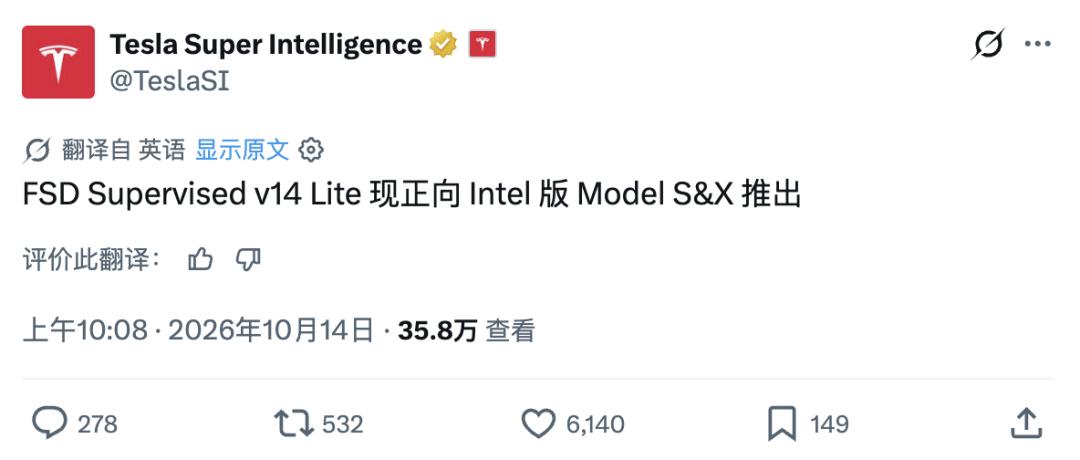
At present, multiple owners have confirmed that they have received the update push, including owners of 2017 vintage vehicles.
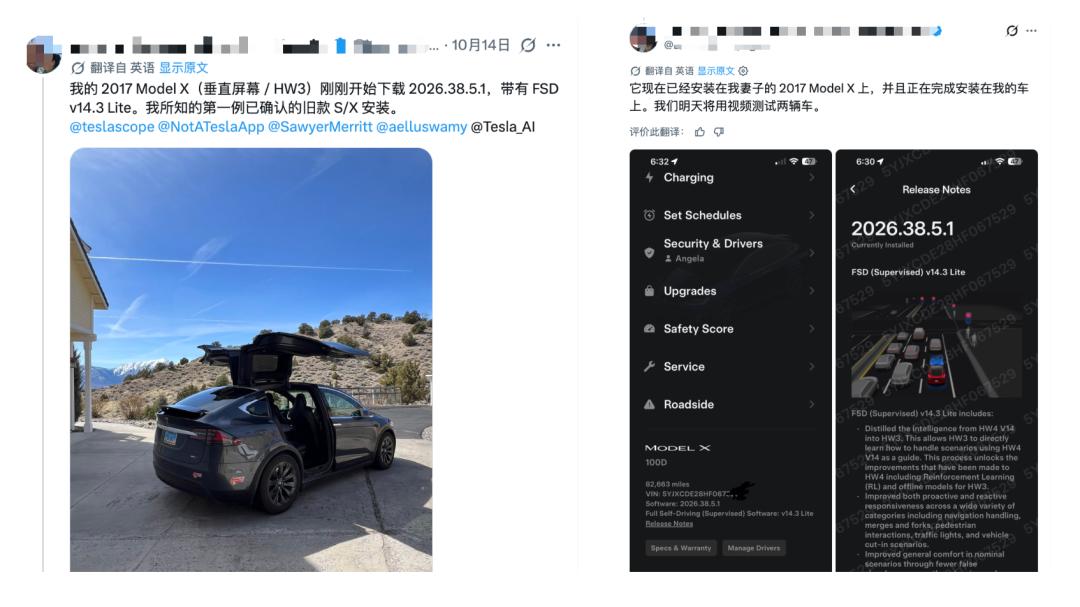
This is the first time these older Model S/X units have received the FSD v14 series update.
In fact, FSD v14 Lite was launched earlier this summer, initially covering HW3-based Model 3/Y. In September, older Model S/X units equipped with AMD infotainment chips also received support one after another, while the Intel version had to wait until now.
After such a long wait, what exactly does this upgrade bring?
According to Tesla's update notes, the new FSD mainly improves the processing capability for complex road scenarios and the comfort level during daily driving.
For scenarios such as ramp merging, road forks, pedestrians crossing the road, complex traffic lights, and other vehicles cutting in abruptly, FSD's response and decision-making capabilities have been optimized.
During normal driving, the vehicle will also reduce unnecessary deceleration, with smoother steering wheel control and more stable lane centering.
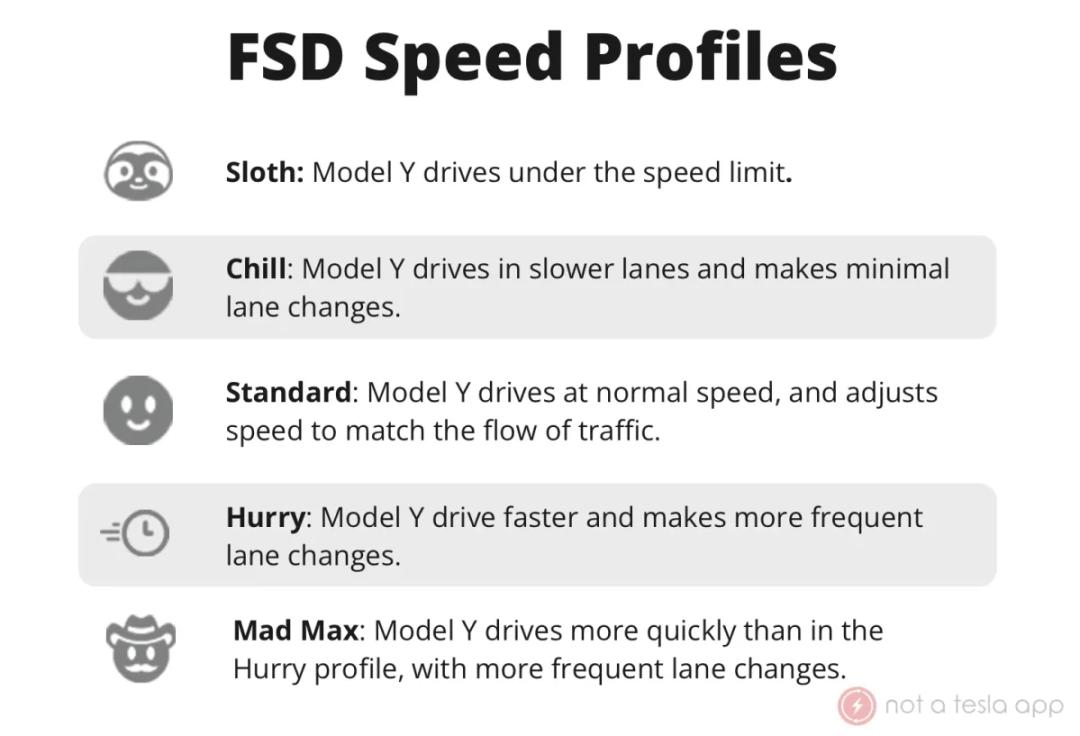
In addition, older Model S/X units also get Speed Profiles, which allows drivers to adjust driving styles according to their preferences; the newly added FSD continuous non-intervention driving mileage statistics can record how far the vehicle has driven continuously without human takeover.
△
However, the treatment for old vehicles is still different.
Compared with Model 3/Y units also equipped with HW3, these older Model S/X units are temporarily missing functions such as FSD automatic parking, starting FSD directly from a parked state, and selecting a parking space after reaching the destination.
Not to mention that they cannot currently run the full FSD v14 developed for the HW4 platform.
But for a car that has been in service for nearly a decade, being able to continuously access part of the capabilities of the new generation FSD is already quite remarkable.
The Model S/X from that era used NVIDIA Tegra infotainment chips, and their autonomous driving computers belonged to an even earlier generation. It was not until around 2018 that Tesla began to replace the infotainment system of Model S/X with Intel Atom; in 2019, the self-developed HW3 computer was officially mass-produced.
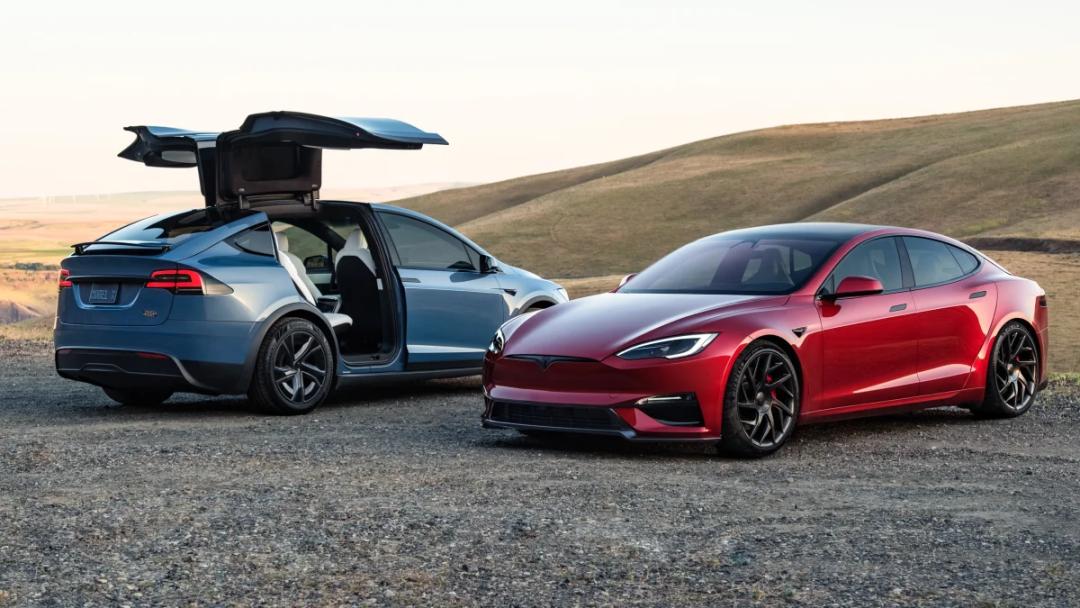
After that, Tesla provided free HW3 upgrades for eligible long-time owners who had purchased FSD, and also launched a paid service to upgrade from the older NVIDIA infotainment system to the Intel one.
In other words, a 2017 Model X being able to receive today's FSD update has actually gone through several iterations of software and hardware behind the scenes.
Even so, there is still a huge performance gap between the old and new platforms.
In April this year, Elon Musk revealed that the memory bandwidth of HW3 is only one-eighth that of HW4. Facing increasingly complex autonomous driving models, this computer launched in 2019 is obviously already struggling to keep up.
How did Tesla make it continue to run the new version of FSD? The key lies in Model Distillation.
In simple terms, it means letting a smaller-scale model learn the driving capabilities already mastered by the HW4 version of FSD, and then deploy it on the HW3 platform with limited resources.
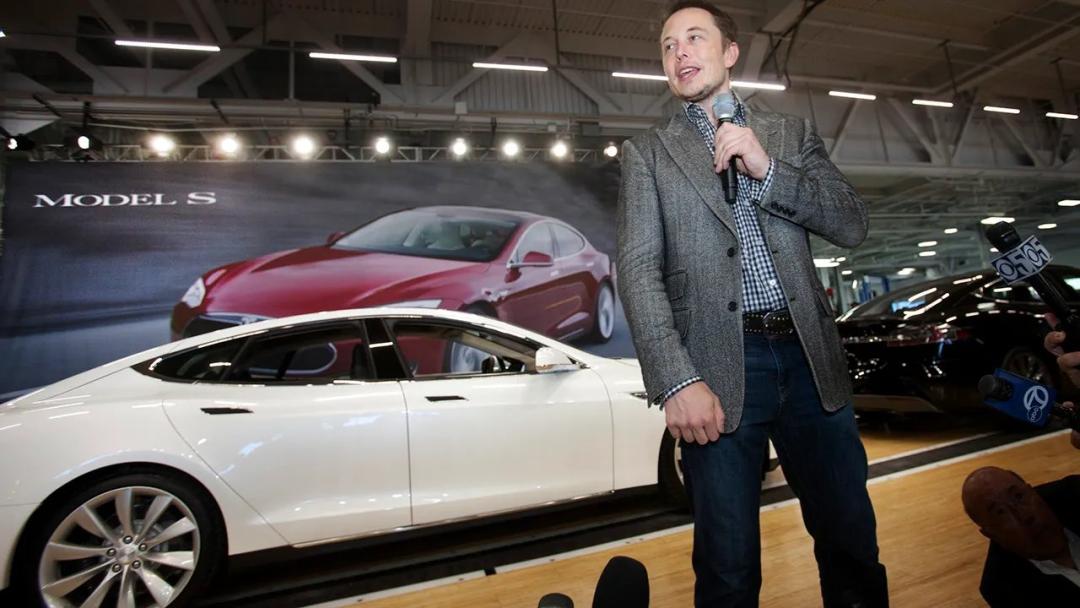
In this way, even if HW3 cannot directly run the complete new-generation model, it can still obtain part of the technical achievements, including driving decision optimization brought by reinforcement learning.
In this update note, Tesla explicitly mentioned distilling the intelligent capabilities of the HW4 version of FSD v14 to HW3.
A computing platform that has fallen behind for several years has caught up with the new generation of autonomous driving technology through model distillation and software adaptation.
We are once again impressed by Musk's technical strength...
Musk shows off his tech, and Intel also gets a free boost
For long-time Tesla owners, this kind of cross-generational software update across hardware generations is nothing new.
Tesla started adding new features to vehicles via OTA very early on. As autonomous driving technology continues to advance, some older vehicles have also gone through multiple rounds of software upgrades.
But this time the span is exceptionally large. The 2017 Model X is even two years older than Tesla's first-generation self-developed FSD computer.
For the smart vehicle industry where software updates are getting faster and faster, this long-term compatibility capability is indeed of high value. However, no matter how powerful the software upgrade is, it may not be able to infinitely make up for the performance gap of hardware...
In April this year, Elon Musk finally explicitly admitted that HW3 cannot achieve FSD that requires no human supervision.
This also means that Tesla's 2016 claim that new vehicles are equipped with all the hardware required for full self-driving has finally not been fulfilled through software updates.
In particular, those long-time owners who purchased FSD and later upgraded to HW3 may now have to replace their hardware again.
According to Musk's statement at the Q1 earnings call, Tesla plans to provide preferential replacement programs for HW3 owners who have already purchased FSD, and also provide hardware modification channels to replace the on-board computer and cameras.
Due to the heavy workload of modification, relying solely on service centers is far too inefficient. Musk even proposed that Tesla may build dedicated small modification factories in major cities to complete hardware replacement in a centralized manner.
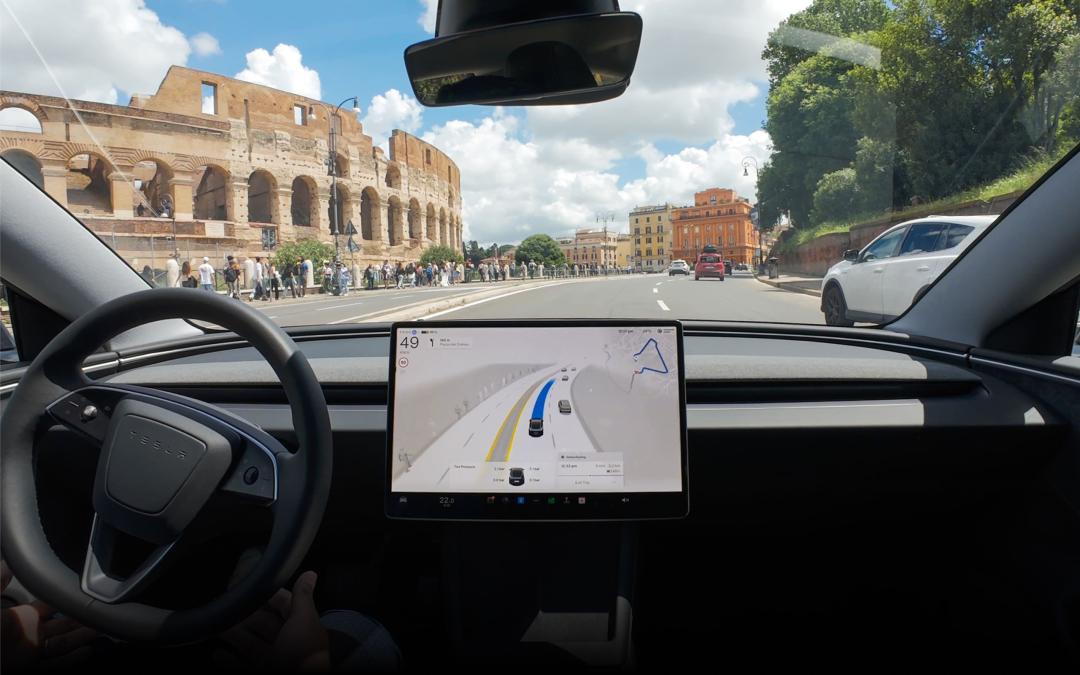
At present, there is no clear implementation timetable for the hardware modification.
In July this year, when Musk was asked again about the progress of the HW3 upgrade, he said that Tesla hopes to adopt a new generation of computing boards with stronger performance, which may be improved AI4 or AI5.
But the related chips are expected to enter mass production around mid-2027.
Therefore, for these old vehicles, FSD v14 Lite is very likely to be the last major version branch available for the existing computing platform.
Interestingly, this update also made Intel unexpectedly gain a wave of exposure.
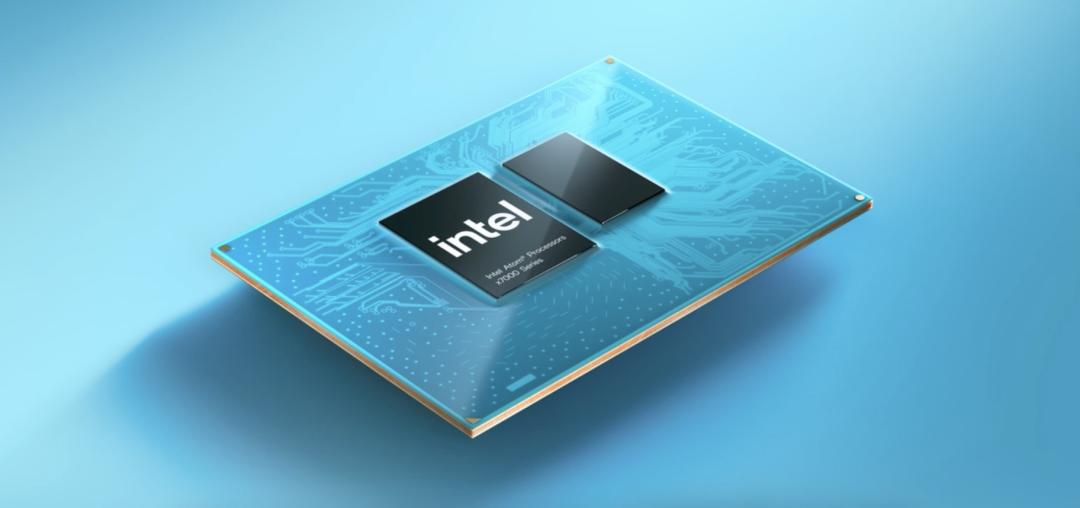
In the early days when smart vehicles were just emerging, Intel Atom was once an important choice for Tesla's infotainment systems. The Model 3 launched in 2017 used Intel processors, and later Model S/X also switched from NVIDIA Tegra to Intel Atom.
But later, Intel's products did become too outdated and too slow.
As the competitive focus of automotive intelligence gradually extends to autonomous driving, NVIDIA continues to expand its influence in the intelligent driving field with its DRIVE series computing platforms, with carmakers including Mercedes-Benz, Volvo, Toyota, and BYD becoming its partners one after another.
Later, NVIDIA Orin dominated the driving domain, and Qualcomm 8295 dominated the cockpit domain.
It is hard to imagine that the latest exposure of Intel, the earliest dominant player in this field, came in this way thanks to Tesla.
Of course, the biggest winner is still Musk. After all, technology is the best selling point, and technology is the top luxury.
Those smart vehicles that no longer push updates for long-time owners should take off their "tech" and "smart" labels now.
This article is from WeChat official account "QbitAI ROBO", written by Jessica, authorized for release by 36Kr.