Former Apple Engineer and Co-founder of Jackery develops pet health hardware, with annual revenue exceeding 1 billion yuan, and has secured investment from HSG | HardKrypton Exclusive Interview
Abstract: Evolving from an automation tool to an intelligent terminal capable of perception, judgment, notification and action.
Author | Huang Nan
Editor | Yuan Silai
Wu Yu, the founder of Petlibro, is a lucky person to some extent. In his 20s, he caught up with the golden era of Chinese consumer hardware going global.
He joined Apple as an engineer in 2007 and participated in the production and R&D of early iPods and the first-generation iPhone. In 2012, he started his own business and co-founded the energy storage brand Jackery, targeting users' anxiety over power consumption and pain points in charging safety, aiming to fill the unmet needs that Apple products did not cover. In 2016, Wu Yu joined Zebao as CEO, participating in and witnessing the surge of Zebao's sales volume from the 1-billion-yuan level to 5 billion yuan.
In 2019, Wu Yu decided to start his business again, stepping into the pet smart hardware industry.
It was not a popular track at that time. In cafes and roadshow venues, people were talking about TWS earphones, sweeping robots and smart cameras, but no one seemed to care whether a cat staying at home alone had drunk enough water that day.
Wu Yu noticed the scenario ignored by the mainstream: when a friend was on a business trip, the feeder got stuck with food, the cat went hungry for a whole day, but the owner had no way to know; in multi-pet families, one cat needed to eat prescription food, but always ate mixed food from other bowls; when the cat frequently appeared in the litter box, the owner could hardly judge whether it was a habit or a physical problem.
At that time, the pet hardware market had already produced leading sellers, but most brands focused on the single category of litter boxes and had not made efforts overseas; meanwhile, the scenarios related to pet health data management and services were completely blank. Wu Yu knew that he had found a track without an absolute leader and that had not been truly defined.
He founded the smart pet brand Petlibro with several young people who love pets. The company has successively obtained financing from leading institutions such as HSG and Shenzhen Venture Capital, with annual revenue of hundreds of millions of yuan. In 2021, the company's first smart feeder Granary series was released.
But this is not a simple "remote feeding" device. From the very beginning of product definition, the R&D ideas and pricing strategies of the team have been different from the mainstream practices in the industry.
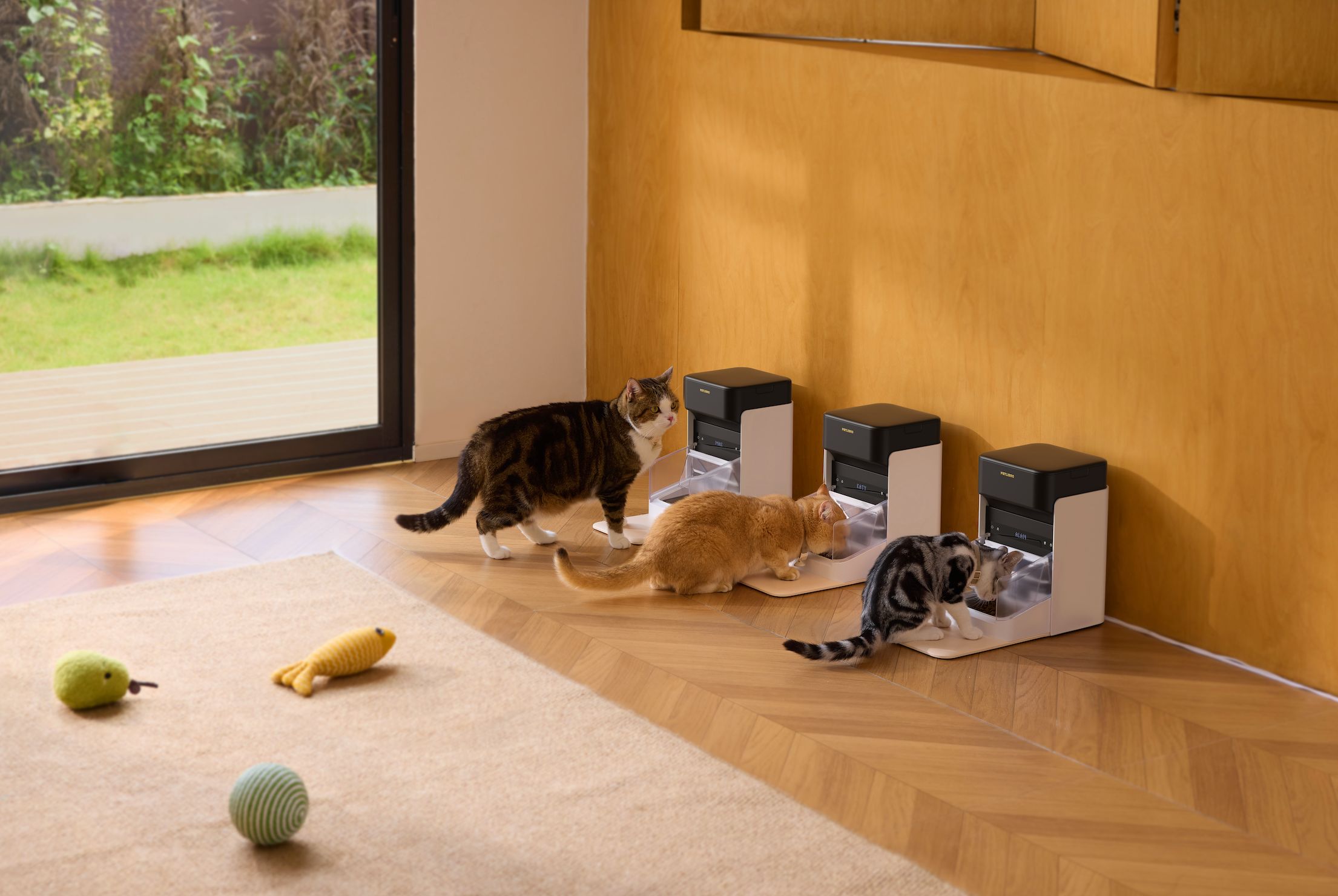
Petlibro Smart Feeder (Source / Enterprise)
In the past, most domestic pet smart manufacturers believed in the fast-track hit product strategy, relying on mature supply chains to replicate functions and relying on price competition to quickly seize the market. A large number of unbranded WiFi feeders on cross-border platforms are priced at 40-60 US dollars; the first-generation basic version of Petlibro Granary was launched at a price of 69.99 US dollars, and the flagship version with a camera in the same series was listed at 149.99 US dollars, with a significantly higher positioning among similar products.
This choice was not a convenient shortcut. Wu Yu had his own judgment: hardware is easy to be replicated, but pet data and the software system built around the data are irreplaceable.
"Not only in hardware, but in the entire pet industry, there is no recognized global leader, and no conclusion on who is the top brand in China, and users' brand awareness is highly scattered. Our idea is very simple: since we choose to start a business, we must choose a direction that has the opportunity to grow big and is worth growing big," Wu Yu said.
The following is the full transcript of the conversation between Hard Krypton and Wu Yu, Founder and CEO of Petlibro, the content has been edited:
Looking for a track without an absolute leader
Hard Krypton: Your personal experience has little overlap with pet hardware. Why did you choose this track to start a business?
Wu Yu: All the time, there are a large number of problems to be solved in almost every field, but there are also many powerful companies trying to solve them.
For example, in the mobile phone industry, is there still a need for a start-up company to enter the market? Actually, there is not much need. The product form has been extremely optimized, and the room for innovation is relatively limited. Users already have the top brand in their minds, and even the top five brands in the track have taken up the market.
We started to observe which tracks still have opportunities; we naturally did research around us, and also looked at the familiar consumer electronics and home appliance industries. At that time in Shenzhen, most tracks already had companies doing pretty well. Therefore, first of all, we had to convince ourselves what the value of doing this thing is.
It can be seen from the research that the pet hardware track has its particularity. There is no unified leading brand awareness on the user side, no one knows who is the world's top brand, and there is no conclusion on who is the top brand in China. Superimposed with intelligent attributes, who is a truly good brand on a global scale? No absolute world leader has taken shape yet.
Our idea is very simple. Since we have decided to start a business, at least we should set our sights higher.
Hard Krypton: Petlibro's first smart feeder was launched in 2021. According to your observation, what stage was overseas pet owners' acceptance of intelligence and real demand at that time?
Wu Yu: Around 2019, the entire pet hardware industry was still in the stage of single-point automation. The mainstream products on the market covered automatic feeders, automatic water dispensers, automatic litter boxes, etc., with basic functions limited to APP remote control, timing and quantitative feeding, and simple status checking. The product narratives of most brands focused on how to help users raise pets more conveniently.

Petlibro APP Remote Real-time Monitoring (Source / Enterprise)
At that time, ChatGPT had not come out yet, but we had already clarified a direction: devices should not stay at the stage of passive control, but should have a closed-loop capability of perception, judgment, notification and action. This is also the underlying logic for Petlibro's subsequent product iteration.
In fact, overseas users have earlier acceptance of smart pet products. For example, there are pet wearables such as Whistle and FitBark in the US market, and smart feeder brands such as Petnet. However, the common problems are single-point functions, data silos, and no health closed loop formed. Products can only capture users' initial sense of freshness, and it is difficult to maintain long-term usage habits. Therefore, our team hopes to further explore cross-device data linkage and long-term health services.
Hard Krypton: Cats and dogs have significant differences in behavior habits, feeding scenarios, health risks, etc. Why did you choose to focus on the direction of pet health?
Wu Yu: Pet health is the foundation of animal life. Falling into daily observable and influential behaviors and data, behaviors such as eating, drinking, defecating, sleeping and exercising are the most directly related factors to the health status. For example, cats have a high incidence of urinary system diseases, so it is necessary to pay attention to key indicators such as water intake, toilet frequency, urine volume, and weight change; dogs have more outdoor activities, so we need to pay attention to exercise volume, separation anxiety, eating habits, etc.
Although there are obvious differences in the physiological structures of cats and dogs, we did not set up separate lines for them, but judged the risk differences according to animal behaviors and scenarios, and designed different product forms and interaction logic.
Hardware is only an entry point, and health data and services are the long-term value. Based on this judgment, the team did not lock the direction on products that focus on convenient functions, but took health-related capabilities as the long-term R&D priority, while ensuring reliability and daily use experience.
We clearly know that structures and functions are easy to be replicated, but the full-stack capability built around pet health is a barrier that is difficult to be replaced.
Hard Krypton: Petlibro is the first brand to put forward the concept of vacuum freshness locking in feeders. Its design is very valuable for pet food preservation, but it was rarely noticed by the industry in the past. How was this product definition formed?
Wu Yu: The team's product ideas are relatively focused. It can be seen that the SKUs of the feeder category are very detailed. In addition to vacuum freshness locking, we have successively launched functions such as multi-pet feeding and RFID (radio frequency identification) recognition.
Behind these solutions are many fragmented user needs. For example, in the multi-pet scenario, the penetration rate of multi-pet families overseas is very high, accounting for more than 50% in North America alone. Such users generally face the same problem: multiple pets have different dietary needs and need to be fed separately, but traditional devices cannot isolate them, and it is easy to have mixed eating and stealing food. My friends who keep pets are also in this situation. Some of the three cats in their family need to eat prescription food. Once they eat mixed food, even if it will not cause immediate health problems, it cannot meet the standard of refined feeding.
We use RFID identification technology to solve this problem. This solution was launched very early. At that time, large models were still in startup labs in Silicon Valley and had not been implemented in consumer hardware. The RFID collar route may not sound cutting-edge, but its technology is mature enough, practical and implementable, and can be applied to mass-produced consumer-grade products to solve user problems.
Hard Krypton: Is your idea to first capture universal demands to create a big hit product, or to use multiple SKUs to verify segmented demands from the very beginning?
Wu Yu: For the trade-off between SKUs and functions, we have a standard: whether this function point is directly related to pet health, and whether it has the ability to form a high-quality data collection closed loop in the long run; rather than looking at how many users this demand covers and whether it can make the product gain volume quickly.
Take the litter box as an example. Automatic shoveling is a universal pain point for all cat owners, and it naturally has the potential to become a big hit product. However, if limited resources are invested in superficial experience optimizations such as deodorization, noise reduction, and appearance, the value boundary of the product will easily be limited to reducing the burden of daily cleaning.
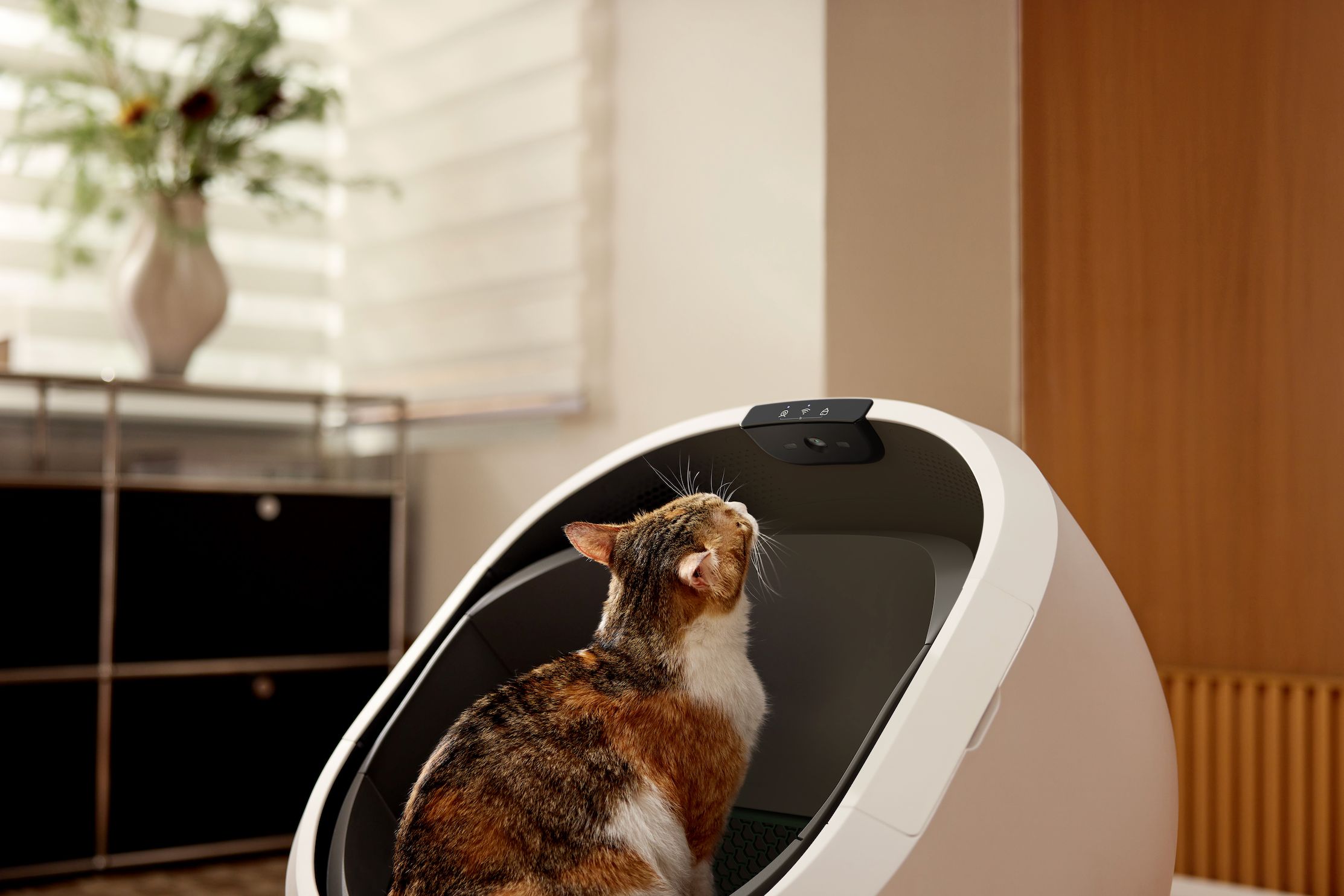
Petlibro Smart Litter Box (Source / Enterprise)
Therefore, in addition to doing a good job in basic experiences such as cleaning, noise, safety and ease of use, we further invest in health-related monitoring capabilities.
For Petlibro, to achieve health monitoring, the system needs to be able to distinguish the toilet data of each cat and accurately correspond to the individual. Therefore, the team spent a lot of energy integrating AI vision technology and researching weight sensors. Through AI recognition, the system can determine which cat enters the litter box, record the excretion frequency and the type of urination and defecation; even in our future products, we will further provide abnormal reminders for bloody stool, wormy stool and other conditions.
Take multi-pet identification as another example. On the surface, it targets the segmented group of multi-pet families, but in fact it corresponds to rigid demands directly related to health such as precise feeding and weight monitoring, which is not a function we made up just to increase SKUs.
Conversely, if a demand has a large number of users but is not related to the main line of health, we will not invest resources in it.
Multiple SKUs are the result, not the starting point. On the basis of the definite direction of "pet health", we screen out the products and functions that must be made, and SKUs will naturally grow out in the R&D process. Even if the product functions are not so "popular" at the beginning, we think this is something really worth doing.
Hard Krypton: On which product was this set of R&D logic first verified to form a closed loop?
Wu Yu: In 2023, we launched the first pet water dispenser with a precise weighing algorithm.
In the past, automatic water dispenser products could only detect the remaining water in the water tank and did not have the ability to identify data. The difference of our product is that after being equipped with the self-developed identification algorithm, the system can accurately distinguish the reasons for the water volume change, including active drinking by pets, manual water addition, or errors caused by device touch, and count the real daily water intake of pets.
Urinary system diseases such as kidney disease are one of the most common diseases in cats, and most of the root causes lie in the fact that cats are naturally lack of water intake. We have real cases around us. After a friend's cat was diagnosed with urinary system problems, the doctor clearly required the cat to drink 120 milliliters of water every day. He used the Petlibro water dispenser, and the APP can display intuitive data. For example, if the cat only drank 80 milliliters today, although the device cannot make the cat drink more water actively, it will remind the user that the cat drank 40 milliliters less, and the user can make up the water intake by other ways after returning home.
In fact, this product was highly controversial inside the company at that time. In 2022, there were almost no similar intelligent and data-based pet drinking hardware on the market. Its R&D cost was very high, core components needed to be redeveloped, and the pricing reached 60 to 70 US dollars; at that time, when opening Amazon, most of the other products on the platform were priced at 20 to 30 US dollars. Therefore, everyone predicted that the sales volume of the product after launch would be very limited.
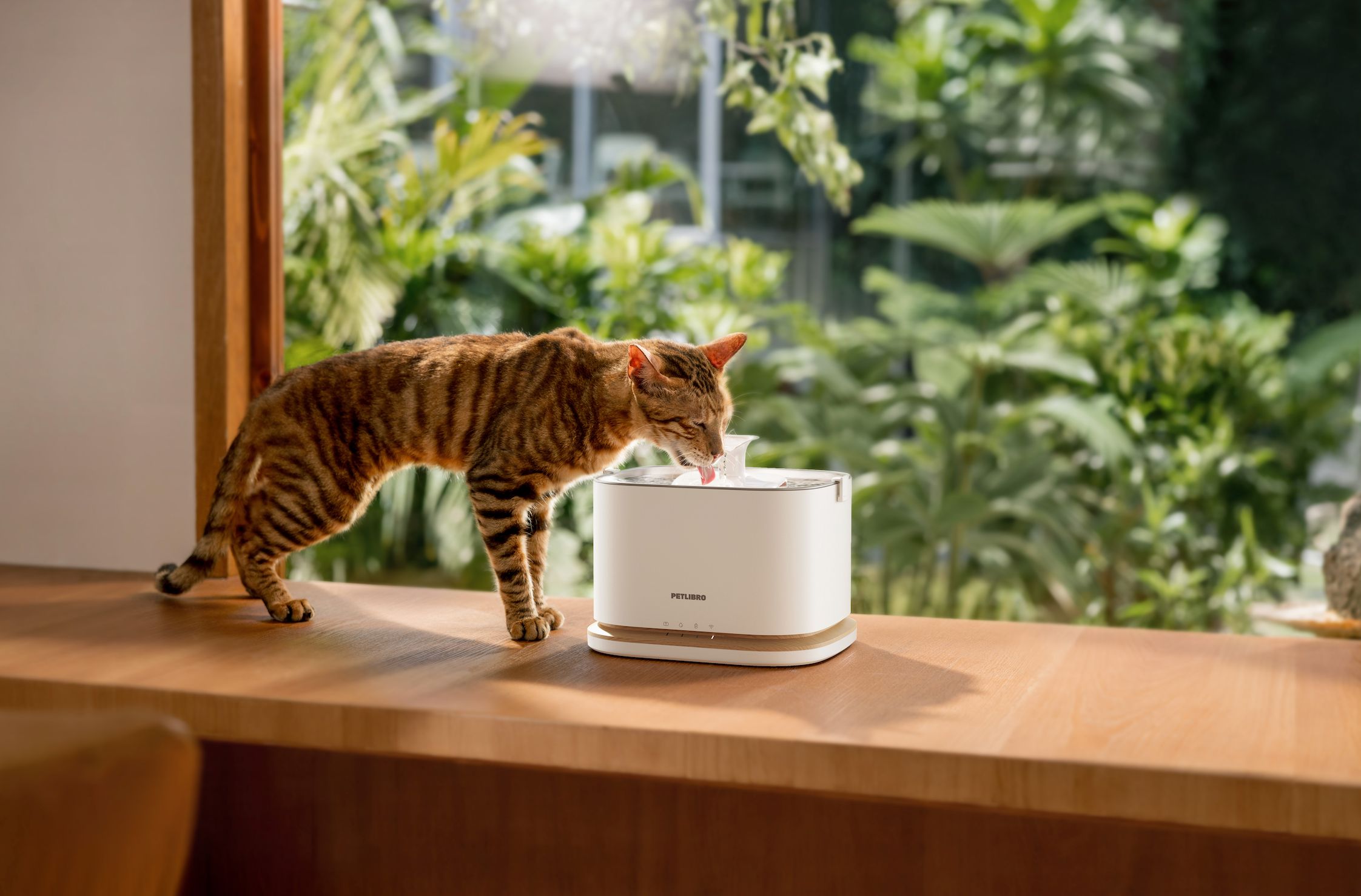
Petlibro Smart Pet Water Dispenser (Source / Enterprise)
But the final performance completely exceeded expectations, and the sales volume quickly exceeded 1,000 units on the first day of launch. This verified that users are willing to pay for quantifiable and implementable pet health value. At the same time, we clearly saw for the first time that health data can form a closed loop on a single product, and clarified the idea of building a software and hardware ecosystem.
Get rid of involution, turn pet health from anxiety into data
Hard Krypton: The pet smart hardware track has obviously heated up in the past two years. From the perspective of technical paths, which directions have shown intelligent trends? The industry has not yet formed a complete data closed loop, at what levels are the main obstacles concentrated?
Wu Yu: Analogous to the autonomous driving industry, the most typical example is the iterative logic of Tesla FSD. It trains the full large model on a new hardware platform with stronger computing power, and then compresses and migrates the capabilities to older hardware through model distillation. This capability of continuous model iteration and cross-hardware compatibility has an iteration speed that even exceeds the expectations of traditional engineering teams.
Applied to the pet hardware track, the industry has already seen similar directions, but it is still difficult to fully replicate this set of data