The extremely cutthroat group live streams have started to go to Latin America to make money from "Big Brother US".
"Latin America is the last blue ocean in the world."
In the eyes of Guo Heye, a Chinese-Mexican, the Chinese community in the United States is huge and the competition there is extremely fierce. Africa and Southeast Asia have long been saturated with no extra room for new entrants, and Europe has no remaining untapped opportunities at all. Only Latin America still has a very small Chinese population. "Pioneering work is very tough, but the returns can also be maximized."
With this mindset, in September 2024, Guo Heye gathered 5 streamers to launch the first group live streaming studio in Latin America in Mexico, and recovered all the investment in the second month.
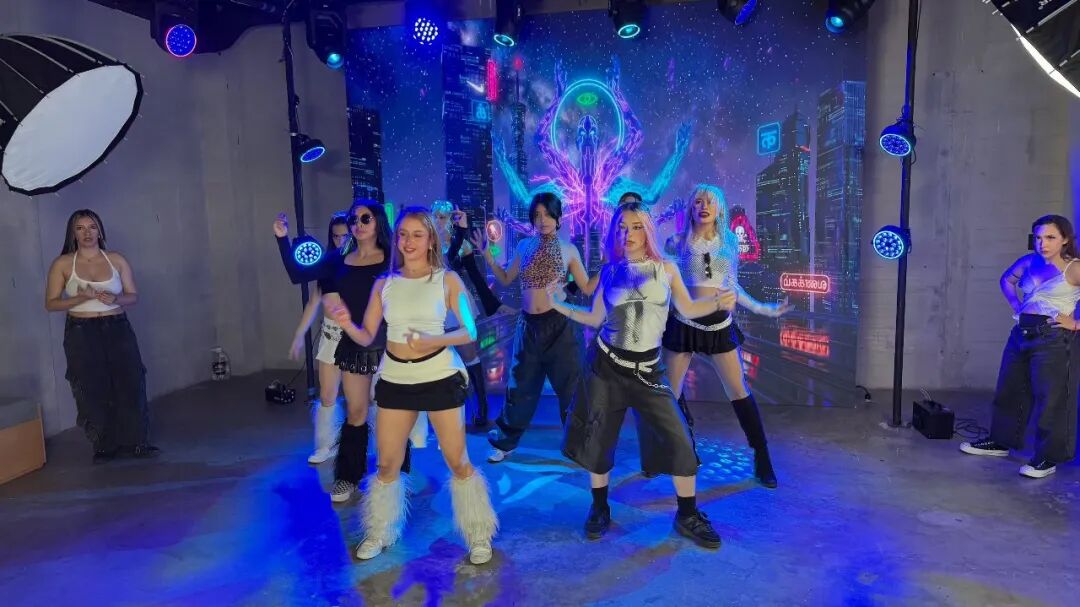
Group live streaming site of Fission Studio
Nowadays, Guo Heye's company Fission Studio has launched 20 group live streaming studios, with more than 100 streamers and backstage employees in total across three countries: Mexico, Colombia and Argentina. It is a well-deserved leader in the Latin American group live streaming industry.
Later, the official team of TikTok stepped in and organized Latin American agencies to visit and study in China. Mike (pseudonym), a former TikTok employee, revealed that by the end of June this year, there had been more than 170 group live streaming studios and over 30 group live streaming agencies in Latin America in total.
Nowadays, high-quality group live streaming projects that cost millions of yuan at every turn, state-owned art troupes that are accelerating their deployment into the field, and increasingly tightened relevant policies have made domestic group live streaming no longer a business accessible to ordinary players. As a result, more and more Chinese group live streaming players are appearing in Southeast Asia, the Middle East, Japan, South Korea, North America and Latin America.
After all, the global monthly active users of overseas TikTok have long exceeded 2 billion (data from Sensor Tower for Q1 2026), and billions of viewers watch live content every year, making it a larger market than Douyin. Research by Kearney predicts that the global live entertainment market outside China will exceed 200 billion US dollars by 2030.
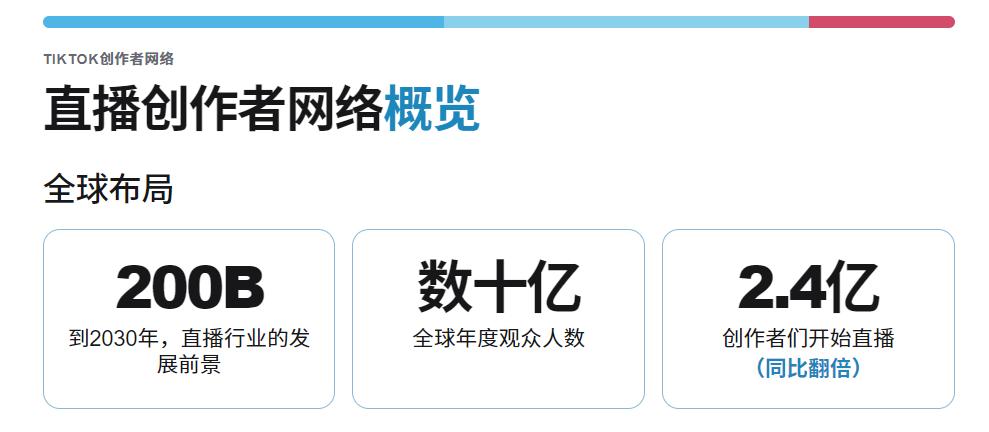
Source: TikTok, Kearney
At the first TikTok LIVE Creator Networks Global Summit held in Bangkok last month, TikTok officially named group live streaming "Group LIVE", and disclosed that its live volume and single-session duration continued to grow throughout 2025 and in the first half of 2026. This means that group live streaming is replicating all the success it once achieved in the Chinese domestic market on TikTok.
The special feature of the Latin American market is that it covers many countries including Brazil, Mexico, Argentina and Peru, with a total population of more than 650 million, and users under 35 years old account for more than 80% of the total population, making it the youngest traffic pool in the world.
According to reliable sources, among TikTok's current main operating regions, Spanish-speaking Latin American countries (Latin American countries excluding Brazil) are the largest unified language market by DAU, with more than 100 million daily active users, ranking second globally in terms of live viewing UV, and third globally in terms of live streaming UV and streamer revenue. At present, leading agencies have achieved a monthly revenue of over 2 million US dollars, and top streamer Cañita has achieved a single-day revenue of over 400,000 US dollars.
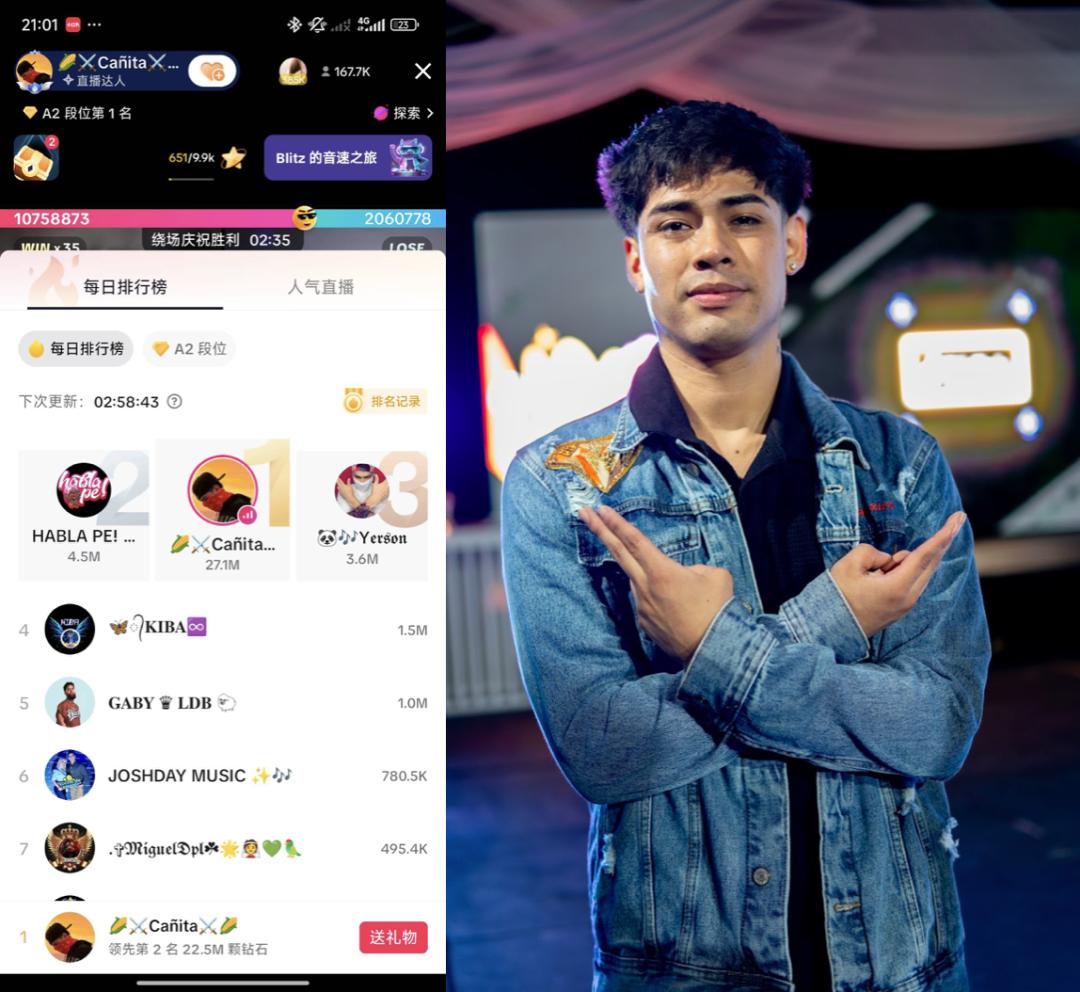
The phenomenal streamer in Latin America once achieved a single-day revenue of over 400,000 US dollars
For group live streaming players who are fed up with the fierce involution in the Chinese domestic market, Latin American group live streaming is undoubtedly an undeveloped fertile land.
So what kind of market is Latin America exactly? Can group live streaming players who can no longer survive the fierce competition in China find new opportunities in Latin America? With these questions, the editorial team of Newrank had an in-depth conversation with Guo Heye, founder of the leading group live streaming agency Fission Studio, and Mike, a Colombian entrepreneur who just left TikTok to start his own group live streaming business.
Behind a population of 650 million, is Latin America a land of milk and honey for group live streaming?
For Chinese people, compared with Japan, South Korea and Southeast Asia which are close at hand, Latin America across the Pacific seems much more unfamiliar. But in fact, as early as the 1990s, Chinese companies such as Huawei, ZTE and Gree had already begun to layout the Latin American market. Earlier this year, Mixue Bingcheng also opened its first offline store in Latin America in Mexico City, the capital of Mexico.
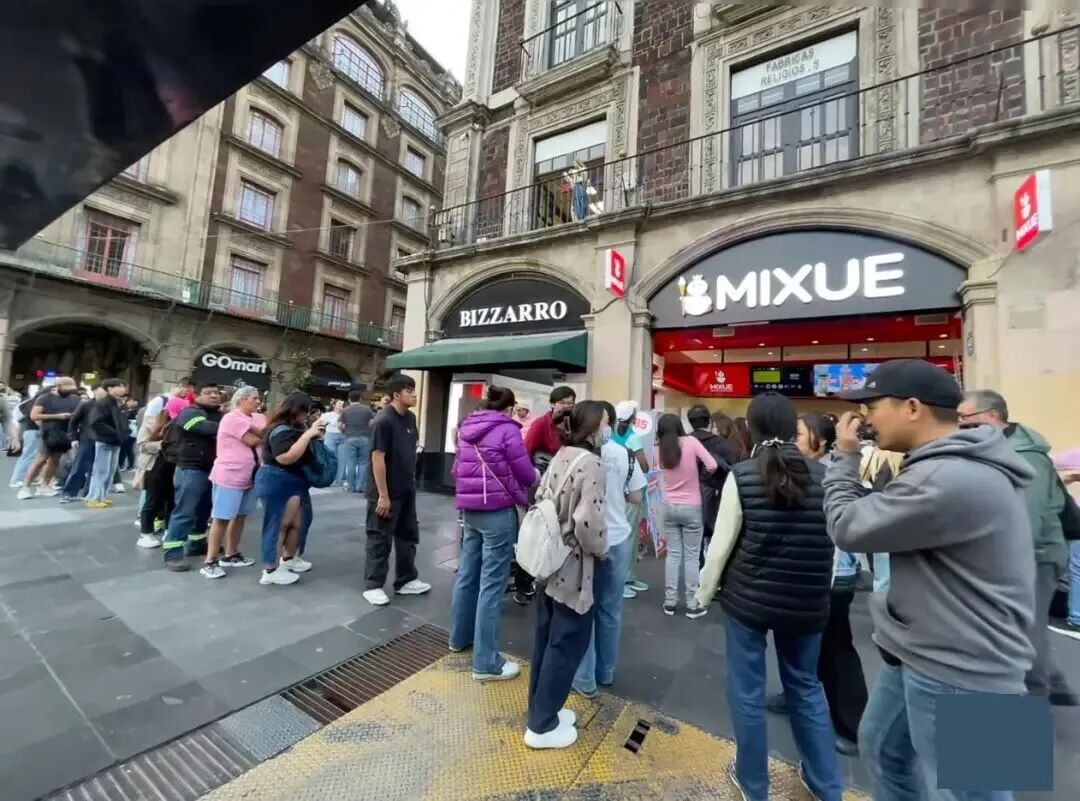
Source: Jimu News
Guo Heye himself is exactly the epitome of Chinese people pioneering in Latin America.
At the age of 12, Guo Heye, who had just graduated from primary school, immigrated to Mexico with his parents, and spent his youth, young adulthood and middle age in Mexico City. As a rare talent proficient in Chinese, English and Spanish, Guo Heye has worked for large Chinese companies such as ZTE and Huawei successively, and previously served as the CEO of Kunlun Wanwei's Mexico region.
In 2023, Guo Heye left his job to start a business and founded one of the first entertainment agencies in Latin America with Chinese capital background. But at the very beginning, Guo Heye focused on talent signing and e-commerce business. It was not until 2024 that he noticed group live streaming, quickly went to China for investigation and study, and opened his first group live streaming studio in September that year. "I have a 700-square-meter villa in Mexico City, which was originally used for offline talent incubation, and I made good use of it at that time."

The small villa where Guo Heye's group live streaming business started
Guo Heye introduced that due to the strong atmosphere of people shooting videos all over the country, Latin America has extremely abundant streamer resources. For example, Mexicans are a bit like people in Northeast China, with extremely strong desire to perform. This allowed Guo Heye to recruit a group of professional dancers with excellent talents in the initial stage.
Fernanda is a professional dancer with many years of dance teaching experience, who once owned her own dance studio. At the end of 2024, in order to let more people see her dance, Fernanda joined Guo Heye's team and started her group live streaming career. With her excellent performance, Fernanda even has her own fan group "TEAM TEDDY!", and fans come to the live stream every day to support her.
Mike mentioned that compared with Chinese agencies which need to spend a lot of energy training streamers' talents, Latin American agencies are much more worry-free. The streamers not only have strong dancing talent, but also their enthusiastic and open personalities allow them to start chatting with audiences on the first day of live streaming. "Chinese group live streaming mainly relies on DJs to interact with users in the live room, while Latin American group live streaming mainly relies on the streamers themselves."
The current Latin American group live streaming studios are very similar to the early group live streaming in China: not very exquisite, but full of vitality, with obvious Latin American style. In addition, thanks to the complete infrastructure of TikTok, the gameplay of PK battles and user gifting in Latin American group live streaming is not much different from that in China.
Latin American group live streaming
Latin Americans who are good at singing and dancing have solved the streamer problem for group live streaming. 62 million Latin Americans in the United States and the extremely low startup cost also make the group live streaming business in Latin America generate good commercial returns.
On the one hand, Latin American users in the United States constitute an important economic foundation for Latin American group live streaming. Guo Heye revealed that more than 90% of the gifting audience of Fission Studio are Latin Americans in the United States. "On the one hand, they are looking for their roots, and they hope to chat with compatriots in their motherland; on the other hand, they are bored, and Americans have almost no entertainment options at night."
Guo Heye mentioned that the minimum wage in Mexico is around 800 US dollars, while the income of Latin Americans in the United States is at least 3 times that of Mexicans. The development level gap between the two places provides strong impetus for the development of Latin American group live streaming.
It is reported that the United States has more than 62 million Latin Americans, accounting for 17% of the total population of the United States. In addition, more than 6 million non-Latino students choose Spanish as their first foreign language, and have good acceptance of Latin American culture.
According to reliable sources, US users are the main source of income for Latin American streamers, among whom US users contribute more than 70% of the income of streamers in Mexico, the Dominican Republic, Venezuela and other countries.
On the other hand, compared with domestic group live streaming which costs millions of yuan at every turn, and Southeast Asian group live streaming where the cost competition has already started, the cost of a single live streaming studio in Mexico is usually between 20,000 and 30,000 US dollars. If you move to Colombia and Peru, the cost can be reduced by another 10% to 30%.
In May this year, Mike invested 60,000 US dollars in the first month to build two group live streaming studios in Mexico, including fixed investments such as equipment and decoration, as well as salary investments for streamers and hosts.
If you look at the group live streaming studios in Latin America, you will find that most of them do not have the exquisite sets seen in China, and equipment such as lighting is relatively simple. Mike introduced that his group live streaming studios are usually equipped with only 4 streamers and one host. The streamers get a base salary of about 700 US dollars plus a 2-3% commission on the total revenue, and the host gets a salary of about 1000 US dollars. There are no positions for operation staff, photographers or camera operators, and sometimes the boss has to shoot videos in person.
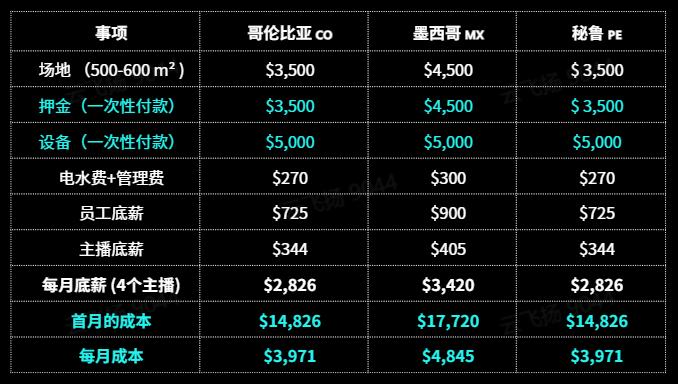
Estimated breakdown of various expenses for Latin American group live streaming. Source: Reliable sources
Compared with other businesses, the biggest advantage of doing group live streaming in Latin America is that it is easy to start and the return cycle is short, which is very suitable for entrepreneurs who do not have too many resources. Of course, to make this business bigger, what ultimately matters is the management and operation capabilities of each team. "It's not hard to get started, but you have to put a lot of thought into making it bigger and better." Guo Heye said.
Nowadays, TikTok has listed Latin America as a global strategic priority market, and has provided a variety of support policies such as cash rewards and offline investigation opportunities. With the convening of the first TikTok LIVE Creator Networks Global Summit, more and more domestic group live streaming players have begun to pay attention to this new market. According to reliable sources, agencies that achieve a monthly group live streaming revenue of 1 million US dollars can get an additional 10,000 US dollars reward from the official TikTok team.
Streamers are hard to manage and content is homogeneous, how to do a good job in Latin American group live streaming?
Although Latin American group live streaming seems to have the advantages of talented streamers, a large number of gifting users and low startup cost, it is not as easy as imagined if you really want to do this business well.
Guo Heye and Mike both mentioned that the biggest challenge for Latin American group live streaming is streamer recruitment and management.
Guo Heye recalled that in the early stage of the business, he tried actors, internet celebrities and models, but found that the better-looking the people were, the worse they were at talking, and the more famous the people were, the more difficult it was to cooperate with them. Finally, he simply chose amateur dancers, which could also save training costs. "One of my partners is a dance teacher, and he just has some dancer resources. Now most of the streamers under me are professional dancers with three or four years of experience."
Latin American group live streaming also has requirements for the personality and age of streamers. Group live streaming is essentially a service industry, and streamers can hardly enter this industry if they cannot correct their attitude.
24-year-old Alexa is a biochemist engineer, and she also teaches hip-hop, jazz, cheerleading dance and gymnastics. After entering the group live streaming industry, she does 7 hours of group live streaming every day, and 5 hours of personal live streaming on workdays. "The most difficult, tiring and frustrating part is that you have to maintain a good attitude and good image for many hours, keep communicating with people, which leads to almost no private time, and you cannot stay away from social media. There is also the malice that some people sometimes spread about you or your team."
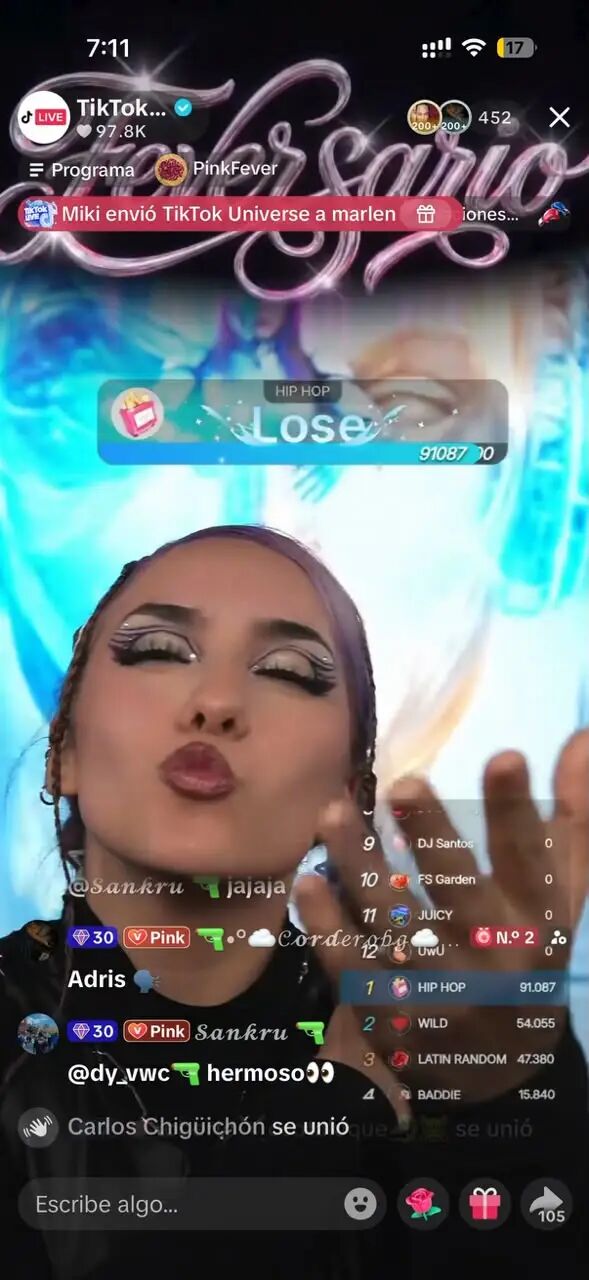
Alexa during live streaming
Guo Heye concluded that the common reasons for the failure of Latin American group live streaming studios include incompatible personalities between streamers, streamers who are too passive, and streamers who are fooled by "real or fake big spenders" to go solo. Mike also mentioned that young streamers aged 18-21 usually have weak service awareness and are unwilling to interact with gifting users, so he will prefer streamers over 22 years old with work experience and dance skills.
"Appearance and educational background are not the decisive factors. Being good at socializing is more popular than just being good-looking, so now I mainly choose streamers who are outgoing, optimistic and open-minded." Guo Heye added.
In addition, as group