Coffee Market Battle in Xinjiang: Luckin Coffee Operates 65 Outlets, Starbucks Unveils Its First Store Equipped With the Highest Standard Configuration
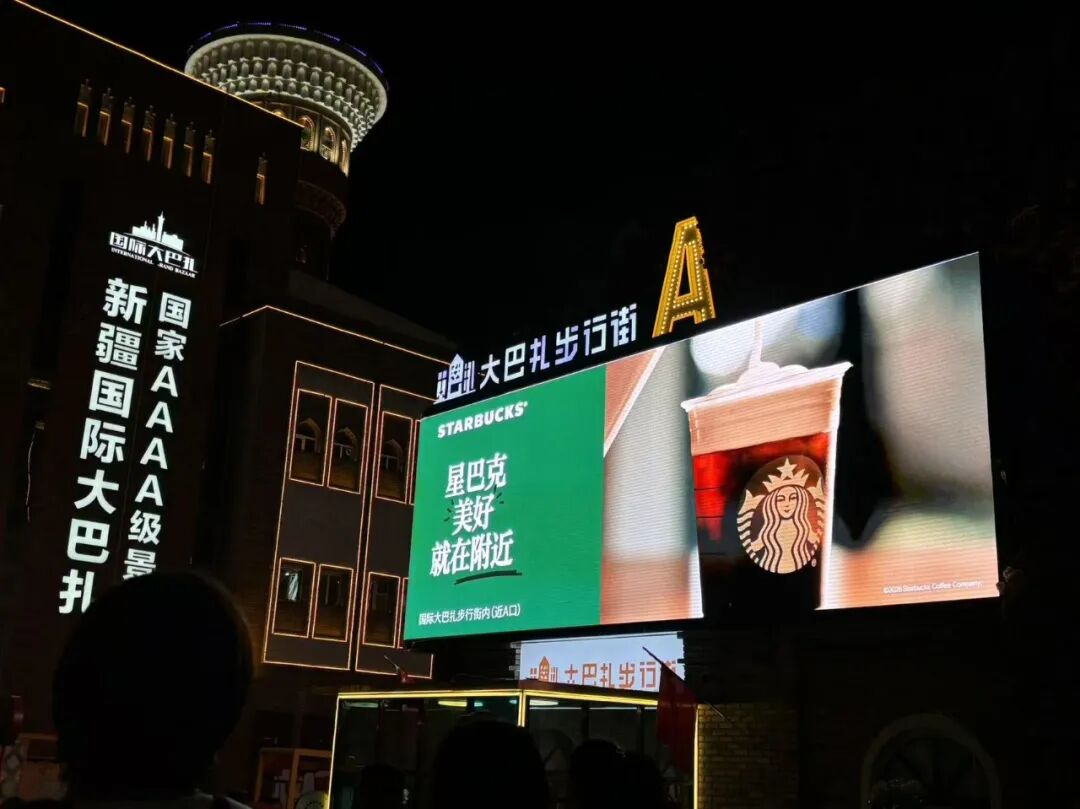
At half past nine on the evening of September 30, there was still a queue at the entrance of the International Grand Bazaar in Urumqi, Xinjiang. But most people in the queue that night were not waiting for baked samsa or old Hami melon, but a coffee shop: the large screen on the security check point of the pedestrian street rolled with a striking logo, "Starbucks, Good is Nearby".
The official name of this Starbucks is the Intangible Cultural Heritage Flagship Store of the International Grand Bazaar, but the partners in the store are more used to calling it "Star Bazaar". Even considering the two-hour time difference, queuing up at night is a rather rare sight for a coffee shop.
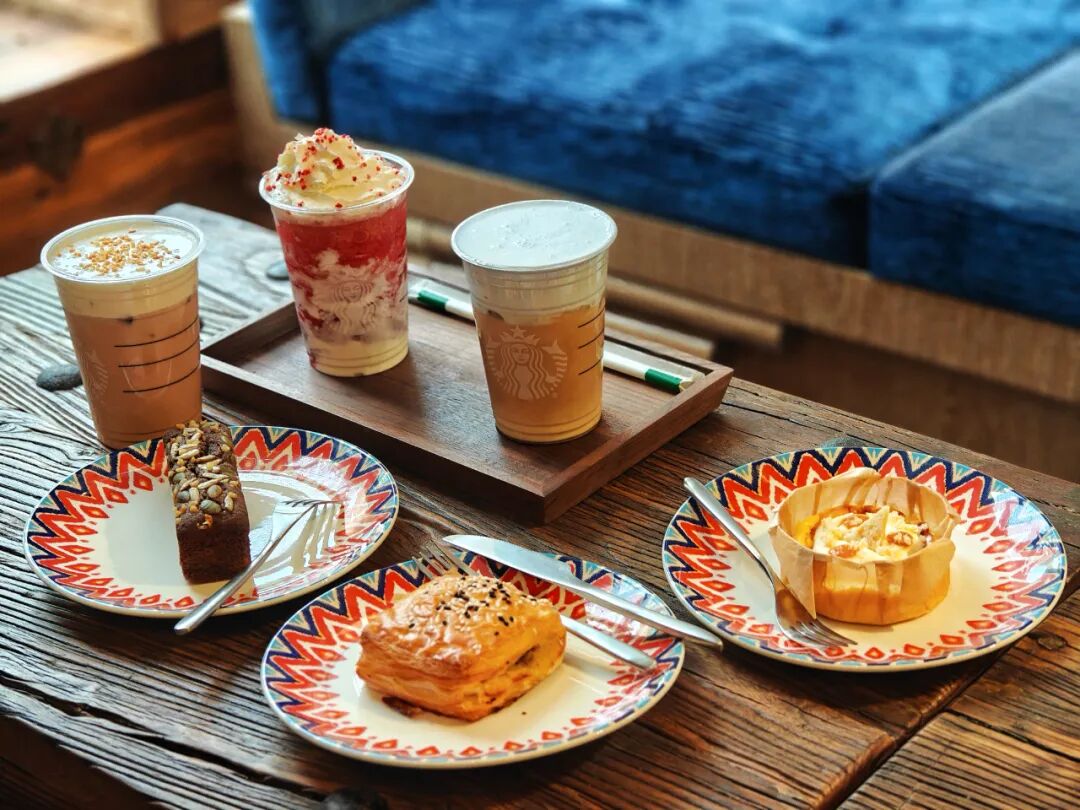
Not all the people in the queue came for caffeine. On the menu of the "Star Bazaar" store, there are Xinjiang-exclusive Pomegranate Yogurt Frappuccino and Milk Skin Salty Milk Tea. The baking area has launched Xinjiang characteristic flavored nut baklava, bahali, roasted lamb crispy buns and yellow apricot milk skin Basque. Of course, the store is also equipped with a "Bear Store Manager" dressed in Xinjiang costumes.
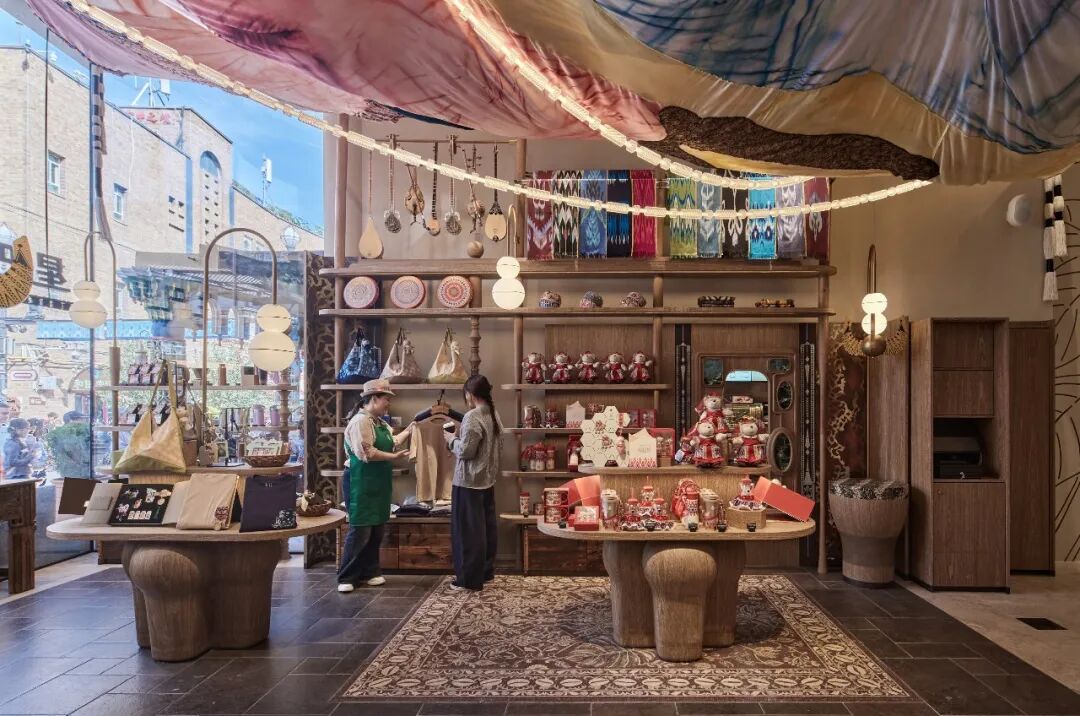
"We rehearsed various problems of the day before opening, and the most worrying thing was that too many people would rush for the little bear," store manager Dolly said half-jokingly.
Dolly worked in Xining for the past eight years, separated from her parents who live in Xinjiang. When she saw Starbucks release the internal recruitment for Xinjiang stores, she signed up immediately. It was not until the day before moving that Dolly was sure that everything was settled, and she called her mother: "I said Mom, pack up my things, I'm going home. My mom asked, how long will you stay this time? I said you tidy up the room for me, I will live at home this time."
Inside Starbucks, this process is called the "Partners Homecoming Program". The more than 50 partners in the store come from 14 ethnic groups and 18 provinces, autonomous regions and municipalities directly under the Central Government. In addition to 19 local partners of the store, there are 4 non-local partners selected to Xinjiang stores through the "Partners Explore the World" program. In addition, there is a STAR team selected from all major regions across the country to provide three-week opening support, with a total of 12 people.
Dolly's store in Xining is also located in a scenic spot, but she thinks the location of the International Grand Bazaar store is quite special: this 4A-level scenic spot has the dual functions of tourism and residential business district, divided into multiple pedestrian streets, and you need to go through security checks when moving between different blocks of the scenic spot. The guests include not only local residents and mainland tourists, but also a large number of foreign tourists from Russia, Kazakhstan and other countries.
There are many milk tea shops around the scenic area, but few of them choose locations inside the pedestrian street. For example, Lucky Coffee chooses the street-side shop between the subway entrance and the security check point.
In April this year, Starbucks China launched a market survey in Xinjiang and selected this location. In the same month, Boyu, which took a 60% equity stake, officially launched its cooperation with Starbucks, and Wenwen Liu, CEO of Starbucks China, first publicly proposed the concept of "Thousand Stores, Thousand Faces". In less than half a year, this intangible cultural heritage flagship store, classified as the "highest level of investment", officially opened its doors to welcome customers.
This marks the official entry of Starbucks into the Xinjiang market. On the same morning, the "Silk Road Station" store located at Urumqi Tianshan International Airport also opened for business. The two well-prepared stores have visible costs everywhere from decoration to labor.
The coffee market in Xinjiang is no longer the blue ocean that some people imagine: in 2024, Luckin Coffee first entered Urumqi, with 11 stores opening on the same day, and the number of stores in Xinjiang reached 65 within one year. Tims, Cotti Coffee, Heytea and other tea drink brands have also laid out in the core business districts.
When the earlier chain brands that entered Xinjiang have turned coffee into daily life with scale and low prices, what kind of coffee does Starbucks want to make in Xinjiang with space, culture, service and organizational strength?
Launching the "Top-tier" Store in 6 Months, the Acceleration of "Thousand Stores, Thousand Faces"
In Uyghur, "Bazaar" means "market".
On the periphery of the store, the design team of "Star Bazaar" used more than 7,000 pieces of local Xinjiang ceramic tiles to simulate the scattered and layered Grand Bazaar. From 4 p.m. to 6 p.m., the Atlas silk on the entrance awning will cast gradient light and shadow on the ground and wall. They made a circular arc aerial stage above the bar, and the curtain presents three scenes of Yunnan coffee planting, harvest, and camel caravan transportation to Xinjiang. Every day, the curtain will be opened regularly, and customers can watch the intangible cultural heritage song and dance specially arranged by Starbucks with the inheritors of "Twelve Muqam".
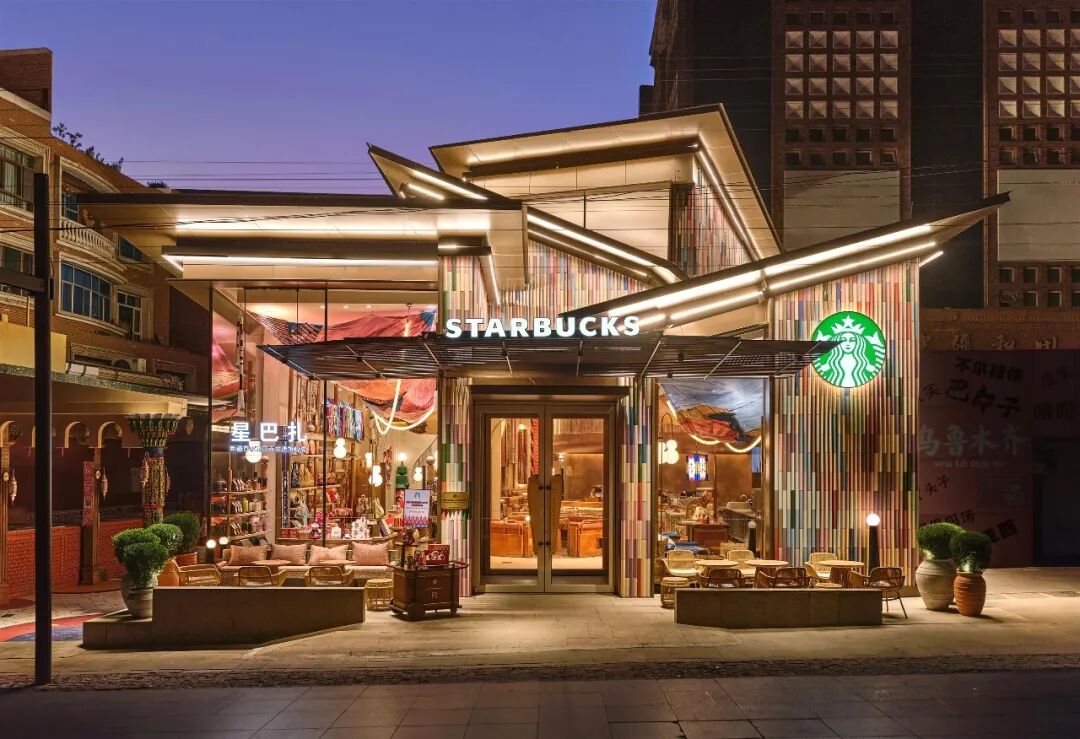
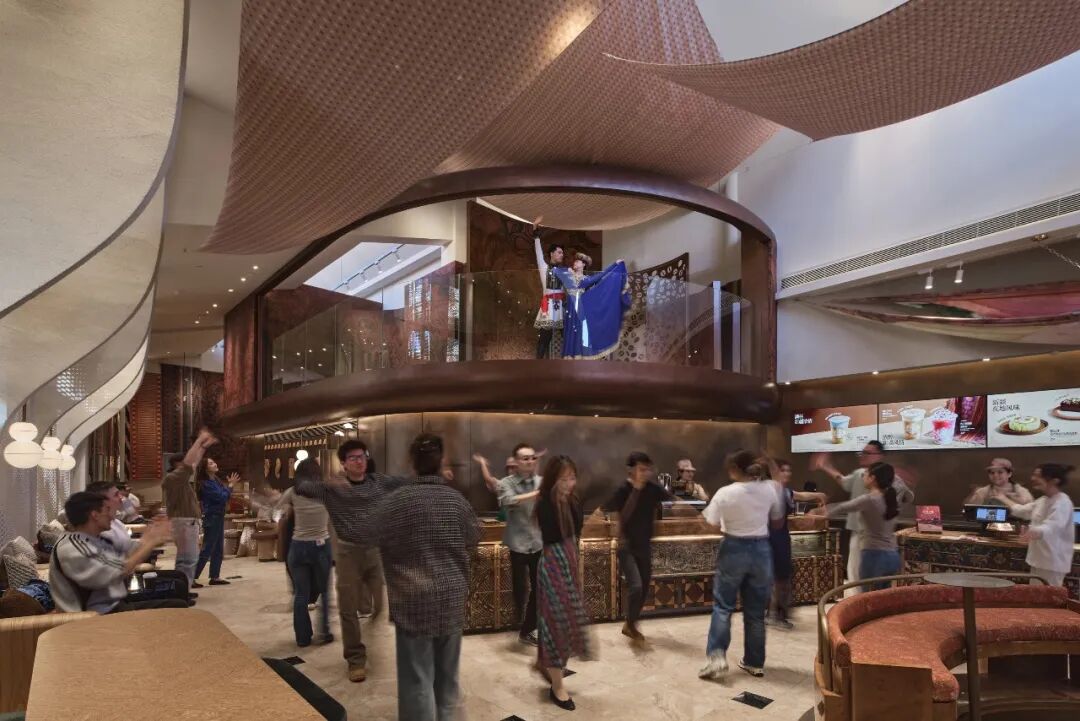
When it comes to entering Xinjiang, Starbucks China has invested more than just a lot of money.
The six-month implementation speed is incredible to many people. According to Dolly's recollection, "all departments" of Starbucks North China are fully promoting the implementation of Xinjiang stores: government affairs departments, logistics supply departments, and even a district manager moved her family from Beijing to Xinjiang for this purpose. She also met Wenwen Liu, CEO of Starbucks China, at the Family party before opening. In the past two years, Urumqi has been vigorously promoting the "first store economy", and governments at all levels have actively followed up brand negotiation and settlement docking. "Star Bazaar" obviously also received the support of the local government. On the opening night, government personnel from the autonomous region, Urumqi city and Tianshan District also attended the ceremony.
This investment intensity and promotion rhythm are rare under normal circumstances, but it is not an isolated case in Starbucks' store opening sequence in recent years. According to the store designer, this is not the "most time-limited" project for them. This year, Starbucks has significantly accelerated its layout of characteristic stores, before going to Xinjiang, Spicy Duo Jiao had successively visited the Tianjin Intangible Cultural Heritage Concept Store in May and the Beijing SKP Reserve Roastery Creative Workshop in September, and the two intangible cultural heritage cultural tourism stores in Shanghai Yu Garden and Beijing Yandai Xiejie have also been launched.
From this perspective, Boyu's entry has indeed brought more possibilities to Starbucks China: the convenience of site selection, the dividends of policies, and Starbucks' determination to make longer-term and higher-value investments in the Chinese market. The most direct example is Starbucks' new generation flagship store at Beijing SKP. In May last year, Boyu's related parties indirectly acquired part of the equity of Beijing SKP through financial investment, which removed many obstacles for Starbucks to enter SKP. At present, Starbucks has settled in SKP in four cities: Chengdu, Xi'an, Beijing and Wuhan. This means that Boyu's political and business resource network in China is opening up previously hard-to-reach location channels for Starbucks.
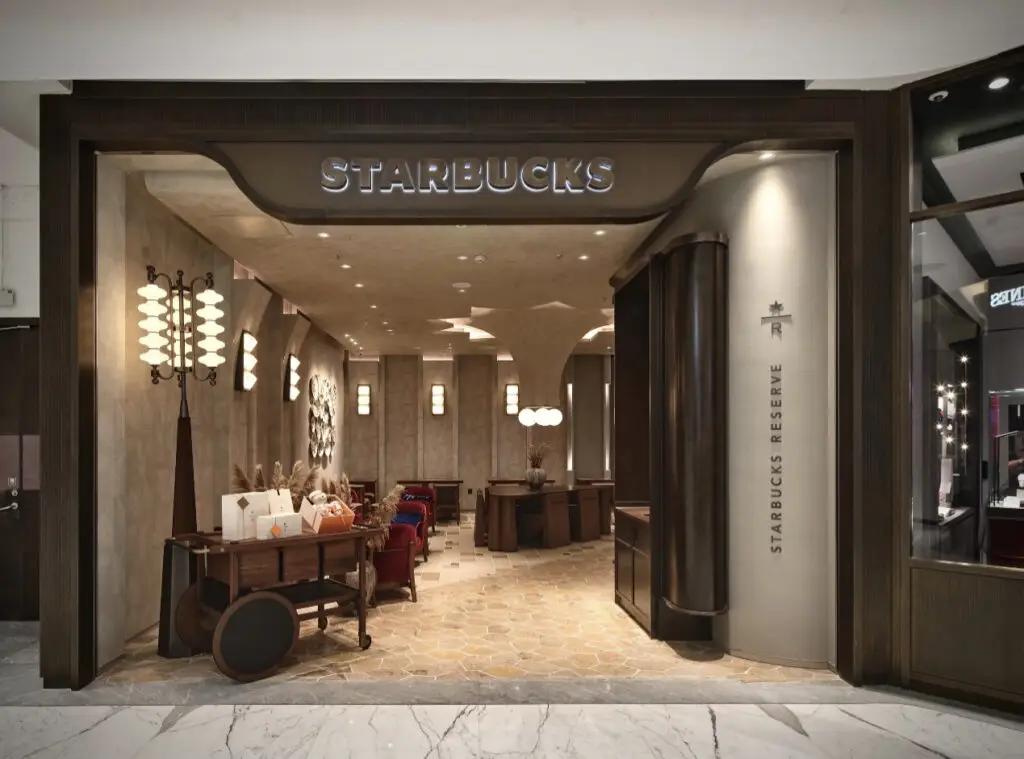
Inner entrance of the Starbucks Creative Workshop in Beijing SKP Mall
Changes to the coffee training system also took place in April. Starbucks announced the launch of a new full-time ACM (Area Coffee Master) position, with 60 ACMs across the country focusing on coffee education and ability development for partners. In July, ACM was officially incorporated into the company's operational system.
Fabio is an ACM that Spicy Duo Jiao met at "Star Bazaar". According to him, since July, he has completed a number of coffee education programs including those in Xinjiang. What impressed him most was organizing partners to visit coffee origins and cupping rooms in Yunnan, Kenya, Rwanda and other places to observe the cultivation, processing, procurement and quality inspection process of coffee crops: "After seeing it with your own eyes and then entering the bar, the feeling will be completely different. Let the partners' experiences become stories and then tell them to our customers, which is a good two-way cycle."
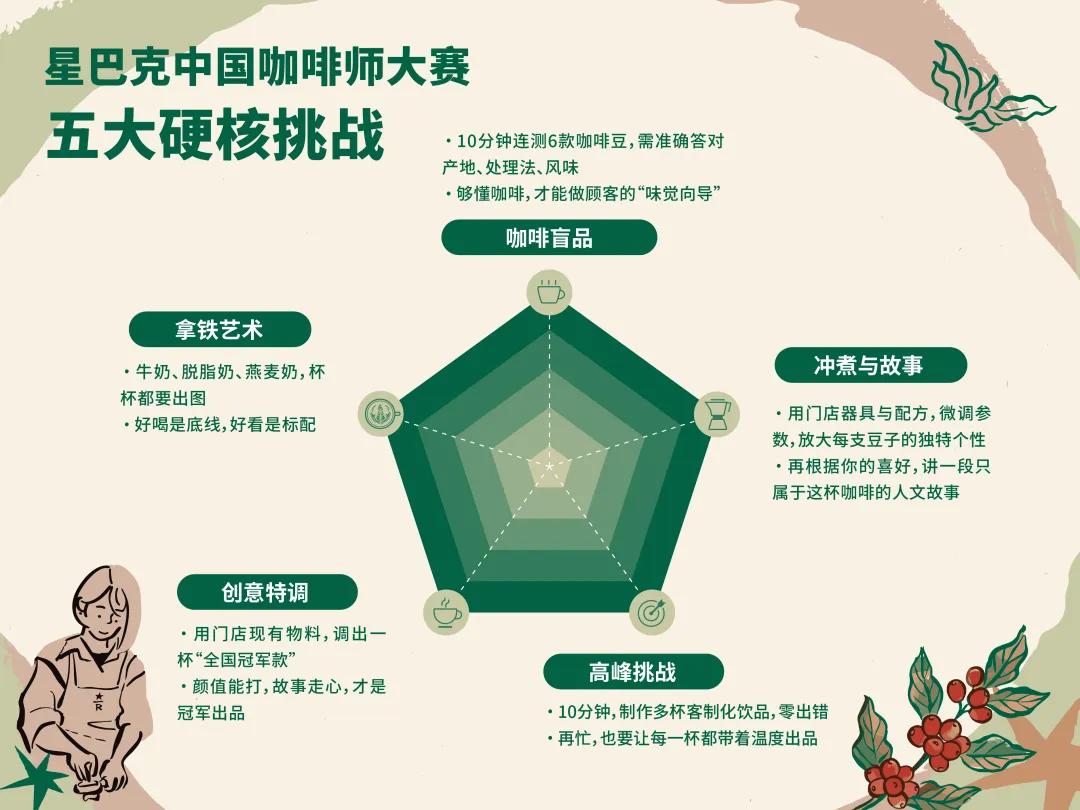
The Barista Competition has always been an important node in Starbucks China's coffee education system. In this year's Barista Competition in September, ACM not only undertook the coaching work for contestants, but also directly participated in the competition. "Through the competition, the Coffee Ambassador program and the ACM system, we are cultivating a group of coffee leaders with both professional ability and humanistic care," said Wenwen Liu. "The professional knowledge, service standards and innovation results tempered through the competition will eventually return to the stores and to the customers, continuously improving the Starbucks experience and making Starbucks the trusted professional coffee choice for more customers."
Who is Selling Coffee in Xinjiang?
Among the mainstream large-scale chain brands, Starbucks' action is relatively late. But the flow of people on the opening day shows that even if Luckin Coffee, Cotti Coffee, Lucky Coffee and other brands have developed the daily coffee consumption in Xinjiang, Starbucks still finds its own space in this extremely mature 4A-level scenic spot.
The consumer fundamentals in Xinjiang are not as thin as some people imagine. According to the data released by the Statistics Bureau of Xinjiang Autonomous Region this year, the total retail sales of social consumer goods in Xinjiang in the first half of the year reached 187.109 billion yuan, which is already at the 100 billion level, while the total retail sales of grain, oil, food and beverages in Urumqi increased by 35.9% and 20.8% respectively.
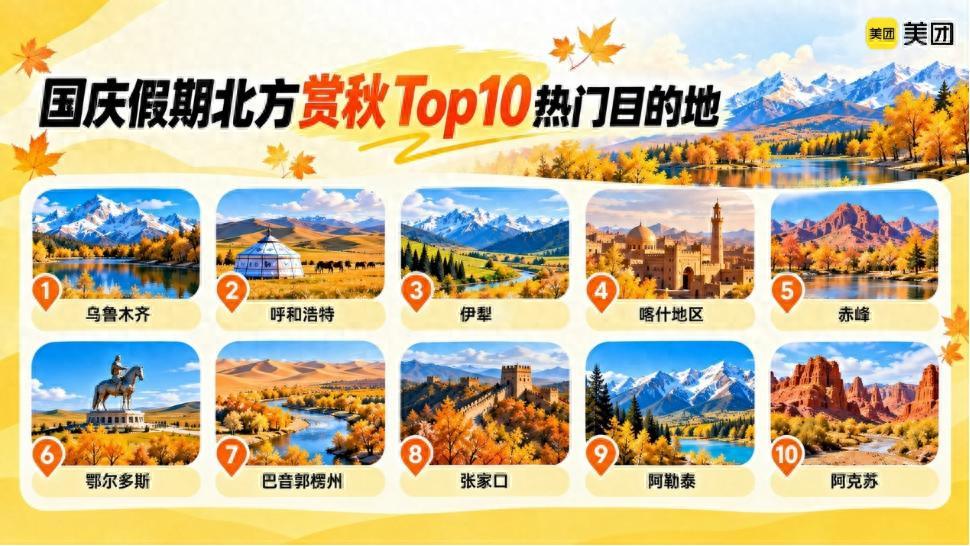
The popularity of tourism in Xinjiang is also continuing. This year, Urumqi topped the list of popular autumn appreciation destinations in northern China. Meituan data shows that the number of cultural tourism reservations in Xinjiang during the National Day holiday increased by 15% year-on-year. The superposition of tourist flow and night economy has significantly delayed the consumption time period in Urumqi, and the willingness to pay has also increased significantly.
At the end of last year, Red Restaurant Network reported that Xinjiang had ushered in a wave of opening of first stores of catering brands: in 2024, Luckin Coffee first entered Urumqi, with 11 stores opening on the same day, and the number of stores in Xinjiang reached 65 within one year. Open Dianping, the chain coffee stores in Urumqi are densely distributed, and Luckin Coffee, Cotti Coffee, Lucky Coffee, and Nowwa Coffee almost cover all major business districts and transportation hubs. In addition to the "milk tea and coffee freedom" brought by brands such as Luckin Coffee, Mixue Bingcheng, Bawangchaji, and Heytea, catering brands such as Mr. Savage and Baoshifu are also entering the market.
However, the vast area of Xinjiang has diluted the paper data of major brands in Xinjiang to some extent. Limited by traffic conditions, the layout of chain brands entering Xinjiang is inevitably highly concentrated: among the 65 stores of Luckin Coffee in Xinjiang given in May last year, 55 are located in Urumqi, and in Urumqi, the first stores of brands are highly concentrated in the top core business districts such as CC Mall and Huijia.
In this context, "Star Bazaar", which is located in the core area of the Grand Bazaar scenic spot, conveys a special signal.
"When I travel, I want to get a special local coffee or milk tea with unique taste or appearance to check in," a mainland tourist told Spicy Duo Jiao, "Even if I am willing to spend more money, the brands I can choose in Xinjiang are still not many. And the privately operated coffee and milk tea in the scenic area cost 40 to 50 yuan a cup after asking, it is better to go to the familiar Starbucks."
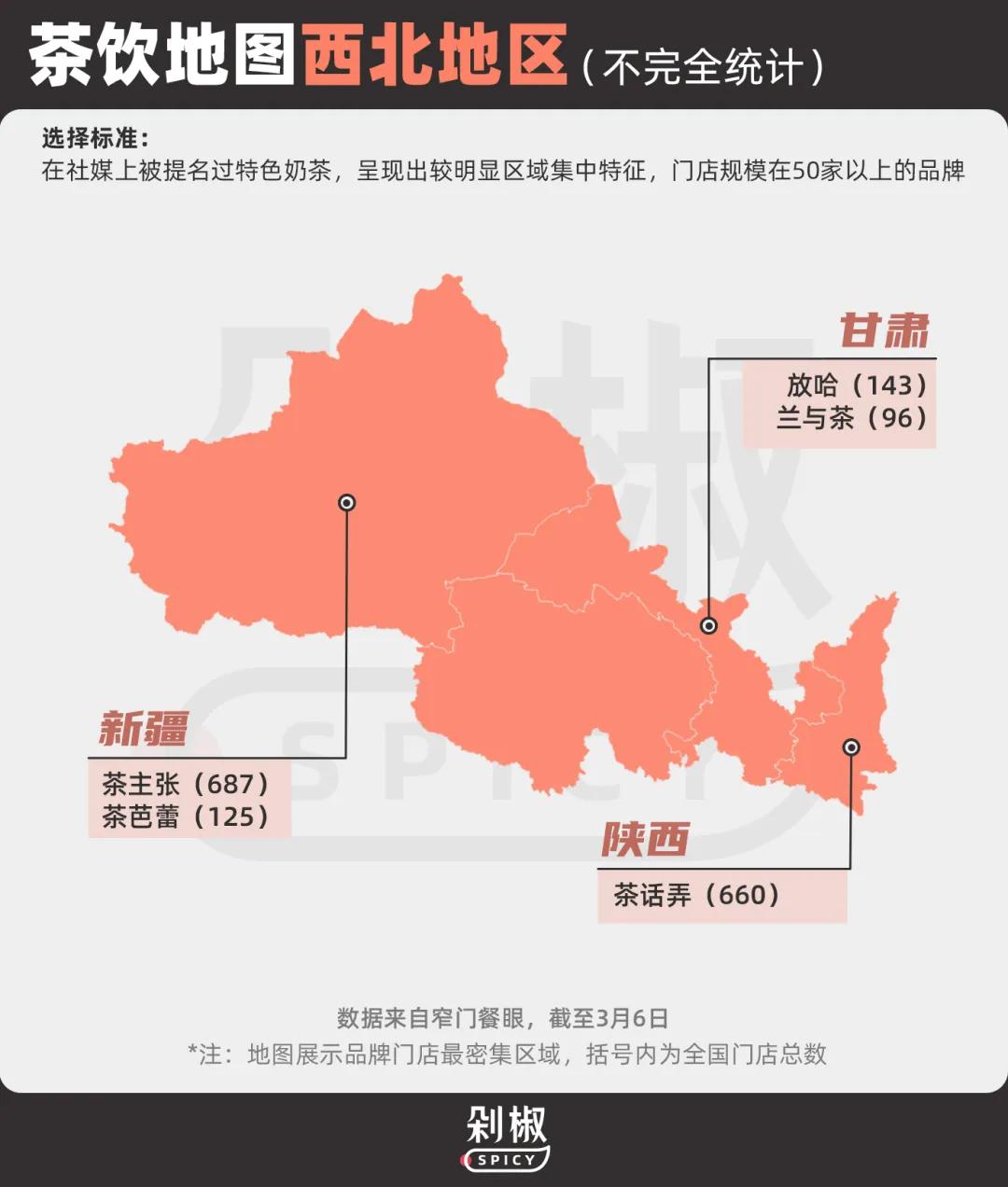
Tourists can't say no to "special features". Regional milk tea brands have become popular with the endorsement of locals, and for chain brands, they can also find their own new growth by relying on "limited editions". For example, Bawangchaji's Xinjiang-exclusive "Silk Road Salty Frost" salty milk tea has also entered the standard check-in process for passengers at Tianshan Airport. And Mixue Bingcheng's