A host of new restaurants are setting their sights on the "counter-side open-flame cooking" niche, and the premium rice bowl track is poised for a reshuffle.
The Aesthetic Dining Scene Gets a Major Upgrade, Introduces "Direct Flame" Cooking to Quietly Widen the Gap
The competition in the aesthetic dining sector is still ongoing.
In previous years, aesthetic dining venues competed on photogenic interiors and exquisitely presented dishes. But as more and more restaurants achieve similar standards for their environments and dishes, it has become far less easy for consumers to remember a single outlet.
Recently, a cooking method called "direct flame" has begun to emerge in restaurants across cities including Beijing, Shanghai and Chengdu.
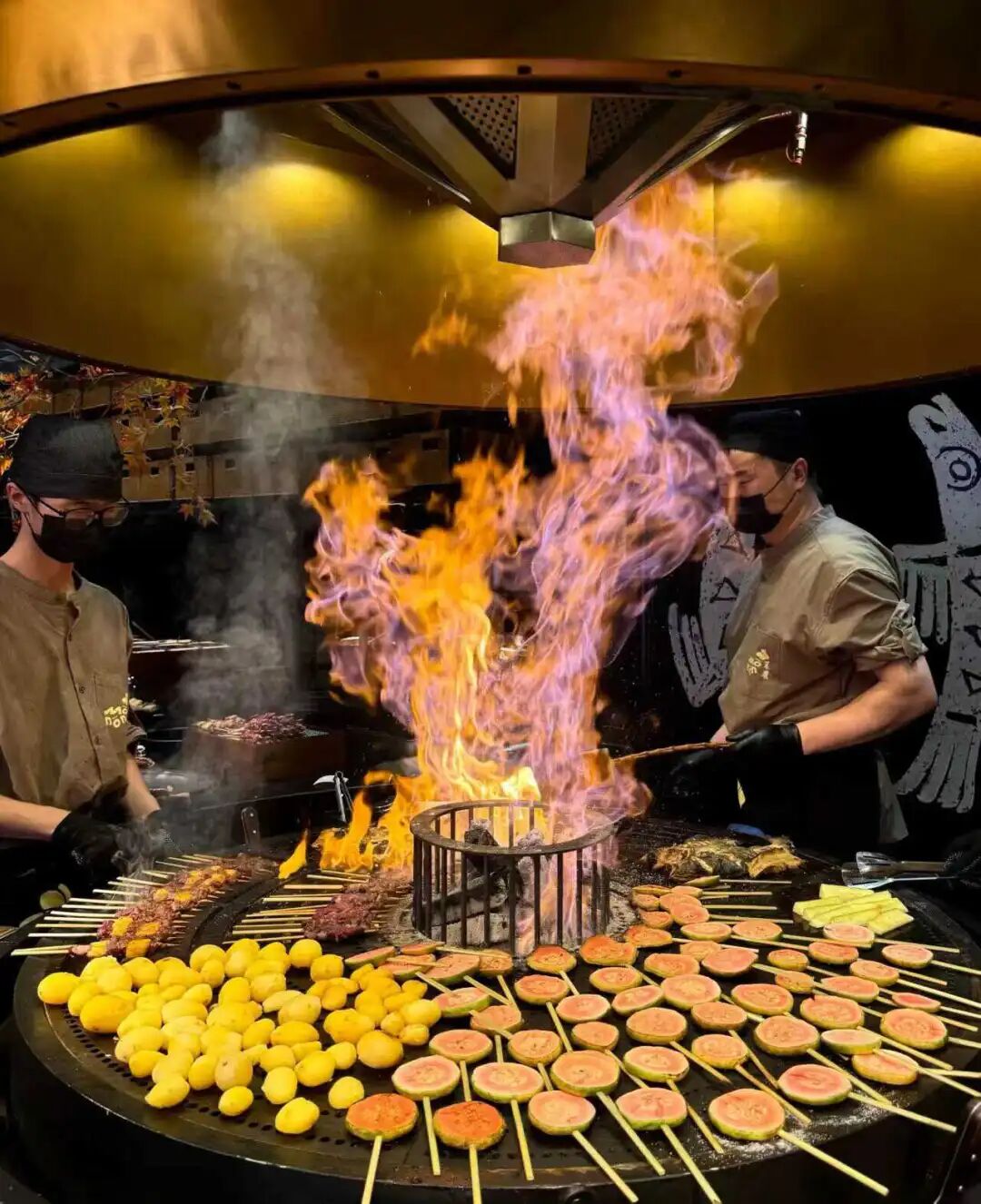
Compared with traditional grilling, direct flame cooking places greater emphasis on exposing ingredients directly to open flames and fruit wood fire. The high temperature quickly seals the surface of ingredients, brings out a charred aroma through the Maillard reaction, then allows the fragrance of fruit wood and charcoal to seep into the ingredients, reduces the reliance on heavy sauces and amplifies the natural flavor of the ingredients themselves, fundamentally upgrading the flavor profile of dishes.
At its core, this is not simply adding a grill to an aesthetic dining venue, but turning the cooking process itself into a selling point. The flames are visible, the aroma is palpable, and consumers can clearly see how chefs handle the ingredients. Aesthetic dining no longer only needs to look good, it requires real, solid skills behind the scenes.
In early August this year, the grilled fish brand "monon · Guibai Mountain Wampee Grilled Fish" opened in Shanghai, with a minimum 3-hour waiting time for queues. The brand is co-created by Zhu Guangyu Hotpot Restaurant and the aesthetic dining brand The Boots. The most eye-catching highlight of the outlet is the open-plan direct flame cooking station in the center of the restaurant, where chefs grill fish and skewers, with flickering flames that constantly grab diners' attention.
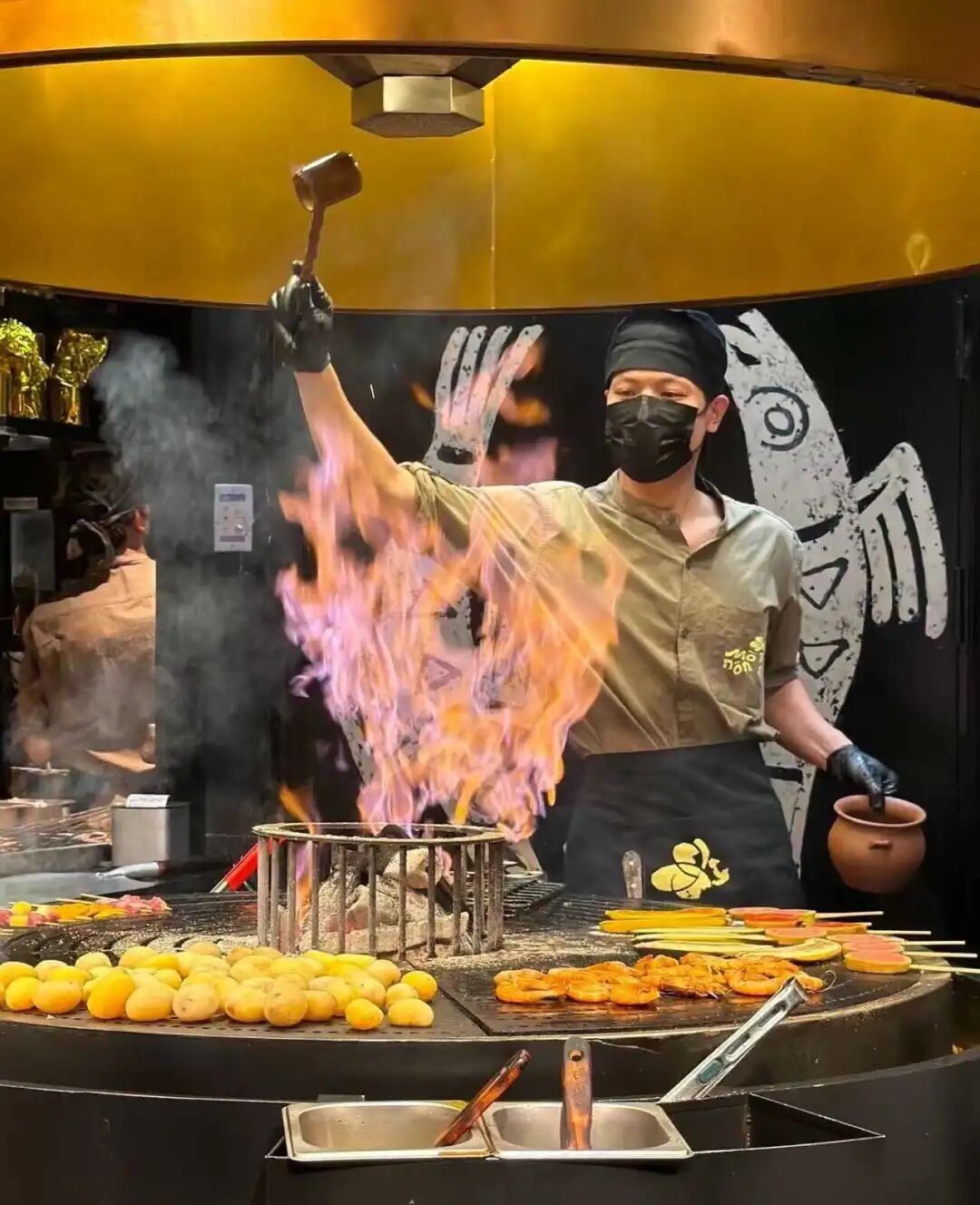
Nanjing's "YASIKO Yanshikou" brings direct flame cooking to Yanbian-style grilled meat. The restaurant adopts a full panoramic open kitchen, where the charcoal grilling process is directly presented to diners. The space features a dark, textured design that blends Korean ethnic cultural elements with modern trendy, cool aesthetics. Traditional flavors form the foundation, plating and spatial design elevate the overall experience, and the charcoal fire in the open kitchen fully infuses the space with a warm, lively smoky atmosphere.
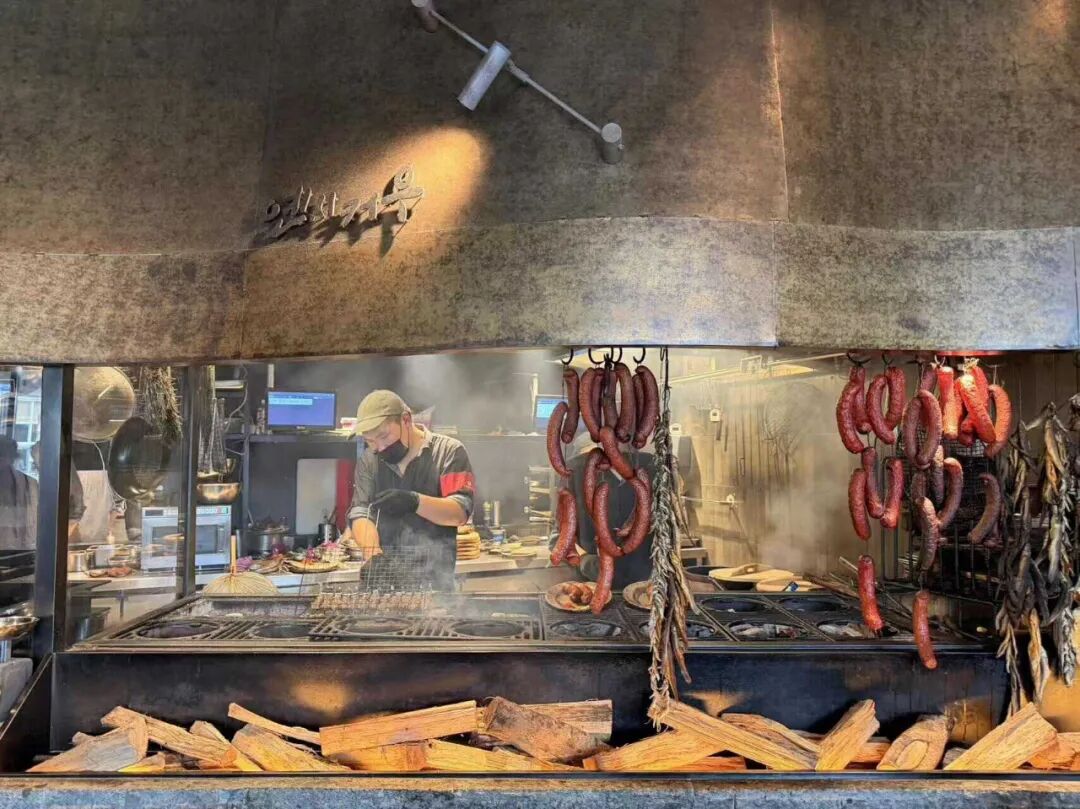
Wuhan's "No Raw Meat Nearby" is a fusion creative cuisine restaurant. The venue, which opened in September this year, was previously home to the creative restaurant "Black Jump" that operated for five years. The owner closed the old outlet and incubated this new brand, which only serves dinner service starting from 17:30. The space is dominated by raw stone and solid wood with minimal unnecessary decorations, with the core feature being an open counter-side charcoal open kitchen. Diners can directly observe the chef's fruit wood charcoal cooking operations, while a nearby aging cabinet displays aged meat and aged fish. Here, the aging process builds up layered flavors, and direct flame cooking brings out the rich aroma. With an average per-person spend of 220 yuan, the venue sells a complete experience spanning ingredient handling, the cooking process and the entire dining journey.
Why Has "Direct Flame" Become the New Viral Hit in the Catering Industry
1. Flavor Differentiation: Shifting from competing on seasonings to competing on ingredients and heat control.
For mature categories such as barbecue and grilled meat, after years of development, products and seasonings have long formed relatively fixed routines. Marinades, sauces and dry rubs are constantly being updated to create increasingly rich flavors, but this also easily leads to homogeneous products across venues.
Direct flame cooking puts more effort into ingredient handling, heat control and charcoal selection. The exact heat level required for different ingredients, grilling duration, when to flip the food, and how to manage excess fat all affect the final taste. The unique aromas released when different types of wood such as lychee wood and apple wood burn can also add extra layers of flavor to the ingredients.
More importantly, direct flame cooking gives restaurants the opportunity to create far more distinct, recognizable signature dishes. Brands can also build their own unique product labels around a specific type of wood, a particular aging process, or a specific heat control method.
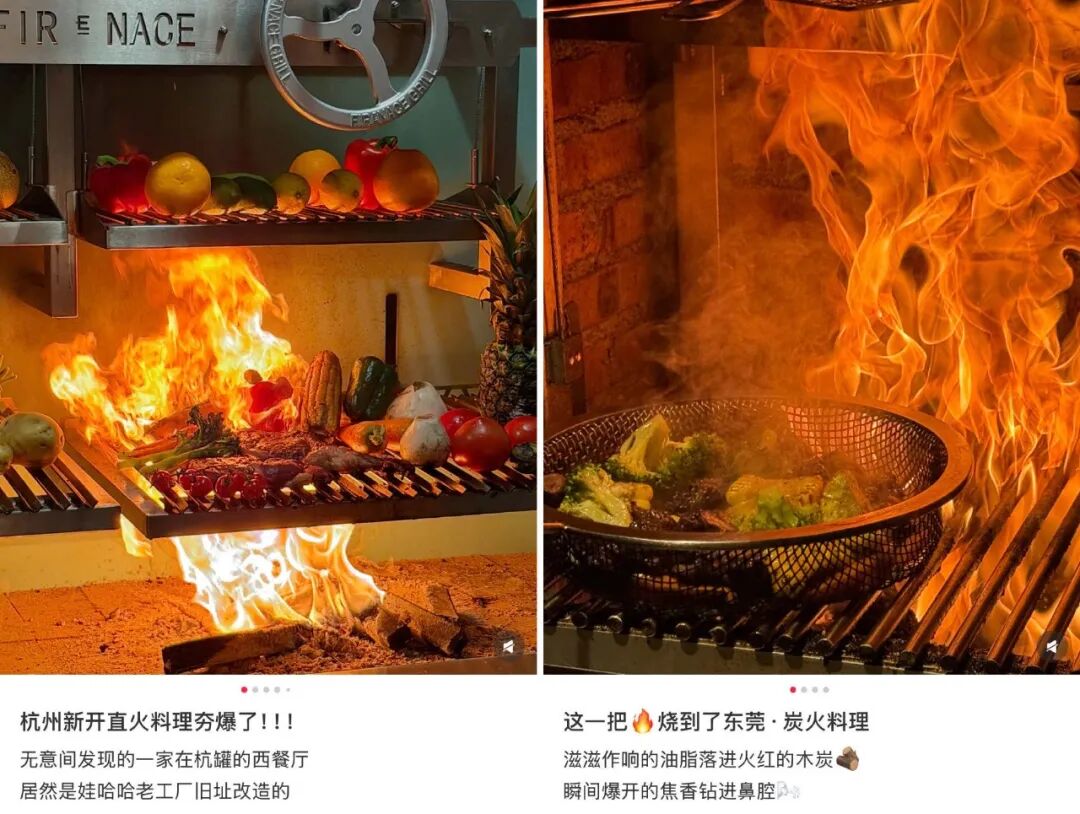
2. The concepts of "cooked on the spot" and "counter-side dining" continue to deepen the overall dining experience.
In recent years, formats such as open kitchens and counter-side dining have been continuously adopted by different types of restaurants. Consumers sitting at the bar watching chefs prepare, season and cook ingredients has become an integral part of the dining experience. Direct flame cooking takes this experience a step further.
As ingredients are placed on the grill, flames suddenly rise, the sizzling sound of dripping fat fills the air, and chefs adjust the heat level, flip the food and control the distance from the fire based on the state of the ingredients. The visual, auditory and olfactory elements immediately build up a strong sense of anticipation. The flame is not just a cooking tool, but also an integral part of the on-site experience.
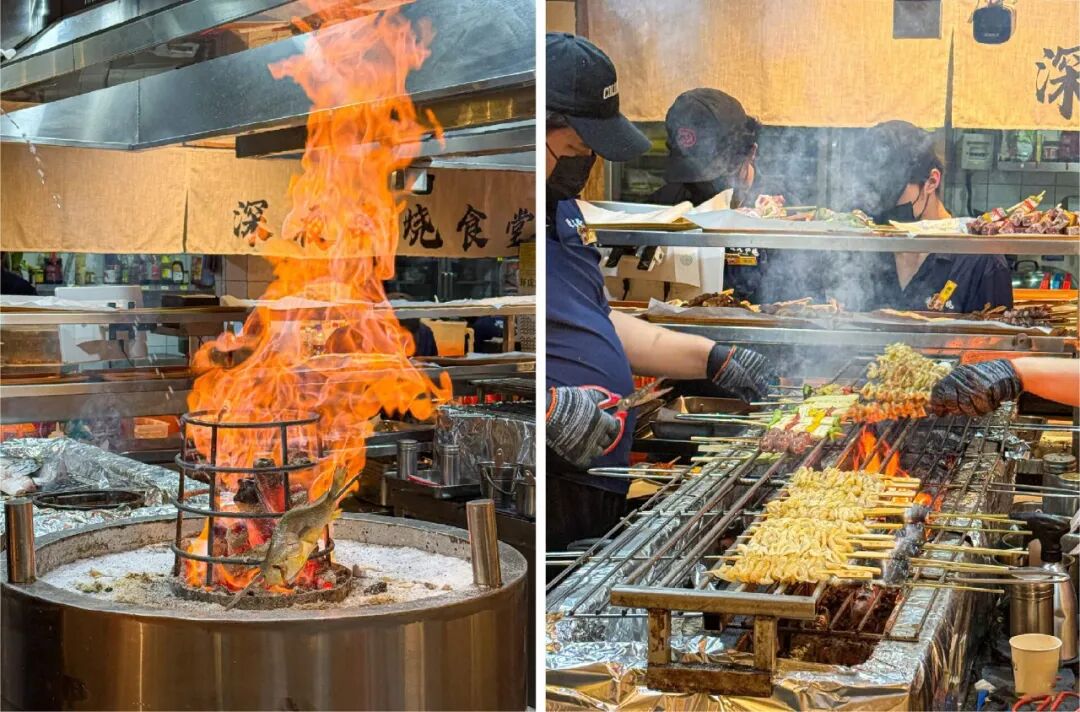
Overall, direct flame cooking provides an upgrade path for traditional catering outlets.
Direct flame cuisine is not a new concept. It has long existed in high-end dining scenarios, especially in dining contexts that emphasize ingredients, culinary skills and a sense of ritual. For example, Shanghai's Tianyan Kaiseki Direct Flame Cuisine adopts a counter-side kaiseki direct flame format, focusing on the shell grilling series where ingredients such as crab and abalone are cooked over open flames using their own shells as containers.
The truly noteworthy change is that this cooking method is being repackaged by more brands, and attempts are being made to bring it to a much broader consumer market.
In 2026, a new batch of catering brands covering grilled fish, grilled meat and bistro formats have already moved in this direction. This approach does not fully rely on increasing the number of dishes, nor does it necessarily require large-scale overhauls of the original product structure. Instead, it attempts to endow existing products or the restaurant itself with new value propositions through a re-combination of culinary techniques, experiences and spatial design.
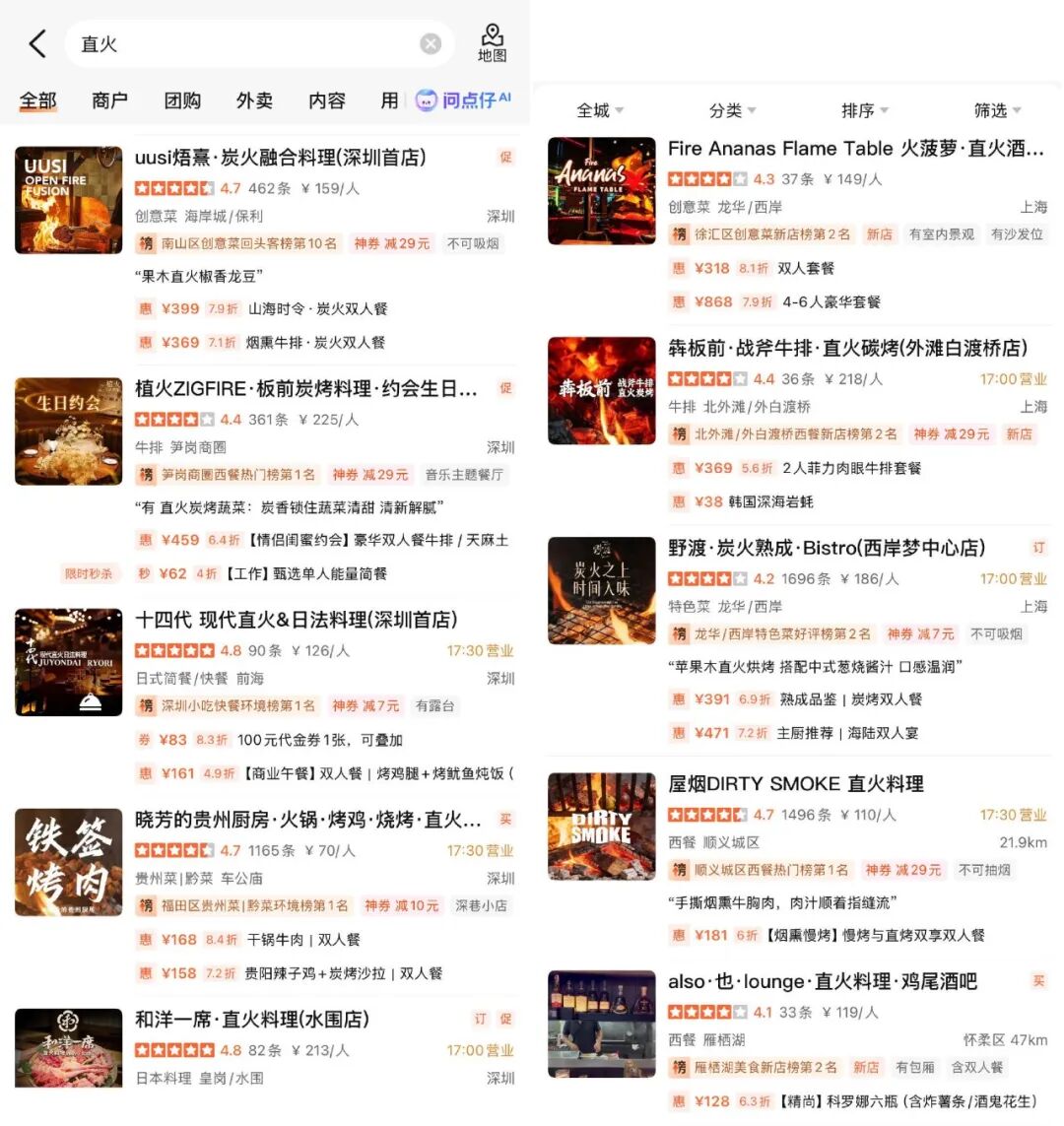
Should You Jump on the Direct Flame Bandwagon?
Direct flame cooking seems to be a booming trend, but putting it into practice is far from simple.
The first hurdle to clear is product quality. Open flame cooking places higher demands on chefs' heat control skills and ingredient handling capabilities. Too strong a fire can easily leave the outside charred while the inside remains raw, while grilling for too long will dry out the meat. Fruit wood and charcoal can bring unique flavors, but they cannot replace the inherent quality of the ingredients, let alone make up for shortcomings in culinary skills.
The second consideration is operational profitability. Direct flame cooking equipment, smoke exhaust system upgrades, aging cabinets and chef training all mean additional investment. While counter-side seats can enhance the dining experience, they also take up valuable space; while on-site grilling is highly engaging, it may not fit the service speed and order rhythm of all restaurant formats. If customers face long waits during peak hours and the kitchen is overwhelmed, even the most spectacular flames will be hard to translate into good business performance.
More importantly, initial foot traffic and repeat purchase rates are two completely different things. Consumers may visit a restaurant for the first time out of curiosity about the flames, open kitchen and novelty factor, but whether they will return for a second visit ultimately depends on how good the dishes taste, whether the price is worth it, and how consistent the overall experience is. If a restaurant only learns how to light a fire, but fails to develop its own signature products and solid operational capabilities, direct flame cooking can easily turn from a unique selling point into a heavy, unsustainable cost burden.
Therefore, for catering business owners, direct flame cooking is not a mandatory requirement, and even less a shortcut to escape price competition. It can be an entry point for product upgrades, or a bonus point for enhancing spatial experience, but the prerequisite is that it matches the restaurant's target customer group, category positioning and operational model.
This article is from the WeChat Official Account "Catering Enterprise CEO Internal Reference", written by Neicanjun, and published with authorization from 36Kr.