The 10,000-store Watershed: Three Distinct Paths Taken by Guming, Aunt Shanghai and Chabaidao
2026 is a year of distinctive significance for the entire new-style tea beverage industry!
With the successive release of semi-annual reports of three leading brands, Guming, Aunt FuShang and Chabaidao, the competitive landscape of the new-style tea beverage industry has changed immediately.
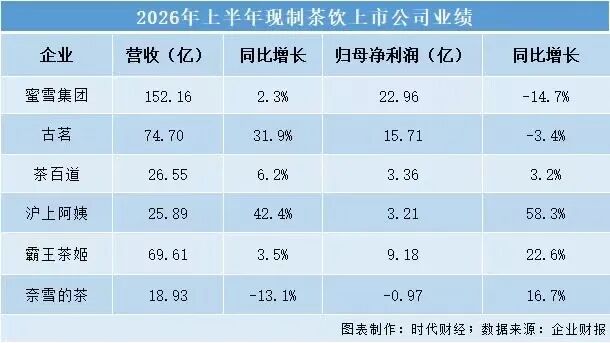
According to data released by relevant media including China Fund News, Economic Observer and Shanghai Securities News, the performance of new-style tea beverage enterprises showed an obvious differentiation trend in the first half of this year: Guming achieved a sales revenue of 7.47 billion yuan (with a year-on-year growth rate of 31.9%), steadily ranking first in the mid-tier segment; Aunt FuShang recorded an operating revenue of 2.589 billion yuan (a year-on-year increase of 42.4%), with a sharp year-on-year net profit growth of 58.3%, showing a relatively fast growth rate; Chabaidao posted an operating revenue of 2.655 billion yuan (with a year-on-year growth rate of 6.2%), with a relatively slow growth rate.
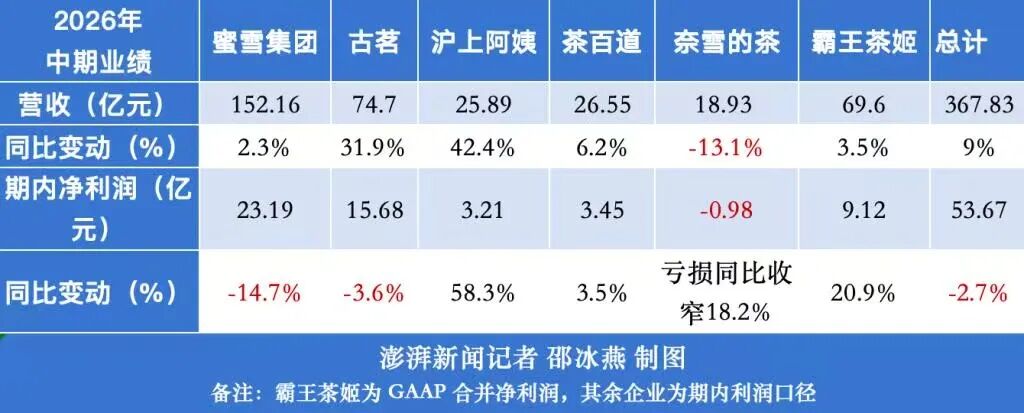
Source: The Paper
Today we will analyze: For these three brands all in the mid-tier segment, where are the new growth points of the enterprises after the number of their stores has reached or approached 10,000?
Guming: The most solid 10,000-store foundation, coffee user acquisition becomes the second growth pole
As the "steady growth pacesetter" in the new-style tea beverage industry, Guming relies on its excellent supply chain and solid operational base to consolidate its position, and increases revenue by introducing new business formats of coffee and morning tea.
First of all, supply chain efficiency is Guming's most core competitive barrier. By the end of June 2026, Guming has set up 24 warehouses with a total floor area of 277,000 square meters, of which the cold storage area is 82,000 square meters.
In addition, 73% of the stores are located less than 150 kilometers away from the warehouse, all stores can receive goods within two days, and the cost of warehouses and distribution accounts for less than 1% of GMV.

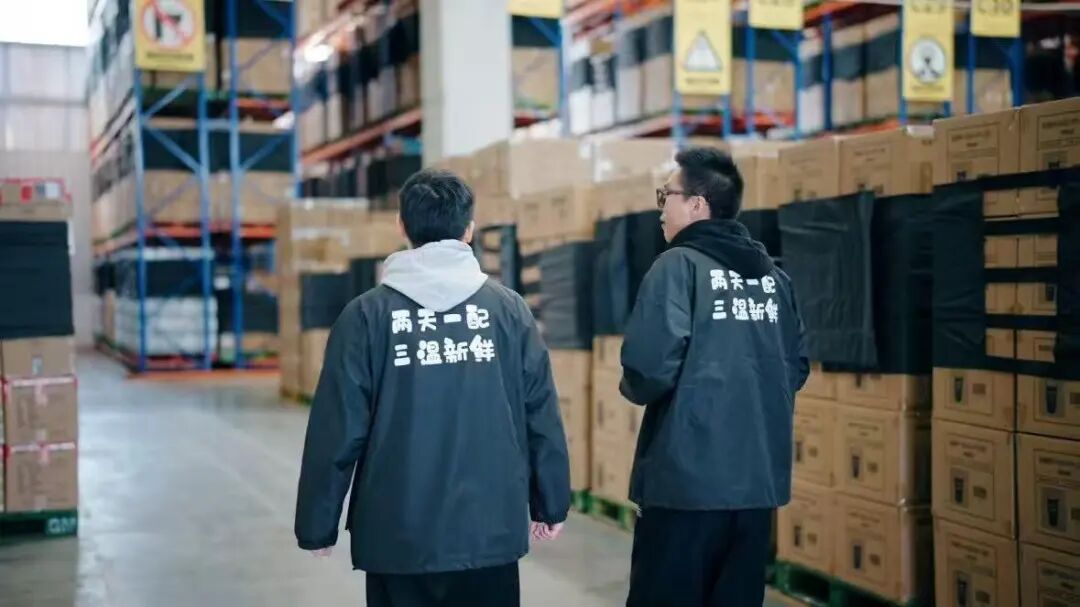
Source: Wenling Daily
The efficient fulfillment system also enables Guming to maintain a gross profit margin of 33.4% (an increase of 1.9 percentage points over the same period of last year) even with 10,000 stores.
Secondly, scenario upgrading continuously empowers single-store growth. At present, about 13,500 Guming stores are equipped with coffee machines, accounting for more than 90% of the total number. At the same time, in the first half of this year, it launched a total of 51 new products, 12 of which are new coffee products.
More than half of the customers who buy coffee products are new customers, which also shows that consumers are gradually forming the habit of alternating between drinking tea and coffee.
Similarly, under the general environment where external takeaway subsidies are gradually fading, the average daily turnover of a single Guming store can still reach 7,800 yuan, which is basically the same as the data of the same period last year, indicating that the value of its new scenarios has been fully reflected.
In addition, Guming adheres to deep cultivation in lower-tier markets, improves quality and slows down store expansion. The number of franchised stores in second-tier and lower-tier cities accounts for more than half of the total, the proportion of township stores is 45%, and its penetration rate in lower-tier markets is leading the industry.
However, in the first half of this year, the company voluntarily slowed down the pace of store opening. The number of newly opened stores was 797 (down 37% year-on-year compared with last year). It focused on store quality, carried out store upgrading and renovation, and raised the entry threshold.
The refined operation also doubled the confidence of old franchisees, and the proportion of new franchised stores opened by old franchisees doubled.
But Guming's shortcomings are also obvious: Guming's layout in high-tier cities is relatively cautious, and it is more cautious in deploying in megacities such as Beijing and Shanghai; although the opening of its first store in Nanjing performed well, it remains to be verified whether the high cost can be digested through the existing price; in addition, due to the change in the fair value of preferred shares, the net profit calculated in accordance with IFRS in the first half of the year was only 105 million yuan, down about 3.4% year-on-year from the same period last year, there is a certain gap between the nominal figure and the actual situation.
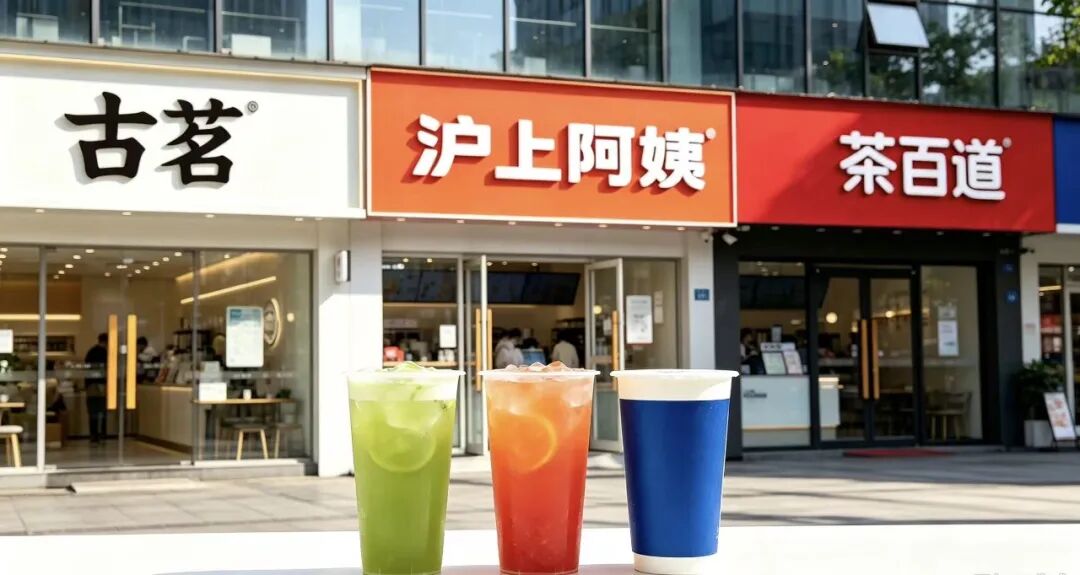
Aunt FuShang: The strongest profit elasticity, repurchase in lower-tier markets accelerates
If Guming is compared to a steady player, then Aunt FuShang is a high-growth explosive player!
First, profit growth rate outpaces revenue growth rate under the scale of 10,000 stores. In the first half of this year, Aunt FuShang's revenue reached 2.589 billion yuan (up 42.4% year-on-year), and its net profit was 321 million yuan (up 58.3% year-on-year). It has become one of the new-style tea beverage enterprises with outstanding profit growth performance.
The brand adopts a supply chain management mode led by independent innovation with multiple cooperation modes coexisting. It realizes independent R&D and production of key raw materials such as taro paste, tapioca pearls and tea leaves. For other raw materials, it adopts the method of direct procurement from suppliers or cooperation with manufacturers, which ensures product quality while reducing the enterprise's investment cost.
Second, multi-brand layout continuously expands the boundary of lower-tier markets. The main brand seizes the mid-range market, while the sub-brand Tea Waterfall targets the low-price sinking market, focusing on campus and township stores.
The two brands can share warehouse distribution, procurement and digital systems to give play to synergistic effects. As of June this year, the number of stores in third-tier and lower-tier cities has accounted for more than half of the total number of stores, and the advantages of the sinking market are constantly being consolidated.
Third, private domain repurchase is the core growth driver of Aunt FuShang. As of June, the brand's mini-program has more than 170 million registered members, of which 38.6 million were newly added within this year.
At the same time, the brand's quarterly repurchase rate is also very impressive. Through refined operation of a large number of private domain assets, the brand gets rid of low-price competition, and can rely on users' frequent repurchases to ensure the sustained profitability of stores.
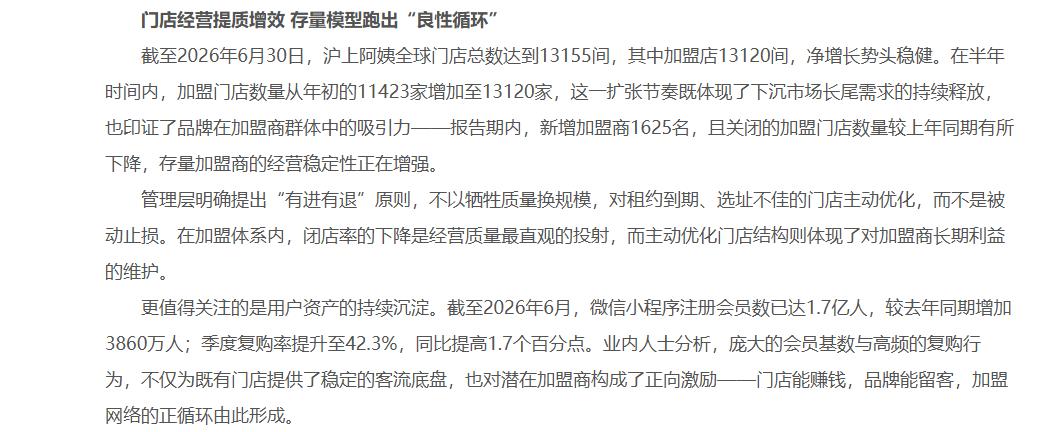
Source: China Securities Journal Online
However, the shortcomings of the brand are still obvious at present: the turnover in the first half of the year is less than half of that of Guming, and the scale gap is large. Part of the revenue growth brought by the 2253 new franchised stores opened in the first half of the year comes from franchise fees, equipment and the first batch of material sales, which cannot fully reflect the actual operating level of terminal stores. In addition, there are only 61 overseas stores, and the pace of globalization still needs to be accelerated.
Chabaidao: Solid fruit milk basic market, overseas expansion and coffee open up new increments
Chabaidao relies on the strong single large product of fruit milk to stabilize the foundation of the sinking market. When the stock competition in the domestic market becomes increasingly fierce and the growth rate begins to slow down, Chabaidao's core strategy is very clear: use large single products to hold the basic market, and break through the bottleneck through new categories or overseas markets.
First, the foundation of lower-tier markets is solid. Chabaidao has sunk to third-tier and even lower-tier cities, and has opened more than 4,000 branches in these places. The store growth rate in the first half of the year reached 7.2%. At the same time, its overseas expansion has become a new growth point. As of June, it has a total of 8,863 stores worldwide, of which 72 are overseas stores, covering 13 different countries and regions including Canada, New Zealand and Vietnam.

Source: Official on-site shooting from CRI Online of China Media Group
Second, the large single product of fruit milk has formed strong product barriers and stable hit product output capability. The signature iced lychee milk sold more than 17 million cups in one season, and new categories such as guava iced milk and grape iced milk were launched to strengthen its category position. In the first half of the year, a total of 62 new products were launched and 6 old products were updated, and 246 sets of formulas were accumulated to maintain rapid product innovation capability.
Third, the supply chain fulfillment capability continues to be optimized. 27 warehouse distribution centers have been established across the country, and the Huai'an warehouse has been newly opened to expand the coverage of East China. 94.24% of the stores can realize next-day delivery, 95.15% of the stores are delivered 2 times or more per week, the unified distribution coverage rate of fruits reaches 91%, and the direct procurement from origin also reduces the cost of the entire supply chain.
However, compared with the previous two brands, Chabaidao faces the greatest pressure. In the first half of the year, its operating revenue growth rate was 6.2%, and its net profit growth rate was 3.2%, which is at a low level in the industry. Although it has a coffee business with more than 2700 stores, its profitability is threatened in the short term due to the profit concession of franchisees that reduces the gross profit margin and extends the repayment cycle of accounts receivable.
In addition, there is a loss of market share in first-tier cities and new first-tier cities, and the number of first-tier stores is also decreasing year by year, it is very difficult for the brand to break through to the high-end market.
The 10,000-store competition comes to an end, hard power is the key in the stock era
Judging from the semi-annual report data of the three brands, the gap in the new-style tea beverage industry has been very obvious.
In terms of scale, Guming has 14,351 stores, steadily ranking first among mid-tier brands; followed by Aunt FuShang with 13,155 stores, closely following Guming; Chabaidao has 8,863 stores, which is relatively less than Guming and Aunt FuShang.
In terms of profitability, Guming's adjusted core profit is 1.73 billion yuan, up 53.3% year-on-year, in an absolute leading position (Note: This core profit is the adjusted caliber excluding the impact of fair value change of preferred shares, which is different from the book net profit of 105 million yuan under the IFRS standard); while Aunt FuShang's growth rate reaches 58.3%, which is the most prominent; while Chabaidao's net profit growth rate is only 3.2%, with a relatively slow growth rate.
In terms of strategy: The three brands have taken three completely different development paths. Guming maintains its leading position relying on supply chain efficiency and stable coffee scenarios; Aunt FuShang achieves overtaking through multi-brand layout and high-frequency consumption; Chabaidao uses large single products to hold the domestic market and goes overseas to seek new growth points.
Source: 36Kr reposted from Time Finance
However, the coffee track has become the consensus of the three brands. Guming and Chabaidao are continuously increasing the coverage rate of coffee machines in their stores, and Aunt FuShang has also joined the coffee track with its sub-brand Huka Coffee.
No matter from which aspect, we can see that: the era of large-scale disorderly expansion of the new-style tea beverage industry has come to an end. In the stock market, efficiency, repurchase rate and franchisee income are the main evaluation criteria.
Conclusion
As leading new-style tea beverage brands at the 10,000-store level, the three have taken different development paths:
Guming stabilizes its growth pace with supply chain advantages and scenario upgrading; Aunt FuShang adopts multi-brand strategy and lower-tier market repurchase to improve profitability; while Chabaidao uses large single products to hold its position, and increases the development of overseas markets and new products.
For the new-style tea beverage industry, 10,000 stores are not the final goal, but a new starting point!
Waican Finance View believes that: the future competition focus of the tea beverage industry will no longer be which brand opens stores faster or owns more stores, but which brand operates better and which brand can maintain healthy and stable growth for a longer time!