Alibaba and Tencent are recruiting an intern.
"Do you know Li Kuan from Unipat?"
Recently, the name of another intern has gone viral in the investor circle. He almost fits the profile of the prodigy in today's venture capital circle: he completed his undergraduate study at Beihang University, his master's degree at the Institute of Computing Technology of the Chinese Academy of Sciences, and enrolled in the Hong Kong University of Science and Technology to pursue a doctoral degree in 2023.
In August last year, he first came into the public eye as an intern in the DeepResearch project team of Tongyi Lab. Among the open-source agent WebSailor released by Alibaba, Li Kuan was one of the project leaders.
The latest news about him is that he founded Unipat, an AI training and benchmark testing company. According to Bloomberg, Unipat's valuation in the latest financing round has reached 2.5 billion US dollars (about 16 billion RMB), with prominent investors including Alibaba, Tencent, and HSG.
Founded for less than a year with a valuation of 2.5 billion US dollars, there is a long queue of investors inquiring about Li Kuan now. It makes people sigh again that the AI era is spawning many entrepreneurial stories that we could not have imagined before.
Started from Beihang, Alibaba intern becomes a hit
When investors talk about their first impression of Unipat, they can hardly avoid mentioning Li Kuan.
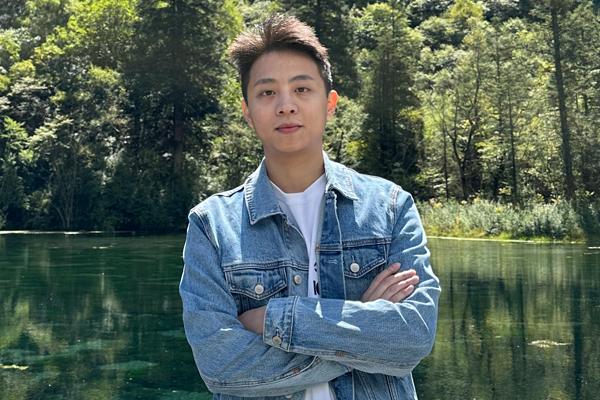
From Li Kuan's personal homepage on the Zhiyuan Community
His resume is impressive enough: he entered the major of Electronic Information and Automation at Beihang University in 2016, and later studied at the Institute of Computing Technology of the Chinese Academy of Sciences. Since 2023, he has been pursuing his doctoral degree at the Hong Kong University of Science and Technology, with research directions covering LLM Agent and Trustworthy Machine Learning.
Coincidentally, Tian Keyu, the former ByteDance intern who is now in the spotlight, also graduated from Beihang University for his undergraduate study.
But outside the academic field, Li Kuan is very low-key. His only public appearance so far was in August last year, when he participated in an online sharing session of the Zhiyuan Community as an Alibaba intern.
At that time, Alibaba Tongyi Lab released the open-source agent WebSailor, which refreshed the best performance of open-source systems in multiple high-difficulty task evaluations and became the first open-source solution that approached the capability of closed-source systems on benchmarks such as BrowseComp. It became an instant hit once released. In the WebSailor paper, Li Kuan was the first named author, as well as the project leader and core contributor.
At that time, he was only a second-year doctoral student.
It was not until December 2025 that his entrepreneurial project surfaced: Unipat was officially established. Tianyancha shows that the company's full name is Pattern Star River (Beijing) Technology Co., Ltd., focusing on AI training and benchmark testing. His entrepreneurial partners include Yin Huifeng, who was also a project leader of WebSailor.
It is widely spread in the venture capital circle that this is a project incubated by HSG. The two sides have long maintained close cooperation: at the beginning of January this year, xbench, an evaluation system under HSG, jointly released BabyVision, an evaluation set for assessing the pure visual understanding ability of large models, with the UniPat AI team.
According to information from multiple sources, although Unipat has not yet made equity changes at the industrial and commercial level, it has completed multiple rounds of financing. According to Bloomberg's disclosure, Alibaba will lead a $300 million financing for UniPat, with Tencent, HSG and other parties also participating, bringing the company's valuation to 2.5 billion US dollars.
In this way, this young intern became famous overnight.
Alibaba and Tencent jointly invest in the company
Consistent with Li Kuan's style, Unipat has also been very low-key since its establishment: over the past period of time, papers and benchmarks are almost the only way for the outside world to learn about this company.
In January this year, UniPat released BabyVision to test the basic visual reasoning ability of models; in March, it released UniScientist, proposing a solution to internalize the full-chain scientific research capability into the model, enabling the model to independently promote scientific research;
In May, Terminal-X tested the programming Agent's ability to solve complex engineering tasks, respond to multi-round demand changes and complete version upgrades; the Vibe-Coding Arena released in July further invited real human experts to evaluate how the Agent understands requirements, accepts feedback and corrects errors in multi-round programming collaboration... It has evolved rapidly in just a few months.
But Unipat has long been well-known in the AI circle: not long ago, the US venture capital institution Dimension Capita organized a group visit to China, during which they visited a number of AI companies intensively. After returning, the team sent an internal letter to the partners, putting forward 13 judgments on the current situation of AI in China and the United States, which was widely circulated in the investment circle. The letter specifically mentioned that Chinese startups represented by UniPat are rising rapidly.
What Unipat does is almost the most indispensable link in the AI chain: to put it simply, it provides training data and evaluation capabilities for large models in real scenarios to help the models get stronger, "acting both as an examiner for AI and a personal trainer for AI."
The fiercer the competition between models, the more important this matter becomes. At present, most AI companies are in the stage of burning money, but Unipat has already started selling data to large manufacturers such as Tencent, Alibaba and ByteDance. It is said that its revenue has exceeded 100 million US dollars at the beginning of this year - this point has been discussed many times in the circle, but has not yet been officially confirmed.
Therefore, we see that Alibaba and Tencent joined hands in the latest round of financing. In the Internet era, giants are mostly competing in business, and their investments are often with a clear stance. In most cases, Alibaba and Tencent have their own business territories, and rarely invest heavily in the same star company at the same time.
But in the AI era, the giants are becoming more and more tacit. Joe Tsai, Chairman of Alibaba Group, recently stated that Alibaba will promote the full-stack AI strategy from the computing power, model and application layers in the future. Tencent is also going all out in the AI field.
The fact that both parties invested in this young man at the same time is thought-provoking.
The era of AI myths: applause and vigilance
The grand occasion of AI financing this year is still amazing.
Most projects start with a valuation of tens of billions. I remember that in March this year, Lin Junyang left Tongyi with the sentence "bye my beloved qwen". Five months later, he officially appeared with Pragmatik Labs - the company did not even have a product, but its valuation had reached 2 billion US dollars.
At this moment, we are witnessing the rise of the AI generation, and the post-2000s generation is showing a more fierce momentum.
Huang Yi, born in 2004, founded RoboParty, which completed six rounds of financing in eight months, with its valuation increasing by more than 20 times; Chen Tianrun, a post-2000s student who is still pursuing his doctoral degree at Zhejiang University, his founded Moxin Technology is about to complete a new financing of 1 billion RMB, with a valuation close to 10 billion RMB.
What is even more sensational is that across the ocean, 23-year-old Noah Shinn founded Instinct, which has only 14 employees, but has just completed a 1 billion US dollar financing, with a post-investment valuation of 10 billion US dollars... This is a scene that no one could have imagined in the past.
After sorting out, their profiles are almost the same: most of the founders are born after 1995 or 2000, with top university backgrounds, holding competition achievements and hard-core research directions, and many of them have not even graduated. Once they start their business, they are quickly targeted by top investment institutions.
At this time, compared with the high valuation, getting on the investment track is more important. For this reason, some early-stage investment institutions have begun to adjust their strategies, expand the scale of their funds, and increase the amount of single investment; at the same time, investors are paying close attention to doctoral students in universities and geniuses in large manufacturers, so as to get the first-hand information of entrepreneurial ideas.
But in the business world, the narrative of genius does not mean success.
Looking back at every wave of technology in the past, there are no shortage of similar stories. But when the era fades away, some people still stand at the forefront of the tide, but more people disappear in the long river of time.
History has proved again and again that the trend is a tide, not a fixed navigation channel.
A brilliant start deserves applause, but more vigilance is needed. After all, countless cases in the history of venture capital have shown that high valuation will lock the subsequent financing window, and a single round of underperformance will lead to a death spiral. The one who finally reaches the other side of success is often not the most dazzling starter.
The long march of entrepreneurship has just taken the first step.
This article is from the WeChat official account "Investment Circle", written by Wu Qiong, and authorized for release by 36Kr.