Last night, Apple pronounced the "death sentence" on the TV hub.
Shortly after Tim Cook stepped down, new CEO John Ternus began to make major strategic moves.
Just one month into his tenure, Apple has directed its full force at the living room scenario.
This time, Apple has launched three major initiatives in a full-scale push for the smart home sector.
None of these initiatives targets TV hardware, yet every single one of them strikes at the "central hub ambition" of Chinese TV enterprises.

Apple's new CEO John Ternus Source: Apple official website
01
Over the past decade, all TV manufacturers have been looking to turn TV into the central hub of the home. But the harsh reality is that the TV turn-on rate has dropped from 70% to 30%, the product replacement cycle has extended to over 8 years, and shipment volume has hit a 10-year low. The TV industry has reached an extremely fierce level of competition.
Can TV still become the smart home hub? Apple has laid its cards on the table.
Last night, apart from HomePod mini 2, 4th-generation Apple TV 4K, and products including smart door locks, cameras, and video doorbells, Apple rolled out its core product HomeView, the smart home hub, a small 7-inch screen priced at around 299 US dollars.
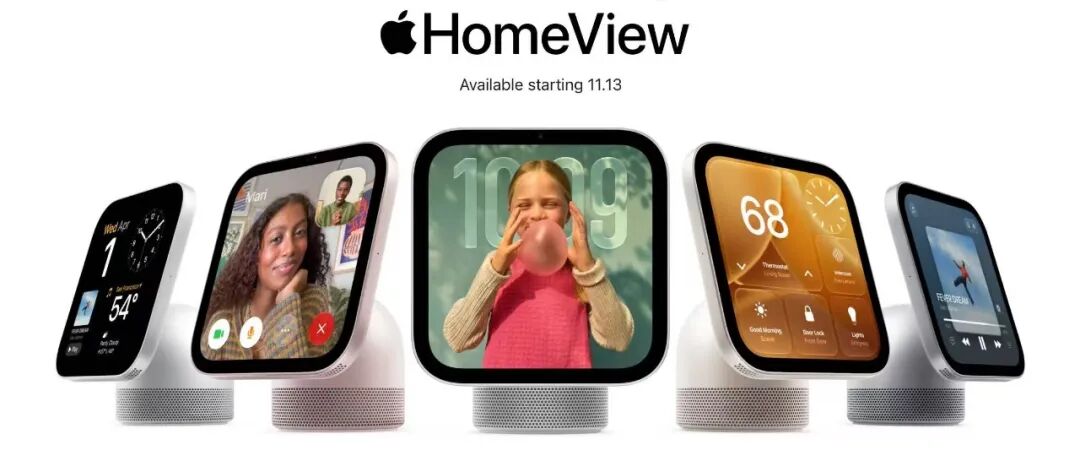
In terms of form, the HomeView screen is suspended above a hemispherical speaker base. It can identify multiple family members, and automatically switch to corresponding schedules and reminder notifications on the interface after recognition.
The concept of smart home is not new. Apple started its attempts as early as a decade ago, and domestic mobile phone and home appliance manufacturers have also been exploring this track. But overall, the actual progress has been relatively slow.
There have been extensive discussions particularly on the smart home hub, and most TV manufacturers believe that the center of the living room should be a large-screen TV. HomeView is an indirect response to this question: which screen should exactly serve as the center of the living room.
Being closer to users, capable of identifying users, and able to change along with user needs — these core attributes that a hub device should have are exactly what TV is worst at delivering.
Overseas, Amazon and Google have previously launched similar small-screen hub devices, and Apple has followed the path of its peers in this regard. Essentially, Apple's move at least reflects that the current center of the smart home is not the large-screen TV.
Data serves as the best proof.
Data from three parties including the China Video Industry Association shows that in the full year of 2025, the total shipment of branded complete TV sets in China's TV market reached about 32.89 million units, hitting the lowest shipment level in the market for at least 16 years since 2010.
Declining shipment volume is one aspect, and the worse situation is that the TV turn-on rate is also dropping. In 2025, the average turn-on rate of household TVs across China stood at 30.2%, while the figure was around 70% ten years ago, marking a cliff-like decline.
In short, almost no one watches TV anymore, and about 70% of TVs are left with black screens all year round. Then who would replace their TV? According to statistics, the TV replacement cycle has extended to 8 to 10 years, the longest among all large home appliance categories.
Left turned off, not replaced, not purchased — the difficult situation of the TV industry is not caused by problems in a single link, but the entire industry chain is in a downward trend.
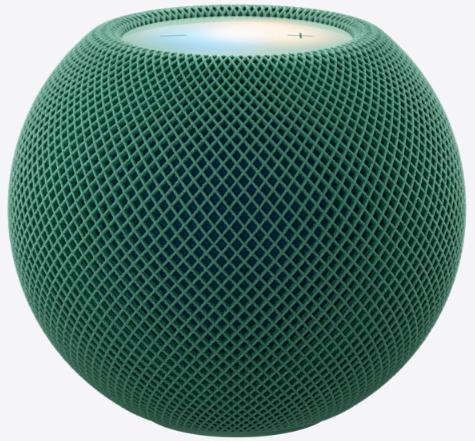
HomePod mini 2
02
In fact, it is not only Chinese manufacturers that are promoting this narrative. Samsung, LG and other overseas brands are also advocating that "TV is the center of the home", and this narrative has only been further amplified in the domestic Chinese context.
Around 2019, the panel price war had wiped out hardware profits. Honor launched the "Smart Screen" product line, Hisense bet on "social TV", Skyworth and Huawei followed up one after another. All of them shared the same idea: to break away from the price war with the "home center" narrative, and upgrade TV from a display device to the home traffic entry.
But the problem is, the entry status was not established, but users were first driven away by boot-up ads, layered paid subscriptions and VIP membership traps. Without becoming the center, the "living room essential" attribute of TV was lost first. That's why the TV market has not achieved satisfactory results so far.
Without positioning as the "home center", the battlefield for large-screen TVs has shifted to competing on screen size, image quality and global market share. In this field, Chinese manufacturers are no weaker than overseas peers. Hisense and TCL have comparable sales volume with overseas brands such as Samsung.
But shipment volume and profit are two different things. Even though sales volume is rising, profits are declining.
In terms of price, combined with national subsidy promotions, the price of 85-inch ultra-large screens has dropped below 3000 yuan, and 65-inch models have fallen to just over 1000 yuan. At the same time, the cost of core component panels is on the rise. In mid-September, the display panel industry saw a wave of intensive price adjustments. It is reported that TCL CSOT, BOE, and HKC have successively issued price increase letters. Under such circumstances, TV manufacturers can only compete on supply chain capabilities.
According to Yiou, The gameplay of the TV industry has long been finalized. TV products themselves cannot provide more value to users. All major manufacturers are barely holding on, and the one who can survive till the end will win. This is a game where the last survivor takes all.
In the first half of this year, manufacturers including Hisense, TCL, Xiaomi, Skyworth, Changhong, Haier, Huawei and others accounted for a combined domestic market share of over 95%. Overseas brands such as Samsung and Sony are continuously shrinking their presence. The industry is continuously concentrating towards leading players, while manufacturers are also speeding up their exit from the market.
KONKA serves as a warning case. In early September this year, KONKA issued an announcement stating that it plans to actively apply for the delisting of its A-share and B-share stocks from the Shenzhen Stock Exchange via a shareholders' meeting resolution. Founded in May 1980, KONKA is the first Sino-foreign joint venture electronics enterprise established after China's reform and opening-up. It was listed on the Shenzhen Stock Exchange in 1992 and was once known as the "No.1 Color TV Stock".
The situation seems very harsh. In the past, lagging manufacturers could still find excuses to sustain their business with the "I am the home entry" narrative, but now the narrative is gone. Players in the market only have two outcomes: either win, or exit.
On the day Apple held the launch event, its stock price rose 1.74% in early trading, with a total market value reaching 5.06 trillion US dollars, hitting a new all-time high. The increase is not entirely due to this launch event, but the capital market at least did not vote against it.
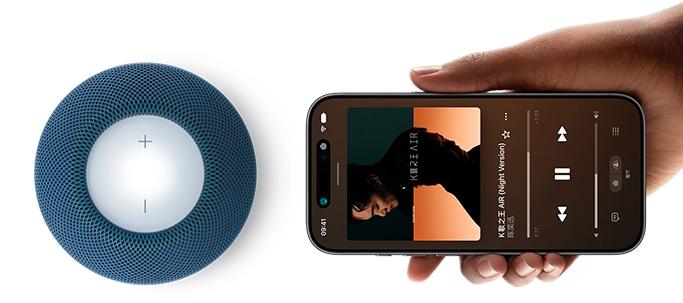
Looking back, Apple's launch of the smart home hub HomeView shifts the spotlight away from large screens, which is equivalent to giving a "death sentence with a reprieve" to the "central hub" positioning of TV.
The debate over the narrative that "TV serves as the whole-house smart hub" has basically come to an end. The fierce battle for large-screen hardware has only just begun.
This article is from the WeChat Official Account "Yiou" (ID: i-yiou), written by Wang Yuanlei, and republished with authorization from 36Kr.