Masayoshi Son makes money in China and spends it in Europe and America, without taking even a single penny back home?
Masayoshi Son once again stunned the capital market by pouring 64.6 billion USD into OpenAI, only securing a 13% stake. Most critically, apart from his own funds from stock sales, a considerable portion of the capital was borrowed at a high interest rate of nearly 10%. This crazy "all-in" style is so typical of Masayoshi Son.
Back in the early days, he heavily invested in Jack Ma, giving Alibaba 82 million USD, and later obtained tens of billions of dollars in returns from dividends and stock sales, which made him a legend and the richest man in Japan.
But after leaving the Chinese market, his investment performance began to decline. Especially for projects invested in the United States, he was scammed by a group of PPT masters. Social unicorn IRL, hotel industry's version of Pinduoduo OYO, SpaceX counterpart OneWeb, Germany's Alipay equivalent Wirecard, the well-known Uber, and co-working space provider WeWork, these famous projects alone caused Masayoshi Son to lose more than 20 billion USD, not to mention the losses from other unknown projects.
Making money in China but losing it in the US, Masayoshi Son may have lost his way at present.
Sold NVIDIA, Poured High-interest Leverage into AI
Recently, Masayoshi Son did two things that once again made people question whether he had gone "crazy".
The first thing is that he poured a huge sum of 64.6 billion USD into OpenAI as a final one-time investment, only getting a 13% stake in return.
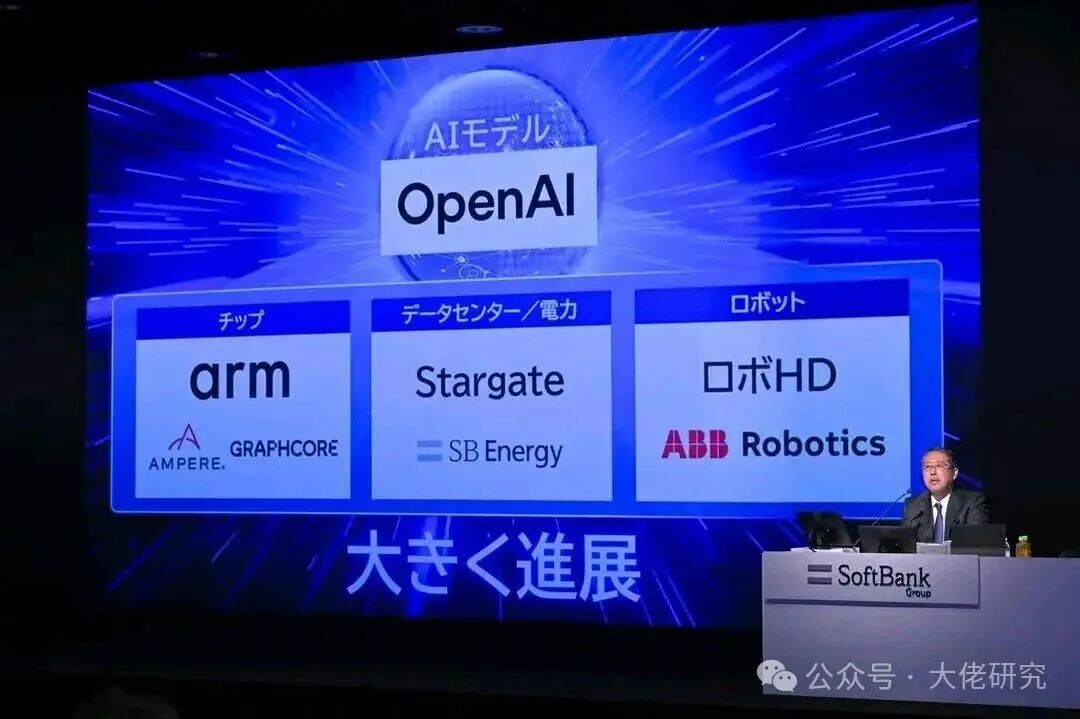
Where did this money come from? Part of it came from selling assets. For example, last October, Masayoshi Son made a decision that shocked the investment circle: he liquidated all his 32.1 million NVIDIA shares and cashed out 5.83 billion USD at one time. At that time, Masayoshi Son said he actually did not want to sell NVIDIA, but in order to raise funds to invest in OpenAI, he had to do it reluctantly, even describing himself as "selling NVIDIA shares in tears".
In addition to his own funds from stock sales, more than half of the 64.6 billion was borrowed. SoftBank raised about 37 billion USD through overseas and domestic Japanese bond issuance and loans this year, and even increased its loan limit by 5 billion USD by pledging its Arm shares. In order to raise enough money, SoftBank issued three consecutive bonds with the highest interest rate reaching 9.75%:
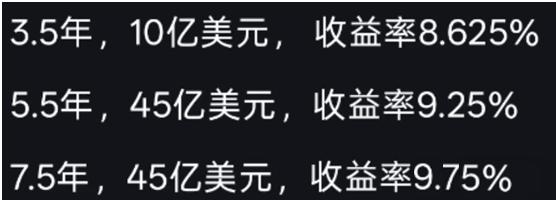
This is completely absurd. Not to mention what the market loan interest rate is now, even when "the belt guy" issued bonds many years ago, the interest rate was never this high. For the tens of billions of borrowed money, even if we calculate it as simple interest (paying interest every year) without compound interest, the principal and interest sum will reach 158.8 billion USD. But at the current stage, OpenAI is impossible to pay dividends at all. Instead, it continues to invest in computing power, R&D and labor costs every day, so he has to find extra money to pay these interests.
That means, in a few years, the valuation of the shares he bought with this money must rise by at least 60% to 70%, and he must be able to sell them, to barely avoid losses. Moreover, the interest payment cannot be stopped during this period. If the valuation of the collateral falls, he will be required to add more collateral or repay the principal in advance (it is absolutely impossible to get this amount of money without collateral).
This crazy full-position investment style is so typical of Masayoshi Son.
As for the second thing, he didn't even take the first thing seriously. He went to the "Middle Eastern princes" to "raise some money", planning to raise another 100 billion USD to continue investing in AI.
According to a report by the UK's Financial Times, Masayoshi Son, founder of SoftBank, is seeking to raise up to 100 billion USD from Gulf region investors to increase his AI investment. In recent weeks, he has held intensive consultations with senior officials in the United Arab Emirates and other regions. This sum of money is planned to be used to set up a fund, first acquire companies, and then use AI to transform the operations of these companies.
However, the move that really made Masayoshi Son famous was mainly his investment in Jack Ma's Alibaba, giving Alibaba 82 million USD. He gradually reduced his holdings in Alibaba and sold all of them by now, gaining tens of billions of dollars in returns. In his life, this is the most profitable successful investment he has ever made, which earned him the title of "God of Investment in Japan".
Later, Masayoshi Son also invested in many other technology companies, especially platform companies similar to Alibaba, with the largest number of projects in the United States, but he was scammed badly:
The social unicorn IRL with a valuation of 1.17 billion USD was finally found that 95% of its 20 million users were bots, and it collapsed.
OYO, known as the Pinduoduo of the hotel industry, completely went under.
OneWeb, known as the counterpart of Elon Musk's SpaceX, raised a total of 3.4 billion USD, of which SoftBank gave 2 billion USD, and then it went bankrupt.
Wirecard, known as Germany's Alipay, once had a market value of 200 billion euros, but then plummeted to 2 billion euros and collapsed.
For the well-known Uber, SoftBank paid 7.7 billion USD, and finally sold its stake with a loss of more than 5 billion USD.
Of course, the most ridiculous one is WeWork, the co-working space provider. Its founder fooled Masayoshi Son, showed him around the office space quickly, and got 4.4 billion USD. After the money was burned out, he made a random phone call and fooled Masayoshi Son into giving him another 1 billion USD, over and over again.
His path of losses in Europe and the United States needs to be detailed carefully.
Failed to "Recreate an Alibaba", Germany's Alipay Equivalent Collapsed
The two most successful investments of Masayoshi Son are Yahoo first, then Alibaba. The return of Alibaba is simply against the sky, which made him obsessed with projects like "a certain country's Taobao" and "a certain country's Alibaba", thinking that these projects will also get hundreds or thousands of times of returns. But there is only one Chinese market, and only one Alibaba, so the result can be imagined.
20 years ago, there was a new Internet upstart in Europe called Wirecard. In its early days, the company served some gambling websites and video streaming websites. After acquiring a bank in 2006, it became a full-range payment service provider.
In 2010, the European Union proposed a digital economy strategy. Wirecard received strong support from Germany and even the European Commission, and began to expand wildly.
First of all, Wirecard owned a bank, which could use the POS machine network under the EU central bank for settlement. After getting government support, it began to acquire new customers, including obtaining 20,000 customers of Citibank across 11 Asia-Pacific countries in 2017, with its business covering almost all major countries in Europe. By 2018, Wirecard's annual revenue had exceeded 2.2 billion euros (about 17.5 billion RMB), and it became a partner of payment giants such as Visa, Mastercard, Apple Pay, WeChat Pay and Alipay.
In this way, Wirecard became a German fintech concept stock, with a market value once reaching 24.6 billion euros (about 195.1 billion RMB), surpassing Deutsche Bank. It was included in the German blue-chip DAX index, with a weight second only to Volkswagen, Siemens and others, and was regarded as a German technology company that could challenge Silicon Valley giants.
Yes, this is what the market called "Germany's Alipay".
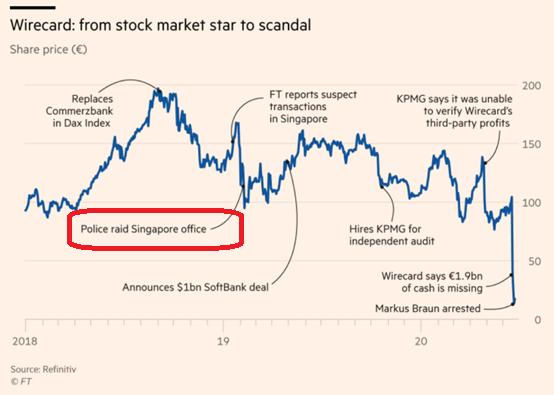
But at this highlight moment in 2018, the Monetary Authority of Singapore received a call from a whistleblower, who revealed that Wirecard's local team forged invoices and contracts to increase revenue.
In early 2019, the Financial Times exposed this incident. The Singapore police investigation found that the main suspected fraud was concentrated in three companies headquartered in Dubai, Singapore and the Philippines, and these three companies provided more than 95% of Wirecard's profits.
After the investigation results came out, the stock price plummeted. Wirecard came out to refute the Financial Times, saying that all the news was false. German regulators also cooperated and announced a ban on short selling of Wirecard by global investors. Surprisingly, the stock price slowly rose back:
German regulators were criticized for protecting their own companies, but Masayoshi Son suddenly came to the rescue as a "white knight": In April 2019, SoftBank injected 900 million euros into Wirecard, bought Wirecard's convertible bonds, and said it would bring Alibaba to cooperate to support Wirecard.
Who would have thought that the incident exploded the next year:
Wirecard suddenly issued an announcement that its auditor Ernst & Young was unable to confirm the existence of 1.9 billion euros (2.1 billion USD) in cash in its financial statements, so it canceled the release of last year's annual report and this year's first-quarter financial report.
Then Wirecard's stock price plummeted continuously. In just one week, it fell from more than 100 euros to only 1.28 euros. The shares pledged by Markus Braun, Wirecard's CEO and major shareholder, were forcibly liquidated. He was arrested soon after, and three other executives were under investigation.
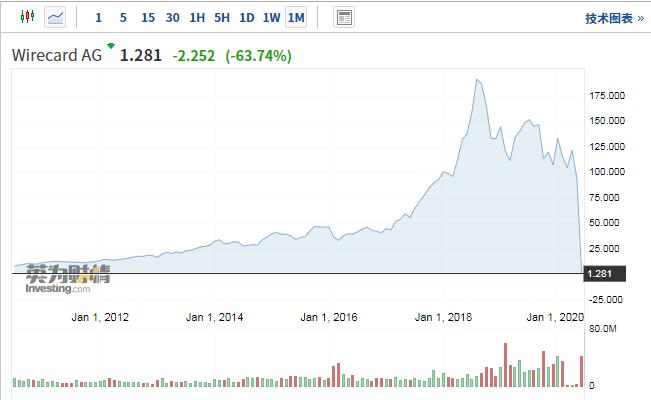
The giant with a market value of 200 billion euros fell to 2 billion euros, was suspended by the Frankfurt Stock Exchange, and filed for bankruptcy a few days later.
Well, "Germany's Alipay" became "Germany's Zhangzidao". The scale of fraud and its bad nature are much more serious. Some media even called it "the German version of Enron".
In fact, the tricks of Wirecard appeared long ago:
Ernst & Young did not obtain the key account information of Wirecard from OCBC Bank in Singapore for three years. It only checked the documents and screenshots provided by the third-party trustee and Wirecard and then closed the case. KPMG, which was in charge of Wirecard's audit, also refused to sign because a 1 billion euro acquisition payment could not be confirmed.
After the accident, SoftBank's people even tried to shift the blame to Warren Buffett:
"The inspiration for investing in Wirecard last year came from Buffett. As we all know, Buffett once made structural investments, bought convertible preferred shares and convertible bonds to invest in troubled enterprises during the financial crisis, and then made profits."
Old Buffett was somehow dragged into trouble for no reason.
Wirecard was not the first landmine SoftBank stepped on. Starting from Uber, SoftBank stepped on one landmine after another. For WeWork and OYO, SoftBank invested a total of more than 12.1 billion USD in the two companies, and all the money was lost in the end. Many people even commented that Masayoshi Son "has lost his judgment in recent years".
WeWork Completely Collapsed, Masayoshi Son Deserves Half of the Credit for This
Masayoshi Son only told one person that he felt this person would be the next Jack Ma, and his company would be the next Alibaba. Who is this person? —— Adam Neumann, founder of WeWork, the leading co-working space provider.
At that time, Masayoshi Son quickly looked around the office space, and praised the young man as "the next great tech company CEO on Earth". The last person who made him have "this kind of feeling" was Jack Ma.
At its peak, WeWork had a valuation of 47 billion USD, equivalent to more than 300 billion RMB. It did not last for a few years before going bankrupt directly.
The question is, what kind of technology enterprise is he running? It is clearly a sublessor, who rents office spaces and sublets them out, but the statement is very fashionable, called "co-working space", "tech company incubator" and so on. He found tech journalists or PR and advertising companies in the tech circle to build momentum. With this kind of packaging, adding an access control system can be called a personnel management system, and doing bookkeeping can be called a financial management system.
Following this logic, today I can officially announce: Finance Gossip Girl APP is the largest "financial circle news aggregation system" in China, and that can also be taken as true?
Of course, his company also grew from a startup. At that time, there were many people in the US who worked relatively independently, such as designers, producers, and lawyers. One or two people could take orders without renting a whole set of offices, so Adam's business was very good, the rental was fast, and he expanded continuously. But at that time, it was still small-scale, with an annual revenue of hundreds of thousands of dollars.
Once he met an investor who took a fancy to his model, and invested 15 million USD at once. Now his mind was completely opened! There is a saying that goes well, 2C2B is not as good as 2VC, and those who can fool investors can get big money.
Since then, Adam embarked on the path of fooling people. He took the money from investors on one hand, and fooled his employees on the other hand, saying