The "Flood Theory" that has been popularized by young people cannot save brands like C'estbon.
The Rise of Large-sized Bottled Water
A new "top trending" product has recently emerged in the beverage sector. It does not come from the milk tea industry or the soft drink industry, but the simplest category — water.
Yet it does not refer to any random type of water, but specifically points to "large-sized bottled water", which refers to bottled water of 1.5 to 2 liters.
This trend originates from the "large-sized water theory" put forward by a netizen. He believes that compared with milk tea, soft drinks and 500ml bottled water, choosing 1.5 to 2 liters of bottled water as daily drink brings more benefits: it is cheap and cost-effective, and also has the attributes of health, social interaction and fitness.
Among them, the advantage of low cost means that the capacity of large-sized bottled water is usually 3 to 4 times that of "small-sized bottled water", but its price is only 1 to 2 yuan higher, making its cost performance far higher than that of soft drinks and milk tea. The health attribute means that 1.5 to 2 liters of water exactly meets the daily healthy water intake demand for one person, which can not only meet the needs of people who love drinking water, but also urge people who do not love drinking water to drink more by intuitively showing the gap between the current intake and the target. The social attribute can be understood as shaping a distinctive and unapproachable personal image. The fitness attribute comes from the fact that large-sized bottled water can perfectly serve as a dumbbell.
Every point of this theory caters to the needs of contemporary young people. As a result, posts showing people drinking large-sized bottled water have gone viral on social platforms.
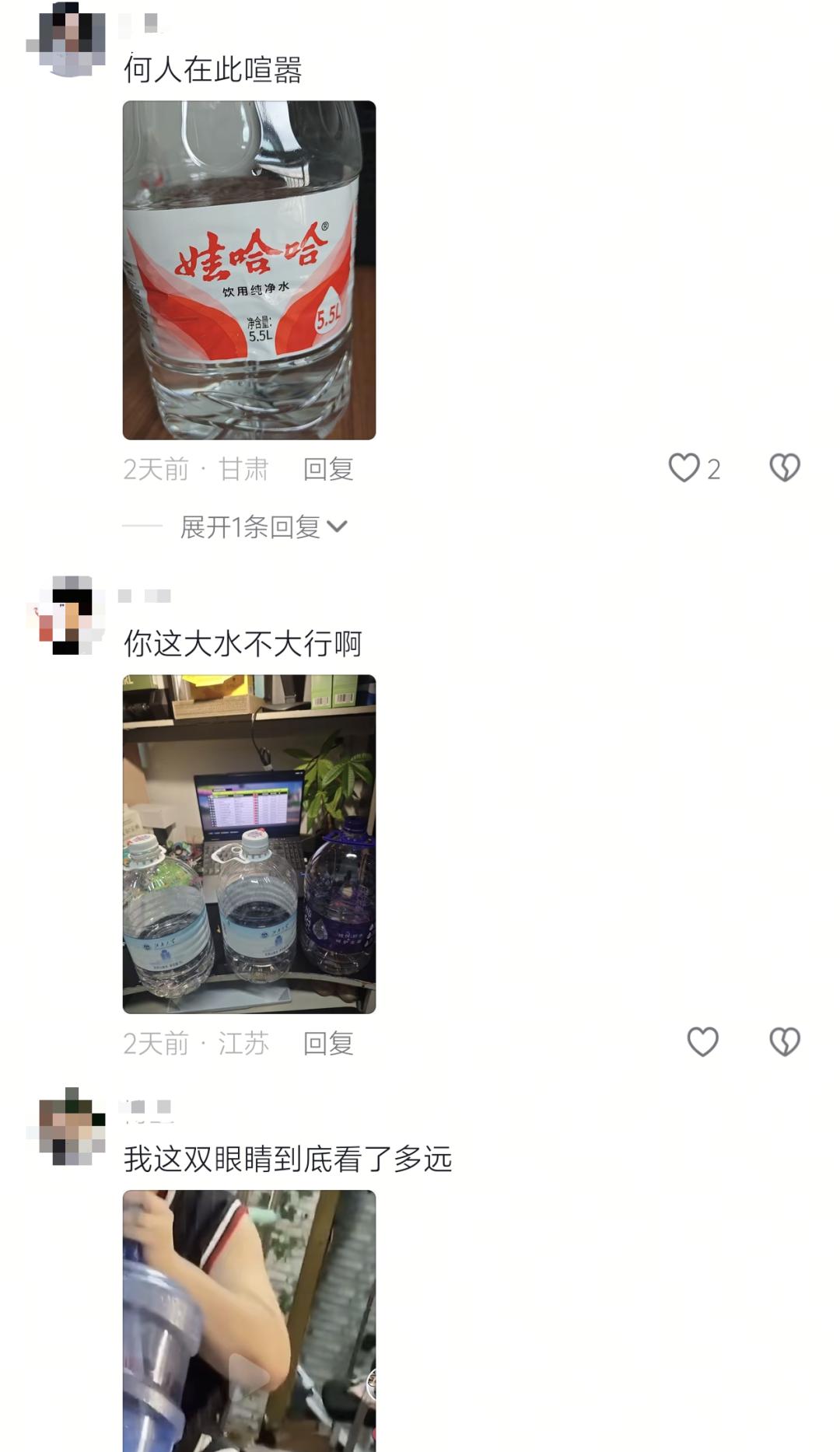
In addition to the widely known brands such as Nongfu Spring, Master Kong, Wahaha, C'estbon, Ganten, Evian, Ganten (Baisuishan), Ice Dew, Chunyue, brands with limited popularity including Quan Yangquan, Runtian, Sam's Club, Freshippo, Haoxianglai, Tsingtao U-Ho have also gained a wave of exposure amid this trend.
A similar scenario played out three years ago.
In 2023, young people who called themselves "poor ghosts" made 1-liter sugary drinks, which are only 1 yuan more expensive than 500ml ones, a hit, and coined the meme "loser drinks" for them. This trend not only drove the performance growth of large manufacturers such as Master Kong, Uni-President and Genki Forest, but also brought a number of niche brands into a broader public view, such as Yineng, Huabang and Mingliu.
The shift from "loser drinks" to large-sized bottled water did not happen overnight.
In the three years after "loser drinks" became a hit, young people have become much more clear-headed.
In terms of health, they do not need their elders to remind them, and take the initiative to pay attention to their physical conditions. In terms of consumption, they have all entered the "era of practical daily life", starting to abandon the pleasure brought by material stimulation, and pursue the simplest and most authentic life.
The change of consumption concept is on the one hand due to objective constraints such as economic conditions, and on the other hand, people have learned to "seek inner fulfillment" in continuous discussion of philosophical issues.
The change of health concept is also far from simple:
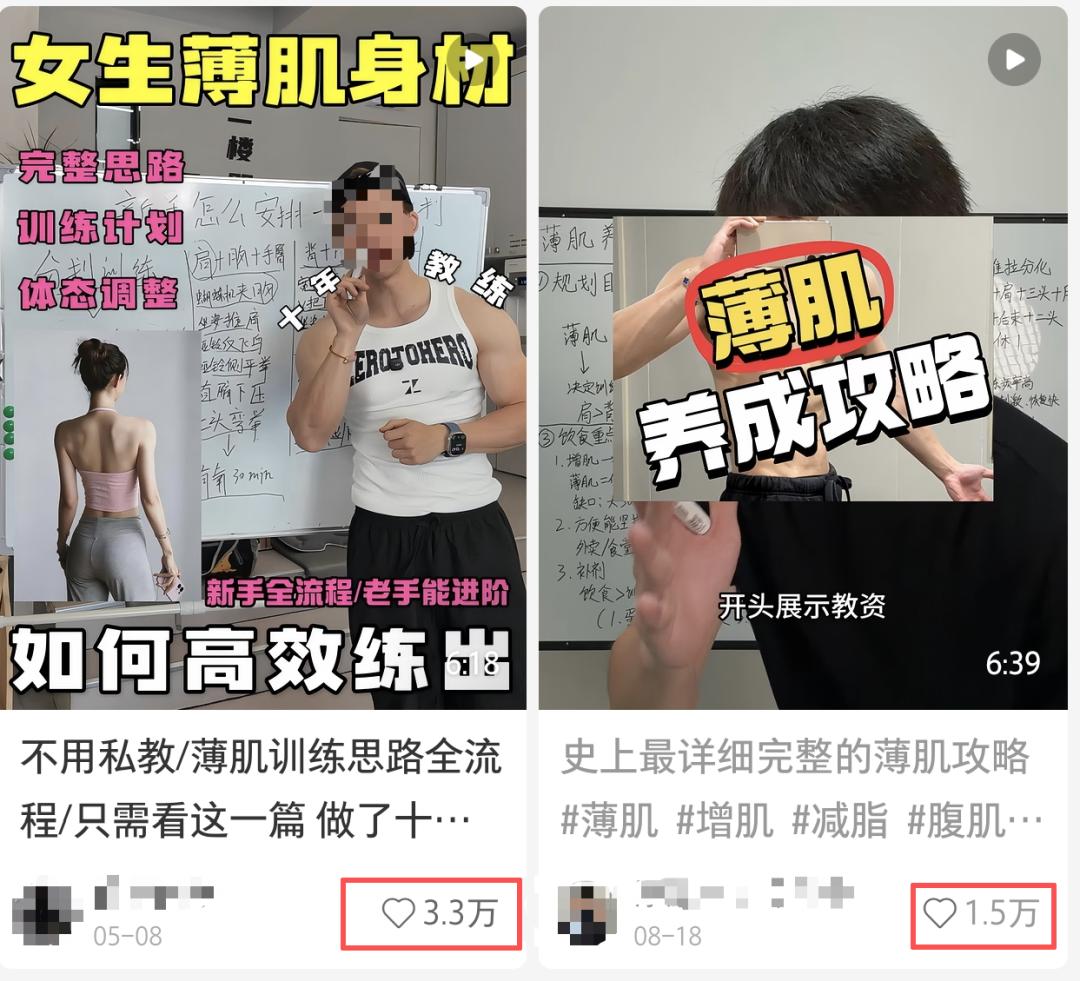
On the one hand, sports such as HYROX and rock climbing are gaining popularity, and the "protein face" with lean muscle and tight skin has been pushed to the altar of public aesthetics, making physical exercise and diet control the social currency of Generation Z (people born between 1995 and 2009).
On the other hand, the trend of younger age groups suffering from diseases such as diabetes, insulin resistance, polycystic ovary syndrome and hyperuricemia, as well as the frequent news on social platforms about celebrities and people around us passing away due to illness, have also caused widespread health anxiety. On Douyin and Xiaohongshu, you can often see young people posting that they will feel anxious if they do not eat green leafy vegetables for a meal, or if they do not consume enough protein in a day.
This change has affected many industries.
Health-related industries have developed: JD data shows that from March 2025 to March 2026, the transaction volume growth rate of fitness equipment such as stair climbers, ski machines and hula hoops all exceeded 100%, and the transaction volume of weight loss foods such as enzymes and white kidney bean extracts increased by more than 5 times year on year.
In the beverage industry, these changes have also triggered a major reshuffle of the sector.
Research agency Nielsen stated in its report "Deconstructing New Growth Momentum in China's Beverage Industry" that in the past three years, ready-to-drink tea has surpassed carbonated drinks to become the largest category in the beverage industry, maintaining double-digit growth in 2025. The growth rate of functional drinks (such as electrolyte water and nutrient drinks) has surpassed that of ready-to-drink tea for the first time, becoming the fastest growing sub-category.
In a nutshell, traditional sugary drinks have basically been out of the game, and sugar-free drinks have taken over part of the market share.
Even Coca-Cola, the so-called "happy water", saw its global unit case volume (shipment volume converted into a unified unit for different beverages) record zero growth for the first time in 10 years in 2025. Among them, the annual sales volume in the Asia-Pacific region remained flat, and most of its growth came from bottled water, sports drinks, coffee and tea. The revenue growth rates of the beverage business of Coca-Cola's Chinese distributors, China Foods and Swire Pacific, also slowed down in 2025, with the former falling from 2.5% to 1.90%, and the latter dropping from 2.06% to -0.92%.
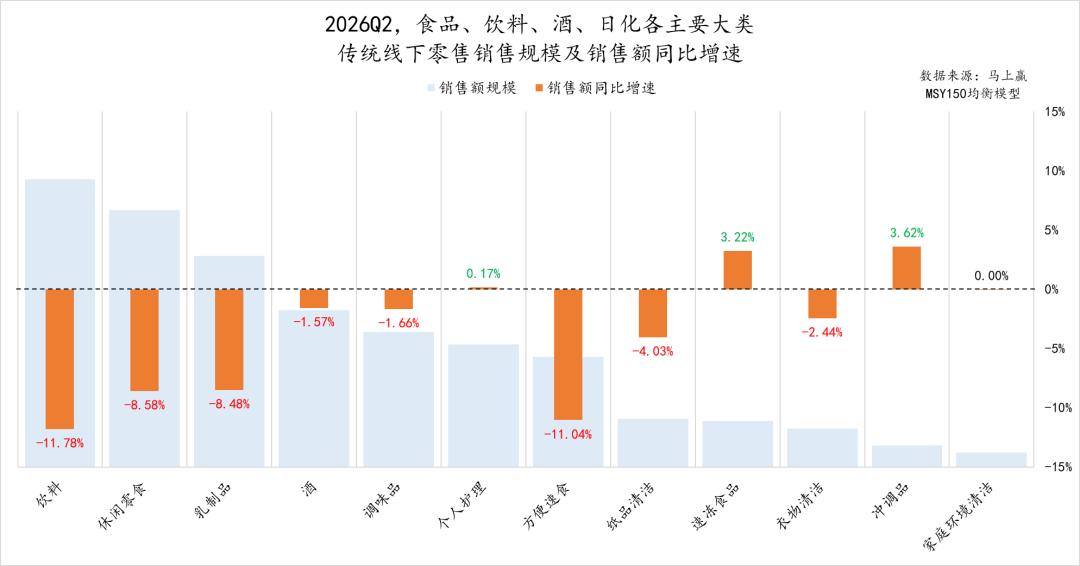
This trend reached its peak this summer — despite the continuous extreme high temperature weather in many regions, the sales of traditional sugary drinks remained weak. Data from big data platform Ma Shang Ying shows that in the second quarter of this year, the offline sales of soda category fell by 12.23% year on year, and the sales of ready-to-drink juice fell by 14.84% year on year, while only sugar-free ready-to-drink tea bucked the trend and rose by 16.10%.
Now, with the more extreme pursuit of health, the focus of power transition in the beverage industry has begun to shift to water again.
In mid-July, a on-site video shot by the person in charge of a large supermarket in Changzhou, Jiangsu, quickly went viral on social platforms. In front of the full-wall beverage display shelf, he said frankly: "We are giving away Fanta priced at 3 yuan for free, but customers walk straight to the 1.2-yuan natural mineral water."
The Difficult Water-selling Business
A counterintuitive phenomenon is that young people's enthusiasm for large-sized bottled water cannot make the water-selling business a profitable one again.
This is partly due to the nature of the track: the drinking water sector has long been a red ocean, and even if the track welcomes dividends, not everyone can get a share of the benefits.
In the first half of 2026, the sales volume of Quan Yangquan mineral water, which takes Changbai Mountain as its water source, reached 1.0357 million tons, up 33.03% year on year; the revenue of Nongfu Spring's packaged drinking water products increased by 2.10% year on year; the revenue of the water category of China Foods (a subsidiary of COFCO Group) increased by 6.5% year on year. Meanwhile, the revenue of China Resources Beverage (parent company of C'estbon) from packaged drinking water products decreased by 7.86% year on year, and the revenue of Master Kong's packaged water business decreased by 4.9% year on year.
The gap in 2025 was even more obvious: the revenue of Nongfu Spring's packaged drinking water products increased by 17.3% year on year to 18.709 billion yuan; the revenue of China Resources Beverage's packaged drinking water products decreased by 21.6% year on year to 9.503 billion yuan; the revenue of Master Kong's packaged water business decreased by 6.1% year on year to 4.708 billion yuan; the revenue of Quan Yangquan's mineral water business increased by 22.05% to 1.003 billion yuan; the revenue of 5100 Tibet Glacier, which takes the Nyainqentanglha Mountains as its water source, increased by 115.3% year on year to 188 million yuan.
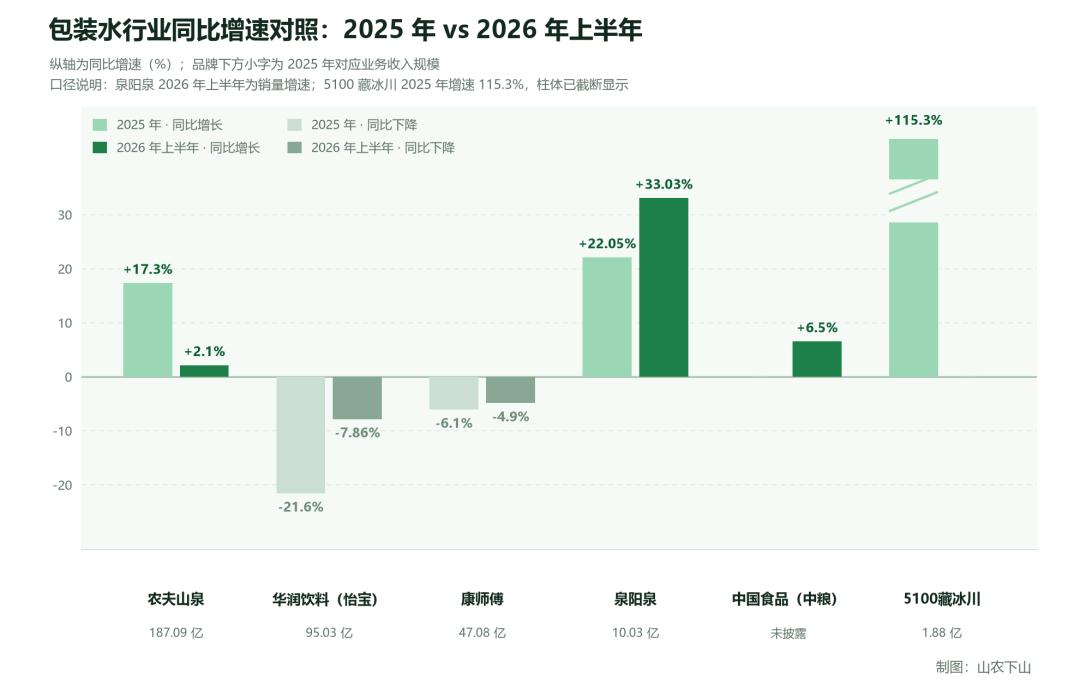
To put it more clearly, the current situation of the drinking water track is: the winner takes all in the mass market, the volume of the niche segments is limited, and most enterprises can only grab the remaining market share in the middle.
On the other hand, the large-sized water theory has not solved the pain points in the development of the drinking water track, but has made them more serious.
Young people are falling in love with drinking large-sized bottled water because its ingredients are extremely simple and the cost performance of large-sized bottled water is high. They only value the price and do not care about the brand.
The simple ingredients leave little room for narrative of bottled water except for water type, water source and packaging, and the differences between products of different brands are limited, so manufacturers can only compete on price and channels.
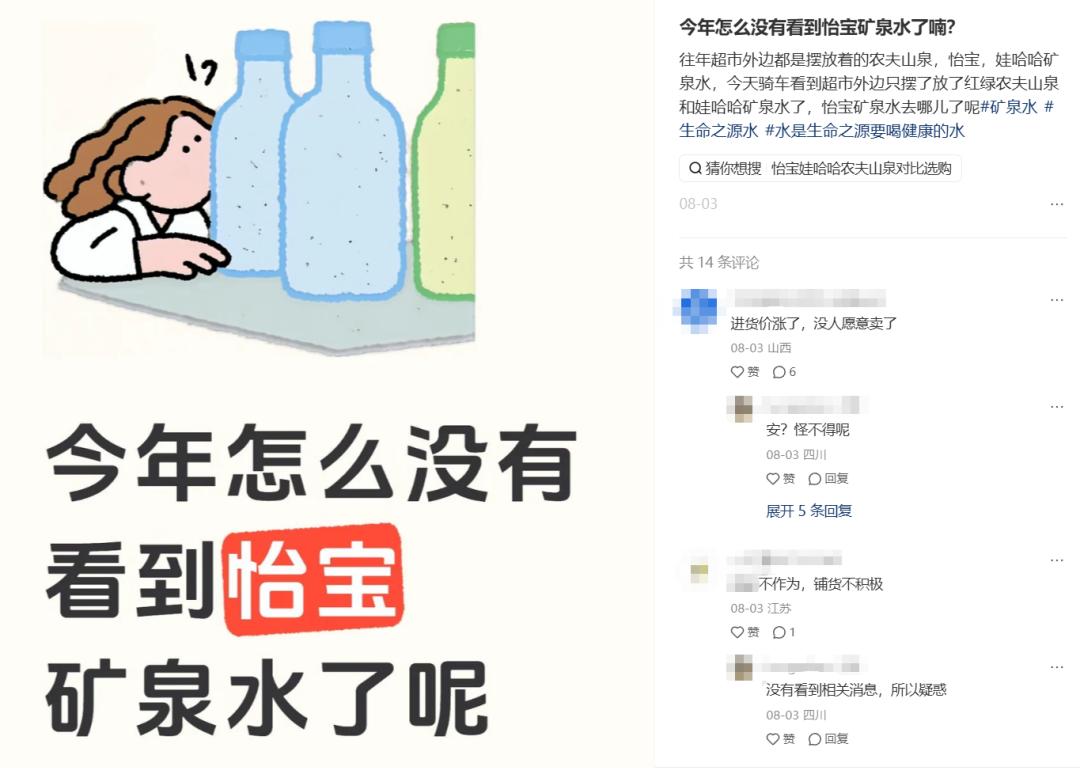
The price war can easily drag down manufacturers with insufficient capital. For example, in the price war that started in early 2024, Wahaha and Nongfu Spring, which have other businesses to support their profits, boldly lowered the price of bottled water to less than 1 yuan per bottle, winning higher market share for themselves. However, C'estbon, whose main business is selling water, only reduced the price to around 1 yuan per bottle, as a result, many distributors chose to quit the distribution network because their income could not cover their costs, leading to a 10% drop in C'estbon's market share in some regions.
More importantly, once the price is pulled down, it is very difficult to raise it again. After the aforementioned price war, 1-yuan bottled water has become the norm now, with almost no possibility of price increase. Even for Nongfu Spring, the leading player in the drinking water sector, the profit margin of its water products was only 33.78% in the first half of 2026. For comparison, the indicators in the first half of 2023 and the first half of 2025 were 36.40% and 35.44% respectively.
It is also not easy to break through from the channel side.
First, conventional channels such as catering and supermarkets are already saturated, and e-commerce and instant retail have impacted the space of special channels such as hotels and Internet cafes, with limited incremental space. Second, the drinking water business has low entry barriers and high gross profit margin, and bottled water, as a daily necessity, can attract customers with low prices, attracting terminal channel providers such as Pangdonglai, Sam's Club, Freshippo, Meituan, East Buy and Haoxianglai to enter the market, further squeezing the living space of traditional water enterprises from the existing stock. For example, the super-value natural water launched by Haoxianglai in May 2025 at the price of 0.6 yuan per bottle sold more than 120 million bottles by the end of 2025.
At the same time, consumers' awareness of bottled water is not solid.
The reason why drinking large-sized bottled water has become a topic discussed by young people is that the previous consumer groups of large-sized bottled water are not them, but are more concentrated in household and office scenarios.
Under the relevant content of the large-sized water theory, a question often arises: since you can buy a cup and drink free water from your school or company all the time, why do you have to spend money on buying bottled water again? The answer is often that buying a large bottle of water gives you a large container that you can use to fill free water, and Wei Dongyi, the mathematical genius from Peking University, does the same.
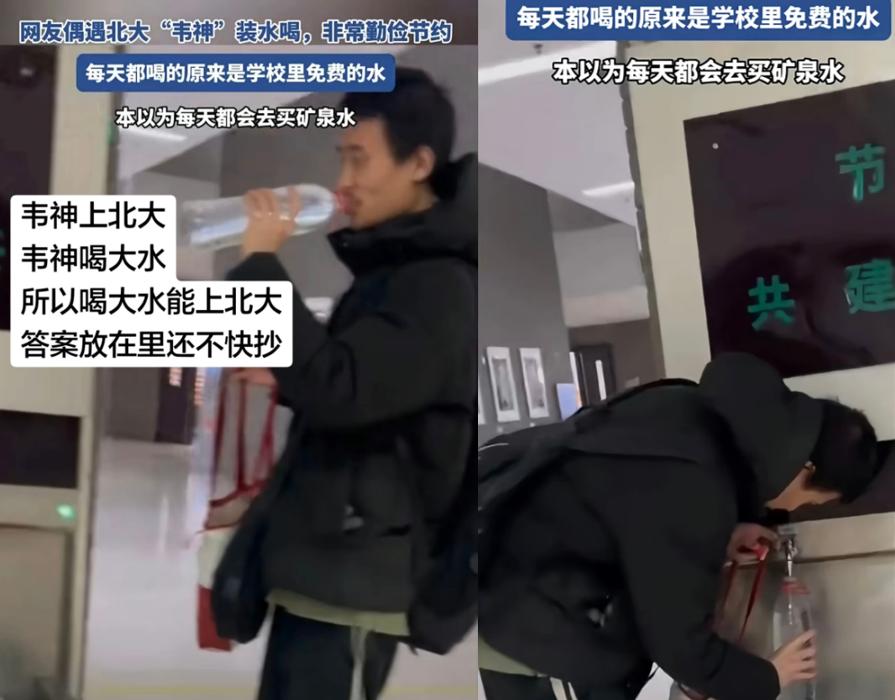
In other words, in the long run, except for some young people who worry about water quality problems caused by insufficient tap water filtration and unclean water dispensers, many participants in the large-sized water trend will not become long-term consumers of bottled water.
It is precisely because the water-selling business is so difficult that a phenomenon has emerged: almost every enterprise that started its business by selling water has developed a beverage-related side business.
Nongfu Spring's tea beverage business, which started in 2005, has replaced the water business as the company's largest source of revenue since 2024; 5100 Tibet Glacier stepped into the highland barley beer business at the end of 2013; Quan Yangquan set up a food company in 2022 to sell Changbai Mountain characteristic foods such as birch sap and ginseng series solid drinks; Ganten also registered a beverage company in 2024.
As a side business, beverages can reuse the production, sales channels and brand assets of the main business, so as to save part of the cost and leverage higher revenue. At the same time, the sugar-free tea and functional drinks included in it also conform to the current health trend.
In essence, they are betting on human nature: even if everyone has always known that plain water is the healthiest, there will always be some people who cannot stick to drinking only plain water. Just like people know that diet food is the healthiest, they will occasionally reward themselves with a less healthy cheat meal — eating bland food all the time will make people feel bored, and in modern society, few people can stand a long period of boredom.
<