Chinese automakers need more of the spirit of craftsmanship and less ostentation.
What Chinese automakers truly need to make up for is not faster production, but more stable production; not better rhetoric, but more solid practice; not more grandstanding, but more craftsmanship. Because in this industry, the only thing that cannot be compressed is the time required to build trust.
On October 8, 2026, the first working day after the National Day holiday, third-party automotive evaluation platform Dongchedi released a video showing that during a full-load braking test at 100 km/h, the brake pedal brackets of three brand-new Zunjie V800 models all fractured.
The three vehicles experienced fractures respectively at the 3rd, 4th and 2nd full braking operation, with completely consistent fracture positions and highly consistent fracture morphology. The pedal force at the moment of fracture of the third vehicle was 1612 Newtons.
On the afternoon of the same day, the share price of JAC Motors hit the 10% down limit, with its total market value evaporating by more than 6.2 billion yuan in a single day. That night, Zunjie released a statement, admitting that "even under non-standard extreme test conditions, we still hope to provide users with higher safety redundancy", and promised to optimize component design and provide free upgrades for delivered vehicles.
The next day, the People's Daily client published a comment using an extremely rare and extremely sharp term — "rush-built vehicle". The comment pointed out that the brake pedal of a car should never fracture during driving; the opportunistic practice of replacing real road tests with simulation tests is a drastic reduction in extreme engineering tests, a corner-cutting behavior that omits verification items and skips verification processes, and ultimately consumers have to pay the price.
On October 10, four authorities including the Ministry of Industry and Information Technology, the Ministry of Public Security, the Ministry of Ecology and Environment and the State Administration for Market Regulation jointly issued the "Draft Notice on Further Strengthening the Management of Innovative Design, R&D, Testing and Verification of Automotive Products", shifting the regulatory focus from "final test report review before market launch" to "the source of R&D".
From the pedal fracture of a single vehicle to the public statement of industry organizations, and then to the qualitative comment of central-level media, the whole process took only three days. These days have been a rare collective self-reflection for the Chinese automotive industry.
The part that should never have broken failed
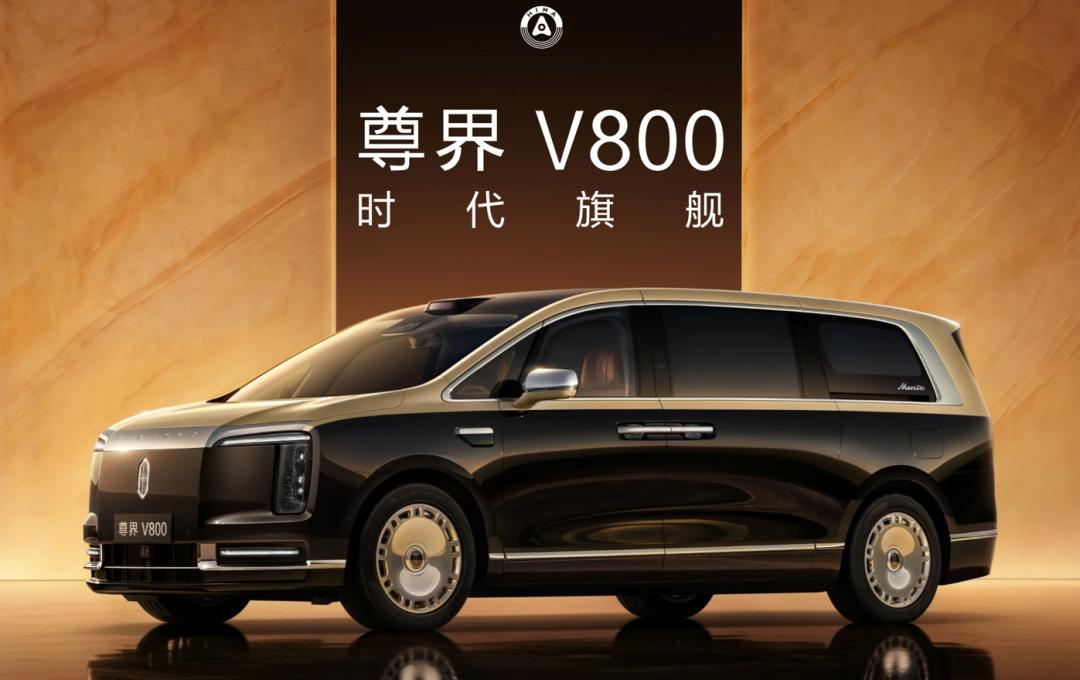
The Zunjie V800 is no ordinary vehicle. It is the flagship MPV of the ultra-luxury brand with the highest positioning under the Harmony Intelligent Mobility Alliance system, with an official guide price ranging from 766,000 yuan to 1,016,000 yuan, serving as the showcase of domestic high-end vehicle manufacturing. JAC Motors is responsible for complete vehicle manufacturing and quality management, while Huawei outputs full-stack technologies including smart cockpit, intelligent driving and three-electric systems.
For such a product that integrates the strengths of two enterprises and targets the million-yuan market, "the core safety shortcoming is exposed on the most basic brake pedal", which in itself is a matter that is very difficult to explain. What is more thought-provoking is that the judgment of the industry on this matter is almost unanimous.
The self-media outlet *LatePost* interviewed 8 automotive R&D engineers and scholars on this incident, whose specialties cover braking R&D, materials and failure analysis. Although their entry points are different, their initial judgments are almost unanimous: No matter how the driver steps on it, the brake pedal bracket should never be broken.
"At the end of the day, it simply should not break." — A braking engineer who once worked for a foreign Tier 1 supplier
"The accelerator can break, but the brake cannot break." — Another foreign Tier 1 braking system R&D engineer put it more bluntly.
These two sentences are the most uncontroversial part of the entire incident. This is not a technical issue, but a common sense issue.
Of course, there is indeed a debate over "whether it is a violent test". Yuan Yongbin, Chairman of braking system supplier Bethel, believes that ordinary drivers cannot generate enough force to break the pedal at all, and the test driver applied lateral force, which belongs to "abusive working conditions". In response, Qiu Jincao, a relevant expert from the Society of Automotive Engineers of China, gave a response closer to the engineering bottom line: no matter how the pedal is stepped on, the brake pedal should not fracture under normal driving scenarios.
The answer to this debate is actually hidden in two sets of data.
The first set is the standards. The relevant national mandatory standard only requires that a pedal force of 500 Newtons can stop the vehicle, which is the "braking portability" requirement to ensure that even drivers with less strength can stop the vehicle; the recommended industry standard QC/T 788—2018 requires the pedal to withstand 1500±20 Newtons for 5 seconds and repeat 5 times without damage. However, the internal requirements of enterprises are often much higher. The design starting point of SAIC-GM is 2700 Newtons, the failure load of a traditional automaker is generally not less than 3000 Newtons, and the design strength of a leading new energy vehicle maker is also higher than 3000 Newtons. A supplier engineer's calculation is more intuitive: the maximum force a human foot can apply is 2000 Newtons, multiplied by a 4:1 lever ratio, the proximal end of the rotating shaft will bear 8000 Newtons, and with additional design redundancy, the destructive resistance should be at least guaranteed to be above 10000 Newtons.
The peak value when the Zunjie pedal fractured was 1612 Newtons. This figure is above the recommended industry standard, but far below the design bottom line of any enterprise that seriously sets aside safety redundancy.
The second set is the structure. Disassembly by Dongchedi shows that the distance between the center of the rotating shaft of the Zunjie V800 bracket and the central axis of the pedal is the farthest among all compared models, which means it has higher requirements for the strength of the rotating shaft; however, the rotating shaft area of this vehicle only uses a single-layer vertical plate for support, while the compared models of the same material and even from the same supplier are generally equipped with 2 to 3 layers of reinforced vertical plates. A researcher of mechanics of materials from Tsinghua University made an analogy: When the total load is 1500 Newtons, if it is shared by 10 people instead of 100 people, the force each person bears is completely different.
Every link of a component from material, structure to processing may or may not retain redundancy. The problem with Zunjie does not lie in its use of plastic — glass fiber reinforced engineering plastic is a mature industry solution, which is widely used by Volkswagen, Toyota and BYD — but in that it did not reserve enough margin at the place where no margin should be spared.
The way of vehicle manufacturing has changed
Putting aside Zunjie itself, what this incident really hits is the pain point of the entire industry.
It exposes a transformation in vehicle manufacturing modes: The development cycle is being compressed, the verification links are being cut down, and the risks are transferred to consumers.
Figures best illustrate this point. Two engineers in the interview with *LatePost* gave the same set of comparisons: Ten years ago, developing a brand-new model took 4 to 5 years from project approval to mass production; now, completing a brand-new project takes no more than two years. Previously, complete vehicle testing basically lasted for 36 months covering two winters and one summer, but now it is generally 18 months. Some automakers even only arrange one winter and one summer test, or no winter test at all, because they can ship vehicles to the southern hemisphere for off-season winter calibration.
The judgment of industry observer Cui Dongshu is very insightful: the so-called "rush-built vehicle" does not have an inevitable relationship with the length of the development cycle. The core judging standard is whether automakers deliberately omit complete vehicle verification links to seize the market, and hastily launch products that have not undergone full reliability verification to the market, ultimately making consumers act as "free test drivers" on public roads.
The term "free test driver" also corresponds to another more hidden way of cost cutting: using simulation to replace real vehicle tests.
Two experts made it very clear on simulation. Zhang Xiang, a researcher at North China University of Technology, pointed out that simulation can only be positioned as an auxiliary tool. It relies on computers to simulate basic working conditions, which can reduce low-repeat physical experiments, but "cannot achieve 100% accuracy"; Cui Dongshu pointed out the "opportunistic practice" in the industry: only a small number of real vehicle tests are carried out, and a large amount of simulation data is used to "complete" real tests. The final physical verification related to safety must never be omitted.
Why do automakers dare to cut verification links? The answer lies in business logic.
Zhang Xiang's observation is that under the dual pressure of industry competition and capital survival, many new energy automakers have long suffered losses and pin their hopes on new models to turn the tide; if R&D is delayed, the planned financing cannot be in place, which may lead to cash flow breakdown. In order to survive, some enterprises take risks and sacrifice verification links in exchange for earlier time-to-market. Cui Dongshu added that some automakers apply the rapid iteration logic of consumer electronics, prioritize seizing the first-mover window, and weaken long-term reliability verification.
As a result, we see a peculiar industry phenomenon: The press conference is held before the vehicle is fully verified; the delivery time is locked before defects are resolved. Once the launch is delayed, all market promotion will be invalid, which will deal a huge blow to the company. Therefore, "some automakers choose to skip and shelve pending problems, and push the vehicle to market with hidden risks".
This logic is called "rapid iteration" in the mobile phone industry, but it is called "taking public roads as test sites" in the automotive industry. The fundamental difference between the two is that if there is a problem with a mobile phone, you can replace it with a new one; if there is a problem with a car, you cannot get a life back.
Where does the problem lie?
The brake pedal is one of the most mature parts on a car. An independent automaker's braking engineer said in his original words, "The pedal has existed since the middle of the last century, it is very mature." The foreign Tier 1 engineer also said, "I have been engaged in braking for nearly 10 years. The plastic part on the pedal where the foot steps on has been broken when someone stamps hard with a tilted foot. But I have never heard of a fracture at the upper rotating shaft position like this incident."
Why did a part that has been mature for half a century have a problem on a new car in 2026? Mechanics of materials gives the technical answer, which exactly reveals the real risk of "rush manufacturing".
Researchers from Tsinghua University explained that for metals (steel, aluminum), their mechanical behavior in the elastic phase is basically the same under slow loading and fast loading; but polymer plastics are softer under slow loading, harder under impact, and have a larger elastic modulus. This means that for plastic parts designed according to slow loading, once encountering the instantaneous impact of emergency braking, their elastic range will shrink, and parts originally designed for 1500 Newtons may exceed the yield limit at around 1500 Newtons. Although adding glass fiber improves the stiffness, it introduces more interfaces and defects. Once the yield limit is crossed, damage will accumulate rapidly.
More critically, the current national standards and industry standards are still mainly aimed at metal pedal bracket structures, and non-metallic materials are only "for reference". In other words, when the industry widely introduces plastic parts to reduce weight and cost, the evaluation standards have not been updated synchronously.
This is the price of "speed". It is not the problem of a single enterprise, but a systemic risk that standards, verification and redundancy all fail to keep up when the entire industry runs too fast collectively.
The words of a purchasing person from a joint-venture brand deserve the attention of all automaker managers: "I don't care about the specific values, that's the R&D team's job. What I care about is the impact of this incident. Risk analysis has three dimensions: severity, occurrence frequency and detectability. The severity of this incident is close to infinity."
Severity close to infinity — this is the difference between a brake pedal and an in-vehicle infotainment screen. If the screen lags, users will complain a few words; if the pedal fractures, it may cost the lives of all people in the vehicle.
A senior industry practitioner with more than 20 years of experience said a sentence that I think is the heaviest sentence in the whole discussion: "After experiencing the era of 'big refrigerators, color TVs, large sofas, tents, sleeping bags and mahjong tables' in cars, automotive consumers should return to rationality and examine the things that deserve the most attention."
In the past few years, the marketing discourse system of Chinese automobiles has almost entirely revolved around "big refrigerators, color TVs and large sofas", focusing on larger screens, more seat massage functions, more dazzling ambient lights, longer range figures and faster acceleration time. These are of course important, and they are part of product competitiveness. But when the attention of the entire industry is occupied by these "visible things", those "invisible, life-related things" — structural strength, fatigue life, failure modes and safety redundancy — are easily ignored.
Moreover, the more invisible a place is, the easier it is to become the object of "optimization".
The sense of trust brought by the genuine craftsmanship of Chinese automakers
In the fuel vehicle era, German brands including Volkswagen, BMW and Mercedes-Benz, and Japanese brands including Toyota and Honda, are widely recognized as representatives of "craftsman enterprises". Their reputation relies not only on leading technologies, but also on a holistic sense of trust accumulated over decades. People believe that the vehicles built by these enterprises will not cut corners even in those invisible places.
Where does this sense of trust come from? It does not come from press conferences or slogans, but precipitated little by little through the reliable performance of generations of products under extreme working conditions. It is a friend of time, and also a result of quantity. Only by selling enough vehicles in enough places and undergoing enough long-term tests can an enterprise deserve the title of "craftsmanship".
Frankly speaking, if you ask which Chinese automaker today can reach the height of this sense of trust, the answer is most likely that none has reached it yet.
This is not to deny the progress of Chinese automakers, but to acknowledge a fact: China's new energy vehicles have surpassed traditional giants in speed, intelligence, cost and ecosystem, but in the dimension of "sense of trust" which is the slowest and most difficult to achieve, we are still followers.
And this is exactly the most insufficient part of current Chinese automakers. I think there are three reasons for this insufficiency:
First, the development speed is too fast to allow time for precipitation.
China's new energy vehicles have grown from catching up to leading in only more than ten years, a speed that is almost unprecedented in industrial history. But "trust" is naturally linked to time. You can build a good car in three years, but it is difficult to build the social cognition that "this enterprise is trustworthy" in three years.
Second, the evaluation system is skewed.
In the past few years, the evaluation of automakers by the industry, capital and media has been highly concentrated on sales volume, growth rate, market value and press conference popularity. Under this guidance, "speed is rewarded, stability is ignored; enterprises that are good at telling stories are sought after, while those that are immersed in verification are neglected." The reason why the Zunjie incident has caused such a big shock is that to some extent, it made the whole society realize for the first time that those neglected "slow efforts" are the things that determine life and death.
Third, some enterprises are too eager for quick success.
Especially those new