With the massive explosion of computing power, who can survive?
"This industry will definitely face cutthroat competition until the end. If an enterprise fails to deliver the best products, it will be eliminated from the market."
In 2022, Yang Yu made his first trip to Ulanqab to attend an industry conference hosted by Huawei. At that time, the third-party data center enterprises that had settled in Ulanqab were generally small in scale, most of which only occupied over 100 mu of land, while western China was not included in the site selection list of most third-party data centers.
Four years later, Ulanqab has become one of the most crowded regions in China's national computing power layout.
China Data Group is one of the first batches of enterprises that bet on Ulanqab early, but Yang Yu does not think this early move can form a competitive moat today. In his view, Ulanqab's market has become fully mature, which means there is no differentiated competitive advantage left. What is really valuable is to judge where the next growth curve will lead.
His approach is to place bets two or three years in advance. In January 2025, China Data Group signed a cooperation agreement with the Zhongwei municipal government, and in January 2026, the clients had already deployed their services on the platform — only 12 months from signing to delivery. This year, China Data Group has a full pipeline of ongoing projects, including those in Horinger near Hohhot, Wuwei in Wuhu of Anhui Province, Zhongwei in Ningxia, and a new project in Changji of Xinjiang that is about to start construction soon.
He prefers to talk about the industrial structure. In his opinion, data centers have never been the bottleneck in this round of computing power competition. The real factor restricting the development of AI is chips. The current high cost of computing power comes from supply-demand mismatch rather than absolute scarcity. This industry has gone through several boom-and-bust cycles in the past 21 years, and it took them three years to digest all the excess capacity left over from the last round of overcapacity.
His judgment framework covers policy windows, technological changes and customer demands. Under the policies including "East Data, West Computing", window guidance and coordinated development of computing power and power supply, the priority tasks vary in different policy cycles. The computing power market is also a highly concentrated market, with three major players accounting for 70% to 80% of the industry's total orders. He estimates that by 2030, the top-performing third-party data center enterprises may reach a scale of several gigawatts.
In September this year, Yang Yu accepted an exclusive interview with China Entrepreneur.
Over the two-hour conversation, he discussed the following topics: Will the cost of computing power keep rising forever? Where will the next computing center be located? What experience from the US can be learned and what cannot? What changes has China Data Group undergone after shifting its focus from financial clients to internet clients? What is the real competitive moat of a data center company? Is it feasible for power enterprises to enter the data center sector?
The following is the edited transcript of the interview:
"Computing power will definitely become cheaper and cheaper"
China Entrepreneur: Everyone is scrambling for computing power now, and AI has pushed the price of Token up continuously. Will it become cheaper in the future?
Yang Yu: This has nothing to do with AI or computing power itself, it is just a result of poor matching between supply and demand.
The cost of electricity will keep decreasing, and the same goes for water. Mankind has achieved affordable access to electricity and water, and we will definitely achieve affordable computing power in the future. Computing power is a universal public good, it will definitely become cheaper and cheaper, and there will only be temporary mismatches in the process.
Just like office buildings, a building located in an ordinary area may have average market performance, but if it is located in Beijing's CBD, it will have scarcity. The same logic applies to data centers.
China Entrepreneur: Will the high price of computing power last for a long time?
Yang Yu: No. It will definitely move towards universal accessibility. In the future, computing power for ordinary people will be just as accessible as today's PCs and CPUs, and no one will regard it as a heavy financial burden.
China Entrepreneur: What is the real bottleneck restricting the development of computing power now?
Yang Yu: It is not the data center, but the upgrading of domestic chips. We need to gradually achieve full mastery of 7-nanometer and 3-nanometer chip technologies, and then chips will become very cheap.
The Chinese government is treating computing power and AI as public infrastructure. For all public infrastructure, investment is always made in advance, just like roads and high-speed railways. So I am not worried about power supply at all, including nuclear power, all related problems will be solved eventually.
"Our layout is even earlier than the "East Data, West Computing" initiative"
China Entrepreneur: China Data Group signed the cooperation agreement for Ulanqab project in 2022, and was one of the first third-party data center enterprises to settle in the region. What was the market like at that time?
Yang Yu: My first trip to Ulanqab was to attend an industry conference held by Huawei. Huawei had started self-built data center projects there very early, so I also wanted to inspect the market environment of Ulanqab. As soon as we arrived, we secured more than 1,000 mu of land. At that time, there were also some third-party companies in the region, but they were all small in scale.
At that time, everyone was still in the exploratory stage, and I found that most of the data centers there were self-built projects.
China Entrepreneur: Why did data center operators prefer to stay in core cities at that time? What made them move to western China later?
Yang Yu: Because core cities have regional premium. As a third-party operator, we made early layout and locked in the regional value in advance. At the same time, after the rise of short video platforms, which are highly tolerant of network latency and allow users to download content while watching, data centers can be deployed in western China to meet the needs of such businesses.
China Entrepreneur: How did the third-party data center industry rise?
Yang Yu: In those years, all major internet enterprises that went to western China built their own data centers instead of cooperating with third-party operators, because they did not need to pay regional premium and there was no access barrier. The market was divided into two categories: one type of business must be deployed in core cities, such as public cloud and private cloud services; the other type of business that can tolerate 10-millisecond latency can be deployed in western China to build data centers.
Nowadays, most of the self-built data center projects of those major internet enterprises in western China only account for a small proportion. The reason is simple: in this industry, we can compete on price and service, while those major players prefer to concentrate all their capital on their core business and get rid of heavy assets.
Therefore, it is logically feasible for third-party operators to enter the western China market. The key is to judge whether the target location is really suitable. Ulanqab has four advantages: pleasant climate, cheap and green power supply, and short distance from Beijing. So we had already selected Ulanqab as our site before the "East Data, West Computing" policy was released.
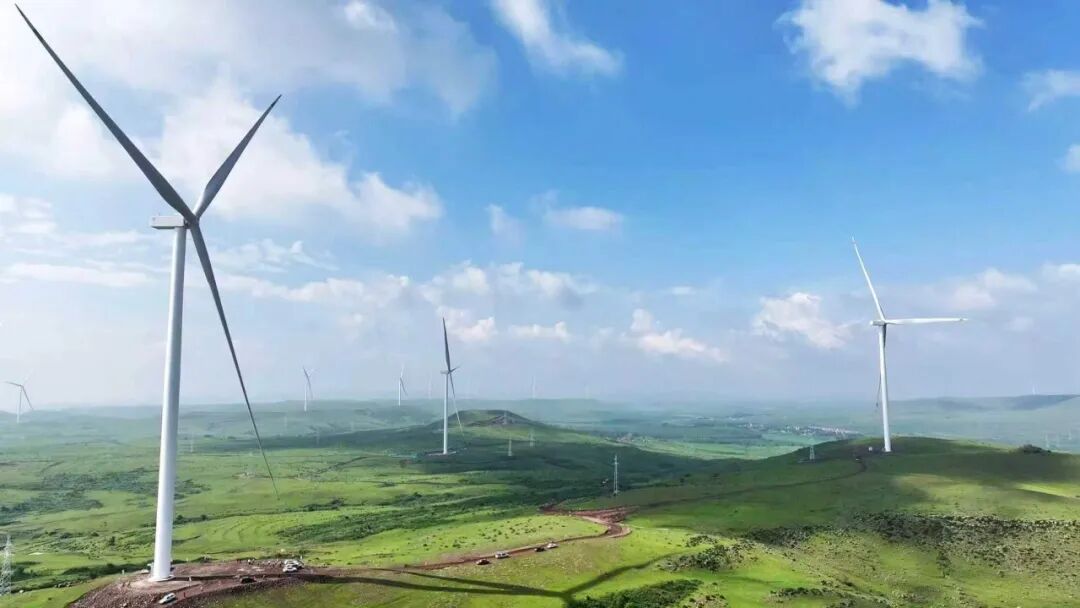
China Entrepreneur: Some people describe that the competition for land resources in Ulanqab is extremely fierce now. Where are you looking for new sites?
Yang Yu: Ulanqab is already a very mature data center market. As a data center service provider, we need to look for the next site that can create the maximum value.
For future decision-making, the most valuable factor is uncertainty. What can really create differentiated value is definitely differentiated cognition. Only by predicting the future development trend can we create the maximum value. This requires very comprehensive judgment, covering policies, geographical conditions, IT technologies, customer layout and many other aspects.
At present, Zhongwei has become a popular area for data center construction. As a heavy-asset enterprise, China Data Group's top priority is to harvest the value of the process from 0 to 1. Ulanqab is already very close to the "1" stage. After reaching the "1" stage, we can provide investors with a mature project and sufficient confidence.
China Entrepreneur: Looking ahead, how will the national computing power be distributed?
Yang Yu: Clients will never put all their eggs in one basket, they will not deploy all their computing power in Inner Mongolia. Clients will choose locations including Hebei, Shanxi, Inner Mongolia, Ningxia, and there will be more new sites in the future.
Second, the economic logic will also change. At the beginning, enterprises went to Inner Mongolia because of its superior location and rich power resources; now, both land and power supply need to be queued for, the construction takes time, and the cost is also changing. When the change of resources and the degree of congestion reach a certain level, the advantageous opportunities of the next suitable location will arrive. Eventually, many regions across the country will jointly meet the demand of the entire computing power industry.
"China is short of chips, while the US is short of electricity"
China Entrepreneur: What aspects of the US data center development model are worth learning from?
Yang Yu: In the early stage of data center development, the US took the lead in many technologies, such as modular design and indirect evaporative cooling. With the maturity of related applications, we are also learning from the global experience and lessons in the field of computing power infrastructure, and now the technologies of China and the US are already very close.
At the same time, domestic supporting manufacturers for data centers are also developing rapidly, and they have been benchmarking against and catching up with global leading enterprises.
China Entrepreneur: What are the differences between China and the US?
Yang Yu: The first difference is the resource endowment. China has abundant power resources but is short of chips now; the US is not short of chips but is short of power supply. Second, unlike the US, China does not have so much natural gas reserve, so it is almost impossible for us to take the natural gas-powered development path.
At the same time, many overseas enterprises are also trying to develop SMR (Small Modular Reactor) and even nuclear fusion technologies.
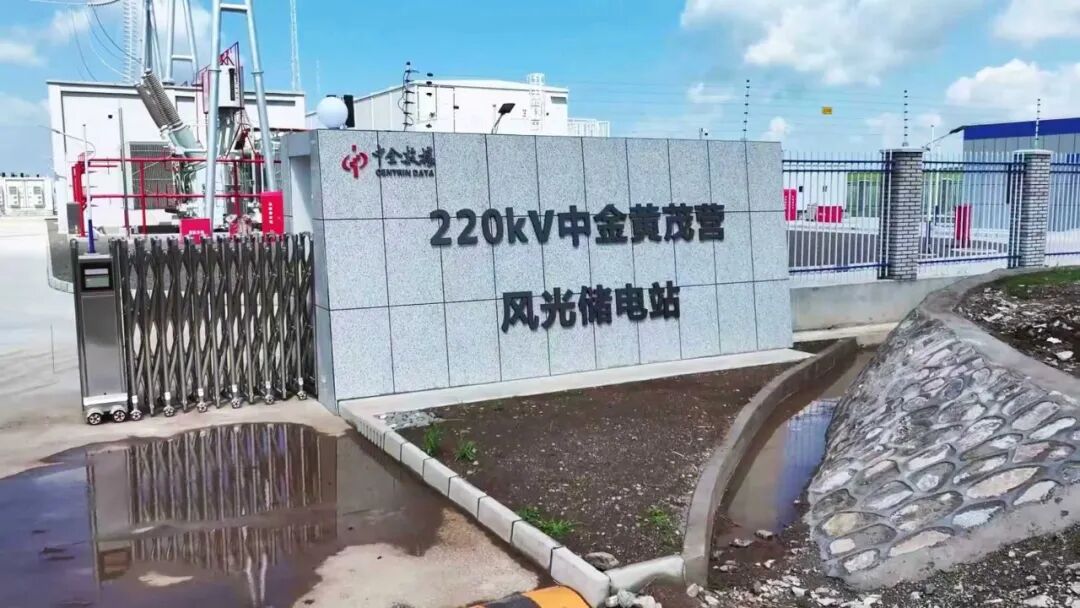
China Entrepreneur: What actions are being taken in China?
Yang Yu: Now the domestic nuclear power industry is focusing on the western Guangdong region and coastal cities, and the nuclear power industry is developing gradually. At the same time, we are also paying attention to the development and cooperation modes of large central state-owned enterprises such as CNNP and CGN.
"This industry will definitely face cutthroat competition until the end"
China Entrepreneur: How many cycles have you experienced in this industry?
Yang Yu: China Data Group has been operating in the data center industry for 21 years, and I have been in this company for 17 years, so I have experienced several industrial cycles.
There was once a year when due to the fluctuation of market demand, we only completed one third of our annual business plan, and there was also a period of one or two years when we had very limited business. Moreover, we usually make layout plans one or two years in advance. Once the capacity is built up while the demand drops, there will be excess capacity, and we have survived all such cycles.
China Entrepreneur: How did you get through those difficult days?
Yang Yu: This is the normal state of this industry, cyclical fluctuations are inevitable. The most important thing is to know what to do in each stage. At the same time, we need to judge where to expand in the next two or three years, and analyze policies, technologies and customer layout. Those who blindly chase the trend or refuse to change will eventually be eliminated.
China Entrepreneur: So you have become more cautious now?
Yang Yu: The development of informatization is irreversible, it will definitely move forward, but enterprises need to go through cycles to survive. The market is very hot now, and I am a little worried that there may be excess capacity in the later stage, and enterprises may be trapped in irrational cutthroat competition.
With the current boom of AI, we are constantly making up for our shortcomings to ensure the benign circulation of our business. In the past, we made plans for projects one by one, but now we need to make rapid layout to support our clients' business. There will be new technical forms and new demands after the current AI wave, and we are keeping an eye on the trend.
China Entrepreneur: Some peers say that Chinese enterprises are prone to engage in such fierce competition that no one can make a profit in the end.
Yang Yu: Competition is not a bad thing, especially market-oriented competition. So our industry will face cutthroat competition until the end, but it does not matter. If you cannot deliver the best products, you will be eliminated, that is all.
"Enterprises have to change as their clients change"
China Entrepreneur: China Data Group started its business by serving financial clients at the very beginning, why?
Yang Yu: At that time, the banking industry was carrying out large-scale system centralization, and banks had purchased a lot of equipment but had no place to deploy them. The requirement at that time was that the service provider must be the property owner of the site rather than a sublessor, so we purchased land and built data centers on our own. All procedures are fully compliant, covering qualification approval and property right certification. Almost all our parks are built through independent land acquisition, independent planning, independent construction and independent operation.
China Entrepreneur: What are the main changes after you shift your focus from financial clients to internet clients?
Yang Yu: The two types of client groups are completely different.
Financial clients attach great importance to safety and reliability, because the cost of failure is extremely high, any accident may lead to public social events. Internet clients have a large number of interfaces, each technology corresponds to one interface, their systems are very open, and they pay more attention to operation efficiency.
When serving financial clients, the top priority is availability and security, and cost may be placed in the second or even lower position. But when you serve internet clients and move towards the direction of universal accessibility, you cannot compromise on availability, but you need to raise the priority of cost control and green power application.
China Entrepreneur: What is the biggest challenge for you personally during this transformation?
Yang Yu: Some things never change, for example, the need to keep learning all the time.
The content of learning changes. In the past, we learned about power supply, source-grid-load-storage system, and now we may learn other things, but the core business logic is almost the