Over the past century, the global automotive industry has gone through three major shakeouts, leaving five survival rules.
In our previous industrial research, we explored from four dimensions that China's automotive industry is standing on the eve of a clearing cycle.
The term "clearing" inherently carries a tragic connotation. In stereotypes, clearing is associated with total chaos and a mess. But real history is far more dynamic. Even during a clearing cycle, the industry does not collapse overnight. According to the research of Martijn J. Burger, after 1911, the US automotive industry eventually shrank from 273 manufacturers to 5, with an average annual exit rate of around 10% during the clearing period.
Opportunities coexist with the clearing cycle. During Japan's Heisei era, the asset bubble burst, commercial land prices in the six major cities fell by 70%, and the retail industry was mired in widespread distress. Nitori, a furniture retailer founded in Hokkaido, took the opportunity to acquire storefronts amid the collapse of shop rents. Over 30 years of deflation, it grew into one of the retail stocks with the highest returns in the Japanese stock market. During the same period, Saizeriya, a restaurant chain that started as an Italian eatery in Chiba Prefecture, expanded its store network to thousands of locations by leveraging deflation-driven pricing strategies.
In an era when investors and consumers tighten their wallets, it is precisely the expansion cycle for a small number of high-value enterprises. Today, following the logic of the previous article, from the perspective of business history, we will discuss the core factors that help the automotive industrial chain resist cycles during the clearing cycle, and what hidden opportunities lie ahead.
Detroit, Stuttgart, and Nagoya, three automotive cities, have all experienced complete clearing cycles. Today, by reviewing the second act of these three historical episodes, we have summarized five common traits shared by upstream and downstream automotive enterprises that can either survive through cycles or capitalize on cycle dividends.
01 The first determinant of survival is liquidity, not scale
In the clearing cycle, what determines the life and death of an enterprise must be the thickness of its liquidity reserve.
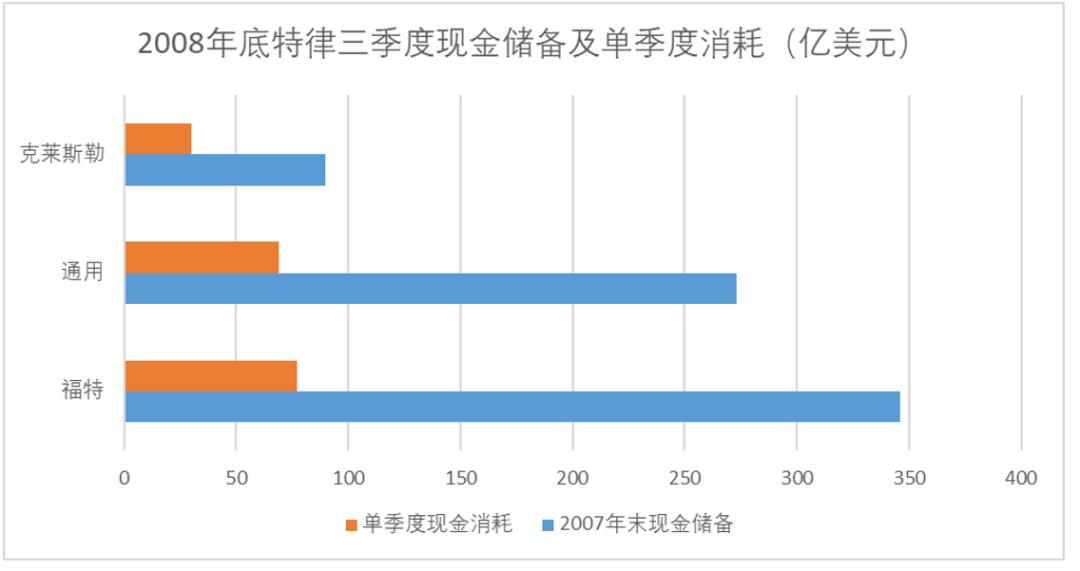
During the US automotive clearing cycle in 2008, the Detroit Big Three all faced considerable cash flow pressure. However, compared with Chrysler and General Motors, Ford had a significantly safer profit buffer. According to financial reports and the 2008 survey data from JPMorgan (Chrysler did not disclose relevant data), Ford's capital reserve was far more abundant.
This also benefited from the resolute actions of Ford's management. In 2006, Mulally, who had just joined Ford from Boeing for less than three months, made a seemingly almost crazy decision in Detroit: to mortgage almost all of the company's assets to banks, including the blue oval logo that the Ford family regarded as their lifeblood. More than 500 banks listened to his restructuring plan and raised 23.5 billion US dollars within two weeks. Mulally later said it was the largest self-rescue loan in history.
According to subsequent JPMorgan surveys, only Ford, which exchanged mortgaged assets for cash flow, had available cash flow that could support normal business operations for two years. Although General Motors also had considerable cash reserves, most of it was calculated under the "available liquidity" caliber, which had poor realizability during the industrial clearing period. As a result, in the 2008 clearing wave, only Ford survived to the end.
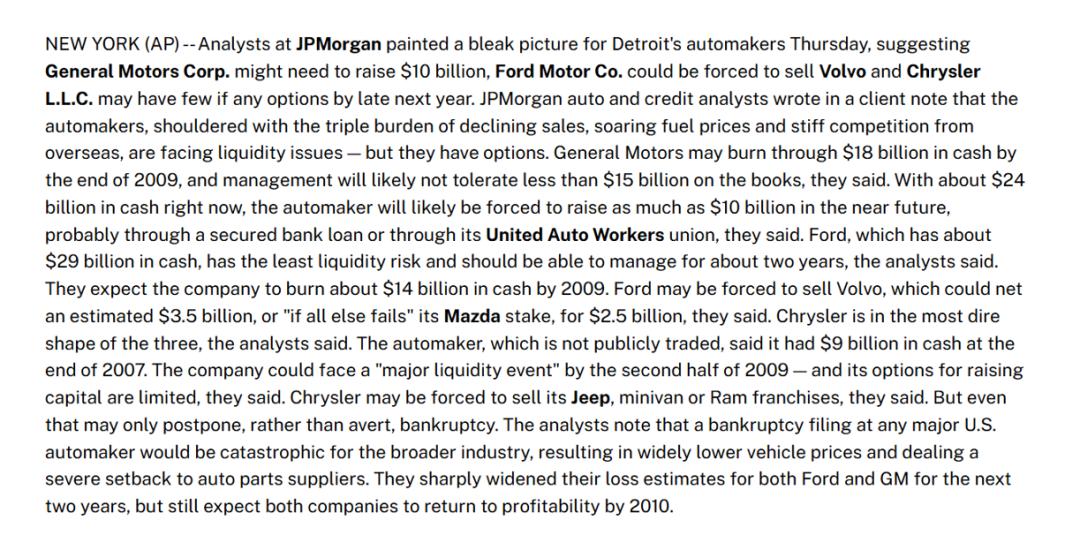
Figure: Review of JPMorgan's 2008 report on the cash reserves of Detroit's Big Three, Source: JPMorgan
And scale itself does not constitute protection. Delphi had revenue as high as 26.4 billion US dollars before bankruptcy, but it still filed for bankruptcy protection. The return on investment of North American suppliers has long been only 4% to 6%, which is far from enough to cover the cost of capital.
So how to judge whether cash reserves have strong anti-fragility? Based on historical experience, there are two core criteria for judgment:
First, without considering sales revenue, the pure cash reserve should cover a window period of about 7 months. According to the calculation in the research report of Daiwa Securities in November 2008, if the cash consumption rate at that time continued, the remaining survival time of General Motors was 1.9 months, Chrysler 2.6 months, and Ford 6.9 months.
Second, when revenue is taken into account, although there is no specific official research data, we have aggregated data from third-party researches including Hilcoglobal, FTI Consulting, Scopegroup and JPMorgan, and found that the ratio of net operating cash flow to total operating revenue of automakers is relatively safe at around 18%, while the ratio of net operating cash flow to total operating revenue of supply chain enterprises is relatively stable at 8%.
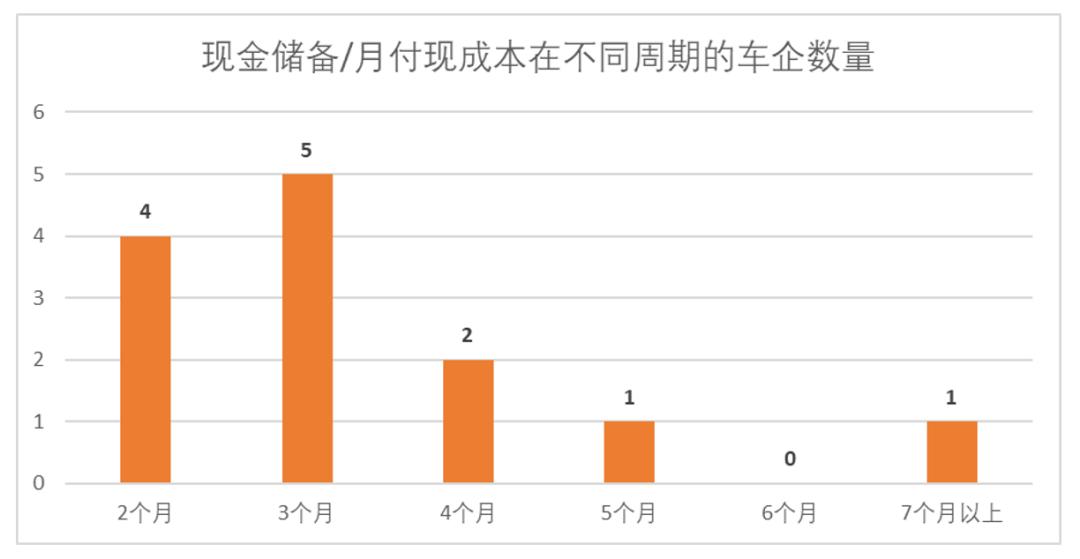
Based on these two points, looking back at the mid-year reports of automakers listed on A-shares and Hong Kong stocks this year, we have counted the financial data of 21 major automakers after deduplication.
Among the 13 sample enterprises counted in A-shares that had net cash outflow in the mid-term report, the average value of cash reserve / monthly average cash payment cost was about 3.7 months. Four automakers had a cash reserve / monthly cash payment cost ratio of less than 3 months, and only one had a ratio of more than 7 months.
If we look at the cash flow quality data of operating cash flow / revenue, among the 21 automakers listed on A-shares and Hong Kong stocks, 10 still have net outflow of operating cash flow, 4 have a net operating cash flow to revenue ratio of less than 10%, and only 3 have a ratio higher than 18%.
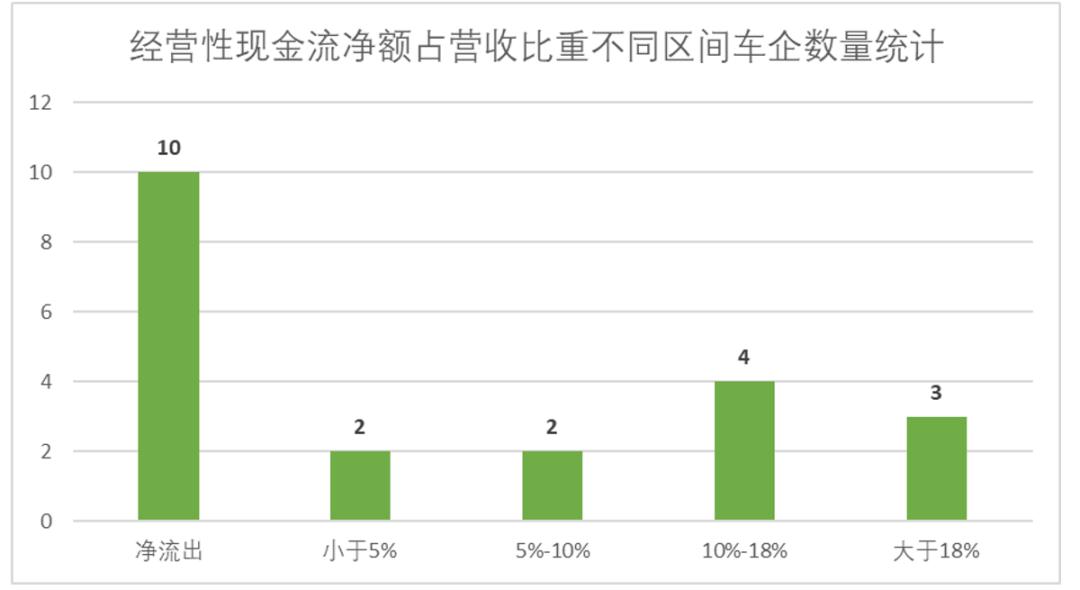
In summary, looking only at the cash flow reserves of automakers, there is only one relatively risk-free enterprise, and under the broad caliber, there are no more than 3 enterprises with relatively sufficient reserves.
02 An EV/EBITDA ratio close to 3-5 times is a safe range, and domestic manufacturers have obvious premium
The clearing period is also a window of frequent mergers and acquisitions. From the perspective of the upstream and downstream of the supply chain, if we lower expectations, there are actually many enterprises with M&A value during the clearing cycle.
Most investors and non-industry related personnel cannot judge from the perspective of component importance and substitutability. But there is an indicator that is universally accepted across the industry — truly valuable and irreplaceable enterprises will show very obvious value discount due to "mispricing" during the clearing cycle.
During the automotive industry clearing periods in the United States in 1920, Europe and the United States in 2008, M&As of component manufacturers showed the characteristics of "low price and high frequency".
In February 2008, Brembo acquired Sabelt with an EV/EBITDA multiple of around 9 times. In July, when Schaeffler launched a takeover of Continental, the EV/EBITDA multiple was also around 12 times.
By 2009, the EBITDA multiple of Faurecia's acquisition of EMCON Technologies was 7.4 times. In the middle and late stage of clearing, according to KPMG's statistical caliber, the EBITDA multiple of German suppliers dropped sharply from 7-8 times before the crisis to 4-5 times. US private equity funds were generally unwilling to pay more than 5-6 times EBITDA to acquire automotive companies during the crisis.
In 2009, PwC's report on private equity investment in the automotive supplier industry confirmed the change of valuation logic from the financing side. The report pointed out that previously, LBO (leveraged buyout) could obtain senior debt financing as high as 6 times EBITDA, but the risk premium of leveraged buyout surged during the clearing period. The sharp contraction of financing leverage directly pushed down the overall valuation multiple of enterprises.
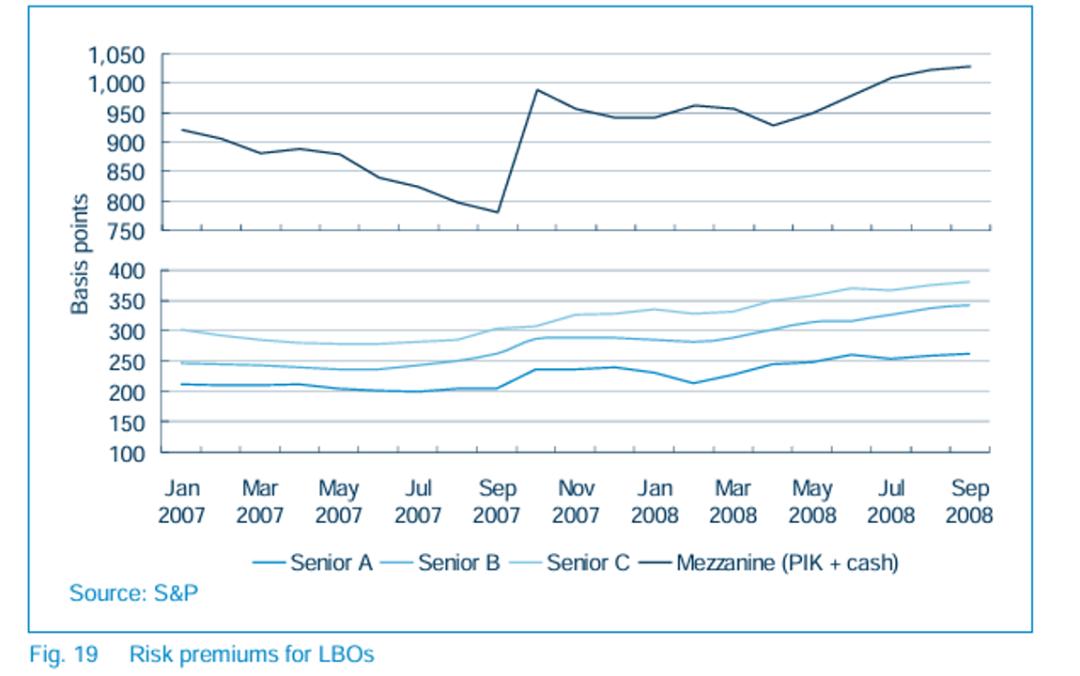
Figure: Risk premium of leveraged buyouts in the automotive industry, Source: PwC *Private equity investments in the automotive supplier industry 2009*
J.P. Morgan's analysis in 2008 also clearly pointed out that during the automotive industry clearing cycle, the range of comparable transaction multiples dropped to 3.9 times.
In other words, if upstream and downstream automotive component enterprises can maintain stable EBIT, and the EV/EBITDA multiple is controlled at 5 times or lower, the risk premium will not be too high. Even if the industry is in a clearing period, they are core targets that are easy to be acquired.
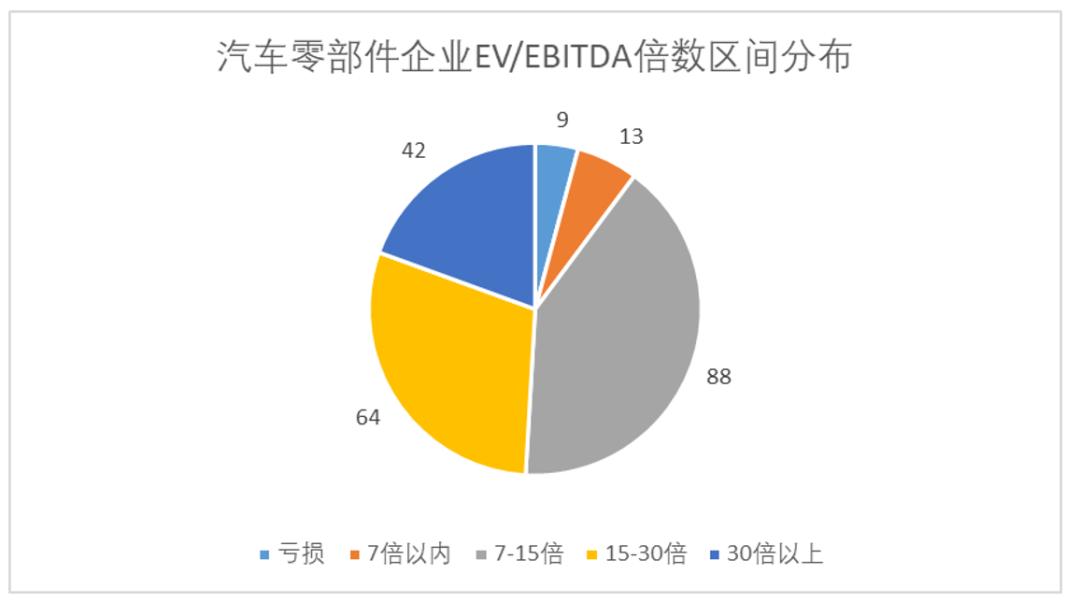
Looking at the current domestic automotive supply chain market, we have counted 216 A-share listed automotive component enterprises. Only 13 of them are in the relatively safe valuation range, and most component enterprises have an EV/EBITDA multiple greater than about 7 times. From the perspective of the clearing period, their M&A value is not significant.
03 Customer base needs to be diversified, shareholding structure needs to be concentrated
The clearing cycle tests more than just the balance sheet. The shareholding structure determines how tight the fist the enterprise can clench internally, and the customer structure determines how much exposure it faces externally. These two variables make no difference in prosperous times, but become the line of life and death in the cold winter:
(1) Shareholding structure needs to be concentrated, counter-cyclical decision-making and potential M&A opportunities both depend on the concentration of shareholding
Going back to the case at the beginning of the article, during the 2008 clearing cycle, in addition to correct decision-making, the underlying factors that promoted the implementation of decisions cannot be ignored for Ford to maintain a relatively stable cash flow level.
The Ford family holds about 2% of the equity through Class B shares, but controls 40% of the voting rights. This structure has been maintained since the company went public in 1956. In 2006, Mulally planned to mortgage almost all assets including the blue oval logo in exchange for 23.5 billion US dollars of life-saving funds. This kind of decision that seemed almost reckless to outsiders would have been debated for half a year by a board of directors with dispersed shareholdings.
Bosch, which has gone through multiple cycles in Europe, has 92% of its equity held by the Robert Bosch Foundation, and voting rights are concentrated in the family trust. Through two world wars and several complete industrial clearings, Bosch has increased its R&D investment against the trend every time.
More importantly, during the clearing cycle, a more concentrated shareholding structure helps enterprises move flexibly at the capital level. The most classic counterexample is Porsche's reverse takeover of Volkswagen from 2005 to 2008, in which Porsche gradually increased its shareholding in Volkswagen and planned to raise its shareholding ratio to more than 75%.
In terms of shareholding ratio, Porsche seemed to be close to completing the acquisition. However, Volkswagen's shareholding structure included 20.1% held by the state government of Lower Saxony and complex cross-shareholding relationships among families. These factors prevented Porsche from obtaining full control, and eventually led to the failure of the acquisition.
(2) Customer base needs to be diversified, when the proportion of a single customer exceeds 20%, it reaches the warning line in the clearing period
Contrary to the shareholding structure, for upstream and downstream enterprises in the industrial chain during the clearing period, the more diversified the customer concentration is, the greater the value is.
We collected the publicly disclosed customer concentration data of some US supply chain enterprises around 2008. According to the data, a customer concentration of around 20% is a relative critical point. Supply chain enterprises with high diversification will also be affected by the decline of industry scale, but they often will not collapse.
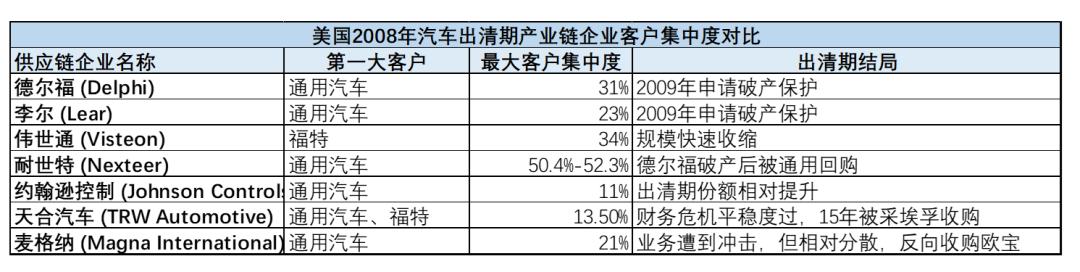
When the Japan Times reviewed the core characteristics of the two industrial clearings from 1980 to 2008 in 2008, it highlighted the key indicator of customer diversification. Suppliers such as Takata and Akebono Brake had at least 20% revenue dependence on the Detroit Big Three, and if the Big Three went bankrupt, they would be the "most severely impacted" suppliers. In contrast, Denso's revenue dependence on the United States was only about 7%.
Turning our perspective back to China, according to last year's annual report data, among the 137 supply chain enterprises listed on A-shares that disclosed the proportion of their largest single customer, 60 had a single customer accounting for more than 20% of their revenue.
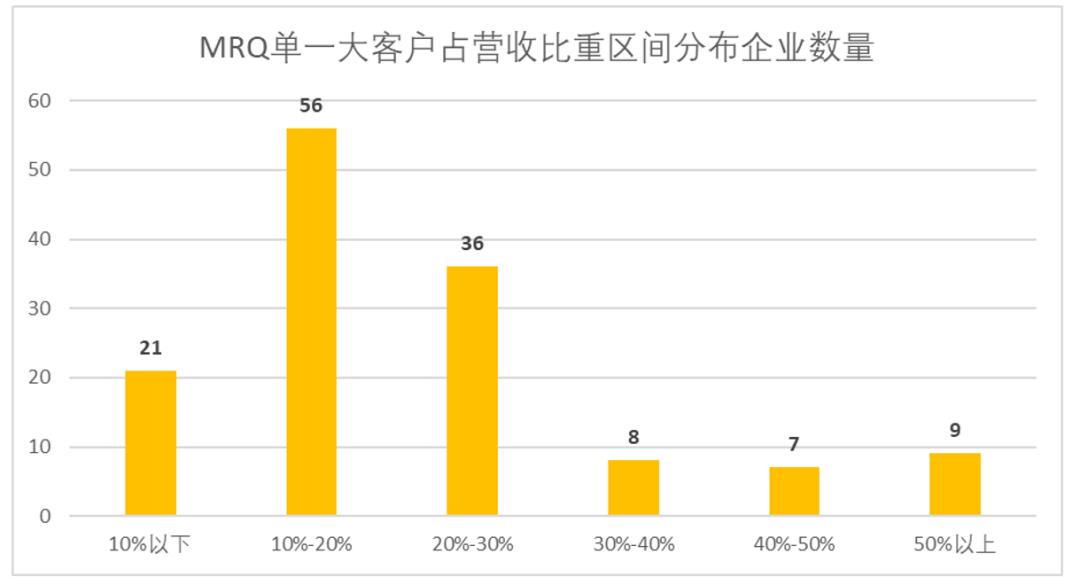
In other words, more than 40% of automotive industry supply chain enterprises are still highly dependent on a single major customer at this stage. Although these enterprises may have fairly good revenue performance, they bear greater risks during the clearing period.
04 Product cycle is prolonged, the after-sales market may be a good business
In addition to identifying the core indicators of enterprise value in the clearing cycle, there are also many opportunities hidden in the history of the automotive industry clearing.
As mentioned in our previous article, the penetration rate of new energy vehicles is already very high. From the perspective of historical clearing cycles, the rise