One of the earliest dream weavers in the AI sector, Character.AI, is on the verge of bankruptcy.
On October 12 local time in the United States, Character.AI, a former generative AI unicorn, officially entered bankruptcy proceedings. Its operating entity, Character Technologies Inc., has filed an application with the U.S. Bankruptcy Court for the District of Delaware to launch voluntary bankruptcy restructuring under Chapter 11 of the U.S. Bankruptcy Code.
In 2024, when Google reached a technology licensing and talent deal worth approximately 2.7 billion U.S. dollars with Character.AI, the company valuation referenced in relevant investor exit arrangements was about 2.5 billion U.S. dollars. Two years later, Character.AI entered bankruptcy proceedings, with declared assets and liabilities both ranging from 50 million to 100 million U.S. dollars.
Disney became the first bidder in this asset sale, proposing to invest 20 million U.S. dollars to obtain a non-exclusive permanent license for part of Character.AI's intellectual property and specific claim rights. According to the agreement, Disney will also provide transition services through previously hired Character.AI employees to assist the platform in maintaining operations.
It should be noted that 20 million U.S. dollars is not the acquisition price of the entire Character.AI company. The company is seeking to sell all or most of its assets under court supervision. Disney's quotation targets one specific asset licensing arrangement, and other buyers can still participate in the bidding.
Character.AI stated that the sale process is expected to be completed from late November to early December. The platform will continue to operate during this period, but if no buyer is willing to maintain the platform business in the end, Character.AI may face closure.
Why did a star AI company with more than 20 million monthly active users and once supported by top Silicon Valley capital end up in bankruptcy?
Looking back at Character.AI's experience over the past four years, the turning point emerged as early as 2024. Google obtained technology licensing and recruited the founding team for 2.7 billion U.S. dollars. After that, the company gradually withdrew from the competition for cutting-edge foundational models and shifted its business focus to AI entertainment and interactive content. At the same time, commercialization exploration was still advancing, but legal disputes surrounding minor safety continued to accumulate, and major changes took place in the management on the eve of bankruptcy.
01 Why traffic failed to turn into profits
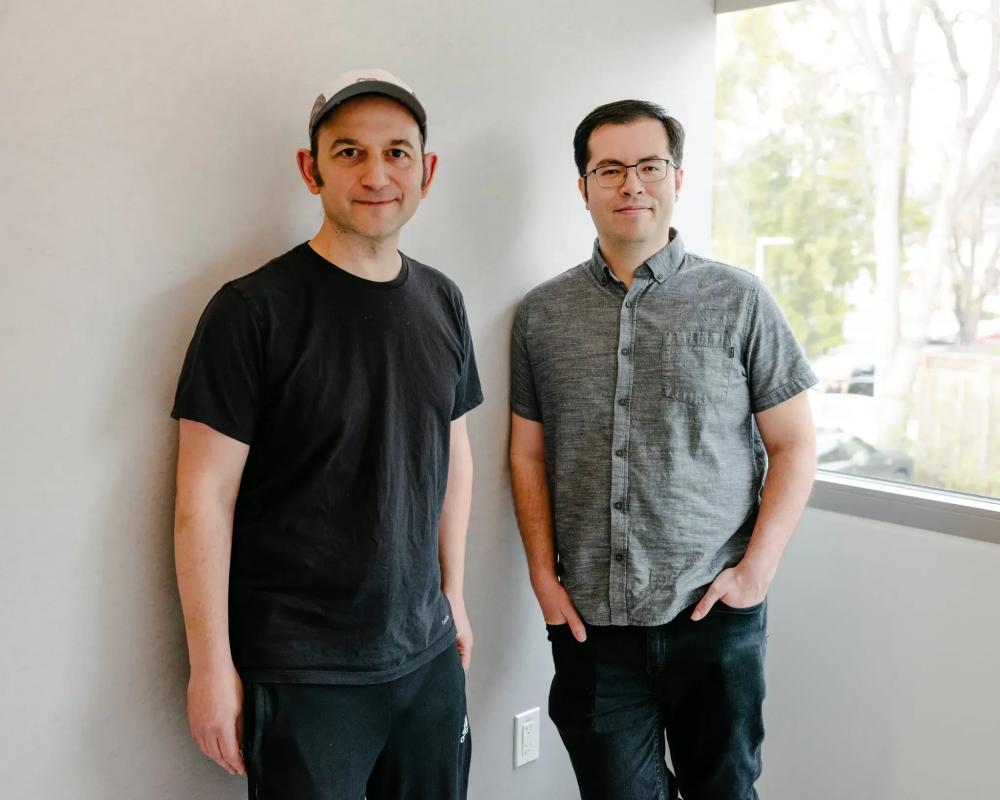
The two co-founders of Character.AI
The story of Character.AI began when two Google AI researchers left their jobs to start a business.
In November 2021, Noam Shazeer and Daniel De Freitas left Google to found Character.AI. Shazeer is one of the co-authors of the 2017 Transformer foundational paper "Attention Is All You Need", while De Freitas once participated in the development of Google's conversational AI project Meena and subsequent related R&D. The two hoped to bring conversational AI to a wider public, rather than just treating it as an internal research achievement.
In September 2022, Character.AI launched its Beta version, two months earlier than the official release of ChatGPT. Different from AI assistants that mainly focus on knowledge Q&A and task processing, Character.AI allows users to create their own virtual characters and continuously interact with anime characters, historical figures and original characters. Users can set the personality, background and speaking style for the characters, making AI no longer just a tool for answering questions, but an object that can communicate for a long time.
This product form quickly attracted a large number of young users. Compared with one-off Q&A, role-playing can form a longer dialogue chain, and the high-viscosity user experience has become the most prominent advantage of Character.AI.
Capital flooded in subsequently. In March 2023, Character.AI completed a 150 million U.S. dollar Series A financing led by Andreessen Horowitz (a16z), with a valuation of 1 billion U.S. dollars, ranking among the unicorns. In the eyes of investors, a large number of user interactions can provide feedback for product improvement, thereby promoting the continuous expansion of user scale.
However, behind this high-frequency interaction, user activity is not directly equivalent to commercial value. The longer users interact with virtual characters, the more model requests the company needs to process; in order to take into account the response speed of dialogue and context memory, the platform must continuously bear high reasoning computing power costs.
On the revenue side, Character.AI is also in a passive position. Although the platform has accumulated a huge group of young users, this group of people has relatively limited payment ability and willingness. Even if the company launched a Premium subscription service for 9.99 U.S. dollars per month, it is difficult to convert the huge active traffic into stable revenue sufficient to cover computing power and operating expenses. In addition, user loyalty of role-playing products is very likely to decline as the freshness fades, and the migration cost for users is extremely low.
02 Core team loss and the losing situation of self-developed large model

Karandeep Anand, former CEO of Character.AI who has joined Disney
When the C-end business was difficult to support the continuously expanding costs, Character.AI ushered in a major turning point in its development direction.
In August 2024, Google reached a non-exclusive technology licensing deal with Character.AI worth approximately 2.7 billion U.S. dollars. The most concerned part of the transaction is that Character.AI co-founders Shazeer, De Freitas, and about 20 to 30 core researchers returned to Google to participate in the R&D of the Gemini project.
This transaction, known as "Reverse Acqui-hire", brought considerable one-time capital income, but did not establish a business that can continuously generate revenue. At the same time, the departure of the core research team has severely weakened the company's ability to maintain independent model R&D.
After that, Character.AI's management underwent adjustments. Dominic Perella, the general counsel, once served as interim CEO for a short period of time, and Karandeep Anand, a former executive of Meta and Brex, officially took over in June 2025.
After taking office, Anand adjusted the route: he gave up the ambition of self-developed large models and turned to rely on open source models such as Meta's Llama and DeepSeek. As he said in an interview with Wired magazine in August 2025, Character.AI's competitive focus has completely shrunk from underlying technology R&D to the application layer such as character design, interactive experience and user operation.
This strategic shift reduced part of Character.AI's R&D expenses, but the commercial dilemma was not eliminated. Calling or deploying open source models still requires bearing expensive reasoning and facility costs. When competitors can also obtain similar model capabilities, the decline in model costs cannot automatically bring stronger user stickiness or willingness to pay.
By the end of 2025, Character.AI, which has about 20 million monthly active users, still needed to bear millions of U.S. dollars in computing power and operating costs every month. Even if the annualized revenue reached about 50 million U.S. dollars, the operating pressure was still huge.
Senior management turmoil continued afterwards. In June 2026, Shazeer left Google to join OpenAI; in September 2026, Anand left his job to serve as the first CTO of Disney's parent company and took away part of the technical team, and Colin Adams took over as CEO of the company. When the foundational model is no longer the core asset of the company, excessively frequent changes make it difficult for Character.AI to establish a sufficiently stable profit model and competitive barrier at the application layer.
03 Litigation and regulatory pressure worsened the commercial dilemma
If computing power costs and core talent loss have weakened the operating foundation of Character.AI, then litigation and regulatory pressure surrounding minor safety have further increased the company's operating uncertainty.
Character.AI's core products are built on long-term, immersive human-computer interaction. Driven by the mechanism of the model's "accommodating psychology", AI characters tend to comply with users' expressions and intensify their emotions, and lack effective risk identification and intervention capabilities when users show dangerous signals. This mechanism can easily lead minors to develop severe emotional dependence.

The mother of the late Sewell Setzer III mourning her son
In October 2024, a mother in Florida, Megan Garcia, sued Character.AI and Google in court. Her 14-year-old son, Sewell Setzer III, committed suicide after establishing a long-term emotional connection with the platform's AI characters. In May 2025, the federal court dismissed Character.AI's motion to dismiss the case filed under Section 230 of the Communications Decency Act and the First Amendment to the Constitution, and the case entered the stage of substantive evidence disclosure.
Although the case reached a settlement around January 2026, the legal storm did not end. On October 8, 2026, the lawsuit previously filed by the Kentucky Attorney General against Character.AI revealed more details. The newly published unabridged document lists cases where chatbots are suspected of encouraging self-harm, extreme dieting and other behaviors, and accuses the company of putting user engagement above the well-being of minors when designing products.
For start-ups that rely on high valuation from future growth, potential compensation, legal response costs and continuous compliance investment have completely overturned the revenue expectations. Litigation and regulatory pressure are intertwined with immature business models, talent loss and lack of competitive barriers, which eventually pushed the originally fragile business model to collapse.
04 Warnings left by Character.AI for the AI application industry
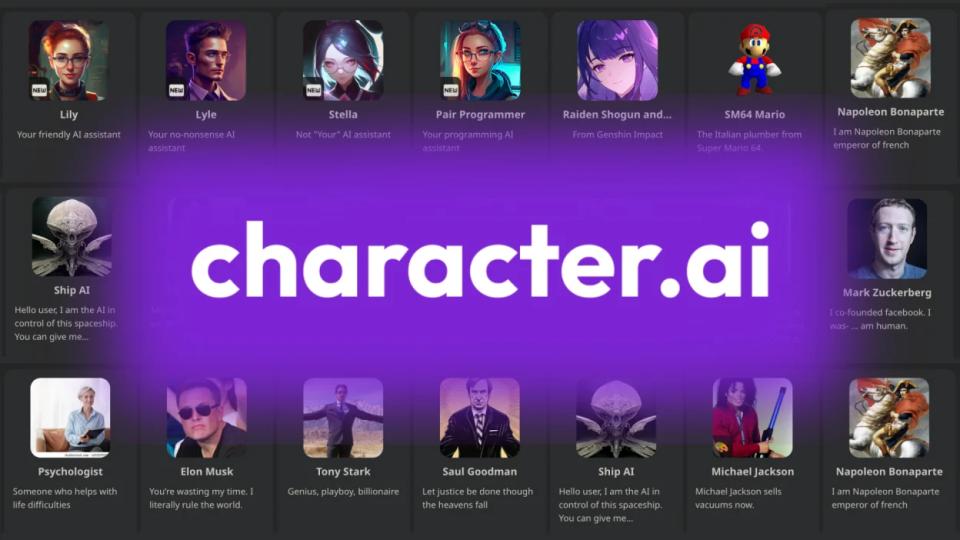
From its founding in 2021 to its peak valuation of 2.5 billion U.S. dollars, Character.AI once proved that generative AI can break through the boundaries of traditional Q&A tools and create highly sticky consumer-grade companionship experience.
However, high-frequency interaction not only brings traffic, but also reasoning costs billed by the second. When scale cannot bring marginal benefits, homogeneous competition erodes experience barriers, and safety compliance issues touch the bottom line of business, the growth expectations that once supported high valuations will collapse in an instant.
As Disney proposes to bid 20 million U.S. dollars for a non-exclusive permanent license of part of the core intellectual property, no matter how the subsequent restructuring proceeds, the independent development path established by Character.AI relying on technological first-mover advantage and traffic dividends has come to an end.
The fall of this unicorn does not mean the end of the AI companionship track, but it does send a warning: traffic and valuation cannot replace a sustainable business model after all. How to establish a balance between product value, computing power cost and safety bottom line is the key for AI start-ups to truly survive the cycle.
Special translator Wu Ji also contributed to this article
This article is from "Tencent Tech", author: Qiaoba, editor: Xu Qingyang, published with authorization from 36Kr.