The Energy Replenishment War Between Geely and BYD
Geely's energy layout in September can be summarized as: seizing the market with smart charging, competing for time with battery swapping, and trading proportion for initiative. It bets on self-developed technology and self-built network on the charging track, and uses equity to exchange for scale and retains fallback options on the battery swapping track. With three bold and highly imaginative moves, Geely deliberately defines its own boundaries: it does not pursue full-stack self-sufficiency, only secures key links, and leaves the rest to joint ventures, equity and the market.
According to data from the China Association of Automobile Manufacturers for January to September this year, the penetration rate of new energy vehicles has exceeded 53.6%, and energy replenishment efficiency has become the main battlefield of competition for Chinese automotive brands following intelligent driving.
In the first half of this year, BYD launched Megawatt Flash Charge 2.0. At normal temperature, it only takes 5 minutes to charge from 10% to 70%, and 9 minutes from 10% to 97%, achieving the same refueling speed as fuel vehicles.
Built on the second-generation Blade Battery, the full-domain 1000V high-voltage architecture of the Super e-Platform and megawatt flash charging stations, BYD has formed a complete set of high-efficiency energy replenishment systems.
After launching the national intelligent driving strategy to underwrite intelligent driving services, BYD's move in energy replenishment efficiency has built a moat for itself.
Geely, which has been competing head-to-head with BYD in the market, made three consecutive moves in September as a response.
From batteries and battery swapping to smart charging technology, it counters every move and advances step by step to win.
This energy replenishment war involves not only technological catch-up, but also vertical and horizontal alliances with upstream and downstream industrial chains and even competitors.
Strictly speaking, with the boom of embodied intelligence, the energy replenishment market is expected to become a field that gives birth to a new batch of industrial giants, and the only players with real strength in this field are BYD, NIO and CATL.
Through deep bundling, Geely has brought NIO and CATL to its side.
01. Geely's Three Moves
Geely's three moves were launched intensively without any delay, demonstrating both the resolute execution of the "One Geely" strategy and an open mindset that does not insist on taking all benefits alone.
The first move: Geely transferred its under-construction 18GWh battery plant in Chongqing Yaoning to Times Geely, a joint venture with CATL, and the transaction received anti-monopoly approval on September 3.
At the same time, Geely stated that it will no longer add new self-built cell production capacity, and established a supply structure of "40% self-supply, 40% of cells purchased from CATL, and 20% from other suppliers". It concentrates resources on technologies close to the vehicle end such as battery pack integration, BMS, and battery safety (Shenshield and Golden Brick batteries), retains the battery R&D and PACK capabilities of Jiyao Mobility and Viridi, and secures the say in the vehicle battery system.
CATL, in turn, quickly deployed its production capacity in southwest China through this cooperation, and Geely and CATL have achieved two-way deep bundling.
The second move: On September 23, Geely released the "Geely Smart Charge" technology, with a single-gun peak power of 2250 kW, refreshing the global upper limit of charging power.
The third move: On September 28, Geely Holding Group and NIO signed a comprehensive strategic cooperation agreement in the field of charging and battery swapping in Hangzhou. The two parties completed capital bundling through cross-shareholding. NIO became the first automotive brand to access Geely's smart charging and energy replenishment network, and Geely thus gained access to 4126 battery swapping stations.
With three bold and highly imaginative moves, Geely deliberately defined its own boundaries.
Among them, the most surprising one is the cooperation between Geely and NIO.
Strictly speaking, Geely and NIO are also competitors. Although the two parties signed the Framework Agreement on Strategic Cooperation in Battery Swapping as early as November 29, 2023, agreeing to unify battery swapping standards and technologies, jointly build battery swapping networks, and jointly develop swappable models, this agreement has only existed on paper for three years without substantial progress.
However, on September 28, the cooperation between the two parties was upgraded to deep capital bundling. Geely invested in NIO Energy with the equity of Yiyi Internet and cash, which undoubtedly gives NIO, which has long been burdened by heavy assets, an industrial partner that can provide strong support.
In the highly involuted Chinese automotive market, this cooperation has become a rare non-zero-sum game.
02. Trading "Battery Swapping" for "Charging"
In the battery swapping market, CATL was once the earliest player expected to take over NIO's battery swapping system, but after Ledeao L90 helped NIO tide over the cash flow crisis, the two parties eventually became competitors in the battery swapping track.
In 2022, CATL put forward the concept of "Chocolate Battery Swapping". In December 2024, it held the Chocolate Battery Swapping Ecosystem Conference in Xiamen, and joined hands with hundreds of enterprises to form the "Chocolate Alliance". At present, it has cooperated with 11 automakers, 18 passenger car brands and 25 models.
In terms of station construction rhythm, CATL revealed in the first half of this year that it will upgrade its existing battery swapping stations to the form of "battery swapping + supercharging", and form a supercharging and swapping network with 4000 "integrated supercharging and swapping stations" by the end of the year.
The core design of the integrated supercharging and swapping station is "shared box substation and charging module": the battery swapping station and the supercharging pile share the same set of power distribution and power equipment, reducing the energy conversion link, and the comprehensive power loss rate is more than 13 percentage points lower than that of the market's energy storage charging stations; in case of emergency demand, the batteries in the battery swapping station can be called to discharge to the charging piles, and the equipment reuse rate exceeds 85%.
"Putting charging capacity into the battery swapping network" is the main theme of CATL's energy replenishment network.
It can be said that CATL's rapid layout in the battery swapping field is on track to surpass NIO.
NIO's battery swapping business started on May 20, 2018. Its first self-built supercharging station was completed in July of the following year, and large-scale construction did not start until the 500kW ultra-fast charging pile was released at the end of 2022.
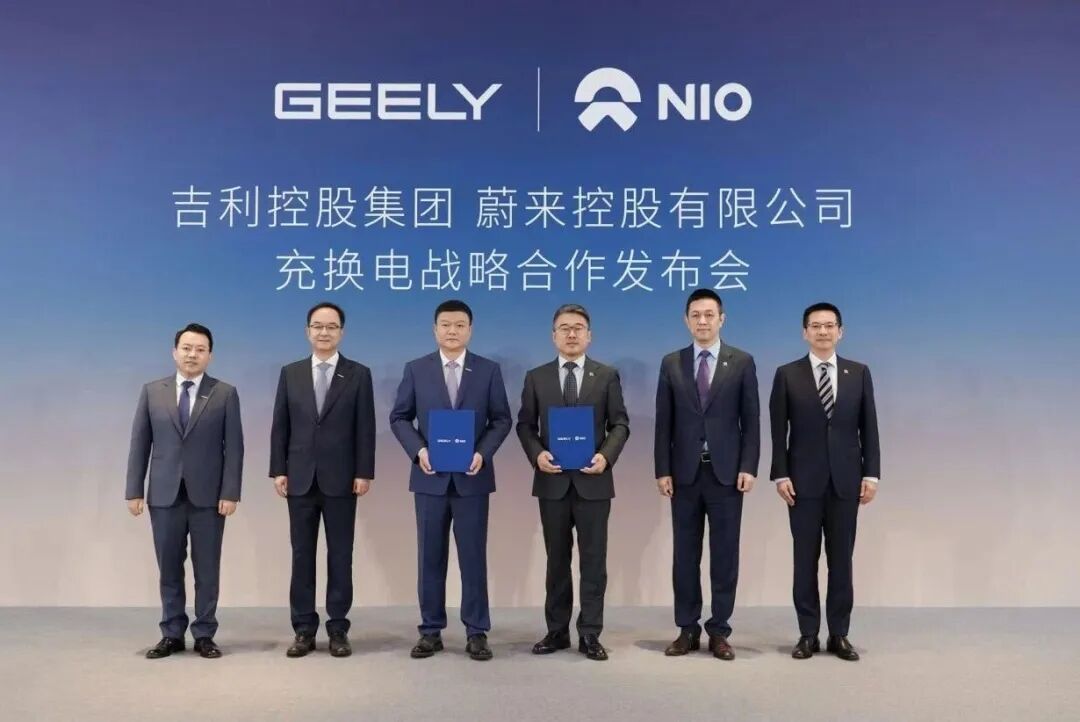
Just five days after Geely released its smart charging technology, NIO and Geely Holding signed a comprehensive strategic cooperation agreement in the field of charging and battery swapping.
Prior to the cooperation, NIO had invested over 20 billion yuan in the field of charging and battery swapping, and had built 9,433 charging and battery swapping stations across China, including 4,126 battery swapping stations (including 1,063 highway battery swapping stations), 5,307 charging stations, 30,598 charging piles, and accessed over 1.73 million third-party charging piles, providing more than 220 million cumulative charging and battery swapping services (including over 125 million battery swapping services).
At the same time, Geely sold part of its power battery production capacity to CATL on the one hand, and on the other hand carried out in-depth battery swapping cooperation with NIO, which is its competitor. It can be said that only Li Shufu has such mind and vision.
According to the cooperation agreement between the two parties:
On the battery swapping side, Geely Holding Group subscribes for new shares issued by NIO Energy with 100% equity of Yiyi Internet Technology (Chongqing) Co., Ltd. it holds plus 640 million yuan in cash, and will hold 30% equity of NIO Energy after the delivery; the more than 460 battery swapping stations for operating vehicles of Yiyi Internet will be fully merged into NIO Energy and operated uniformly by NIO Energy.
After the transaction is completed, NIO Holding's shareholding ratio in NIO Energy will drop to 63.6%, and the post-investment valuation of NIO Energy will be about 16 billion RMB.
On the charging side, the direction is the opposite: NIO Holding subscribes for 10% of the new shares of Haohan Energy, Geely Holding's charging business subsidiary, with cash, and this subscription fund will be used by Haohan Energy to purchase a number of charging assets from NIO.
The agreement also stipulates that the two parties will jointly build unified C-end battery swapping technologies and standards, Geely Holding will develop battery swapping models for the C-end, and NIO Energy will provide battery swapping services for them.
In short, Geely invests in battery swapping with assets, NIO invests in charging with cash, and the cash eventually flows back to buy charging assets.
One announcement completes two actions: cross-shareholding and asset sale at the same time.
The mainstream judgment of industry insiders on this transaction is that it is a win-win situation.
Cui Dongshu, Secretary-General of the China Passenger Car Association, believes that the introduction of Geely's vehicle flow by NIO Energy can greatly improve the utilization rate of battery swapping stations and improve profitability.
For Geely, "supercharging is for mass household use, and battery swapping serves high-end and high-frequency operation" is a rational scenario stratification and risk hedging. Entering the battery swapping field in an asset-light way through shareholding also avoids the risk of heavy asset self-construction.
He also pointed out that the BaaS battery rental model is only suitable for high-end series such as Zeekr, and mainstream mass-selling brands such as Lynk & Co are not suitable for it - which just shows that battery swapping will not be the standard configuration of all models, but the optimal solution for specific scenarios.
Looking deeper, this convergence between NIO and Geely may be a landmark event for Chinese automakers to shift their heavy-asset gameplay.
NIO has previously transferred the assets of 36 charging and battery swapping stations in Wuhan to Optics Valley State-owned Assets, and the daily operation and maintenance is still the responsibility of NIO Energy.
If this model of "state-owned assets holding assets + NIO operation" is replicated, coupled with the shareholding of industrial capital such as Geely, the energy replenishment network is expected to continue to expand without significantly increasing the heavy asset balance sheet.
NIO Energy introduces strategic shareholders with a post-investment valuation of 16 billion yuan, and Haohan Energy has its first external shareholder. This is the same transformation of the two roles.
For Haohan Energy, it was originally a supporting facility for Geely's own brands. Now it has its first external shareholder and external assets flowing in. For the first time, it has transformed from Geely's charging department to an open energy replenishment platform.
The value of the platform grows with the number of access parties. NIO is the first, and there is no reason to assume that it will be the last. NIO's entry itself will reduce the negotiation cost of the next party.
On the day of the cooperation announcement, the capital market recognized with a "buy" that the energy replenishment network is changing from "supporting facilities for automakers" to "independently priced assets".
At the close of trading on September 28, NIO's Hong Kong stock rose 1.35% to HK$28.44, with a total market value of about HK$71.4 billion; Geely Automobile rose 3.65% to HK$16.17, with a total market value of about HK$174.4 billion. The combined market value of the two companies increased by about HK$7.1 billion in a single day.
The market first voted for the "convergence of energy replenishment" with a rise.
However, obvious differences emerged on the second trading day.
On September 29, Geely Automobile's Hong Kong stock led the blue-chip decline, closing down 7.36% (it once fell more than 5% to HK$15.30 during the session); NIO's Hong Kong stock once fell 5.767% in the afternoon session, and its US stock closed down 5.29% at $3.40 on September 29.
The same announcement changed from "both rising" to "both under pressure" within two days.
The market needs time to digest two different things: for NIO, it is "getting money and traffic", and for Geely, it is "giving up equity and receiving heavy assets".
03. Are Piles More Important?
There are four details in the agreement between the two parties that need attention:
First, the agreement does not set contractual obligations for the number of battery swapping stations.
NIO Energy's goal of building 10,000 battery swapping stations by 2030 is NIO's own strategic decision, not an indicator that Geely must jointly bear - Geely does not have to bear commitments for the station construction progress.
Second, the 30% equity comes with a performance bet arrangement tied to operating milestones.
If the relevant operating performance fails to meet the agreement, Geely's shareholding ratio can be reduced to no less than 20%; conversely, Geely also obtains an option - within two years after the transaction is completed, or before the next round of financing of NIO Energy, it can make additional cash investment equivalent to 6.4% equity to increase its shareholding ratio to 34%. There is downside protection and upside room, but neither side constitutes an obligation.
Third, Yiyi Internet is fully merged into NIO Energy instead of retaining independent operation.
This means that Geely's role on the battery swapping side has changed from "self-built and self-operated" to "participating through shareholding", and battery swapping is no longer a heavy asset that Geely has to carry on its own.
Fourth, and the most critical point: the control after the delivery is in NIO's hands.
NIO China holds 63.6% equity of NIO Energy. Even if Geely exercises its option to increase its shareholding to 34%, NIO's shareholding ratio will drop to 60%, still maintaining absolute control. Geely can only influence decisions on this platform, not make them.
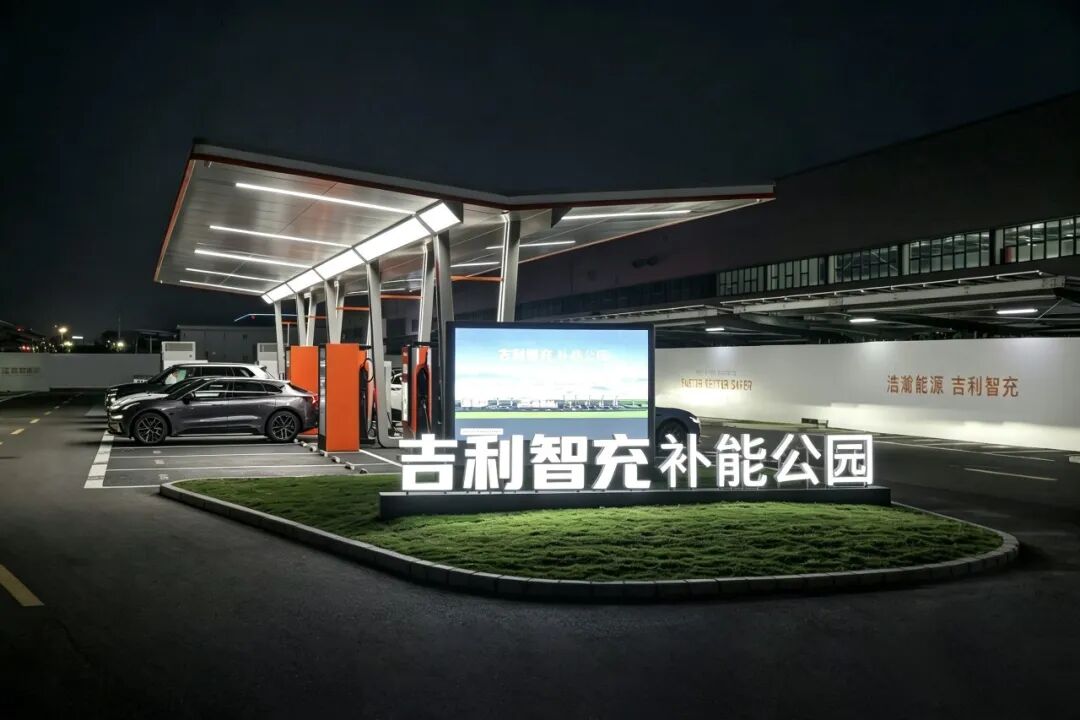
From Geely's perspective, the above four points allow it to retain upside space and exit flexibility on the battery swapping track, while choosing real money heavy investment on the charging track.
Behind this is a fundamental difference between charging and battery swapping that is often overlooked:
Battery swapping stations recognize battery specifications, and naturally have brand walls; charging piles do not. A charging gun standing there can be plugged into any car, the only difference is whether the power can reach full capacity.
Charging is a typical utilization rate business: fixed costs are in place, and revenue depends entirely on how many kilowatt-hours of electricity flow out of the gun every day, and the ceiling of electricity volume is determined by how many brands of vehicles it can serve.
The more open the piles are, the more viable the business is, and NIO has the hardest empirical data on this point.
