A fitness blogger developed a calorie recognition app and successfully broke into the global Top 10.
In the past six months, the top-tier landscape of the calorie tracking track has barely changed.

In the first half of 2026, products with monthly revenue exceeding 1 million USD remained almost unchanged. The only new entrant is "Noom", which was launched more than a decade ago, with its revenue rebounding driven by semaglutide and related businesses | Drawn by Baijing Global based on AppMagic data
According to AppMagic data, in the first half of 2026, except for one old product with rebounding revenue, the products with monthly revenue above 1 million USD are basically the same group. The overall revenue of top products even decreased slightly month-on-month. In a track where the top 1 product can generate over 100 million RMB in monthly revenue, the top-tier pattern has been solidified.
But in August, a new name appeared on the ranking list.
"MenuFit" has never disclosed any financing information. The founder's previous job was creating themed videos on TikTok about how to eat properly during muscle gain and fat loss periods. The product has been launched for just one year, and its monthly revenue after sharing cuts has exceeded 1 million USD, making it into the top 10 of global revenue rankings.
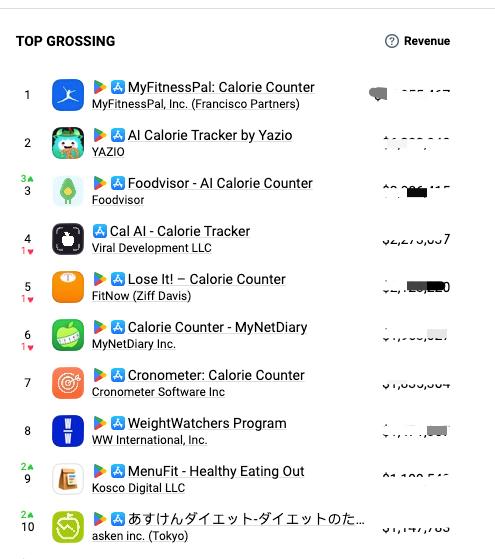
Under the weight and food calorie tracking category, the top 10 global revenue products in August (may have omissions), "MenuFit" ranks 9th | Image source: AppMagic
I. From Post-Meal Logging to Pre-Meal Decision-Making
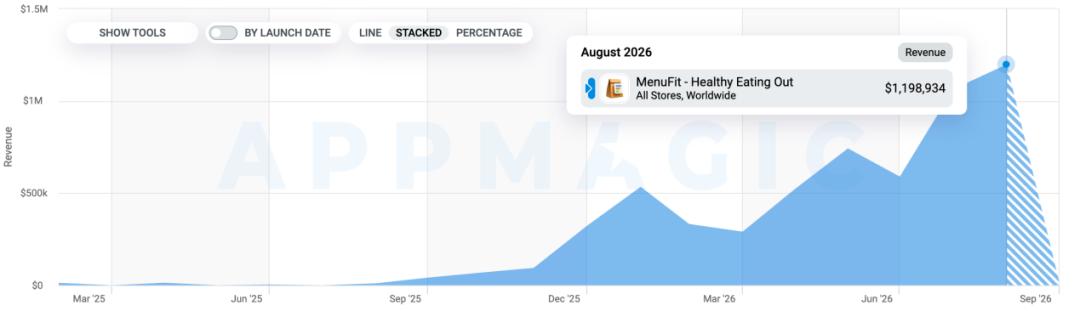
The monthly revenue curve of "MenuFit" since its launch | Image source: AppMagic
Whether it is MyFitnessPal that has been developed for 16 years, CalAI that broke into the top tier with AI photo recognition in the past two years, or BitePal that entered the market with the pet-raising gameplay, products in the calorie tracking track share the same basic assumption: users eat first, then open the app to log. Technological iteration has improved efficiency, but the scenario has always been "post-meal".
The entry of "MenuFit" into the ranking stems from its breaking out of this scenario.
Its recognition target has changed from the food prepared by users to the menus of fast food brands. Users open the app before ordering, select a catering brand, and the system recommends specific dish combinations according to fat loss or muscle gain goals, marking calories and macronutrients; or there is a second usage path where users only know they want to eat beef or burritos today, and the app matches solutions across menus of different brands based on their goals.
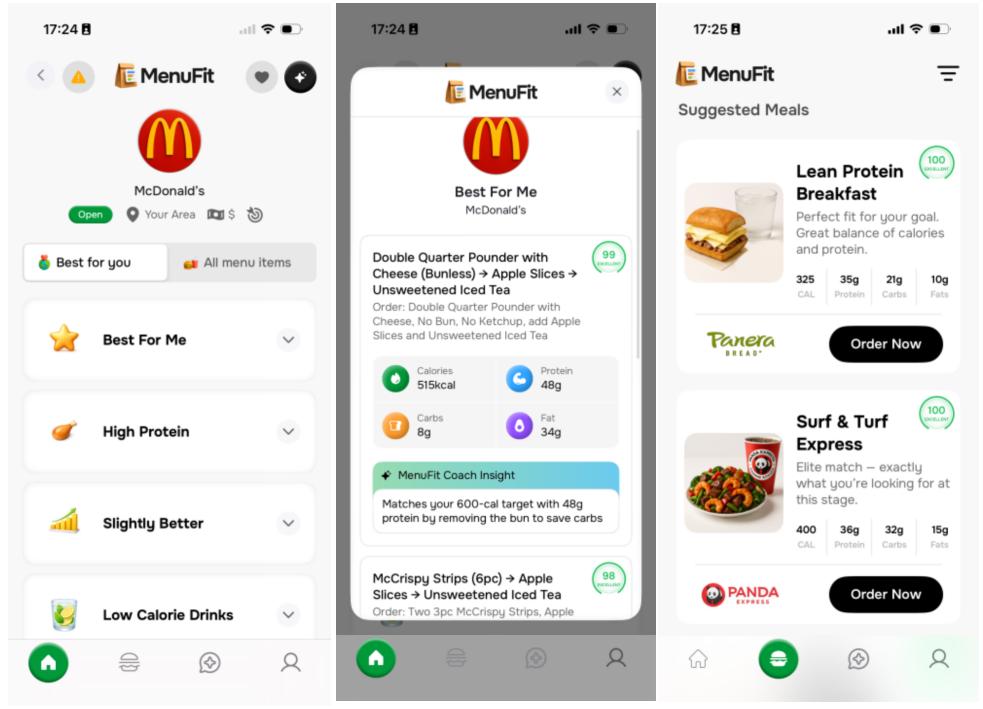
There are 2 core usage methods of the product: first, users select a catering brand, and the app recommends multiple options (the most suitable for the goals users filled in during the onboarding process; high-protein menus, etc.), after clicking in, you can see the menu details and data, refer to Figure 1&2 on the left; second, users fill in their preferences through filters (such as wanting to eat beef or chicken, rice bowl or hamburger), and the app recommends menus from different catering brands | Product screenshot
It used to be "log after eating", but now it has become "check what to eat before meals", which is more than just a functional difference. When losing weight, it is impossible to cook every meal by yourself. How to complete a meal within the calorie budget when eating out is regarded by founder Cole Kosco as a high-frequency and real decision-making scenario, which has hardly been touched by previous top products. "MenuFit" uses this neglected entry to avoid head-on competition with all top products in the same scenario.
The discovery of this entry is directly related to the founder's background.
II. 6 Videos Sent Out 500,000 PDFs
Different from the founders of calorie tracking apps who mostly come from the health field or are original tool developers, Cole Kosco, the founder and CEO of "MenuFit", used to be a college athlete. He dropped out of school after his sports career ended, and his subsequent work did not go well. Later, he switched to be a fitness coach, and at the end of 2024, he ran a paid community called Kosco Fitness on Skool, providing fitness courses, recipe planning, and 1-on-1 fitness guidance.
In 2025, Cole started posting videos on TikTok, using various common foods as materials to explain their impacts on fat loss and muscle gain, with views ranging from thousands to tens of thousands, not making much waves.
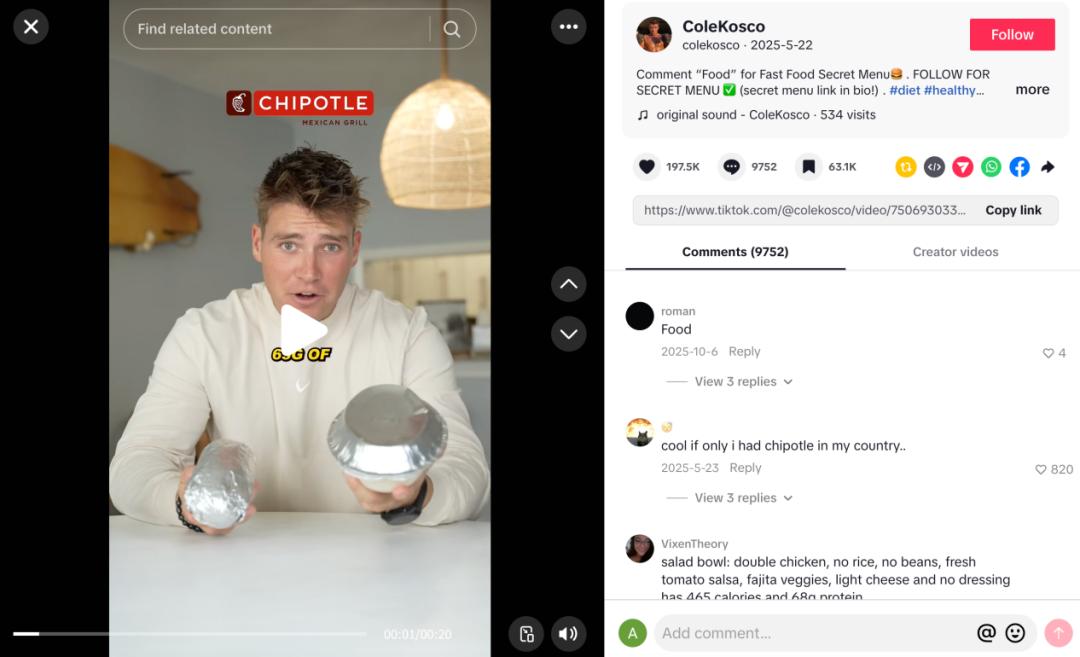
This video got 2.7 million views, nearly 200,000 likes, and nearly 10,000 comments, with data far higher than other videos | Image source: TikTok
Until May 2025, he made an episode comparing meals of Mexican catering brand CHIPOTLE: the rice bowl in his left hand has 65g of protein and 500 kcal; the burrito in his right hand has 15g more protein, but as much as 1400 kcal. Cole threw out a sentence in the video that was later repeatedly quoted: "Whether you are losing fat or gaining weight, as long as you order the right food, eating fast food outside will not affect your goals." At the same time, the video guided users to leave a comment "Food" to get a PDF diet guide for various catering brands, which marked the calorie and macronutrient data of each dish. This video got nearly 200,000 likes.
Cole later recalled in the podcast that he sent out about 500,000 PDFs through around 6 videos. "I confirmed that the demand exists, and there is no corresponding product on the market, so it will definitely succeed. The only possible failure is that I don't execute it or don't execute it well enough."
Although the actual developer cost far exceeded his initial estimate of 15,000 USD, "MenuFit" was officially launched on the iOS platform in August 2025, and subsequent videos also changed from getting PDFs through comments to downloading the app.
III. Make the Cash Flow Run
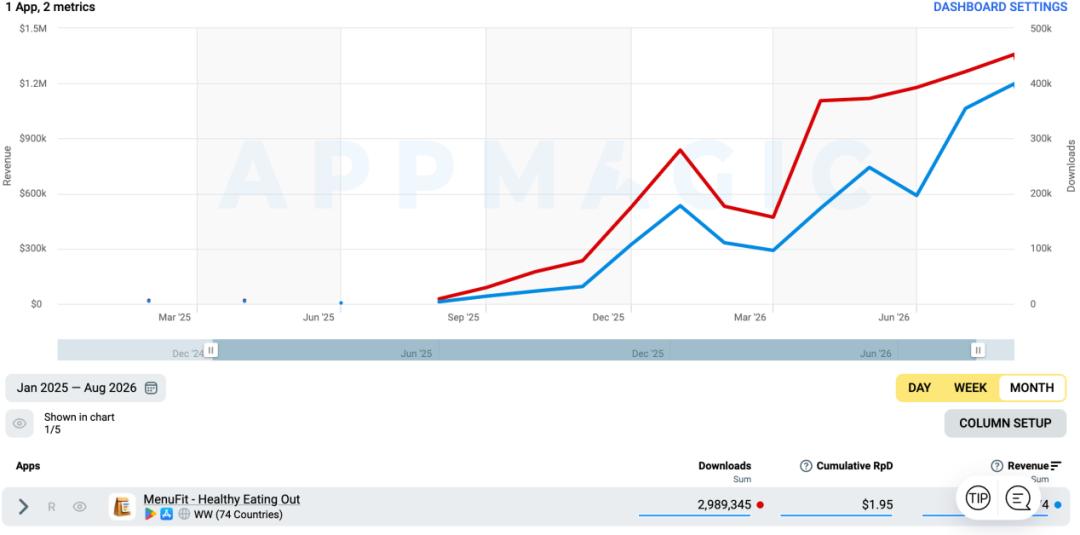
From the revenue and download curves, "MenuFit" is a very typical download-driven revenue product | Image source: AppMagic
In the first 3 months after launch, "MenuFit" mainly relied on the original social media channels to attract traffic, guiding users to download and pay, to verify whether the app can meet user needs. Apple has an account period of about 60 days. Due to the design of a strong paywall, revenue was recorded successively at the end of October. After confirming that the payment model was feasible, "MenuFit" started to launch ad placements in November, all concentrated on Meta channels. Since then, the data has continued to rise, showing an obvious overall form of download-driven revenue.
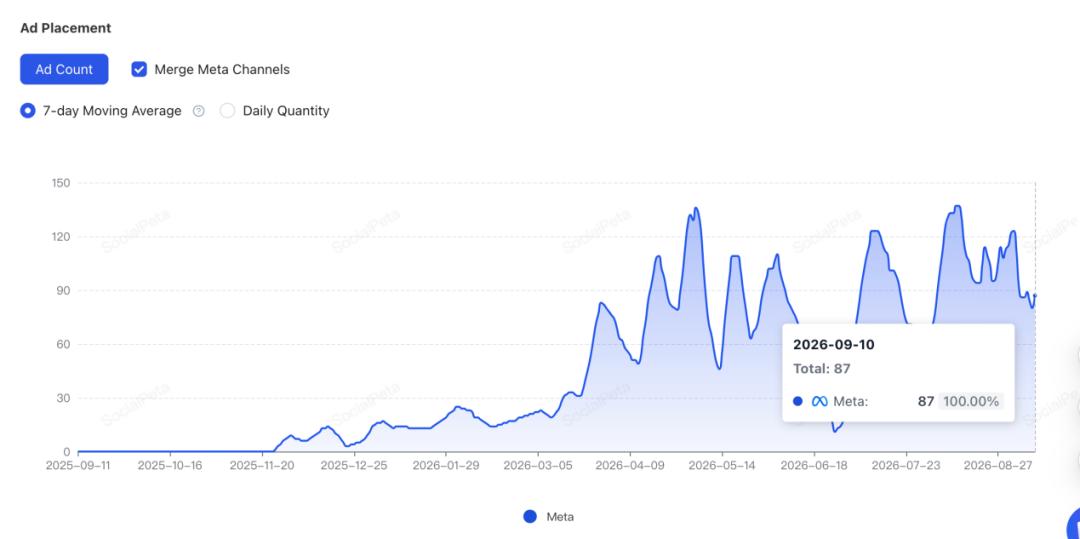
In late November 2025, "MenuFit" launched ad placements, all concentrated on Meta's channels | Image source: TopOn
In order to go through the path of social media verification - product development and launch - verifying the payment model (Apple's 60-day payment return period) - launching ad placements - paywall monetization - continuing ad placements to drive downloads and payments, the team built a mechanism that can make cash flow. (We did not find any financing information, but undisclosed financial support cannot be ruled out.)
In terms of the most costly ad placements, the team's chosen method can be described as both extensive and meticulous, "loose entry and strict exit", transforming KOL placement into a "performance-based creative supply chain".
The product idea of "MenuFit" came from social media, and the verification was also completed on social media platforms. Cole is very clear that the product needs to use ads to "create" and amplify demand, rather than undertaking users' search behavior (searching for healthy ordering apps), and he also knows what kind of content is an effective hook. In order to seize the growth window, in addition to some KOL exclusive referral code cooperation, he mainly chose the model of creator endorsement + paid ad scaling.
Its innovation lies in that there are no contracts between the brand and creators, and there are no restrictions on the content and number of posts. The brand did not spend money to invite KOLs to create content, but lowered the cooperation threshold to the minimum, using incentives to "lure" KOLs to actively endorse the brand, and then selecting suitable materials to scale up through ad testing.
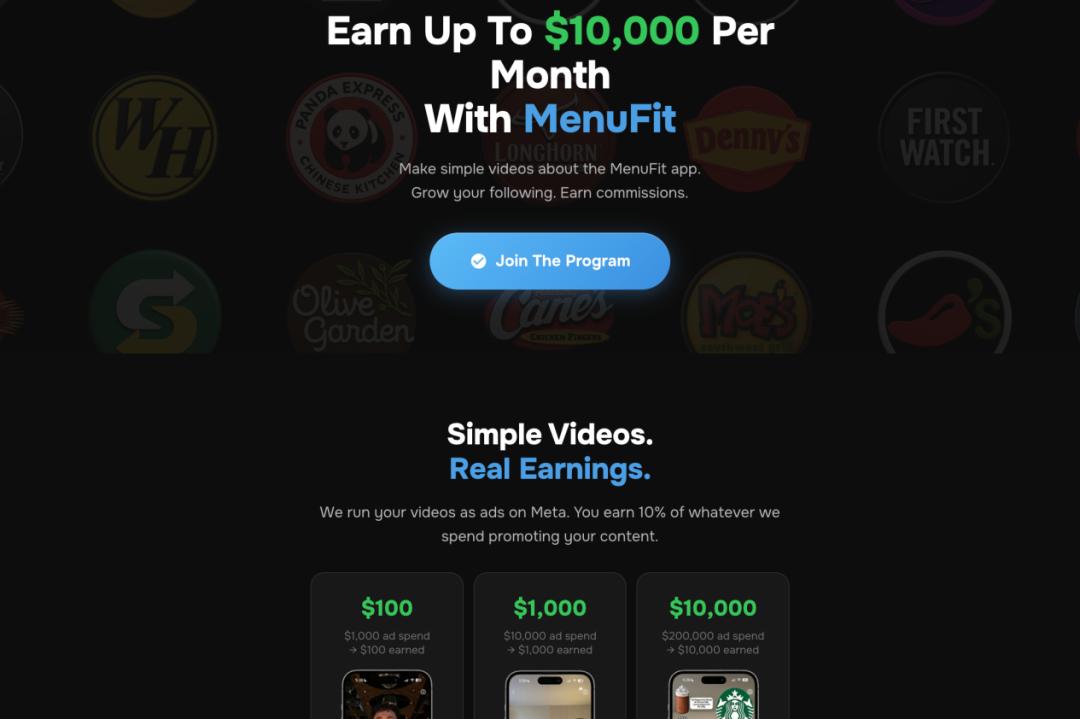
The creator cooperation page of "MenuFit"
Specifically, creators can create any content for "MenuFit", and the team will review the videos. The first approved video will be rewarded with 20 USD; the team promises to test every submitted material, the winning material will be scaled up for delivery, and the creator will get 10% of the corresponding ad spend. Creators can check the material performance, delivery amount and revenue through the dashboard. The page also provides "winning videos/hooks that work now/simple formats" to feed back the historical winning experience to the next batch of creators.
Low-threshold recruitment - batch UGC variants - small-scale testing - expanding Meta ad spend based on performance - creator revenue sharing - winner template feedback, is the current core growth mechanism of the MenuFit team.
The premise for the core operation of this mechanism is that the payment end can support the traffic. Like most calorie recognition apps, "MenuFit" adopts a strong paywall design, users can hardly use it without paying, and it is also matched with a very long onboarding process. Even during our test, we found for the first time that a product does not allow screenshots to save the onboarding process.
According to the founder's statement on the podcast, two weeks after launching the ad placements, new records were set almost every day, and he claimed that 99.8% of launching users would complete the about 25-screen onboarding to reach the paywall, of which 40%-45% would start the free trial or pay.
But a set of data made us notice the other side of this growth story.
IV. 400 Calories vs 860 Calories
We tried to verify it with a LONGHORN Steakhouse menu recommended by "MenuFit". The recommended menu given by the app is sirloin steak with 4 grilled shrimps, with a total marked calorie of 400 kcal. But referring to LONGHORN's official menu, the grilled shrimps actually come with rice and garlic butter, and the ordering prompt on the back of the card did not remind users. Rice and garlic butter contribute about 230 kcal each, and the total calorie when eating all is 860 kcal. (Note: According to the regulations of the US FDA, chain restaurants with 20 or more stores must disclose calorie information on their menus.)
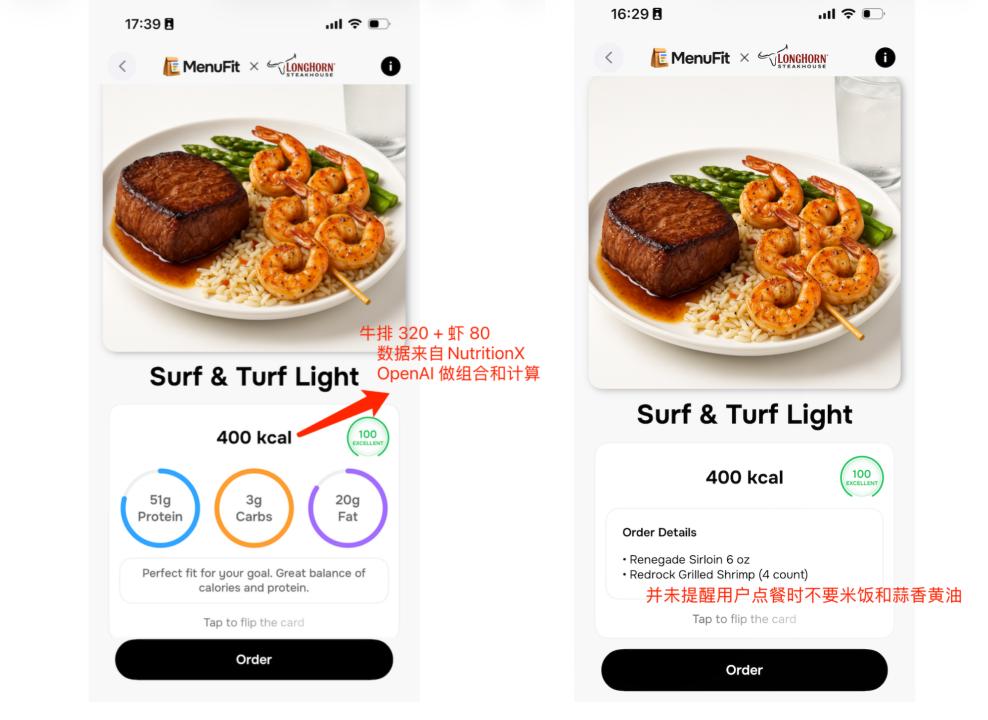
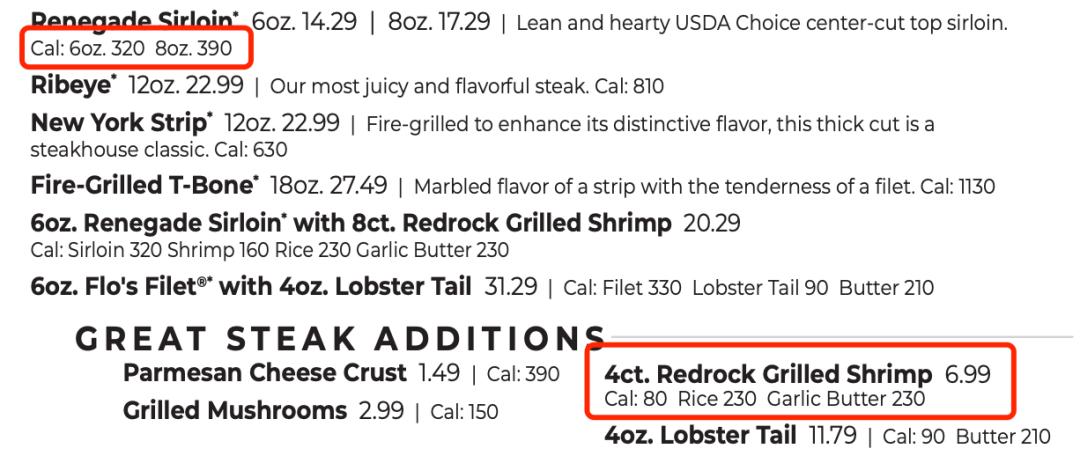
The menu and calorie information displayed by "MenuFit" (top) The official menu of LONGHORN restaurant (bottom); According to the US FDA regulations, chain restaurants of the same brand that have 20 or more stores and sell basically the same standard dishes must disclose calorie information on the menu, and provide nutritional information such as fat, carbohydrates, protein, and sodium at the request of consumers. If you simply call a third-party API, the cost will be very high.
For a product whose core value proposition is "telling users how to order food outside without exceeding the calorie limit", the gap between 400 and 860 will directly shake user trust.
According to the information released by the product, the data source of "MenuFit" is the third-party nutrition database Nutritionix. Based on the basic information filled in by users during the onboarding process, it uses formulas such as Mifflin–St Jeor to estimate the basal metabolic rate, derive the daily calorie and macronutrient targets, and then OpenAI combines the calculation results and user preferences to combine the menus and generate recommendation reasons. Any deviation in any link, such as untimely data update, AI's negligence of details when recombining, or even 4 shrimps turning into 5 shrimps when synthesizing pictures, will be regarded as data errors by users.