Japan's lost innovation is being made up for by China's smart hardware industry.
"The universal truth in the world is 'change'. Though the whole world is fully aware of this truth, the public, industries and even countries all panic at the very mention of 'change'."
In the book *The Lost Manufacturing Industry: The Defeat of Japanese Manufacturing*, Japan's semiconductor technology expert Takashi Tsukino describes the innovation dilemma plaguing Japan's manufacturing sector.
Thirty years on, "news" about Japan's continuous economic decline keeps emerging, and this time it has reached a more notable turning point.
According to IMF forecasts, Japan's GDP will be overtaken by India in 2026, dropping from the world's fourth to fifth largest economy. The Japanese yen has continued to depreciate, once approaching 164 against the US dollar in July, hitting a new low in nearly 40 years, and fiscal intervention only brought a short-lived rebound. The latest corporate operation data also shows that in the first half of fiscal 2026 (April to September 2026), the number of corporate bankruptcies in Japan hit the highest level since fiscal 2013[1]. The number of Japanese companies with liabilities exceeding 10 million yen that went bankrupt reached 5,373, marking a year-on-year increase for five consecutive years.
Aging population and labor shortage have become key issues, triggering a series of chain reactions. Generations of politicians have tried to create economic miracles through innovation, but innovation has failed to take root in this aging soil.

The gap in local innovation capacity has opened a window for Chinese smart hardware brands to expand into the Japanese market. In recent years, Chinese smart hardware brands have gained increasing popularity in the Japanese market, with Anker Innovations as a representative. Ayumu Saruwatari, Representative Director and CEO of Anker Japan, stated in a media interview that Anker has achieved the top online market share in almost all product categories in Japan, and its sales exceeded 83 billion yen 13 years after the company was founded.
Anker Innovations' success in Japan is by no means an isolated case: according to BCN Award data, DJI and Insta360 have topped the sales rankings in the "action camera/panoramic camera" and "drone" categories for many consecutive years, jointly capturing more than 80% of the retail sales share in Japan. Plaud Note raised more than 270 million yen within 2 months of its launch on Makuake, setting a new historical record in the "business office tools" category on Makuake. The AI/AR glasses project under Rokid raised a total of about 636 million yen, refreshing the highest all-category fundraising record in the 13-year history of the Makuake platform, and was named the "phenomenal AI hardware" in the first half of 2026 by Japanese media.
Facing a market known for its "pickiness", what exactly did Chinese brands do right?
Japan in the era of Sanae Takaichi: Higher thresholds, greater opportunities
"Sanae Takaichi has been very friendly to us," a smart hardware practitioner joked to Global Insights after entering the Japanese market and achieving certain results in 2026. In his view, "Japan needs innovation, and the fastest way to achieve this innovation is to open up the market."
In the autumn of 2025, Sanae Takaichi took office as the 104th Prime Minister of Japan, becoming the first female prime minister in Japanese history. Up to now, her term has lasted for nearly a year. It is worth noting that in the early public opinion polls after she took office, the approval rating of the Takaichi Cabinet once reached 63%-83%, which is extremely rare among successive Japanese governments.
However, under such a high approval rating, Sanae Takaichi has been at the center of public opinion at home and abroad in the nearly one year since she took office. Cabinet reshuffles, diplomatic disputes, governing style, and controversies triggered by "Sanae Economics" have kept this 65-year-old national leader extremely busy.
At the economic level, Sanae Takaichi inherited a Japan where anxiety is continuously accumulating. Although trains run punctually and convenience stores stay open all night, labor shortages have penetrated into the daily operations of the nursing, IT and service industries. The continuous weakening of the yen has pushed up the prices of imported energy and food, prices have risen for 52 consecutive months, and consumers are more sensitive to value than ever before. In addition, the labor shortage and insufficient innovation momentum brought by the declining birthrate and aging population are deeper hidden worries under Japan's economic crisis.
The "Takaichi administration" was born under such pressure.
In her policy speech in October 2025, she put forward "responsible proactive fiscal policy" and "crisis management investment", which refers to forward-looking investment led by the joint efforts of the government and the private sector targeting various risks such as energy, food, healthcare, and economic security, and set "wage growth outpacing price rises" as a goal that must be fulfilled. As a firm successor to Shinzo Abe's hawkish line, the dividends brought by the previous yen depreciation no longer work - depreciation means rising import costs, which will directly weaken household purchasing power and completely conflict with the goal of "outpacing price rises".

To break this deadlock, the Japanese economy needs new vitality, and an important source of this vitality is to allow more innovative enterprises to enter the market.
In terms of specific policies, a pattern of "combining leniency and strictness" has taken shape.
Let's start with "strictness". The thresholds for economic security and business qualifications have been raised simultaneously. The Economic Security Promotion Act has been continuously strengthened, and the review of products involving cybersecurity, cloud data upload, sensitive technology and large model applications has become increasingly strict.
The Active Cyber Defense Act clarifies that the state can implement defensive countermeasures against attacking servers, and force relevant facilities to report cyber attack incidents. The revised amendment to the Personal Information Protection Act introduced a fine system to strengthen accountability for violations.
At the same time, crowdfunding and local sales are required to be bound to "Japanese local corporate entities and local bank accounts", all domestic and overseas projects are only allowed to be submitted by legal persons, and returned products are only accepted within Japan... Through accelerated implementation and strengthened compliance, the original institutional foundation has changed from "bypassable" to "hard to bypass", and sellers who used cross-border mailing and gray customs clearance to "make a quick buck" have been completely cleared out.
Emily, head of international business at GREEN FUNDING, also expressed the same view. She believes that this change has made brands that have long wanted to take root in Japan pay more attention to compliance, and their product presentations are more in line with the preferences of Japanese consumers.
The result of strict regulation is obvious: speculative players are blocked by policy and compliance thresholds, and the cost of gray market overseas expansion has risen sharply. Long-term brands that are willing to set up subsidiaries in Japan and improve data compliance and after-sales systems have obtained admission tickets in a clearer and healthier competitive environment.
Then comes "leniency", which is reflected in policy dividends and surging demand. The Japanese government has increased support for AI application implementation and automation upgrading. Taking the nursing industry, which is extremely short of manpower, as an example, the 2026 budget includes about 20 billion yen in robot introduction subsidies, with each institution eligible for a maximum of 40 million yen, and the subsidy intensity is close to half of the introduction cost. All intelligent products that can respond to the "labor gap" can enjoy the dual dividends of policy subsidies and market demand at the same time.

This set of policies has been implemented for nearly a year, and its effects are two-sided.
On the one hand, even with subsidies to offset the impact, fiscal expansion relies on large-scale bond issuance, and consumers still feel the greatest consumption pressure in daily life, with the imported inflation background unchanged. But subsidies are indeed changing corporate behavior. In industries that are extremely short of manpower, such as catering, hotels and elderly care, the willingness to purchase robots and AI tools has been catalyzed by policies and turned into real money orders.
On the other hand, for gold diggers who want to "make a quick buck and leave", the entry has become narrower. Opportunities exist, but everyone has to find their own "number plate" to match the position.
Craftsmanship spirit, the shackle that traps Japanese innovation
In the manufacturing industry, Japan has well-deserved pride. In the 1980s, the concept of "Japan as Number One" in the semiconductor, television and electronics sectors was widely known.
Panasonic achieved the ultimate in durability and stability with its "Water Tap Philosophy[2]", Sony called in the golden age of consumer electronics with Walkman and Trinitron TV, and Toyota's lean production was regarded as a classic by the global manufacturing industry. This idea of in-depth research and strict standards has allowed Japan to still hold a say in fields such as semiconductor equipment, materials and optical instruments to this day.
With the blessing of the "craftsmanship spirit", local Japanese brands once left a strong mark in the global manufacturing sector with their extreme craftsmanship and attention to detail.
However, success itself can also become a burden. When analyzing the "innovation dilemma" of Japanese manufacturing, Takashi Tsukino pointed out that people who experienced the era when Japanese technology was the world's number one have a strong sense of pride in past success, and this pride precisely hinders corporate reform. The strength of Japanese manufacturing mainly comes from technological progress at the hardware level; while Schumpeter's definition of "innovation" refers to the new combination of invention and the market. No matter how advanced the technology is, if it fails to keep up with market changes, it will be left behind.
With the advent of the software and ecosystem era, the craftsmanship spirit has been elevated to a high position, but its other side has emerged: the driving force that once pushed Japanese manufacturing to the top of the world is now becoming an obstacle and barrier that slows down its transformation.
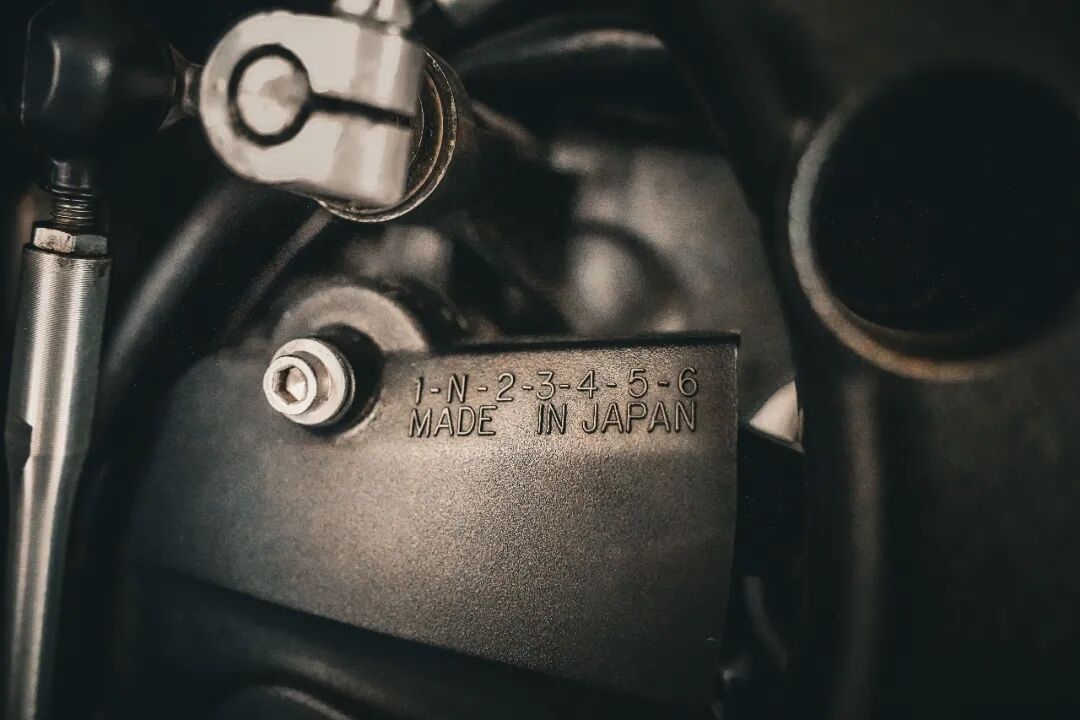
A commercial and economic term originating from Japan is "Galapagosization", which borrows biologist Darwin's observation of species evolution on the Galápagos Islands: in a relatively isolated and closed environment, things will independently evolve unique functions that are extremely "adapted to the local environment"; however, once impacted by globally standardized products from the outside world that are highly versatile and low-cost, they are prone to being eliminated or marginalized.
This term was first used to describe Japanese mobile phones: their functions were ahead of the rest of the world, but they were disconnected from global general standards, and were eventually eliminated by the smartphone wave. Now, the same problem has emerged in the smart home field. A survey by the Japanese Cabinet Office shows that the more IoT devices there are in a home, the more apps users need to download. Users have to switch back and forth between multiple apps, which runs counter to the convenience and efficiency that smart homes are supposed to bring.
In fact, as early as 2011, major Japanese home appliance brands jointly launched the ECHONET Lite protocol, whose core design goal is to allow resource-constrained devices such as air conditioners, electricity meters and sensors to connect to the Internet at low cost, realizing interconnection between different devices.
But Japanese companies are accustomed to regarding communication protocols as part of product competition. In actual implementation, manufacturers use technical means to restrict the pairing and connection of their own devices with devices that are "not of their own brand" or "not on the cooperation list", resulting in extremely fragmented home experience for consumers.
In a fast-changing market, Galapagosization has caused Japanese home appliance brands to lose some users. Why don't they make changes? Is this only caused by the competition logic between manufacturers?
The answer is that apart from the competition between enterprises, in the decision-making of Japanese brands themselves, the cost of making changes is far greater than the cost of not changing.
In July 2026, Rockwell Automation in the United States released the *Smart Manufacturing Report 2026*, surveying 1,560 leaders in the global manufacturing industry. In this large comparison sample, it points out that Japan's biggest bottleneck lies in "people and organizations", not just technical limitations.
The most mainstream software development method in Japan is still the waterfall model, which divides the development process into several stages, advances in a fixed order, and enters the next stage only after the previous stage is completed, just like a waterfall flowing down step by step.
This is highly consistent with the traditional Japanese Ringi System[3] and layer-by-layer approval logic, but in fields that require rapid trial and error and continuous updates, such as smart hardware, AI software, AR glasses, sweeping robots and humanoid robots, this hierarchical bureaucratic system will become a disadvantage that hinders innovation.
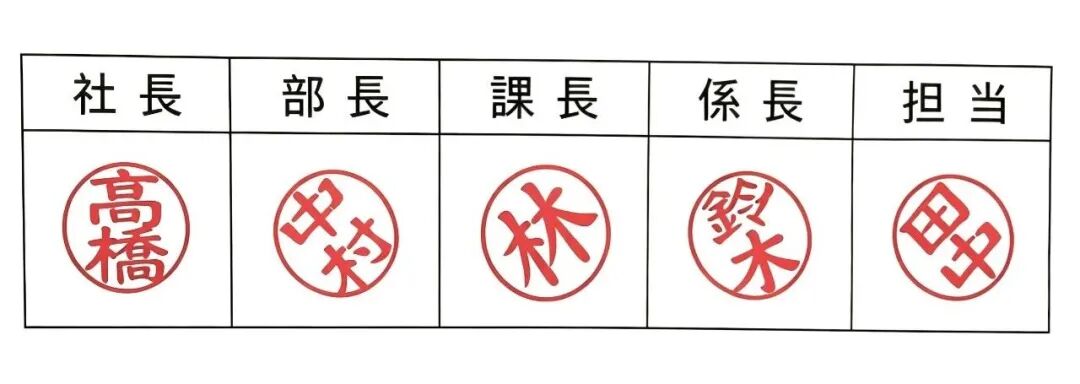
Japan's "bow stamp" culture, source: Internet
For example, the R&D cycle of Panasonic's smart home products is as long as 18-24 months, while Xiaomi and other companies use the agile development model to compress iterations to 2-4 weeks. When product competitiveness increasingly depends on the frequency of software updates, the "slowness" of the waterfall model is not just an efficiency problem, but a fundamental mismatch in the competition model.
The same dilemma is also reflected in the slow introduction and development of generative AI in Japan.
The *2026 Smart Manufacturing Report* released by Rockwell Automation Japan shows that the implementation rate of generative AI and causal inference AI investment by Japanese enterprises is as high as 70%, far exceeding the global average of 55%. 41% of enterprises that achieve high return on investment through AI technology, which is higher than the global average of 32%. Judging from the figures on paper, Japanese enterprises are at the forefront of the world in "willing to spend money on AI".
The problem lies in the conversion link from spending money to actual usage.
Even with financial support, only 22% of Japanese enterprises plan to introduce AI within 7-11 months, far lower than the global average of 39%. In contrast, the proportion of enterprises postponing the introduction plan to 1-2 years later is as high as 53%, nearly twice the global average of 27%.
A system known for its "prudence" usually chooses to wait and see before taking action when facing new technologies that require rapid trial and error.
This set of systems and cultures that once made Japanese manufacturing rank first in the world shows strong path dependence and inadaptability in the face of the new software-driven paradigm. The judgment of prioritizing hardware over software, the institutional design of avoiding risks, the mismatch of professional treatment, and the insufficient supply of educational talents have all jointly slowed down the pace of Japanese innovation.
A thought-provoking detail is that in 2026, all AI models available on the Japanese Digital Agency's government AI platform "Genna" come from US companies Anthropic and Amazon, and domestically developed large models in Japan are still in the "evaluation and trial stage".
When the competition logic of global smart hardware shifts from "hardware determines experience" to "software determines experience", if computing power, data and talents cannot be converted into models that can be iter