The embodied intelligence company behind Tencent's robot "No. 1 Employee" has just raised 1 billion yuan.
This financing speed is indeed rare in the embodied intelligence circle.
4 rounds of financing in half a year, with the valuation soaring from 100 billion yuan to 150 billion yuan.
The latest progress just officially announced by Astribot Intelligence has once again drawn public attention back to this robotics company founded more than 3 years ago.
But what is really worth paying attention to about this company is not just the capital it has obtained.
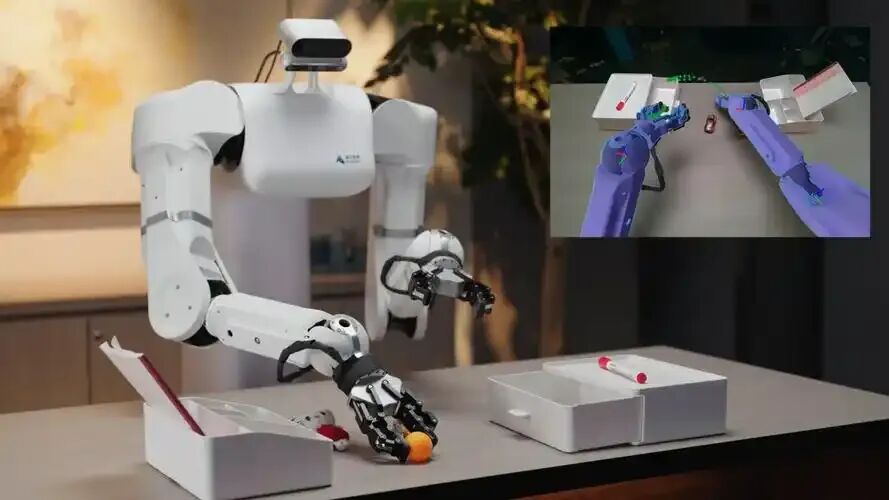
Behind it, the founding team are early core members from Tencent Robotics X Lab; its technical route is the minority cable-driven robot; its goal is to connect AI models, robot bodies and real task data.
Since its establishment in 2022, Astribot Intelligence has been becoming an increasingly unique sample among domestic embodied intelligence startups.
Astribot Intelligence Raised 10 Billion Yuan
Astribot Intelligence just officially announced that it has completed a new round of financing of about 10 billion RMB, with a post-money valuation reaching 150 billion yuan.
Institutions participating in this round of financing include Toukong Donghai, Hongtai Fund, Ninghai Xingtaihe Fund, Shanheng Capital, etc., and the old shareholder Xianmu Capital continued to make additional investment.
Looking back, in June this year, Astribot Intelligence just completed the Series B round of financing, with its valuation exceeding 100 billion yuan. In just a few months, the company's valuation has further increased.
If you stretch the timeline, you will find that Astribot Intelligence has always maintained a relatively intensive financing pace:
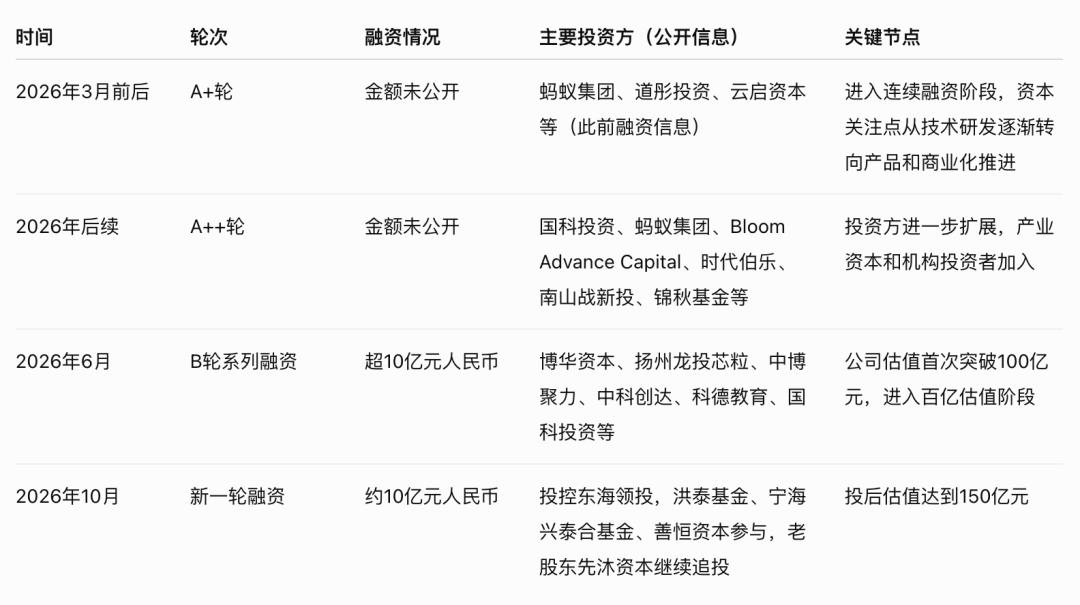
Since 2026, Astribot Intelligence has completed 4 rounds of financing in about half a year, from the A+ round, A++ round to the Series B round of financing, and then to the latest 10 billion yuan financing. Its valuation has gradually entered the 150 billion yuan range from the stage below 100 billion yuan in the early period.
The change in the structure of investors also reflects that the market focus is changing.
In the early stage of robotics entrepreneurship, capital paid more attention to technical direction and team background; as the industry enters the next stage, the capability of robot ontology, manufacturing capability and real scenario implementation have begun to become new consideration factors.
The financing story of Astribot Intelligence actually corresponds to the technical route it has chosen behind it.
Who is Astribot Intelligence? The Startup Founded by the "No.1 Employee" of Tencent Robotics
The story of Astribot Intelligence starts from Tencent Robotics X.
When it was established at the end of 2022, embodied intelligence had not yet become the popular track it is today, but the founding team of Astribot Intelligence had accumulated many years of experience in the robotics field.
Founder Lai Jie previously participated in the Baidu Xiaodu robot project, and later joined Tencent Robotics X Lab as the "No.1 employee" of the team, who has long been engaged in R&D related to robot systems, motion control and intelligent hardware.
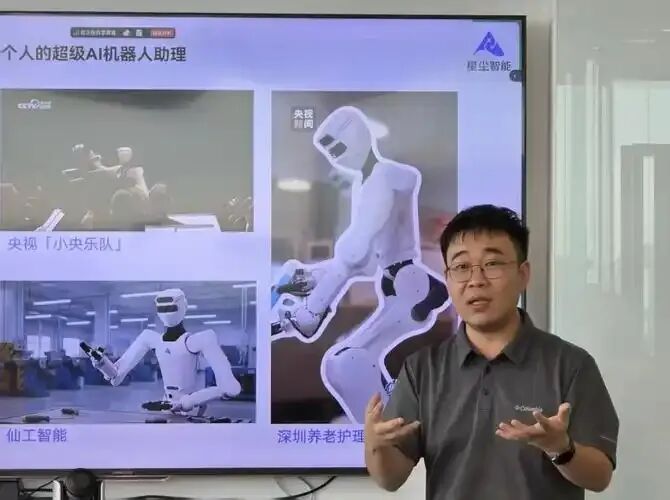
This experience also influenced the subsequent entrepreneurial direction of Astribot Intelligence.
Compared with some startups that cut into the robotics field from large models in recent years, Astribot Intelligence paid attention to robot ontology and control systems earlier. The reason is that after embodied intelligence actually enters the real environment, model understanding of tasks is only the first step, and robots also need to have a physical body capable of executing tasks.
The problem it faces is not only whether it can generate actions, but also whether it can stably complete continuous tasks in complex environments.
The direction that Astribot Intelligence chooses to cut into is robot body design, and its most distinctive technical route is cable-driven robots.
At present, the more common solution in humanoid robots is that the motor directly drives the joints. This type of structure has been verified by industrial robots for many years, with a mature control system, and it is also the mainstream route in the current industry.
The cable-driven method adopts another idea: the power is transmitted through cables to separate the driving part from the joint structure, and the overall structure is closer to the relationship between muscles, tendons and bones in the human body.
One advantage of this design is that it can reduce the weight of joints and improve the movement flexibility and compliance of robots. For robots that need to handle complex objects in the future, compliance means better contact control capability. For example, when grasping objects such as glass cups and clothes, robots need to adjust the force according to contact feedback, instead of simply executing fixed actions.
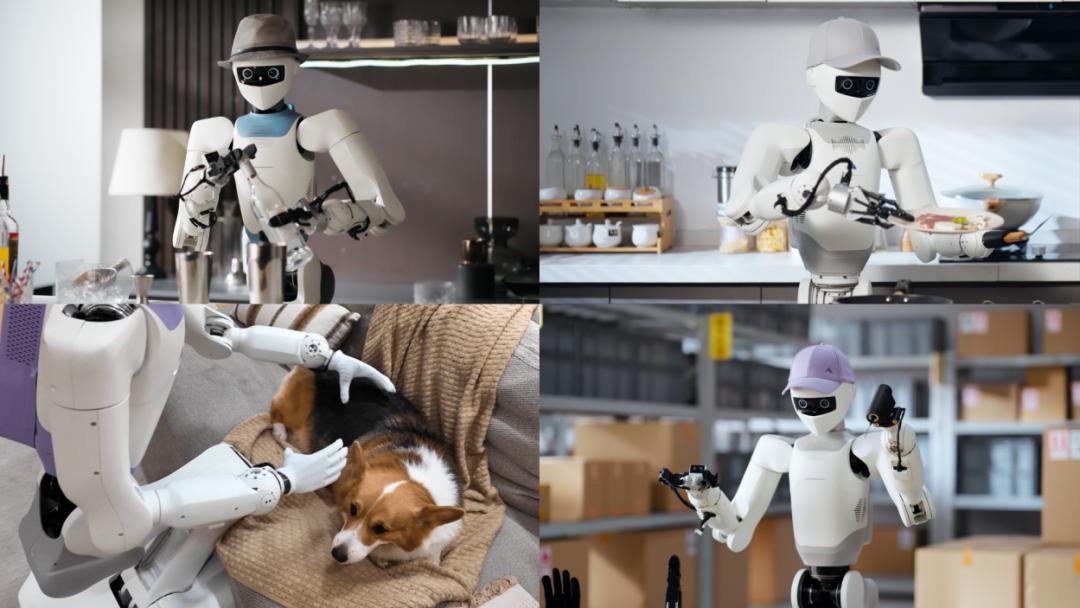
Apart from the cable-driven ontology, Astribot Intelligence has further built a technical system of "AI model + embodied OS + robot ontology".
Among them, the robot ontology is responsible for executing actions, the AI model is responsible for understanding tasks and generating strategies, and the embodied OS undertakes the connection between algorithms and hardware.
At the model level, Astribot Intelligence has publicly demonstrated the Lumo embodied model and proposed the DuoCore fast-slow system architecture. To put it simply, the high-level system is responsible for task understanding and planning, and the low-level system is responsible for fast action response.
This design solves a practical contradiction in robot operation: complex tasks require stronger reasoning capability, but actions such as grasping and obstacle avoidance require low latency.
In addition to the model architecture, the data system is also an important part of Astribot Intelligence's technical route - it explores teleoperation and demonstration learning to obtain robot training data through human operation processes.
This direction is also reflected in the company's public research.
For example, research related to Astribot Suite focuses on the problem of full-body operation. Compared with separately training robotic hands to complete grasping tasks, full-body operation requires robots to coordinate body movement, visual perception, dual-arm actions and hand control, which is closer to complex tasks in real environments.
And the StableVLA research focuses on the stability of vision-language-action models. VLA models try to make robots understand language instructions and generate actions, but changes in objects, positions and scenarios in real environments will affect model performance. Therefore, how to improve the generalization capability of models is an important issue for current robot intelligence.
In addition, researches such as Efficient-WAM explore the direction of world models, hoping that robots can predict future states before executing actions. For example, when grasping an object, the robot not only judges whether the current action is correct, but also predicts whether the object will slip and whether the force needs to be adjusted.
All these research directions revolve around a common goal: to enable robots to gradually adapt to open environments from executing fixed actions.
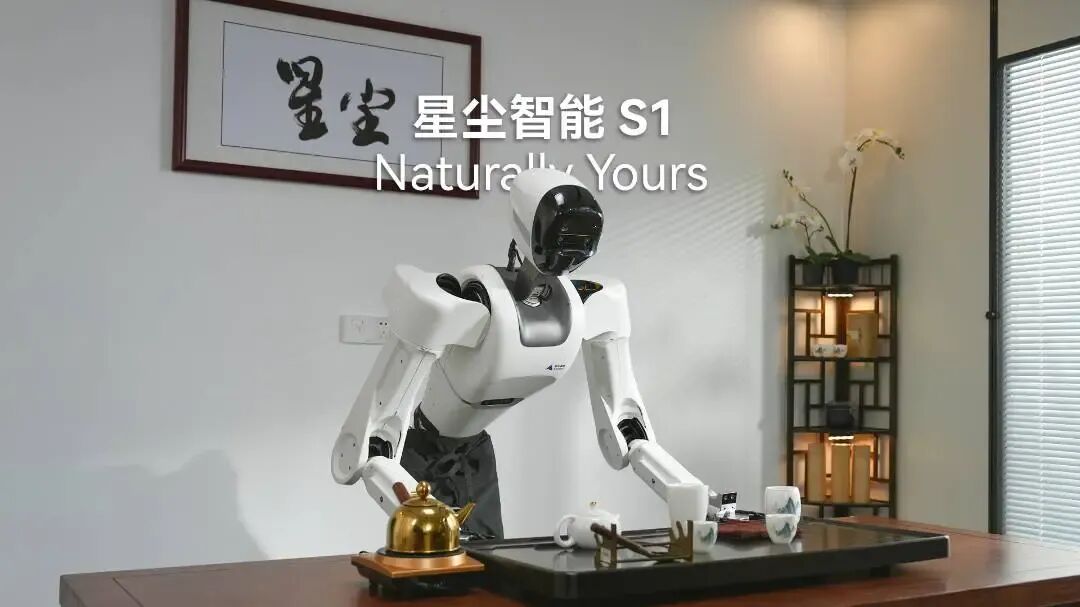
In terms of products, Astribot Intelligence is currently promoting robot landing mainly through S1 and T1.
S1 first entered the public view, and the public videos show that it completes continuous tasks such as pouring water, sorting items, and operating tools. Compared with simple movement and single grasping, such tasks are closer to the operation requirements in real environments.
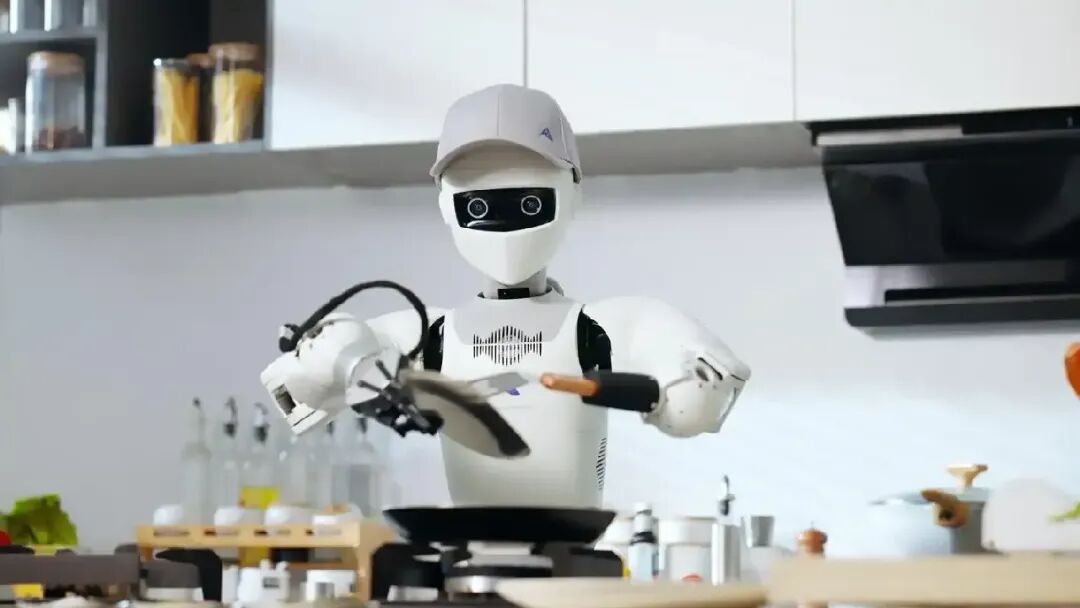
The subsequently launched T1 has started to move towards productization, emphasizing deployment and usage scenarios.
However, from the perspective of the whole industry, embodied intelligence is still in the stage of technical verification and commercial exploration. The cable-driven route chosen by Astribot Intelligence has certain characteristics in terms of flexibility and interaction capability, but at the same time it also faces problems such as control accuracy, long-term reliability and manufacturing cost.
Similarly, although embodied models and data systems can improve the adaptability of robots, model generalization, data scale and real environment stability are still problems that the whole industry needs to solve continuously.
Financing, of course, reflects the market's continuous attention to the productization possibility of Astribot Intelligence.
But Astribot Intelligence has chosen a full-stack route, which promotes the development from cable-driven robot ontology to control systems and then to AI models synchronously, which makes it different from companies that only focus on a single link.
In particular, the "cable-driven" form is now facing more and more doubts. On the surface, it seems to be closer to human physiological structure and more in line with the "first principle", but opponents believe that conforming to the first principle does not mean imitating human structure, but serving the task itself. After all, human structure is not perfect.
Not to mention the problems of cable-driven solutions such as cost, reliability and control accuracy.
This also means that Astribot Intelligence with a valuation of 150 billion yuan not only needs to face the challenges of multiple links including robot hardware, algorithm models and commercial landing at the same time, but also needs to be a "lonely brave" of the "niche" technical route to prove everyone wrong.
This article is from the WeChat official account "Intelligent Vehicle Reference" (ID: AI4Auto), written by Jia Haonan, and authorized for release by 36Kr.