Amazon has offered 50 billion to acquire this company that acts as a "translator" for computing power.
On October 11, according to a report by The Wall Street Journal, Amazon is in negotiations to acquire Israeli AI company Decart at a potential price of around 7 billion US dollars. If the deal closes, based on the currently public transaction amounts, it will be listed in the 2026 acquisition cases of AI model and software companies, ranking after Cursor, Hugging Face, World Labs and OpenRouter.
Decart has only more than 100 employees, and its business focuses on connecting models and chips. Its core product DOS (Decart Optimization Stack) is a set of computing power "translation layer", which helps models adapt to different GPUs, TPUs and Trainium, making operation on different hardware faster and more cost-effective. It is also developing real-time video and world models, combining model research with underlying software optimization.
From model discovery, invocation to operation optimization, these "intermediate layer" companies that help developers use AI are becoming high-quality assets that major tech giants are competing for. They not only lower the threshold for AI adoption, but also influence which model developers finally choose and whose computing power they will use.
7 Billion US Dollars, What Does Amazon Want to Purchase?
The AI competition has evolved from model rivalry to various Agent applications, which leads to a surge in inference demand, and self-developed chips have started to gain popularity.
However, the codes, tools and engineering experience accumulated around CUDA are extremely difficult to migrate. Even if the chip price is lower, the cost of migration and debugging may offset all the saved expenses.
What Decart does is to reduce such conversion cost: adjusting models and underlying operations, so that customers can still obtain sufficiently good performance after switching to another chip. According to previous industry estimates, its technology can make models run 8 times faster than the industry average.
Its technical advantages have already been reflected in the valuation. In less than two years, Decart's valuation has risen from 500 million US dollars to nearly 4 billion US dollars in May this year, and now to the current acquisition negotiation of around 7 billion US dollars.
In fact, Amazon has long witnessed the capabilities of Decart. In the summer of 2025, the two sides began to contact, and Decart later obtained the opportunity to use Trainium 3 in advance.
By the end of the AWS re:Invent conference, the team demonstrated real-time video generation on stage, allowing founder Dean to instantly transform his image in front of the camera.
There were only 26 days from receiving the invitation to going on stage, and they prepared 16 sets of backup systems, even taking the failure of the entire server cluster into consideration. The demonstration was successfully completed in the end.
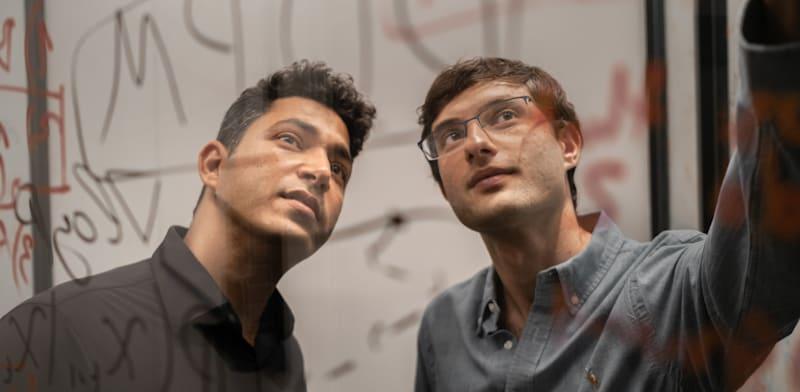
Dean introduced on the HSG podcast that in order to realize instant video generation, the team not only adjusted the model structure, but also wrote underlying operation codes, and even rewrote some framework components. Only by promoting model research and software optimization at the same time can the waiting time for users to see the picture after pressing the button be shortened.
The cooperation between the two sides has also brought tangible performance improvement. The official website of AWS shows that in the early video test, the frame throughput on Trainium reached up to 4 times that of the control GPU solution, and the cost efficiency reached 2 times. The self-developed chip combined with targeted optimization can undertake the tasks originally completed by GPUs, which gives Amazon an additional case to attract customers.
So why is Amazon willing to pay 7 billion US dollars? One possible explanation is that the same technology means different businesses in the hands of different buyers.
Anthropic calculates how much cost it can save for Claude; Amazon, in addition to reducing its own cost, can also calculate how many customers it can help migrate to Trainium and how much cloud business it can bring.
The official website of AWS also disclosed the future plan that it will provide Decart's real-time video technology to customers through Bedrock. Decart's own models also have the opportunity to become products sold by AWS.
AWS has computing power and enterprise customers, which can provide conditions for Decart's models; Decart's models can in turn increase the usage scenarios of Trainium, allowing Amazon to have more services to sell, and the two sides can form a positive cycle.
Wanted to Sell to Anthropic Most, Why Did It Choose to Exit After Due Diligence?
Before negotiating with Amazon, Decart was only one step away from being acquired by Anthropic.
In August, the two sides exchanged the draft of the acquisition agreement. Some media said that the founder and major investor HSG preferred Anthropic, believing that it could lead the company to enter the next stage of development. But after Anthropic completed the due diligence in September, it chose to exit.
The ambition of the founding team to independently develop products and the realistic pressure of commercialization failed to be balanced, which may be the reason for the breakdown of this negotiation.
First look at what kind of company Decart originally wanted to become.
In an early interview, founder Dean Leitersdorf flipped through a Google 25th anniversary album on the desk: the first third of the book is about search, and the rest are products that keep increasing. He held up the first part and said: "We are here now."
He hopes that Decart can also start from underlying technology and create applications for billions of users.
In the same interview, he also said that they could have built a company to be sold to NVIDIA, but his goal is to own a billion consumers. In another interview, he even said directly: Let Decart become "Google or Apple in the AI era".
However, developing products requires continuous consumption of computing power, which startups cannot afford. So they first help others optimize models to make money, and then support their own products.
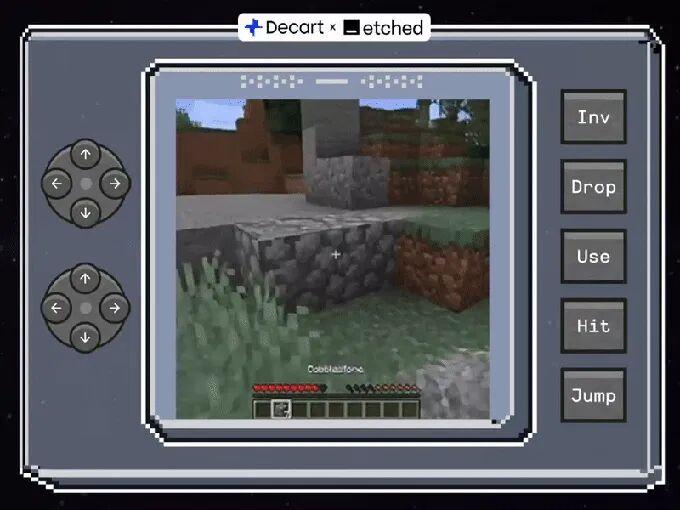
The Oasis model launched on October 31, 2024 looks like Minecraft, but its pictures are generated in real time by the model according to user operations. According to the founder's recollection, the number of Oasis users exceeded one million three days after its launch. Dean said that when he rented a car in Idaho, the counter staff recognized his Decart email and said that he had been playing it all night the previous night. That was the first time he met his own user on the street.
However, the popularity of the models did not turn into revenue. According to analysis by relevant media, Decart's graphics and game models have always been difficult to generate stable revenue, and the product direction has been forced to adjust for many times; its main revenue comes from the more underlying optimization business.
At the same time, the company has to pay a large amount of computing power fees for GPUs and computer rooms every month, which has accumulated to tens of millions of US dollars. Although it has project revenue, there is still a gap before it can achieve large-scale and sustainable product business.
Products that want to grow bigger need to spend money, while the already monetized business is to save money for others. Some media analysis believes that the difficulty of product commercialization and continuous computing power investment are the factors that prompt the founders and investors to consider selling the company.
At this time, Anthropic happened to provide what Decart valued: it has models and enterprise customers, and Decart provides optimization technologies, as well as complementary directions such as real-time video and world models. For Decart, joining a model company with existing market share may be faster than finding product outlets on its own.
Choosing Anthropic also has financial considerations. According to media estimates, NVIDIA's intended price is about 7 billion to 8 billion US dollars, partly because it is already a shareholder; the highest price offered by Anthropic is about 6 billion US dollars, which is mainly paid in stocks. The shareholders are optimistic about the future stock return of Anthropic and choose to accept a lower nominal quotation.
In addition to the price, the arrangement after the team is merged is also considered by the media to be one of the differences in this negotiation.
According to Reuters, if the transaction is completed, the Decart team will join Anthropic's Inference & Performance department. As for whether the Oasis and Lucy models can continue to be developed, Anthropic does not seem to care that much.
What's more, Anthropic itself is also investing in underlying software optimization. As early as 2024, it publicly introduced that it co-wrote underlying operation codes with the Annapurna team of AWS.
The performance problems of Decart found in the due diligence are also unfavorable factors for Anthropic's IPO. No valuable assets are more important than a clean financial statement.
Therefore, for Anthropic, which is preparing for the listing, Decart is never a must-buy. Some media also noticed a detail at that time: Anthropic's prospectus had been submitted secretly long ago, but its release was postponed, and this acquisition negotiation may be one of the reasons.
The team resettlement and site selection finally became the trigger of the differences between the two sides. Decart originally expected to become Anthropic's R&D center in Israel. According to relevant sources, at the end of the negotiation, Anthropic hoped to move the main R&D force to San Francisco, while the founder hoped to stay in Tel Aviv.
AI Giants Are Scanning for "Intermediate Layer" Companies
Dean once recalled in the HSG podcast that he considered three paths when starting a business: challenging NVIDIA, building the next AWS, and creating new user experiences. Now, the giants on the first two paths have appeared in the buyer list one after another.
Such route transitions have also occurred in more "intermediate layer" companies. Hugging Face helps developers discover, evaluate and deploy models, OpenRouter helps customers call and switch different models, and Decart helps models adapt to different chips. Each of them grasps part of the developer needs, and also influences who will finally undertake these needs, and finally they all choose to be acquired by major tech giants.
When giants acquire intermediate layer companies, they get interfaces for their own business to extend forward. Stripe said in the announcement of acquiring OpenRouter: It will connect model cost, routing and revenue management.
For intermediate layer companies, the resources of giants also help to support business expansion. When explaining the reason for joining Stripe, OpenRouter mentioned customer network, global infrastructure and anti-abuse support. After the call volume increases, in addition to providing choices, it needs to rely on giants to handle more and more operational problems.
However, what the acquirers value also includes the trust accumulated by these companies when serving different customers. Neutrality is one of their important values. If they obviously favor the buyer's products and hardware after the acquisition, this part of trust may be damaged, which will also affect their own development prospects.
Now a good price is on the table. Whether Amazon can also be a good home for Decart depends on whether Decart can continue to do its own things after being sold.
This article is from the WeChat Official Account "Alpha AI", written by Si Bo, and published with authorization from 36Kr.