What Did the 2026 New Nobel Laureates Explore Over the Past Half Century: Insights Gained From Dissecting 15 Top-Cited Studies
At 17:45 on October 12 (yesterday) Beijing Time, the last and most anticipated award of this year's Nobel Prize, the Nobel Memorial Prize in Economic Sciences, was announced. Professor Robert E. Hall from Stanford University and Professor Michael Woodford from Columbia University jointly won this honor, in recognition of their work that "laid the microeconomic foundations for macroeconomic stabilization policies". The two will split the 12 million Swedish kronor prize equally.

Put it in simpler terms, they studied why the economy sometimes overheats and sometimes slumps, and how central banks and governments can "step on the gas" and "hit the brakes". The answer cannot only rely on aggregate data, but must go back to how every household spends money, how every enterprise sets prices, and how every employer recruits employees. After the "stagflation" in the 1970s rendered the traditional Keynesian models ineffective, Hall started his research from the labor market, consumption and investment, while Woodford focused on interest rates, inflation and expectations. They respectively rebuilt the macroeconomic models on the basis of individual decision-making.
The two winners have completely different styles. Born in Palo Alto, California in 1943, Hall obtained his doctorate under the supervision of Robert Solow at the Massachusetts Institute of Technology, but calls himself an "applied economist". He led the Business Cycle Dating Committee of the National Bureau of Economic Research (NBER) for a long time from 1978 to 2024. The authoritative judgment on when the US economy fell into recession and when it recovered from recession came from this committee. Woodford was born in 1955, studied at the University of Chicago, Yale Law School and the Massachusetts Institute of Technology successively, and holds both Juris Doctor (J.D.) and Doctor of Economics degrees. His book Interest and Prices is a standard reference book for researchers of central banks around the world. The "forward guidance" widely used by central banks such as the Federal Reserve after the 2008 financial crisis had its embryonic form in his research long ago.
For business operators, their research raises many specific questions: Why do enterprises prefer to cluster in industrial parks? When income rises, how much will consumption increase? When interest rates change, will people definitely adjust their consumption? When the government increases procurement, how much new demand will it generate? Next, we will take a look at 15 of the most influential research achievements of the two Nobel laureates, covering multiple research fields.
#1
Why Do Some Countries Produce So Much More Output per Worker than Others?
Why Do Some Countries Produce So Much More Output per Worker than Others?
Authors: Robert E. Hall, Charles I. Jones
Citations: 14,491 | Year 1999
Quarterly Journal of Economics
Introduction: This is a paper co-authored by Hall and his Stanford colleague Charles I. Jones and published in Quarterly Journal of Economics. The paper starts with a striking fact: in 1988, the output per worker in the United States was more than 35 times that of Niger. Where does this gap come from? The two decomposed the output differences among 127 countries into three parts: physical capital, human capital and productivity, and found that capital and education can only explain a small part of the gap, while the majority comes from the difference in productivity.
The root of the productivity difference lies in what they call "social infrastructure", that is, the institutions and government policies of an economy, which either encourage production and investment, or tolerate rent-seeking and predation. To prove this causal relationship, the two used the distance between countries and the equator, the proportion of European languages such as English used in the countries as instrumental variables, to rule out the reverse explanation that "prosperity leads to good institutions".
Insights: This paper is in the same line as the 2024 Nobel Prize-winning research on institutions by Acemoglu and others, and was published two years earlier. It reminds enterprises that what determines long-term competitiveness is often not the scale of plants and equipment, but the efficiency of converting inputs into outputs, and whether the environment they are in rewards production rather than arbitrage. When enterprises evaluate a market during site selection or overseas expansion, in addition to labor costs and resource endowments, they should also pay attention to whether the rules are stable and whether property rights are protected.
#2
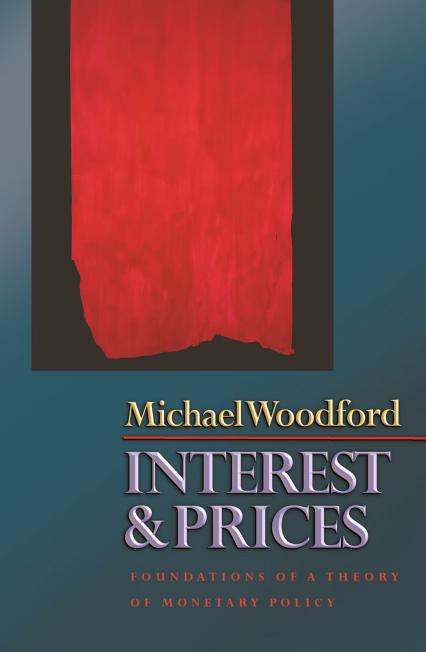
Interest and Prices: Foundations of a Theory of Monetary Policy
Interest and Prices: Foundations of a Theory of Monetary Policy
Author: Michael Woodford
Citations: 14,260 | Year 2003
Princeton University Press
Introduction: This nearly 800-page work is a comprehensive masterpiece of neo-Keynesian monetary theory. The title pays tribute to the 1898 work of the same name by Swedish economist Knut Wicksell, and Woodford also calls his theoretical framework "neo-Wicksellian": Central banks do not need to target the money supply, but stabilize prices by setting interest rates.
Starting from the optimization behavior of households and enterprises, under the assumption of sticky prices, the whole book deduces the relationship among inflation, output and interest rates, and systematically answers several core questions: What kind of interest rate rule should central banks follow? How to trade off between inflation and employment? Why are commitments to future policies more important than single current operations?
Insights: Woodford pointed out in the book that successful monetary policy lies not so much in effectively controlling overnight interest rates as in influencing the market's expectations for the future. For entrepreneurs, to understand the central bank, rather than focusing on a single interest rate hike or cut, it is better to pay attention to the central bank's statement on the future policy path. Enterprises' decisions on financing, capacity expansion and stockpiling are essentially bets on future interest rates and prices.
#3
Stochastic Implications of the Life Cycle-Permanent Income Hypothesis: Theory and Evidence
Stochastic Implications of the Life Cycle-Permanent Income Hypothesis: Theory and Evidence
Author: Robert E. Hall
Citations: 5,992 | Year 1978
Journal of Political Economy
Introduction: According to Milton Friedman's Permanent Income Hypothesis, people arrange their consumption based on their expectations of lifetime income. Hall went a step further in this paper: if consumers are rational and make full use of all information, today's consumption has already included all expectations for the future, and the change in consumption in the next period will only depend on "unexpected events" and cannot be predicted by past income and other information. In other words, consumption should change like a "random walk".
This conclusion introduced rational expectations into consumption research and became the starting point for empirical tests in the following decades. A large number of subsequent evidences show that consumption in reality is more predictable than Hall's prediction, but his derivation is still the benchmark in this field to this day.
Insights: How much consumers spend today depends on their judgment of future income, not how much they earned last month. One-time subsidies and short-term promotions have limited driving effect on consumption. What really changes consumption is people's confidence in employment and income prospects. When enterprises make demand forecasts, consumer confidence indicators are often more informative than historical sales curves.
#4
Productivity and the Density of Economic Activity
Productivity and the Density of Economic Activity
Authors: Antonio Ciccone, Robert E. Hall
Citations: 4,688 | Year 1993
National Bureau of Economic Research (NBER) Working Paper
Introduction: Why do people and enterprises always gather in big cities and industrial clusters? In this paper co-authored with Antonio Ciccone, Hall used US county-level data to study the relationship between employment density and labor productivity. The two found that when the county-level employment density doubles, the average labor productivity increases by about 6%; more than half of the per capita output differences among US states can be explained by the density of economic activities.
The benefits brought by density come from many aspects: lower transportation costs, finer division of labor, and easier spillover of knowledge and technology through close-range communication. This paper was originally published as a working paper, and later published in American Economic Review in 1996, becoming a classic literature in the research of urban economics and agglomeration economy.
Insights: The value of industrial clusters is not just "gathering", but the efficiency dividend brought by density. When choosing locations, enterprises that are close to the upstream and downstream of the industrial chain and talent-intensive areas can often obtain productivity that is impossible to achieve when operating alone; for local governments, increasing the density of economic activities may be more effective than the sprawling expansion of industrial parks.
#5
Estimation and Inference in Nonlinear Structural Models
Estimation and Inference in Nonlinear Structural Models
Authors: Ernst R. Berndt, Bronwyn H. Hall, Robert E. Hall, Jerry A. Hausman
Citations: 3,819 | Year 1974
Annals of Economic and Social Measurement
Introduction: This is a methodological paper. The authors are Ernst R. Berndt, Bronwyn H. Hall, Robert E. Hall and Jerry A. Hausman. The algorithm proposed in the paper is called the "BHHH algorithm" after the initials of the four authors' surnames. In the era when computing power was limited, estimating complex nonlinear models with the maximum likelihood method required a huge amount of computation. The paper proposed a simple iterative algorithm that only uses the information of first derivatives to obtain the estimated values stably and efficiently.
This algorithm has since been incorporated into almost all mainstream econometric software and is still widely used today.
Insights: The influence of a good tool is sometimes more lasting than a good conclusion. The statistical models used by enterprises today for credit scoring, customer churn prediction and demand estimation are often supported by such basic algorithms behind. Attaching importance to "methodological infrastructure" is the source of long-term competitiveness for research institutions and enterprise data teams.
#6
Tax Policy and Investment Behavior
Tax Policy and Investment Behavior
Authors: Robert E. Hall, Dale W. Jorgenson
Citations: 3,481 | Year 1967
American Economic Review
Introduction: This is a paper co-authored by Hall and Dale W. Jorgenson in the early stage of his career and published in American Economic Review. The two proposed the calculation framework of "user cost of capital", which incorporates factors such as interest rate, depreciation, tax rate, accelerated depreciation and investment tax credit into the same formula to measure the real cost for enterprises to use one unit of capital, and accordingly estimated the impact of policies such as accelerated depreciation and investment tax credit on enterprise equipment investment in the United States from the 1950s to 1960s.
This method is still the standard tool for evaluating how tax policies affect investment to this day.
Insights: The key for tax preferences to drive investment lies in the extent to which they reduce the user cost of capital. When evaluating investments such as equipment renewal and technological transformation, enterprises should include factors such as depreciation policies and pre-tax deductions into the calculation; policies such as the one-time pre-tax deduction for equipment and appliances launched in China in recent years can be measured by this framework for their actual incentive effects.
#7
Intertemporal Substitution in Consumption
Intertemporal Substitution in Consumption
Author: Robert E. Hall
Citations: 3,294 | Year 1988
Journal of Political Economy
Introduction: When interest rates rise, will people spend less and save more? This depends on the "intertemporal elasticity of substitution", that is, the extent to which consumers are willing to delay consumption for higher returns. Hall used US consumption and interest rate data for estimation and found that this elasticity is very small, close to zero: the impact of interest rate changes on the timing of consumption is much weaker than what many theoretical models assume.
This finding has direct implications for fiscal policies such as savings tax preferences and the transmission mechanism of monetary policy, and has also triggered decades of academic debates.
Insights: The effect of relying on interest rate adjustments to make consumers "save more and spend less" or "save less and spend more" may be smaller than expected. When judging the impact of the interest rate cycle on terminal demand, enterprises should not overestimate the direct effect of interest rates themselves on consumption willingness.
#8
An Optimization-Based Econometric Framework for the Evaluation of Monetary Policy
An Optimization-Based Econometric Framework for the Evaluation of Monetary Policy
Authors: Julio J. Rotemberg, Michael Woodford
Citations: 3,000 | Year 1997
NBER Macroeconomics Annual
Introduction: This is one of the first neo-Keynesian models that can be directly used for policy evaluation. Woodford and Julio J. Rotemberg built a small model: both households and enterprises make optimization decisions, enterprises have sticky price adjustment, and the model parameters are estimated with US data. Since the model is built on individual decision-making, the two can directly use household welfare as the standard to compare the advantages and disadvantages of different interest rate rules, without setting policy targets based on experience.
Such models later developed into the Dynamic Stochastic General Equilibrium (DSGE) models widely used by central banks around the world.
Insights: Good policy evaluation must return to the reactions of micro individuals. The same applies to the strategic deduction of enterprises. Instead of only extrapolating with historical data, we should ask: Facing new prices and rules, how will customers, competitors and suppliers adjust their behaviors?
#9
The Relation between Price and Marginal Cost in U.S. Industry
The Relation between Price and Marginal Cost in U.S. Industry
Author: Robert E. Hall
Citations: 2,964 | Year 1988
Journal of Political Economy
Introduction: In a perfectly competitive market, price should equal marginal cost. Hall designed a clever test method: using demand changes unrelated to productivity (such as military expenditure, international oil prices, and ruling party changes) to observe how inputs change when output changes. He found that prices in many industries in the United States are significantly higher than marginal costs, and enterprises generally have a considerable degree of market power.
This also explains a phenomenon that has long puzzled economists: why does productivity fluctuate synchronously with economic prosperity. In the presence of price markup and excess capacity, the expansion of demand itself will make productivity "appear" to improve.
Insights: Pricing power is one of the most important moats of enterprises. The study also reminds that the "improvement" of productivity during prosperity may only be the result of higher capacity utilization. Managers should not misinterpret the impressive efficiency data in the boom period as a permanent improvement in capabilities.
#10
Employment Fluctuations with Equilibrium Wage Stickiness
Employment Fluctuations with Equilibrium Wage Stickiness
Author: Robert E. Hall
Citations: 2,054 | Year 2005
American Economic Review
Introduction: Why does the unemployment rate rise sharply during a recession while