Hema and Sam's Club Push Into County-level Markets: What Is the Toughest Hurdle They Have to Cross?
1
After the expansion and closure of hypermarkets in county towns, Hema, Sam's Club and Meituan have also marched into these markets.
Hema Super Box NB has opened its first store in Chongzhou, Sichuan, with plans to cover more than 300 counties and cities across the country. The main structure of Sam's Club Jiangyin store was topped out in early 2026, and the Yiwu store is expected to open between the end of 2026 and 2027.
Front warehouses are also being deployed deeper in lower-tier markets. Meituan Xiaoshi Supermarket plans to set up 800 front warehouses, which have already entered Qingyuan, Shanwei and Jiangmen in Guangdong. Dingdong Maicai plans to add 100 new front warehouses, targeting more sinking cities in Jiangsu, Zhejiang and Shanghai. In many regions, Hema Super Box NB and Meituan's HappyMonkey have already engaged in direct head-to-head competition.
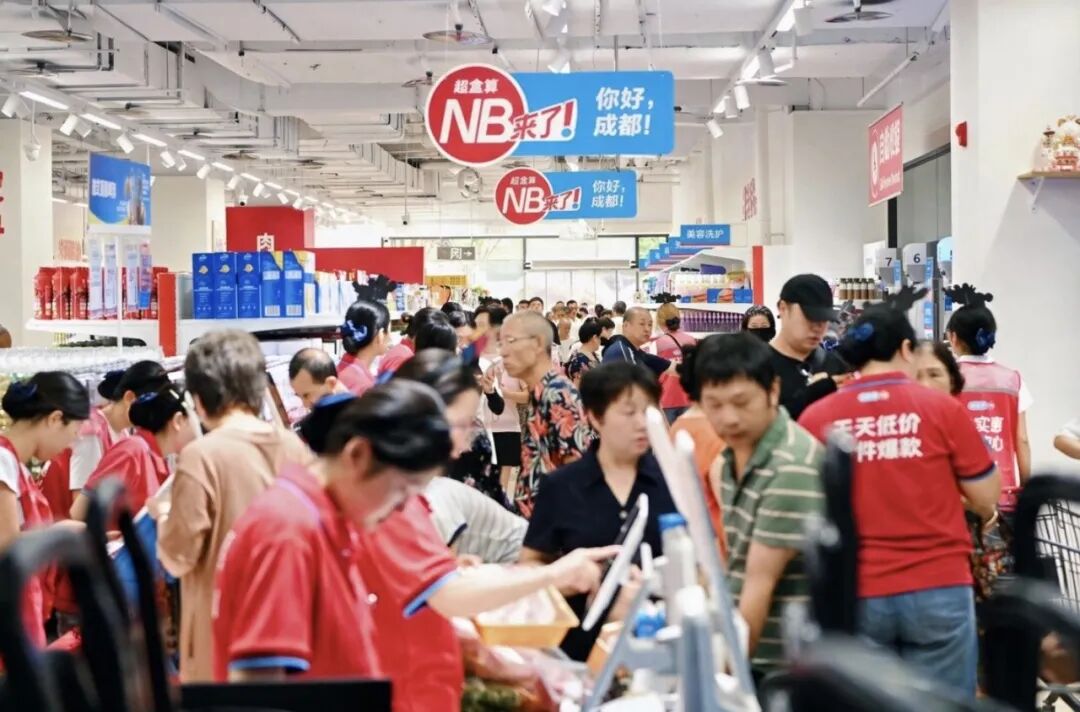
The path that the previous round of hypermarkets failed to get through has now welcomed more players.
The reason for supermarkets to gather in sinking markets is not difficult to understand on the surface.
Commercial complexes in first- and second-tier cities are saturated, and multiple supermarkets and front warehouses are even gathered in the same area. Macro policies are also pushing chain enterprises to expand downward, and enterprises themselves are facing greater growth pressure. After Hema achieved phased profitability, it wants to dilute costs through scale expansion; Sam's Club China's sales revenue has exceeded 1400 billion yuan, and it also needs to open new stores to maintain growth.
However, these reasons also existed in the last wave of store closures.
Back then, hypermarkets also took county towns as the next growth point and expanded rapidly. Several stores crowded into one county town, targeting the exact same group of customers.
But the disadvantages were obvious: hypermarkets were too heavy. Stores covering tens of thousands of square meters, with rent, labor and inventory costs, all relied on stable customer flow to support operations. The population of county towns was limited in the first place, and most people preferred to buy groceries in wet markets, so the customer flow could not support such large stores. Eventually, the extra costs had to be passed on to product prices, which further reduced customer flow as prices rose.
Looking back, the problems of the last round have not completely disappeared. There are a large number of peers competing, and prime locations have to be fought for. The consumption power has not fully risen yet, so opening stores is to some extent a bet. Internally, the store format was too single, using one type of large store to adapt to all county towns.
In this round, the external conditions have indeed changed to some extent. The most obvious change is in locations: in the past, players fought fiercely for prime spots, but now the competitive pressure has decreased significantly.
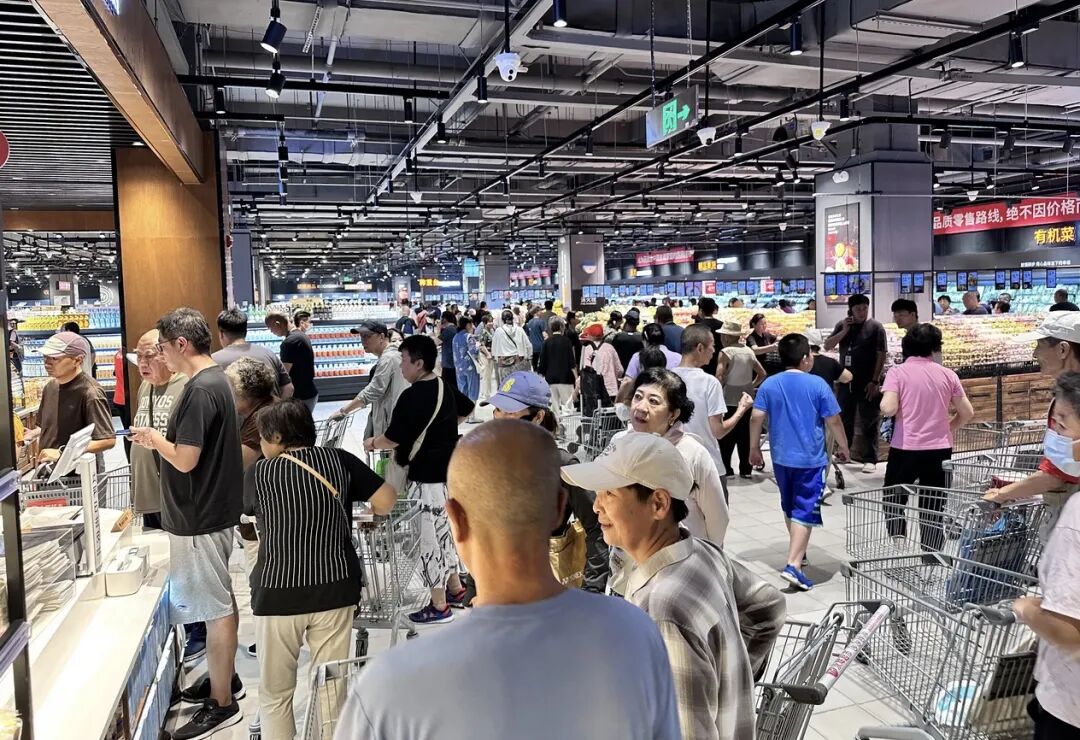
Traditional supermarkets are still adjusting. Yonghui Supermarket closed 232 stores in 2024 and another 381 stores in 2025. According to the company's disclosed 2026 estimated plan, the number of store closures will further decrease. The contraction of traditional supermarkets has provided space for new business formats to enter some markets, but it also reminds new players: the closed stores are not all in poor locations, and it is also possible that the original business model is unsustainable.
Regional supermarkets are also retreating. For example, BBK has closed hundreds of stores in Hunan, Guangxi and Sichuan since 2022, many of which are located in third- and fourth-tier cities and county-level regions; Hubei Zhongbai has also closed some old hypermarkets in the past two years. Similar contractions are not rare across the country. Fewer new players are entering, and old players are retreating, leaving more locations for new supermarkets in county towns.
Of course, the exit of old players may also indicate that this business itself is difficult to operate. But looking at the exited entities, they are mainly traditional supermarkets that relied on large stores and slotting fees to make profits, not that there is no consumption demand in county towns.
Looking at consumption, the share of county-level consumption is still rising.
According to data from the National Bureau of Statistics, from January to August 2026, the retail sales of consumer goods in counties and townships accounted for 39% of the total national retail sales of consumer goods, an increase of 0.3 percentage points year on year.
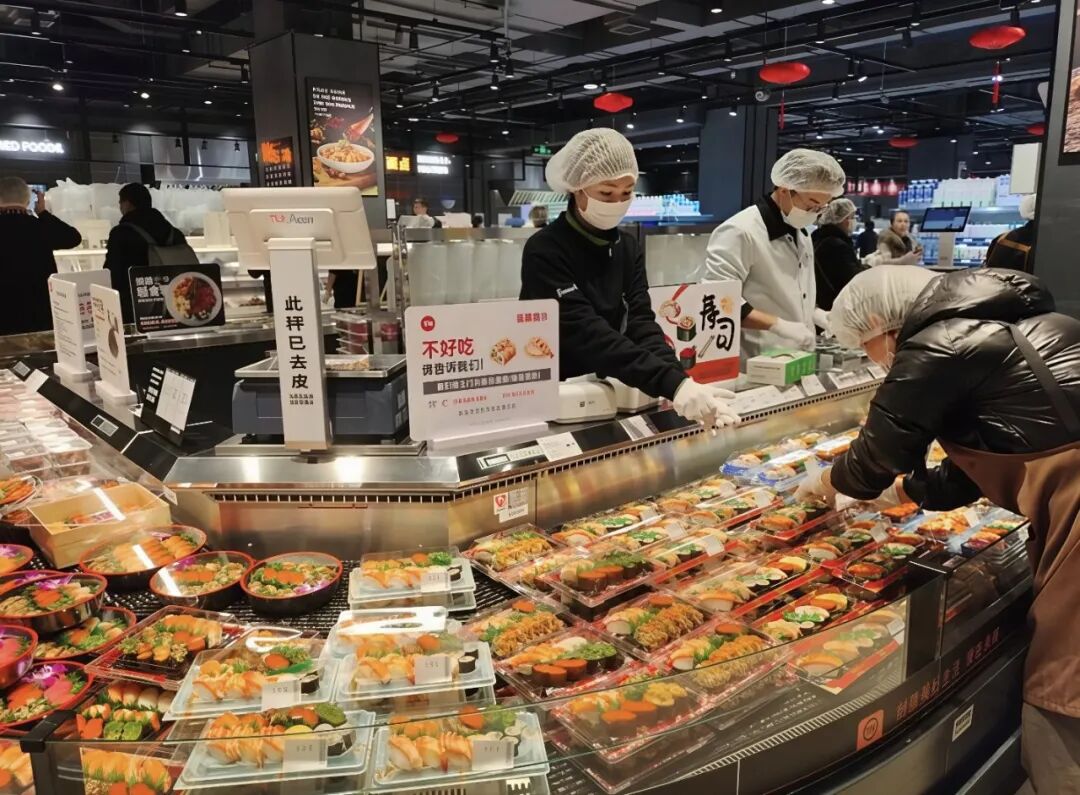
Take store performance as an example: the head market has already provided verification. In 2024, Hema's new store in Xuzhou, Jiangsu Province achieved sales of 45 million yuan in its first month of opening, setting a regional record.
These performances are not gradually nurtured after opening stores. Many families in sinking markets have long formed the habit of buying imported fruits, branded dairy products and other goods. In the past, they either traveled to big cities specially or waited for express delivery after online shopping. The opening of physical stores retains the consumption that originally flowed out to other places locally.
However, sufficient confidence does not mean that stores can be opened anywhere. The 39% figure is the sum of all county-level regions across the country, and the Xuzhou example cannot be replicated in every county town. The consumption power is real, but it is not evenly distributed across every county town.
Therefore, locations and demand only prove that county towns are worth entering. What supermarkets really need to answer are two other questions: which county towns to enter, and what type of stores to open.
2
There are huge gaps between different county towns.
There are only 6 county-level regions in China with a GDP exceeding 300 billion yuan: Kunshan, Jiangyin, Zhangjiagang and Changshu in Jiangsu, Jinjiang in Fujian, and Cixi in Zhejiang. Kunshan's gross domestic product reached 561.534 billion yuan in 2025, ranking first among the top 100 county towns for 22 consecutive years.
However, in many county towns in central and western China, young people work outside all year round, the permanent resident population is decreasing year by year, and the consumption power is scattered in various towns and townships.
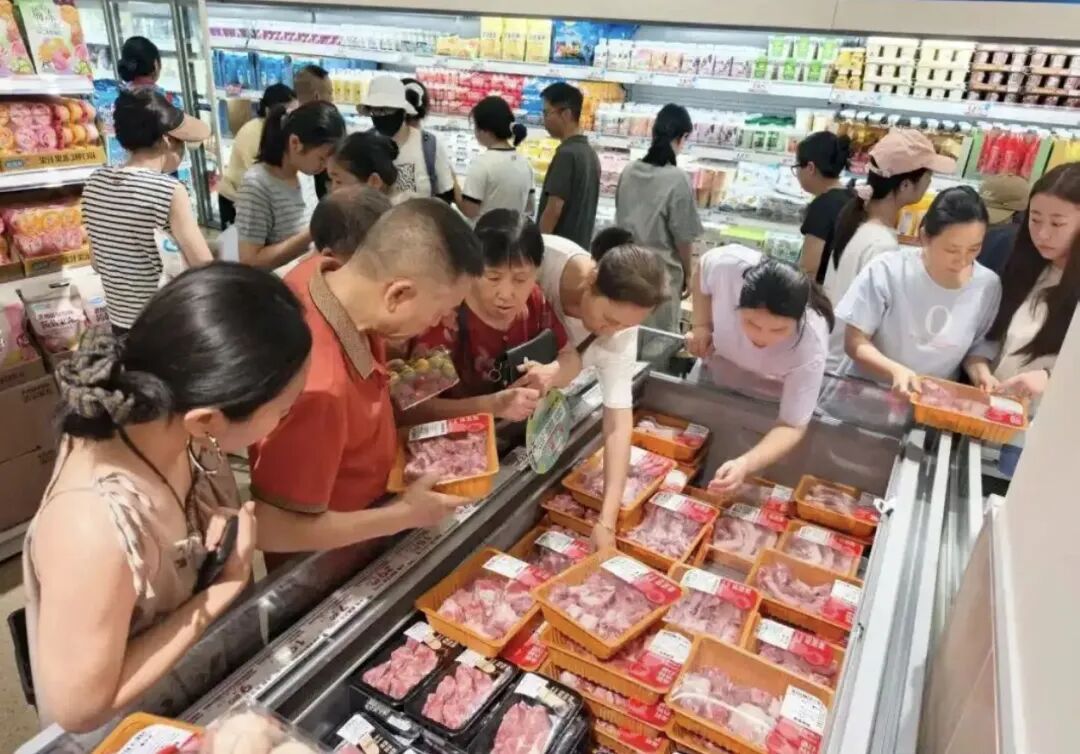
The gap exists not only between different county towns, but also within the same county town, where consumption is stratified. Some families drive to neighboring cities to stock up on imported steaks and large-packaged nuts, while some families compare the price differences of a few cents when buying groceries. The former cares about quality and experience, while the latter cares about price and convenience. It is difficult for the same store to meet these two types of needs at the same time.
Consumption stratification is not unique to Chinese county towns.
The stratification of retail in German towns can be used for reference. Hard discount supermarkets Aldi, Lidl and DM focus on daily necessities and packaged food; higher-end fresh ingredients are provided by Rewe.
In the same town, the two business formats operate independently, and consumers switch between different demands. This pattern was not planned by anyone, but gradually formed after decades of precipitation of consumption habits.
Hard discount stores streamline product categories, mainly promote private brands, push prices to the lowest, and meet standardized, price-sensitive demands. Comprehensive supermarkets put more efforts on fresh products, category breadth and services, to meet the demands for quality and freshness. When demands are stratified, the supply follows to be stratified, and each layer has corresponding stores.
What is the current state of Chinese county towns? The consumption power has risen, but the stratification on the supply side has not been established yet.
Retail in county towns has long been supported by local supermarkets, family-owned stores and wet markets. Quality-related demands cannot find corresponding stores locally, so they have to flow to big cities or e-commerce. Affordable demands are scattered in a large number of small stores, with low operating efficiency.
Demands have been stratified, but the supply remains at the original stage. The gap in between is the opportunity for the new round of sinking market expansion. Precisely because of this, this round is not necessarily a zero-sum game: different players are filling different layers of demand.
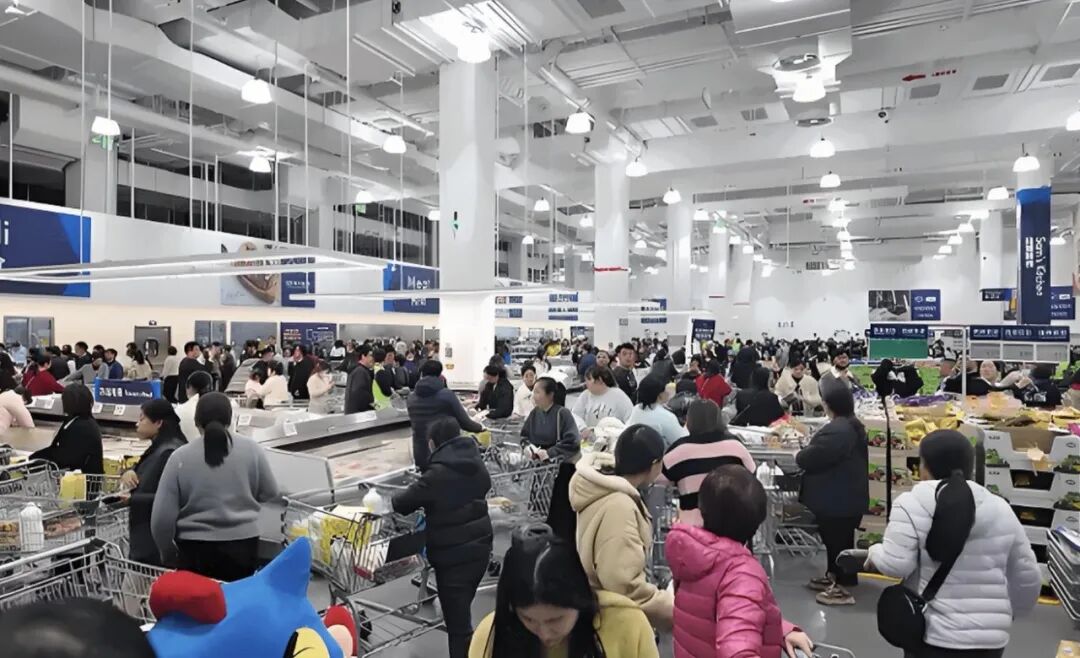
Sam's Club fills the top layer. Its membership system, large packaging and high unit price correspond to families in the region with stable income, private cars, and willingness to pay for quality.
Therefore, Sam's Club only enters strong county towns, and its county-level stores are concentrated in Kunshan, Jinjiang, Zhangjiagang, with stores under construction in Jiangyin and Yiwu. The customer base of one Sam's Club store usually comes from a large number of surrounding towns and neighboring cities and counties. It exactly captures the part of quality consumption that used to flow out of the local area.
Hema wants to cover the middle two layers at the same time. Hema Fresh is positioned as a quality daily shopping option with no membership threshold, and its stores are concentrated in Yangtze River Delta counties with a GDP of 100 billion yuan such as Changshu, Yiwu and Zhuji. Hema Super Box NB goes one level lower, opening as affordable community stores at the entrance of residential areas, relying on high-frequency rigid demand products such as vegetables, meat, eggs, rice, flour and oil to drive sales, with plans to cover more than 300 counties and cities.
HappyMonkey targets the most price-sensitive layer. As a hard discount supermarket under Meituan, it streamlines product categories, increases the proportion of private brands, and pushes down prices through bulk procurement, making it one of the business formats in China that is closest to Aldi's logic.
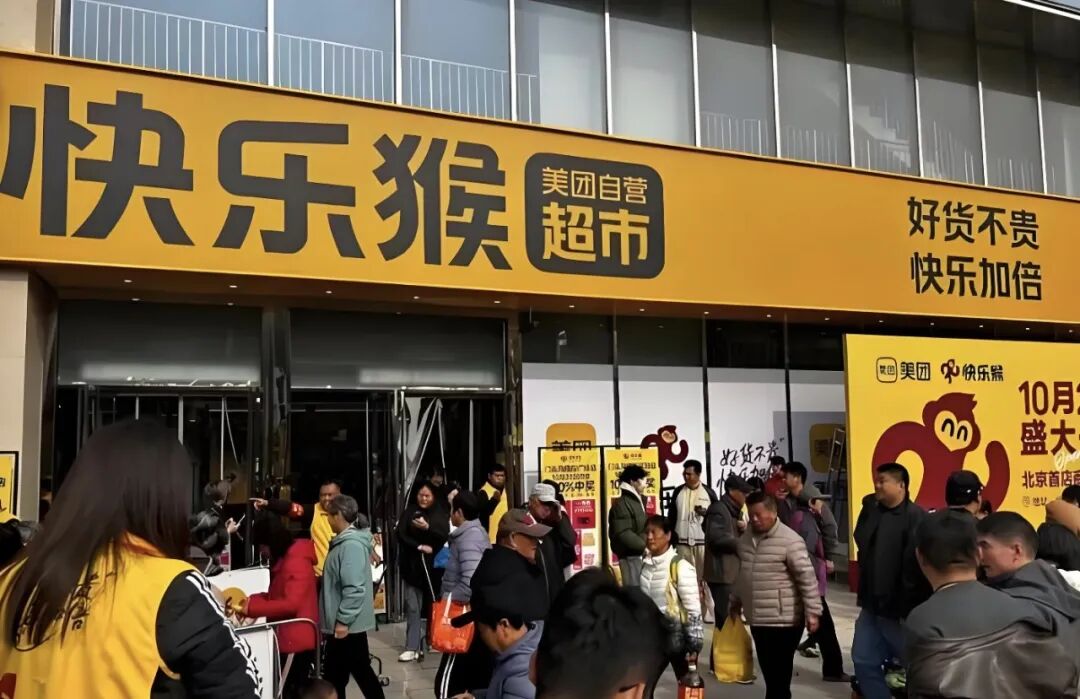
In Jiande, Zhejiang, Hema Super Box NB and HappyMonkey opened around the same community. This case perfectly illustrates the two sides of stratification: different layers can coexist, but there is still direct competition within the same layer. The two stores compete for the daily purchases of the same group of residents, as well as the store density in the same region. The higher the density, the lower the warehouse and distribution costs.
How many types of stores a county town can accommodate depends on how many layers its demands are divided into. However, it took decades for the stratification in Germany to stabilize, and the supply stratification in Chinese county towns has just started. In each layer, the most difficult part to tackle is fresh food.
3
Crowded with supermarkets, county towns are full of challenges.
Consumers in county towns have money, but they have not yet formed the habit of replacing wet markets with standardized supermarkets. Behind this is a consumption logic completely different from that of first-tier cities.
People in first-tier cities are willing to pay for time saving and stable quality. With long commutes and busy work, it is difficult for them to spend time picking groceries in wet markets after work. Pre-cut, pre-weighed and pre-packaged standardized fresh products are rigid demands for them. The extra money they pay is exchanged for time and certainty.
Consumers in county towns calculate a different account. The travel distance is short and the pace of life is slow, so time is not scarce, and the value of saving time is greatly reduced. Their acceptance of supermarkets has a clear dividing line in terms of product categories. For standardized products with long shelf life such as milk, biscuits, rice, flour and oil, the brands and specifications are consistent, and there is little difference between buying them in different stores, so supermarkets face no supply barriers. But when it comes to "fresh" products such as vegetables, fruits, meat and fish, their acceptance of standardization drops significantly.
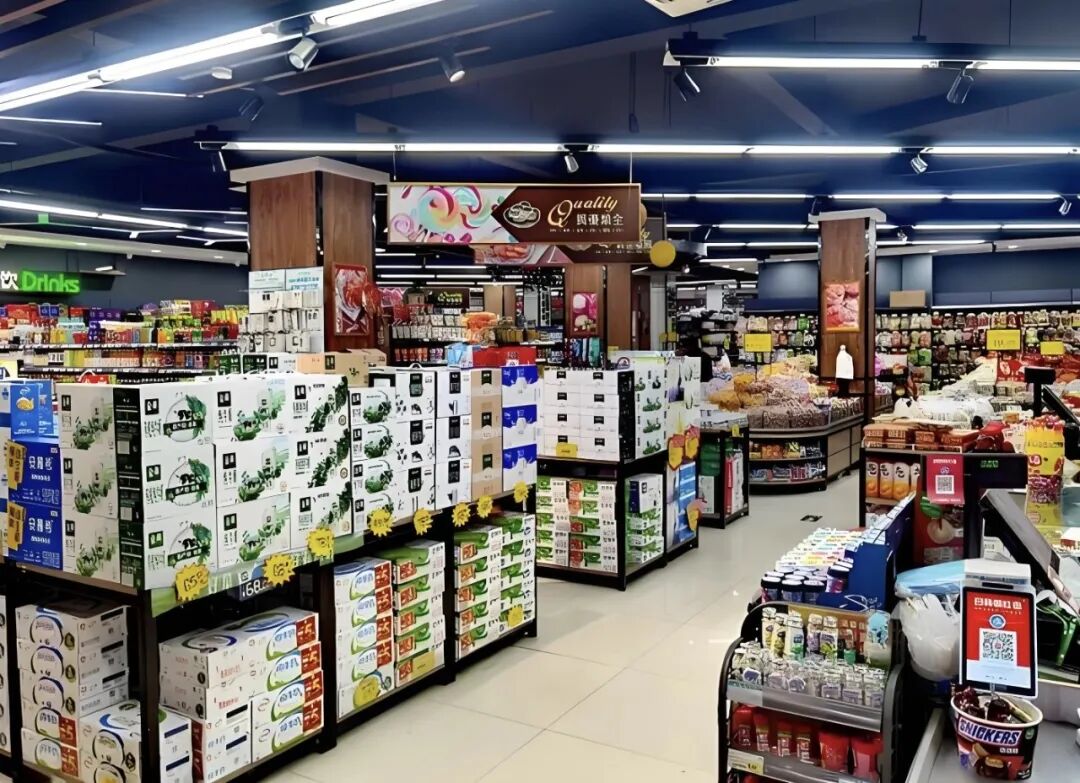
However, there are also gradients within the fresh food category. Imported fruits, steaks and frozen seafood are rarely seen in wet markets, so supermarkets selling these products are not competing with wet markets. The real difficult part to tackle is the daily necessities such as leafy vegetables, pork and local river fish. These products have low unit prices, high purchase frequency, and require absolute freshness on the day of purchase, which is the home ground of wet markets.
To capture this home ground in county towns, supermarkets have to cross three thresholds.
The first one is price. Fresh products in supermarkets need to go through cold chain transportation, sorting, packaging, and also bear loss costs. All these costs will eventually be reflected in the price tags. For the same bunch of green vegetables, customers can pick and choose in wet markets and even get a discount on the total price; while in supermarkets, the vegetables are packed in boxes and labeled, leading to higher prices.
The second one is trust. Consumers in county towns trust things they can see and touch more. Local wet markets, street vendors and acquaintance transactions form the "iron triangle" for them to buy fresh food.
The third one is localization. National unified procurement focuses on standardization, but local consumers in county towns prefer local flavors. The origin of pork, and what vegetables to eat in what season, vary from place to place. The standardized products on the shelves may not meet the local people's demands.
The three thresholds have different weights for different types of stores.
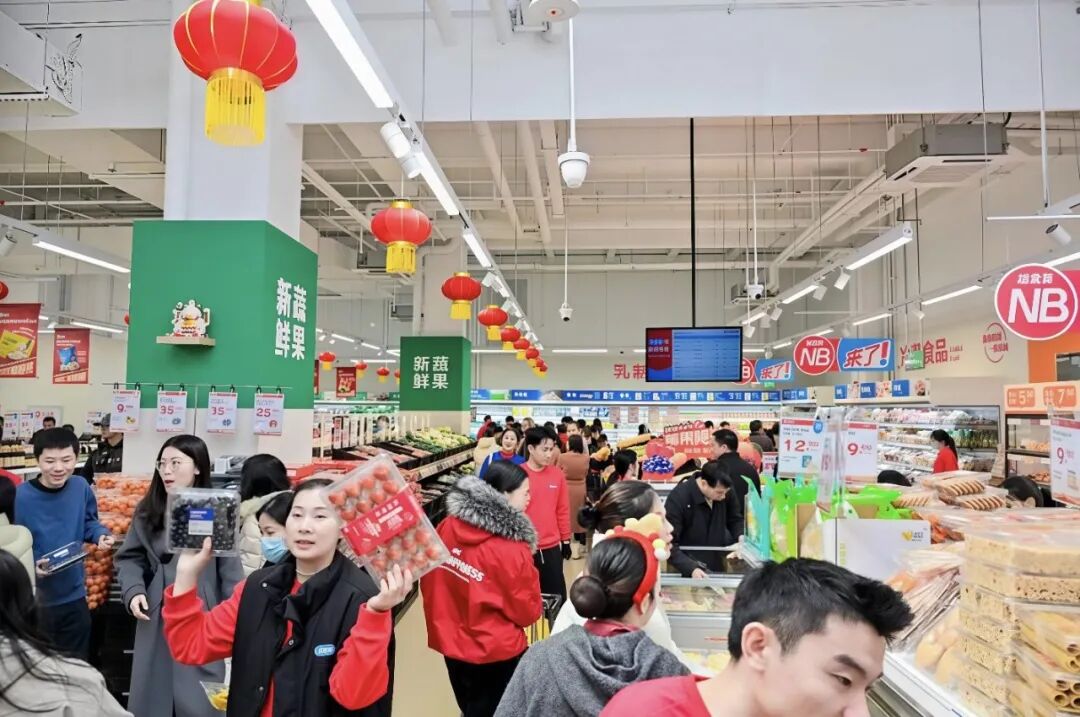
Hema Fresh takes fresh food, catering and imported products as its core, with fresh food accounting for about 58% of its total categories; some Hema Super Box NB stores have a fresh food proportion of over 60%. Sam's Club's fresh food category accounts for more than 50%, but a large part of that is baked goods, cooked food and imported fresh products, most of which are not available in local wet markets.
Therefore, Sam's Club faces the least impact.