Why do all shopping malls across the country look identical?
Shopping malls in China may have achieved national unification even earlier than high-speed railway stations.
The first floor is invariably occupied by gold, beauty and new energy vehicle brands; the second and third floors are always full of sportswear and fast-fashion women's clothing; if you want to eat hot pot, barbecue or buffet, just head straight to the upper floors by elevator; for milk tea, bread, ramen and boiled dumplings, please go to the B1 floor on your own.
The routines in the atrium are even more mature: set up several IP installations, stack rows of golden eggs for lucky draws, mark out a few photo spots for social media check-ins, and the false prosperous atmosphere for weekends is ready.
You travel a long way from a first-tier city back to your county, walk into a shopping mall, and you can always find a Starbucks at the entrance, Xiaomi and Huawei stores on the first floor, as well as AITO, NIO, XPeng and Li Auto vehicles displayed in the lobby.
When you get to the second and third floors, there must be Li-Ning and ANTA; Haidilao may not be on the fourth floor, but there is definitely a cinema on the fifth floor; and on the basement floor, you can always find a Yang Guofu or Yuanji Cloud Dumpling store.
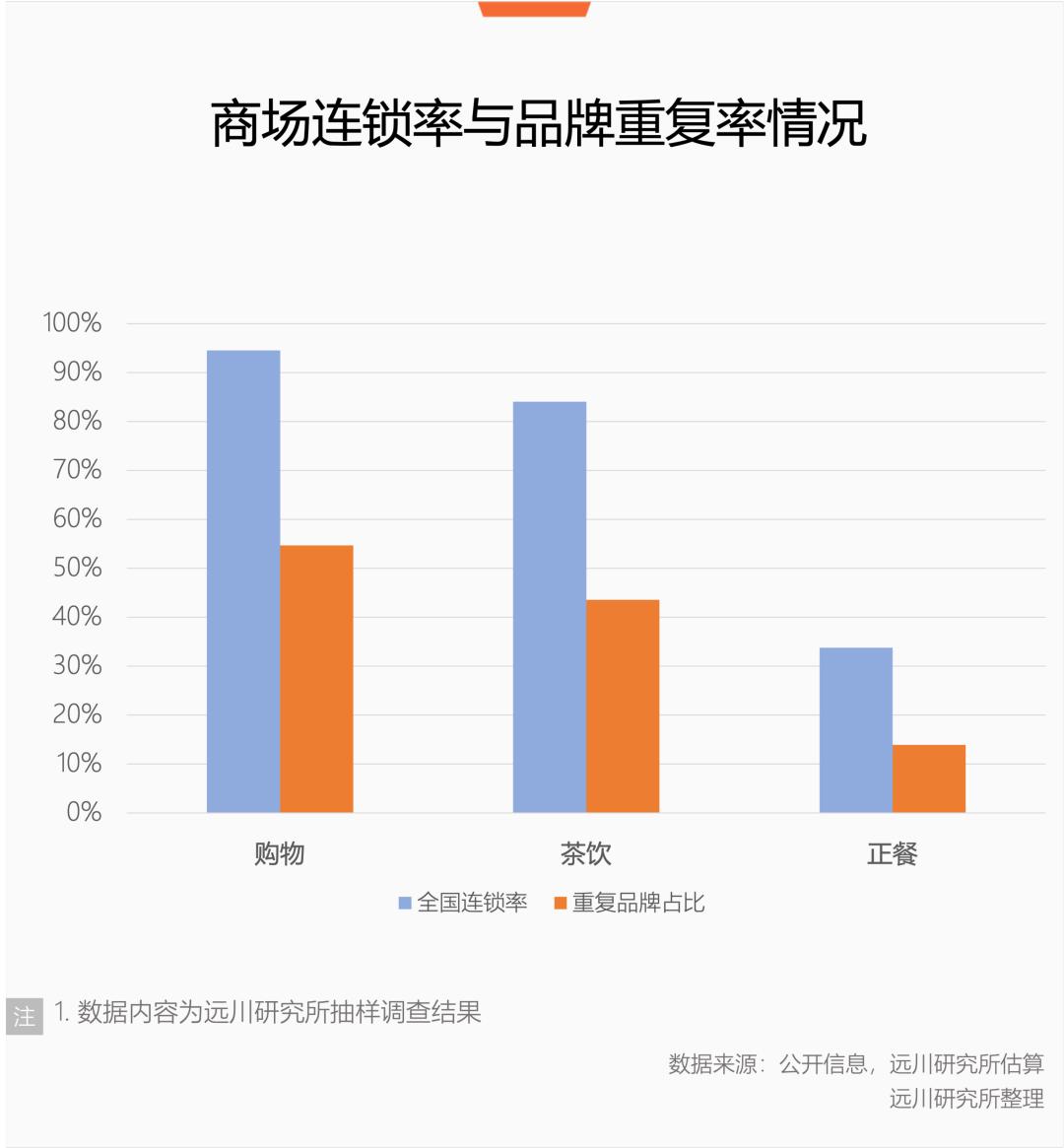
This is not an illusion. We sampled and counted the brands in some shopping centers, and the results show that the chain brand proportion in the shopping sector reaches 95%, and more than half of the shopping brands appear repeatedly in at least two shopping malls.
Shopping malls were originally supposed to be places for unexpected encounters. Why did they end up becoming assembly lines that stably output chain brands?
To understand how this assembly line was built, we have to go back to the famous 100 million yuan bet in 2012.
The Outcome of the 100 Million Yuan Bet
In 2012, Jack Ma and Wang Jianlin made a bet of 100 million yuan in front of the national audience.
They bet on whether e-commerce could take up half of China's retail market eight years later.
One held Taobao and Tmall, thinking about how to put all the shops in the world into a single screen; the other owned Wanda Plazas, believing that Chinese people could not stay at home forever.
After the bet started, Jack Ma took the first move. He intercepted the products that were easiest to move online first.
Take a few photos of clothes, mark the bottom price for home appliances, sort out the sizes of shoes, and put all of them into the search box. Consumers also learned quickly: they only tried on products in shopping malls but did not buy them, and went home to pay on Taobao.
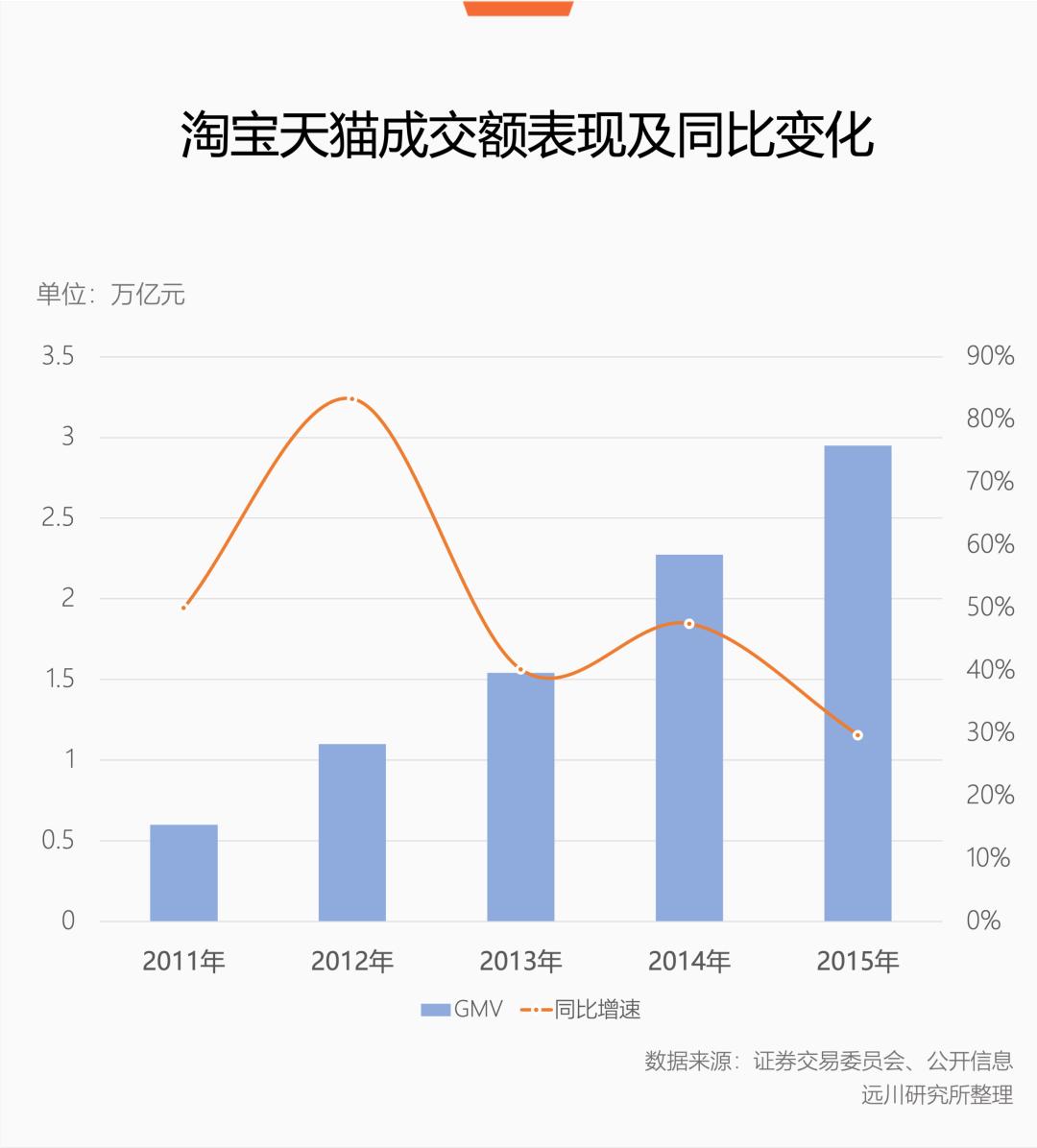
In 2012, the transaction volume of Taobao and Tmall exceeded 1 trillion yuan for the first time[1], rising by about 80% year on year.
Shopping malls became living bodhisattvas that contributed money and venues: Wang Jianlin stood in front to receive customers, while Jack Ma collected money behind the scenes.
In the first round, Jack Ma attacked fiercely, and Wang Jianlin certainly would not sit still and get beaten. He did not use shelves to block the search box, but moved the battle line one step back. Since he could not keep the commodities, he would keep people's time.
Therefore, Wanda began to carry out a drastic transformation to replace old tenants: it cleared out department stores, and immediately filled the venues with catering, cinemas and children's playgrounds. But defense was only the first step. Wang Jianlin directly reached out to the territory of e-commerce.
In 2013, Wanda tried to figure out who the consumers entering Wanda Plaza were, what they bought and where they went through members, big data and mobile terminals.
Since Jack Ma could direct consumers to shop online, Wanda could also use its shopping centers across the country to put offline passenger flow into its own system in turn.
It was not enough to go alone, so Wang Jianlin began to pull in allies.
In 2014, Wanda invited Tencent and Baidu to the table, and the three parties formed the "Teng-Wan-Bai" alliance, preparing to interconnect the member, payment, point and data systems. In 2015, Feifan was officially launched. Wanda had a big appetite, wanting to put all the shopping malls across the country into the same system.
But by the end of 2015, before the 100 million yuan bet had a winner, Wanda itself could not hold on any longer, and closed more than 40 department stores at one go[2].
Although the department stores were closing, Wanda Plazas were still opening. From 2012 to 2015, the number of Wanda Plazas increased from 66 to 135, and the annual passenger flow almost doubled[3].
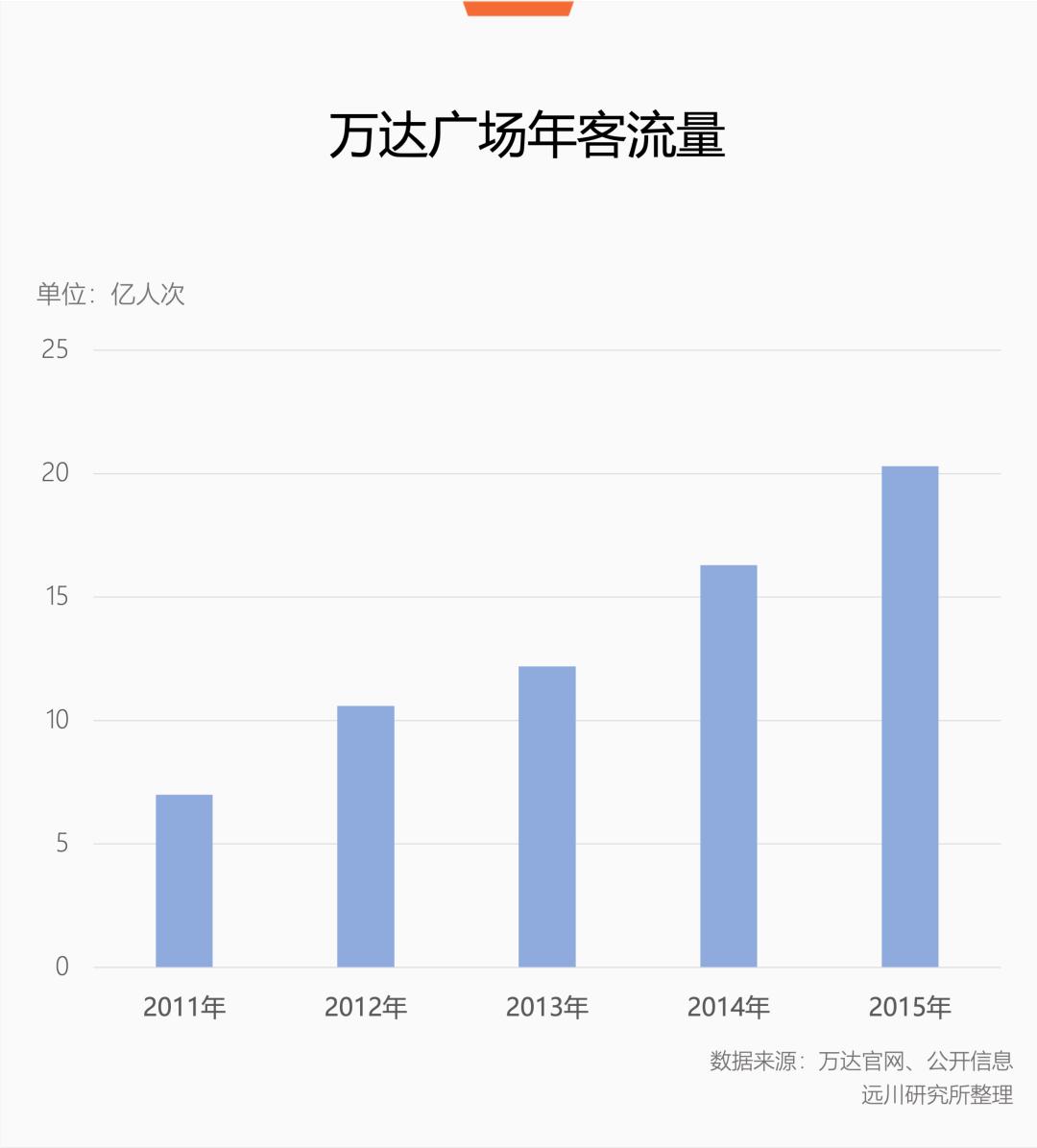
It can be seen that what really failed was not the shopping centers, but Feifan's counterattack against the online sector.
In 2016, Wanda itself admitted that the previously agreed investment cooperation had not been finalized. This so-called encirclement that gathered three forces only left Wanda itself holding the flag when it was time to charge into battle.
Although Feifan failed to beat e-commerce, it does not mean that Jack Ma won completely.
Those represented by Jack Ma had traffic in their hands, but lacked scenarios that could make people stay for several hours; those represented by Wang Jianlin owned shopping malls, but never managed to turn offline passenger flow into their own internet entry.
One could not break through the defense line, and the other could not swallow the whole market.
By the end of 2016, seeing the stalemate, Jack Ma changed his direction, saying that the era of pure e-commerce was coming to an end, and the next era would belong to "New Retail" that integrated online and offline sectors.
This sentence sounds like a strategic upgrade, but in fact it is more like a truce agreement. E-commerce took away standard commodities, and shopping malls kept catering, entertainment and people's time.
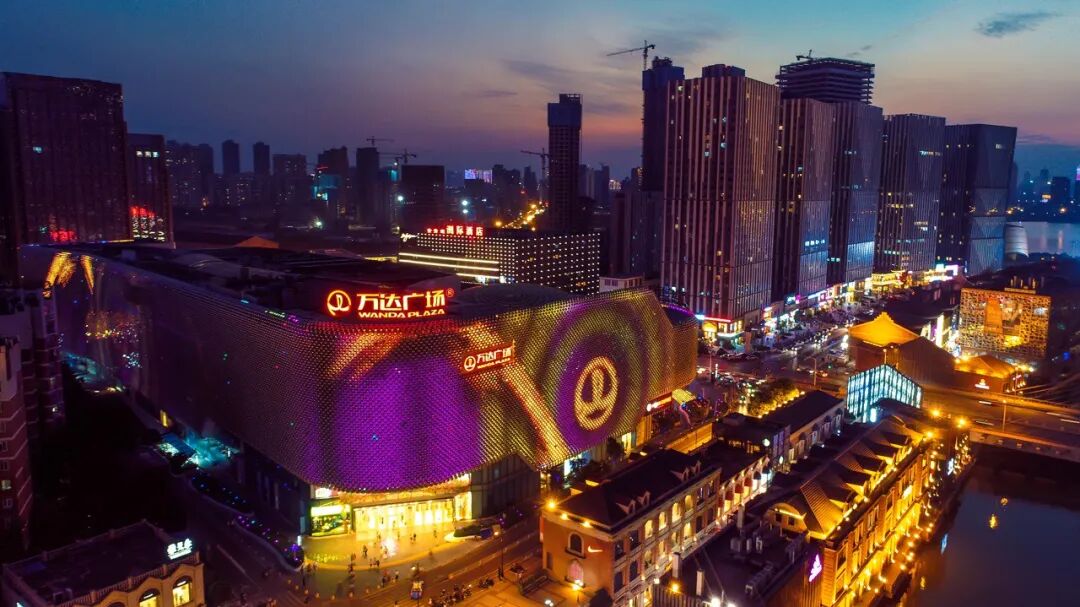
Wanda Plazas spread all over the country
It just so happened that in the same year, the newly completed shopping center area in China was about 5.75 million square meters, ranking first in the world in terms of scale[4].
In that era when real estate was booming, basically wherever residential real estate projects were developed, the blueprints for commercial real estate would be directly copied and pasted there.
But a problem arose: the supply of shopping malls was in surplus, while the brands that paid rent to keep the malls running were somewhat insufficient.
The Eliminated Differences
Every boss who has a headache about shopping mall investment promotion knows one thing clearly: running a shopping mall is a heavy asset business that costs a lot of money, requires a lot of effort, and takes longer to get returns than a snail crawling.
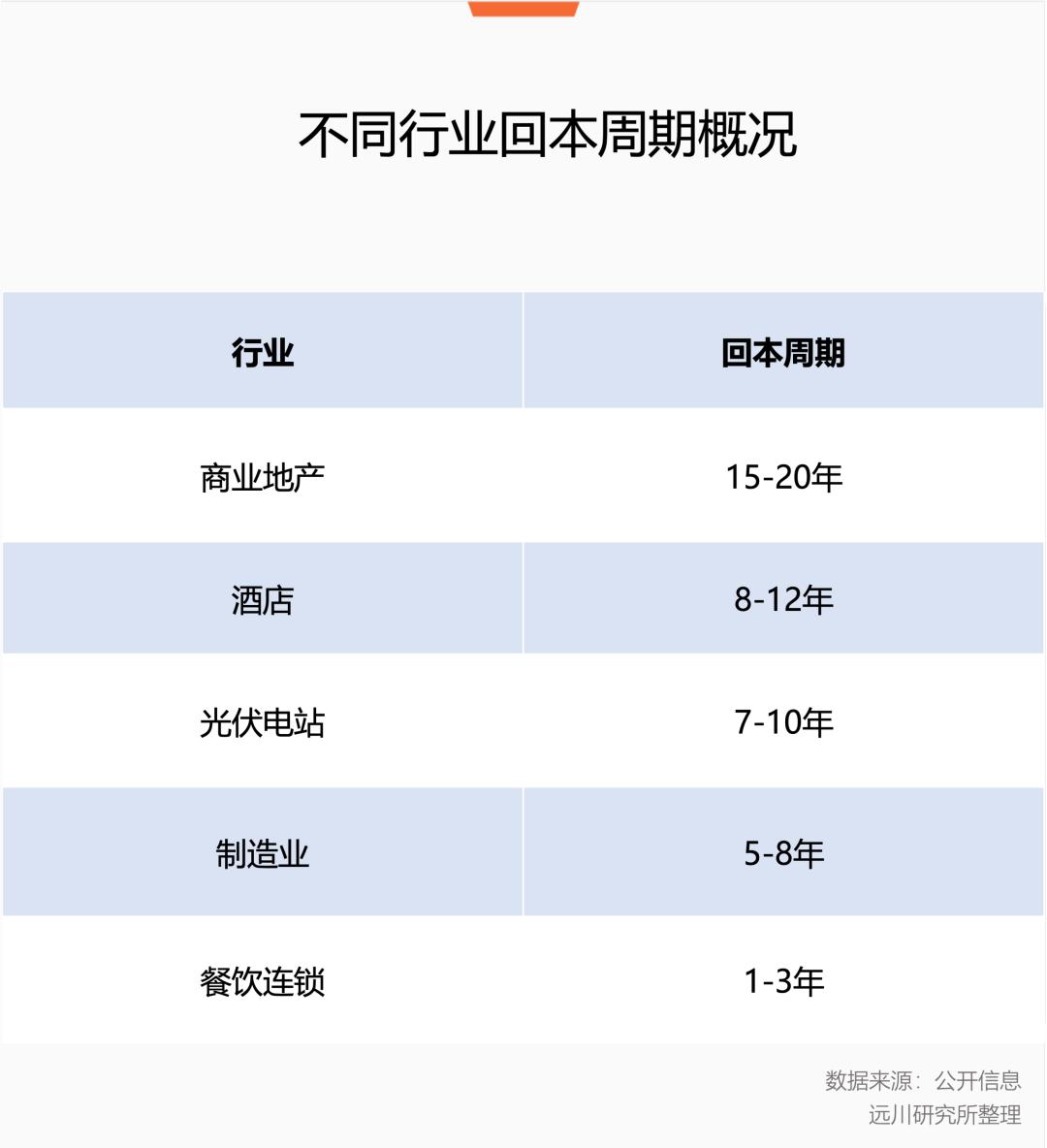
According to the survey data from JLL, when institutions acquire existing retail properties, the payback period is usually 15 to 20 years.
Don't forget, this is still the account for taking over existing businesses. If you count from the stage of land acquisition and foundation laying, the cycle will probably be more than 20 years.
In addition to the long payback period, shopping malls also face immediate vacancy pressure. Reports show that the overall vacancy rate of shopping mall projects rose from 10.5% to 11.6% in 2025; more than 79,000 stores were closed, and about 73,200 new stores opened[5].
In other words, for every 100 stores closed in shopping malls, only about 93 new stores are added. The long-term investment has not been recovered, and there are constantly vacant shop spaces to fill right now.
Once a business is to be run for 20 years, the last thing the boss fears is not the lack of surprises, but unexpected accidents halfway.
As a result, it is difficult to reach an agreement between the supply and demand sides. Shopping malls only pursue stability; but consumers outside the door are always eagerly looking forward to new experiences.
This contradiction is first reflected in investment promotion. In the eyes of investment promotion directors, certainty is more important than possibility.
Facing the same shop space, a local brand owner holds a thick menu and brand feelings, begging the mall to give two years to build up the brand; while a national chain brand puts down solid transaction records and a promise that the store can open next month.
The former says it has unlimited potential, while the latter directly puts the property certificate and credit report on the table. For a shopping mall project worth tens of billions of yuan, of course it will choose the latter without hesitation.
In 2025, the west zone of Beijing Super Hopson One opened, claiming to introduce nearly 300 brands, with the proportion of first stores as high as 35%. But after checking this "first store" list carefully, most of them are familiar faces such as Camel, Super ANTA and Sisyphe[6].
The so-called first store may refer to the first store in the region or the first store of a new format, rather than letting an untested new brand that has not been verified by the market to take the risk.
The favorite state of shopping malls is probably: the store can be new, but the brand must be familiar.

Image source: Internet
Secondly, performance assessment also puts considerable pressure on shopping malls.
A distinctive new store needs at least half a year of slow operation to become popular, but the monthly report at the end of the month and the quarterly review can not wait that long.
This pressure does not mean that shopping malls do not change stores at all, but strictly control the changes within a safe range. More than half of the shopping centers have a store opening to closing ratio between 0.8 and 1.2, and the scale of store opening and closing is roughly close[5].
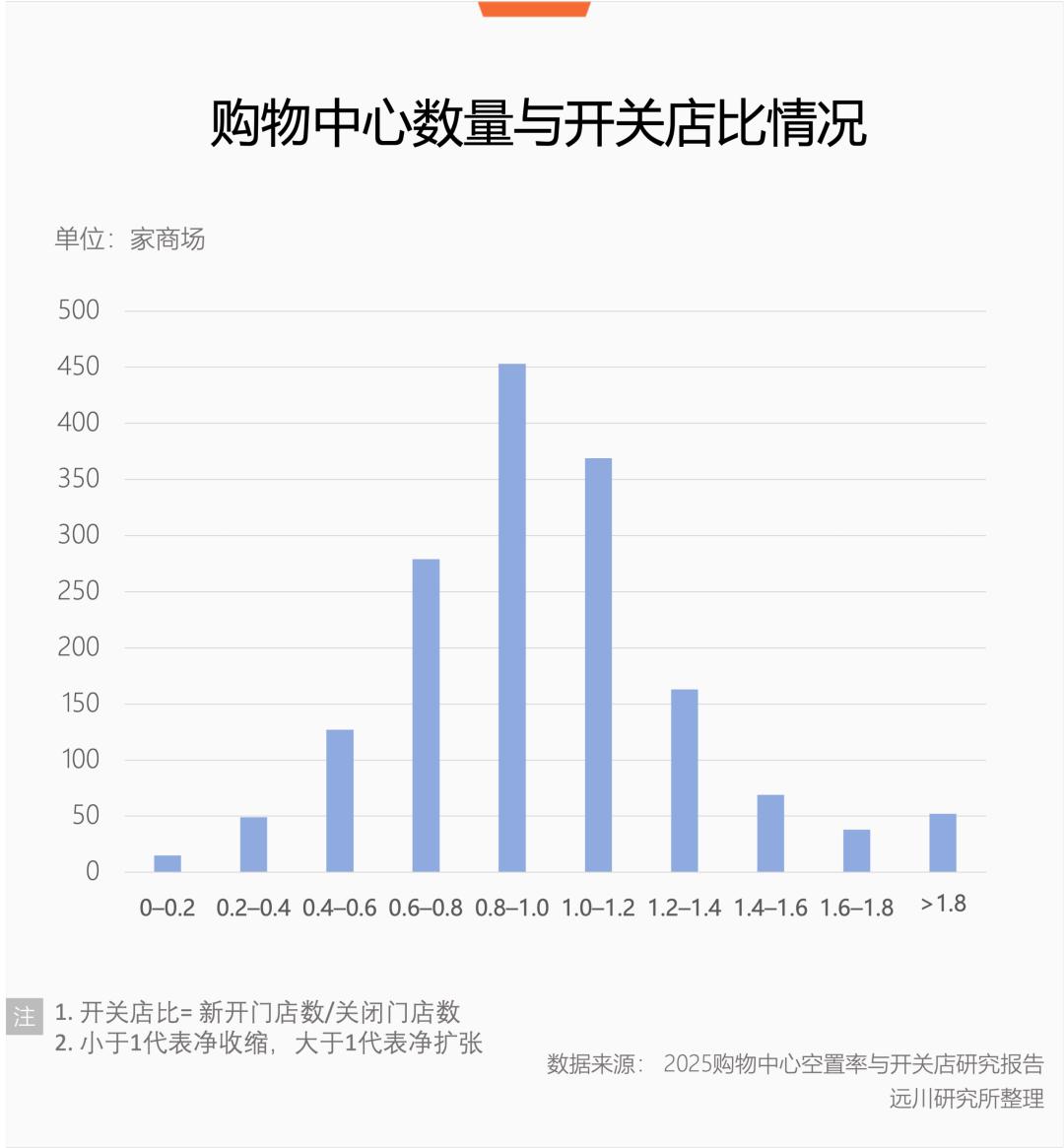
Most shopping malls do not make drastic changes, but focus on minor repairs, trying to avoid sharp fluctuations in the brand mix.
There are not many types of businesses that can survive offline and afford the rent, so the products sold in shopping malls are naturally becoming more and more similar.
For the management, this dynamic balance is also an operating result. After all, homogeneity is mostly complained about by consumers, but the vacancy rate is related to their own jobs.
However, this big problem can not be entirely blamed on shopping malls.
When capital invests in a brand, it is usually not satisfied with the brand only operating in its own small territory, but wants to turn it into a money printing machine that can be copied infinitely.
Shopping malls are exactly the perfect socket for this machine. Chain brands need space for expansion, and shopping malls need rent and full occupancy rate, so the two sides hit it off immediately.
As for those really interesting local small shops, the sky-high rent in the core business district alone is enough to keep them out.
Therefore, the homogenization of shopping malls is not a failure of risk management, but exactly the result of overly successful risk management.
Consumers want to open a blind box in the shopping mall and encounter some unexpected surprises, but the commercial system is responsible for eliminating all unexpected surprises in advance.
Short-lived Prosperity
Shopping mall owners are not unaware that their malls are boring, but they really dare not make drastic changes.
As soon as you clear out an old store, the investment promotion and decoration will take several months. Before a distinctive new store can build up its reputation, the vacancy rate data has already appeared in the KPI at the end of the month.
Since the foundation can not be changed, shopping malls simply turn to IP co-branding activities in the atrium.
In the past, co-branding activities were auxiliary marketing measures only held during holidays, but now they have been forced to become year-round normalized measures to maintain business.
In this playbook, Chaoyang Joy City in Beijing is a top student. In 2025, the project held more than 120 first exhibition and first launch activities, and generated 150 million yuan in sales through pop-up stores[7].
Jing'an Joy City in Shanghai is even more aggressive: it launched more than 100 IP pop-up activities a year, more than 60% of which were the first stops in the country, directly bringing in 220 million yuan in real revenue[8].
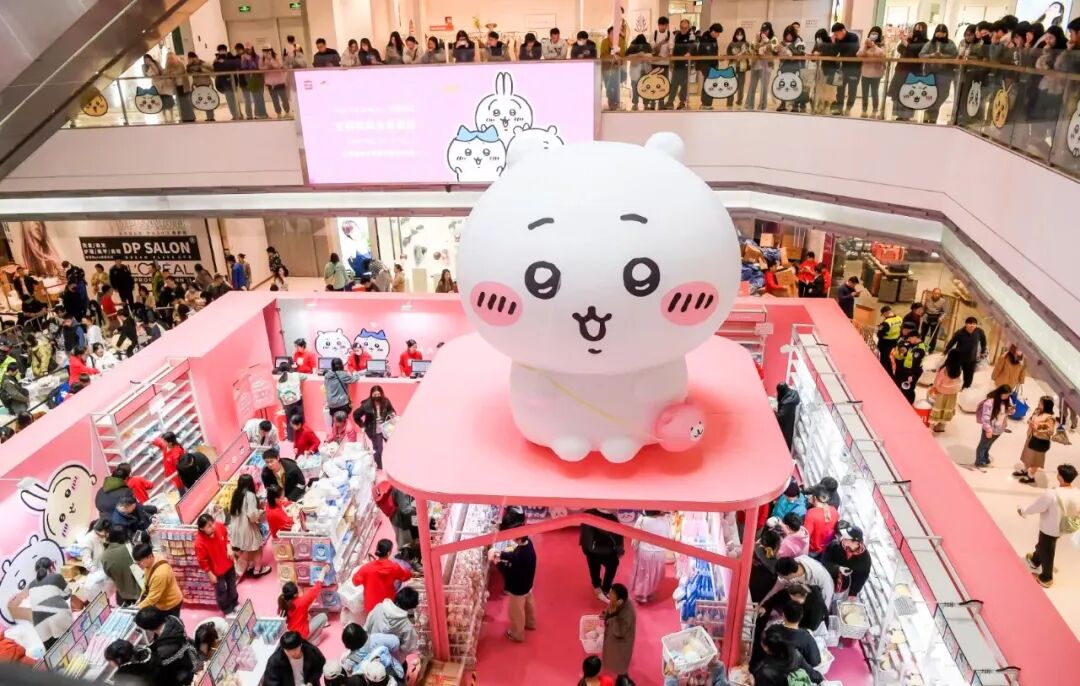
Pop-up activities in Jing'an Joy City
Calculated at this frequency, Jing'an Joy City updates an activity on average every four days. IPs take turns to enter, the background boards are replaced every month, and the atrium of the shopping mall operates like a film studio with no off-season.
But the data is really immediate: last year, Jing'an Joy