Car prices are getting lower and lower, so what is the price we pay for it?
Ahead of the holiday, a friend of mine who is preparing to buy a car recently with a budget of just over 200,000 yuan asked me for some advice.
Based on the requirements he raised, I recommended five models from three brands one after another. However, the problem was that this buddy did not give a definite answer during the seven-day long holiday. What's more, in the subsequent communication, I found that what he was struggling with was not which car to pick, but whether he should buy a car at the current moment.
At the end of our communication, there was only one sentence left: "What's the rush, just wait a little longer", which made all my previous efforts in vain. Yet I had no intention of refuting him, because from the perspective of September 2026, the "wait-and-see group" in China's auto market does represent the prevailing truth.
In the past less than two months, my peers in the automotive industry in my WeChat Moments have hardly had a single day off. Either one original equipment manufacturer launched a new car, or another brand rolled out its annual facelift model.
As early as mid-August, on the eve of the Chengdu Auto Show this year, multiple heavyweight cars had already started pre-sales. After that, new products were released one after another, and a new wave of climax came from September 21 to September 30 on the eve of the National Day holiday — within ten days, 27 brands launched a total of 28 new cars, and 9 new cars were launched on September 23 alone.
What is more striking than the number of new car launches is the price. Shortly after the pre-sale price is announced, the official launch price will be much lower. A 300,000-yuan car can be 20,000 to 30,000 yuan cheaper, and a 150,000-yuan car can be cut by another 10,000 yuan. When the limited-time benefit price and replacement subsidy are superimposed, the final price is far lower than the guide price.
The configuration level is also rising. Features like refrigerator, large screen and zero-gravity sofa have already become standard equipment. As for the 800V high-voltage platform, lidar, air suspension and zero-gravity seats, these premium features that only appeared on 300,000 to 400,000-yuan models three years ago are now listed on the configuration sheet of cars at the 200,000-yuan or even 150,000-yuan level.
Theoretically, this is the best era for consumers, but the market does not show a very positive sign. Even with clear intentions to buy or replace a car, the feedback from potential car owners is not frantic buying, and the proportion of people who choose to "wait a little longer" just like my friend mentioned above is on the rise.
On the one hand, the reason for hesitation is that there are too many new products and the selection range is so wide that people feel dazzled and overwhelmed. But on the other hand, many people are also skeptical about the contrast between the increasingly high configuration and the increasingly low price at present.
The combination of refrigerator, large screen and zero-gravity sofa has become the admission ticket for mid-to-large-sized cars. But at the same time, the sunshade curtain on the roof is gone, leaving only a glass canopy that gets scorching hot under the sun. Even in the invisible parts, materials like sound insulation cotton, adhesive coating and cavity wax injection are being quietly reduced. As for cases where the brake or accelerator pedal breaks, we can temporarily regard them as extreme cases and do not take them into special consideration.
All those details that will not be written on the configuration sheet and may not be felt during the test drive often can only be noticed after you pick up the car and drive it for a period of time, and get desensitized to all kinds of seemingly cross-level configurations...
N new cars are launched every day, and there are not enough car owners to go around
First of all, it is necessary to clarify the background, the general context where new cars are so numerous that there are "not enough car owners" —
On August 20, the Xjie G9 was launched one day before the opening of the Chengdu Auto Show. On the first day of the auto show the next day, the BYD Han EV started pre-sales, the SAIC Volkswagen ID.ERA 5S was launched, the MG 07 was launched, the third-generation Tang made its debut, plus the Dongfeng Aeolus L8Y, the all-new Deepal G318 and the pre-sale-launched BMW Neue Klasse iX3, eight cars were crowded on the same day.
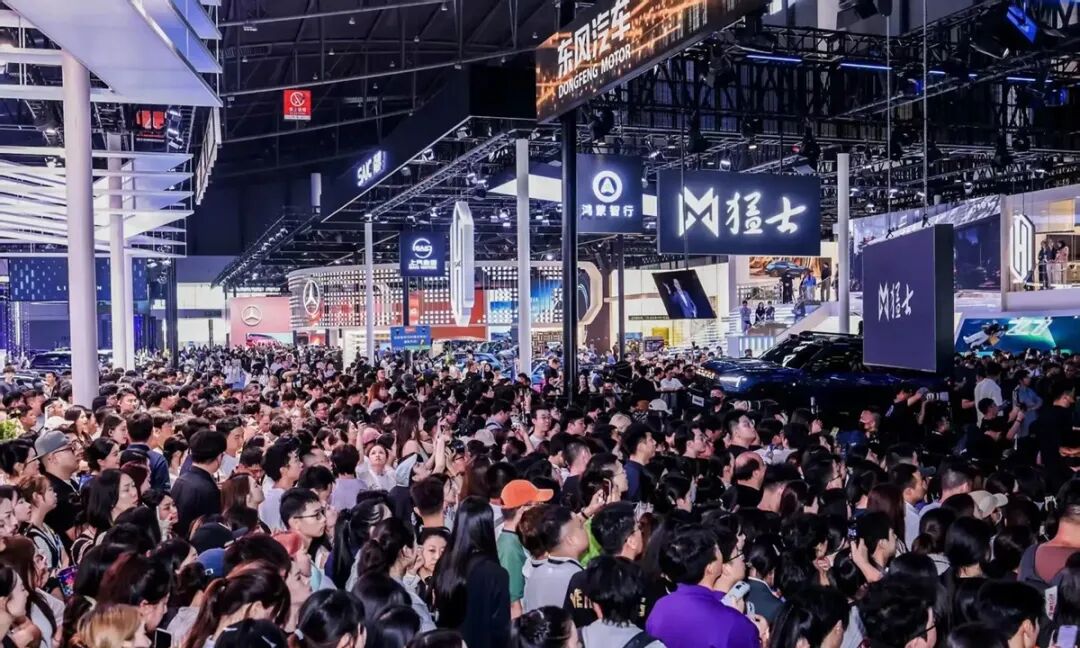
Photo | This is not to deny original equipment manufacturers or even the entire industry, but even with the uniquely large scale of the Chinese market that leads the world, at the current speed of new product launches, there are really not enough domestic car owners to share all these new cars
The situation was even more exaggerated in late September. According to incomplete statistics from Red Star Capital Bureau, 28 new cars from 27 automotive brands were launched from September 21 to 30, and 9 new cars were launched on September 23 alone. But the number is only the appearance, what really makes people feel uncertain is the price.
Almost all new cars in this round are doing the same thing: setting a price for pre-sale first, then cutting the price directly at the official launch, and then superimposing the limited-time benefit price and replacement subsidy. The pre-sale price of the Denza Z9S starts at 319,800 yuan, and the official launch price starts at 255,800 yuan. The pre-sale price of the Qijing GX7 starts at 249,900 yuan, and the limited-time benefit price at launch starts at 229,900 yuan. The pre-sale price of the Changan Qiyuan Q06 starts at 149,900 yuan, and the limited-time benefit price at launch is 135,900 yuan.
Joint venture brands are the same. The official guide price of SAIC Volkswagen ID.ERA 5S starts at 119,900 yuan, and the limited-time benefit price is directly pressed down to start at 89,900 yuan...
A B-class plug-in hybrid sedan is sold at the price range of A-class cars. In contrast, in the 200,000 to 300,000 yuan price range, it is no longer a novelty that the official launch price is 20,000 to 30,000 yuan lower than the pre-sale price.
On the other side of the downward price exploration, cars are getting larger and larger. The BYD Han EV with a length of 5256mm and a wheelbase of 3130mm has a pre-sale price starting at 249,900 yuan. The Qijing GX7 with a length of 5099mm and a wheelbase of 3070mm has a limited-time benefit price starting at 229,900 yuan at launch. Three years ago, cars of this size usually had a starting price of more than 300,000 or even 400,000 yuan, but now the price has been pushed down to the line of just over 200,000 yuan and less than 250,000 yuan.
If newly launched models have their own new pricing standards, we can take a look at the Xpeng P7, the benchmark of domestic pure electric coupe back then.
When the P7 was launched in April 2020, the price after subsidy started at 229,900 yuan, and the top configuration was 349,900 yuan. But after being updated to the "new generation", it re-appeared with full-domain 800V, 5C ultra-fast charging and more than 2000 TOPS of computing power, while the official guide price starts at 203,800 yuan, with the price directly cut by a notch. In particular, the 229,900 yuan back then was after subsidy, and there should be some discounts on the current guide price at the sales end.
Macroeconomic data confirms that the new car price range in China is continuing to move down as a whole. Cui Dongshu, Secretary General of the China Passenger Car Association, disclosed that there were 100 price-reduced models nationwide from January to August this year. Although the number is less than the same period last year, the average price reduction per car is still 30,000 yuan. The situation in August alone is more exaggerated. Only 10 models are publicly marked as price-reduced, but the average price reduction per new energy vehicle has reached 45,000 yuan.
While the price of each car is constantly decreasing, the size and configuration of cars are not getting smaller and more shabby. On the contrary, features that were exclusive to flagship models two years ago such as 800V platform, lidar, urban assisted driving, dual-chamber air suspension and rear-wheel steering are now listed on the configuration sheet of cars at the 150,000-yuan level. The size is also increasing, with a car length of 5.2 meters and a wheelbase of 3.1 meters, still sold at a price of just over 200,000 yuan.
With the same amount of money, you can get a larger car and a longer configuration list, and the price is lower than three years ago. Consumers will naturally become the "wait-and-see group", even if original equipment manufacturers launch limited-time free or limited-time promotion policies.
Moreover, as they wait, some people begin to wonder: the combination of refrigerator, large screen and zero-gravity sofa has become standard, lidar is also being popularized, and the price is getting lower year by year. From which part of the cost is this money saved?
This doubt itself is what really needs attention.
Behind the increasingly low price, what is the cost?
First of all, the examples below will not name specific brands. First of all, there are too many similar situations at present, so it is impossible to list all of them one by one, and naming a single brand will be very unfair. What's more, many changes are gradual and batch-based, so we can only discuss the phenomena and general direction.
The most easily noticed change is the configuration reduction brought by the newly added low-cost entry-level version. The entry-level version of a domestic brand's best-selling model launched in the past two years retains the panoramic canopy, but removes the electric sunshade. The annual facelift of a joint venture brand lowers the price threshold by 20,000 yuan, the entry-level version loses the front parking radar, and the wheel size of mid-to-high-end configurations is reduced from large to small. The low-end model of a new car-making force simply cancels the air suspension and head-up display, and the dashcam and sentinel mode disappear together.
The more hidden change is in the benefit list. A new car-making force quietly stopped giving away the rear mobile control screen in the recent facelift, and clearly stated that paid optional installation is no longer open. Similar situations include changing the lifetime warranty to a limited-time warranty, canceling the free charging quota, and changing the intelligent driving package from lifetime free to a subscription system. These things are never written on the vehicle configuration sheet, but only printed on the promotional posters. Once the policy is switched, consumers have no basis for comparison.
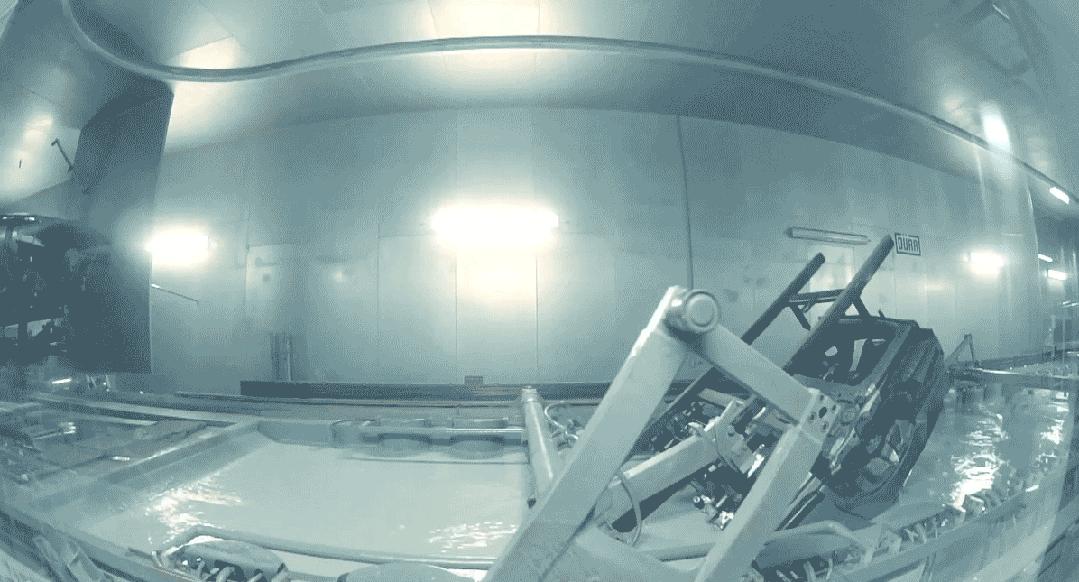
Photo | Electrophoresis, cavity wax injection, adhesive coating and other processes are completely invisible in daily use and will not be written on the configuration sheet, but they are the hardest hit areas of "material reduction"
The most disturbing part is the invisible layer, that is, the body material and process. The standard of electrophoresis can be lowered, part of the cavity wax injection can be saved, and the consequence is that the car will show rust after driving for two or three years. As for changing the chassis aluminum parts to steel, changing the double-layer sound insulation cotton of the four doors to single-layer, changing the double-layer laminated glass to single-layer, and simplifying the chassis galvanized layer, these are not even considered major issues.
When writing this article, I once came across a post in a car owner community, where the car owner complained that the sound insulation cotton was removed from the inner lining of his newly bought latest sedan of a domestic brand, and there was severe wind noise when the speed reached 80km/h. However, when he complained to the 4S store, the reply he got was that this was a design issue of the manufacturer, not a quality problem, and could not be accepted for handling...
These places do not affect taking photos and posting on Moments on the day of picking up the car, but they are related to abnormal noise three years later, rust five years later, and the experience of every drive on the viaduct and highway.
Why do we have to engage in all these abnormal practices? The answer is hidden in the industry's accounts.
From January to August this year, the revenue of China's automotive industry was more than 7 trillion yuan, a year-on-year increase of 2.9%, but the cost increased by 4%, the profit was only 253.4 billion yuan, a year-on-year decrease of 16%, and the sales profit margin fell to 3.6%. Calculated based on the average price of just over 200,000 yuan per car, original equipment manufacturers can only make a profit of about 3,000 yuan for each car they sell. The situation in the vehicle manufacturing link is more severe, and the average profit margin can be described as "miserable".
On the contrary, the upstream is still raising prices. The prices of memory, lithium carbonate, non-ferrous metals and semiconductors are rising all the way, which means the industry is squeezed from both ends. With such a poor financial performance, the pressure can only be passed along the industrial chain. In August, the dealer inventory coefficient was 1.58, more than 80% of dealers had price inversion, and loss per car has become the norm. More than 70% of dealers are in a loss state in overall operation. According to incomplete statistics, more than 1,800 authorized stores have closed or exited the network in the first half of the year.
Original equipment manufacturers are not unaware of how to make a "conscientious" car, but if they continue to be "conscientious", the cost will collapse, the pricing will be too high, and they are destined to be unable to beat competitors with more favorable prices. So there is only one way left: fill up all the visible parts, and as long as it is compliant and legal, quietly save costs in the invisible places.
The mentality on the consumer side is also tangled. On the one hand, consumers pursue large size and complete functions, large space, zero-gravity seats, lidar and air suspension are all indispensable. On the other hand, they want the lowest price, and a car that is 10,000 yuan more expensive than others in the same segment is considered insincere...
McKinsey's China Auto Consumer Insights this year gives a counter-intuitive conclusion: the stimulation of price war on demand is failing. Among the car owners who bought cars in the past year, the proportion of people with a negative attitude towards price war is higher than that of people with a positive attitude, while the positive feeling brought by technological iteration and configuration upgrade has nearly doubled. The more the price drops, the less people buy, and the less people buy, the more the price drops. Behind this is the reality of unstable income under deflation expectations, and people's psychological threshold for spending an extra 20,000 yuan has been raised extremely high.
The farce three years ago and today's mess
Speaking of which, I have to mention an old event.
On July 6, 2023, at the China Auto Forum hosted by the China Association of Automobile Manufacturers in Jiading, Shanghai, the heads of 16 auto companies including FAW, Dongfeng, SAIC, Changan, BAIC, GAC, Sinotruk, Chery, JAC, Geely, Great Wall, BYD, NIO, Li Auto, Xpeng and Tesla sat together and signed the "Commitment Letter on Maintaining Fair Competition Market Order in the Automotive Industry". The first article promised not to disrupt the fair market competition order with abnormal prices.
Then, public opinion exploded. The first reaction of netizens was not praise, but questioning whether this was a price alliance, a "cartel", and why more than a dozen companies could decide what normal price is for consumers, and so on.