The Other Side of the "Great AI Opportunity" for Digital Employees
Recently, an enterprise engaged in a critical yet underrated AI application track is sprinting toward the capital market: Zhuhai Jinzhiwei Artificial Intelligence Co., Ltd. has submitted a new listing application to the Main Board of the Hong Kong Stock Exchange. This marks its second attempt, after its first submission on December 15, 2025 lapsed upon the expiration of the 6-month validity period.
According to its prospectus, as of the end of June 2026, Jinzhiwei has deployed more than 2 million AI digital employees in terms of authorization volume, "covering more than ten industries including financial services, government affairs, and manufacturing, serving a total of over 1,600 customers (including more than 120 Fortune Global 500 and Fortune China 500 enterprises)", and "has provided services for over 270 banks (covering all six major state-owned banks in China), over 130 securities firms (covering more than 90% of securities firms in China), and more than 220 other major financial institutions."
Observing this digital employee manufacturer from a business perspective, its business is future-oriented with prominent technological attributes, which should theoretically deliver solid financial performance, be sought after by capital, and receive regulatory support. However, the financial data tells a far more complicated story.
From 2023 to 2025, its total accumulated losses over the three years amounted to approximately 531 million yuan. Its cash and cash equivalents on the books are only about 72 million yuan, while its liabilities related to redeemable preferred shares are as high as 2.126 billion yuan.
A tech enterprise that has deployed 2 million digital employees and boasts a star-studded customer base still fails to deliver satisfactory financial results. Behind this phenomenon lies a story about AI, business models, and operational validation.
Appeal of the Track
The story of the AI sub-track focused on digital employees does sound sufficiently appealing.
According to estimates in a report released by iAnalysis in July 2026, the market size of digital employees in China will surge from 7.47 billion yuan in 2025 to 209.84 billion yuan in 2030, representing a staggering compound annual growth rate of 94.9%. The underlying logic behind this explosive growth is attributed by the institution to "the qualitative transformation of digital employees from cost-cutting tools to a new type of labor force".
In Jinzhiwei's prospectus, AI digital employees are defined as "virtual workforce that integrates RPA and AI technologies (such as OCR, ASR, NLP and large language models), capable of replacing humans to complete standardized, repetitive and cross-system operational tasks in enterprises and government departments."
Once digital employees are defined as "labor force", their connotation and extension have been fully upgraded, the market ceiling has been raised significantly, and the necessity for institutions to make relevant layouts has also increased substantially.
In the past, budgets for information technology and other related items were classified as enterprise IT informatization expenditures. However, when the "labor attribute" of information technology emerges, its track will expand from IT information to human resources.
This logic is undoubtedly extremely compelling: If digital employees as commodities can really be incorporated into the enterprise staffing system just like human employees, the market they face will no longer be limited to the software market, but the entire labor market.
In this narrative, Jinzhiwei, with years of industry accumulation, has grown into a leading player in this track.
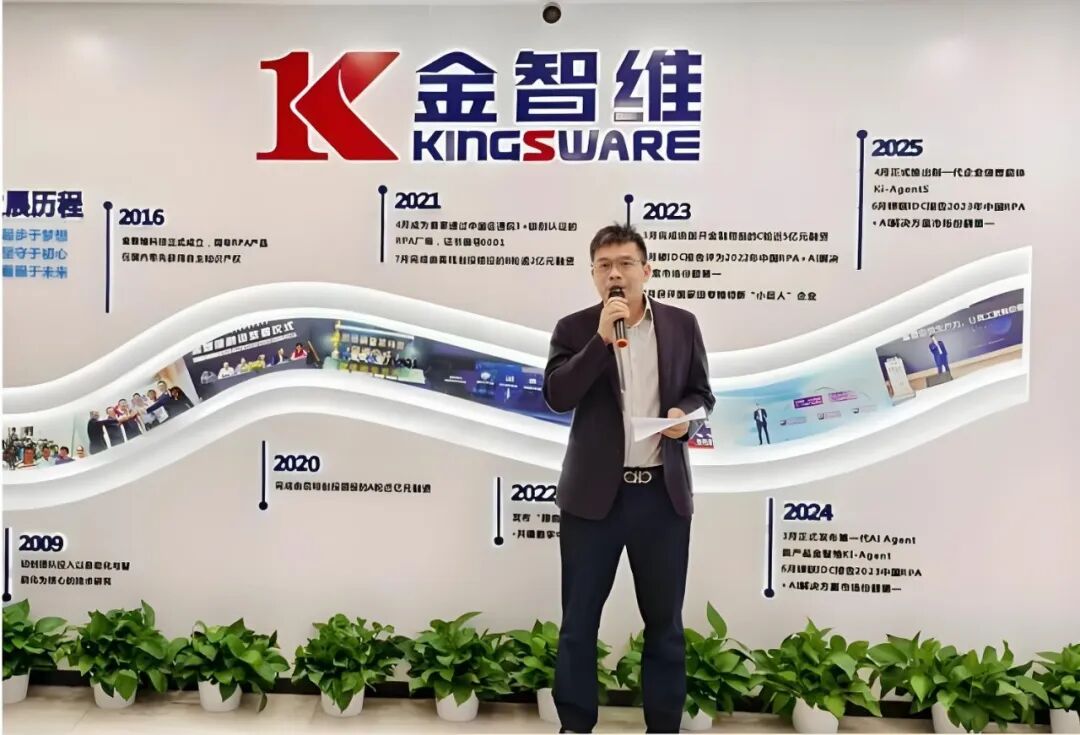
Liao Wanli, the founder, graduated from the School of Computer Science and Application of Hangzhou Institute of Electronic Engineering in 1993, and immediately joined the technology department of Zhuhai Branch of Agricultural Bank of China, where he worked as a core technical staff for nearly 8 years. After leaving the bank, he held key positions in financial IT companies including Yuxin Yichu, Mingtai Information, Yuxin Hengsheng, and Kingdom Technology.
In March 2016, he founded the current Jinzhiwei in Zhuhai.
Having a background in core banking systems is one of Jinzhiwei's key competitive features.
In the 2019 global tender of China Construction Bank, Jinzhiwei competed head-to-head with international peers including UiPath, Blue Prism, and Automation Anywhere, and its K-RPA product won the bid with the top score. Since then, Industrial and Commercial Bank of China, the Export-Import Bank of China, multiple provincial branches of Bank of China, and the Credit Card Center of Bank of Communications have successively become its customers.
As of the end of June this year, Jinzhiwei has provided services for more than 270 banks, and revenue from the financial services industry has long accounted for about 70% of its total revenue.
However, behind its impressive track record lies continuous financial pressure.
In the first half of 2026, Jinzhiwei recorded a revenue of 65.13 million yuan, representing a year-on-year increase of 41.7%. But from a longer-term perspective, the company's growth trajectory over the past three years has been almost flat. From 2023 to 2025, the company's revenue reached 217 million yuan, 243 million yuan, and 256 million yuan respectively, with a two-year compound growth rate of only about 8.7%.
In comparison, the compound growth rate of China's enterprise-level AI solution market reached 37.1% in the same period — enterprises are investing more funds in AI products other than digital employees.
Its profit performance is far less impressive than its revenue performance. From 2023 to 2025, Jinzhiwei's net loss expanded year by year from 62.57 million yuan to 346 million yuan, with a total accumulated loss of 530 million yuan over the three years. It continued to lose 109 million yuan in the first half of 2026.
Even after excluding factors such as fair value changes of financial instruments including redeemable preferred shares, its adjusted net loss expanded from 2.95 million yuan in 2024 to 27.13 million yuan in 2025, and further expanded to 56.82 million yuan in the first half of 2026.
Mounting Operational Pressure
To understand why Jinzhiwei's revenue growth does not translate into profit growth, we first need to analyze its revenue structure.
In 2025, Jinzhiwei's project-based revenue reached 197 million yuan, accounting for 76.9% of its total revenue, among which customized development and deployment services accounted for nearly half of its total revenue, reaching 127 million yuan.
In addition, its subscription-based revenue dropped from 58.73 million yuan in 2024 to 43 million yuan in 2025, with its proportion falling to 16.8%. The gross margin of project-based business is 44.2%, while the gross margin of subscription-based business is 75% — the former is less than 60% of the latter.
This is a critical structural problem.
In the context of this company, project-based business mostly refers to customized services with separate negotiation for each single order. Under this model, each customer requires the on-site implementation team to conduct demand research, process configuration, scenario debugging, and on-site acceptance. Revenue expansion is highly dependent on headcount expansion, making marginal costs extremely difficult to dilute.
Data confirms this point. In 2025, Jinzhiwei's outsourced deployment costs rose 139% to 28.58 million yuan. In the first half of 2026, among Jinzhiwei's 905 employees, the number of delivery and operation & maintenance personnel reached 373, exceeding the 342 R&D personnel.
Such a business model will significantly increase the expenditure on cost items.
First of all, for every new customer acquired, the company needs to allocate corresponding implementation and operation & maintenance manpower, and the cost of these personnel is rigid, which is difficult to be diluted as the scale grows.
Secondly, the project-based model will also lead to increasing pressure on the expense side. In the first half of 2026, sales and distribution expenses increased from about 29.21 million yuan in the same period of the previous year to about 59.96 million yuan, up 105.3%, far exceeding the 41.7% revenue growth rate in the same period. The proportion of sales expenses in revenue surged to 92.1% from around 29% from 2023 to 2025.
To maintain the effective operation of projects, R&D expenses also need to be increased simultaneously. From 2023 to 2025, Jinzhiwei's R&D expenses increased from 55.38 million yuan to 78.77 million yuan. In the first half of 2026, it continued to grow by 34.5% to 42.53 million yuan, accounting for as high as 65.3% of revenue.
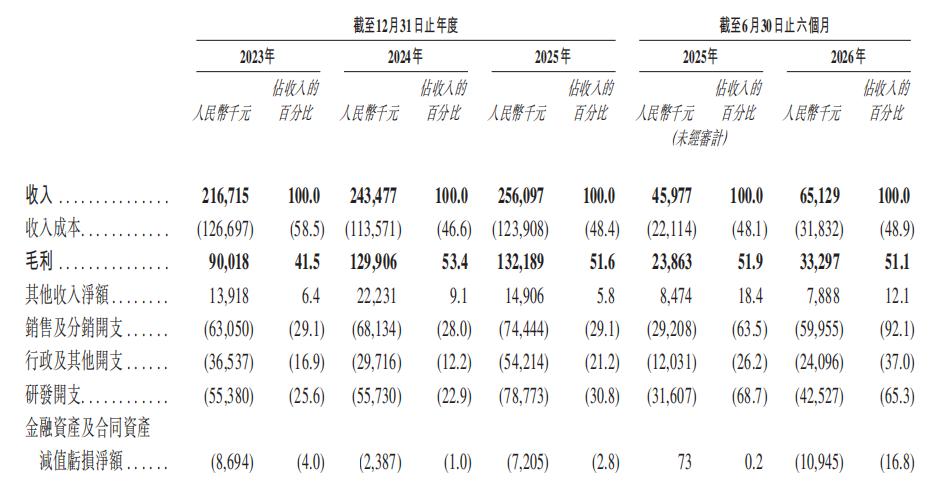
The low gross profit of its main business and high expenditure inevitably lead to pressure on its balance sheet.
As of the end of June 2026, Jinzhiwei's cash on its books is only about 72 million yuan, while its liabilities related to redeemable preferred shares are as high as 2.126 billion yuan. These liabilities stem from the bet-for-value arrangements signed with investors during financing — if the IPO is not completed, investors have the right to require the company to redeem their shares.
This means that if the IPO is blocked again, the company will face greater liquidity pressure. Listing has become an inevitable path for Jinzhiwei to sustain its operations.
However, even if the listing is finally completed, Jinzhiwei's development bottleneck will hardly be resolved in the short term, which is determined by the current development stage of the digital employee track.
Testing Ground of the Industry
Although many enterprises claim that digital employees "save manpower" or "improve efficiency", most of these effects do not have unified standards, and few enterprises can break them down into quantifiable profit contributions in their financial reports.
For example, in financial scenarios, there are multiple standards to measure the value of digital employees:
Industrial and Commercial Bank of China and China CITIC Bank adopt the unit of "man-year". The former believes that "the annual workload undertaken by AI digital employees is equivalent to 55,000 man-years", while the latter states that intelligent models have improved efficiency by more than 17,000 man-years;
Bank of Jiangsu uses the concept of "man-hour". Its 2026 semi-annual report discloses that various AI-related applications across the bank have cumulatively replaced 1.2 million man-hours;
China Merchants Bank claimed in its annual report that "AI has saved more than 15.56 million hours of manual work".
No matter which expression is used, none of the major banks have finally summed up the cost reduction results into tangible monetary figures.
The lack of a sufficiently unified evaluation framework means that enterprises' procurement decisions are more "driven by the trend of the times". Their main motivation is not to fall behind in the industry's AI competition, and they have not yet entered the stage of real efficiency verification and value-driven procurement.
This procurement model also brings many problems to suppliers. In addition to facing greater bargaining pressure, once the product fails to meet expectations or cannot generate commercial returns, enterprises are very likely to stop using it, remain wait-and-see, and wait for product upgrades.
Jinzhiwei's customer retention rate dropped from 74% in 2023 to 66% in 2025, and further fell to 60% in the first half of this year. Its average customer unit price dropped all the way from 380,000 yuan to 150,000 yuan.
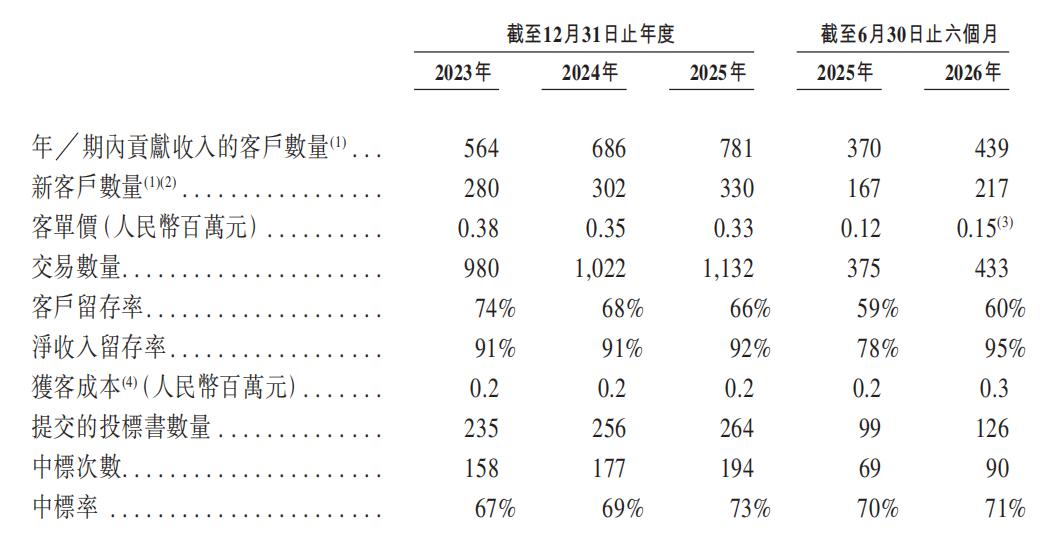
Putting these indicators together paints the following picture: the AI project has been launched, but customers do not see sufficient returns, so they choose not to renew the contract, or require suppliers to lower their quotations.
Moreover, this is not the predicament faced by Jinzhiwei alone.
According to the global technology report released by KPMG in June 2026, 88% of surveyed enterprises have begun to integrate Agentic AI into their systems, but only 24% of enterprises can achieve return on investment across multiple AI use cases.
According to the 2026 H1 CIO report released by Gartner, 83% of CEOs are increasing their investment in AI, and 59% of AI projects fail to enter the production environment. Among the 11,000 CIOs surveyed, 71% said it is difficult to select AI application scenarios that can bring quantifiable results.
In other words, everyone thinks digital employees are a promising product, but few enterprises actually save money by using them, and even fewer can calculate exactly how much money they have saved.
The track seems to have unlimited potential, but in fact almost all participants are moving forward through trial and error. In this environment, customers will not entrust all their digital employee procurement to a single dominant supplier, and the industry will remain relatively fragmented.

According to data from Frost & Sullivan, although Jinzhiwei ranks first in the AI digital employee solution market with a market share of 3.3% in 2025, the second and third players account for 2.9% and 2.1% respectively, and the total share of the top five manufacturers is only about 11.3%.
It can be seen that this is a highly fragmented early-stage market with low access thresholds and no dominant competitive barriers formed yet.
If the overall intelligence level of the entire industry is significantly upgraded in the future, a large number of institutions including financial institutions will take action again. Before that, institutions will remain relatively indifferent to suppliers' products. It is more like a necessary but relatively cautious "strategic allocation" oriented to the future, rather than a pure purchase of digital employee products.
For suppliers like Jinzhiwei, this is a strategic opportunity period in the early stage of industry development, but it is also a continuous torment.
Conclusion
The difficulties faced by this company are essentially a typical sample of the upcoming AI era, where all tracks are gradually moving from the carnival of concepts to the real validation process of specific commercial activities.
AI has become a strategically oriented direction with strong long-term certainty across all industries, but the tactical approaches are generally far from mature.
Pioneers can gain capital attention, land on the capital market, and even obtain a large number of customer orders. Even so, all participants are still in the early stage of industrial development, and digital employees and Jinzhiwei are typical representatives in this stage.
For capital and customers, the various emerging AI products at the current stage share similar common features: they are future-oriented and will surely have sufficient development opportunities, but time will always be the key criterion to