Elon Musk himself admitted that only three entities across the globe have sufficient data, and he is not among them.
$600 Billion: Buying a Missing Admission Ticket
On October 10, at the X Takeover event with more than 2,000 attendees, Elon Musk joined the scene remotely. The host asked him directly: Why did you acquire Cursor?
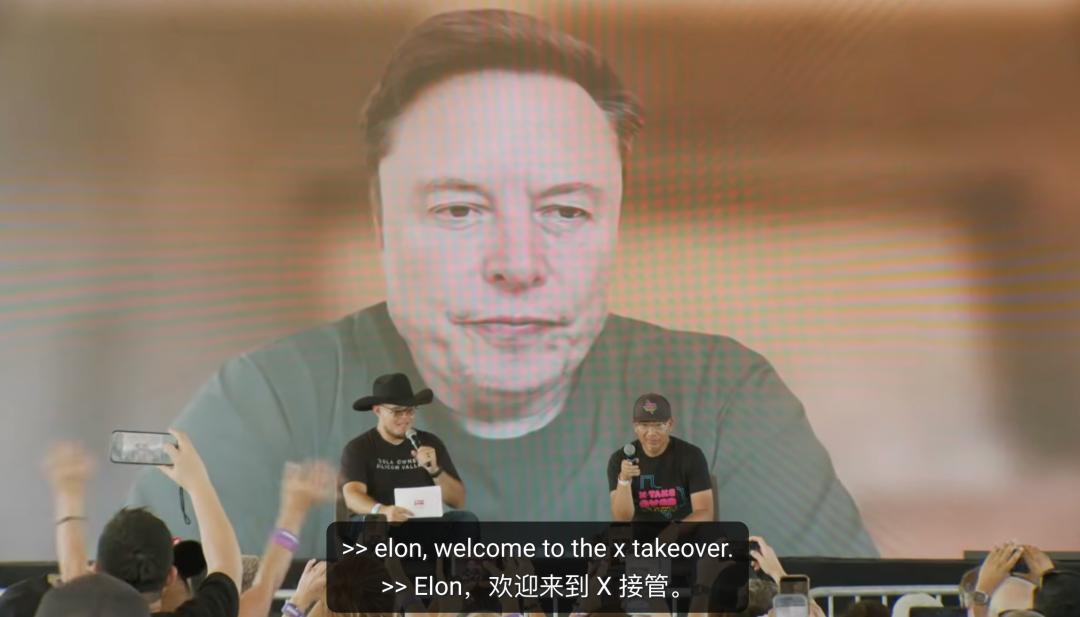
Musk's 61-second response quickly spread across the entire internet.
He said that to build a decent superintelligence, you have to get programming right. And as far as he knows, there are only three companies in the world that have gathered enough programming training data —
OpenAI, Anthropic, and Cursor. Google barely counts as half of one.
There is no xAI, no Grok, and no sign of Musk himself on this list.
A man who owns rockets, Colossus supercomputing power and Tesla admitted in front of more than 2000 audiences:
On the most critical path leading to superintelligence, he did not have an admission ticket originally.
So he bought Cursor.
Why Are Programming Data So Extremely Valuable?
Cursor is a code editor that programmers spend hours on every day to write code.
When AI gives you a suggestion, you can press Tab to accept it, delete it directly, or modify several lines before using it.
Every operation like this is equivalent to grading an assignment for the AI — tick the correct answer, mark the wrong one, and attach the correct solution for partially correct results.
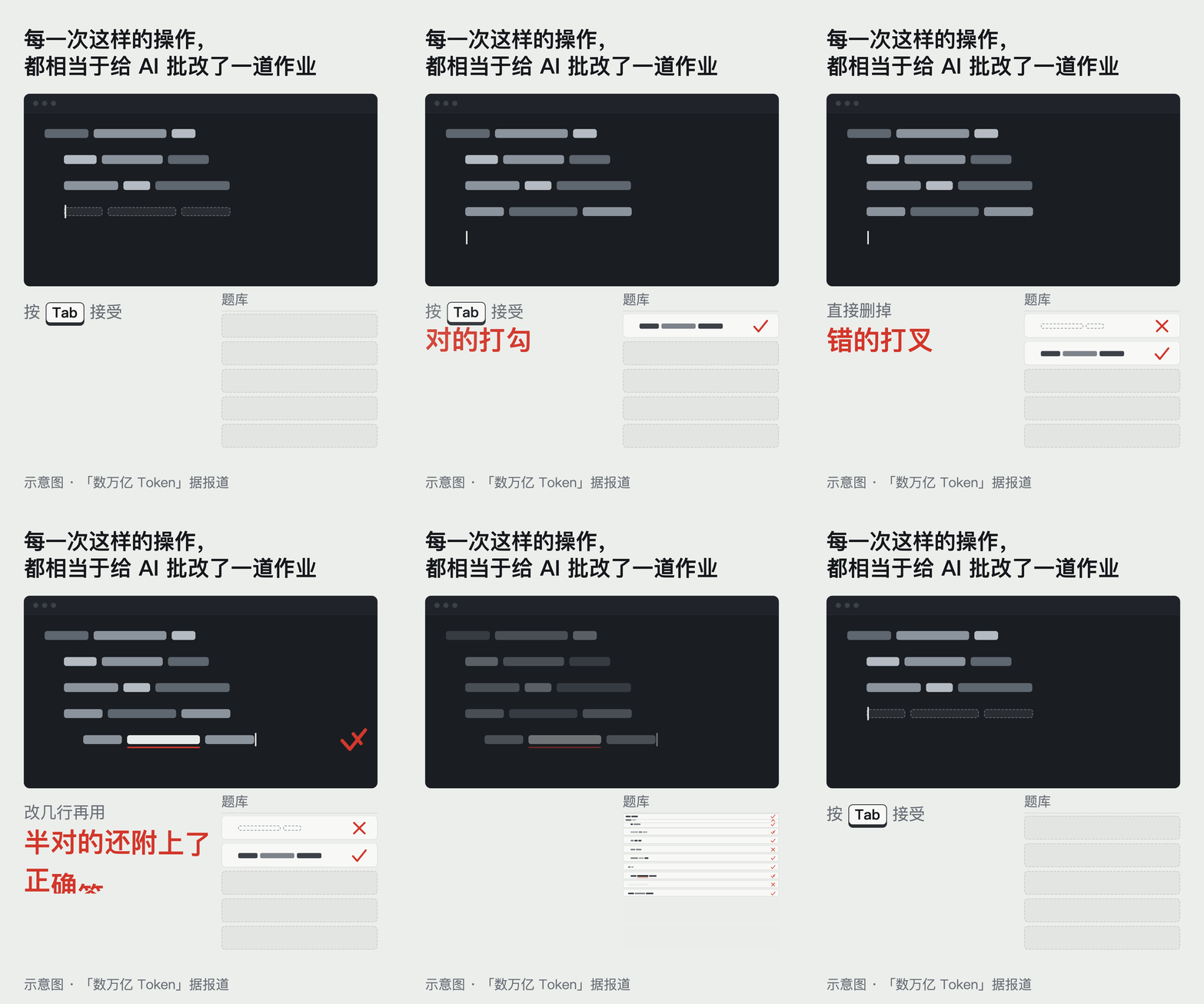
According to reports, Cursor used trillions of Tokens of such real developer interaction data during its training process.
This kind of data cannot be crawled from the internet, nor can it be generated in laboratories. It can only be accumulated line by line, day after day by tens of thousands of real programmers.
Musk himself also explained why programming is the most special field in the same interview: software logic is deterministic and can run unit tests.
You will know immediately whether the code is correct after running it, and the result does not rely on anyone's subjective scoring.
Programming is the subject where AI can most easily "practice to level up" on its own. The larger the question bank and the more grading records there are, the faster the AI can improve.
And the quality of grading records is extremely critical.
Musk also shared a very impressive detail. When he checked the reinforcement learning training records of the new version of Grok, he found that sometimes the AI was judged wrong even when it gave the correct answer, because the question itself was flawed. Then the AI would frantically try random answers as if there was a gun pointing at its head.
He said he would hate that feeling if he were the AI.
If the question is wrong, the AI's training is wasted, and it may even go further off track. Every choice made by real programmers — accepting this piece of code, rejecting that one, modifying two lines here — is the most reliable grading record, because it comes from real work, and the judgment of right or wrong is made by real people.
The one who holds the largest and cleanest question bank is one step closer to ASI.
He Has All Kinds of Resources, But Just Lacks This Part
Looking back at Musk's assets: X has massive text data, Tesla has road scenario data, SpaceX has engineering data, and Colossus has the world's top GPU computing power. He has no shortage of resources in all these fields.
But he just lacks the data generated by real people writing real code.
A side proof can well illustrate this point. In IDC's analysis in early September this year, it was mentioned that Musk admitted in a sworn testimony that xAI had used OpenAI's outputs to train Grok.
Without enough data in his own question bank, he could only practice by copying others' answers. But Musk knows better than anyone that this path cannot go far.
Computing power can be built with capital investment, and models can catch up with enough time. But programming data can only be accumulated line by line by users.
Cursor is a company founded in 2022. In just a few years, it has accumulated the resource that Musk said only three companies in the world own.
In April this year, SpaceX and Cursor announced their cooperation. SpaceX got an option: either pay 10 billion US dollars to continue the cooperation, or spend about 600 billion US dollars to acquire the whole company.
SpaceX chose to acquire the whole company.
At 600 billion US dollars, the most expensive acquisition in the history of startup takeovers, Musk himself gave the reason: this is not buying a product, but buying an admission ticket.
Four Elements for Building Superintelligence, the Fourth One Is the Most Unexpected
At this event, Musk even made the formula for building superintelligence public:
Data, talent, computing power, plus a strong enterprise sales team.
Everyone basically agrees on the first three elements. The fourth one is the real surprise — an enterprise sales team?
What does building superintelligence have to do with sales?
They are highly connected. The cooperative relationships with thousands of companies mean that Cursor has already been installed on the computers of programmers in these companies.
If superintelligence wants to enter real work scenarios, these are ready-made entrances. The more doors are opened, the more people use the tool, the more new programming data is generated, the better the model is trained, and the more companies the product can be sold to.
The process of technology development and the process of application form a flywheel here.
Musk has calculated everything more clearly than anyone else: in real companies, programmers write code and reject AI suggestions every day, the questions come from real work, and the judgment of right and wrong is made by real people. Every time the sales team knocks on the door of a new company, the AI gets one more real exercise book.
Superintelligence is not only a technical problem, but also a business problem.
On July 8, SpaceXAI and Cursor jointly released Grok 4.5, focusing on programming and Agent capabilities, trained on tens of thousands of NVIDIA GB300 chips.
Musk called it Opus-level, with faster speed, lower Token consumption and lower cost.
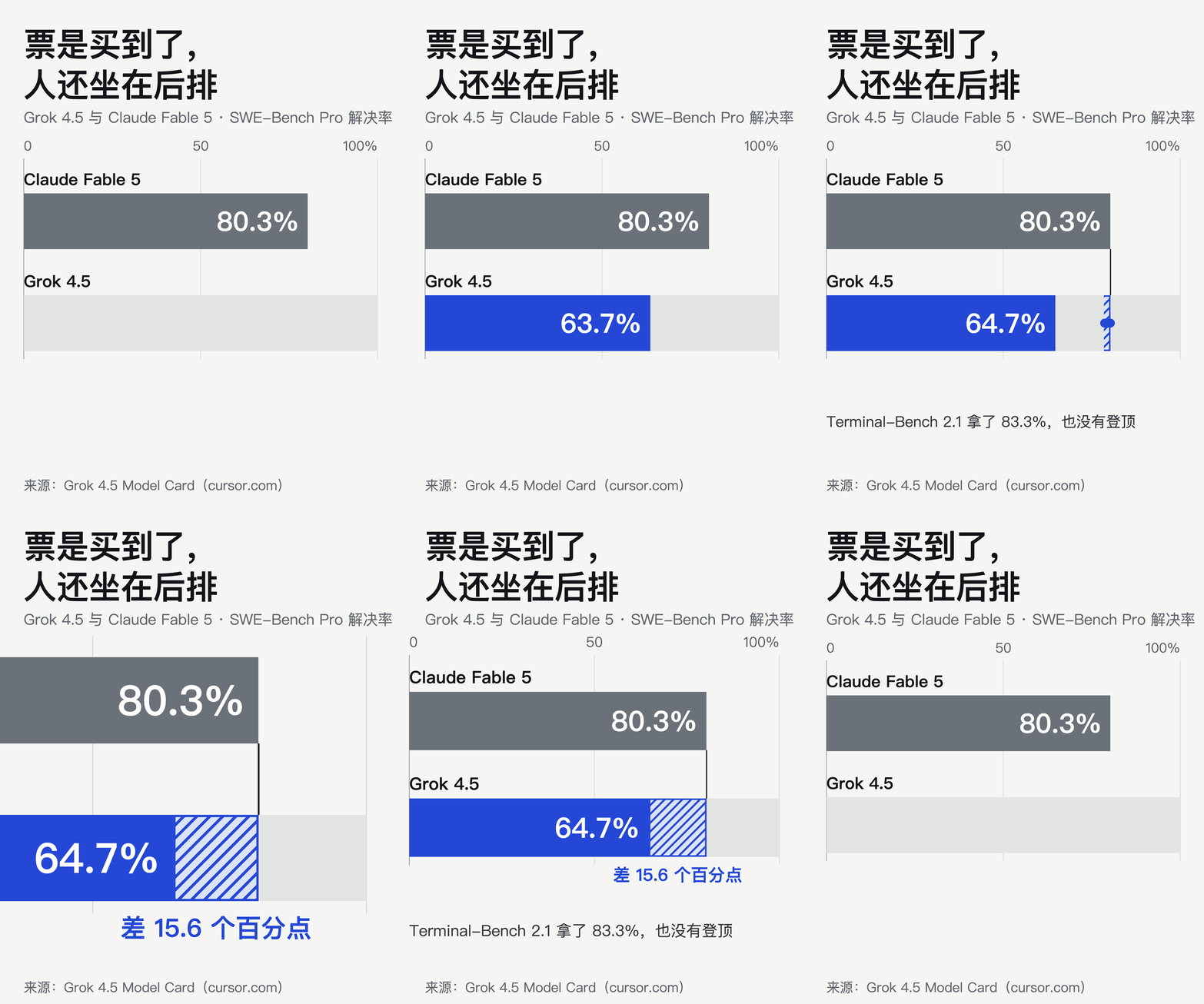
But its actual performance is 64.7% resolution rate on SWE-Bench Pro, lagging behind Claude Fable 5's 80.3%; it got 83.3% on Terminal-Bench 2.1, which is not the top score.
The ticket is bought, but he is still sitting in the back row.
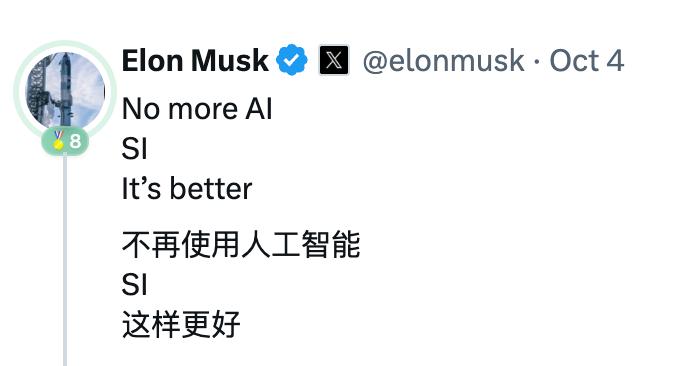
On October 4, Musk confirmed on X that SpaceXAI was renamed SpaceXSI — SI stands for Super Intelligence. He has written the destination in the name, but whether he has reached it is another story.
OpenAI has Codex, as well as massive programming conversations in ChatGPT.
Anthropic has Claude Code, which has an astonishingly large usage volume in programming scenarios.
The first two companies named by Musk have long held full control of their own models, programming products and programming data.
Interestingly, Musk spoke highly of his competitors. In the interview, when talking about AI-generated music MVs, he specifically praised Claude and said "we have to give them a lot of credit". When talking about AI safety, he said "I agree with some of the points Anthropic has made".
You Think You Are Writing Code, But Actually You Are Teaching Superintelligence to Write Code
Musk's interview publicly rewrote the scoring rules of the ASI competition.
In the past few years, everyone has been counting GPUs. Whoever has more GPUs is closer to the finish line.
But now, a man who owns the world's largest computing power cluster has paid the highest price in the history of startup acquisitions to buy something that cannot be exchanged for by any amount of computing power —
Human judgment.
Computing power can be stacked with capital, but data can only be accumulated by people. Every record in programming data represents a choice made by a real programmer: accept this part, reject that part, modify a few lines before submission. The judgment of right and wrong is made by real people and verified by machines, with no extra impurities at all.
Therefore, the tuition fee for superintelligence is not generated by burning electricity in data centers of tech giants, but pressed out bit by bit by programmers all over the world.
References:
https://x.com/ns123abc/status/2109105516941107311
Editor: Solomon
This article is from the WeChat official account "AI Era", written by ASI Revelation, and published with authorization from 36Kr.