After three years of frenzied development, Chinese-style fried chicken brands no longer pursue reckless store expansion.
Is the fried chicken business really easy to run?
Recently, even Cotti Coffee has started testing the fried chicken business.
One Cotti Coffee store in Ningde, Fujian has launched four types of freshly brewed draft beer and freshly fried snacks (fried chicken, fries, etc.). Cotti Coffee responded that relevant products are currently only available in this one store, which means fried chicken is a highly visible business track.
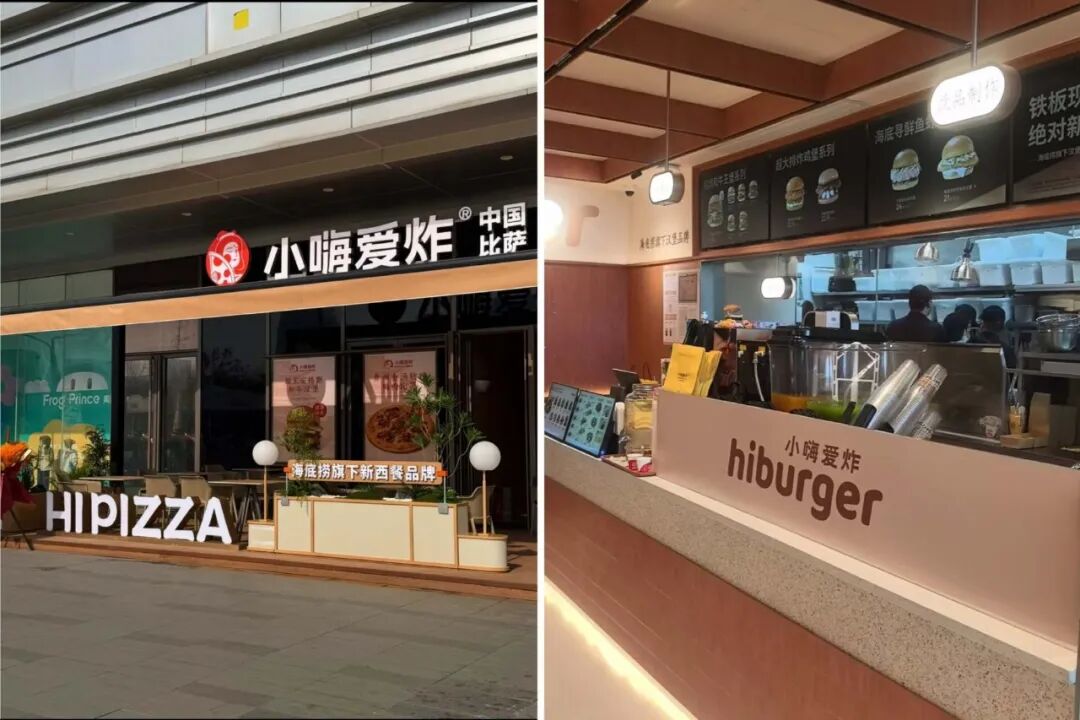
Haidilao made an earlier attempt. In 2024, the first store of Xiao Hai Ai Zha opened in Taiyuan, followed by different models including "Xiao Hai Ai Zha · Chinese Pizza" in Xi'an and "Xiao Hai Ai Zha hiburger" in Changsha. However, when industry insiders recently checked on Dianping, it was found that all stores of Xiao Hai Ai Zha in Taiyuan, Changsha, Wuhan and other cities have been closed down.
Not only local brands are increasing their investment, international fast food giants are also continuously expanding into the Chinese-style fried chicken track.
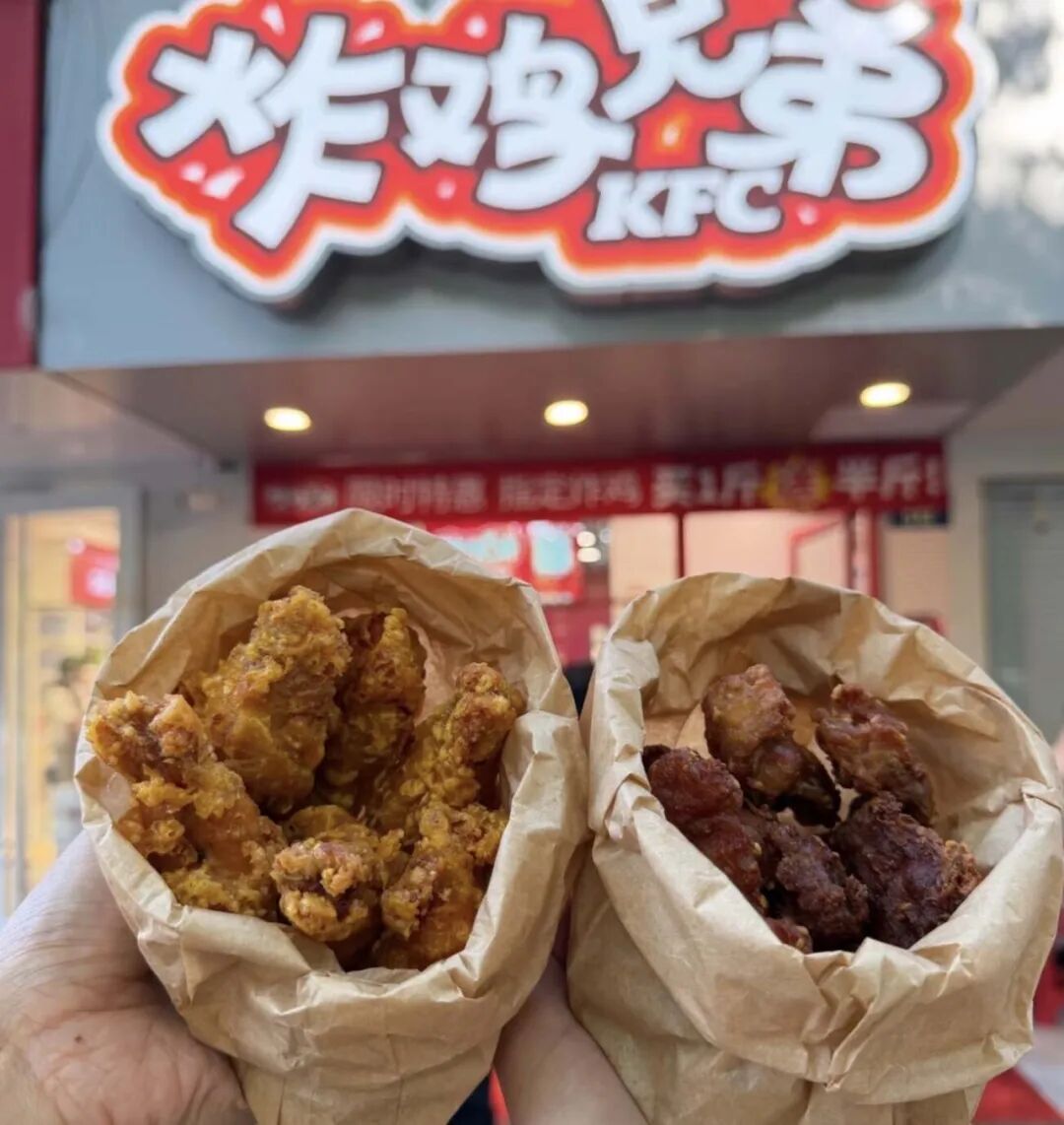
KFC has launched the dual-model brand Fried Chicken Bros, covering Chinese-style and Korean-style fried chicken formats respectively. According to incomplete statistics, KFC Fried Chicken Bros has quietly opened more than 20 stores in Shanghai, Hangzhou, Xiamen, Chengdu, Tianjin and other cities.
Behind the rush of giants to enter the track is the dividend brought by the expansion of the Chinese-style fried chicken sector. However, beneath the bustling appearance, the prominent pain points of the industry - large overall category scale, small individual brand size and high market fragmentation - still remain.
Industry data shows that about 95.7% of brands in the current market have less than 5 stores, small and medium unlicensed brands are being phased out at an accelerated pace, and resources are concentrating on leading players. In 2026, the Chinese-style fried chicken sector presents the characteristics of "brand stratification, track segmentation, and elimination of inferior players".
Leading brands slow down expansion, joining the reserve force for 10,000-store scale
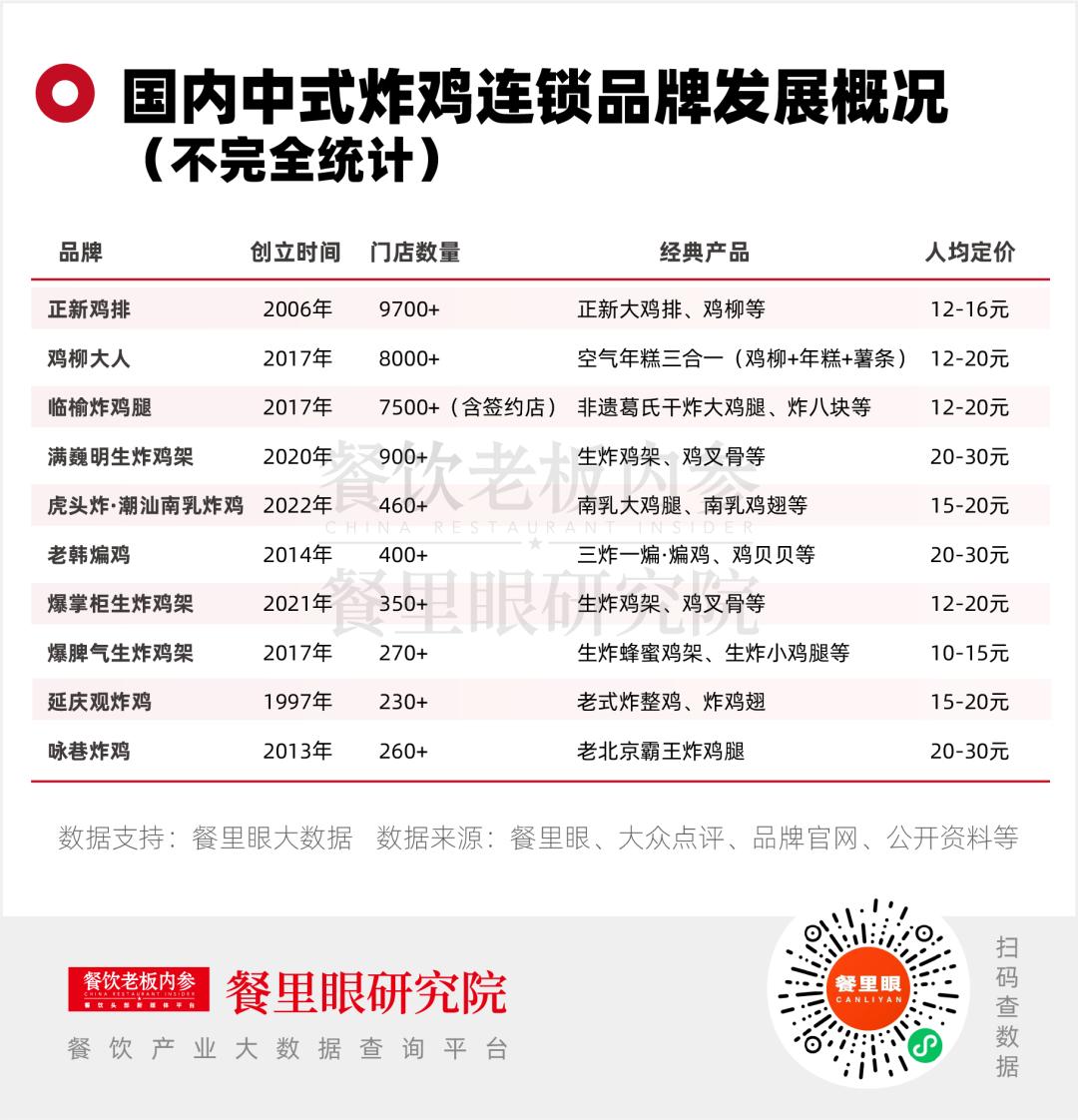
In terms of store scale, Zhengxin Chicken Steak, Chicken Fillet Master and Linyu Fried Chicken Drumstick rank at the top.
With their extremely lightweight small store model, Chicken Fillet Master and Linyu Fried Chicken Drumstick have steadily secured their positions in the reserve force for 10,000-store scale, underpinning the basic market of the Chinese-style fried chicken sector.
Public data shows that Linyu Fried Chicken Drumstick currently has more than 7,500 stores nationwide (including signed stores), maintaining a new store growth of over 1,000 per year. Chicken Fillet Master has grown rapidly from less than 300 stores in 2022 to more than 8,000 stores globally in 2026, registering dozens of times of growth in four years.
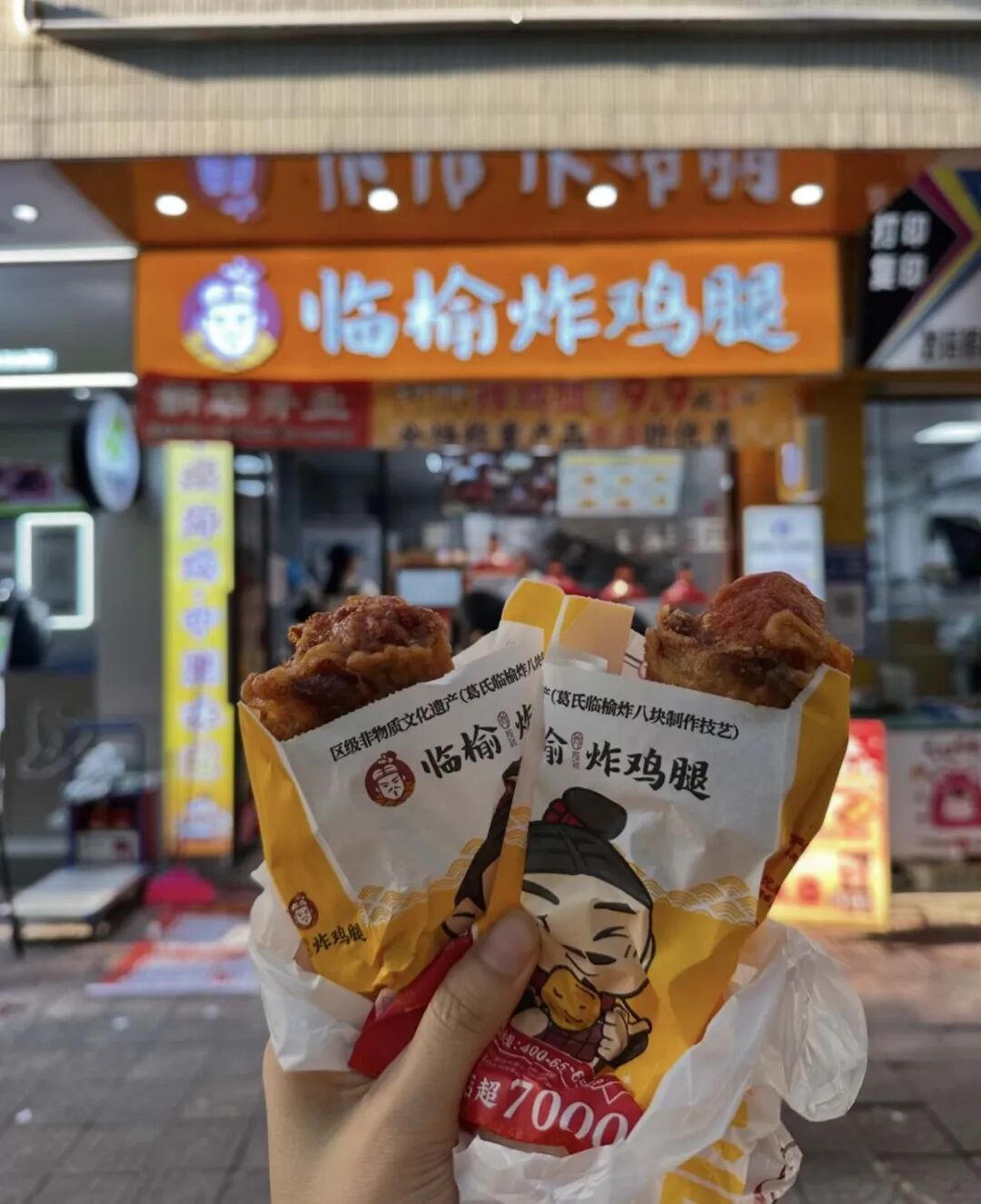
Both brands saw their peak of explosive store growth in 2025. Public data shows that Chicken Fillet Master added more than 3,500 new stores throughout the year, opening 9 new stores per day on average; Linyu Fried Chicken Drumstick added 2,453 new stores in the whole year, hitting a new record for annual store expansion of the brand.
In terms of business model, the two brands are similar, both focusing on the 10-30㎡ no-dining-in stall model that can be operated by only 1-2 people, with streamlined SKUs and standardized operations, which is a typical mom-and-pop store model. The low franchise threshold and high adaptability perfectly meet the needs of small and medium entrepreneurs in sinking markets. Chicken Fillet Master aims to reach 10,000 stores, positioning itself as "Mixue Ice City in the fried food sector".
However, the product logics of the two brands are different. Chicken Fillet Master breaks the limitation of single chicken products with its hit three-in-one combination of "chicken fillet + rice cake + fries". Linyu Fried Chicken Drumstick relies on the intangible cultural heritage "Ge's Linyu Eight Pieces Fried Chicken" ancient dry-frying process, builds differentiated consumer perception with cost-effective single products, and deeply cultivates county-level sinking markets.
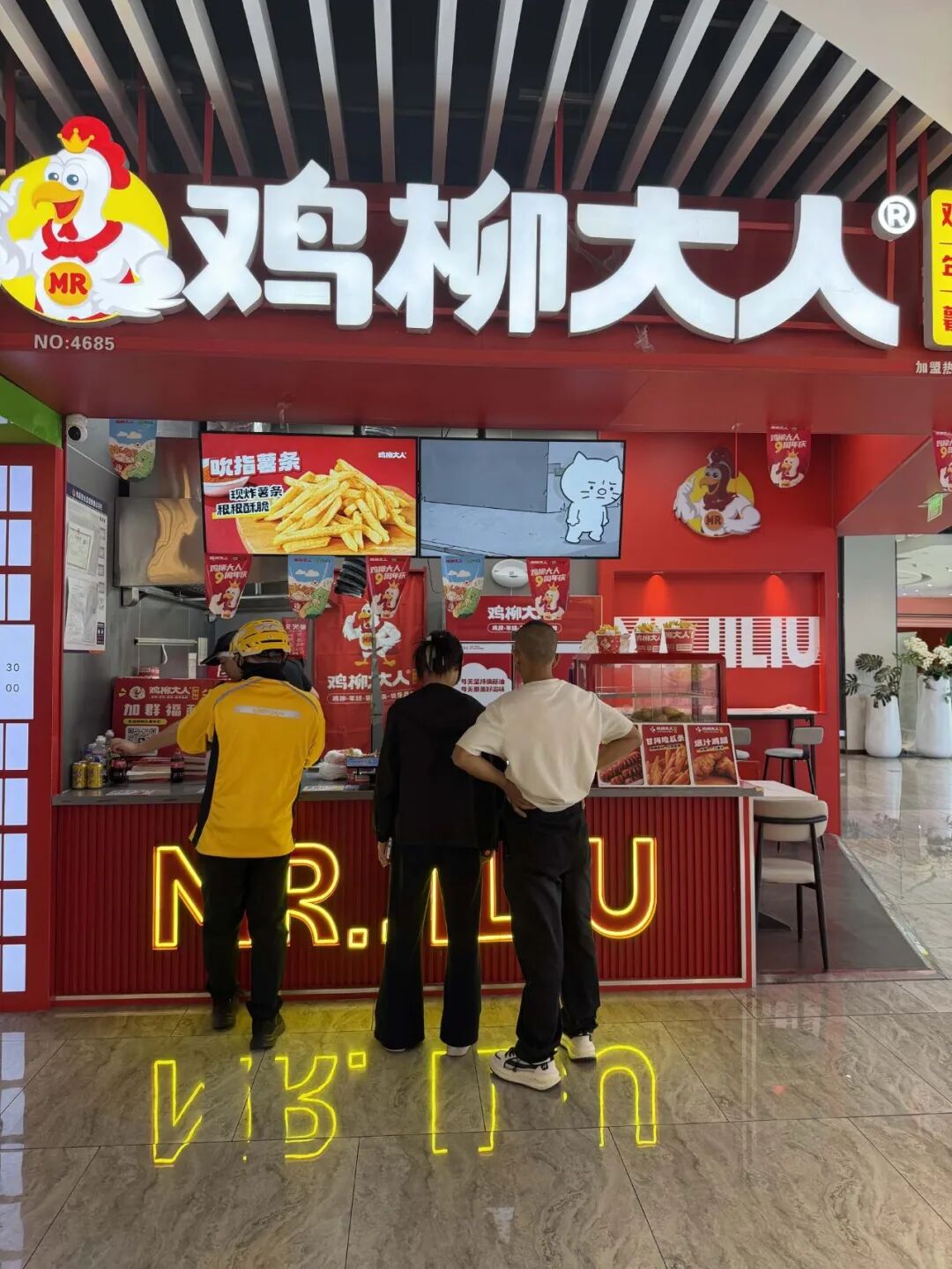
However, rapid franchise expansion also brings risks such as quality control issues and cutthroat competition among stores. The signature "three-in-one" product of Chicken Fillet Master is often teased by netizens as "Shredded Chicken Master", where you can barely find chicken fillet in the bucket.
"The cost of chicken fillet is relatively high, the price of fries fluctuates, and rice cake is relatively stable. Before this year's Spring Festival, our self-built chicken fillet factory was put into operation, which creates space for us to reduce costs and increase the portion of chicken fillet," explained Yu Kun, founder of Chicken Fillet Master. He also publicly stated that "from 2026, the number of stores will no longer be our pursuit, and our core focus will shift to making stores survive better and longer amid difficulties."
Cost-effectiveness does not mean pushing the price to the lowest, but making consumers feel it is worth the money, and allowing operators to still make profits.
Mid-tier brands deeply cultivate niche markets with regional characteristics
Facing American-style fried chicken and Korean-style fried chicken, Chinese-style fried chicken that wants to break through the market must firmly capture consumers' taste buds.
Looking at the mainstream of Chinese-style fried chicken, we can see that brand players have jumped out of the product framework of Western and Korean-style fried chicken on the product side, and reconstructed the Chinese-style fried chicken category market with Chinese craftsmanship, local flavors and diversified scenarios, completing the "localized transformation" of products.
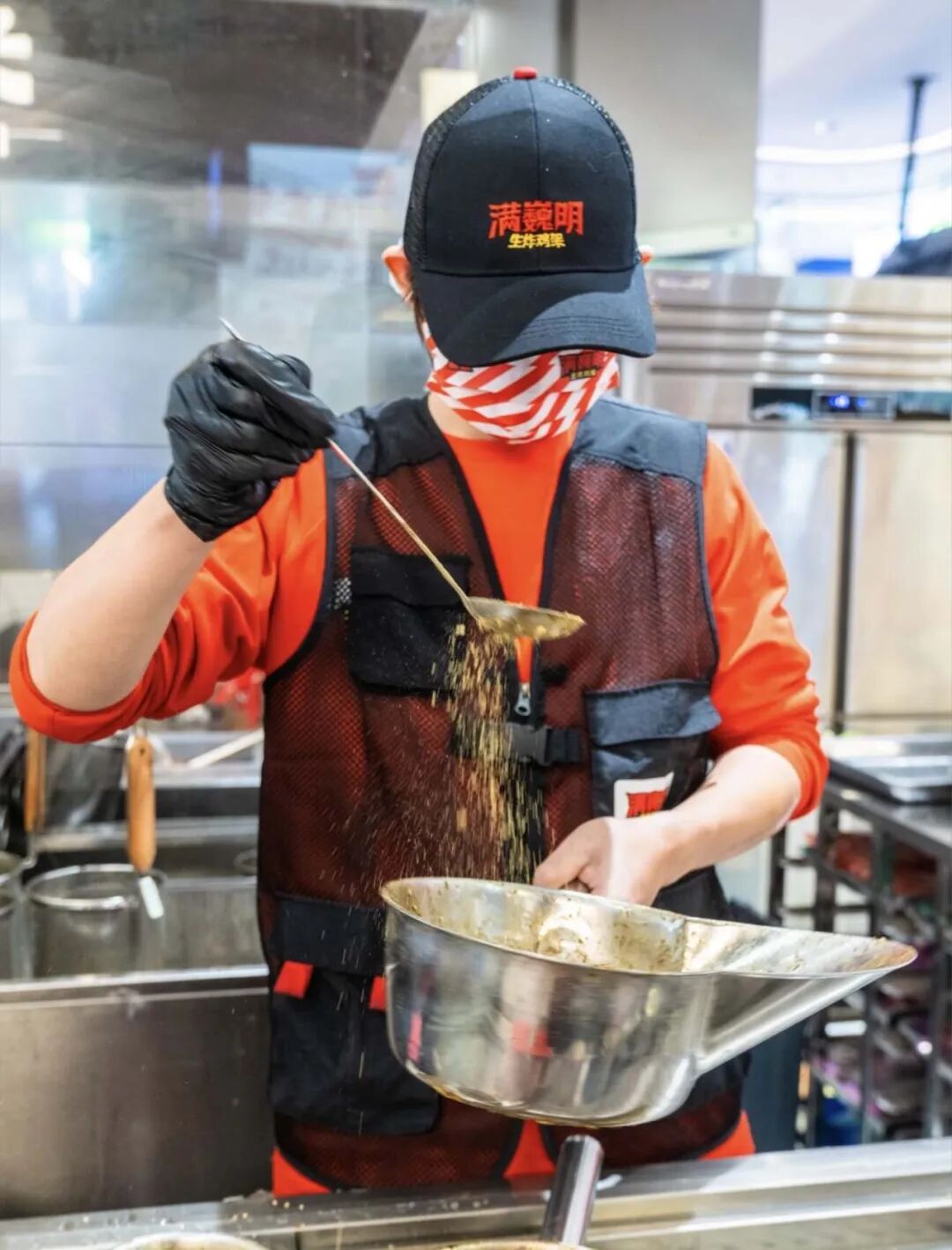
Manweiming Raw-Fried Chicken Skewer focuses on the characteristic Northeast China raw meat deep-frying process, insists on no powder coating and no thick batter, and targets the late-night snack consumption scenario with its unique product features of locking freshness by spraying vinegar and being edible both hot and cold. At present, it has more than 900 stores nationwide, and has opened overseas stores in Singapore.
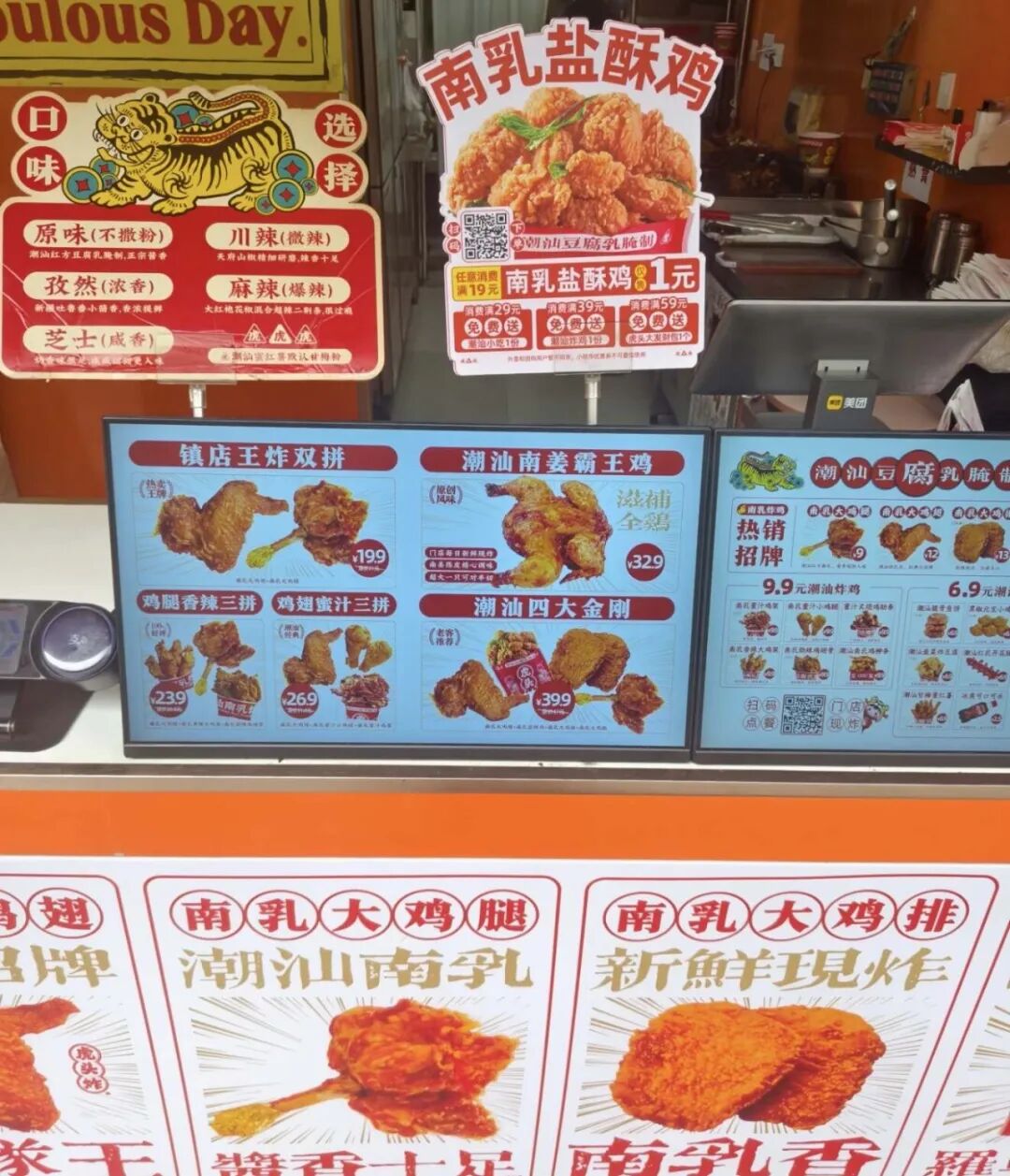
Laohuzha · Chaoshan South Milk Fried Chicken is rooted in Chaoshan regional characteristics, builds exclusive taste barriers with the fermented salty aroma of ancient South milk, and mainly deploys in Central China and East China markets relying on high re-opening rate of franchisees, with more than 500 stores.
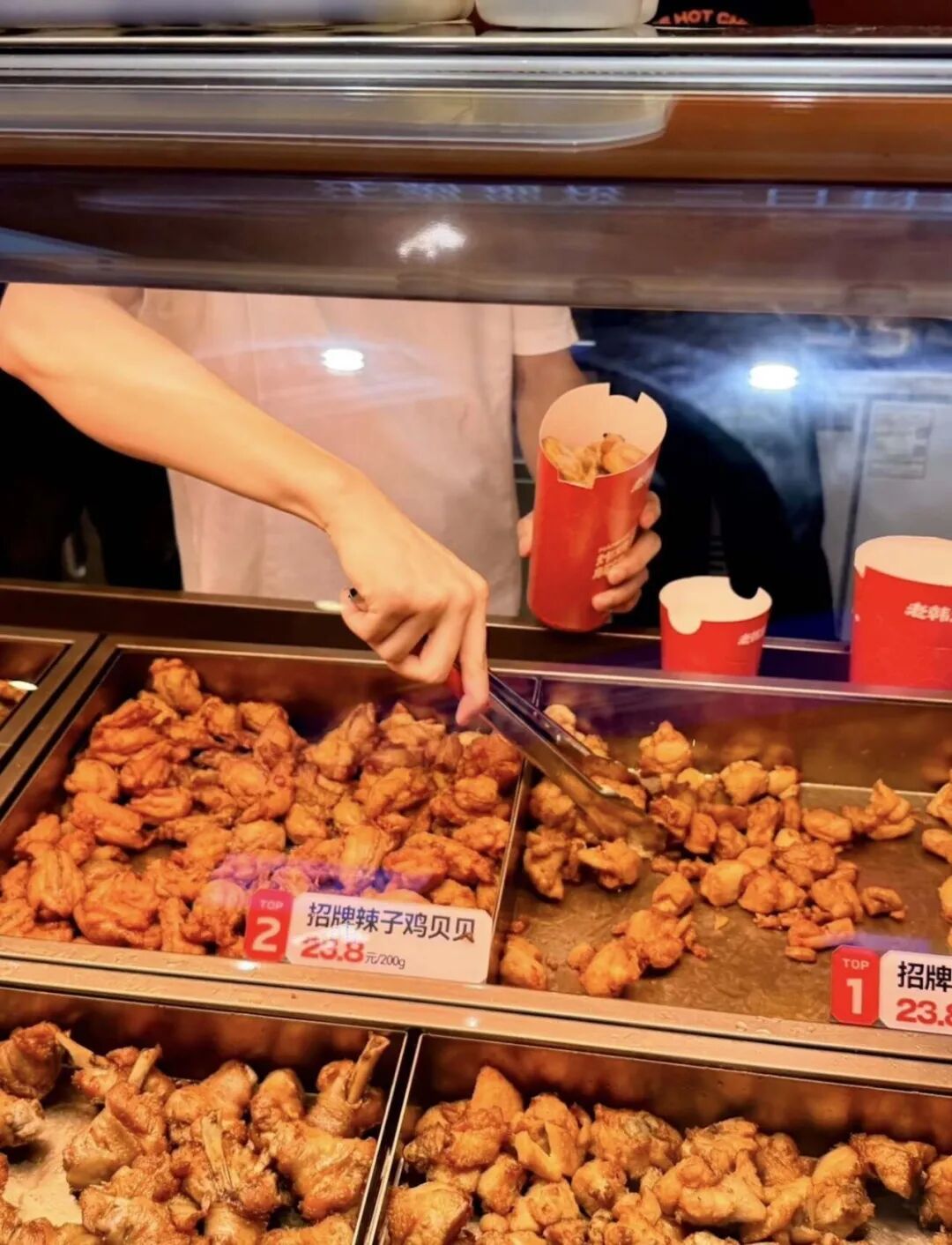
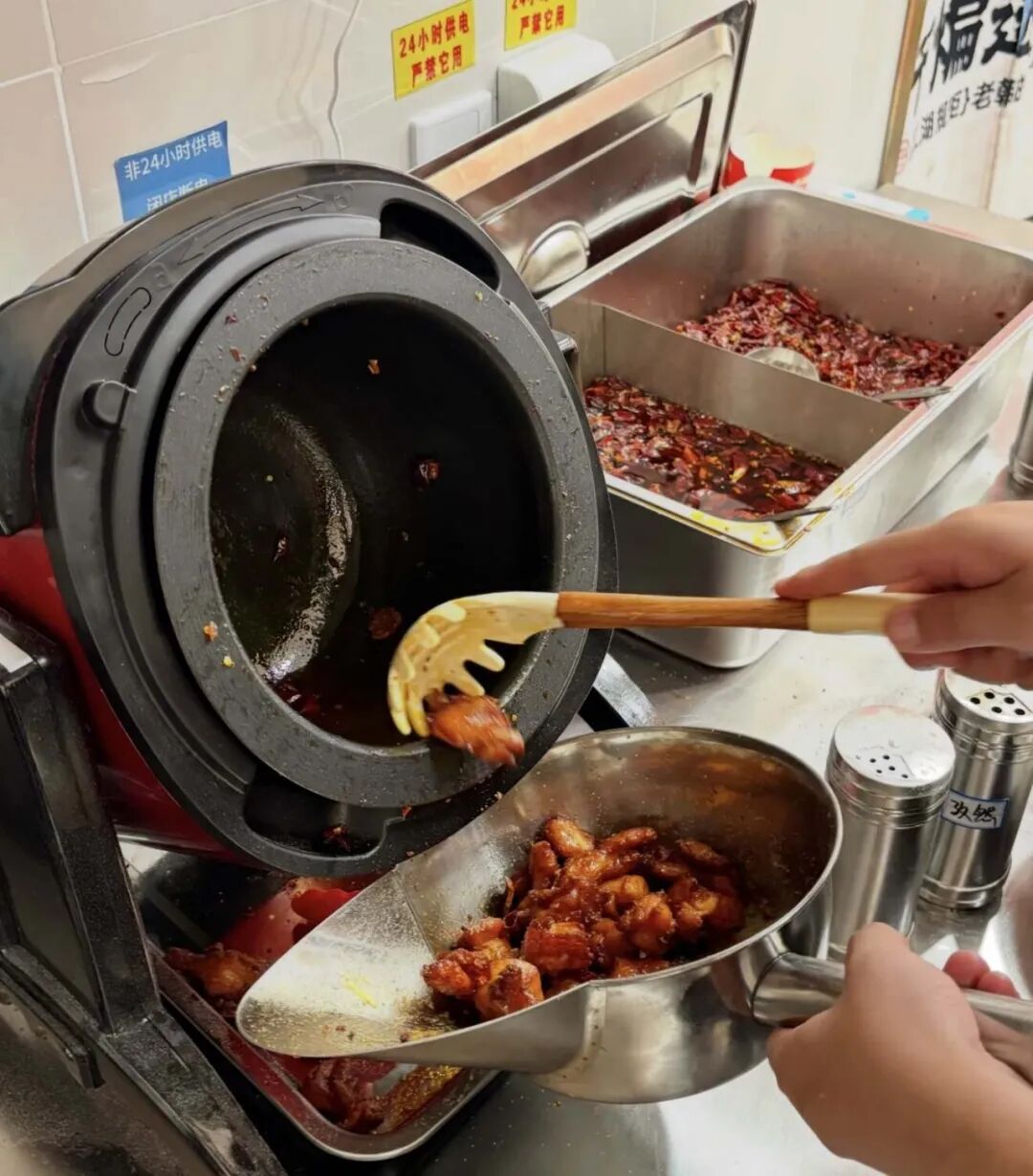
Laohan Stir-Fried Chicken focuses on the characteristic Sichuan-Chongqing "three-fry one-stir-fry" process, creates differentiated dry, spicy and fragrant taste, and focuses on the refined mall stall scenario. Official data shows that it has more than 400 stores nationwide.
In terms of scale, there is a noticeable gap between these brands and leading players. The reason lies in the inherent differences between these brands.
Linyu and Chicken Fillet Master adopt the national affordable single-product strategy, their product flavors have no regional barriers, and their stall model is extremely simple to operate even for one person with lower costs. Laohuzha and Laohan Stir-Fried Chicken have strong regional attributes and limited audience coverage: the salty-sweet fermented South milk flavor of Laohuzha's Chaoshan style is less accepted by some consumers in northern China, which is both the brand's unique feature and the bottleneck for its national expansion. In addition, the relatively complex production process requires stable supply chain coverage, making standardized replication more difficult.
These brands have not never tried to expand. In 2023, capital poured into the Chinese-style fried chicken sector intensively, driving up the popularity of the category, but the capital heat of the sector cooled down rapidly afterwards, and the landmark financing events of the industry have remained at the level of 2023 for years. Brands including Leg Boss and Worries Relief Grandma, which obtained angel round financing at the same time, basically stagnated in subsequent store expansion and faded out of the track competition, and Laohuzha is the only one that stood out.
However, last June, Laohuzha officially released the announcement of "suspending franchise in some regions", saying it would suspend new franchise authorization applications in the three northeastern provinces, Inner Mongolia, Ningxia, Gansu, Qinghai, Xinjiang and other regions, and would concentrate superior resources to deeply cultivate regional markets.
It can be seen from this that brands no longer pursue rapid store expansion, take the initiative to control the pace of store opening, and shift their focus to single store model optimization, supply chain construction and repurchase rate improvement.
According to public information, in April this year, Laohuzha signed a tripartite industry-university-research cooperation agreement with Heyuan Lighthouse Basin National Agricultural High-tech Zone and South China Agricultural University, investing 20 million yuan in the first phase to focus on upstream links such as soybean variety breeding, South milk strain screening and fermentation process optimization, to build a standardized South milk supply chain.
Han Jixing, general manager of Laohan Stir-Fried Chicken, once mentioned that the brand should deepen product development, innovate marketing strategies, and target younger consumer groups. It clearly refuses reckless store expansion, prioritizes ensuring the survival rate of old stores and the per-area revenue of single stores, and strictly controls franchise access thresholds. It is reported that existing franchisees are mainly professional multi-store operators, and 35% of franchisees own 2-3 stores. In terms of product innovation, this year the brand draws on the Bistro flavor of Yunnan, Guizhou and Sichuan, takes litsea cubeba as the iconic flavor, and launches litsea cubeba spicy duck to further strengthen flavor differentiation. In terms of process, it introduces automatic stir-frying robots to realize the standardization of "three-fry one-stir-fry". The operating data of Laohan Stir-Fried Chicken during the National Day holiday shows that there are more than 50 stores with daily turnover exceeding 10,000 yuan nationwide, and the dine-in proportion of stores is as high as 67.4%.
Regional flavors are responsible for making customers remember the brand, while supply chain and operation are responsible for making customers come back next time.
Regional players seize market share, blind imitation cannot build moat
Apart from leading and mid-tier brands, a group of regional deep-cultivation and niche-focused players with store scale of about 100 have emerged in the Chinese-style fried chicken sector, seizing the stock market with differentiated models but with relatively weak overall momentum.
Represented by established brands such as Yongshun Fried Chicken and Yongxiang Fried Chicken, they have been deeply cultivating northern regional markets for decades, accumulating stable loyal customer groups with classic domestic flavors, but their scale has not increased but decreased.
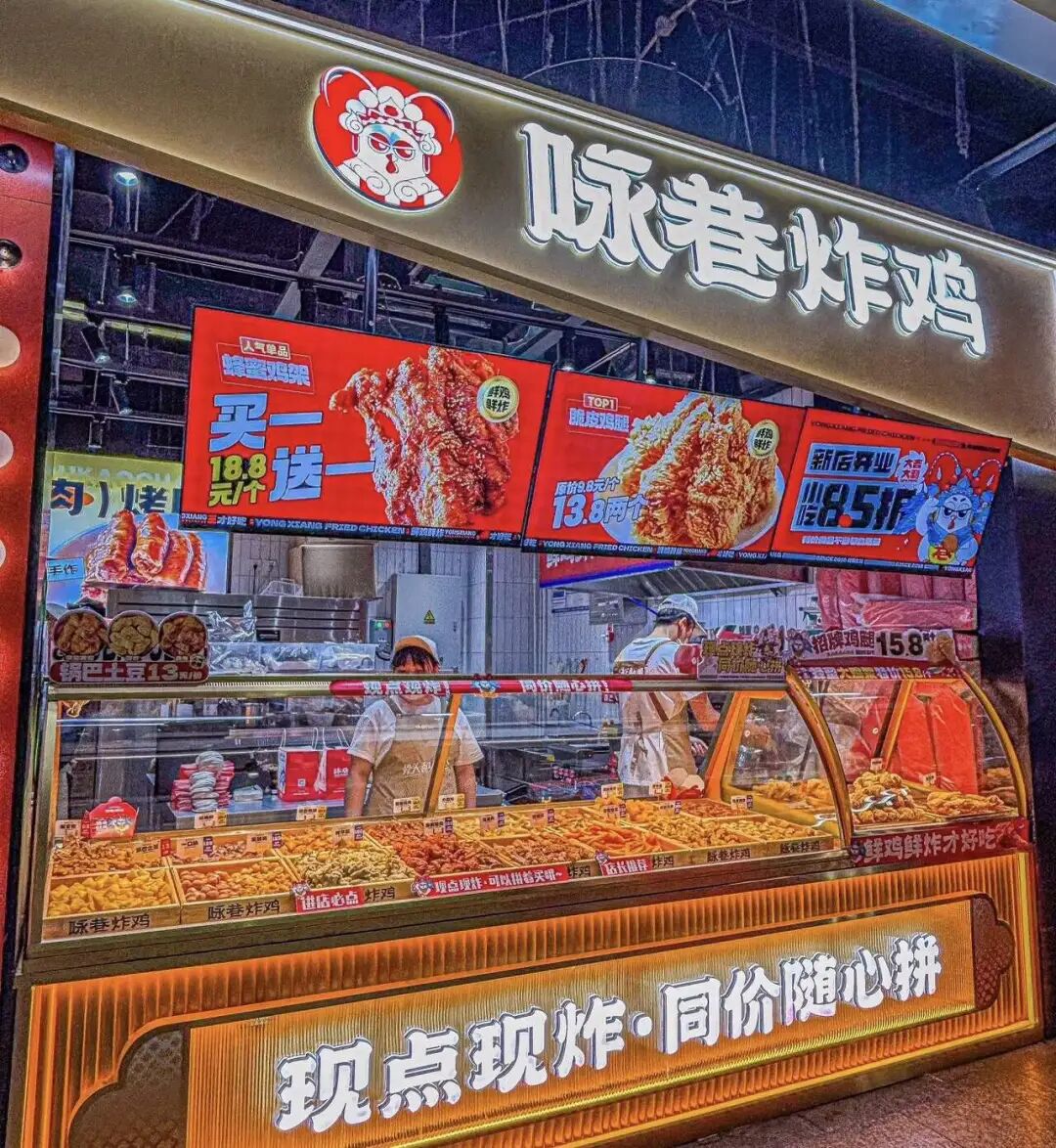
After Chinese-style fried chicken became popular, a group of brands named after Chinese-style fried chicken, such as Sun Xiaochang Chinese Fried Chicken and Xu Xiaochen Chinese Fried Chicken, are relatively small in size, with only more than ten stores.
In addition, following the leading brands, many "imitators" have emerged and gained certain popularity in regional markets.
With the rise of Linyu Fried Chicken Drumstick nationwide, regional brands including Yulin Fried Chicken Drumstick, Yushu Fried Chicken Drumstick and Youmin Fried Chicken Drumstick have emerged in sinking markets, all of which now have more than 100 stores. After Laohan Stir-Fried Chicken became popular, brands such as Gan Stir-Fried Ji that focus on dry-stir spicy chicken emerged. Manweiming made the raw fried chicken skewer niche product popular, and brands such as Bao Zhang Gui and Bao Pi Qi have emerged, with more than 350 and 200 stores respectively.
