The first batch of "Xilaodeng" have started to be delisted.
01
In the past two days, the delisting of Sheraton Huzhou Hot Spring Resort, once hailed as a seven-star hotel, has sparked huge attention in China's hotel industry.
Before the National Day holiday, some netizens found that this hotel was no longer searchable on Marriott's official website, and its name on OTA platforms had been quietly changed to Huzhou Taihu Moon Hot Spring Resort.
Time flies. In May 2014, before Sheraton was acquired by Marriott, I was invited by Starwood Hotels and Resorts, the hotel management group at that time, to attend the opening event in Huzhou.
At that time, the hotel had already started trial operation. Many tourists from Jiangsu, Zhejiang and Shanghai began to make special trips to stay in the "moon building" on Taihu Lake, which was a very popular weekend vacation option in the regions with free shipping services in East China.
Looking through the old photos from that time, the hotel rooms still carried the aesthetic taste of the economic boom period: a round bathtub was placed in the most prominent position of the room, the bathroom was paved with light-colored stone, and red wine hot spring pools were hidden among tropical plants in the hot spring area.
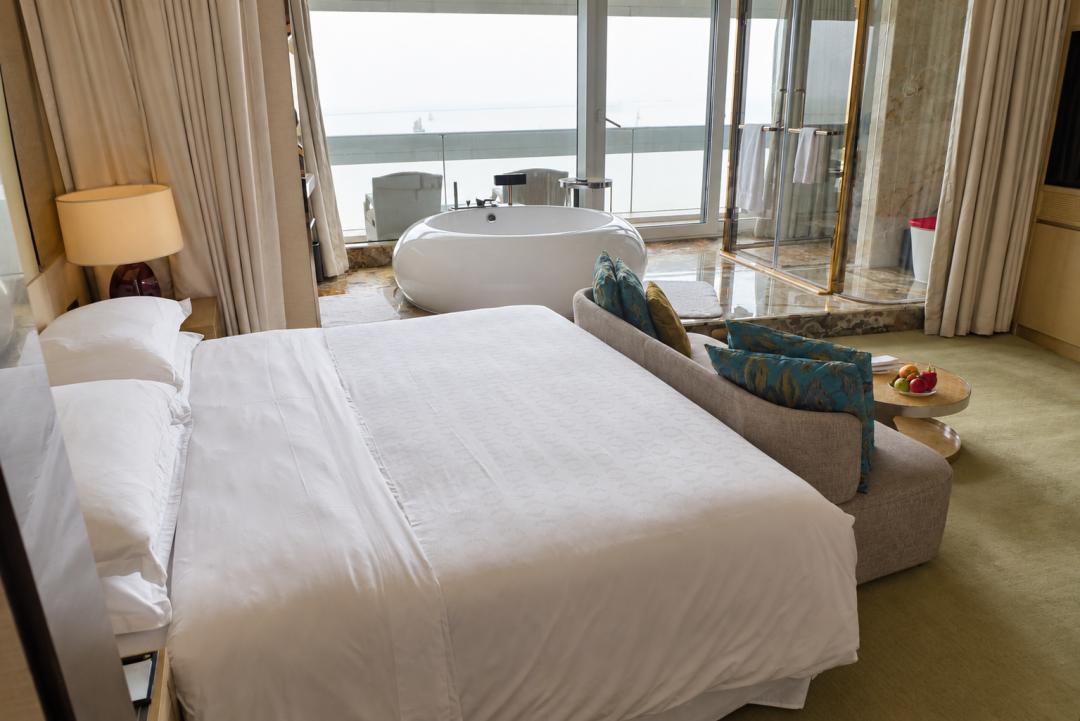
Rooms of Sheraton Huzhou Hot Spring Resort in May 2014 / Photo taken by Lvjie
The design that looked quite novel 12 years ago can hardly hide its sense of age and vicissitudes in 2026.
In recent OTA reviews, some guests mentioned that the curtain control buttons failed to work, some facilities were worn out, and others expressed dissatisfaction with the room odor and service response speed.
On social media, "Old Sheraton" has gradually become a joke used by netizens to tease some old Sheraton hotels. The luxury hardware facilities that were supposed to bring surprises have slowly become the object of picky criticism from guests.
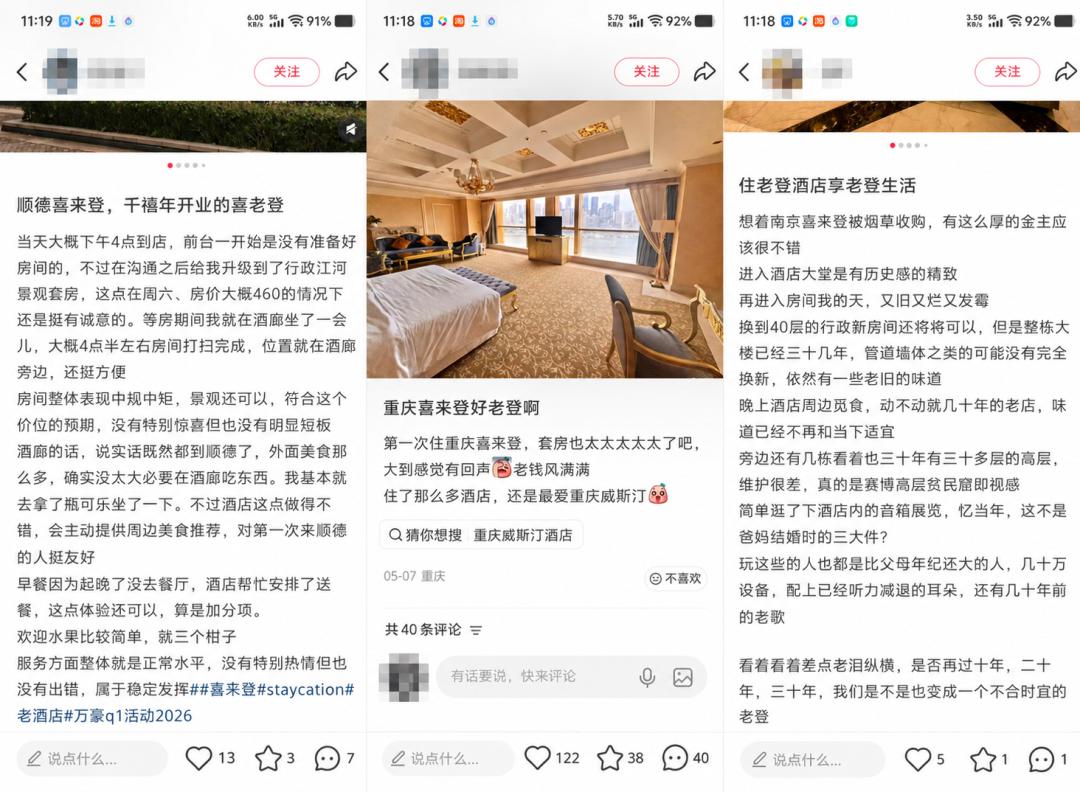
The split between Huzhou and Sheraton is not an isolated case.
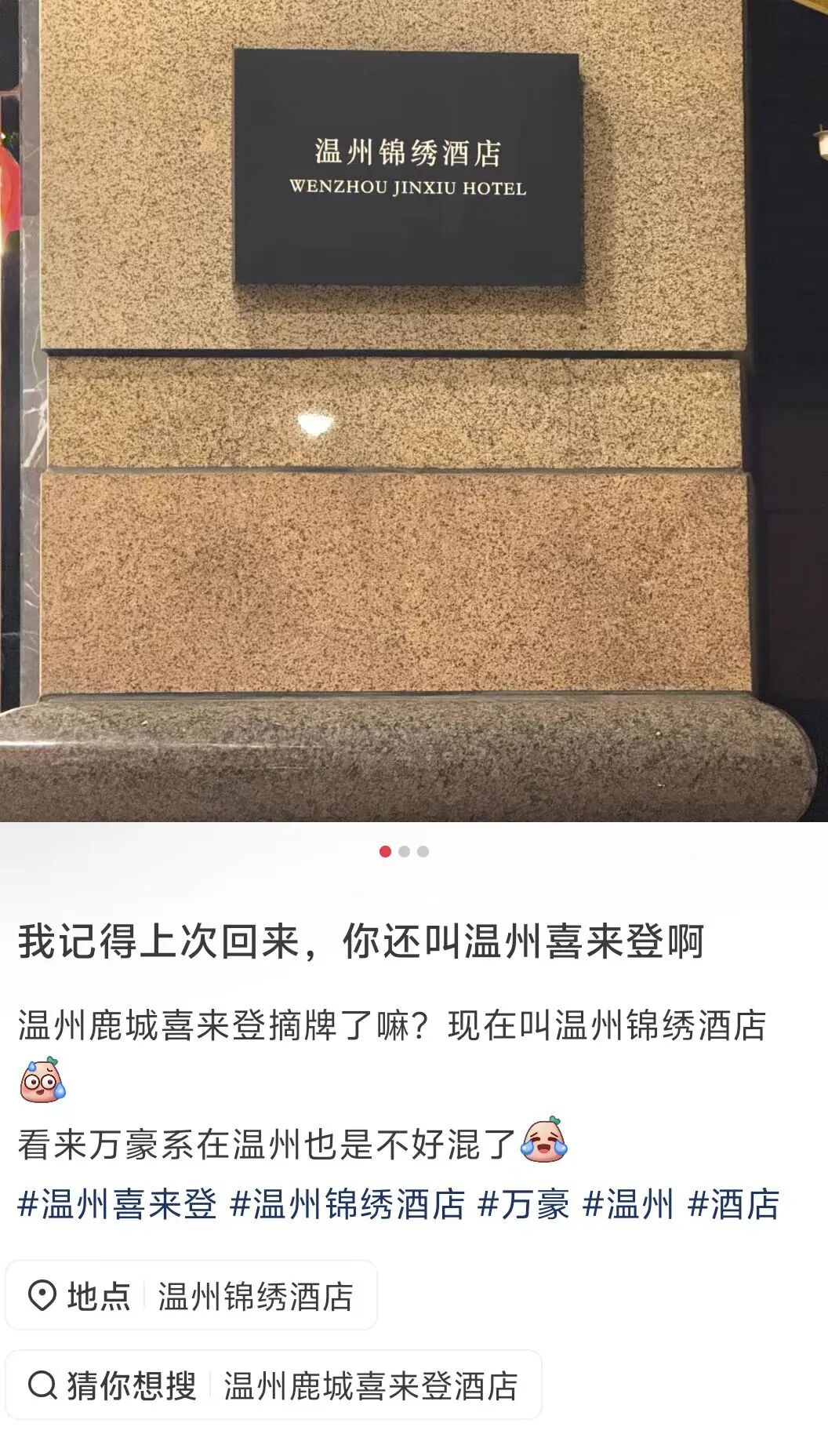
On June 1 this year, Sheraton Wenzhou, which had accompanied Wenzhou for more than ten years, was officially delisted, ending its more than ten years of brand cooperation with Marriott International Group. It continues to operate under the name of Splendid Hotel at present.
In Xi'an, the Sheraton project died before it was completed.
In 2021, Gemdale Group once announced the signing of the Sheraton Xi'an Gemdale project. However, when Pullman Xi'an Gemdale officially opened at the end of last November, people found that the project had been assigned to Accor's brand portfolio.
Around the world, Sheraton is also shrinking in scale.
In September 2016, Marriott completed the acquisition of Starwood. By the end of that year, there were 449 Sheraton hotels around the world.
Nearly ten years later, Marriott's annual report shows that the number of stores of Sheraton, this old brand incorporated into the world's largest hotel group, has decreased to 436.
The most obvious decline is in Sheraton's once most mature markets.
From 2016 to 2025, the number of Sheraton hotels in the United States and Canada decreased from 196 to 165, a drop of 15.8%, while the number in Europe decreased from 62 to 48, a decrease of 22.6%.
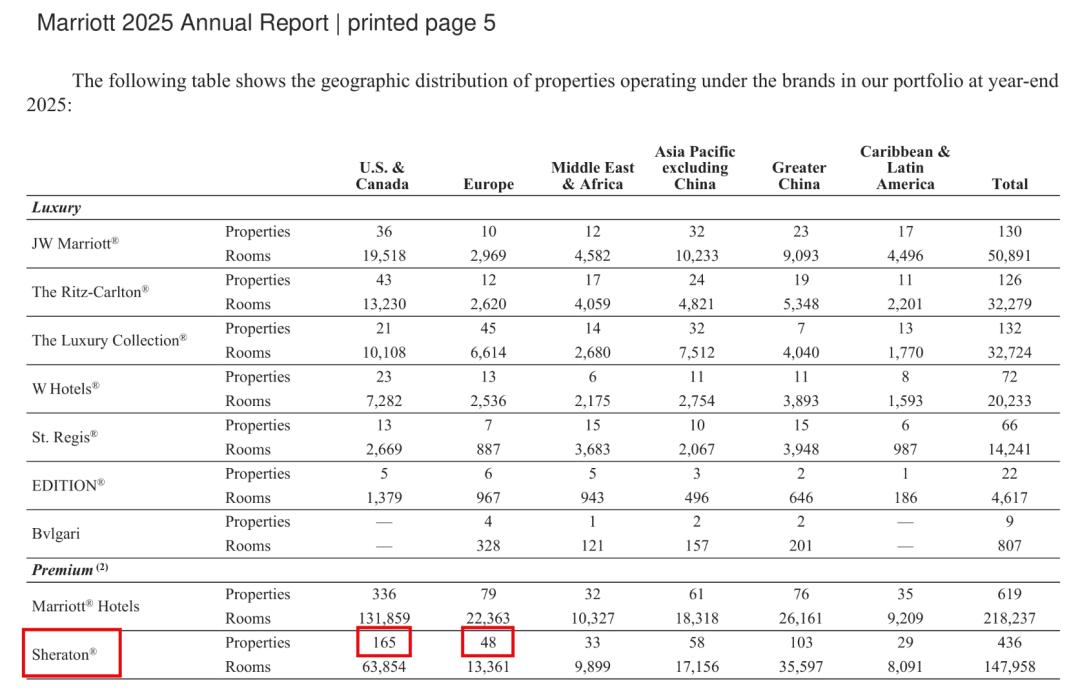
Source: Marriott financial report
In the Asia-Pacific region, Sheraton is still growing, but at the same time, Four Points by Sheraton, which is positioned at a lower level and classified by Marriott as a classic select service brand, is catching up rapidly.
Taking the Greater China region as an example, there were 99 Sheraton hotels and 50 Four Points by Sheraton hotels at the end of 2023. By the end of 2025, the number of Sheraton hotels has increased to 103, while the number of Four Points by Sheraton hotels has reached 102.
In just two years, Four Points by Sheraton, which used Sheraton's popularity to open up the market, has reached a comparable market scale with its senior counterpart in China, expanding to more cities leveraging Sheraton's brand recognition.
02
Looking back on the development track of Sheraton in Chinese mainland, the brand once enjoyed extremely high prestige.
The Great Wall Sheraton Hotel Beijing, which opened in 1985, can be regarded as the "Huangpu Military Academy" for early high-end foreign-related receptions. It even enlightened many Chinese people and industry practitioners' perception of five-star hotels. However, the old landmark beside Liangmaqiao in the past has long removed its Sheraton signboard.
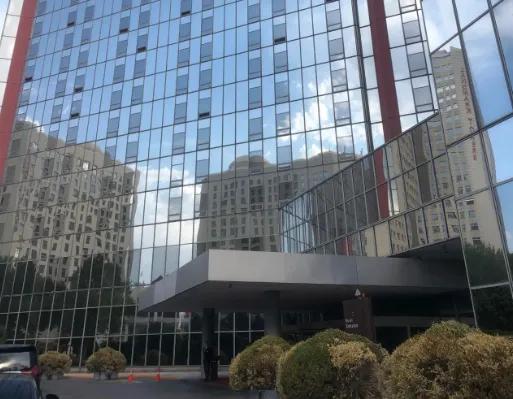
The Great Wall Hotel Beijing (formerly Sheraton)
After Marriott acquired Starwood in 2016, the internal brand ecosystem seems to have fallen into internal friction.
The new owner owns 30 brands, with The Ritz-Carlton and St. Regis holding the high-end luxury market, while the direct Marriott brand and Westin at the same level also divert business customers.
Sandwiched in Marriott's luxury brand matrix, Sheraton can hardly break through to the higher-end luxury circle, and at the same time has to face the homogeneous competition from sibling brands. Its position has been swinging for years until it was left behind by its junior counterpart Four Points by Sheraton.
Taking Huzhou as an example, Four Points by Sheraton Huzhou and Four Points by Sheraton Huzhou Nanxun opened one after another in 2024. With the delisting of Sheraton Huzhou Hot Spring Resort, Huzhou has become another domestic city that only has Four Points by Sheraton but no Sheraton.
More direct competitive pressure comes from local hotel brands. As Atour, Intercity and Ji Hotel have been competing for business travelers with new products in recent years, many aging Sheraton hotels are facing increasing pressure.
Last summer vacation, Lvjie exclusively reported the phenomenon that Sheraton's price was even lower than Atour's. Sheraton Zhongshan launched a 3-day-2-night package priced at 699 yuan, which is less than 350 yuan per night. Sheraton Shunde Foshan also started at only 487 yuan at that time.

The signboard of old foreign five-star hotels can no longer support the price gap with local mid-range hotels.
For guests who only stay for one or two nights, the grand banquet hall and swimming pool may not be used. The comfort of the bedding in new hotels, the style, decoration and aesthetic taste of the rooms are more likely to affect their next choice.
This makes some old Sheraton hotels maintain the huge configuration of full-service hotels, but can only attract guests by cutting prices.
From the perspective of business development model, the real estate supporting model that supported foreign five-star hotel brands to develop rapidly in China has long reached a turning point.
During the boom of China's real estate industry, high-star hotels could increase the value of the entire real estate project, so developers were willing to pay a lot for the brand license, and the investment return cycle of Sheraton, Marriott and other hotels themselves was not that important.
With the adjustment and contraction of the real estate market, it is increasingly difficult to rely on the sales of surrounding properties to offset the hotel investment.
Owners who no longer have extra funds have asked hotels to prove their profitability independently. After all, the identity of urban landmark cannot pay for the cost of every unsold guest room.
Marriott's senior management did try to save Sheraton. In June 2018, it announced the Sheraton brand renovation plan, hoping to renovate guest rooms and public spaces to make old hotels meet the new brand standards.
The real resistance comes from the owners' wallets. Faced with renovation bills ranging from tens of millions to hundreds of millions of yuan, most local real estate enterprises that invested in heavy assets in the early years are under liquidity pressure and cannot afford to pay for the renovation of old buildings at all.
As a heavy asset industry, even in foreign countries, when hotel owners are willing to spend money on renovation, they will re-evaluate the brand signboard at the door.
In July this year, the 260-room Sheraton San Diego Mission Valley in the United States underwent comprehensive renovation, covering guest rooms, public spaces and catering facilities. It is expected to be converted to a Hyatt hotel after the completion of the renovation at the end of the year.
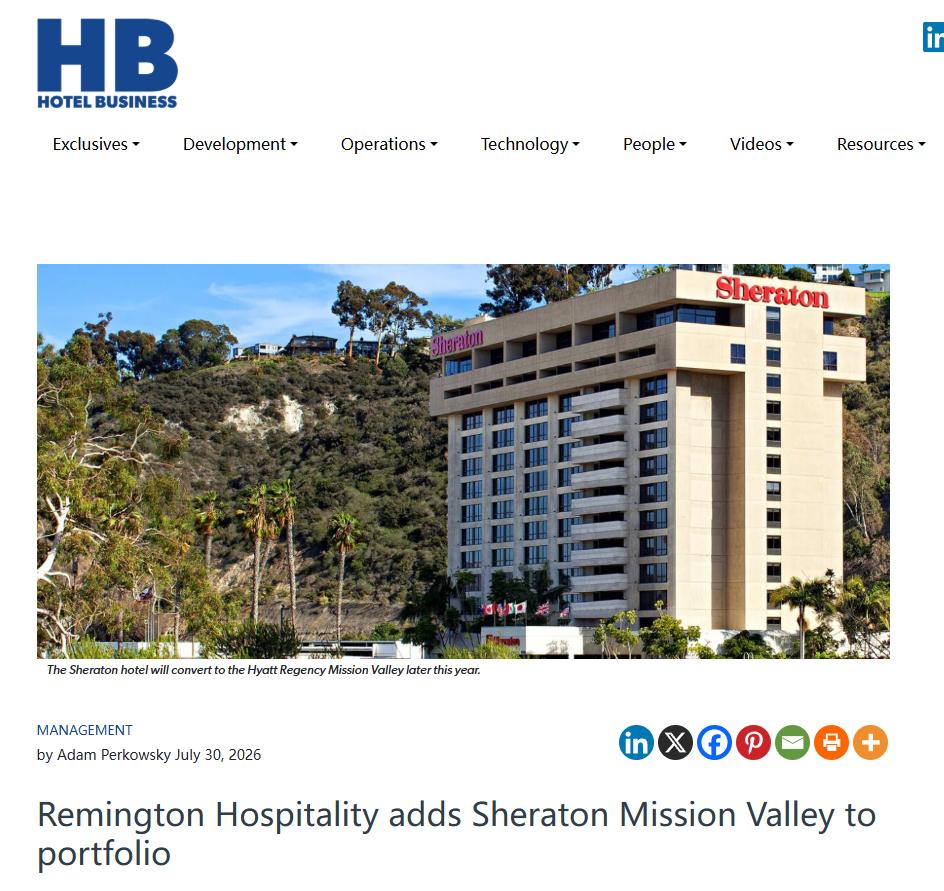
For old hotels that require heavy investment in renovation, no matter how much reputation the brand has accumulated in the past, it ultimately depends on how much revenue it can bring to the guest rooms in the future.
03
A couple of days ago, I was wandering in Baku, the capital of Azerbaijan. Standing on the coast of the Caspian Sea, I could see the towering Crescent Development Building coming into view directly.
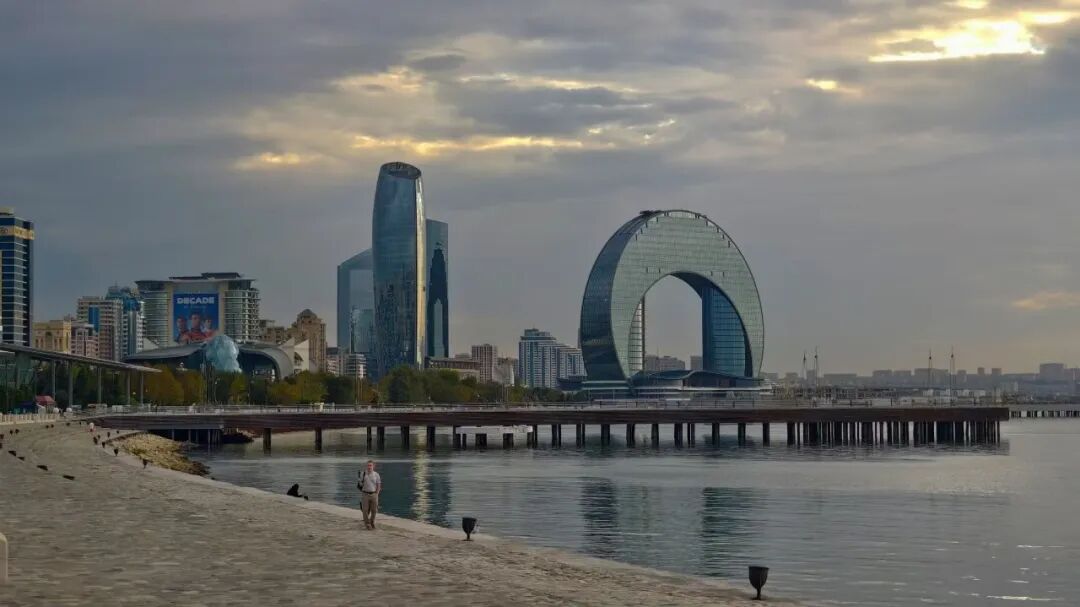
The Crescent Development Building in Baku is very similar to Sheraton Huzhou Hot Spring Resort / Photo taken by Lvjie
Looking at the huge metal structure on the foreign waterfront, my thoughts are easily pulled back to the shore of Taihu Lake many years ago.
It should be noted that the Crescent Development Building also tried to become a city landmark with its exaggerated shape. On the official website of the project, the planned St. Regis Hotel and apartments have been listed as core projects.
This reminds me that before the opening of Sheraton Huzhou, there were widespread rumors in the industry that the owner was trying its best to get the super luxury St. Regis brand licensed.
The compromise and concession at that time actually sowed the seed of misalignment between the ambition of hardware construction and the brand's carrying capacity from the very beginning.
Today, more than ten years later, almost no costly spectacle landmark around the world will consider choosing Sheraton as its hotel brand.
Sheraton is essentially a standardized product from the industrialization era, which is responsible for providing stable and reliable business travel accommodation, and cannot meet the current owners' demands for social media attention and extreme premium for landmark projects.
It is not just Sheraton that is falling behind. The entire era of old foreign five-star hotels creating mythical reputations is rapidly collapsing.
When foreign five-star hotels have become a common configuration, investors who have invested heavily in prime locations need hotel brands to clarify what kind of guests they can attract, and why guests are willing to pay more.
The global high-end luxury hotel track is moving towards polarization. The top of the pyramid is firmly occupied by luxury brands that attach great importance to aesthetic style, such as Four Seasons, Rosewood and Aman, which lock in high-net-worth customers with scarcity and circle screening mechanisms.
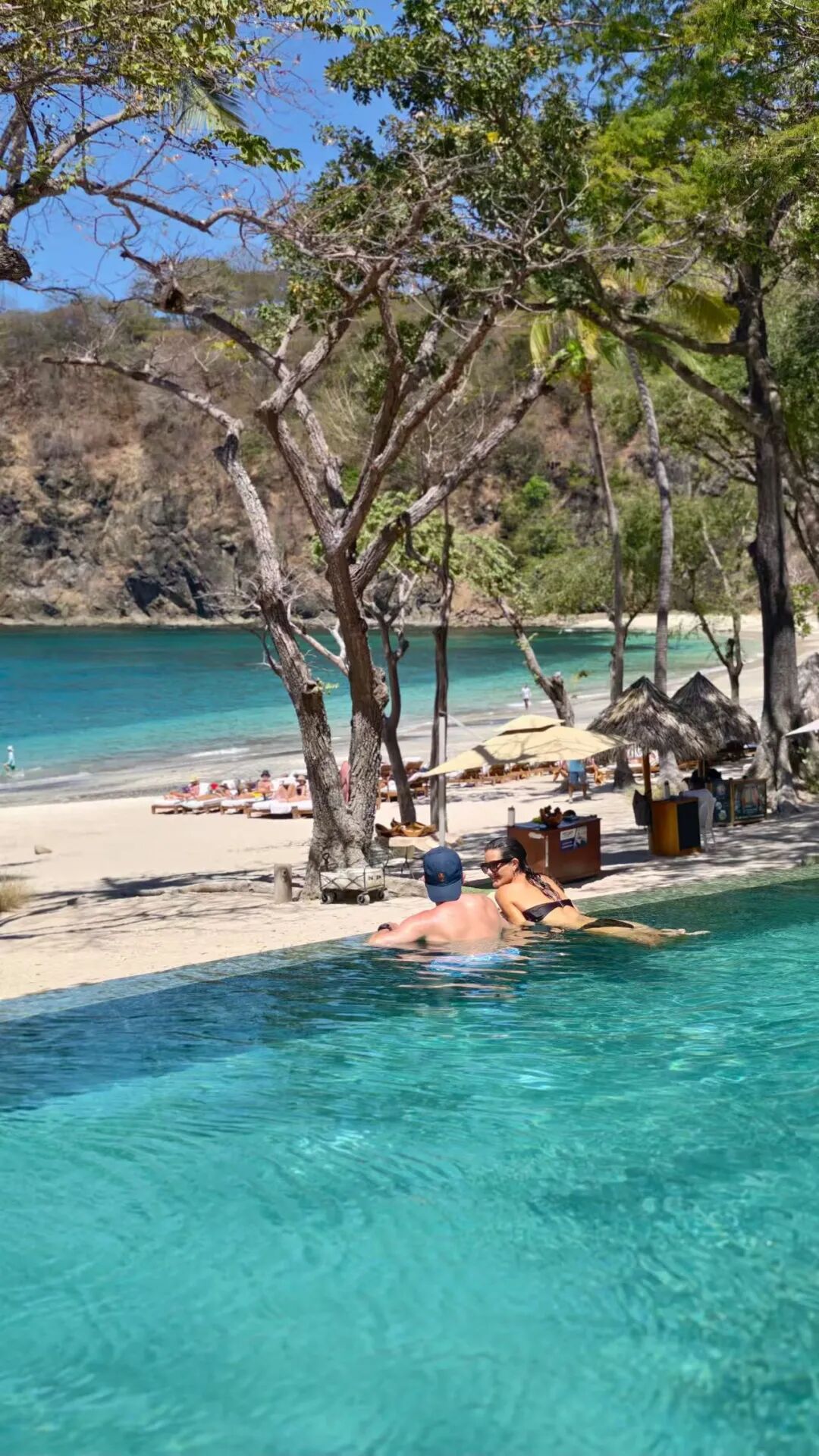
Four Seasons Resort Costa Rica at Papagayo / Photo taken by Lvjie
Another fiercer impact comes from the global wave of lifestyle hotels. Major hotel groups are sparing no effort to seize the high ground of the lifestyle hotel market.
Ennismore under Accor announced this year that its hotel network has exceeded 200, more than double the number four years ago. After Hyatt acquired The Standard, it formed a separate product matrix for lifestyle brands. Under Marriott, EDITION and W Hotels occupy the trend center, and InterContinental is also making efforts to develop Kimpton.
The new generation of consumer groups no longer blindly believe in the personality-free star rating certification, but are more willing to pay for unique design languages and highly dynamic nightlife atmosphere.
Under the multiple squeezes of the industry, the aging Sheraton is awkwardly hanging in mid-air: it cannot reach the dream-making aura of top luxury brands, and cannot compete with the young vitality of lifestyle brands at the lower end.
The huge circular building in Huzhou removing the Sheraton signboard seems to be a move by the owner to stop losses by getting rid of high management fees on the surface, but in depth it reflects the fate of the marriage between the early real estate spectacle projects and old multinational brands.
When foreign brand signboards can no longer provide value support, delisting and self-operation is a relief for owners to unload their burdens, and also marks the complete end of the impetuous era when people could easily gain huge profits by building artificial landmarks.