The once highly lucrative internet celebrity career that used to rake in over 10,000 yuan a day has been quietly supplanted by AI that costs a mere 800 yuan per month.
Trust is never a mass-produced commodity. It takes time, human connection, and the sparkle in a person's eyes. Digital avatars can deliver standardized explanations, but they cannot pull off real sales. This also explains why top streamers have not been replaced on a large scale.
Xiao Le has not received a proper live streaming schedule for almost two months.
She worked as a live-streaming sales host in Hangzhou for two years, and left her last full-time job at the end of July this year. She signed a management contract, which required her to pay liquidated damages to terminate the agreement. The company refused to let her go and even withheld more than 20,000 yuan of her salary.
"After I left that company, I completely lost my motivation," she said. She went back to her hometown and stayed there for half a month before returning to Hangzhou to look for jobs. The recorded demo clips she submitted went nowhere, and for the few trial streams with poor performance data, the operations staff would PUA her to extend her live streaming hours. Now she does not even want to open the BOSS Zhipin recruitment app.
Xiao Le's predicament is not an isolated case. Today, the number of professional streamers in China has reached 38.8 million, while nearly half of all streamers across the country leave the industry in less than a year. Taking Hangzhou, known as the "E-commerce Capital", as an example, the average monthly salary of mid-tier streamers has fallen below 20,000 yuan, and the income of some niche category streamers has dropped from the 25,000-50,000 yuan range to the 15,000-20,000 yuan range.
However, another set of data is confusing. In 2025, the GMV (Gross Merchandise Value) of live e-commerce exceeded 5 trillion yuan, the industry's user base reached 660 million, and there are 25.696 million live streaming-related enterprises in China. The entire industry seems to be booming. On one side there is decline, on the other side there is growth. Digging into the reasons behind this, we may find that after going through a wave of "decentralization", the live streaming industry soon ran head-on into the surging tide of AI.
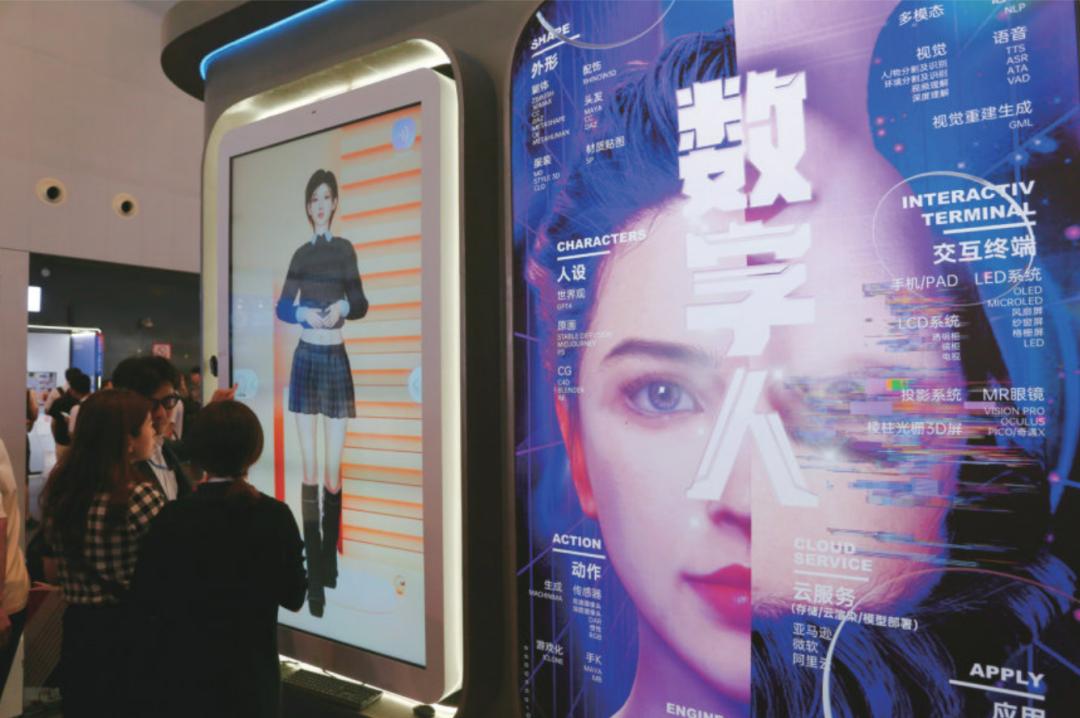
On July 6, 2023, the 2023 World Artificial Intelligence Conference officially opened at the Shanghai World Expo Exhibition and Convention Center. More than 400 exhibiting enterprises from around the world showcased products including humanoid robots, digital avatars, and large language models. (Photo/CFP)
Two Faces of an Industry
Xiao Le's predicament is perhaps a true snapshot of the situation of human streamers in the AI era.
"Record a demo clip — get an interview — record another demo clip — do a trial stream", after several rounds of such screening, this process has become the industry standard in the current human streamer recruitment market. Xiao Le said that even if she makes it to the trial stream stage, she is not guaranteed to be hired. She has to reorganize her script to record new demo clips for every job application before being screened again. Even for part-time streamers, the requirement is "can get to work immediately", working 3 to 4 hours of live streaming per day with an hourly pay ranging from 100 yuan to 150 yuan, and the hourly pay during the probation period is only half of that. As long as a streamer has poor performance data for one day, they will be replaced immediately the next day. "The recruiters made it very clear when hiring: it is impossible for streamers to make a lot of money right from the start."
Her experience reflects a reality: the live streaming industry is changing from "short of manpower" to "overcrowded", from "creating stars" to "eliminating unqualified people". But why has this industry become what it is now?
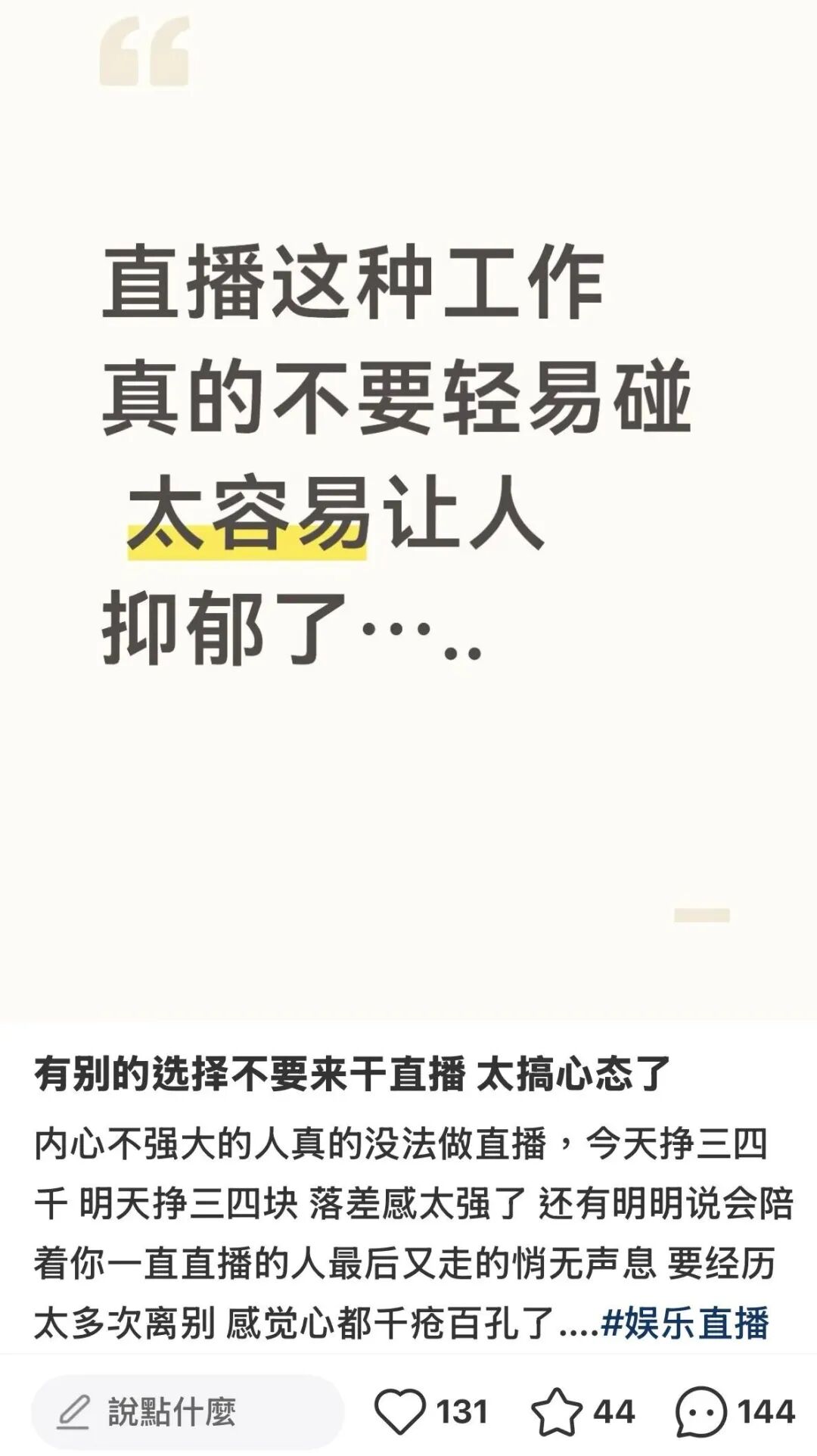
(Photo/Screenshot from Xiaohongshu)
When I asked her if she knew the reason why the market was getting worse, her first reaction was within my expectation. She said: "There is a saying circulating in the live streaming circle now — AI streamers are going to take over the live streaming rooms." On one side is the decline of human streamers, on the other side is the rapid growth momentum of digital avatars. But it would be rather arbitrary to conclude that digital avatars have "crushed" human streamers out of the market.
After the era of super top streamers who "support an entire platform alone" came to an end, brands have started to build their own live streaming rooms one after another to cultivate their own user base. In the past two years, AI has begun to play a delicate role. It is neither a driving force nor the protagonist, but it is indeed accelerating the disappearance of certain things.
The "mass exodus of internet celebrities" in Hangzhou is not a disorderly flow, but a strategic choice based on content positioning and resource costs. In such choices, digital avatars have become a figure left behind by this retreating team.
The Threshold of Trust Cannot Be Crossed With Just 800 Yuan
The traffic dividend has peaked, competition has become white-hot, and the era when you could make money just by standing in front of the camera is over. The adjustment of the industry structure will inevitably "persuade" some people to leave, but the new landscape is shaking the foundation of the entire industry. The argument that "AI will replace human beings" is rampant, but no one can tell exactly what AI will develop into in the future.
At present, low cost is the most obvious advantage of digital avatars. The monthly service fee for popular digital avatar software on the market ranges from 800 yuan to 4,000 yuan. Some merchants only need to spend a few thousand yuan per month to build an AI live streaming room. Data from JD shows that the cost of digital avatar live streaming is only 10% of that of human streamers.
There is a tenfold difference between 800 yuan and 10,000 yuan. Brands have done the math: assigning the late-night time slot to AI can save a huge amount of money in a year. It seems that digital avatars have not taken the jobs of human streamers, with clear division of labor on both sides, but they have pushed some people out of the table, and turned the rest into "night shift colleagues".
But low cost does not equal good sales performance, which is the fatal flaw of digital avatars.
All along, the logic of live-streaming sales is actually that "users trust this person, so they will buy things from this person". No matter how realistic a virtual image is, users can immediately tell that it is fake. On social media, many users who have watched digital avatar live streaming rooms have feedback that it is very difficult to get the urge to pay money when facing a fake person.
It is not hard to find that consumers' acceptance of human streamers is significantly higher than that of AI streamers. Human streamers build trust through "extensive and effective relationship-based paths", while AI streamers can only convert their functional advantages into trust under specific motivational conditions. Previous digital avatar live streams made with the virtual images of celebrities such as Luo Yonghao also caused a noticeable "uncanny valley effect" among consumers, and this perception systematically reduced the audience's evaluation of the streamers' credibility, attractiveness and professionalism.

On April 18, 2025, in Zunyi, Guizhou. The 17th Guizhou Tea Industry Expo opened, and an "AI-assisted agriculture digital avatar live streaming" booth was set up at the expo site. The AI streamer is online 24 hours a day, realizing "intelligent interaction + real-time Q&A". (Photo/Qu Honglun, China News Service)
Trust is never a mass-produced commodity. It takes time, human connection, and the sparkle in a person's eyes. Digital avatars can deliver standardized explanations, but they cannot pull off real sales. This also explains why top streamers have not been replaced on a large scale.
In December 2025, the Beijing Consumers' Association joined 8 e-commerce platforms including JD, Douyin and Kuaishou to sign the country's first "Letter of Commitment to Promote the Standardized Application of AI Technology". The "Regulations on the Supervision and Administration of Live E-commerce", which came into effect in February 2026, officially brought digital avatar streamers under regulatory supervision, requiring live streaming rooms to continuously remind consumers that the character image is generated by artificial intelligence and other technologies.
The logic of regulation is very clear: technology can make the digital avatar image infinitely close to reality, but it cannot pretend to be a real person. No matter how cheap digital avatars are, they cannot replace the sense of trust brought by real people. And trust is precisely the highest cost in the live e-commerce business.
The Stronger AI Gets, the More "Valuable" Real People Become
Nowadays, the focus of consumers when shopping is shifting from streamers' endorsement to product quality and brand reputation. The market structure is also shifting from centralization to decentralization, from "people promoting goods" to "goods promoting people".
While AI is joining live-streaming sales, the logic of live e-commerce is also being rewritten. "One streamer + one AI middle platform + two or three execution staff" can support a high-quality live stream, with AI responsible for initial product selection, real-time rhythm prompts and data alerts, while the core value of streamers shifts to emotional resonance, on-site interaction and personalized IP building.
In this new structure, digital avatars act as "fillers", filling the gap where small and medium-sized merchants cannot afford to build a professional team, and covering the vacant time slots that human streamers cannot endure. Although the penetration rate of digital avatar live streaming in standardized tracks such as 3C products and daily necessities has exceeded 60%, human streamers are still irreplaceable for categories that require emotional connection and trust endorsement.
Yiting (pseudonym) is a streamer in the high-end skincare category on Douyin. She has been in the industry for four years, with less than 100,000 followers, but her repurchase rate exceeds 60%. I watched her live stream for more than ten minutes, and saw a follower asking in the comment section about a product that Yiting had never recommended before. She did not give a perfunctory answer, but said directly: "I have never used this product, so I will not talk nonsense about it. I will tell you the result after I try it myself for two weeks." Another follower raised a question to her, and Yiting recognized at a glance that this was an old customer: "I have been using this product for two years, and I also encountered the problem you mentioned later. You must pay attention to ... when using it."
There are no marketing tricks in her live stream, no countdowns of "3, 2, 1, go live with the link". What she does most often is to break down the ingredient list of products in front of the camera, explain why a certain essence is more friendly to sensitive skin, and why the texture of a certain cream is not suitable for people with oily skin in summer. She answers when someone asks a question; when no one asks, she speaks calmly.
I asked Yiting if she was worried about being replaced by AI, and her answer was unexpected. She said: "I don't reject it at all, I even want to try using it, but I will still focus on my own live streaming." In her opinion, pan-entertainment streamers are highly replaceable in fierce competition with low fan stickiness, while streamers who create in-depth content in vertical fields are still irreplaceable.
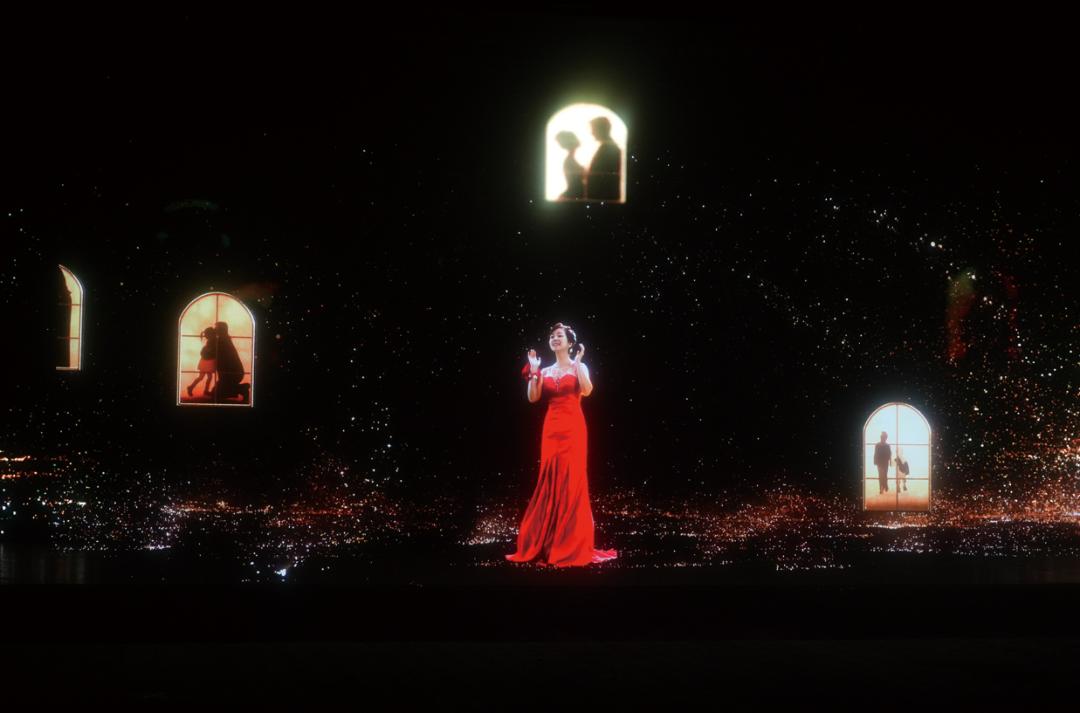
On May 8, 2026, in Zhengzhou, Henan. The Teresa Teng Digital Technology Music Center (Henan) opened to the public. On the same day, the center held a "Teresa Teng Concert" using holographic audio and video technology, where the AI version of "Teresa Teng" performed on stage. (Photo/Que Li, China News Service)
Overall, the accumulation of real usage experience, professional industry background, and judgments derived from personal experience — these unique experiences cannot be forged by AI. The audience actually knows very well whether a streamer is really helping them, or just pretending to help them.
In traditional business, a good buyer-seller relationship is nothing more than that — remembering the names of old customers, knowing their preferences, and giving them a sincere suggestion when they are hesitant. This set of principles still applies today. Streamers are the "face" of the sellers, and good streamers are good at managing relationships. "For example, if a buyer who asked a question before enters the live stream room again, she probably wants to buy something but still has some concerns. I will try to ask her about it," Yiting said. Treating fans as friends, remembering their names, and treating people sincerely are things that will never go out of style no matter when.
Nowadays, many human streamers may have clearly felt the employment pressure brought by AI technology, but technology is also spawning new positions — new professions such as AI trainers, digital avatar operations specialists, and intelligent agent optimization specialists have emerged as the times require. One of Xiao Le's peers used to be a beauty category streamer last year, earning 20,000 yuan per month with base salary plus commission. But at the beginning of this year, the brand moved her live streaming time slot from prime time to the late night slot, on the grounds that "the prime time slot is for AI to test data". Three months later, she completely left that position and went to work for an MCN agency as a live stream operation specialist, helping brands train the script for digital avatars.
Xiao Le later told me that she decided to continue doing live streaming, but in a different way. "In the past, I only focused on selling goods, but now I learn to chat with people and share my daily life. The operations staff said that after I did this, my performance data got even better." The fact that she can say this shows that she has figured it out: the ones that can be replaced by AI are those "human loudspeakers" who only read scripts; real human streamers who can chat and have warmth will become "more valuable" precisely because of the contrast from AI.

On March 14, 2026, in Shanghai. At the 2026 China Home Appliances and Consumer Electronics Expo (AWE), staff members are live streaming in a dedicated live streaming room. (Photo/CFP)