Current status of AI applications in 98 enterprises: How far are we from large-scale implementation?
Survey Overview
Currently, enterprise generative AI is gradually moving from the early stage of tool trial and technical verification to the large-scale implementation stage. As the capabilities of large models extend from general Q&A to scenarios such as enterprise knowledge base, data analysis, Agent, and business process automation, enterprises are facing opportunities for efficiency improvement and business innovation, while also starting to deal with practical problems including governance, cost, system integration, and input-output verification.
This survey is based on questionnaire data from 98 enterprises, and systematically analyzes the current status of enterprise generative AI application around dimensions including the generative AI application stage of enterprises, employee usage, application scenarios, usage methods, work substitution degree, governance mechanism, AI usage management, enterprise-level platform demand and future investment willingness.
Overall, the application of enterprise generative AI presents obvious characteristics of "wide coverage, shallow application, project-based implementation, and lagging governance". 85.7% of enterprises have carried out applications in scenarios such as AI search and enterprise knowledge base; however, only 20.4% of enterprises have formed an enterprise-level AI platform/system or realized deep integration of AI into core businesses. At the same time, 60.2% of enterprise employees have an AI usage rate of less than 30%, and 30.6% of enterprises have not yet established an AI governance mechanism. Enterprises' overall willingness to invest is positive. The data shows that 80.6% of enterprises plan to increase AI investment in the next 1-2 years, and 58.2% of enterprises have purchased or plan to purchase an enterprise-level AI platform within the next year. Enterprise AI is going through a key stage of evolution from "single-point application" to "platform-based, systematic and business-oriented development".
Key Findings
1. AI has been widely adopted by enterprises, but it is still in the shallow application stage on the whole: 63.3% of enterprises are still in the stage of exploration, independent use by employees or department-level pilot; only 20.4% of enterprises have formed an enterprise-level system or deeply integrated AI into their core businesses.
2. AI is still a tool for the few: 60.2% of enterprises have an employee AI usage rate lower than 30%, and 52.0% of enterprises have a proportion of high-frequency AI users lower than 10%.
3. Knowledge office scenarios are the first to be implemented, while core business scenarios lag relatively behind: The penetration rate of AI search/enterprise knowledge base reaches 85.7%, while that of production/manufacturing, supply chain/procurement and management decision-making is 23.5%, 24.5% and 18.4% respectively.
4. AI governance and usage management lag significantly behind: 30.6% of enterprises have no AI governance mechanism, 39.8% of enterprises have not carried out usage statistics, and 38.8% of enterprises cannot clarify their monthly Token usage.
5. Agents are rapidly entering enterprises, but behavior governance is still insufficient: 42.9% of enterprises have used AI Agents, while the coverage rate of Agent operation audit and AI output review is only 8.2% and 6.1% respectively.
6. Enterprises have strong willingness to invest, but procurement decisions still emphasize ROI: 80.6% of enterprises plan to increase AI investment, 58.2% have purchased or plan to purchase an enterprise-level AI platform within one year, while 29.6% of enterprises are still in the stage of observing the market.
Sample Profile
(1) Industry Distribution
The industry distribution presents a highly concentrated feature. Among the 98 surveyed enterprises, pharmaceutical/medical/healthcare enterprises account for 57.1%, nearly 60% of the samples; consumer goods/retail/trade enterprises account for 15.3%, automobile/auto parts enterprises account for 11.2%, industrial manufacturing/equipment manufacturing enterprises account for 5.1%, followed by energy/chemical/new materials accounting for 3.1%, high-tech manufacturing accounting for 4%, Internet/software/information services accounting for 2.0%, and others accounting for 2.0%. The AI implementation landscape presented in this survey is more consistent with the actual situation of pharmaceutical industry and advanced manufacturing enterprises.
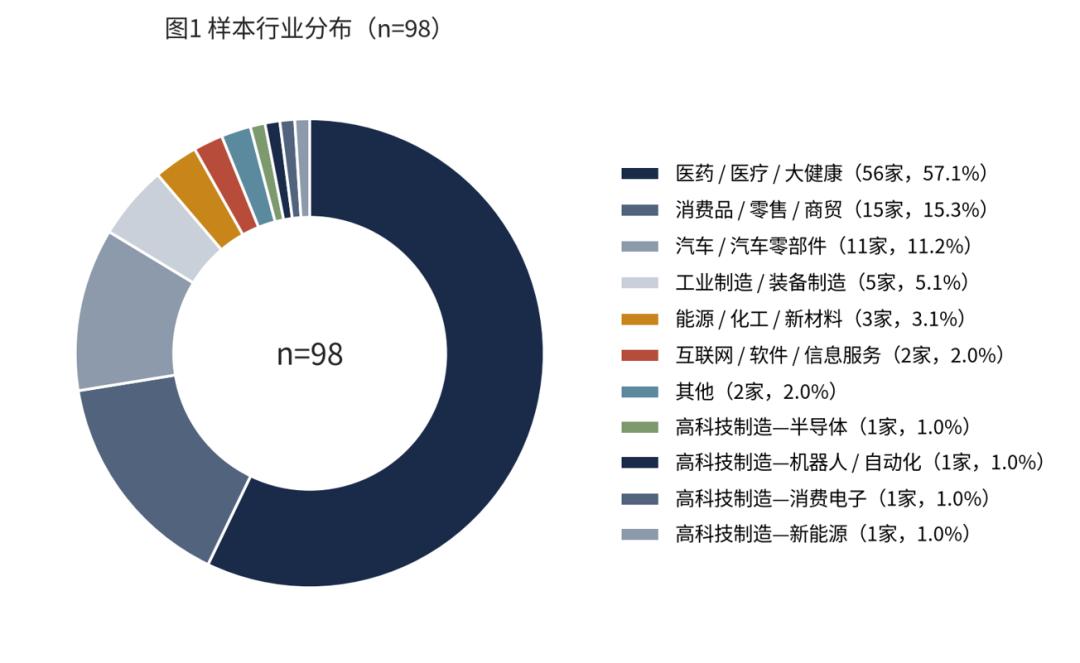
Figure 1 Industry Distribution of Samples
(2) Employee Size Distribution
Enterprises with 500-2,000 employees are the main force of the samples, accounting for 33.7%; followed by enterprises with 2,000-5,000 employees, accounting for 19.4%; enterprises with less than 500 employees account for 15.3%. Enterprises with more than 5,000 employees account for 31.6% in total, of which 5,000-10,000 account for 12.2%, 10,000-50,000 account for 14.3%, and more than 50,000 account for 5.1%. The surveyed enterprises are mainly medium-sized and above, with relatively higher acceptance and demand for enterprise-level generative AI tools.
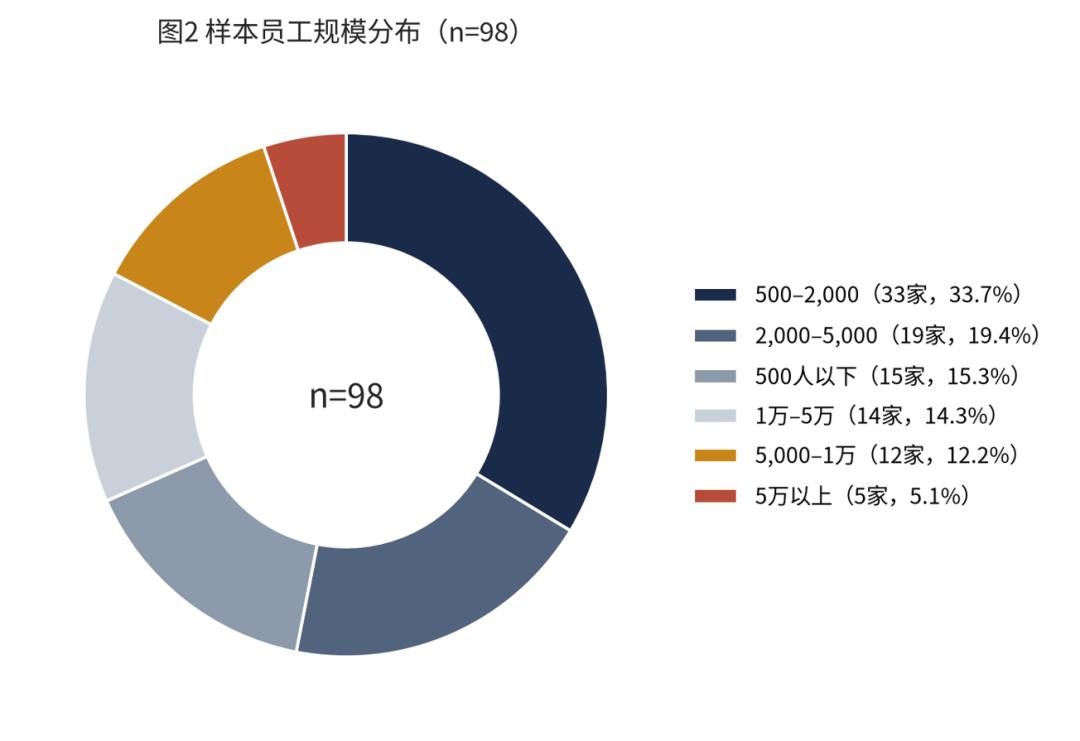
Figure 2 Employee Size Distribution of Samples
Current Status of Enterprise Generative AI Application
Overall, enterprise generative AI presents the feature of "wide coverage and shallow application". Knowledge office scenarios have achieved high coverage, but the integration of enterprise-level system and core business is still in the early stage.
(1) Overall Application Stage of Generative AI
60% of enterprises are still at the pilot stage or below, and the application stage shows an obvious pyramid structure. The number of enterprises at the department-level pilot stage is the largest, accounting for 33.7%; 20.4% of enterprises have independent use by a small number of employees; 19.4% of enterprises have formed an enterprise-level AI platform/system; 16.3% of enterprises have realized large-scale application across multiple departments; 9.2% of enterprises are in the understanding/exploration stage; only 1.0% of enterprises have realized deep integration of AI into core businesses. The sum of enterprises in exploration, independent use and department pilot stages is 63.3%. Most enterprises' AI applications are still promoted by departments or projects, and platform-based integration is the development direction of the next stage.
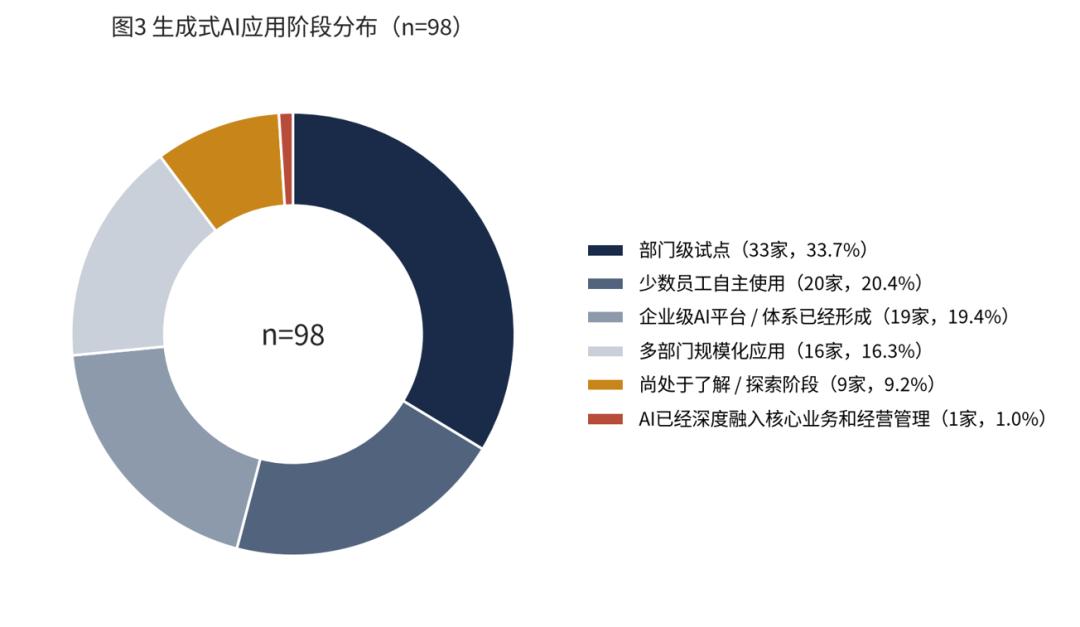
Figure 3 Distribution of Generative AI Application Stages
(2) Proportion of Employees Using Generative AI
60% of enterprises have less than 30% of employees using generative AI, and AI is still a "tool for the few". Enterprises with employee AI usage rate lower than 30% account for 60.2%; of which 29.6% have usage rate below 10%, and 30.6% have usage rate between 10% and 30%. Only 17.4% of enterprises have employee usage rate over 50%. The low concentration of usage rate indicates that AI is currently mainly mastered by deep users in a few departments and a few positions, and has not been transformed into full-staff productivity, which also shows that enterprises are still in the "shallow application" stage at present.
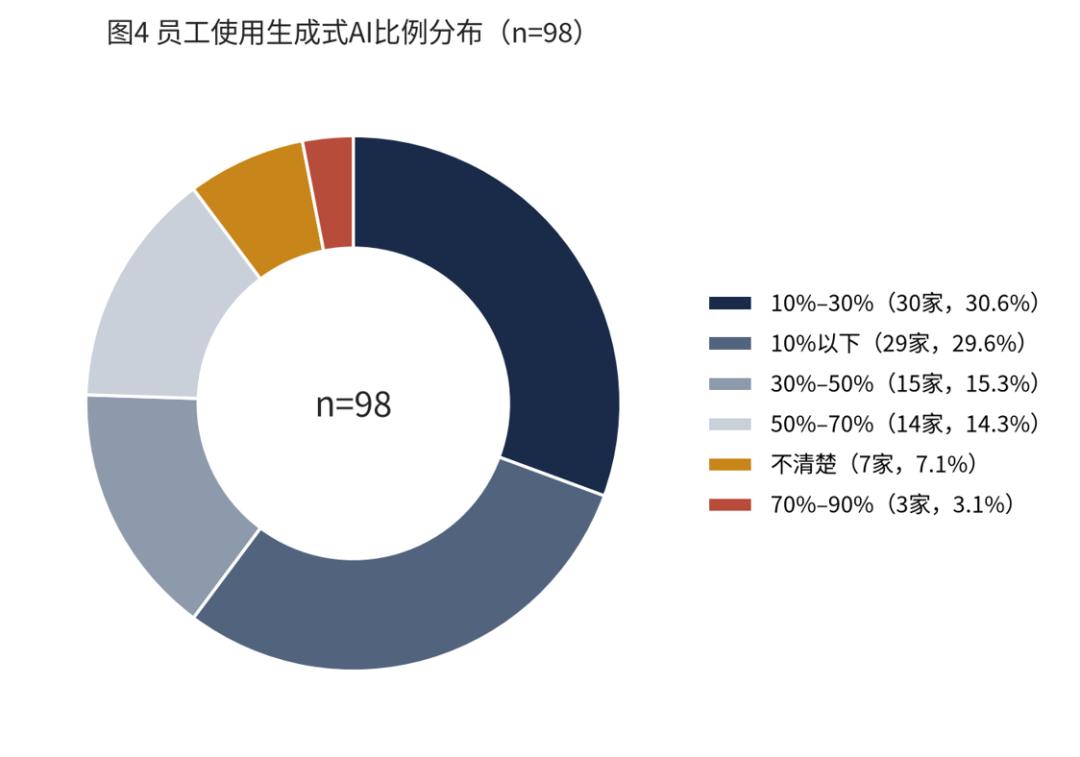
Figure 4 Distribution of Proportion of Employees Using Generative AI
(3) Proportion of High-frequency AI Users
52.0% of enterprises have a proportion of high-frequency AI users (using more than 3 times a week) lower than 10%; 18.4% of enterprises have the proportion over 30%, and only 10.2% of enterprises have the proportion over 50%. It indicates that many people in enterprises use AI, but few people really use it well and form habits. In the next stage, enterprises need to shift from expanding coverage to further improving activity level and workflow embedding degree.
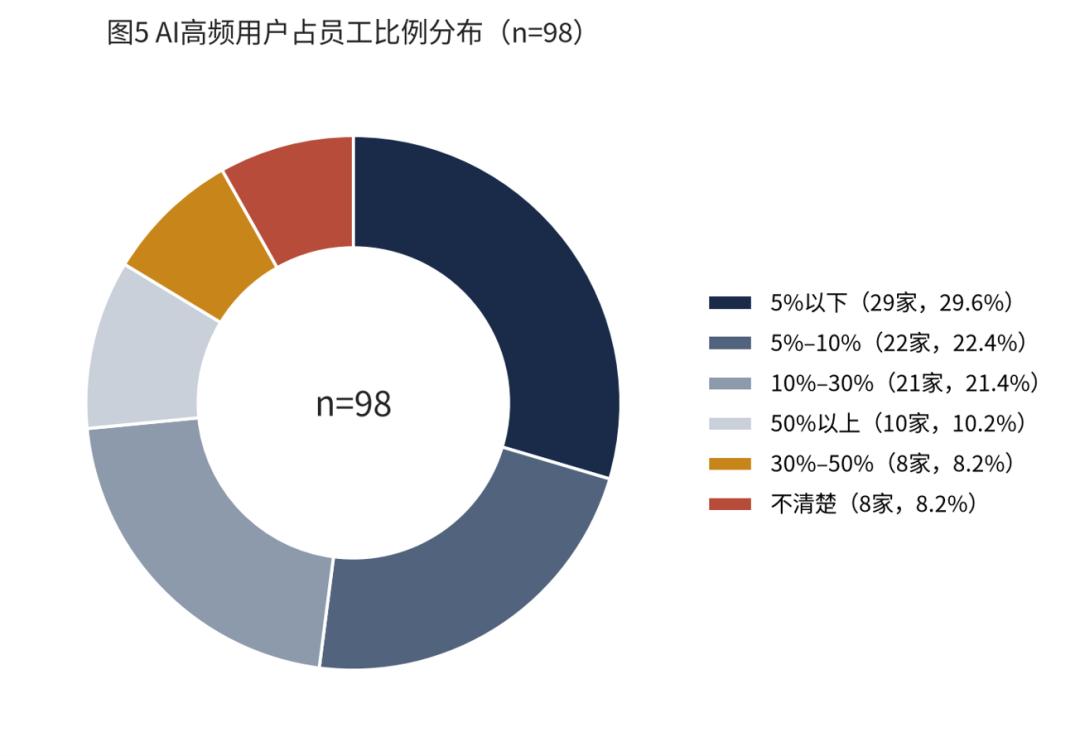
Figure 5 Distribution of Proportion of High-frequency AI Users among Employees
(4) Main AI Application Scenarios
Knowledge office scenarios take the lead, while the application of production manufacturing and business decision-making scenarios lags far behind. Among them, 85.7% of enterprises use AI search/enterprise knowledge base; 76.5% of enterprises use AI for meeting minutes/information sorting; 60.2% of enterprises use AI for documents/emails/PPTs; 58.2% of enterprises use AI for software development and data analysis/BI. AI Agents have been adopted by 42.9% of enterprises, and the Agent form is penetrating rapidly.
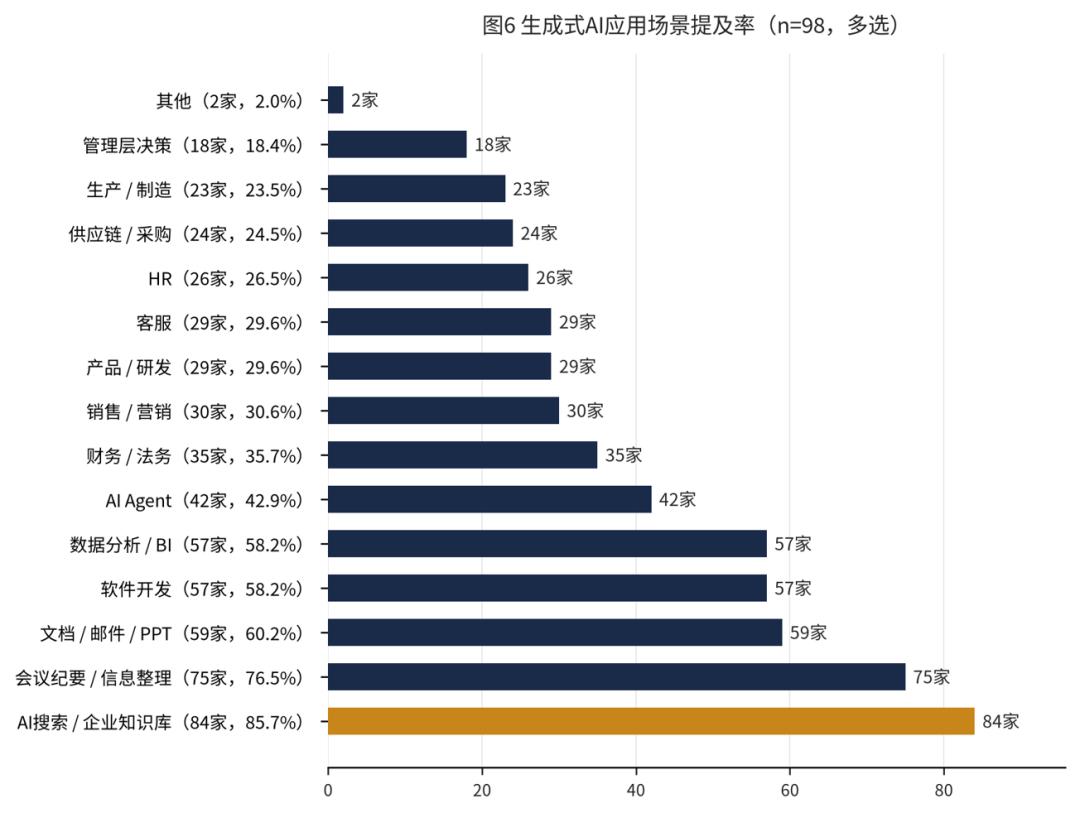
Figure 6 Mention Rate of Generative AI Application Scenarios (Multiple Choice)
(5) Number of AI Applications/Projects
Enterprises with 4-10 applications and enterprises with 1-3 applications rank the highest in parallel, accounting for 29.6%; enterprises with more than 30 applications account for 20.4%, enterprises with 11-30 applications account for 11.2%, only 5.1% of enterprises have no AI applications, and 4.1% of enterprises are not clear about the specific number. More than 60% of enterprises have more than 4 AI applications, but only 20% of enterprises have formed an enterprise-level system. It presents the feature of "many projects but few systems". Most AI applications are promoted in the form of scattered projects, lacking unified platform and specification constraints.
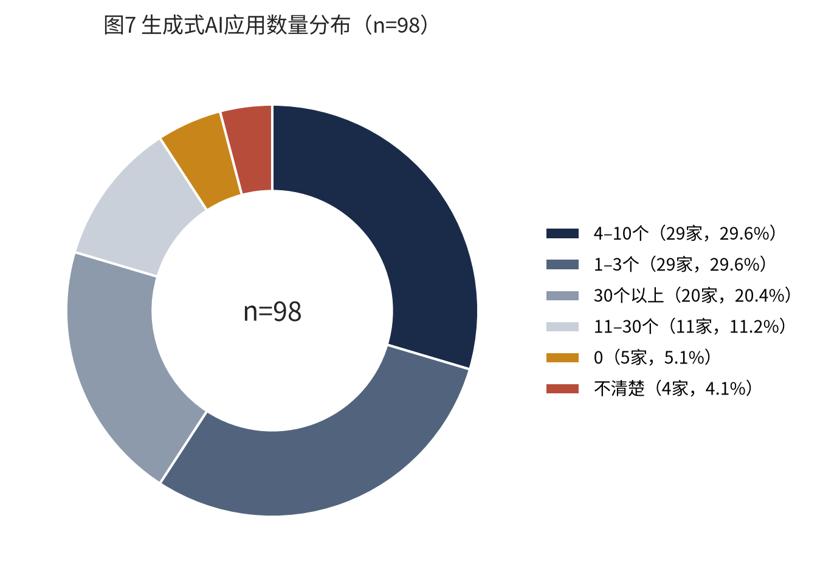
Figure 7 Distribution of Number of Generative AI Applications
(6) Current Main Usage Methods of AI
70.4% of employees use AI tools personally, ranking first; 48.0% of enterprises choose unified procurement of AI office tools and enterprise knowledge base/RAG, ranking second in parallel; 45.9% of enterprises call third-party large models through API; 31.6% of enterprises deploy large models internally and use AI Agents to perform tasks automatically; 27.6% of enterprises develop AI applications independently; 26.5% of enterprises integrate AI with ERP/CRM/OA and other systems; only 10.2% of enterprises embed AI into core business processes. 70.4% of personal usage by employees means that a large number of AI usages bypass IT access and data security processes and occur in advance. This also reflects that AI first enters enterprises in the form of "individual productivity tool", and organizational procurement and system integration have not yet become the mainstream.
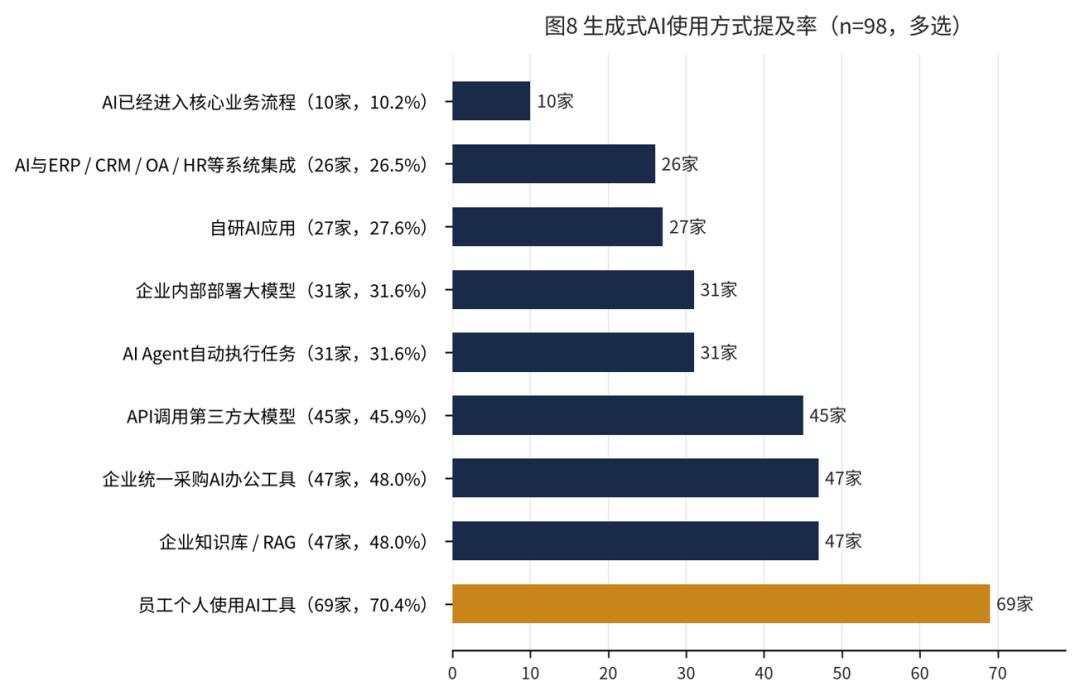
Figure 8 Mention Rate of Generative AI Usage Methods (Multiple Choice)
(7) Actual Work Scenarios Replaced or Reduced by AI
The substitution effect of AI is first concentrated on knowledge-based affairs such as retrieval, writing and sorting. In the past 3 months, the work actually replaced/reduced by AI is concentrated on knowledge-based affairs: document writing accounts for 74.5%, meeting minutes account for 73.5%, information search accounts for 71.4%, PPT/report making accounts for 64.3%, ranking in the forefront; software development accounts for 46.9%, data analysis accounts for 42.9%, followed by. While R&D accounts for 18.4%, finance/legal affairs accounts for 18.4%, management decision-making accounts for 17.3%, production/supply chain accounts for 15.3%, the proportion is significantly low, and only 4.1% of enterprises indicate that no obvious substitution has been formed. This shows that substitution has actually occurred, but it has not touched production line operations and high-level decision-making. With the improvement of employee usage rate and the enhancement of Agent capabilities, the focus of substitution in the next stage will shift to core business processes and business decision-making links.
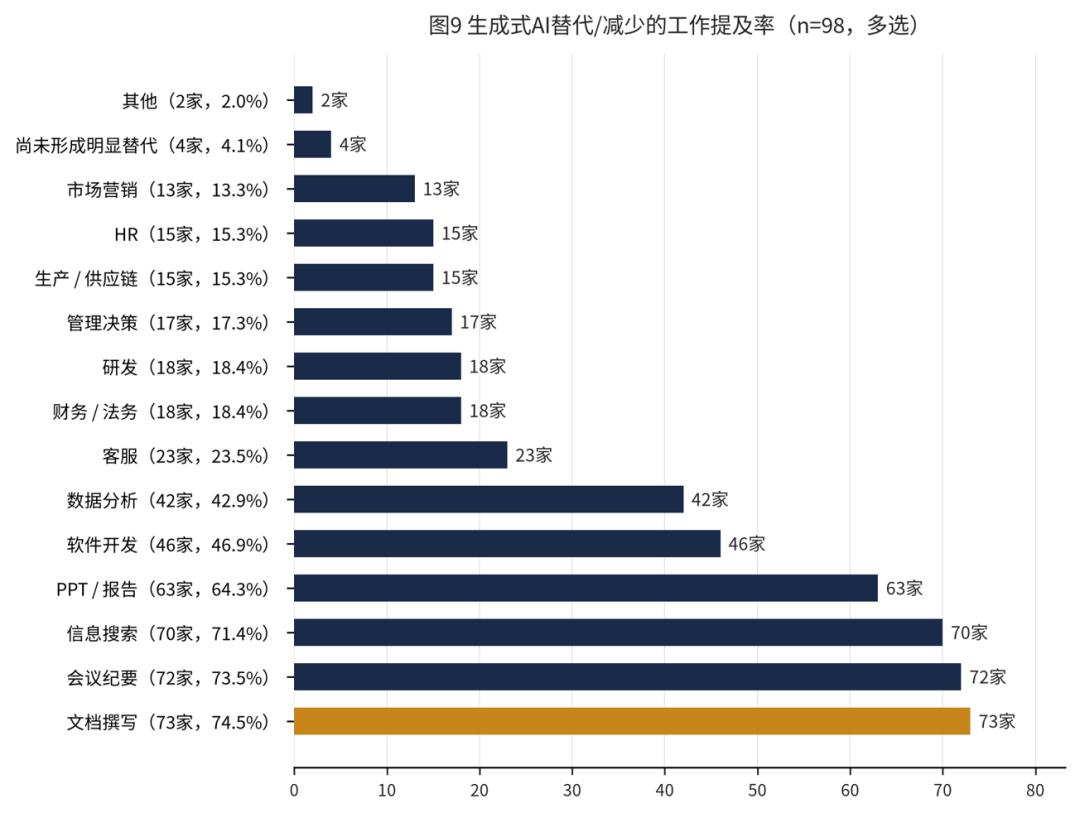
Figure 9 Mention Rate of Work Replaced/Reduced by Generative AI (Multiple Choice)
Governance and Usage Management
Enterprise AI governance obviously lags behind the expansion speed of applications. The current governance focus is mainly concentrated on tool access, data security